COST FUNCTION IN LONG- RUN
 Cost function in Long- Run may be defined
as the mathematical relationship btw cost
of a product and the various determinants
of cost.



C= F [Q, T ,Pf, K]
LONG- RUN COST
 In long run ,all inputs to a firms production may be

changed.
 There are no fixed inputs, fixed cost.
 The cost that are incurred on the fixed factors like

plant, building, machinery, etc., are known as Long- run
cost, .
 In the long run , however even the fixed costs become

variable costs as the size of the firm or scale of production
increases.
LONG- RUN AVERAGE COST
It is aperios of time during which the firm can vary all

of its input
The firm moves from one plant to another in long run
Long run cost of production is the least posible cost of

producing any given level of output when all
individual factors are variable
LONG-RUN AVERAGE COST CURVE
Long- run average cost curve depicts the functional

relationship between output & the long run cost of
production.
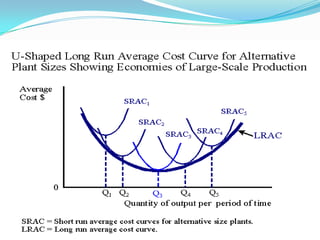
It envelops the set of U- shaped short run average cost

curves corresponding to different plant sizes.
LRAC Curve is reflecting economic of scale when

negatively slop & diseconomies of scale when positivey
sloped.
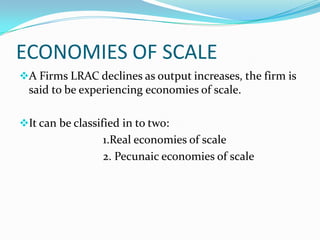
ECONOMIES OF SCALE
A Firms LRAC declines as output increases, the firm is

said to be experiencing economies of scale.
It can be classified in to two:

1.Real economies of scale
2. Pecunaic economies of scale
...........
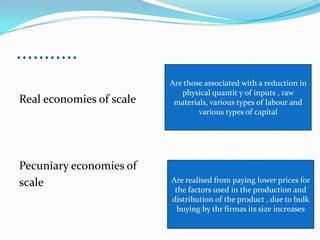
Real economies of scale

Pecuniary economies of
scale

Are those associated with a reduction in
physical quantit y of inputs , raw
materials, various types of labour and
various types of capital

Are realised from paying lower prices for
the factors used in the production and
distribution of the product , due to bulk
buying by thr firmas its size increases
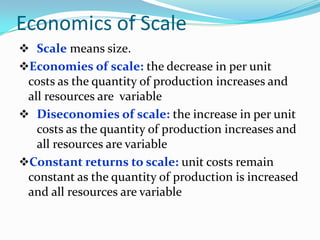
Economics of Scale
 Scale means size.
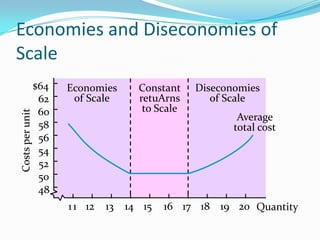
Economies of scale: the decrease in per unit
costs as the quantity of production increases and

all resources are variable
 Diseconomies of scale: the increase in per unit
costs as the quantity of production increases and
all resources are variable
Constant returns to scale: unit costs remain
constant as the quantity of production is increased
and all resources are variable
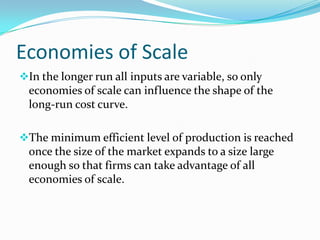
Economies of Scale
In the longer run all inputs are variable, so only

economies of scale can influence the shape of the
long-run cost curve.
The minimum efficient level of production is reached

once the size of the market expands to a size large
enough so that firms can take advantage of all
economies of scale.
Diseconomies of Scale
Diseconomies of scale refer to decreases in

productivity which occur when there are equal
increases of all inputs (no input is fixed).
Constant Returns to Scale
 Constant returns to scale is where long-run average

total costs do not change as output increases.
Costs per unit

Economies and Diseconomies of
Scale
$64
62
60
58
56
54
52
50
48

Economies
of Scale

1 1 12

13

Constant
retuArns
to Scale

14 15

Diseconomies
of Scale
Average
total cost

16 17 18 19 20 Quantity
THANK YOU

Long run Managerial Economics

  • 2.
    COST FUNCTION INLONG- RUN  Cost function in Long- Run may be defined as the mathematical relationship btw cost of a product and the various determinants of cost.  C= F [Q, T ,Pf, K]
  • 3.
    LONG- RUN COST In long run ,all inputs to a firms production may be changed.  There are no fixed inputs, fixed cost.  The cost that are incurred on the fixed factors like plant, building, machinery, etc., are known as Long- run cost, .  In the long run , however even the fixed costs become variable costs as the size of the firm or scale of production increases.
  • 4.
    LONG- RUN AVERAGECOST It is aperios of time during which the firm can vary all of its input The firm moves from one plant to another in long run Long run cost of production is the least posible cost of producing any given level of output when all individual factors are variable
  • 5.
  • 6.
    LONG-RUN AVERAGE COSTCURVE Long- run average cost curve depicts the functional relationship between output & the long run cost of production. It envelops the set of U- shaped short run average cost curves corresponding to different plant sizes. LRAC Curve is reflecting economic of scale when negatively slop & diseconomies of scale when positivey sloped.
  • 7.
    ECONOMIES OF SCALE AFirms LRAC declines as output increases, the firm is said to be experiencing economies of scale. It can be classified in to two: 1.Real economies of scale 2. Pecunaic economies of scale
  • 8.
    ........... Real economies ofscale Pecuniary economies of scale Are those associated with a reduction in physical quantit y of inputs , raw materials, various types of labour and various types of capital Are realised from paying lower prices for the factors used in the production and distribution of the product , due to bulk buying by thr firmas its size increases
  • 9.
    Economics of Scale Scale means size. Economies of scale: the decrease in per unit costs as the quantity of production increases and all resources are variable  Diseconomies of scale: the increase in per unit costs as the quantity of production increases and all resources are variable Constant returns to scale: unit costs remain constant as the quantity of production is increased and all resources are variable
  • 10.
    Economies of Scale Inthe longer run all inputs are variable, so only economies of scale can influence the shape of the long-run cost curve. The minimum efficient level of production is reached once the size of the market expands to a size large enough so that firms can take advantage of all economies of scale.
  • 11.
    Diseconomies of Scale Diseconomiesof scale refer to decreases in productivity which occur when there are equal increases of all inputs (no input is fixed).
  • 12.
    Constant Returns toScale  Constant returns to scale is where long-run average total costs do not change as output increases.
  • 13.
    Costs per unit Economiesand Diseconomies of Scale $64 62 60 58 56 54 52 50 48 Economies of Scale 1 1 12 13 Constant retuArns to Scale 14 15 Diseconomies of Scale Average total cost 16 17 18 19 20 Quantity
  • 14.