ENQUIRIES

Business communication
“inquire” and “enquire?”
These are two spellings of the
same word, which means to seek
information about something or to
conduct a formal investigation
(usually when followed by “into”).
Either spelling can be used, but
many people prefer enquire and
enquiry for the general sense of
“ask”, and inquire and inquiry for a
formal investigation:
I enquired his name
The lawyers asked when the
inquiry will be completed.
enquire and enquiry are more
common in British English
inquire and inquiry are more
common in US English
Letters of Enquiry
The word “Enquiry” refers to
investigate or find out fact about
anything and in Business
Correspondence it means asking
for information about prices,
quality, quantity and terms for
supply of goods.
In hot pursuit to buy goods at
favorable businessman writes or
corresponds with manufacturers or
traders for the information about
the price, quality, quantity and
other details.
In other words,
“Letters of Enquiry”.
In other words, letter writing in
business asking for information
about the goods or services by the
intending buyer from the
manufacturer, seller, dealer or
supplier may be called a Letter of
Enquiry.
Types of Enquiry:
(a) Solicited Enquiry – This enquiry is
request for information by the
intending buyer after being convinced
through any advertisement or
communication from the seller or
supplier. These enquiries can be found
in newspapers and magazines and is
generally displayed as “for details
contact…” which means that the
intending buyer should write to the
advertiser to seek for information or
details. Such type of enquiries can be
(b) Unsolicited Enquiry – This enquiry
is the information asked by the
intending buyer about desired goods
or services without the influence of
advertisement or seller’s advice. In this
type of enquiry, the intending buyer
corresponds or communicates by
seller by his information about the
desired goods or services and so they
are called unsolicited enquiry.
Sources of Enquiry:
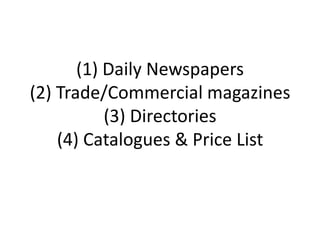
(1) Daily Newspapers
(2) Trade/Commercial magazines
(3) Directories
(4) Catalogues & Price List
The intending buyer can get the
name and address of the desired
supplier or manufacturer from
these sources of enquiry.
Contents of Letter:
(1) The intending buyer should
write the purpose of making
enquiry about the desired goods or
services to be purchased.
The intending buyer should specifically
write about the details of goods or
services required. If there is an enquiry
about the goods/services then the
enquiry can about quality, quantity,
size, brand etc of the product. If there
is need for another queries like sample
patterns, catalogues or price lists, then
it should be mentioned exclusively in
the letter.
The intending buyer should ask for
the terms and conditions for the
payment and delivery of the goods
or services.
The intending buyer should show
urgency of early information so
that there should be expression of
hope in the desired enquiry from
the supplier.
Drafting of an Enquiry Letter
The enquiry letter should begin
with a direct question or questions.
The information should be asked
directly without jumbling of words
or ideas.
The enquiry letter should be
directly properly to the
requirements of goods or services
should be stated in a
straightforward manner.
should be kept short as far as
possible and it should be to the
point.
enquiry letter there has to be
appropriate opening and closing
sentences so that it should look
relevant with the subject.
Kinds of Business-Enquiry Letter
and other information etc, i.e. asking
for price, quality, terms and
conditions.
(2) Tabulated Enquiry.
(3) Asking for catalogues and pricelists.
(4) Asking for samples, patterns etc.
(5) Asking for goods on approval on
return basis.
(6) Asking for concessions and special
terms.
General Enquiry
The letter about general enquiry
consists of asking information
about the prices and other terms
for any item required in day-to-day
business. This enquiry can be for
stationary products or office
equipments or any goods for sale..
The drafting of such enquiry letter
is easy and should start by putting
questions and giving details of the
items required. Finally there has to
be stress upon the urgency or
information so that the reply is
received by the sender at the
earliest.
These types of letters should be
written in direct style and it should
be abstained from writing
introduction or preface. In this
letter question is put forward to
the correspondent or reader of the
letter. The letter should be closed
after giving information in brief.
Tabulated Enquiry
Tabulated enquiry is those where
information is asked through several
points or questions in serial order. The
information asked can be divided into
several parts and all points are serially
numbered. This type of letter writing is
useful for both the reader and writer
as it clearly specifics the points within
the letter. The information can be
Download Letter Formats
http://www.2shared.com/file/Nvfvw4We/Write_an_inquiry_to_ask_for_mo.ht
ml

http://www.2shared.com/file/VXJv9dH-/Wriiten_communiaction.html

Enquiries Business Communication

  • 1.
  • 2.
  • 3.
    These are twospellings of the same word, which means to seek information about something or to conduct a formal investigation (usually when followed by “into”).
  • 4.
    Either spelling canbe used, but many people prefer enquire and enquiry for the general sense of “ask”, and inquire and inquiry for a formal investigation:
  • 5.
    I enquired hisname The lawyers asked when the inquiry will be completed.
  • 6.
    enquire and enquiryare more common in British English inquire and inquiry are more common in US English
  • 7.
  • 8.
    The word “Enquiry”refers to investigate or find out fact about anything and in Business Correspondence it means asking for information about prices, quality, quantity and terms for supply of goods.
  • 9.
    In hot pursuitto buy goods at favorable businessman writes or corresponds with manufacturers or traders for the information about the price, quality, quantity and other details.
  • 10.
    In other words, “Lettersof Enquiry”. In other words, letter writing in business asking for information about the goods or services by the intending buyer from the manufacturer, seller, dealer or supplier may be called a Letter of Enquiry.
  • 11.
  • 12.
    (a) Solicited Enquiry– This enquiry is request for information by the intending buyer after being convinced through any advertisement or communication from the seller or supplier. These enquiries can be found in newspapers and magazines and is generally displayed as “for details contact…” which means that the intending buyer should write to the advertiser to seek for information or details. Such type of enquiries can be
  • 13.
    (b) Unsolicited Enquiry– This enquiry is the information asked by the intending buyer about desired goods or services without the influence of advertisement or seller’s advice. In this type of enquiry, the intending buyer corresponds or communicates by seller by his information about the desired goods or services and so they are called unsolicited enquiry.
  • 14.
  • 15.
    (1) Daily Newspapers (2)Trade/Commercial magazines (3) Directories (4) Catalogues & Price List
  • 16.
    The intending buyercan get the name and address of the desired supplier or manufacturer from these sources of enquiry.
  • 17.
  • 18.
    (1) The intendingbuyer should write the purpose of making enquiry about the desired goods or services to be purchased.
  • 19.
    The intending buyershould specifically write about the details of goods or services required. If there is an enquiry about the goods/services then the enquiry can about quality, quantity, size, brand etc of the product. If there is need for another queries like sample patterns, catalogues or price lists, then it should be mentioned exclusively in the letter.
  • 20.
    The intending buyershould ask for the terms and conditions for the payment and delivery of the goods or services.
  • 21.
    The intending buyershould show urgency of early information so that there should be expression of hope in the desired enquiry from the supplier.
  • 22.
    Drafting of anEnquiry Letter
  • 23.
    The enquiry lettershould begin with a direct question or questions. The information should be asked directly without jumbling of words or ideas.
  • 24.
    The enquiry lettershould be directly properly to the requirements of goods or services should be stated in a straightforward manner.
  • 25.
    should be keptshort as far as possible and it should be to the point.
  • 26.
    enquiry letter therehas to be appropriate opening and closing sentences so that it should look relevant with the subject.
  • 27.
  • 28.
    and other informationetc, i.e. asking for price, quality, terms and conditions. (2) Tabulated Enquiry. (3) Asking for catalogues and pricelists. (4) Asking for samples, patterns etc. (5) Asking for goods on approval on return basis. (6) Asking for concessions and special terms.
  • 29.
    General Enquiry The letterabout general enquiry consists of asking information about the prices and other terms for any item required in day-to-day business. This enquiry can be for stationary products or office equipments or any goods for sale..
  • 30.
    The drafting ofsuch enquiry letter is easy and should start by putting questions and giving details of the items required. Finally there has to be stress upon the urgency or information so that the reply is received by the sender at the earliest.
  • 31.
    These types ofletters should be written in direct style and it should be abstained from writing introduction or preface. In this letter question is put forward to the correspondent or reader of the letter. The letter should be closed after giving information in brief.
  • 32.
    Tabulated Enquiry Tabulated enquiryis those where information is asked through several points or questions in serial order. The information asked can be divided into several parts and all points are serially numbered. This type of letter writing is useful for both the reader and writer as it clearly specifics the points within the letter. The information can be
  • 33.