LIVER TRAUMA
Dr. D.K.Sharma
M.S., MCh. (GI Surgery)
Prof. & Head, Deptt. Of Surgery
RNT Medical College, Udaipur, Raj.
Synopsis
 Epidemiology
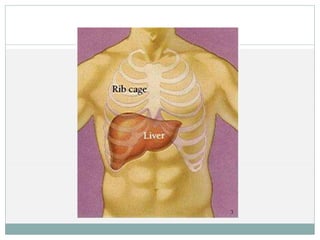
 Relevant Anatomy
 Pathophysiology
 Mechanisms of Injury
 Grades of Liver Trauma
 Clinical Features
 Investigations
 Treatment
 Important Concepts
 DPL
 FAST / eFAST
 ALTS
 DCS
 Death Triangle
 Total Vascular Exclusion
Epidemiology
Associations
 Isolated liver injury occurs in less than 50% of
patients.
 Blunt trauma 45% with spleen
 Rib fracture  33% with Liver injury
 Bowel injuries
 Pancreatic Injuries
 Gall Bladder & Bile Duct Injuries
 Rare
 Contusions, avulsions, lacerations or perforations.
Relevant Anatomy
Pathophysiology
Why the liver…
 Large organ
 Friable parenchyma, thin capsule, fixed position in
relation to spine  prone to blunt injury
 Wide bore, thin walled blood vessels with high
blood flow  Excessive blood loss
 Right lobe larger, closer to ribs  more injury
 In children:
 compliant ribs
 transmitted force
 Mild injuries heal in 3 months.
 Moderate injuries heal in 6 months.
 Severe injuries in 9-15 months.
Healing
Classification & Grading
Grade VI Hepatic Avulsion
Clinical Features
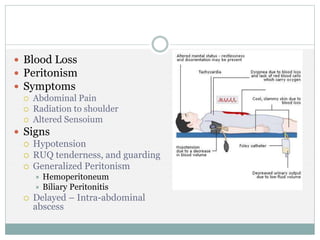
 Blood Loss
 Peritonism
 Symptoms
 Abdominal Pain
 Radiation to shoulder
 Altered Sensoium
 Signs
 Hypotension
 RUQ tenderness, and guarding
 Generalized Peritonism
 Hemoperitoneum
 Biliary Peritonitis
 Delayed – Intra-abdominal
abscess
Investigations
Labs & Radiology
 Hematologic
 Elevated LFTs
 DPL -- high sensitivity
 CT scan is the diagnostic procedure of choice.
 USG
 MRI ??
 Diagnostic Laparoscopy
USG
 FAST
 eFAST
Angiography
 Active bleeding
 Transcatheter embolization
 Embolization & stenting for fistulas.
CT Scan
 Localization.
 Monitor healing.
 Grades 1-6
Management
Management
 In the Past vs Now treatment of blunt liver trauma
 Stopped bleeding at Laparotomy- 86%
 Non-therapeutic explorations- 67%
 Conservative Management-
 Adults-80%
 Children-97%
 Reasons
 MDCT
 TAE
 Liver regenerative capacity
 Improved Critical Care
 Operative / Non-Operative
 CT scan diagnosis and follow up
 Remember associated injuries
 Spleen
 Pancreas
 Bowel
 Resuscitate
 Consider Cryoprecipitate, FFP
 Assessment of injury
 Spiral CT
 Laparotomy
♦ Treatment
♦ OM
♦ NOM
Management
 Damage Control Surgery
 Perihepatic packing
 Hepatorrhaphy
 Mesh Wrapping
 Enough Tension
 Anchoring
 Hepatotomy & Selective Vascular Ligation
 Resection
 Non-anatomical
 Anatomical
 Intrahepatic Balloon Tamponade
 Total Vascular exclusion
 Liver Transplantation
Post-Operative Complications
 Hemorrhage
 Correct coagulopathy
 TAE
 Operative Control
 Remove perihepatic packing bet 36-72 h
 Sepsis & Abscess
 Percutaneous drainage
 Surgical Drainage
 Biliary Complications
 Biloma
 Biliary Ascites
 Biliary Fistulae
ATLS
 Advanced Trauma Life Support
 Aggressive fluid resuscitation
 CVP
 UO Monitoring
 Avoidance of “Death Triangle”
 Hypothermia
 Coagulopathy
 Acidosis
Damage Control Surgery
 Stone (1980); Univ. of Pennsylvania (1983)
 To avoid or deal with Danger Triad
 Early recognition
 Already at physiologic limit
 Concepts & Sequence
 Control of Hemorrhage & Contamination
 Temporary closure & Return to ICU
 Deal with the Triad
 Return to OT Definitive repair
Death Triangle
 Danger Triad; Bloody Vicious Cycle
 Components
 Hypothermia
 Decreasing Temp
 <34 C
 Coagulopathy
 Non-surgical Oozing
 PT > 50% of normal
 Acidosis
 <7.2 despite adequate volume resuscitation
 surgeryclasses.blogspot.in
Thank you

Liver Trauma & Concepts in Abdominal Trauma Lecture

  • 1.
    LIVER TRAUMA Dr. D.K.Sharma M.S.,MCh. (GI Surgery) Prof. & Head, Deptt. Of Surgery RNT Medical College, Udaipur, Raj.
  • 2.
  • 3.
     Epidemiology  RelevantAnatomy  Pathophysiology  Mechanisms of Injury  Grades of Liver Trauma  Clinical Features  Investigations  Treatment  Important Concepts  DPL  FAST / eFAST  ALTS  DCS  Death Triangle  Total Vascular Exclusion
  • 4.
  • 5.
    Associations  Isolated liverinjury occurs in less than 50% of patients.  Blunt trauma 45% with spleen  Rib fracture  33% with Liver injury  Bowel injuries  Pancreatic Injuries  Gall Bladder & Bile Duct Injuries  Rare  Contusions, avulsions, lacerations or perforations.
  • 6.
  • 8.
  • 9.
    Why the liver… Large organ  Friable parenchyma, thin capsule, fixed position in relation to spine  prone to blunt injury  Wide bore, thin walled blood vessels with high blood flow  Excessive blood loss  Right lobe larger, closer to ribs  more injury  In children:  compliant ribs  transmitted force
  • 10.
     Mild injuriesheal in 3 months.  Moderate injuries heal in 6 months.  Severe injuries in 9-15 months. Healing
  • 11.
  • 12.
  • 14.
  • 15.
     Blood Loss Peritonism  Symptoms  Abdominal Pain  Radiation to shoulder  Altered Sensoium  Signs  Hypotension  RUQ tenderness, and guarding  Generalized Peritonism  Hemoperitoneum  Biliary Peritonitis  Delayed – Intra-abdominal abscess
  • 16.
  • 17.
    Labs & Radiology Hematologic  Elevated LFTs  DPL -- high sensitivity  CT scan is the diagnostic procedure of choice.  USG  MRI ??  Diagnostic Laparoscopy
  • 18.
  • 19.
    Angiography  Active bleeding Transcatheter embolization  Embolization & stenting for fistulas.
  • 20.
    CT Scan  Localization. Monitor healing.  Grades 1-6
  • 21.
  • 22.
    Management  In thePast vs Now treatment of blunt liver trauma  Stopped bleeding at Laparotomy- 86%  Non-therapeutic explorations- 67%  Conservative Management-  Adults-80%  Children-97%  Reasons  MDCT  TAE  Liver regenerative capacity  Improved Critical Care  Operative / Non-Operative  CT scan diagnosis and follow up
  • 23.
     Remember associatedinjuries  Spleen  Pancreas  Bowel  Resuscitate  Consider Cryoprecipitate, FFP  Assessment of injury  Spiral CT  Laparotomy ♦ Treatment ♦ OM ♦ NOM Management
  • 24.
     Damage ControlSurgery  Perihepatic packing  Hepatorrhaphy  Mesh Wrapping  Enough Tension  Anchoring  Hepatotomy & Selective Vascular Ligation  Resection  Non-anatomical  Anatomical  Intrahepatic Balloon Tamponade  Total Vascular exclusion  Liver Transplantation
  • 26.
    Post-Operative Complications  Hemorrhage Correct coagulopathy  TAE  Operative Control  Remove perihepatic packing bet 36-72 h  Sepsis & Abscess  Percutaneous drainage  Surgical Drainage  Biliary Complications  Biloma  Biliary Ascites  Biliary Fistulae
  • 27.
    ATLS  Advanced TraumaLife Support  Aggressive fluid resuscitation  CVP  UO Monitoring  Avoidance of “Death Triangle”  Hypothermia  Coagulopathy  Acidosis
  • 28.
    Damage Control Surgery Stone (1980); Univ. of Pennsylvania (1983)  To avoid or deal with Danger Triad  Early recognition  Already at physiologic limit  Concepts & Sequence  Control of Hemorrhage & Contamination  Temporary closure & Return to ICU  Deal with the Triad  Return to OT Definitive repair
  • 29.
    Death Triangle  DangerTriad; Bloody Vicious Cycle  Components  Hypothermia  Decreasing Temp  <34 C  Coagulopathy  Non-surgical Oozing  PT > 50% of normal  Acidosis  <7.2 despite adequate volume resuscitation
  • 30.
  • 31.