ABDOMINAL TRAUMA
By Dr. Saleh M.Al-Salamah
B.Sc, MBBS, FRCS
Associate Professor of Surgery
General & Laparoscopic Surgeon
College of Medicine
King Saud University
Riyadh
K.S.A
 Objectives
 Types of abdominal Trauma
 Anatomical regions of the abdomen
 Hospital Care and diagnosis
(Evaluation of patient with blunt /
Penetarating Trauma)
 Specific organs trauma
Upon completion of this topic
the student will be able to
identify the differences in
patterns of abdominal trauma
based on mechanism.
Specifically the student will
be able to:
OBJECTIVES:
 Describe the anatomical
regions of the abdomen.
 Discuss the difference in
injury pattern between blunt
and penetrating trauma.
 Identify the signs suggesting
retroperitoneal, intraperitoneal
or pelvic injuries.
 Outline the diagnostic &
therapeutic procedures
specific to abdominal trauma.
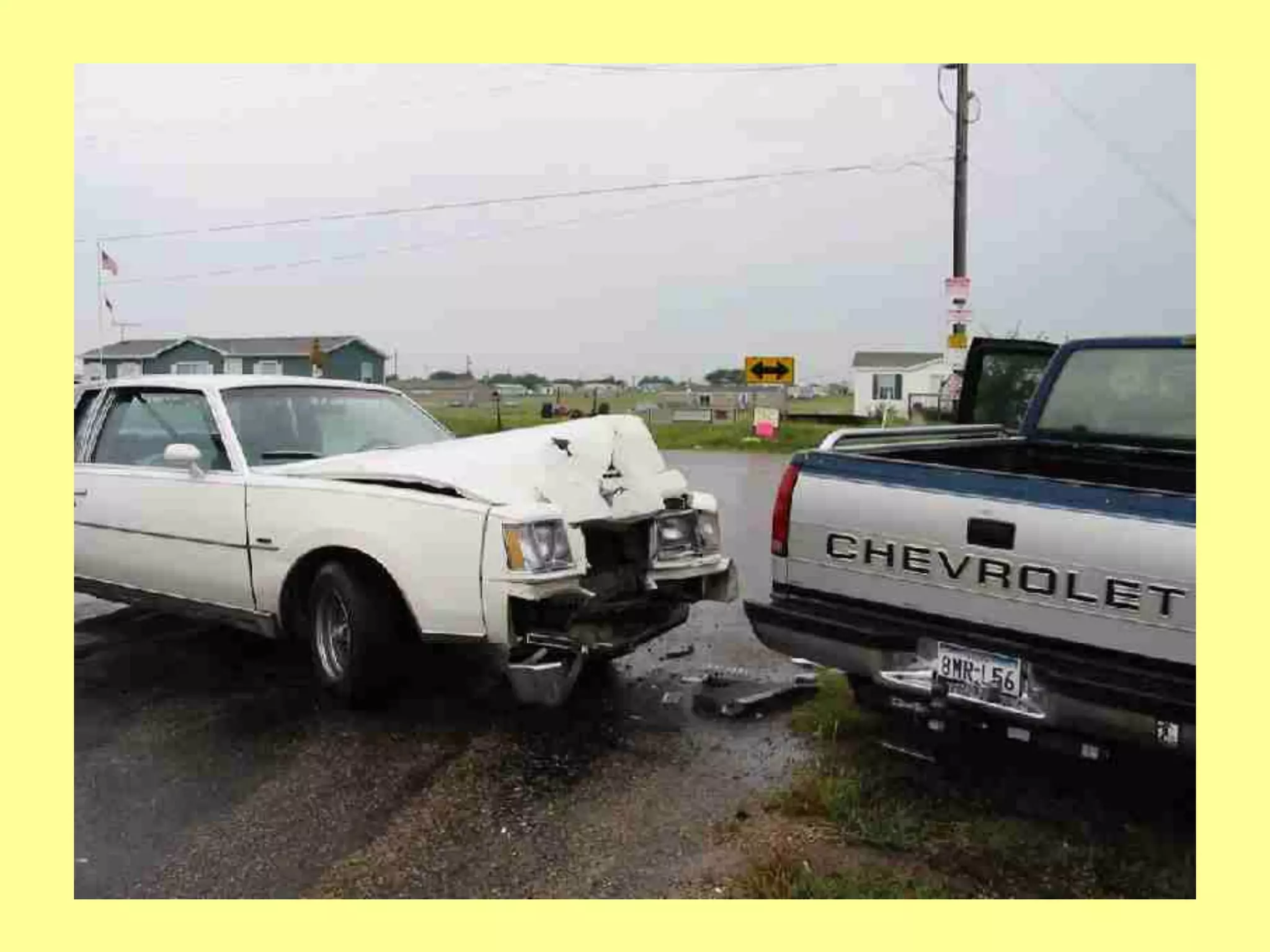
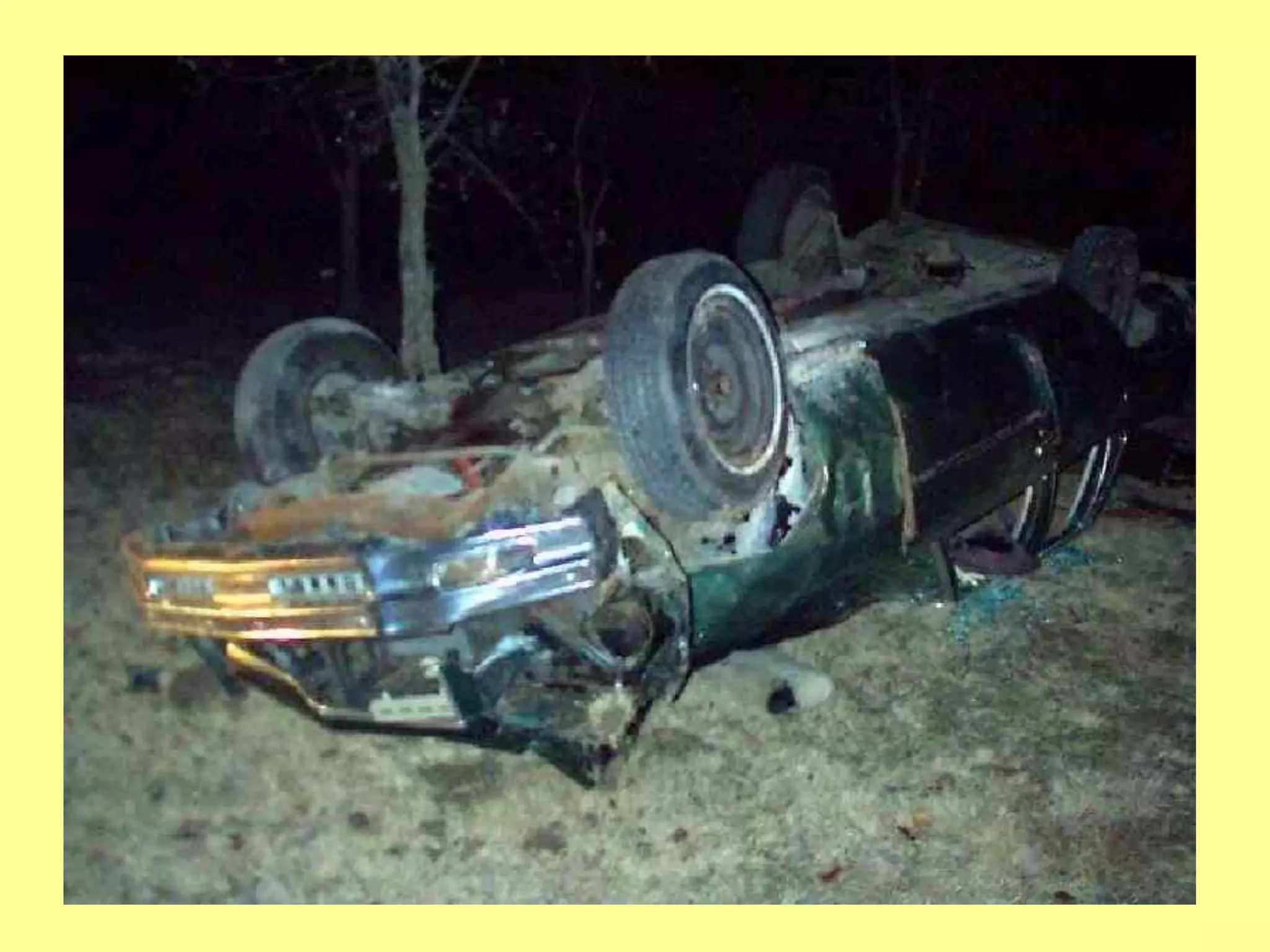
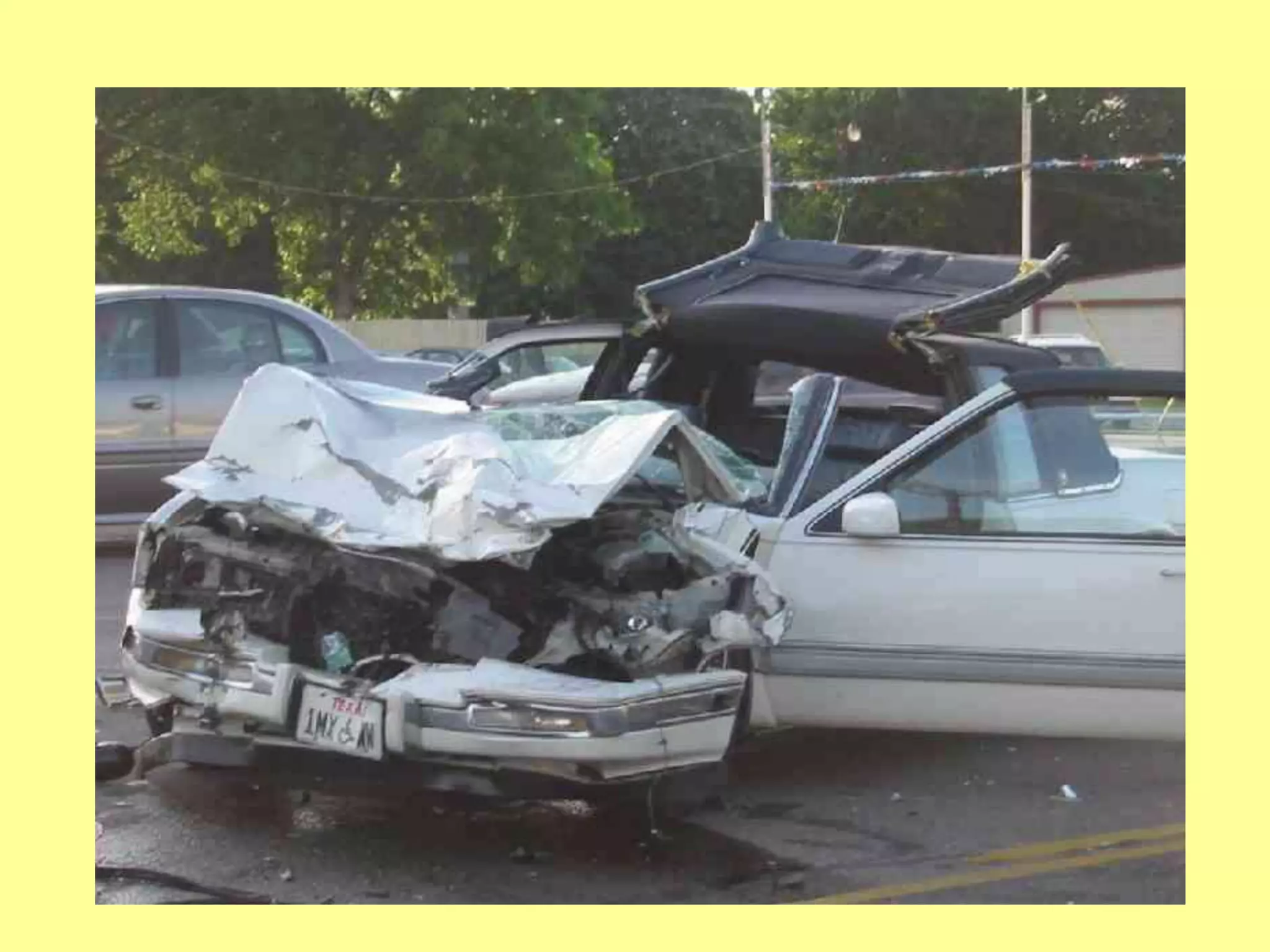
 The majority of abdominal
injuries are due to blunt
abdominal trauma secondary to
high speed automobile
accidents. The failure to
manage the abdominal injuries
accounts for majority of
preventable death following
multiple injuries.
 The primary management of
abdominal trauma is
determination that an intra
abdominal injury EXISTS and
operative intervention is
required.
 Types of the abdominal trauma.
(a) Blunt abdominal trauma.
(b) Penetrating abdominal
trauma.
The recognition of the
mechanism of the injury
weather is penetrating or non-
penetrating trauma is a greatest
importance for treatment and
diagnosis and workup therapy.
The liver, spleen and kidneys
commonly involved in the blunt
abdominal injuries.
 Anatomical regions of the
abdomen:
(a) Peritoneum.
 Intrathoracic abdomen
 True abdomen
(b) Retroperitoneum abdomen
(c) Pelvic abdomen.
 Hospital Care and Diagnosis
(Evaluation of patient with
Blunt / Penetrating Trauma)
 Initial Management:
 The resuscitation &
Management priorities of
patient with major abdominal
trauma are. The (ABCDE) of
EMERGENCY resuscitations
airway, breathing and
circulation with hemorrhage
control should be initiated.
 NGT & Folly's Catheter.
 HISTORY:
(a) Blunt abdominal trauma
(b) Penetrating abdominal trauma.
 PHYSICAL EXAMINATION:
 General physical Examination
 Examination of the abdomen.
 Inspection
 Palpation
 Percussion
 Auscultation
 Rectal Examination
 Vaginal Examination
 DIAGNOSTIC PROCEDURES
(Investigations)
(A) Blood Tests
(B) Radiological Studies
(Plain abdominal X-ray,
CXR)
(C) Peritoneal lavage (DPL)
(D) USS abdomen
(E) CT abdomen
(F) Peritoneoscopy (Diagnostic
laproscopy)
 ESTABLISHING PRIORITIES
AND INDICATIONS FOR
SURGERY:
(The indications for laparotomy)
(A) Signs of peritoneal injury
(B) Unexplained shock
(C) Evisceration of viscus
(D) Positive diagnostic (DPL)
(E) Determination of finding
during routine follow up
 Specific Organs Trauma:
 Liver
 Spleen
INCIDENCE
 The liver is the largest organ
in the abdominal cavity and
continues to be the most
commonly injured organs in all
patients with abdominal
Trauma (Blunt/Penetrating) (35-
45%) in blunt abdominal
Trauma 40% in stab wound
30% in gunshot wounds to
abdomen.
MECHANISM OF INJURY
Hepatic injuries result from direct
blows, compression between the
lower ribs on right side and the
spine or shearing at fixed points
secondary to deceleration. Any
penetrating gunshot, stab or
shotgun wound below the right
nipple on right upper quadrant of
the abdomen is also likely to cause
a hepatic injury.
DIAGNOSIS (LIVER TRAUMA)
 CLINICAL MANIFESTATIONS
 Diagnosis of hepatic injury is
often made at laparotomy in
patients presenting with
penetrating injuries requiring
immediate Surgery
 Or those sustaining blunt
Trauma who remain in shock or
present with abdominal rigidity.
 INVESTIGATIONS:
Adjuvant diagnostic tests are
necessary in the decision
making process to determine
whether or not laparotomy is
necessary:
(a) Diagnostic peritoneal
lavage (DPL) has been
extremely reliable 98% in
determining the presence of
blood in the peritoneal cavity
once (positive) patient should
be taken to the Operating
Room without delay.
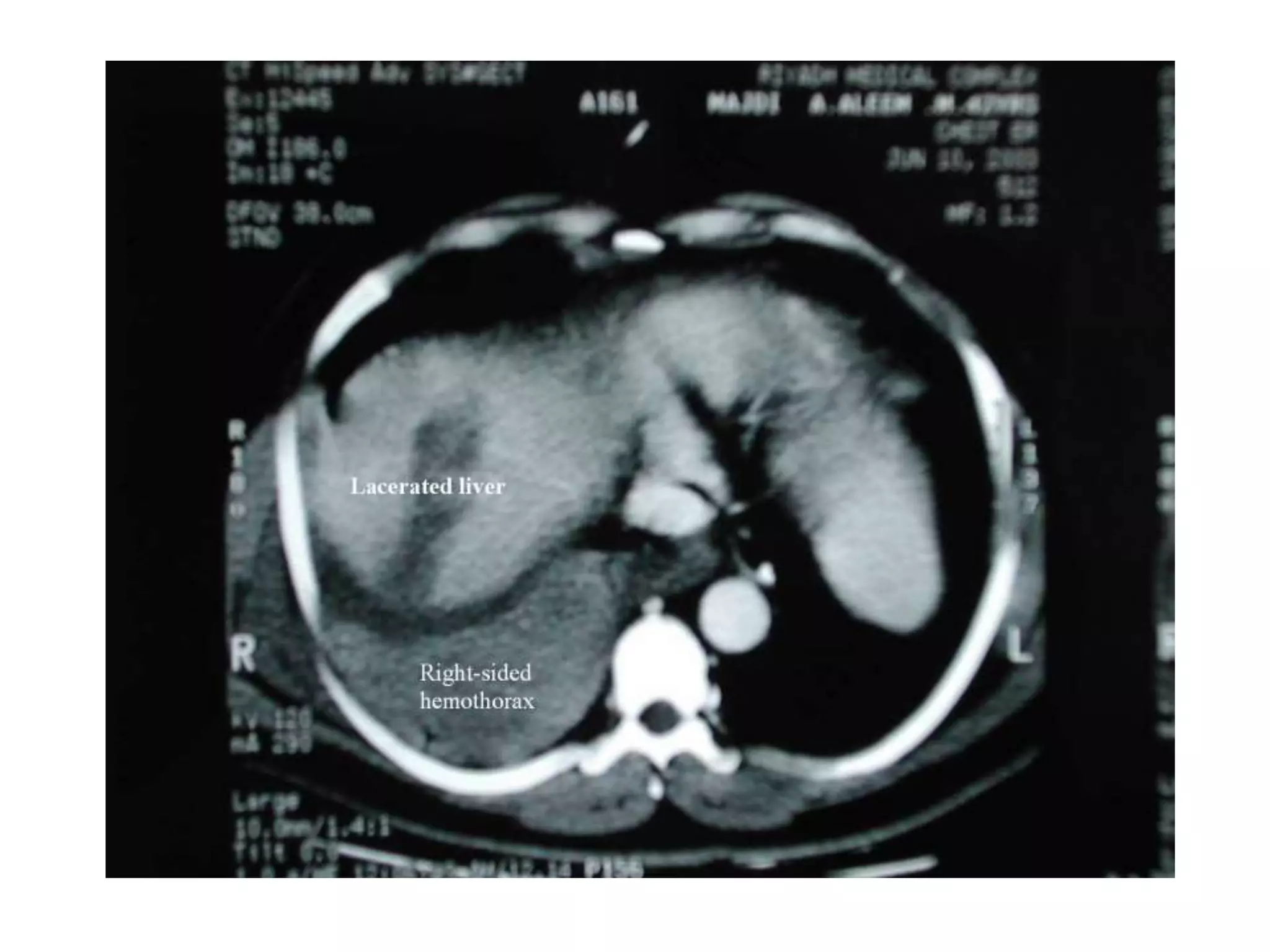
(b) CT.Scan abdomen
used for diagnosing
intraperitoneal injuries in
stable patients after blunt
trauma.
Patients sustaining significant
Right lower thoracic, Right
upper quadrant and Epigastric
blunt trauma, should be
suspected of having suffered a
hepatic injury, clinical
assessment and abdominal
paracentesis
SUMMARY
Cont ….
& DPL are most important
factors in determining operative
intervention. CT Scanning may
be useful adjuvant in the
haemodynamically stable blunt
trauma patient.
 TREATMENT:
 When patient arrived to
ER the initial management of
the patient should be uniform
regardless of organs system
injuries. Resuscitation is
performed (ABCDE) in the
standard fashion.
 Non operative approach:
The hepatic injury diagnosed
by CT in stable patient is now
non operative approach
practiced in many centers.
CT. Criteria for nonoperative
management include the
following:
 Simple hepatic laceration Or
intrahepatic hematoma
 No evidence of active bleeding
 Intra peritoneal blood loss >250 ml
 Absence of other Intraperitoneal
injuries required surgery
 OPERATIVE APPROACH
 Persistent hypotension, despite
adequate volume replacement,
suggests ongoing blood loss and
mandates immediate operative
intervention.
 Injury classification: This
classification based on operative
findings and management. So
hepatic injury classified as follows:
 Grade I:
Simple injuries – non bleeding
 Grade II:
Simple injuries managed by
superficial suture alone
 Grade III:
Major intraparenchymal injury
with active bleeding but not
requiring inflow occlusion
(Pringle maneuver) to control
haemorrhage
 Grade IV:
Extensive intraparenchymal
injury with major active bleeding
requiring inflow occlusion for
hemostatic control
 Grade V:
Juxtahepatic venous injury
(injuries to retrohepatic cava or
main hepatic veins)
All patients undergoing
laparotomy for trauma should
be explored through midline
incision.
OPERATIVE MANAGEMENT:
Grade-I&II: Simple injuries can
be management by any one of
variety of methods (simple
suture, electrocautery or
Tropical Hemostatic Agents) This
type of injury like Liver Bx. does
not require drainage.
MANAGEMENT OF SPECIFIC
LIVER INJURIES:
Grade III: Major intraparenchymal
injuries with active bleeding can
best be managed by Finger
Fracturing the hepatic parenchyma
and ligating or repairing lacerated
blood vessels & bile ducts under
direct vision.
 GradeIV:
Extensive intraparenchynal injuries
with major rapid blood loss require
occlusion of portal trial to control
haemorrhage.
SUMMARY
 Simple techniques includes
drainage only of non-bleeding
injuries, application of fibrin glue,
and sutures hepatorrhaphy and ,
Application of Surgical (I & II).
 Advanced Techniques of
Repair (III & IV) all performed
with Pringle Maneuver in place.
(a) Extensive hepatorrhaply
(b) Hepatotomy with selective
vascular ligation
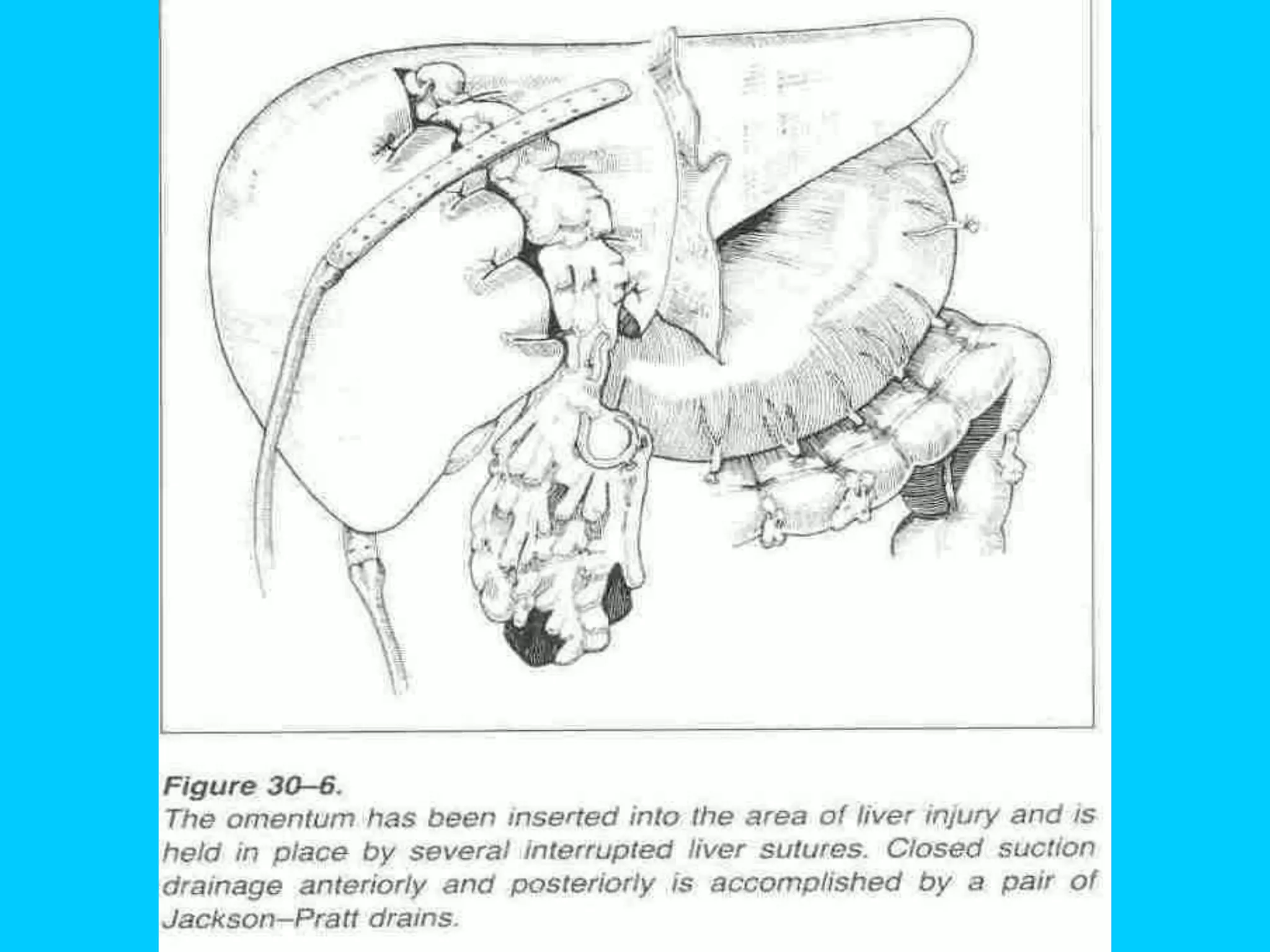
(c) Omertal Pack
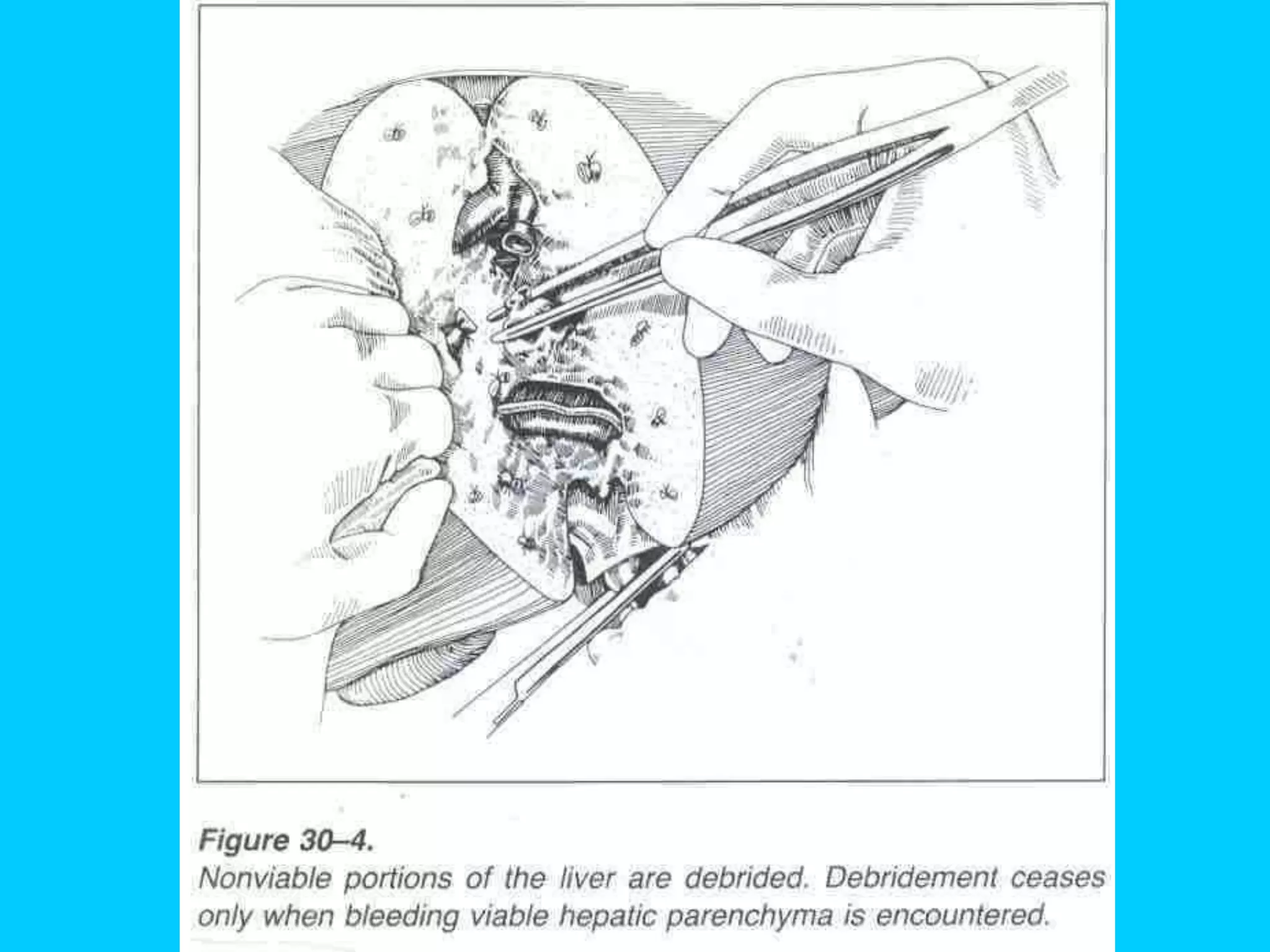
(d) Resectional debridement with
selective vascular ligation
(e) Resection
(f) Selective Hepatic Artery
Ligation
(g) Perihepatic packing
COMPLICATIONS & MORTALITY:
 Recurrent bleeding
 Hematobilia
 Perihepatic abscess
 Billiary Fistula
 Intrahepatic Haematoma
 Pulmonary Complications
 Coagulopathy
 Hypoglycemia
INCIDENCE
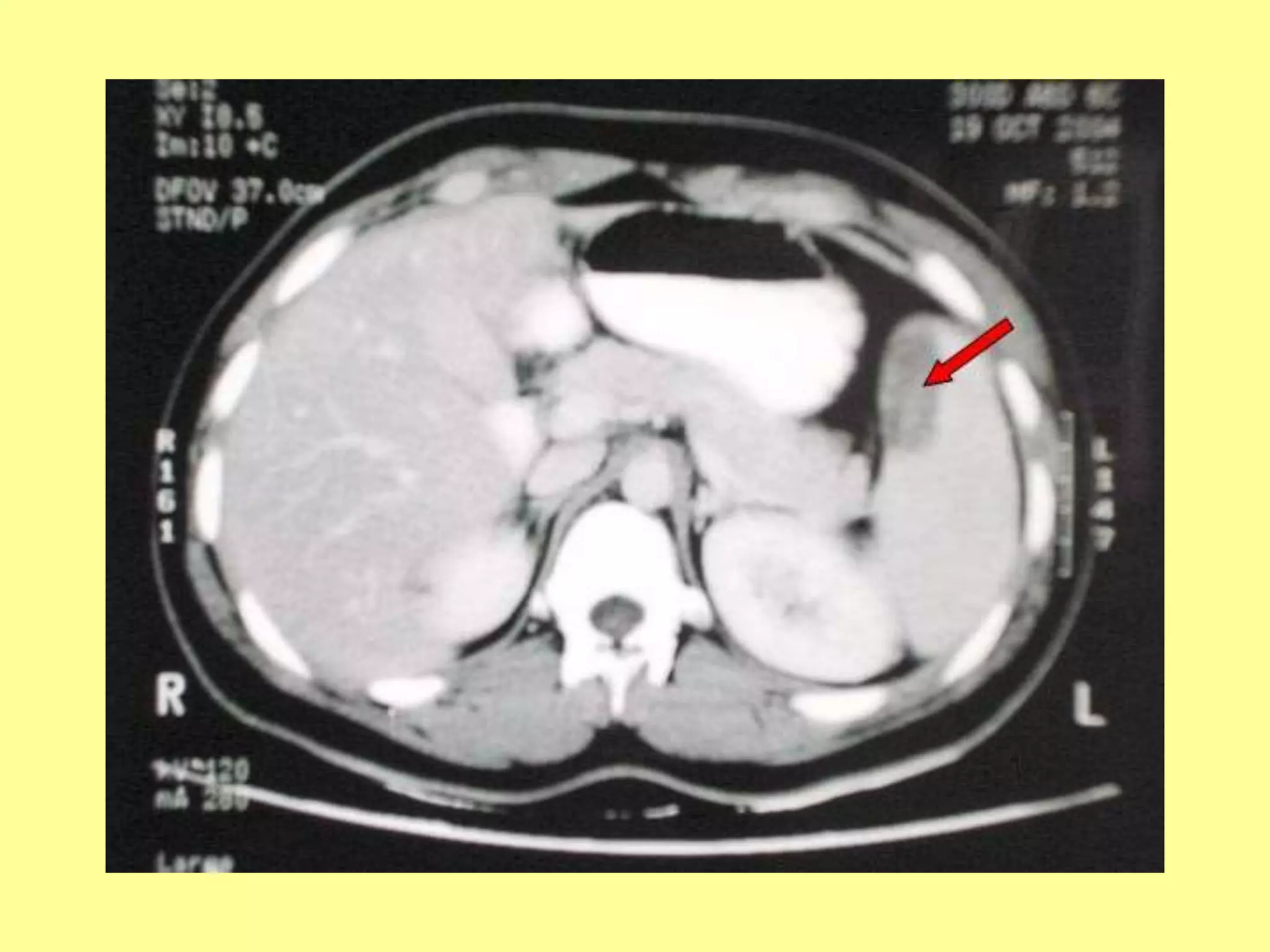
 The spleen remains the most
commonly injured organ in
patients who have suffered blunt
abdominal trauma and is
involved frequently in
penetrating wounds of the left
lower chest and upper abdomen.
Management of the injured
spleen has changed radically
over the pastdecade.
Now recognized as an important
immunologic factory as well as
reticuloenlothelial filter.
Although the risk of over
whelming postsplenctomy sepsis
(OPSS) is greatest in child less
than 2 yrs recognition of OPSS
has stimulated efforts to
(Conserve spleen) by
splenorrhaphy.
MECHANISM OF INJURY
 The spleen is commonly injured in
patients with blunt abdominal
trauma because of its mobility.
Most civilian stab wounds and
gunshot wounds cause simple
lacerations or through and through
injuries.
 It is of interest 2% of patient who
are undergoing surgery LUQ of the
abdomen can injured the spleen
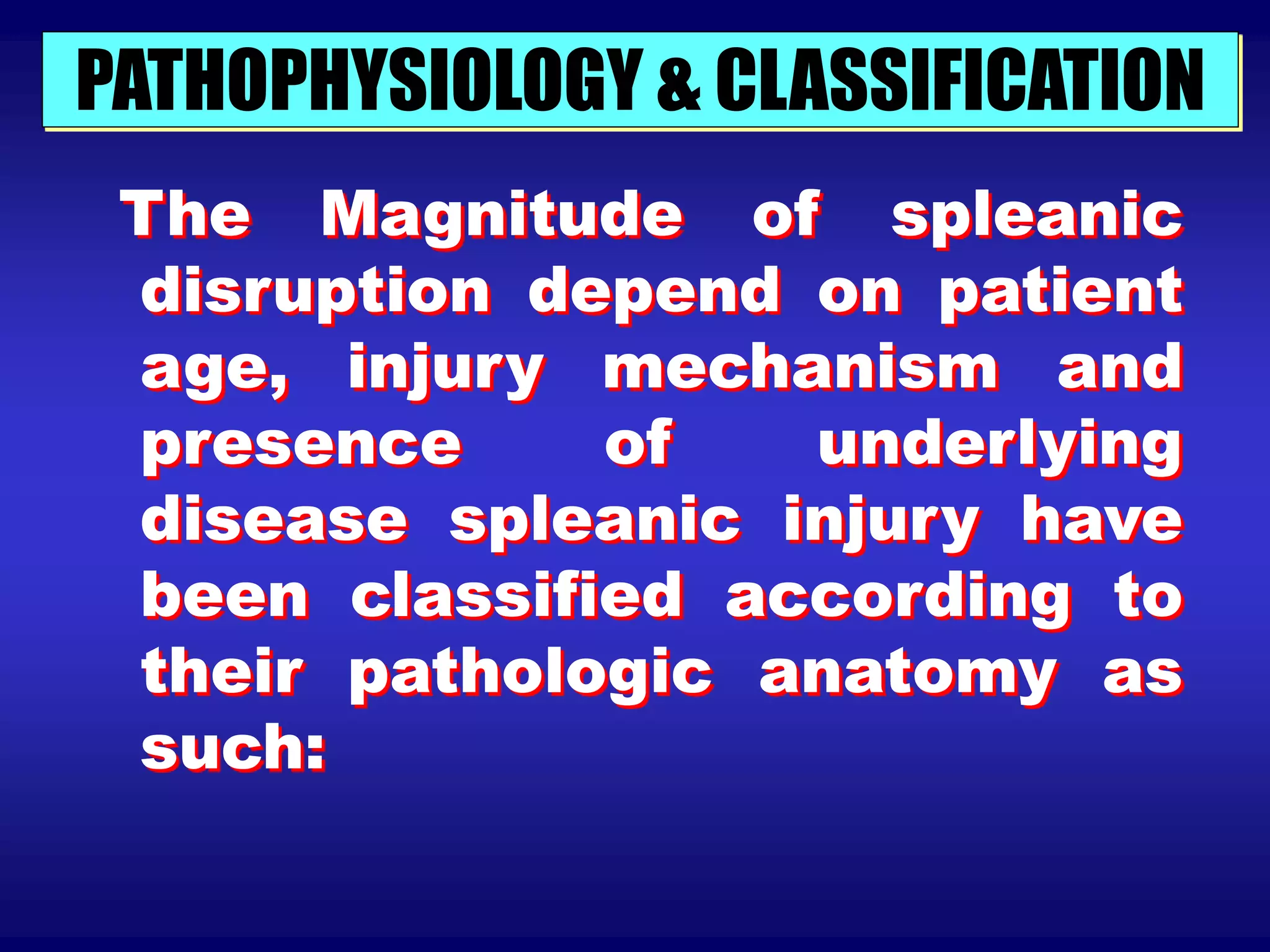
PATHOPHYSIOLOGY & CLASSIFICATION
The Magnitude of spleanic
disruption depend on patient
age, injury mechanism and
presence of underlying
disease spleanic injury have
been classified according to
their pathologic anatomy as
such:
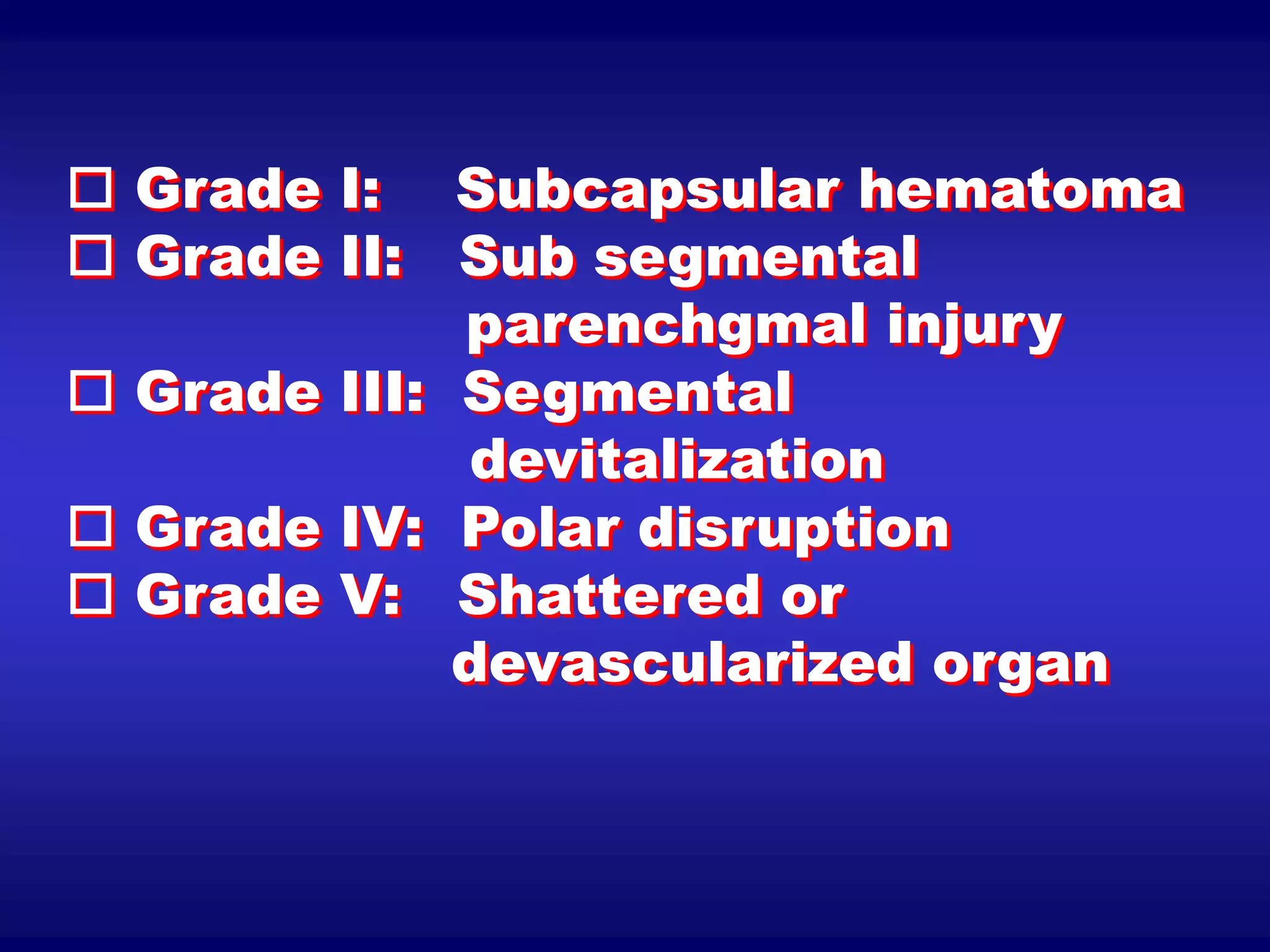
 Grade I: Subcapsular hematoma
 Grade II: Sub segmental
parenchgmal injury
 Grade III: Segmental
devitalization
 Grade IV: Polar disruption
 Grade V: Shattered or
devascularized organ
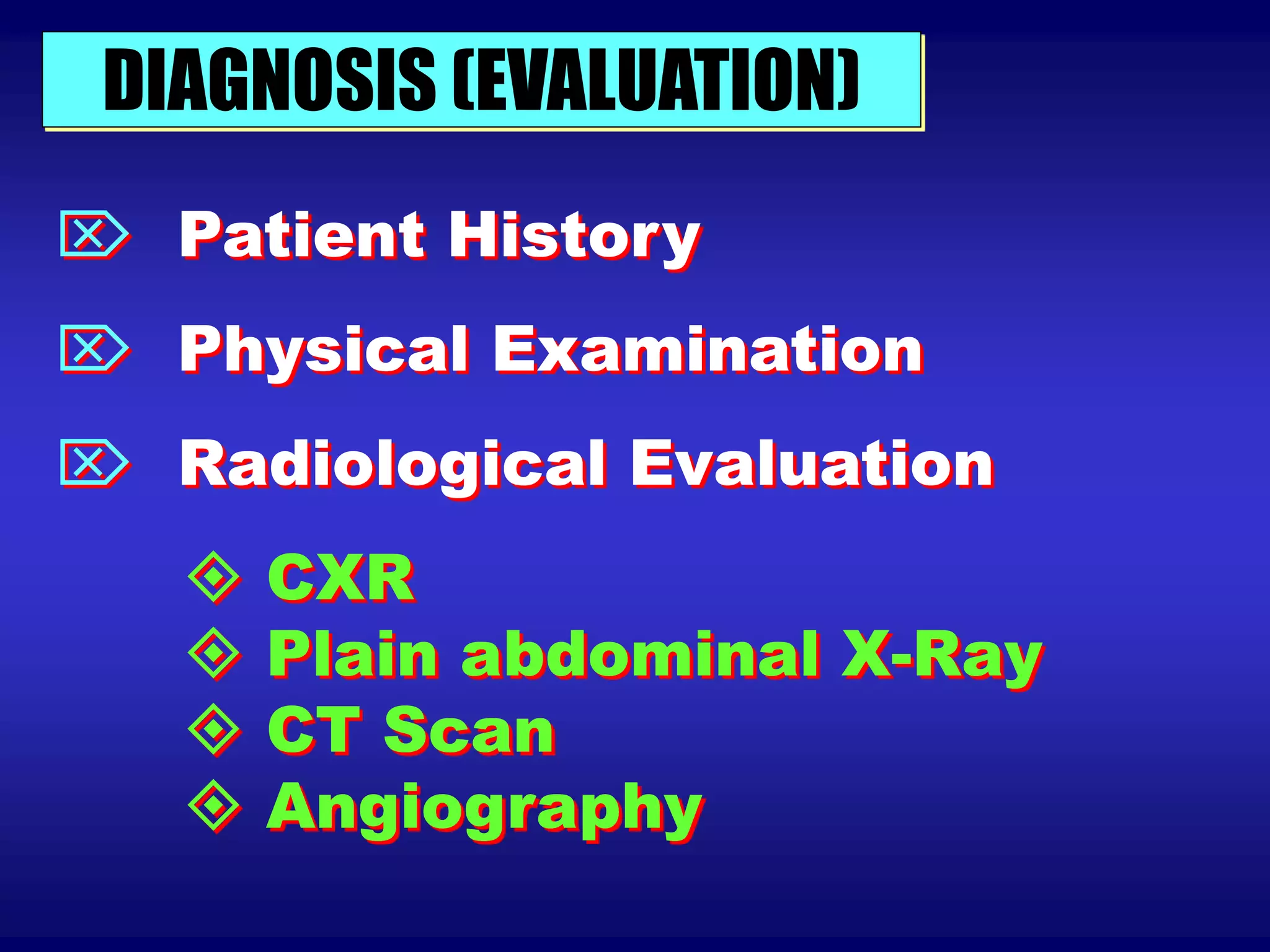
DIAGNOSIS (EVALUATION)
 Patient History
 Physical Examination
 Radiological Evaluation
 CXR
 Plain abdominal X-Ray
 CT Scan
 Angiography
TREATMENT:
 Initial Management
(Resuscitation) ABCDE
 Non operative approach:
 Widely practiced in pediatric trauma
the criteria for nonoperative approach
 Haemodynamically stable
children / adult
 Those patient without peritoneal
finding at anytime
 Those who did not require greater
than two unit of blood
 Contra indication for splenic
salvage:
 The patient has protracted
hypotension
 Undue delay is anticipated in
attempting repair the spleen
 The patient has other severe
injury
 Operative approach:
 Decision to perform
splenctomy or splenorraphy is
usually made after assessment
& grading the splenic injury
Postsplectomy and
splenorraphy complications:
 Early
 Bleeding
 Acute gastric distention
 Gastric necrosis
 Recurrent splenic bed
bleeding
 Pancreatits
 Subpherinic abscess
 Late Complications:
 Thrombocytosis
 OPSS (1 – 6 Week)
 DVT
2 - ABDOMINAL TRAUMA.ppt

2 - ABDOMINAL TRAUMA.ppt

  • 2.
    ABDOMINAL TRAUMA By Dr.Saleh M.Al-Salamah B.Sc, MBBS, FRCS Associate Professor of Surgery General & Laparoscopic Surgeon College of Medicine King Saud University Riyadh K.S.A
  • 4.
     Objectives  Typesof abdominal Trauma  Anatomical regions of the abdomen  Hospital Care and diagnosis (Evaluation of patient with blunt / Penetarating Trauma)  Specific organs trauma
  • 5.
    Upon completion ofthis topic the student will be able to identify the differences in patterns of abdominal trauma based on mechanism. Specifically the student will be able to: OBJECTIVES:
  • 6.
     Describe theanatomical regions of the abdomen.  Discuss the difference in injury pattern between blunt and penetrating trauma.
  • 7.
     Identify thesigns suggesting retroperitoneal, intraperitoneal or pelvic injuries.  Outline the diagnostic & therapeutic procedures specific to abdominal trauma.
  • 8.
     The majorityof abdominal injuries are due to blunt abdominal trauma secondary to high speed automobile accidents. The failure to manage the abdominal injuries accounts for majority of preventable death following multiple injuries.
  • 9.
     The primarymanagement of abdominal trauma is determination that an intra abdominal injury EXISTS and operative intervention is required.
  • 10.
     Types ofthe abdominal trauma. (a) Blunt abdominal trauma. (b) Penetrating abdominal trauma.
  • 11.
    The recognition ofthe mechanism of the injury weather is penetrating or non- penetrating trauma is a greatest importance for treatment and diagnosis and workup therapy. The liver, spleen and kidneys commonly involved in the blunt abdominal injuries.
  • 12.
     Anatomical regionsof the abdomen: (a) Peritoneum.  Intrathoracic abdomen  True abdomen (b) Retroperitoneum abdomen (c) Pelvic abdomen.
  • 13.
     Hospital Careand Diagnosis (Evaluation of patient with Blunt / Penetrating Trauma)  Initial Management:
  • 14.
     The resuscitation& Management priorities of patient with major abdominal trauma are. The (ABCDE) of EMERGENCY resuscitations airway, breathing and circulation with hemorrhage control should be initiated.  NGT & Folly's Catheter.
  • 15.
     HISTORY: (a) Bluntabdominal trauma (b) Penetrating abdominal trauma.  PHYSICAL EXAMINATION:  General physical Examination  Examination of the abdomen.
  • 16.
     Inspection  Palpation Percussion  Auscultation  Rectal Examination  Vaginal Examination
  • 17.
     DIAGNOSTIC PROCEDURES (Investigations) (A)Blood Tests (B) Radiological Studies (Plain abdominal X-ray, CXR) (C) Peritoneal lavage (DPL) (D) USS abdomen (E) CT abdomen (F) Peritoneoscopy (Diagnostic laproscopy)
  • 18.
     ESTABLISHING PRIORITIES ANDINDICATIONS FOR SURGERY: (The indications for laparotomy) (A) Signs of peritoneal injury (B) Unexplained shock (C) Evisceration of viscus (D) Positive diagnostic (DPL) (E) Determination of finding during routine follow up
  • 19.
     Specific OrgansTrauma:  Liver  Spleen
  • 22.
    INCIDENCE  The liveris the largest organ in the abdominal cavity and continues to be the most commonly injured organs in all patients with abdominal Trauma (Blunt/Penetrating) (35- 45%) in blunt abdominal Trauma 40% in stab wound 30% in gunshot wounds to abdomen.
  • 23.
    MECHANISM OF INJURY Hepaticinjuries result from direct blows, compression between the lower ribs on right side and the spine or shearing at fixed points secondary to deceleration. Any penetrating gunshot, stab or shotgun wound below the right nipple on right upper quadrant of the abdomen is also likely to cause a hepatic injury.
  • 24.
    DIAGNOSIS (LIVER TRAUMA) CLINICAL MANIFESTATIONS  Diagnosis of hepatic injury is often made at laparotomy in patients presenting with penetrating injuries requiring immediate Surgery  Or those sustaining blunt Trauma who remain in shock or present with abdominal rigidity.
  • 25.
     INVESTIGATIONS: Adjuvant diagnostictests are necessary in the decision making process to determine whether or not laparotomy is necessary:
  • 26.
    (a) Diagnostic peritoneal lavage(DPL) has been extremely reliable 98% in determining the presence of blood in the peritoneal cavity once (positive) patient should be taken to the Operating Room without delay.
  • 27.
    (b) CT.Scan abdomen usedfor diagnosing intraperitoneal injuries in stable patients after blunt trauma.
  • 29.
    Patients sustaining significant Rightlower thoracic, Right upper quadrant and Epigastric blunt trauma, should be suspected of having suffered a hepatic injury, clinical assessment and abdominal paracentesis SUMMARY Cont ….
  • 30.
    & DPL aremost important factors in determining operative intervention. CT Scanning may be useful adjuvant in the haemodynamically stable blunt trauma patient.
  • 31.
     TREATMENT:  Whenpatient arrived to ER the initial management of the patient should be uniform regardless of organs system injuries. Resuscitation is performed (ABCDE) in the standard fashion.
  • 32.
     Non operativeapproach: The hepatic injury diagnosed by CT in stable patient is now non operative approach practiced in many centers. CT. Criteria for nonoperative management include the following:
  • 33.
     Simple hepaticlaceration Or intrahepatic hematoma  No evidence of active bleeding  Intra peritoneal blood loss >250 ml  Absence of other Intraperitoneal injuries required surgery
  • 34.
     OPERATIVE APPROACH Persistent hypotension, despite adequate volume replacement, suggests ongoing blood loss and mandates immediate operative intervention.  Injury classification: This classification based on operative findings and management. So hepatic injury classified as follows:
  • 35.
     Grade I: Simpleinjuries – non bleeding  Grade II: Simple injuries managed by superficial suture alone  Grade III: Major intraparenchymal injury with active bleeding but not requiring inflow occlusion (Pringle maneuver) to control haemorrhage
  • 36.
     Grade IV: Extensiveintraparenchymal injury with major active bleeding requiring inflow occlusion for hemostatic control  Grade V: Juxtahepatic venous injury (injuries to retrohepatic cava or main hepatic veins)
  • 37.
    All patients undergoing laparotomyfor trauma should be explored through midline incision. OPERATIVE MANAGEMENT:
  • 38.
    Grade-I&II: Simple injuriescan be management by any one of variety of methods (simple suture, electrocautery or Tropical Hemostatic Agents) This type of injury like Liver Bx. does not require drainage. MANAGEMENT OF SPECIFIC LIVER INJURIES:
  • 39.
    Grade III: Majorintraparenchymal injuries with active bleeding can best be managed by Finger Fracturing the hepatic parenchyma and ligating or repairing lacerated blood vessels & bile ducts under direct vision.  GradeIV: Extensive intraparenchynal injuries with major rapid blood loss require occlusion of portal trial to control haemorrhage.
  • 40.
    SUMMARY  Simple techniquesincludes drainage only of non-bleeding injuries, application of fibrin glue, and sutures hepatorrhaphy and , Application of Surgical (I & II).  Advanced Techniques of Repair (III & IV) all performed with Pringle Maneuver in place.
  • 41.
    (a) Extensive hepatorrhaply (b)Hepatotomy with selective vascular ligation (c) Omertal Pack (d) Resectional debridement with selective vascular ligation (e) Resection (f) Selective Hepatic Artery Ligation (g) Perihepatic packing
  • 44.
    COMPLICATIONS & MORTALITY: Recurrent bleeding  Hematobilia  Perihepatic abscess  Billiary Fistula  Intrahepatic Haematoma  Pulmonary Complications  Coagulopathy  Hypoglycemia
  • 46.
    INCIDENCE  The spleenremains the most commonly injured organ in patients who have suffered blunt abdominal trauma and is involved frequently in penetrating wounds of the left lower chest and upper abdomen. Management of the injured spleen has changed radically over the pastdecade.
  • 47.
    Now recognized asan important immunologic factory as well as reticuloenlothelial filter. Although the risk of over whelming postsplenctomy sepsis (OPSS) is greatest in child less than 2 yrs recognition of OPSS has stimulated efforts to (Conserve spleen) by splenorrhaphy.
  • 48.
    MECHANISM OF INJURY The spleen is commonly injured in patients with blunt abdominal trauma because of its mobility. Most civilian stab wounds and gunshot wounds cause simple lacerations or through and through injuries.  It is of interest 2% of patient who are undergoing surgery LUQ of the abdomen can injured the spleen
  • 49.
    PATHOPHYSIOLOGY & CLASSIFICATION TheMagnitude of spleanic disruption depend on patient age, injury mechanism and presence of underlying disease spleanic injury have been classified according to their pathologic anatomy as such:
  • 50.
     Grade I:Subcapsular hematoma  Grade II: Sub segmental parenchgmal injury  Grade III: Segmental devitalization  Grade IV: Polar disruption  Grade V: Shattered or devascularized organ
  • 51.
    DIAGNOSIS (EVALUATION)  PatientHistory  Physical Examination  Radiological Evaluation  CXR  Plain abdominal X-Ray  CT Scan  Angiography
  • 54.
    TREATMENT:  Initial Management (Resuscitation)ABCDE  Non operative approach:  Widely practiced in pediatric trauma the criteria for nonoperative approach  Haemodynamically stable children / adult  Those patient without peritoneal finding at anytime  Those who did not require greater than two unit of blood
  • 55.
     Contra indicationfor splenic salvage:  The patient has protracted hypotension  Undue delay is anticipated in attempting repair the spleen  The patient has other severe injury
  • 56.
     Operative approach: Decision to perform splenctomy or splenorraphy is usually made after assessment & grading the splenic injury
  • 57.
    Postsplectomy and splenorraphy complications: Early  Bleeding  Acute gastric distention  Gastric necrosis  Recurrent splenic bed bleeding  Pancreatits  Subpherinic abscess
  • 58.
     Late Complications: Thrombocytosis  OPSS (1 – 6 Week)  DVT