Submitted by-
Ashvinth Kumaar K
M.Tech 1st Year
 Introduction
 Types of lithography
 Steps used in lithography
 Lithography Techniques
 Lithography method was first invented in1978 by
German author and actor Alois Senefelder.
 Lithography comes from the greek word ‘lithos’ means
“stone” , ‘graphein’ means “to write”.
 Lithography is the process of transferring patterns of
geometric shapes in a mask to a thin layer of radiation-
sensitive material covering the surface of a
semiconductor.
 Electron beam lithography
 Ion beam lithography
 Ion track lithography
 X-ray lithography
 Nano imprint lithography
 Extreme ultraviolet lithography
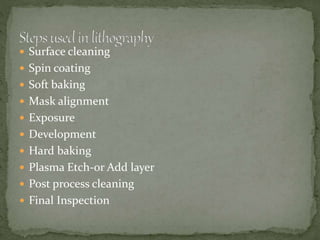
 Surface cleaning
 Spin coating
 Soft baking
 Mask alignment
 Exposure
 Development
 Hard baking
 Plasma Etch-or Add layer
 Post process cleaning
 Final Inspection
 Beam Pen Lithography
 Nanomotor Lithography
 Coaxial Lithography
 Atomic Layer Deposition Lithography
 Photon Upconversion Lithography
 Oxygen Inhibition Lithography
 Meniscus Mask Lithography
 Marker Pen Lithography
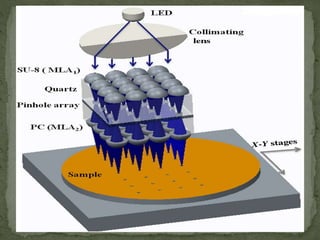
 Beam pen lithography is a low cost and high
throughput soft lithographic technique that doesn’t
need sophisticated clean rooms for nano patterning
 It combines the principles of polymer-pen lithography
and near-field scanning optical microscopy to create
large scale patterning with feature sizes above and
below the diffraction limit of light
 It combines the principles of polymer-pen lithography
and near-field scanning optical microscopy to create
large scale patterning with feature sizes above and
below the diffraction limit of light.
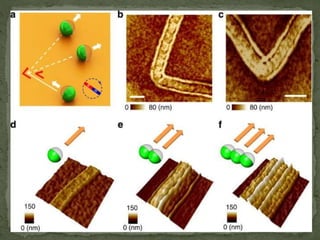
 This method translates the movements of chemically
powered, self propelled and magnetically controlled
nanomotors or nanorobots into nano scale structural
features by the use of light focusing and light blocking
characteristics of the nano motors
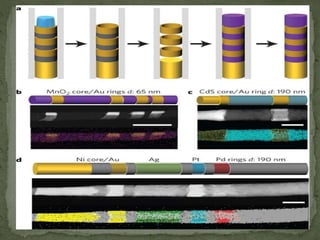
 Tuncay Ozel developed a high-throughput coaxial
lithography process to prepare coaxial nanowires
composed of combinations of metals, metal oxides,
metal chalcogenides and conjugated polymers with
sub 10 nm control over structural parameters.
 In this technique, gold was electrochemically
deposited into the nanopores of an aluminium oxide
template, followed by deposition and shrinking of
polymer in vacuum.
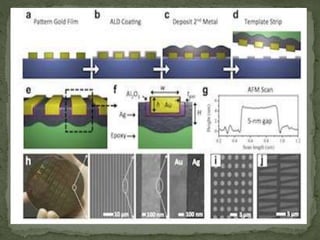
 It is developed to control process defects with
minimum structure damage in a lithographic process.
 Banquiu Wu demonstrated this method by combining
the aspects of atomic layer deposition and lithographic
processes.
 Atomic layer deposition (ALD) is a method that
allows for the deposition of thin films
with atomic level control of the thickness and an
excellent conformality on 3-dimensional surfaces.
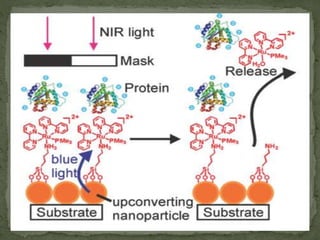
 This is a modified photolithographic technique
developed mainly to pattern biomaterials using near-
infrared light.
 Proteins and an upconverting‐nanoparticle‐decorated
substrate are linked via blue‐light‐cleavable Ru
complexes
 The substrate is irradiated using near‐infrared light
with a photomask. In the exposed areas, upconverting
nanoparticles convert the near‐infrared light into blue
light, which induces cleavage of the Ru complexes and
release of the proteins.
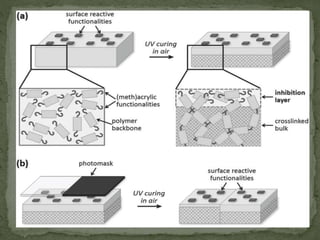
. Oxygen inhibition lithography was developed by Vitale, A
and
. It is a modified photolithographic technique that makes use
of oxygen inhibition which is often treated as a problem in
photo-polymerization and photo-curing, during ultra-
violet curing in air to obtain multi-surfaces.
. The oxygen inhibition of UV curable polymers is
exploited in novel technology for the fabrication of
patterns and closed devices
. Multipolymeric and multifunctional structures are also
prepared: adequately choosing the material of each layer, a
set of different properties is arranged in the same device
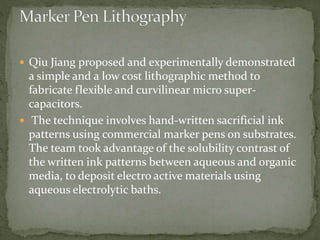
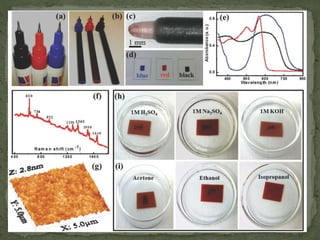
 Qiu Jiang proposed and experimentally demonstrated
a simple and a low cost lithographic method to
fabricate flexible and curvilinear micro super-
capacitors.
 The technique involves hand-written sacrificial ink
patterns using commercial marker pens on substrates.
The team took advantage of the solubility contrast of
the written ink patterns between aqueous and organic
media, to deposit electro active materials using
aqueous electrolytic baths.
Lithographic techniques

Lithographic techniques

  • 1.
  • 2.
     Introduction  Typesof lithography  Steps used in lithography  Lithography Techniques
  • 3.
     Lithography methodwas first invented in1978 by German author and actor Alois Senefelder.  Lithography comes from the greek word ‘lithos’ means “stone” , ‘graphein’ means “to write”.  Lithography is the process of transferring patterns of geometric shapes in a mask to a thin layer of radiation- sensitive material covering the surface of a semiconductor.
  • 4.
     Electron beamlithography  Ion beam lithography  Ion track lithography  X-ray lithography  Nano imprint lithography  Extreme ultraviolet lithography
  • 5.
     Surface cleaning Spin coating  Soft baking  Mask alignment  Exposure  Development  Hard baking  Plasma Etch-or Add layer  Post process cleaning  Final Inspection
  • 6.
     Beam PenLithography  Nanomotor Lithography  Coaxial Lithography  Atomic Layer Deposition Lithography  Photon Upconversion Lithography  Oxygen Inhibition Lithography  Meniscus Mask Lithography  Marker Pen Lithography
  • 7.
     Beam penlithography is a low cost and high throughput soft lithographic technique that doesn’t need sophisticated clean rooms for nano patterning  It combines the principles of polymer-pen lithography and near-field scanning optical microscopy to create large scale patterning with feature sizes above and below the diffraction limit of light
  • 9.
     It combinesthe principles of polymer-pen lithography and near-field scanning optical microscopy to create large scale patterning with feature sizes above and below the diffraction limit of light.  This method translates the movements of chemically powered, self propelled and magnetically controlled nanomotors or nanorobots into nano scale structural features by the use of light focusing and light blocking characteristics of the nano motors
  • 11.
     Tuncay Ozeldeveloped a high-throughput coaxial lithography process to prepare coaxial nanowires composed of combinations of metals, metal oxides, metal chalcogenides and conjugated polymers with sub 10 nm control over structural parameters.  In this technique, gold was electrochemically deposited into the nanopores of an aluminium oxide template, followed by deposition and shrinking of polymer in vacuum.
  • 13.
     It isdeveloped to control process defects with minimum structure damage in a lithographic process.  Banquiu Wu demonstrated this method by combining the aspects of atomic layer deposition and lithographic processes.  Atomic layer deposition (ALD) is a method that allows for the deposition of thin films with atomic level control of the thickness and an excellent conformality on 3-dimensional surfaces.
  • 15.
     This isa modified photolithographic technique developed mainly to pattern biomaterials using near- infrared light.  Proteins and an upconverting‐nanoparticle‐decorated substrate are linked via blue‐light‐cleavable Ru complexes  The substrate is irradiated using near‐infrared light with a photomask. In the exposed areas, upconverting nanoparticles convert the near‐infrared light into blue light, which induces cleavage of the Ru complexes and release of the proteins.
  • 17.
    . Oxygen inhibitionlithography was developed by Vitale, A and . It is a modified photolithographic technique that makes use of oxygen inhibition which is often treated as a problem in photo-polymerization and photo-curing, during ultra- violet curing in air to obtain multi-surfaces. . The oxygen inhibition of UV curable polymers is exploited in novel technology for the fabrication of patterns and closed devices . Multipolymeric and multifunctional structures are also prepared: adequately choosing the material of each layer, a set of different properties is arranged in the same device
  • 19.
     Qiu Jiangproposed and experimentally demonstrated a simple and a low cost lithographic method to fabricate flexible and curvilinear micro super- capacitors.  The technique involves hand-written sacrificial ink patterns using commercial marker pens on substrates. The team took advantage of the solubility contrast of the written ink patterns between aqueous and organic media, to deposit electro active materials using aqueous electrolytic baths.