LIQUIDITY
             V S.


                                 Dr. NEERAJ CHITKARA
  PROFITABILITY
Dr. Neeraj Chitkara
Assistant Professor
Samalkha Group of Instituions
Email- neer.chitkara@gmail.com
FINANCING OF WORKING CAPITAL

 Long Term Financing


                               Dr. NEERAJ CHITKARA
 Short Term Financing

 Spontaneous Financing
APPROACHES REGARDING FINANCING


                                 Dr. NEERAJ CHITKARA
 Heading Approach
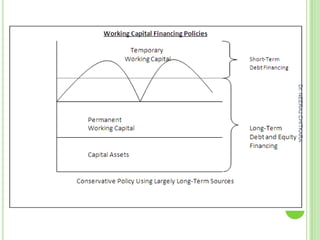
 Conservative Approach

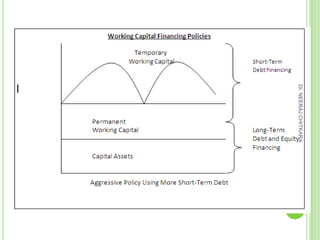
 Aggressive Approach
Dr. NEERAJ CHITKARA
Dr. NEERAJ CHITKARA
SHORT-TERM VS. LONG-TERM FINANCING

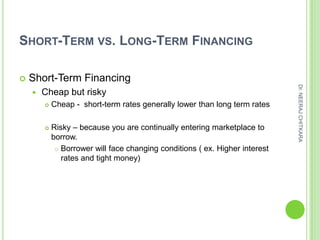
   Short-Term Financing


                                                                              Dr. NEERAJ CHITKARA
       Cheap but risky
           Cheap - short-term rates generally lower than long term rates

           Risky – because you are continually entering marketplace to
            borrow.
              Borrower will face changing conditions ( ex. Higher interest

               rates and tight money)
SHORT-TERM VS. LONG-TERM FINANCING


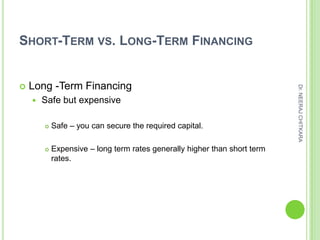
   Long -Term Financing


                                                                           Dr. NEERAJ CHITKARA
       Safe but expensive

           Safe – you can secure the required capital.

           Expensive – long term rates generally higher than short term
            rates.
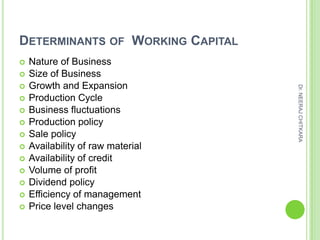
DETERMINANTS OF WORKING CAPITAL
   Nature of Business
   Size of Business
   Growth and Expansion


                                   Dr. NEERAJ CHITKARA
   Production Cycle
   Business fluctuations
   Production policy
   Sale policy
   Availability of raw material
   Availability of credit
   Volume of profit
   Dividend policy
   Efficiency of management
   Price level changes
IMPORTANCE OF WORKING CAPITAL

 Maximizing shareholders wealth
 Profit maximization


                                   Dr. NEERAJ CHITKARA
 Behavioral Objectives

 Divergent objectives

 Agency problem

 Ethical issues

 Social responsibilities.
WORKING CAPITAL MANAGEMENT
WCM is the process of planning and controlling the
 level and mix of the current assets of the firm as


                                                           Dr. NEERAJ CHITKARA
 well as financing these assets. Specially wcm
 requires financial manager to decide that what
 quantities of cash , accounts receivables and
 inventories etc. the firm must hold at any point of
 time.

The goal of WCM is to manage the current assets
  and current liabilities of the firm in such a way that
  satisfactory level of working capital is maintained.

Liquidity vs. Profitability

  • 1.
    LIQUIDITY V S. Dr. NEERAJ CHITKARA PROFITABILITY Dr. Neeraj Chitkara Assistant Professor Samalkha Group of Instituions Email- neer.chitkara@gmail.com
  • 2.
    FINANCING OF WORKINGCAPITAL  Long Term Financing Dr. NEERAJ CHITKARA  Short Term Financing  Spontaneous Financing
  • 3.
    APPROACHES REGARDING FINANCING Dr. NEERAJ CHITKARA  Heading Approach  Conservative Approach  Aggressive Approach
  • 4.
  • 5.
  • 6.
    SHORT-TERM VS. LONG-TERMFINANCING  Short-Term Financing Dr. NEERAJ CHITKARA  Cheap but risky  Cheap - short-term rates generally lower than long term rates  Risky – because you are continually entering marketplace to borrow.  Borrower will face changing conditions ( ex. Higher interest rates and tight money)
  • 7.
    SHORT-TERM VS. LONG-TERMFINANCING  Long -Term Financing Dr. NEERAJ CHITKARA  Safe but expensive  Safe – you can secure the required capital.  Expensive – long term rates generally higher than short term rates.
  • 8.
    DETERMINANTS OF WORKINGCAPITAL  Nature of Business  Size of Business  Growth and Expansion Dr. NEERAJ CHITKARA  Production Cycle  Business fluctuations  Production policy  Sale policy  Availability of raw material  Availability of credit  Volume of profit  Dividend policy  Efficiency of management  Price level changes
  • 9.
    IMPORTANCE OF WORKINGCAPITAL  Maximizing shareholders wealth  Profit maximization Dr. NEERAJ CHITKARA  Behavioral Objectives  Divergent objectives  Agency problem  Ethical issues  Social responsibilities.
  • 10.
    WORKING CAPITAL MANAGEMENT WCMis the process of planning and controlling the level and mix of the current assets of the firm as Dr. NEERAJ CHITKARA well as financing these assets. Specially wcm requires financial manager to decide that what quantities of cash , accounts receivables and inventories etc. the firm must hold at any point of time. The goal of WCM is to manage the current assets and current liabilities of the firm in such a way that satisfactory level of working capital is maintained.