Lipinski’s rule of
Lipinski’s rule of
ve
ve
Lipinski's rule of five
Lipinski's rule of five also known as the Pfizer's rule of five
or simply the
Rule of five (RO5) is a rule of thumb to evaluate drug
likeness or determine if a chemical compound with a
certain pharmacological or biological activity has
properties that would make it a likely orally active drug
in humans. The rule was formulated by Christopher A.
Lipinski in 1997, based on the observation that most
medication drugs are relatively small and lipophilic
molecules [Lipinski et al. 1997, 2001  2004].
Lipinski’s rule states that, in general, an orally active drug has
no more than one violation of the following criteria:
● Not more than 5 hydrogen bond donors
(nitrogen or oxygen atoms with one or more hydrogen atoms)
● Not more than 10 hydrogen bond acceptors
(nitrogen or oxygen atoms)
● A molecular mass less than 500 daltons
● An octanol-water partition coefficient log P not greater than 5
How this rule benefits your project?
The rule describes molecular properties important for a
drug’s pharmacokinetics in the human body, including
their absorption, distribution, metabolism, and excretion (“ADME”).
However, the rule does not predict if a compound is
pharmacologically active.
This rule helps Pharmaceutics/Industrial Pharmacy students in
proper selection of the drug and knowing whether the drug is
suitable for oral formulations.
For Medicinal chemistry students involved in drug designing,
CADD, understanding this rule will help you a lot in designing
suitable homologues of rugs and fine tuning your drug with suitable
modifications
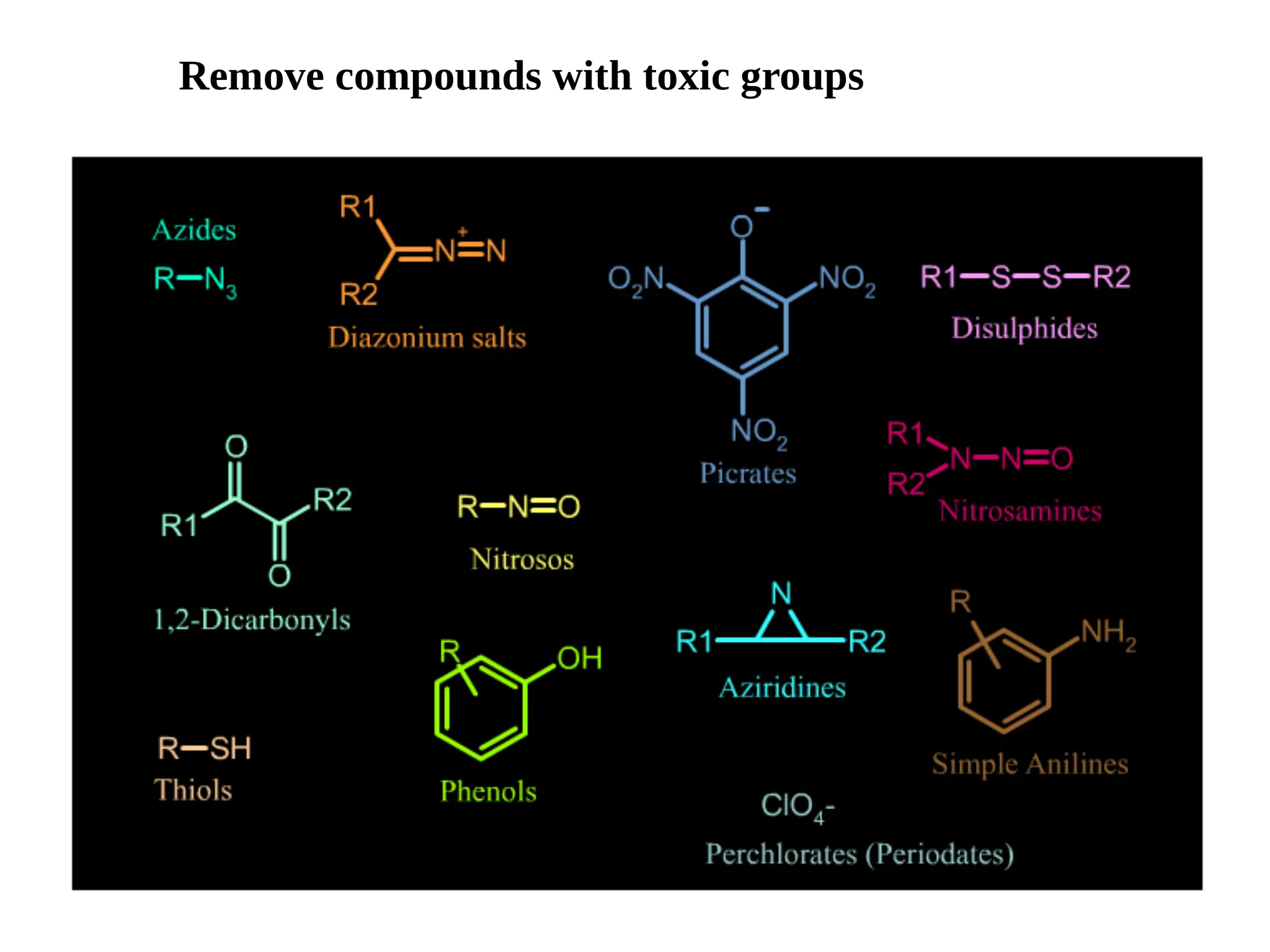
Remove compounds with toxic groups
O
O
HO
CH3
O
O
CH3
O
O
O
O
H3
C
H3
C
O
O
HO
HN
O
H3
C
CH3
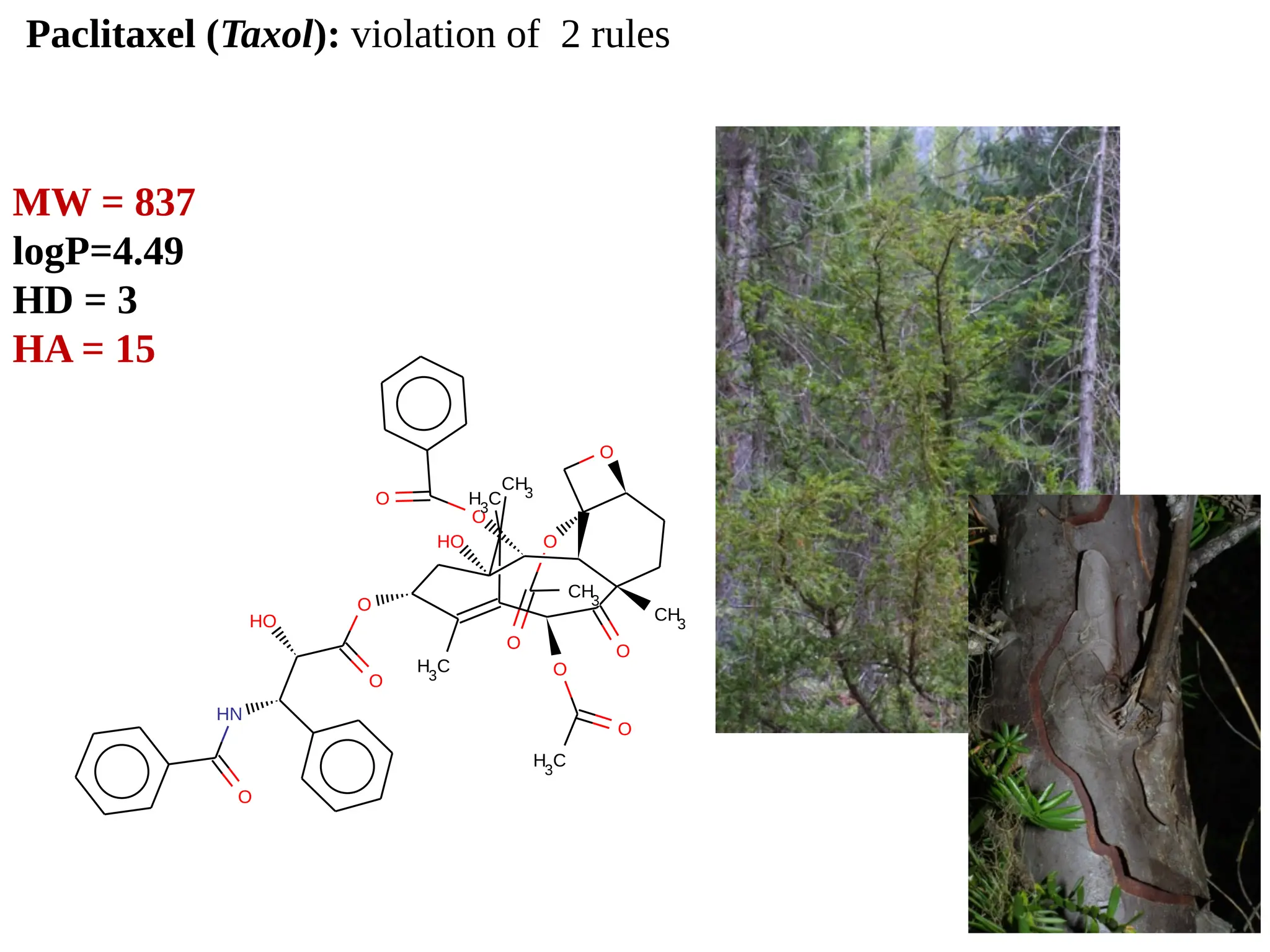
MW = 837
logP=4.49
HD = 3
HA = 15
Paclitaxel (Taxol): violation of 2 rules
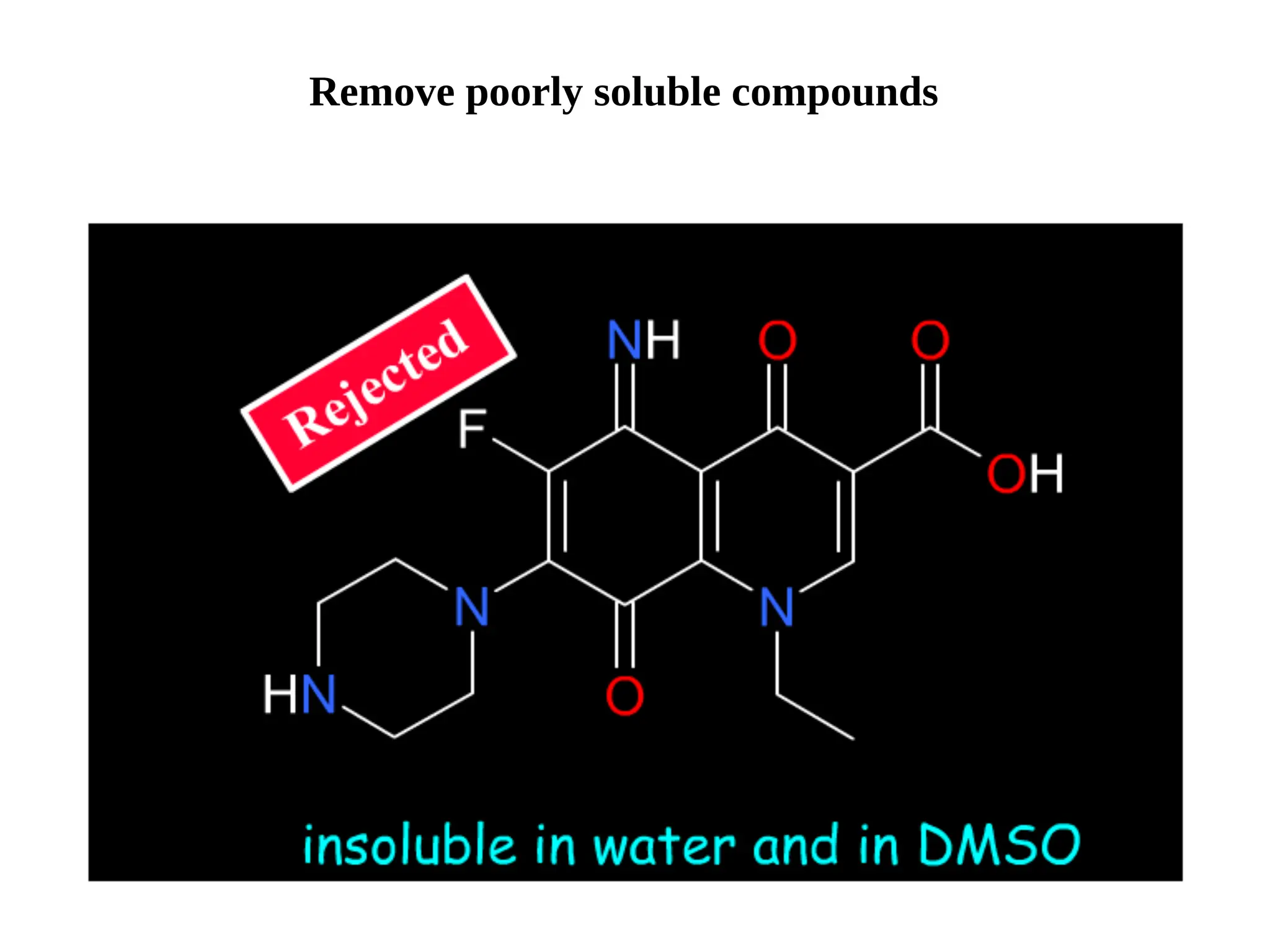
Remove poorly soluble compounds
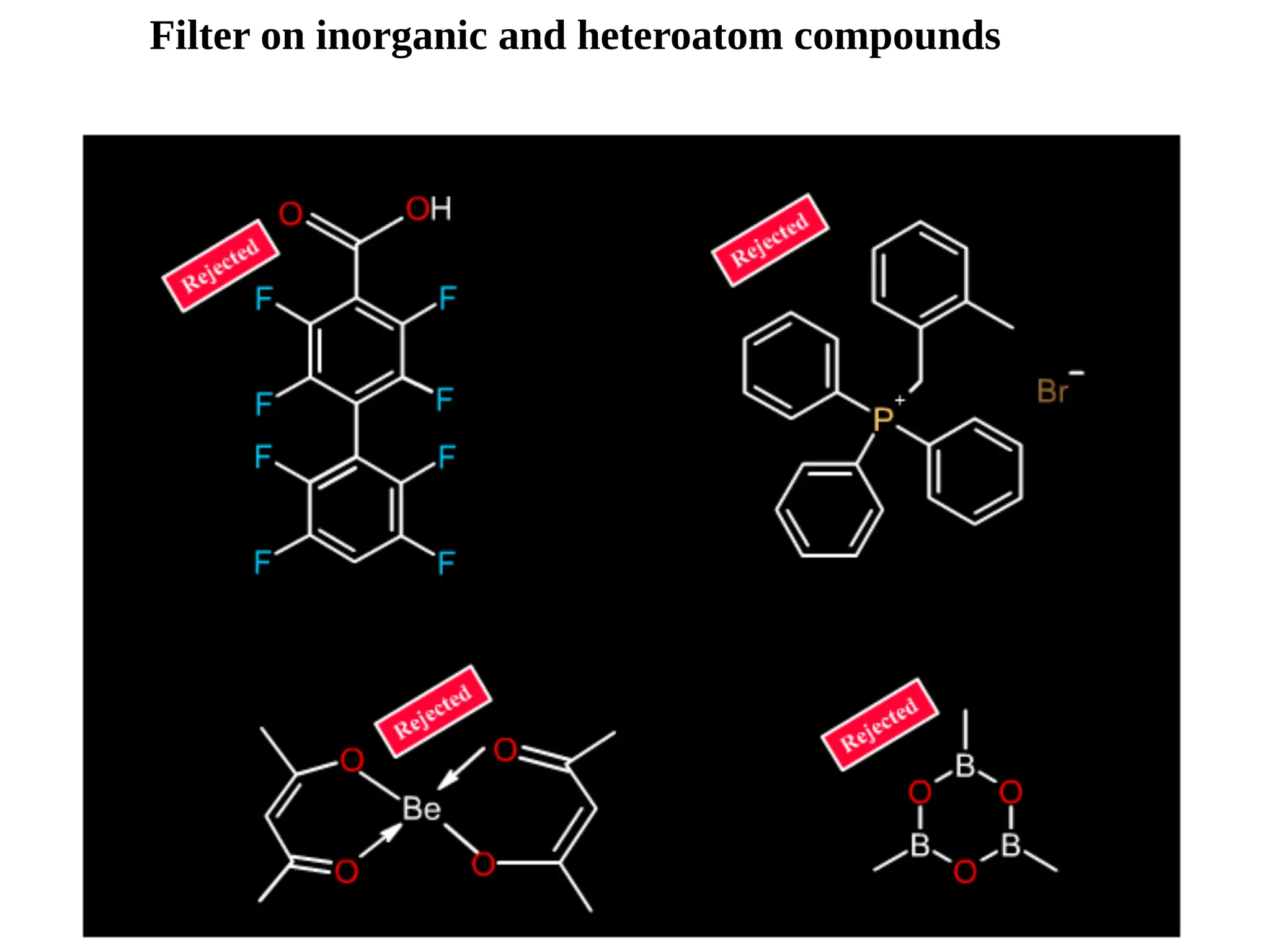
Filter on inorganic and heteroatom compounds
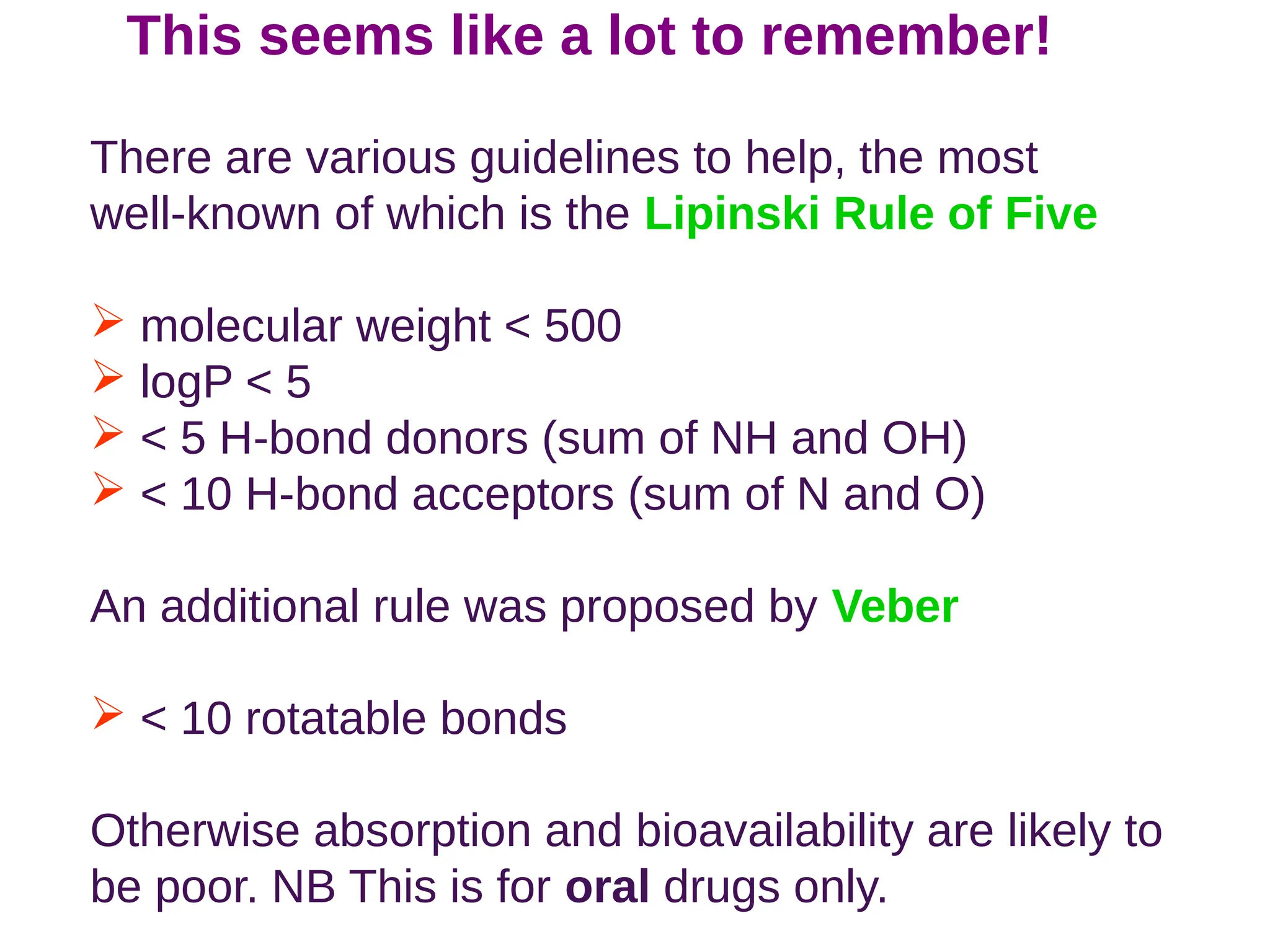
This seems like a lot to remember!
There are various guidelines to help, the most
well-known of which is the Lipinski Rule of Five
 molecular weight  500
 logP  5
  5 H-bond donors (sum of NH and OH)
  10 H-bond acceptors (sum of N and O)
An additional rule was proposed by Veber
  10 rotatable bonds
Otherwise absorption and bioavailability are likely to
be poor. NB This is for oral drugs only.

Lipinskis rules of five for bioavailability

  • 1.
  • 2.
    Lipinski's rule offive Lipinski's rule of five also known as the Pfizer's rule of five or simply the Rule of five (RO5) is a rule of thumb to evaluate drug likeness or determine if a chemical compound with a certain pharmacological or biological activity has properties that would make it a likely orally active drug in humans. The rule was formulated by Christopher A. Lipinski in 1997, based on the observation that most medication drugs are relatively small and lipophilic molecules [Lipinski et al. 1997, 2001 2004].
  • 3.
    Lipinski’s rule statesthat, in general, an orally active drug has no more than one violation of the following criteria: ● Not more than 5 hydrogen bond donors (nitrogen or oxygen atoms with one or more hydrogen atoms) ● Not more than 10 hydrogen bond acceptors (nitrogen or oxygen atoms) ● A molecular mass less than 500 daltons ● An octanol-water partition coefficient log P not greater than 5
  • 4.
    How this rulebenefits your project? The rule describes molecular properties important for a drug’s pharmacokinetics in the human body, including their absorption, distribution, metabolism, and excretion (“ADME”). However, the rule does not predict if a compound is pharmacologically active. This rule helps Pharmaceutics/Industrial Pharmacy students in proper selection of the drug and knowing whether the drug is suitable for oral formulations. For Medicinal chemistry students involved in drug designing, CADD, understanding this rule will help you a lot in designing suitable homologues of rugs and fine tuning your drug with suitable modifications
  • 5.
  • 6.
    O O HO CH3 O O CH3 O O O O H3 C H3 C O O HO HN O H3 C CH3 MW = 837 logP=4.49 HD= 3 HA = 15 Paclitaxel (Taxol): violation of 2 rules
  • 7.
  • 8.
    Filter on inorganicand heteroatom compounds
  • 9.
    This seems likea lot to remember! There are various guidelines to help, the most well-known of which is the Lipinski Rule of Five  molecular weight 500  logP 5  5 H-bond donors (sum of NH and OH)  10 H-bond acceptors (sum of N and O) An additional rule was proposed by Veber  10 rotatable bonds Otherwise absorption and bioavailability are likely to be poor. NB This is for oral drugs only.