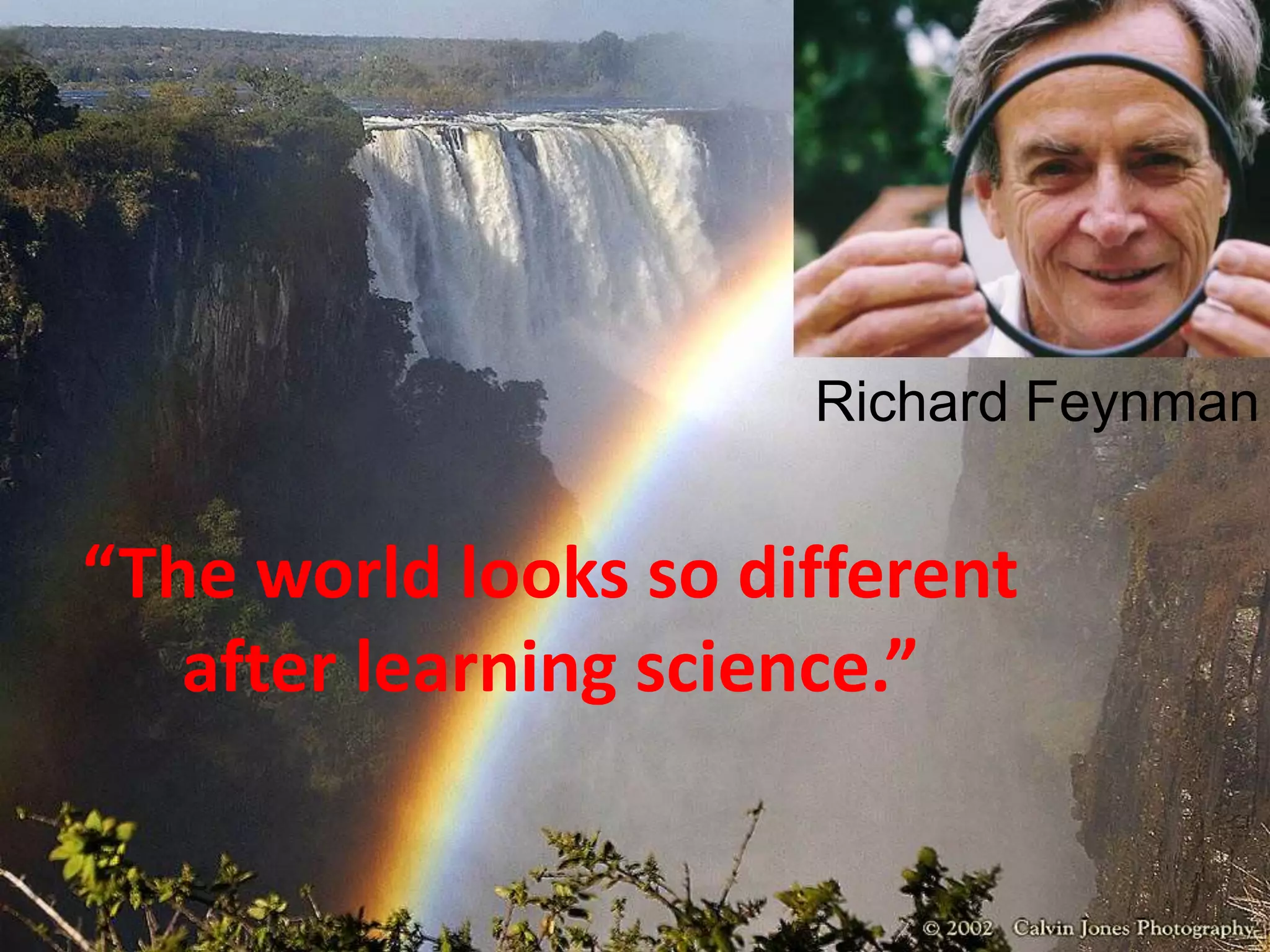
“The world looks so different
after learning science.”
Richard Feynman
Refraction of Light
Learning out comes
• By the of the lesson SS will be able to
• Use the materials and tools to investigate and
prove the concept of light refraction
• Identify the conditions of light refraction.
Necessary Review
• How does light travel?
Light travels in straight lines.
• Through what substances can light travel?
Transparent or translucent objects only.
• What’s the max speed of light?
300000Km/sec
• Through all mediums?
No, through vacuum or air only.
• What happens to the speed of light when it
moves from air to another transparent medium?
The speed of light will be reduced.
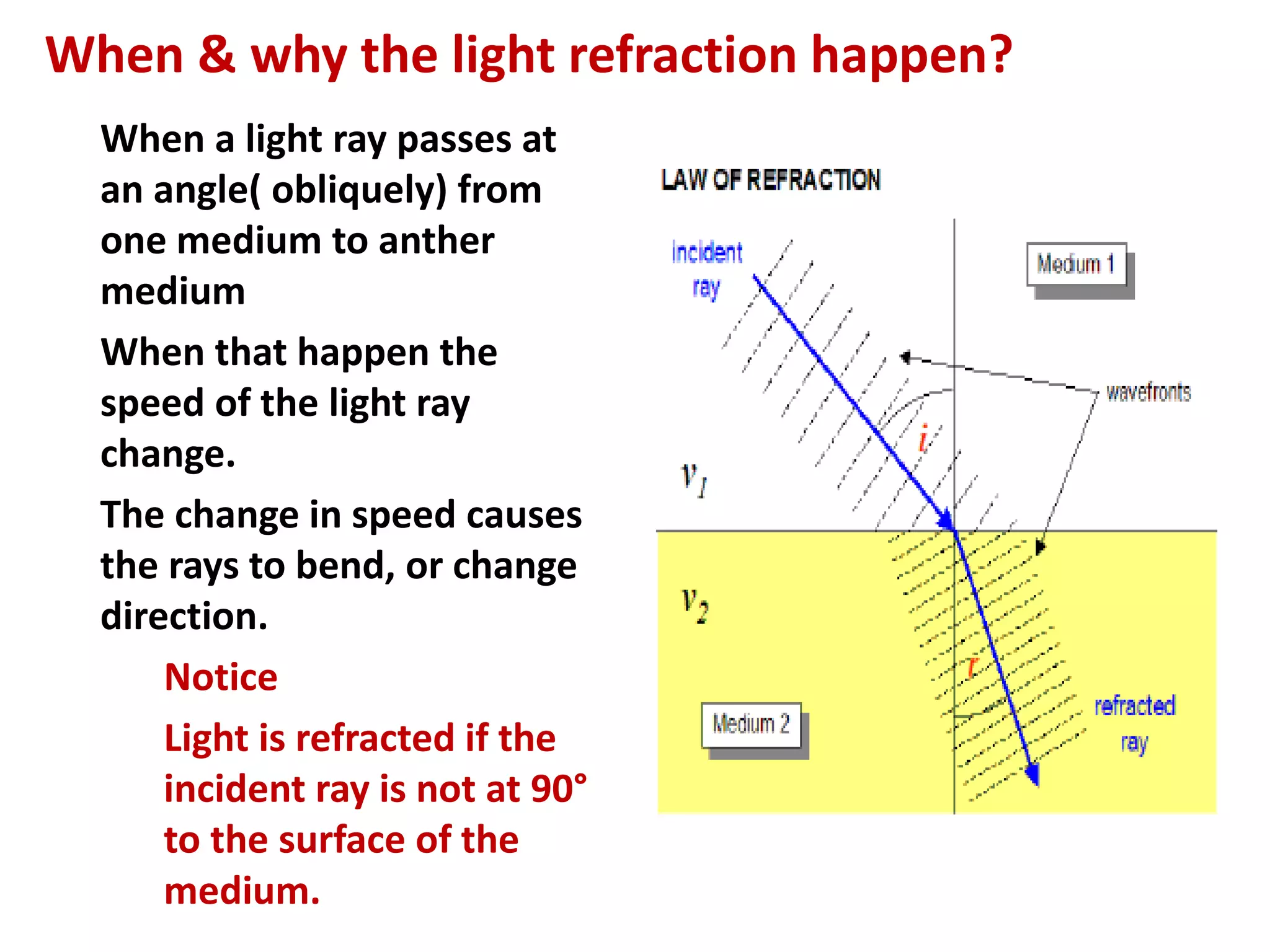
When & why the light refraction happen?
When a light ray passes at
an angle( obliquely) from
one medium to anther
medium
When that happen the
speed of the light ray
change.
The change in speed causes
the rays to bend, or change
direction.
Notice
Light is refracted if the
incident ray is not at 90°
to the surface of the
medium.
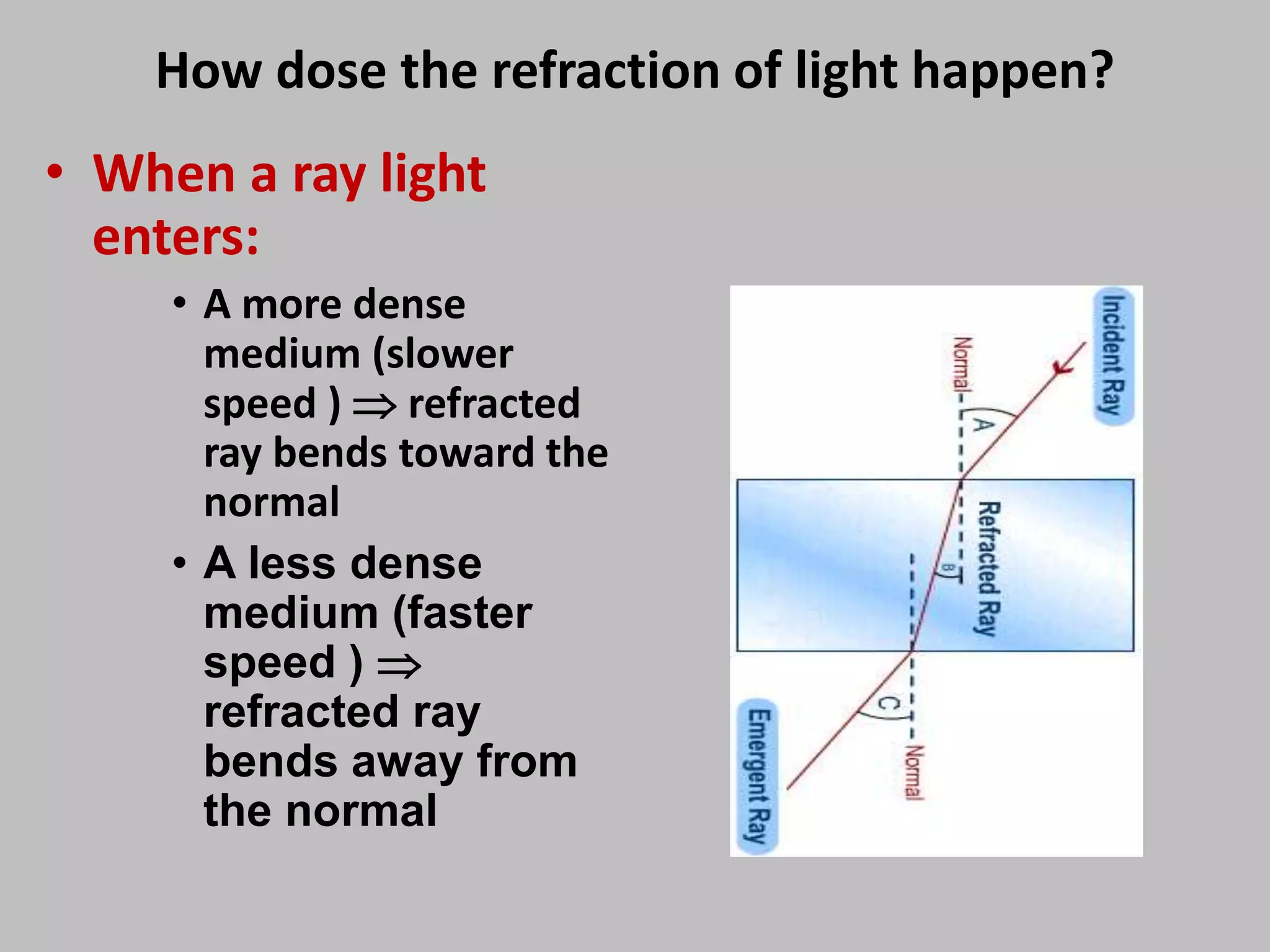
How dose the refraction of light happen?
• When a ray light
enters:
• A more dense
medium (slower
speed )  refracted
ray bends toward the
normal
• A less dense
medium (faster
speed ) 
refracted ray
bends away from
the normal
Concept checking
• What is it called when light bends as it moves
from one substance to another
• When light passes through air into glass, its
angle of refraction is less than its angle of
incidence. T or F
• T ….
• Why?
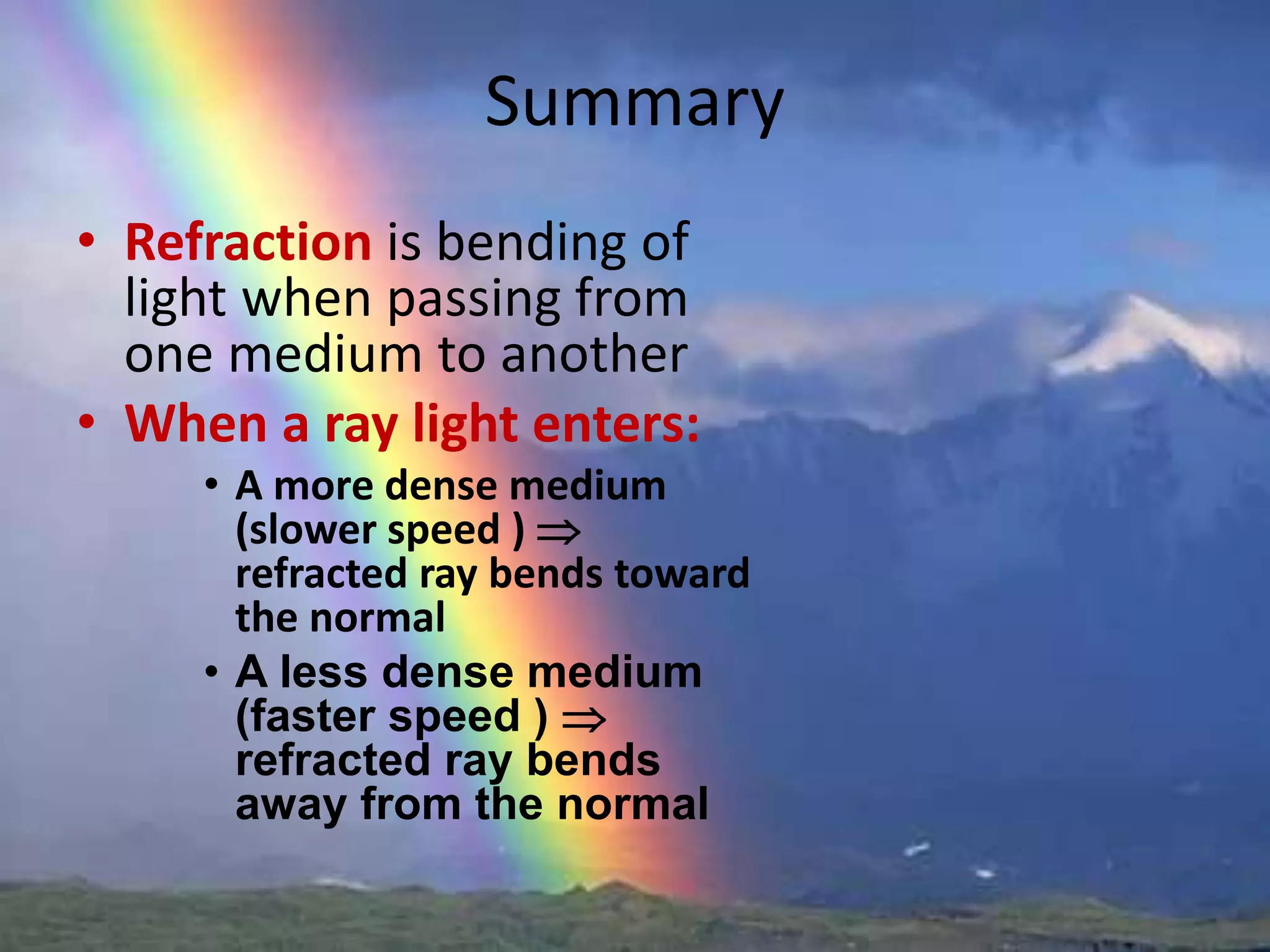
Summary
• Refraction is bending of
light when passing from
one medium to another
• When a ray light enters:
• A more dense medium
(slower speed ) 
refracted ray bends toward
the normal
• A less dense medium
(faster speed ) 
refracted ray bends
away from the normal
Pair working
With your partner use thesis words to answer
the question 1-5(a-k) in next slide :
(increased– decreased- more than - less than –
refraction – speed- direction- towards into-
away from )
Don’t use any term more than once.
There are 3 extra terms.
You have 5 minutes to finish your work.
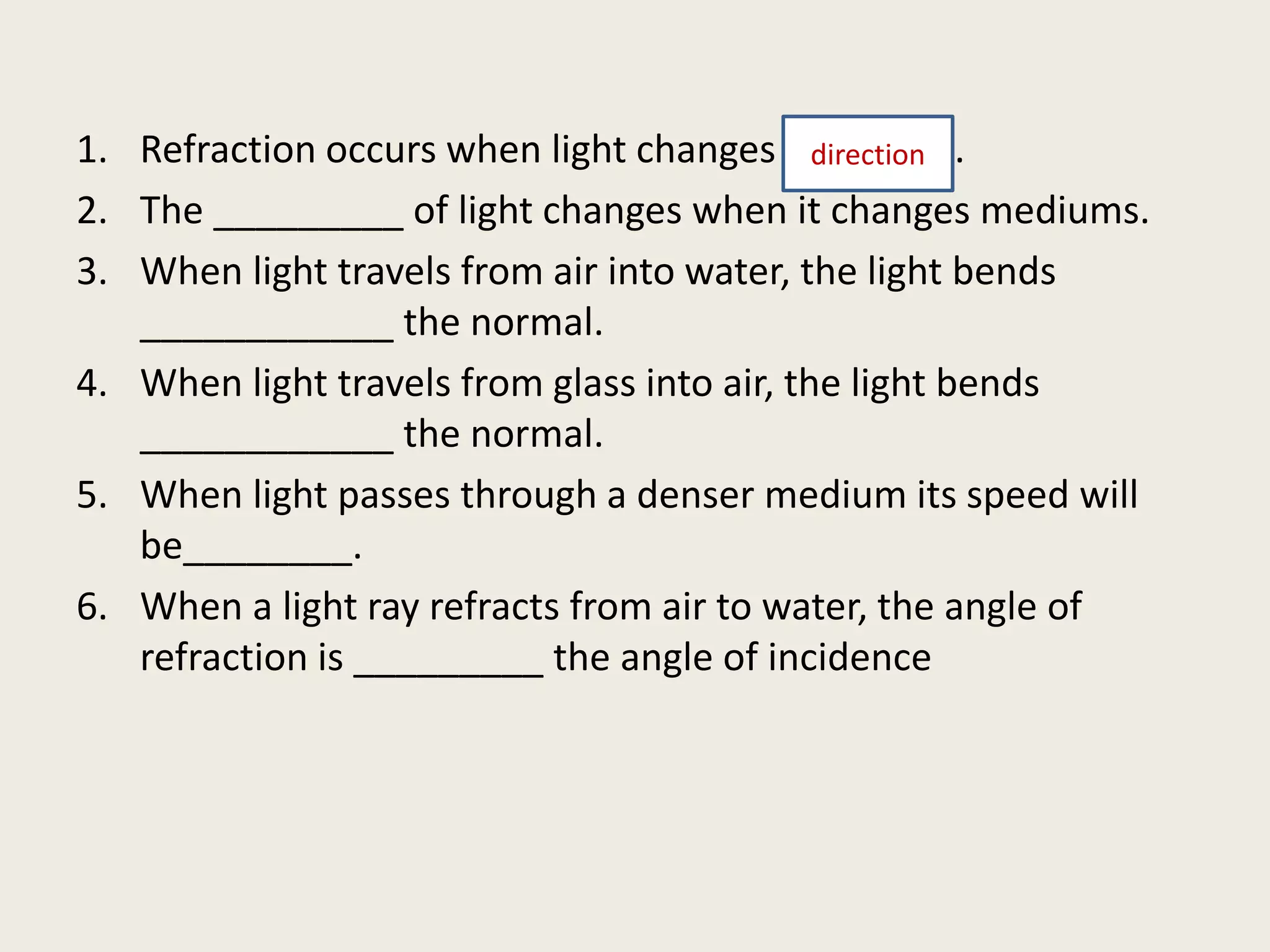
1. Refraction occurs when light changes ________.
2. The _________ of light changes when it changes mediums.
3. When light travels from air into water, the light bends
____________ the normal.
4. When light travels from glass into air, the light bends
____________ the normal.
5. When light passes through a denser medium its speed will
be________.
6. When a light ray refracts from air to water, the angle of
refraction is _________ the angle of incidence
direction
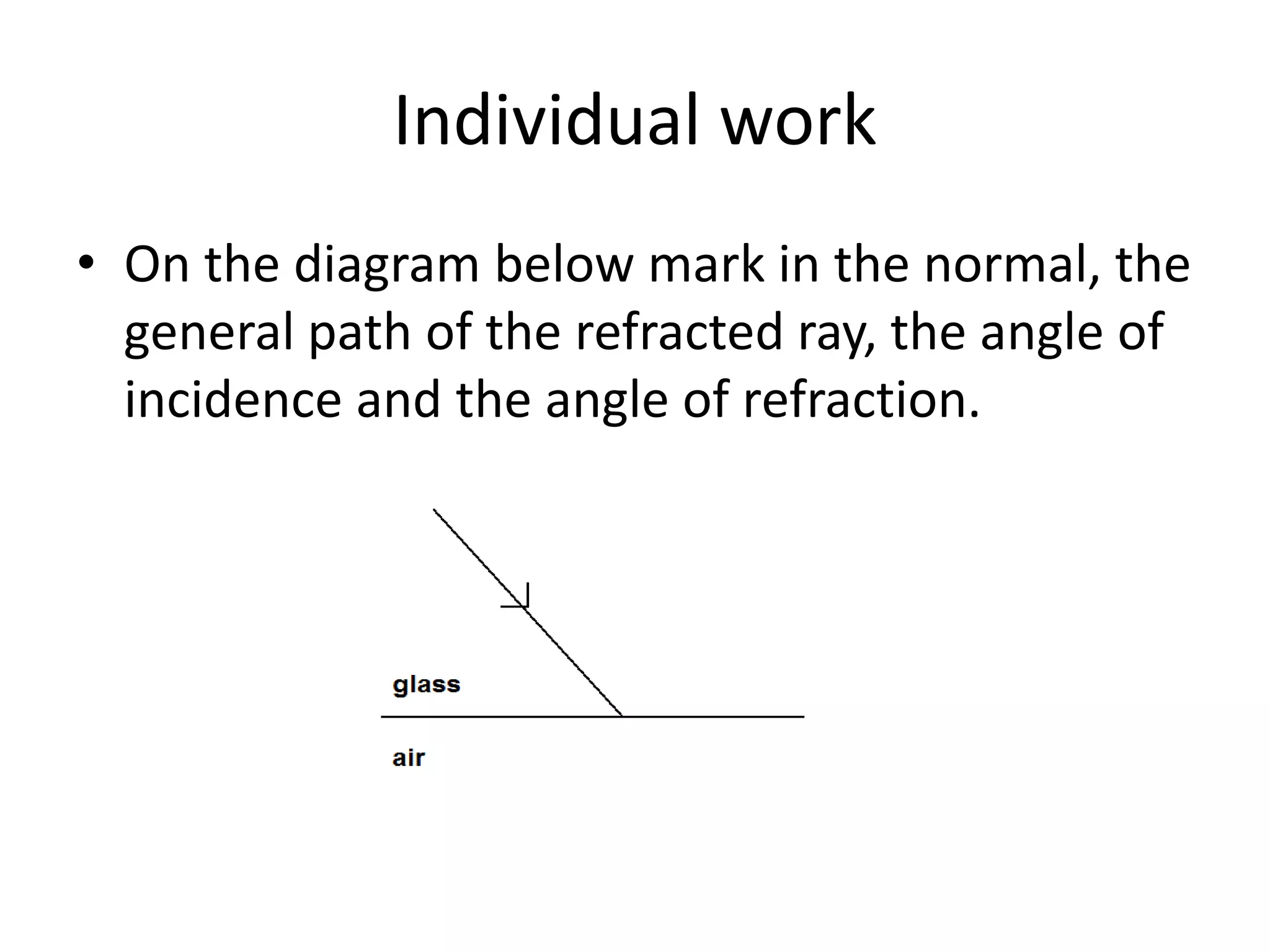
Individual work
• On the diagram below mark in the normal, the
general path of the refracted ray, the angle of
incidence and the angle of refraction.

Light refrection

  • 1.
    “The world looksso different after learning science.” Richard Feynman
  • 2.
  • 3.
    Learning out comes •By the of the lesson SS will be able to • Use the materials and tools to investigate and prove the concept of light refraction • Identify the conditions of light refraction.
  • 4.
    Necessary Review • Howdoes light travel? Light travels in straight lines. • Through what substances can light travel? Transparent or translucent objects only. • What’s the max speed of light? 300000Km/sec • Through all mediums? No, through vacuum or air only. • What happens to the speed of light when it moves from air to another transparent medium? The speed of light will be reduced.
  • 5.
    When & whythe light refraction happen? When a light ray passes at an angle( obliquely) from one medium to anther medium When that happen the speed of the light ray change. The change in speed causes the rays to bend, or change direction. Notice Light is refracted if the incident ray is not at 90° to the surface of the medium.
  • 6.
    How dose therefraction of light happen? • When a ray light enters: • A more dense medium (slower speed )  refracted ray bends toward the normal • A less dense medium (faster speed )  refracted ray bends away from the normal
  • 7.
    Concept checking • Whatis it called when light bends as it moves from one substance to another • When light passes through air into glass, its angle of refraction is less than its angle of incidence. T or F • T …. • Why?
  • 8.
    Summary • Refraction isbending of light when passing from one medium to another • When a ray light enters: • A more dense medium (slower speed )  refracted ray bends toward the normal • A less dense medium (faster speed )  refracted ray bends away from the normal
  • 9.
    Pair working With yourpartner use thesis words to answer the question 1-5(a-k) in next slide : (increased– decreased- more than - less than – refraction – speed- direction- towards into- away from ) Don’t use any term more than once. There are 3 extra terms. You have 5 minutes to finish your work.
  • 10.
    1. Refraction occurswhen light changes ________. 2. The _________ of light changes when it changes mediums. 3. When light travels from air into water, the light bends ____________ the normal. 4. When light travels from glass into air, the light bends ____________ the normal. 5. When light passes through a denser medium its speed will be________. 6. When a light ray refracts from air to water, the angle of refraction is _________ the angle of incidence direction
  • 11.
    Individual work • Onthe diagram below mark in the normal, the general path of the refracted ray, the angle of incidence and the angle of refraction.