Chapter 11 Physical and Cognitive Development in Early Adulthood © 2006 Pearson Education/Prentice-Hall Publishing
Emerging Adulthood Emerging adulthood  -- transition from  adolescence to adulthood Five key features characterize emerging adulthood:  Identity exploration, especially in love and work  Instability  Self-focused  Feeling in-between  The age of possibilities when individuals have an opportunity to transform their lives  (Jeffrey Arnett, 2006)
Becoming an Adult? Holding permanent, ft job  Taking personal responsibility Playing house Three variables related to success: Intellectual fitness -- academic success, good decision-making Psychological -- self-motivation, confidence, identity, values Social -- community involvement, peer relations
A. Physical Development and the Senses Maturation mostly complete. Senescence   [next]
 
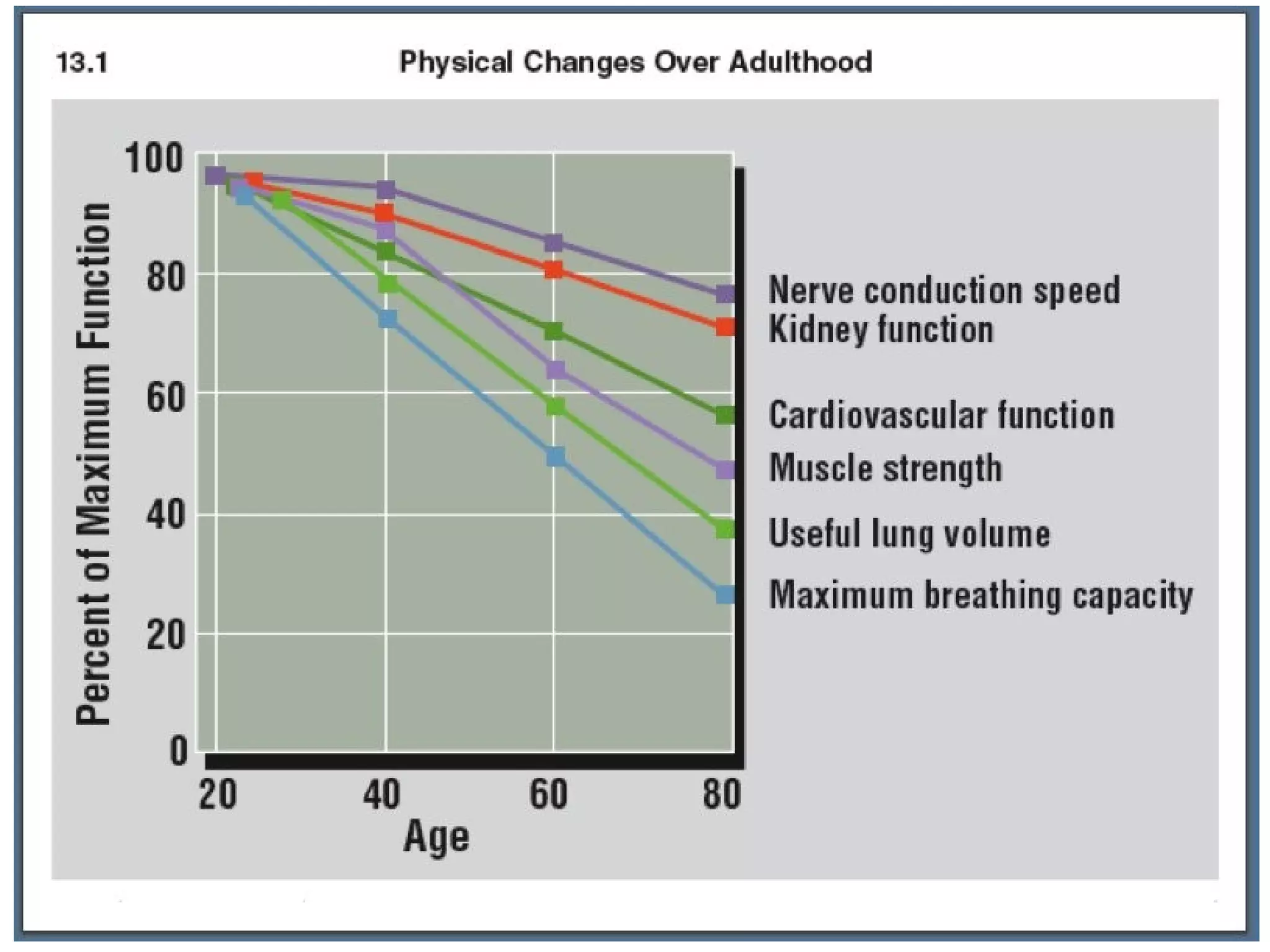
Physical Performance and Development  Most reach peak physical performance before 30  Begin to decline in physical performance around age 30  Sagging chin, protruding abdomens  Sensory systems show little change
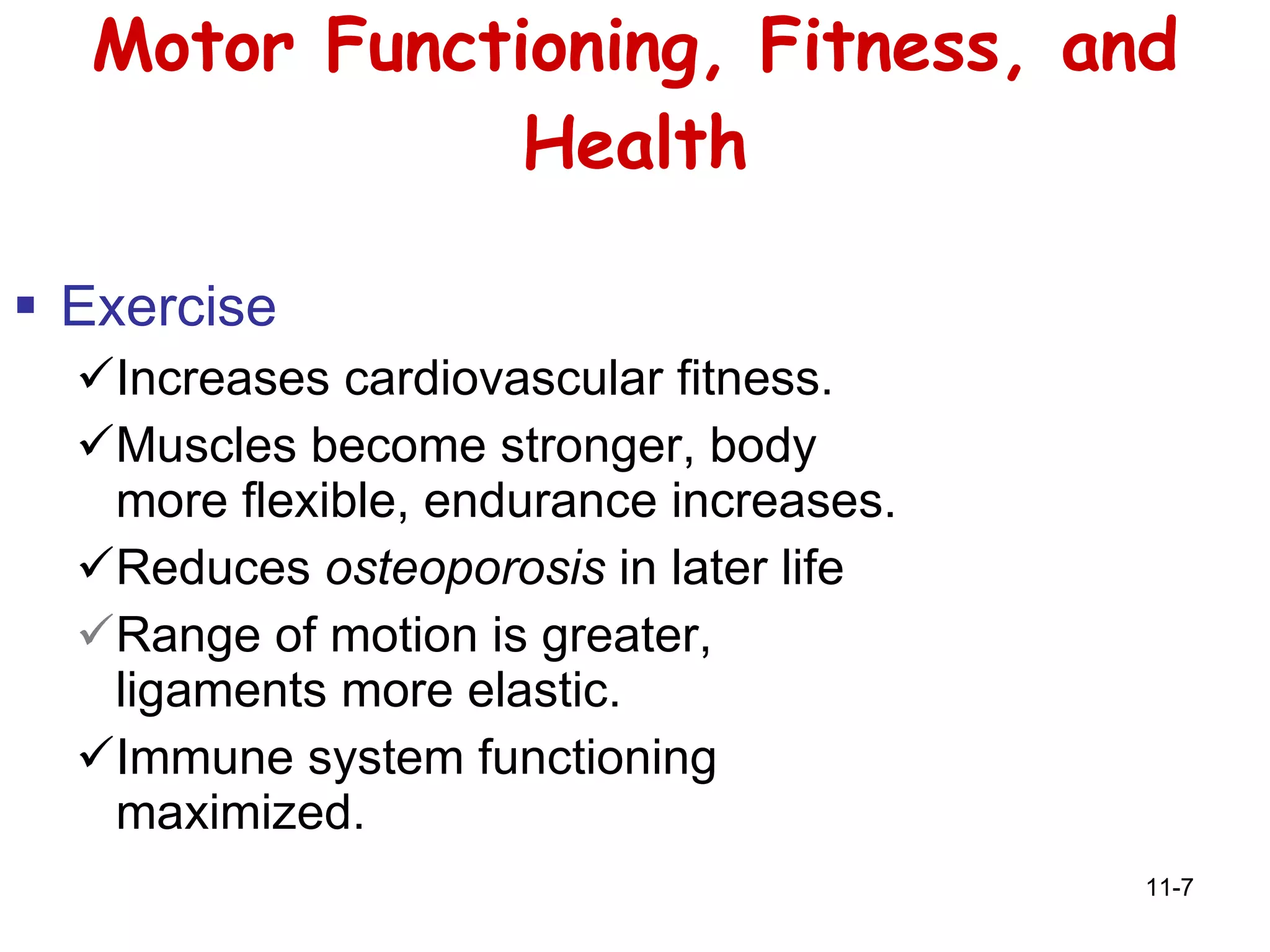
Motor Functioning, Fitness, and Health Exercise Increases cardiovascular fitness. Muscles become stronger, body more flexible, endurance increases. Reduces  osteoporosis  in later life Range of motion is greater, ligaments more elastic. Immune system functioning maximized.
Health Few chronic health problems, but still significant deaths by: Accidents, suicide, homicide  [p.311] Lifestyle choices (drugs, alcohol, smoking, unprotected sex) can hasten secondary aging, but few think about it. 5 years after stopping smoking, health risk is significantly lower
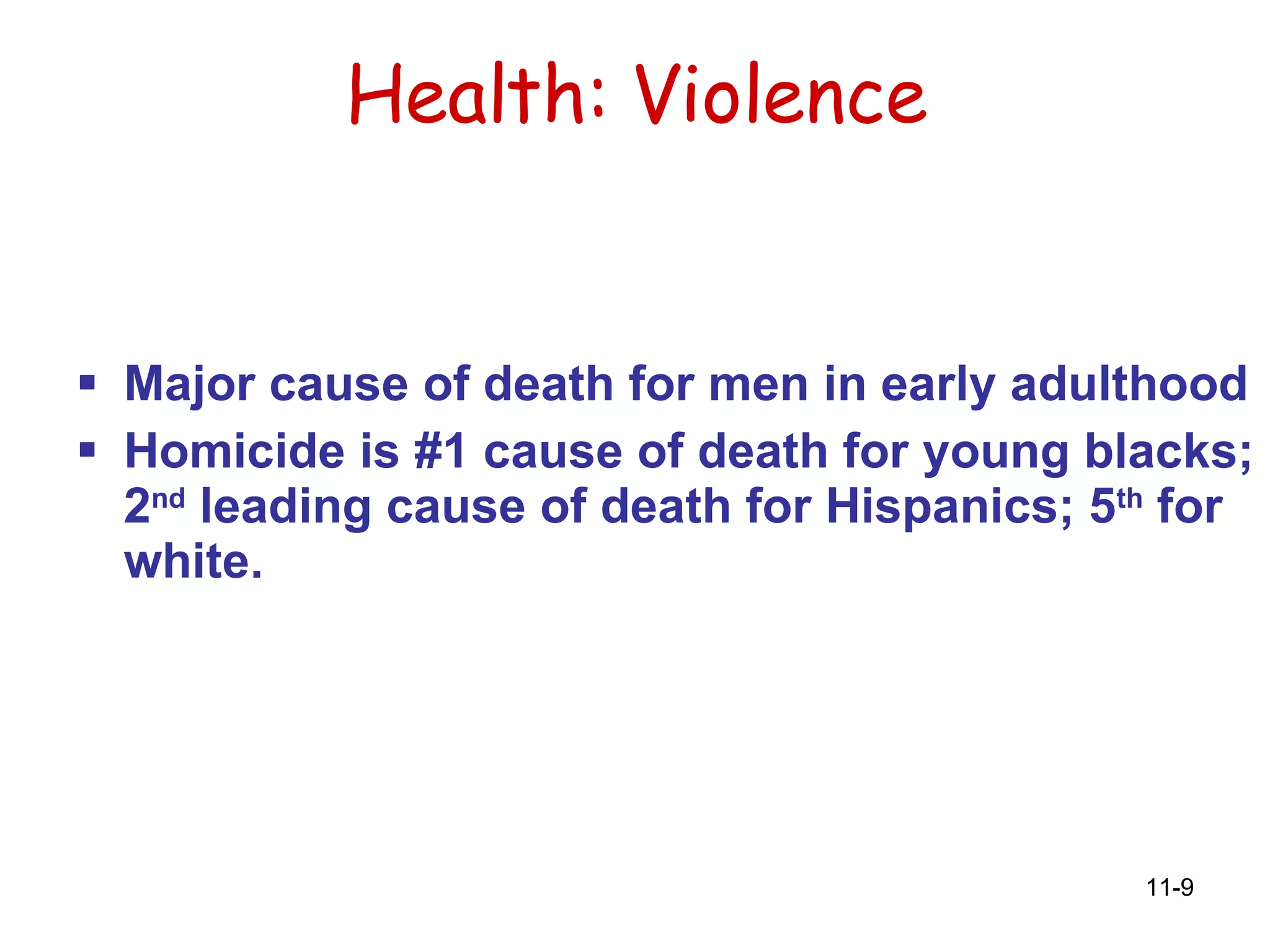
Health: Violence Major cause of death for men in early adulthood Homicide is #1 cause of death for young blacks; 2 nd  leading cause of death for Hispanics; 5 th  for white.
B. Obesity - A “weighty” concern
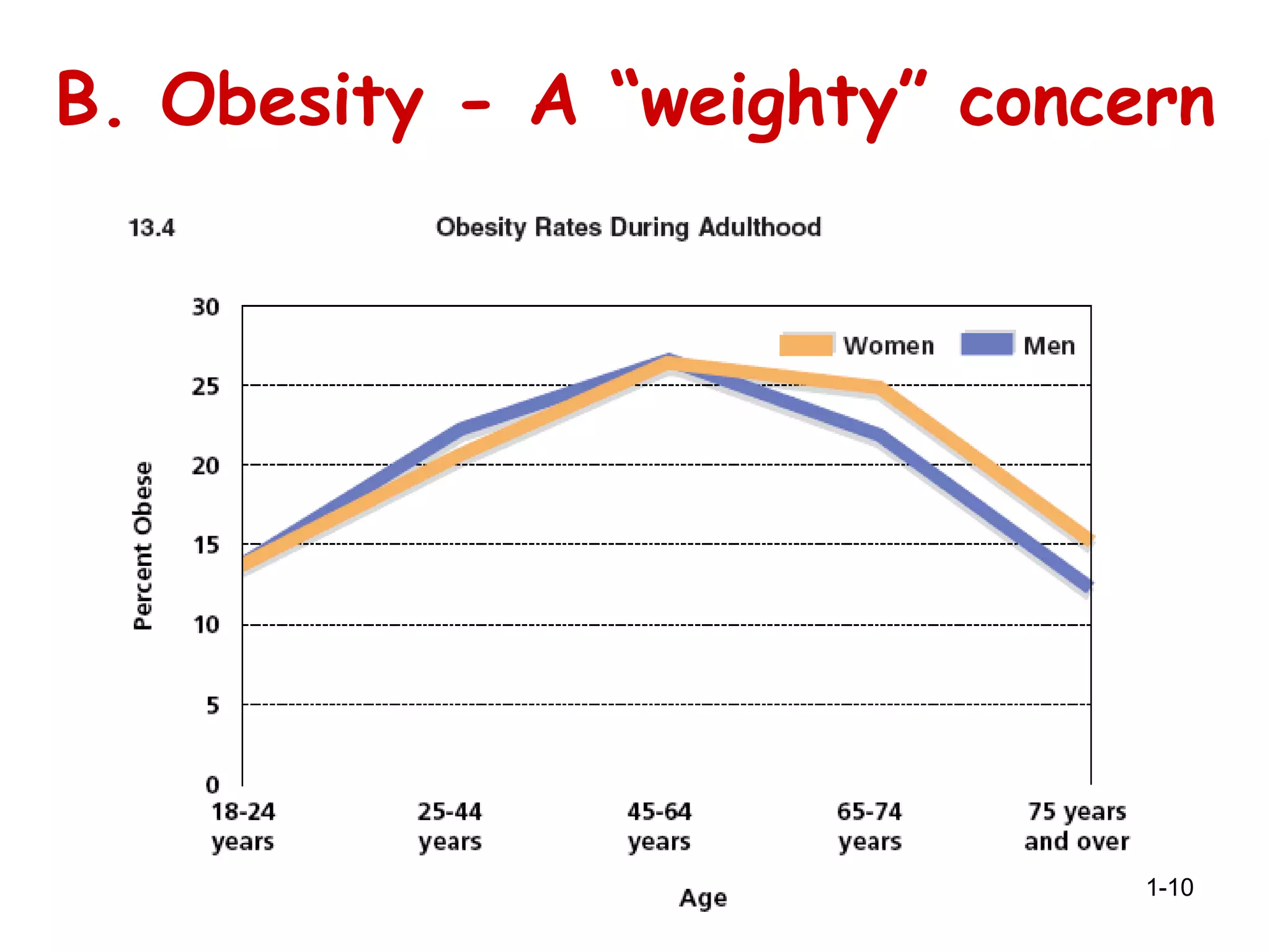
B. Obesity - A “weighty” concern Obesity  -- BMI > 29 Linked to increased risk of hypertension, diabetes, and cardiovascular disease Set point, metabolism, need to reduce calorie intake   Most young adults know which foods are healthy, but ignore good nutrition.
C. Physical Disabilities in Young Adulthood: Coping With Physical Challenge Number of disabled Americans ~ 54 million. (2006) Includes: blind, deaf, wheelchairs also those with chronic diseases or mental disabilities .  1990 Americans with Disabilities Act (ADA) mandates  full  access to public facilities and accommodations in education and employment. Some nondisabled focus so much on disability that they overlook a person’s abilities.
D. Date Rape Date or acquaintance rape Text: 2/3 college freshman women report having been date-raped or experienced attempted date rape.  RM: Way exaggerated!
E. Stress  and Coping Define  stress   Stress is a  biological  reaction to external events, in which hormones are released that cause a rise in heart rate, blood pressure, and respiration. Psychoneuroimmunology  (PNI)
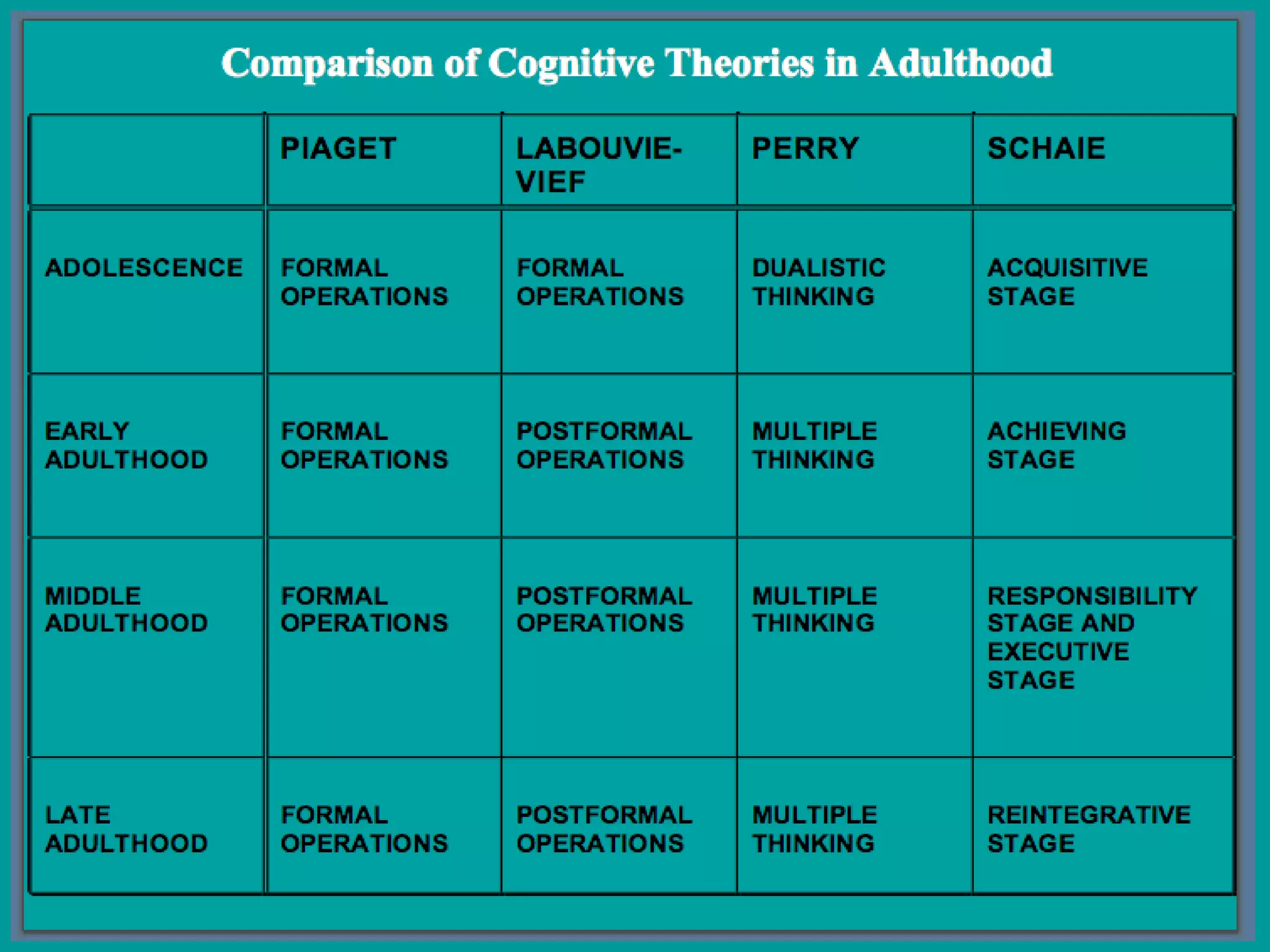
II. Cognitive Development Evidence suggests that Piaget was WRONG that adolescents and adults think qualitatively in the same way (and many adults don’t think in formal operations). Gisela Labouvie-Vief postformal thought
C. William Perry Dualism  Multiplism Relativism  Commitment
 
E. Sternberg and Intelligence (thinking?) Robert Sternberg’s TRIARCHIC THEORY OF INTELLIGENCE: Componential – analyzing data to solve problems; “intelligence” tests. Experiential – using prior experience to cope with new situations. Contextual – meeting the demands of the everyday world.
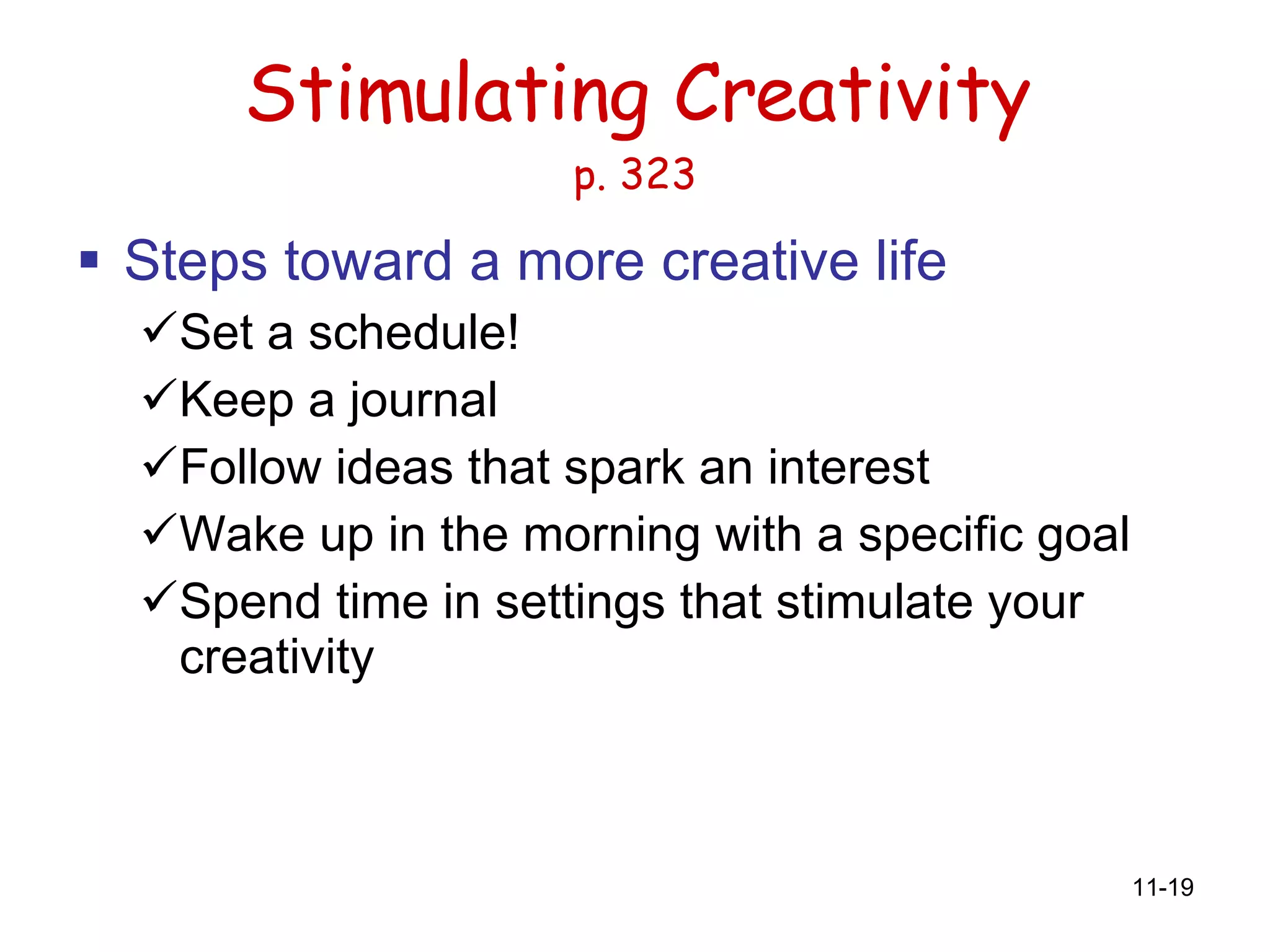
Stimulating Creativity p. 323 Steps toward a more creative life Set a schedule! Keep a journal Follow ideas that spark an interest  Wake up in the morning with a specific goal Spend time in settings that stimulate your creativity
III. College: Pursuing Higher Education
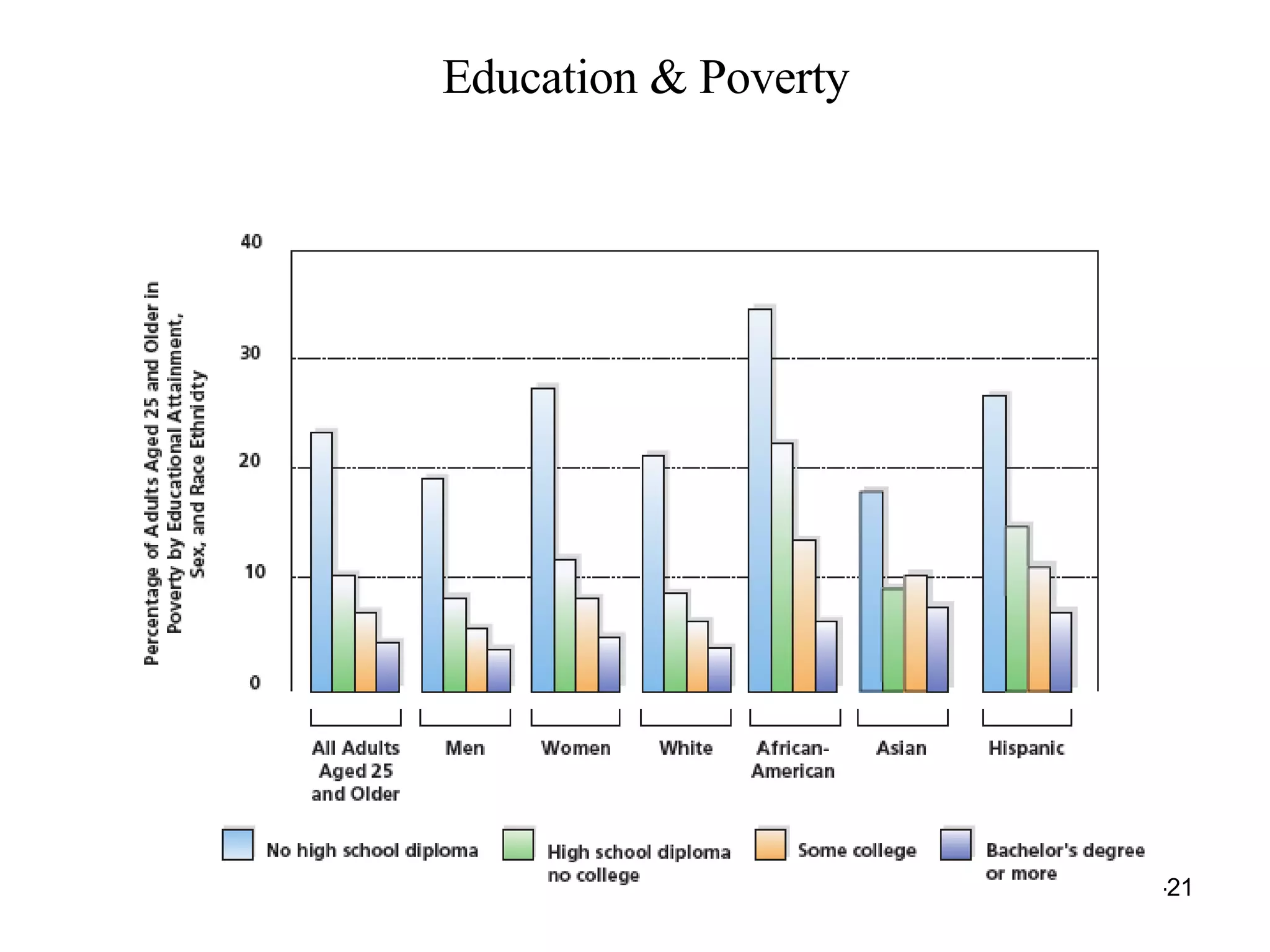
Education & Poverty
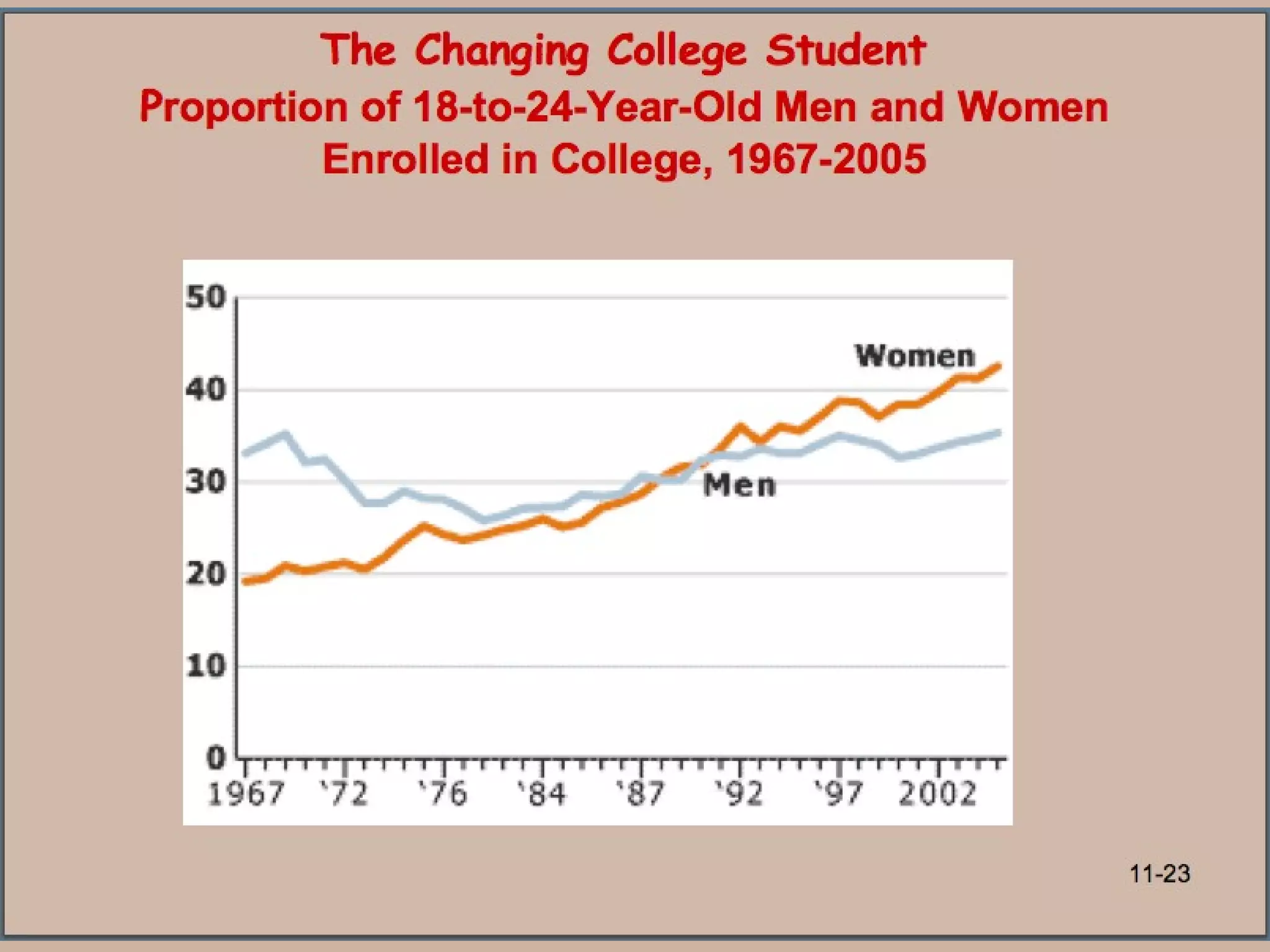
The Changing College Student
The Changing College Student P roportion of 18-to-24-Year-Old Men and
Women Enrolled in College, 1967-2005
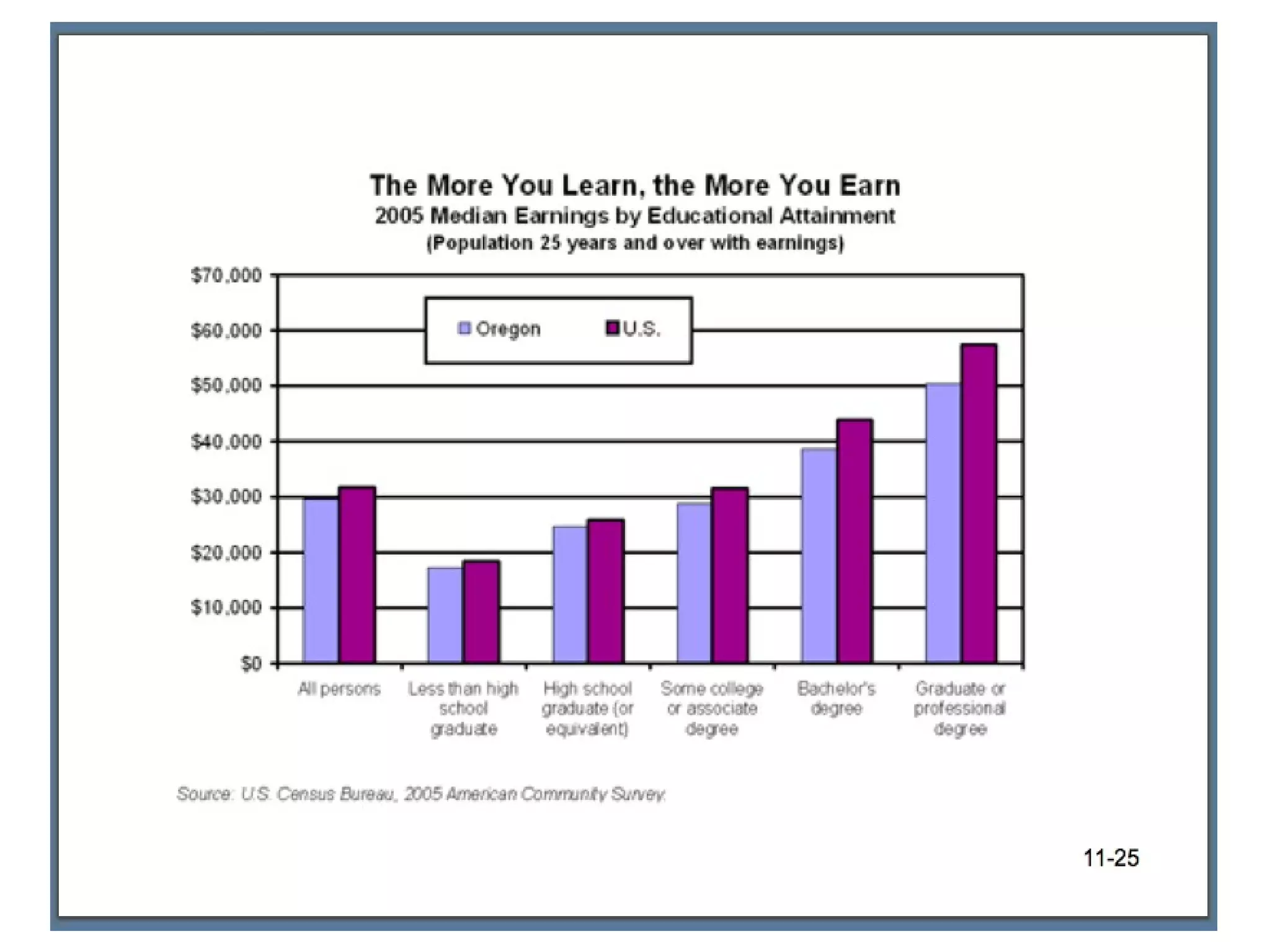
The Changing College Student 1/3 of college students today are 25 years of age or older.  Average age at CC is 31.  “ A college degree is becoming increasingly important in obtaining a job.”  RM:  Essential  to a good job [next]
 
College Adjustment Surveys: almost half have a least one significant psychological issue.  [next] Relationship changes
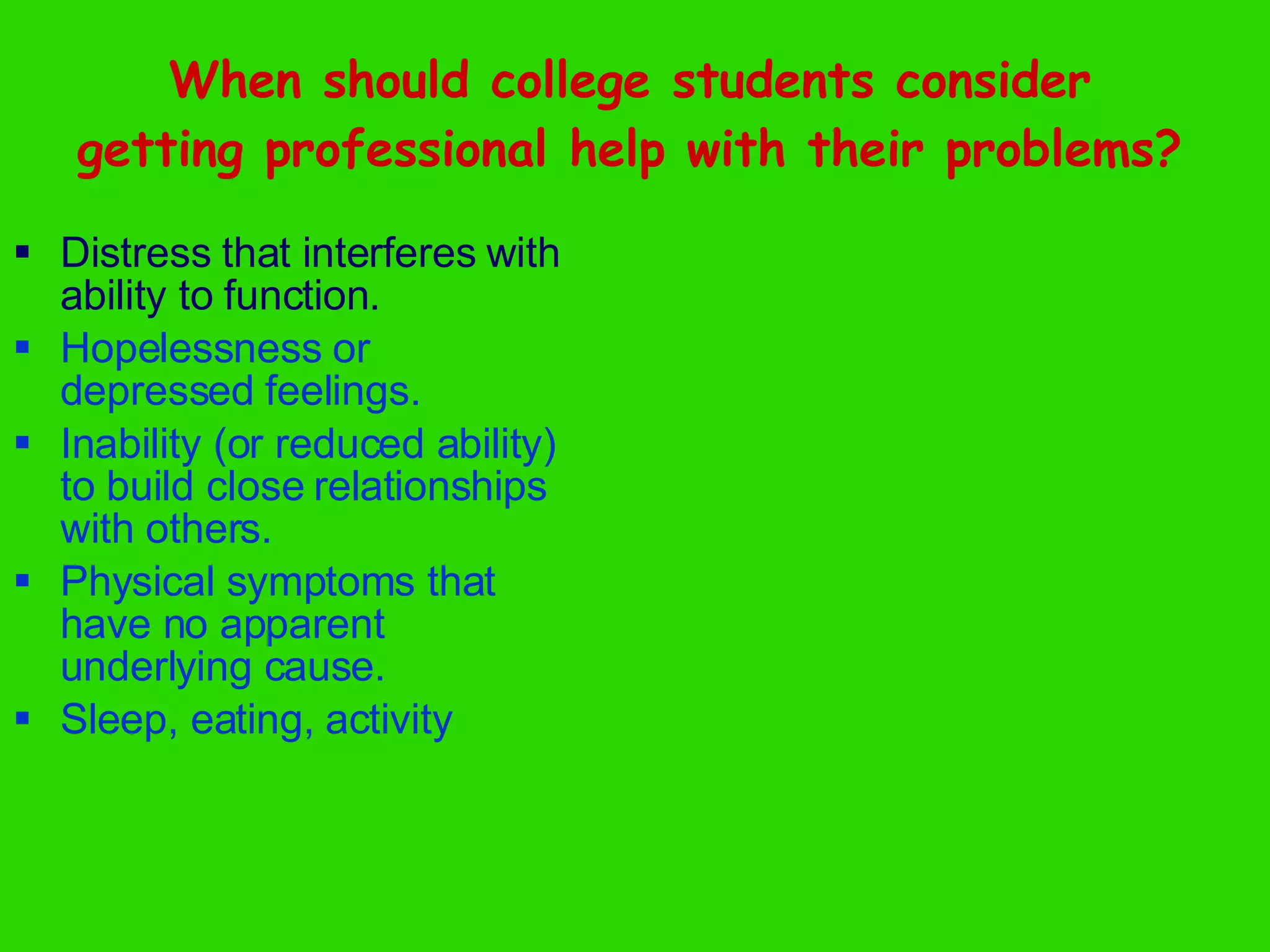
When should college students consider getting professional help with their problems? Distress that interferes with ability to function. Hopelessness or depressed feelings. Inability (or reduced ability) to build close relationships with others. Physical symptoms that have no apparent underlying cause. Sleep, eating, activity
During the 1 st  year of college What is at the root of this difference?
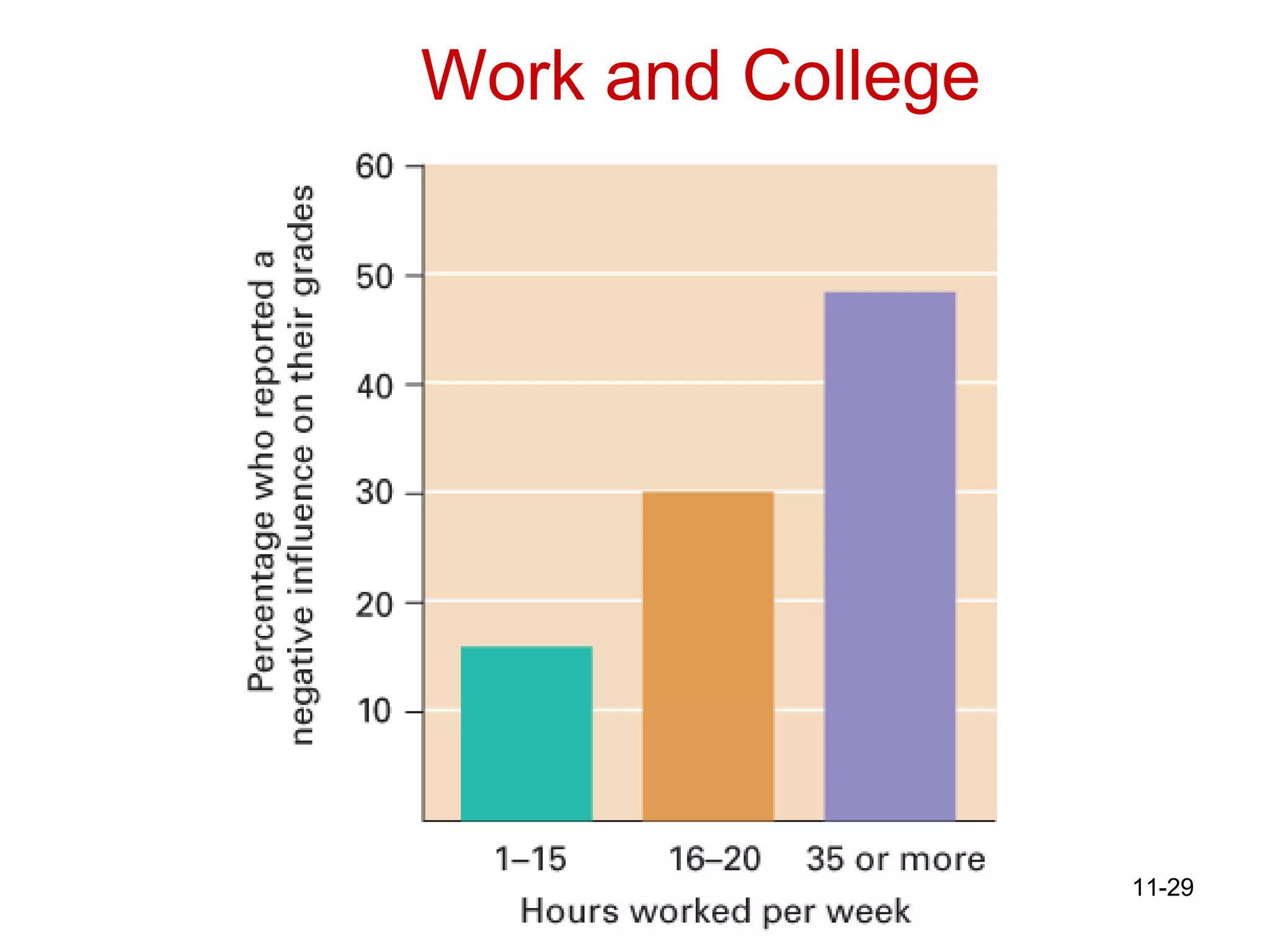
Work and College
Dropping Out of College Half of all students drop out of college. Why?
 

Lifespan Chapter 11 Online Stud

  • 1.
    Chapter 11 Physicaland Cognitive Development in Early Adulthood © 2006 Pearson Education/Prentice-Hall Publishing
  • 2.
    Emerging Adulthood Emergingadulthood -- transition from adolescence to adulthood Five key features characterize emerging adulthood: Identity exploration, especially in love and work Instability Self-focused Feeling in-between The age of possibilities when individuals have an opportunity to transform their lives (Jeffrey Arnett, 2006)
  • 3.
    Becoming an Adult?Holding permanent, ft job Taking personal responsibility Playing house Three variables related to success: Intellectual fitness -- academic success, good decision-making Psychological -- self-motivation, confidence, identity, values Social -- community involvement, peer relations
  • 4.
    A. Physical Developmentand the Senses Maturation mostly complete. Senescence [next]
  • 5.
  • 6.
    Physical Performance andDevelopment Most reach peak physical performance before 30 Begin to decline in physical performance around age 30 Sagging chin, protruding abdomens Sensory systems show little change
  • 7.
    Motor Functioning, Fitness,and Health Exercise Increases cardiovascular fitness. Muscles become stronger, body more flexible, endurance increases. Reduces osteoporosis in later life Range of motion is greater, ligaments more elastic. Immune system functioning maximized.
  • 8.
    Health Few chronichealth problems, but still significant deaths by: Accidents, suicide, homicide [p.311] Lifestyle choices (drugs, alcohol, smoking, unprotected sex) can hasten secondary aging, but few think about it. 5 years after stopping smoking, health risk is significantly lower
  • 9.
    Health: Violence Majorcause of death for men in early adulthood Homicide is #1 cause of death for young blacks; 2 nd leading cause of death for Hispanics; 5 th for white.
  • 10.
    B. Obesity -A “weighty” concern
  • 11.
    B. Obesity -A “weighty” concern Obesity -- BMI > 29 Linked to increased risk of hypertension, diabetes, and cardiovascular disease Set point, metabolism, need to reduce calorie intake Most young adults know which foods are healthy, but ignore good nutrition.
  • 12.
    C. Physical Disabilitiesin Young Adulthood: Coping With Physical Challenge Number of disabled Americans ~ 54 million. (2006) Includes: blind, deaf, wheelchairs also those with chronic diseases or mental disabilities . 1990 Americans with Disabilities Act (ADA) mandates full access to public facilities and accommodations in education and employment. Some nondisabled focus so much on disability that they overlook a person’s abilities.
  • 13.
    D. Date RapeDate or acquaintance rape Text: 2/3 college freshman women report having been date-raped or experienced attempted date rape. RM: Way exaggerated!
  • 14.
    E. Stress and Coping Define stress Stress is a biological reaction to external events, in which hormones are released that cause a rise in heart rate, blood pressure, and respiration. Psychoneuroimmunology (PNI)
  • 15.
    II. Cognitive DevelopmentEvidence suggests that Piaget was WRONG that adolescents and adults think qualitatively in the same way (and many adults don’t think in formal operations). Gisela Labouvie-Vief postformal thought
  • 16.
    C. William PerryDualism Multiplism Relativism Commitment
  • 17.
  • 18.
    E. Sternberg andIntelligence (thinking?) Robert Sternberg’s TRIARCHIC THEORY OF INTELLIGENCE: Componential – analyzing data to solve problems; “intelligence” tests. Experiential – using prior experience to cope with new situations. Contextual – meeting the demands of the everyday world.
  • 19.
    Stimulating Creativity p.323 Steps toward a more creative life Set a schedule! Keep a journal Follow ideas that spark an interest Wake up in the morning with a specific goal Spend time in settings that stimulate your creativity
  • 20.
    III. College: PursuingHigher Education
  • 21.
  • 22.
  • 23.
    The Changing CollegeStudent P roportion of 18-to-24-Year-Old Men and
Women Enrolled in College, 1967-2005
  • 24.
    The Changing CollegeStudent 1/3 of college students today are 25 years of age or older. Average age at CC is 31. “ A college degree is becoming increasingly important in obtaining a job.” RM: Essential to a good job [next]
  • 25.
  • 26.
    College Adjustment Surveys:almost half have a least one significant psychological issue. [next] Relationship changes
  • 27.
    When should collegestudents consider getting professional help with their problems? Distress that interferes with ability to function. Hopelessness or depressed feelings. Inability (or reduced ability) to build close relationships with others. Physical symptoms that have no apparent underlying cause. Sleep, eating, activity
  • 28.
    During the 1st year of college What is at the root of this difference?
  • 29.
  • 30.
    Dropping Out ofCollege Half of all students drop out of college. Why?
  • 31.