HUMAN DEVELOPMENT
• Definition: The development of human beings'
cognitive, emotional, physical and social
capabilities and functioning over the course of the
life span, from infancy through old age.
Human Growth and Development:
Aspect # 1.
Physical Development during Infancy:
Physical growth and development describe the
physical as well as psychomotor changes in an
individual. The physical development is very rapid at
this stage. At birth a baby is generally 18 to 20
inches long and seven pounds (3 kg) in weight.
• He grows about three times within a year.
• By the time he is two years of age he attains a
length of 33 inches and a weight of 25 pounds.
• At birth the brain is almost one fourth of its final
weight.
• The first nine months of a child are a period of rapid
growth.
• During the first two months a baby shows postural
changes. He sits at seven month.
• Creeps by ten months, stands alone at thirteen
months and walks by thirteen to fifteen months.
• This development follows a proximodistal
sequence. By six months milk teeth appear.
Early Childhood Stage:
• Early childhood stage covers from 2/3 years to 6/7
years.
• Rate of growth during this stage becomes slow in
comparison to infancy stage.
• At six, the child weights 36 to 42 pounds.
• Boys are found to be slightly taller than girls. Body
proportions change and head grows at a slower
rate.
• At six, it attains 90% of adult size. Hands and feet
grow bigger. Muscles grow larger and stronger.
• Hand-skills are established at this stage. Brushing
the hair, bathing and better toilet habits develop.
• The child can draw pictures . The child learns to
hop, skip, jump, run, climb and dance during this
stage.
LATER CHILDHOOD
Later Childhood Stage:
• The first signs of puberty typically begin to appear
in late childhood.
• The period during which people reach sexual
maturity and become capable of reproduction.
• In girls, puberty can begin between the ages of 8
and 13, while it usually begins around age 10 in
boys.
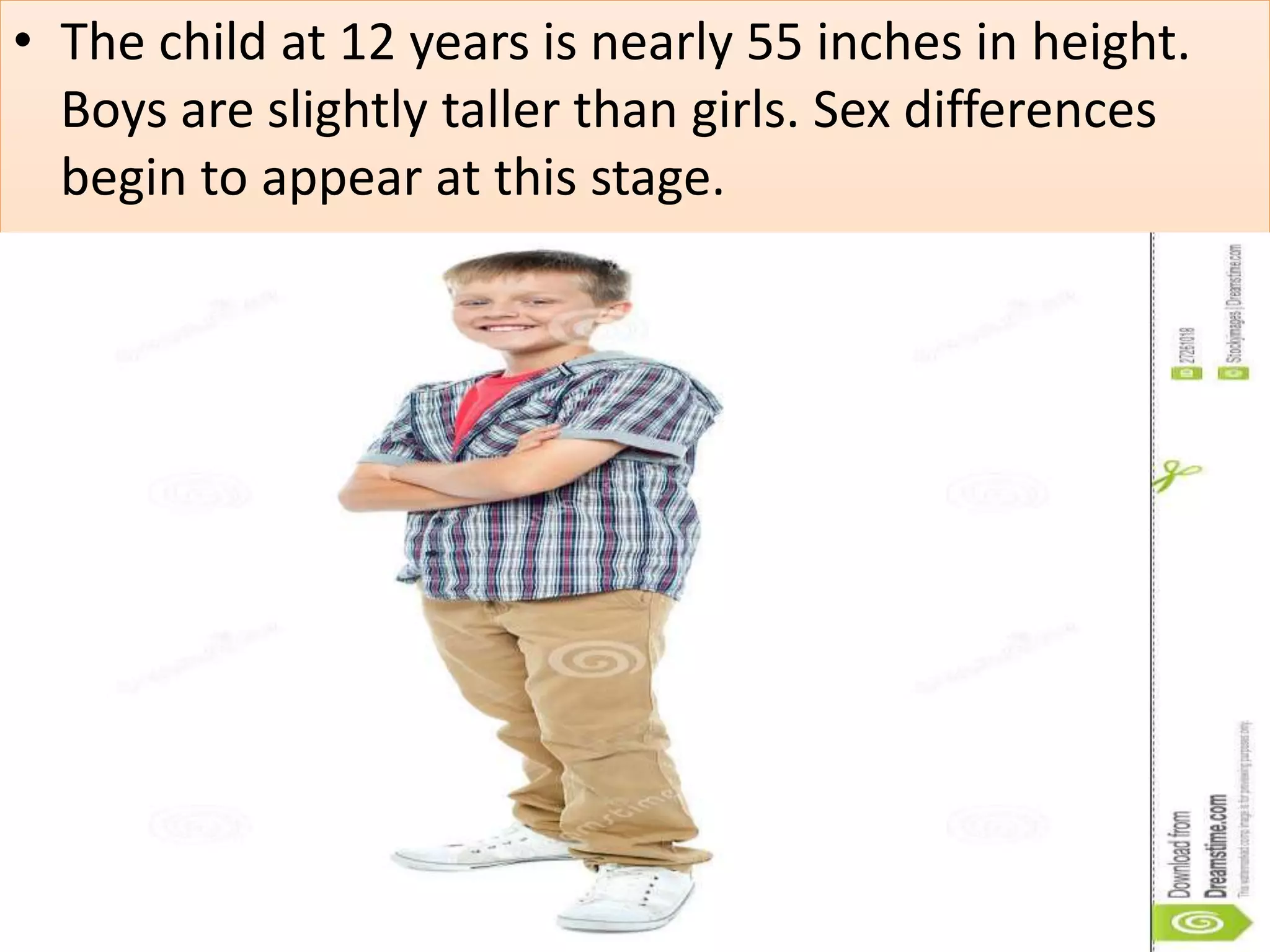
• The child at 12 years is nearly 55 inches in height.
Boys are slightly taller than girls. Sex differences
begin to appear at this stage.
•The child gains full control over the movement of his
limbs.
•During later childhood period (9 years to 12 years of
age) physical growth is initially slow.
•Arms and legs grow faster than the trunk and the
child appears tall and thin.
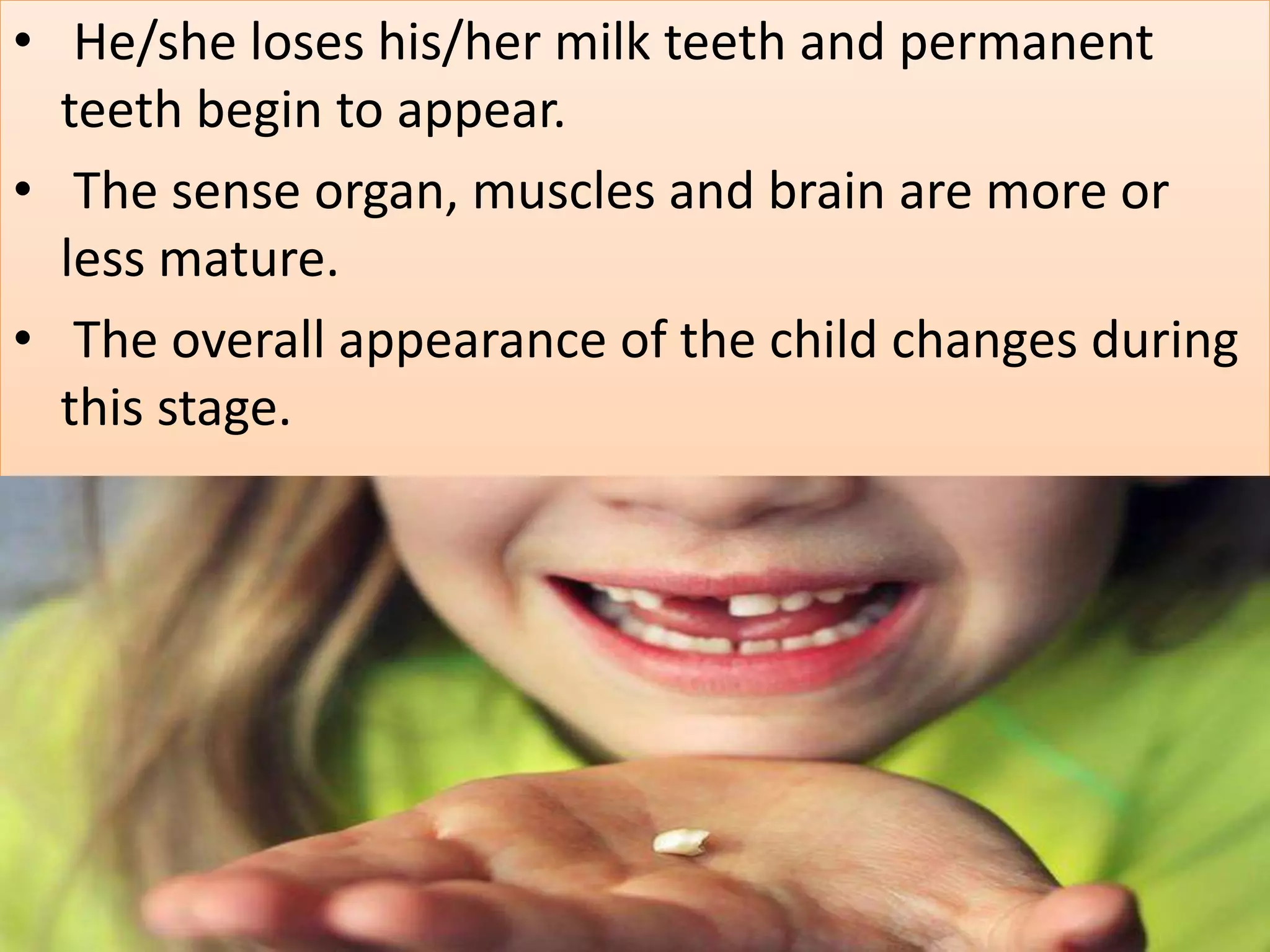
• He/she loses his/her milk teeth and permanent
teeth begin to appear.
• The sense organ, muscles and brain are more or
less mature.
• The overall appearance of the child changes during
this stage.
ADOLESCENCE STAGE
Adolescence Stage:
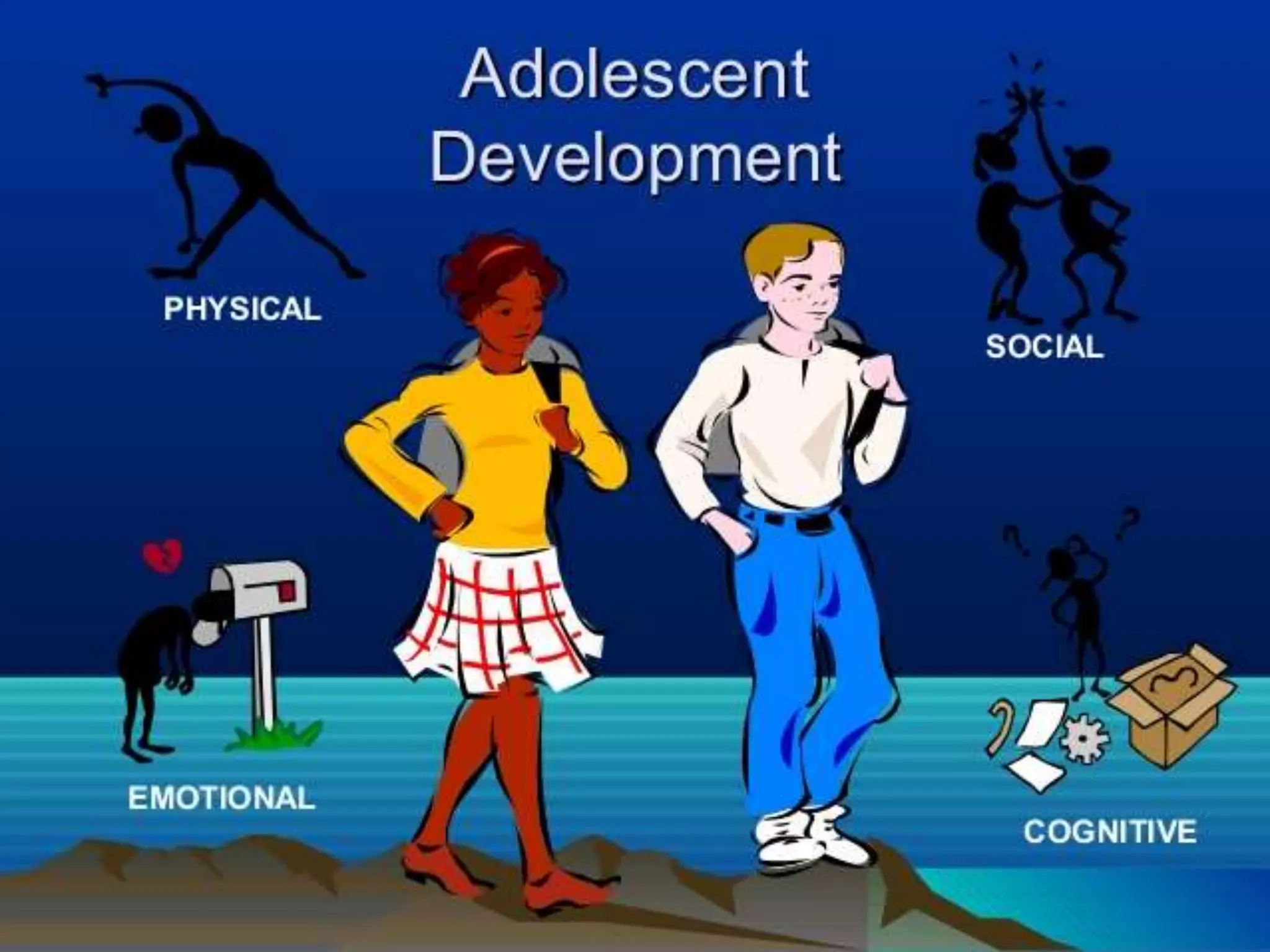
• A.t. Jersild defines adolescence as TRANSITIONAL
PERIOD “the span of years during which the boys
and girls move from childhood to adulthood.” All
types of changes like biological(the
progressive changes in size, shape, and function ),
physical, social (behavior patterns and cultural
values and norms), intellectual, moral etc. take
place during the adolescence stage.
• At the early adolescent years, most children
experience the adolescent growth spurt, a rapid
increase in height and weight, usually, this spurt
occurs in girls within two years and during this time
girls gain 6 to 7 inches and boys 8 to 9 inches in
height .By the age of seventeen in girls and eighteen
in boys, the majority of them have reached 98
percent of their final height.
• Sex differences become apparent during this stage.
Sex glands start secreting for the first time and this
is responsible for the growth of boys into manhood
and of girls into womanhood.
• Certain bodily appearances make both boys and
girls bodily conscious. Sexual development is the
most remarkable features of adolescence.
• The voice of boys becomes rough and that of girls
becomes sweet.
ADULTHOOD:
• Adults experiences age-related changes based on
many factors.
• By the time ,we reach early adulthood ,our physical
maturation is complete, although weight increase
slightly.
• In early adulthood, our physical abilities are at their
peak including muscle strength , cardiac
functioning.
• Changes in vision occurs.
• Hair can start to thin and become gray around the
age of 35
• Skin becomes drier and wrinkles start to appear by
the end of adulthood.
• The immune system becomes less adept at fighting
of illness, and reproductive capacity starts to
decline.
•
OLD AGE:
•
• Hearing problems
• Age spots and blood vessels become more apparent
as the skin continues to dry and get thinner.
• Women experiences gradual decline in fertility as
they approach the onset of menopauses(the end of
menstrual cycle) around 50 years old.
•
Life span development

Life span development

  • 2.
    HUMAN DEVELOPMENT • Definition:The development of human beings' cognitive, emotional, physical and social capabilities and functioning over the course of the life span, from infancy through old age.
  • 7.
    Human Growth andDevelopment: Aspect # 1. Physical Development during Infancy: Physical growth and development describe the physical as well as psychomotor changes in an individual. The physical development is very rapid at this stage. At birth a baby is generally 18 to 20 inches long and seven pounds (3 kg) in weight.
  • 9.
    • He growsabout three times within a year. • By the time he is two years of age he attains a length of 33 inches and a weight of 25 pounds. • At birth the brain is almost one fourth of its final weight.
  • 11.
    • The firstnine months of a child are a period of rapid growth. • During the first two months a baby shows postural changes. He sits at seven month.
  • 12.
    • Creeps byten months, stands alone at thirteen months and walks by thirteen to fifteen months. • This development follows a proximodistal sequence. By six months milk teeth appear.
  • 13.
    Early Childhood Stage: •Early childhood stage covers from 2/3 years to 6/7 years. • Rate of growth during this stage becomes slow in comparison to infancy stage. • At six, the child weights 36 to 42 pounds.
  • 14.
    • Boys arefound to be slightly taller than girls. Body proportions change and head grows at a slower rate. • At six, it attains 90% of adult size. Hands and feet grow bigger. Muscles grow larger and stronger.
  • 15.
    • Hand-skills areestablished at this stage. Brushing the hair, bathing and better toilet habits develop. • The child can draw pictures . The child learns to hop, skip, jump, run, climb and dance during this stage.
  • 16.
  • 17.
    Later Childhood Stage: •The first signs of puberty typically begin to appear in late childhood. • The period during which people reach sexual maturity and become capable of reproduction. • In girls, puberty can begin between the ages of 8 and 13, while it usually begins around age 10 in boys.
  • 19.
    • The childat 12 years is nearly 55 inches in height. Boys are slightly taller than girls. Sex differences begin to appear at this stage.
  • 20.
    •The child gainsfull control over the movement of his limbs. •During later childhood period (9 years to 12 years of age) physical growth is initially slow. •Arms and legs grow faster than the trunk and the child appears tall and thin.
  • 21.
    • He/she loseshis/her milk teeth and permanent teeth begin to appear. • The sense organ, muscles and brain are more or less mature. • The overall appearance of the child changes during this stage.
  • 23.
  • 24.
    Adolescence Stage: • A.t.Jersild defines adolescence as TRANSITIONAL PERIOD “the span of years during which the boys and girls move from childhood to adulthood.” All types of changes like biological(the progressive changes in size, shape, and function ), physical, social (behavior patterns and cultural values and norms), intellectual, moral etc. take place during the adolescence stage.
  • 26.
    • At theearly adolescent years, most children experience the adolescent growth spurt, a rapid increase in height and weight, usually, this spurt occurs in girls within two years and during this time girls gain 6 to 7 inches and boys 8 to 9 inches in height .By the age of seventeen in girls and eighteen in boys, the majority of them have reached 98 percent of their final height.
  • 27.
    • Sex differencesbecome apparent during this stage. Sex glands start secreting for the first time and this is responsible for the growth of boys into manhood and of girls into womanhood. • Certain bodily appearances make both boys and girls bodily conscious. Sexual development is the most remarkable features of adolescence. • The voice of boys becomes rough and that of girls becomes sweet.
  • 32.
    ADULTHOOD: • Adults experiencesage-related changes based on many factors. • By the time ,we reach early adulthood ,our physical maturation is complete, although weight increase slightly. • In early adulthood, our physical abilities are at their peak including muscle strength , cardiac functioning.
  • 33.
    • Changes invision occurs. • Hair can start to thin and become gray around the age of 35 • Skin becomes drier and wrinkles start to appear by the end of adulthood. • The immune system becomes less adept at fighting of illness, and reproductive capacity starts to decline. •
  • 34.
    OLD AGE: • • Hearingproblems • Age spots and blood vessels become more apparent as the skin continues to dry and get thinner. • Women experiences gradual decline in fertility as they approach the onset of menopauses(the end of menstrual cycle) around 50 years old. •