HAZARDS THROUGHOUT
LIFESPAN
PRESENTED BY : ALINA, JAWERIA,
ASIYA, MARWA, SANAGUL,
NAZISH
ASSIGNED BY : MA’AM RABIYA
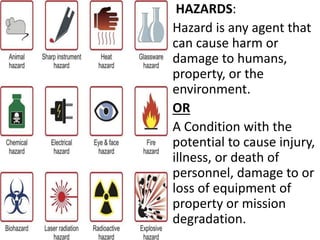
• HAZARDS:
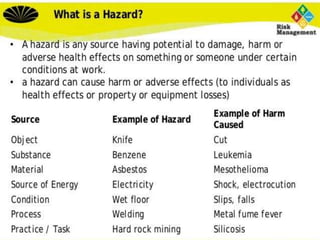
• Hazard is any agent that
can cause harm or
damage to humans,
property, or the
environment.
• OR
• A Condition with the
potential to cause injury,
illness, or death of
personnel, damage to or
loss of equipment of
property or mission
degradation.
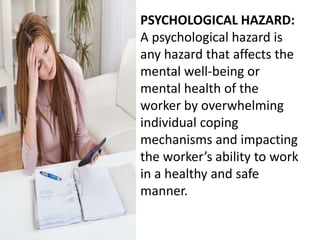
• PSYCHOLOGICAL HAZARD:
A psychological hazard is
any hazard that affects the
mental well-being or
mental health of the
worker by overwhelming
individual coping
mechanisms and impacting
the worker’s ability to work
in a healthy and safe
manner.
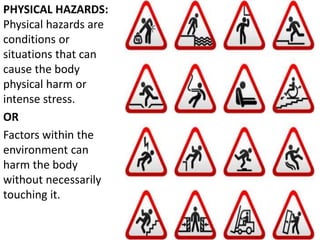
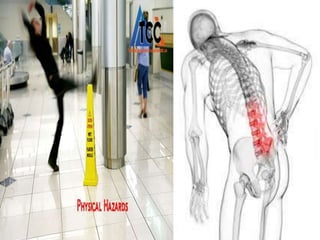
PHYSICAL HAZARDS:
Physical hazards are
conditions or
situations that can
cause the body
physical harm or
intense stress.
OR
Factors within the
environment can
harm the body
without necessarily
touching it.
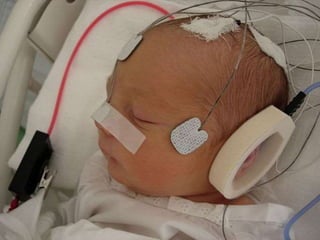
 One of the most
hazardous periods in the
life span.
 Some are of only
temporary significance
while others can affect the
individual’s life pattern.
 It can result to infant’s difficulty
adjusting to post natal life.
 Prolonged and intense maternal stress,
for example, may cause the infant to
be tense and nervous.
 Hazardous only when the fetus becomes so
large that the birth requires the use of
instruments or surgery.
 Infants may also experience neonatal
adjustments problem.
 Frequently results in temporary or
permanent brain damage.
 The more complicated the birth the
more damage there is to the brain
tissue, the greater the effect on
the infant’s postnatal adjustments.

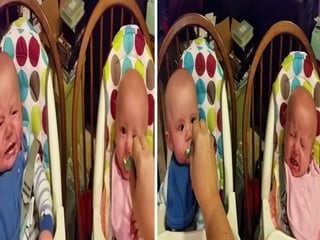
PSYCHOLOGICAL HAZARDS DURING INFANCY
• Psychological hazards of infancy include the
traditional beliefs associated with birth. For
example – Some people believe that the
children born with birth complications lead a
difficult life. Also, the attitude of parents
towards the infant due to gender
preferences, complications at the time of
birth, unexpected arrival of twins or triplets
etc affects his growth.
PHYSICAL HAZARDS
IN EARLY CHILDHOOD
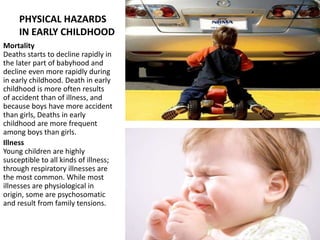
Mortality
Deaths starts to decline rapidly in
the later part of babyhood and
decline even more rapidly during
in early childhood. Death in early
childhood is more often results
of accident than of illness, and
because boys have more accident
than girls, Deaths in early
childhood are more frequent
among boys than girls.
Illness
Young children are highly
susceptible to all kinds of illness;
through respiratory illnesses are
the most common. While most
illnesses are physiological in
origin, some are psychosomatic
and result from family tensions.
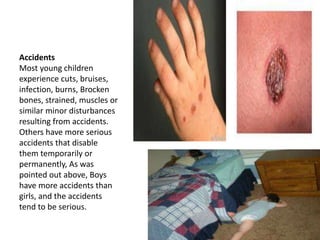
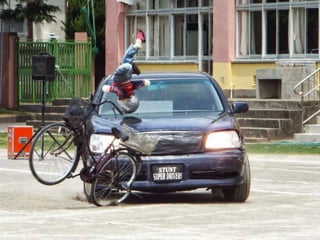
Accidents
Most young children
experience cuts, bruises,
infection, burns, Brocken
bones, strained, muscles or
similar minor disturbances
resulting from accidents.
Others have more serious
accidents that disable
them temporarily or
permanently, As was
pointed out above, Boys
have more accidents than
girls, and the accidents
tend to be serious.
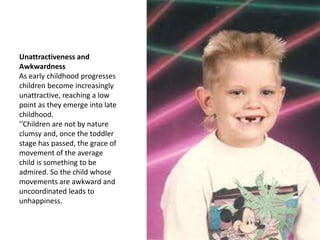
Unattractiveness and
Awkwardness
As early childhood progresses
children become increasingly
unattractive, reaching a low
point as they emerge into late
childhood.
’’Children are not by nature
clumsy and, once the toddler
stage has passed, the grace of
movement of the average
child is something to be
admired. So the child whose
movements are awkward and
uncoordinated leads to
unhappiness.
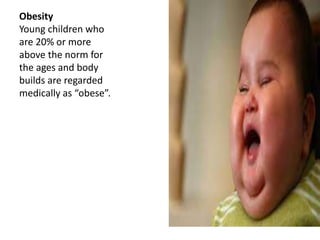
Obesity
Young children who
are 20% or more
above the norm for
the ages and body
builds are regarded
medically as “obese”.
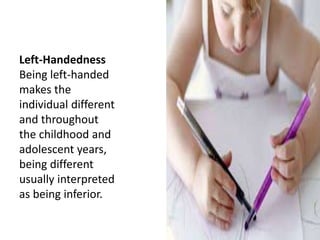
Left-Handedness
Being left-handed
makes the
individual different
and throughout
the childhood and
adolescent years,
being different
usually interpreted
as being inferior.
LATE CHILDHOOD
Physical Hazards in Late
Childhood:
As a result of new medical
techniques for diagnosing,
preventing and treating
illnesses, mortality during the
late childhood occurs much
less frequently than in the
past
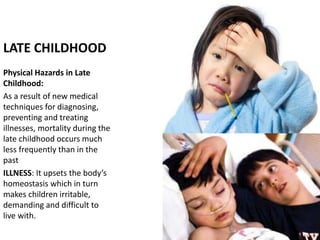
ILLNESS: It upsets the body’s
homeostasis which in turn
makes children irritable,
demanding and difficult to
live with.
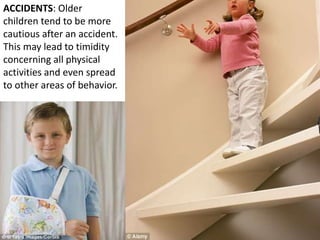
ACCIDENTS: Older
children tend to be more
cautious after an accident.
This may lead to timidity
concerning all physical
activities and even spread
to other areas of behavior.
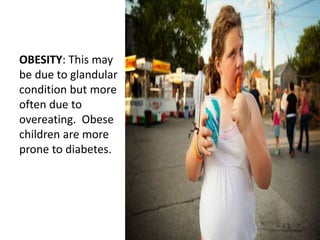
OBESITY: This may
be due to glandular
condition but more
often due to
overeating. Obese
children are more
prone to diabetes.
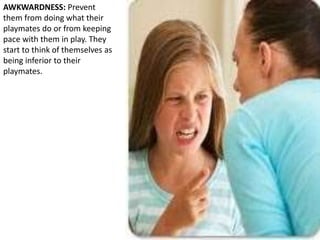
AWKWARDNESS: Prevent
them from doing what their
playmates do or from keeping
pace with them in play. They
start to think of themselves as
being inferior to their
playmates.
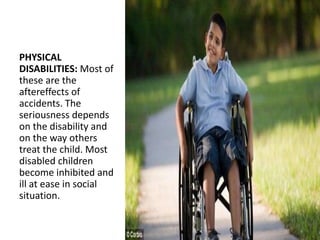
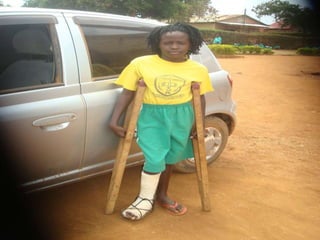
PHYSICAL
DISABILITIES: Most of
these are the
aftereffects of
accidents. The
seriousness depends
on the disability and
on the way others
treat the child. Most
disabled children
become inhibited and
ill at ease in social
situation.
Lifespan hazards powerpoint

Lifespan hazards powerpoint

  • 1.
    HAZARDS THROUGHOUT LIFESPAN PRESENTED BY: ALINA, JAWERIA, ASIYA, MARWA, SANAGUL, NAZISH ASSIGNED BY : MA’AM RABIYA
  • 2.
    • HAZARDS: • Hazardis any agent that can cause harm or damage to humans, property, or the environment. • OR • A Condition with the potential to cause injury, illness, or death of personnel, damage to or loss of equipment of property or mission degradation.
  • 5.
    • PSYCHOLOGICAL HAZARD: Apsychological hazard is any hazard that affects the mental well-being or mental health of the worker by overwhelming individual coping mechanisms and impacting the worker’s ability to work in a healthy and safe manner.
  • 7.
    PHYSICAL HAZARDS: Physical hazardsare conditions or situations that can cause the body physical harm or intense stress. OR Factors within the environment can harm the body without necessarily touching it.
  • 10.
     One ofthe most hazardous periods in the life span.  Some are of only temporary significance while others can affect the individual’s life pattern.
  • 11.
     It canresult to infant’s difficulty adjusting to post natal life.  Prolonged and intense maternal stress, for example, may cause the infant to be tense and nervous.
  • 13.
     Hazardous onlywhen the fetus becomes so large that the birth requires the use of instruments or surgery.  Infants may also experience neonatal adjustments problem.
  • 15.
     Frequently resultsin temporary or permanent brain damage.  The more complicated the birth the more damage there is to the brain tissue, the greater the effect on the infant’s postnatal adjustments. 
  • 17.
    PSYCHOLOGICAL HAZARDS DURINGINFANCY • Psychological hazards of infancy include the traditional beliefs associated with birth. For example – Some people believe that the children born with birth complications lead a difficult life. Also, the attitude of parents towards the infant due to gender preferences, complications at the time of birth, unexpected arrival of twins or triplets etc affects his growth.
  • 19.
    PHYSICAL HAZARDS IN EARLYCHILDHOOD Mortality Deaths starts to decline rapidly in the later part of babyhood and decline even more rapidly during in early childhood. Death in early childhood is more often results of accident than of illness, and because boys have more accident than girls, Deaths in early childhood are more frequent among boys than girls. Illness Young children are highly susceptible to all kinds of illness; through respiratory illnesses are the most common. While most illnesses are physiological in origin, some are psychosomatic and result from family tensions.
  • 20.
    Accidents Most young children experiencecuts, bruises, infection, burns, Brocken bones, strained, muscles or similar minor disturbances resulting from accidents. Others have more serious accidents that disable them temporarily or permanently, As was pointed out above, Boys have more accidents than girls, and the accidents tend to be serious.
  • 21.
    Unattractiveness and Awkwardness As earlychildhood progresses children become increasingly unattractive, reaching a low point as they emerge into late childhood. ’’Children are not by nature clumsy and, once the toddler stage has passed, the grace of movement of the average child is something to be admired. So the child whose movements are awkward and uncoordinated leads to unhappiness.
  • 22.
    Obesity Young children who are20% or more above the norm for the ages and body builds are regarded medically as “obese”.
  • 23.
    Left-Handedness Being left-handed makes the individualdifferent and throughout the childhood and adolescent years, being different usually interpreted as being inferior.
  • 24.
    LATE CHILDHOOD Physical Hazardsin Late Childhood: As a result of new medical techniques for diagnosing, preventing and treating illnesses, mortality during the late childhood occurs much less frequently than in the past ILLNESS: It upsets the body’s homeostasis which in turn makes children irritable, demanding and difficult to live with.
  • 25.
    ACCIDENTS: Older children tendto be more cautious after an accident. This may lead to timidity concerning all physical activities and even spread to other areas of behavior.
  • 28.
    OBESITY: This may bedue to glandular condition but more often due to overeating. Obese children are more prone to diabetes.
  • 30.
    AWKWARDNESS: Prevent them fromdoing what their playmates do or from keeping pace with them in play. They start to think of themselves as being inferior to their playmates.
  • 32.
    PHYSICAL DISABILITIES: Most of theseare the aftereffects of accidents. The seriousness depends on the disability and on the way others treat the child. Most disabled children become inhibited and ill at ease in social situation.