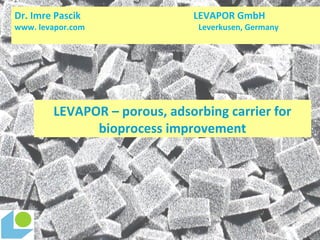
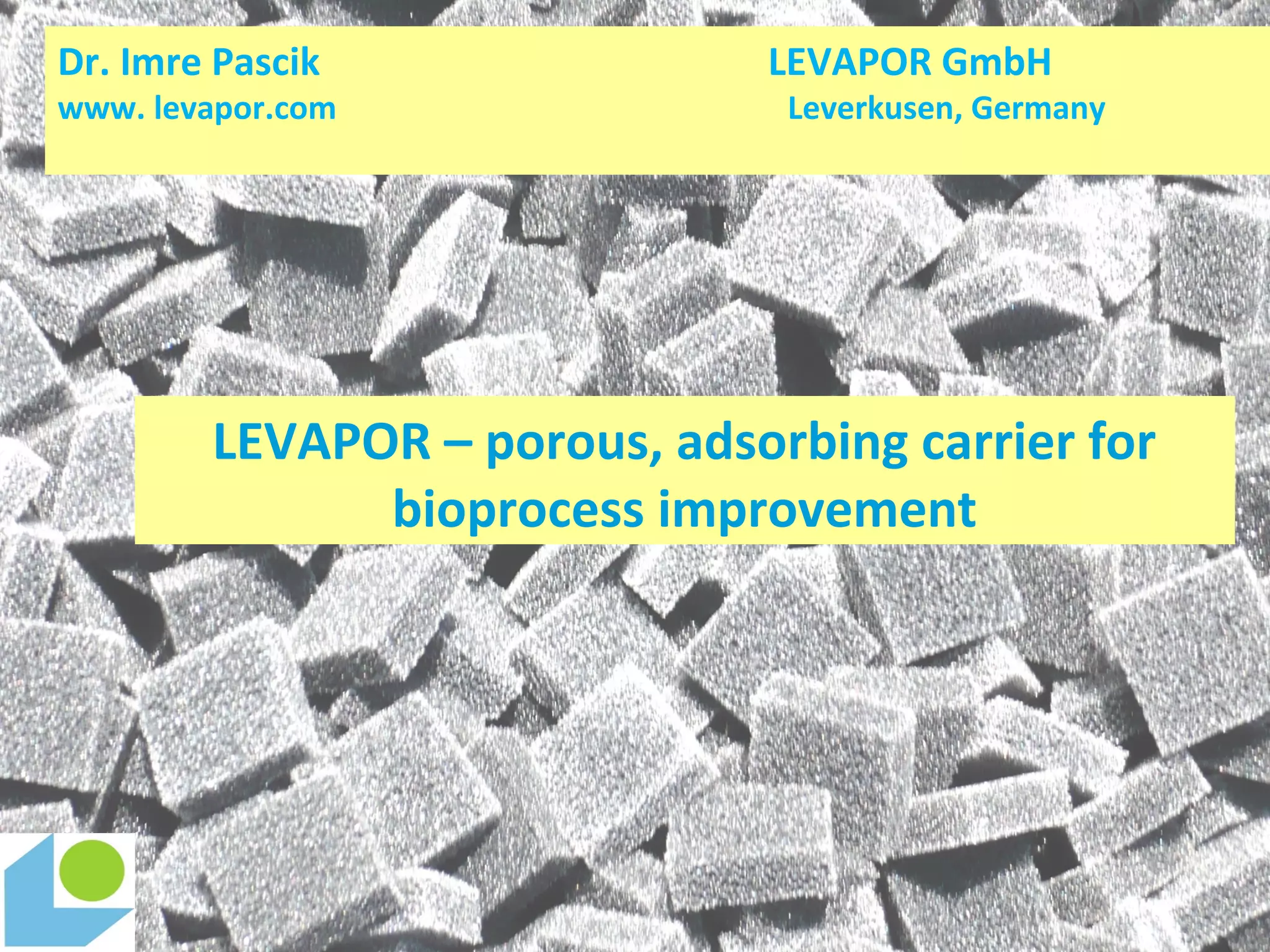

LEVAPOR – porous, adsorbing carrier for
bioprocess improvement
Dr. Imre Pascik LEVAPOR GmbH
www. levapor.com Leverkusen, Germany
About us
• Innovative Organization
• Fixed Film Based Process Solutions
• Complex Effluent, Municipal Wastewater,
Polluted Gas
• CEO Dr. Imre Pascik
• 40 years of experience with Bayer AG,
Environmental Bio Technology Centre,
Leverkusen
About us
• Development of innovative processes
• Two Step nitrification of high Ammonia
containing effluents
• Landfill Leachate Treatment
• Bayer Tower Biology (Otto Award)
• Degradation of toxic effluents using
Anaerobic-Aerobic Processes
What We do
• Problem analysis for the treatment of high strength
industrial and municipal wastewater treatment
• Define treatment goals and conceptual process
design
• Development of optimal process and design
parameters with pilot tests
• Manufacturing of high performance tailor made bio
carriers for the application
• Process Start up
Industries We serve
• Chemicals and Pharmaceuticals
• Petrochemicals and Refineries
• Pulp and Paper
• Coal Conversion : coke plant, coal gasification,
pyrolysis
• Textile finishing and Leather manufacturers
• Municipal Wastewater Treatment
• Special effluents like land fill leachate and sludge
processing unit
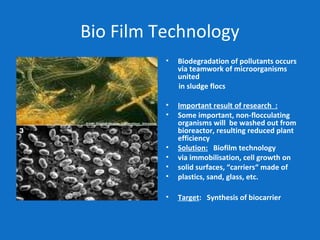
Bio Film Technology
• Biodegradation of pollutants occurs
via teamwork of microorganisms
united
in sludge flocs
• Important result of research :
• Some important, non-flocculating
organisms will be washed out from
bioreactor, resulting reduced plant
efficiency
• Solution: Biofilm technology
• via immobilisation, cell growth on
• solid surfaces, “carriers“ made of
• plastics, sand, glass, etc.
• Target: Synthesis of biocarrier
Our REQUESTS on OPTIMAL CARRIER
• PROPERTY EFFECT
• 1. Adsorbing capacity - binding toxic pollutants
- fast colonization + bio film
- fast start up at high level
• 2. Porosity, high inner surface - protection of the biofilm
• (high biomass content) - high space-time-yields
• 3. Fast wetting - homogenous fluidisation
• 4. Water binding - mass transport, bioactivity
• 5. Proper fluidisation - lower energy consumption
Our Technology
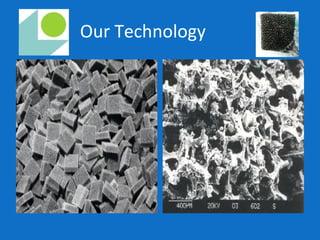
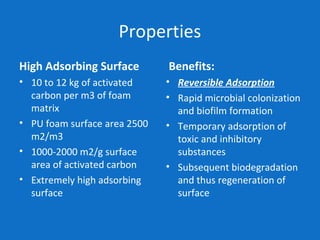
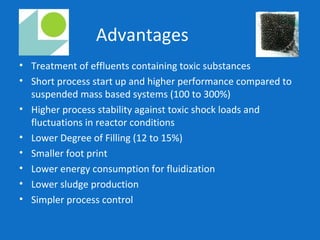
• LEVAPOR Bio Carrier
• First synthesized Bio Carrier
• Porous, Flexible, Durable PU foam
impregnated with surface active pigments like
activated carbon
• Due to variability of foam and pigment type
and their ratios, tailor made carriers can be
produced with varying properties
Our Technology
Properties
High Adsorbing Surface
• 10 to 12 kg of activated
carbon per m3 of foam
matrix
• PU foam surface area 2500
m2/m3
• 1000-2000 m2/g surface
area of activated carbon
• Extremely high adsorbing
surface
Benefits:
• Reversible Adsorption
• Rapid microbial colonization
and biofilm formation
• Temporary adsorption of
toxic and inhibitory
substances
• Subsequent biodegradation
and thus regeneration of
surface
Advantages
• Treatment of effluents containing toxic substances
• Short process start up and higher performance compared to
suspended mass based systems (100 to 300%)
• Higher process stability against toxic shock loads and
fluctuations in reactor conditions
• Lower Degree of Filling (12 to 15%)
• Smaller foot print
• Lower energy consumption for fluidization
• Lower sludge production
• Simpler process control
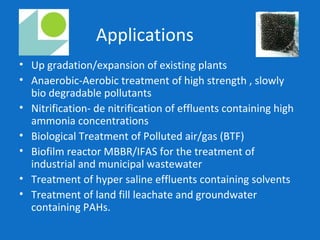
Applications
• Up gradation/expansion of existing plants
• Anaerobic-Aerobic treatment of high strength , slowly
bio degradable pollutants
• Nitrification- de nitrification of effluents containing high
ammonia concentrations
• Biological Treatment of Polluted air/gas (BTF)
• Biofilm reactor MBBR/IFAS for the treatment of
industrial and municipal wastewater
• Treatment of hyper saline effluents containing solvents
• Treatment of land fill leachate and groundwater
containing PAHs.
Agro Chemicals, Middle East
• Pesticides Manufacturing Agrochemicals industries
• A Wide variety of agro chemicals manufactured at site due
to hectic crop cycle
• Effluents Containing :
• Biologically active biocides and often inhibiting raw
chemicals , active ingredients and their by products
• Solvents like methanol, aromates, dicholoromethane,
methyl-isobutyl-ketone(MIBK) from the formulations
• Higher Salinity
A typical Effluent Characteristics
• Up to 12,000 mg/lit COD comprising solvents in it
• Up to 600 mg/lit inhibitory , active ingredients and their by
products
• 500 to 800 mg/lit Total Kjehldahl Nitrogen (TKN) containing
mostly Organic-N associated with slowly hydrolysable s-
triazine.
• Up to 1500 mg/lit Sulfates (SO4-)
• 10,000 to 25,000 mg/lit Salt Concentration as NaCl
The Problem
• Adversely affect the environment
• Presence of high amount of biodegradable solvents make wet
oxidation processes costly and thus biological degradation
would be cost effective alternative
• Higher concentrations of inhibitory substances lower the COD
removal efficiency of suspended growth only reactors
• COD removal also affected due to high fluctuations of load
• Severe nitrification inhibition due to fluctuating COD removal
efficiency
• Aerobic only treatment increases aeration costs and also
handling of high amount of toxic sludge
The solution
• MicroAerobic-Anaerobic-Aerobic
• Provides most diverse microbial consortia responsible for
the biodegradation of complex molecular structures.
• During Anaerobic Step the complex molecules are
hydrolysed
• Much of the COD removed , thus reduce aeration demand
• Lower sludge production and thus solids handling costs.
• Presence of inhibitory substances, pH changes, salinity
fluctuations cause deflocculation and wash out of microbes
• Thus, immobilization of microbes on carriers
Pilot Testing
• Proposed Micro Aerobic-Anaerobic-Aerobic
Scheme with denitrification
• Tested for two years at site
•
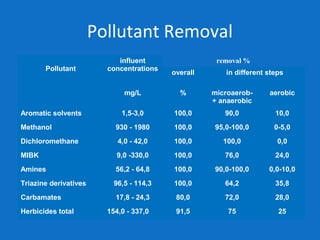
Pollutant Removal
Pollutant
influent
concentrations
removal %
overall in different steps
mg/L % microaerob-
+ anaerobic
aerobic
Aromatic solvents 1,5-3,0 100,0 90,0 10,0
Methanol 930 - 1980 100,0 95,0-100,0 0-5,0
Dichloromethane 4,0 - 42,0 100,0 100,0 0,0
MIBK 9,0 -330,0 100,0 76,0 24,0
Amines 56,2 - 64,8 100,0 90,0-100,0 0,0-10,0
Triazine derivatives 96,5 - 114,3 100,0 64,2 35,8
Carbamates 17,8 - 24,3 80,0 72,0 28,0
Herbicides total 154,0 - 337,0 91,5 75 25
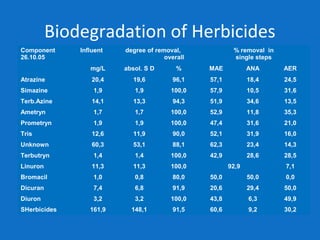
Biodegradation of Herbicides
Component
26.10.05
Influent degree of removal,
overall
% removal in
single steps
mg/L absol. S D % MAE ANA AER
Atrazine 20,4 19,6 96,1 57,1 18,4 24,5
Simazine 1,9 1,9 100,0 57,9 10,5 31,6
Terb.Azine 14,1 13,3 94,3 51,9 34,6 13,5
Ametryn 1,7 1,7 100,0 52,9 11,8 35,3
Prometryn 1,9 1,9 100,0 47,4 31,6 21,0
Tris 12,6 11,9 90,0 52,1 31,9 16,0
Unknown 60,3 53,1 88,1 62,3 23,4 14,3
Terbutryn 1,4 1,4 100,0 42,9 28,6 28,5
Linuron 11,3 11,3 100,0 92,9 7,1
Bromacil 1,0 0,8 80,0 50,0 50,0 0,0
Dicuran 7,4 6,8 91,9 20,6 29,4 50,0
Diuron 3,2 3,2 100,0 43,8 6,3 49,9
SHerbicides 161,9 148,1 91,5 60,6 9,2 30,2
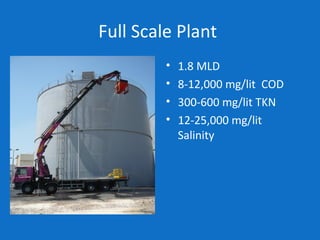
Full Scale Plant
• 1.8 MLD
• 8-12,000 mg/lit COD
• 300-600 mg/lit TKN
• 12-25,000 mg/lit
Salinity
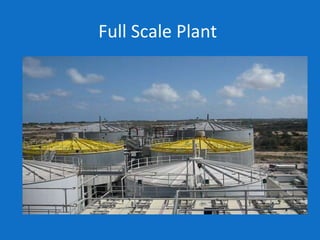
Full Scale Plant
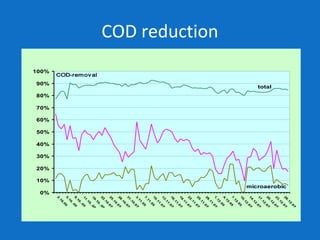
COD reduction
COD-removal
0%
10%
20%
30%
40%
50%
60%
70%
80%
90%
100%
2.10.055.10..058.10..0511
.10
..0519
.10
..0522
.10
.0
525
.10
.0
528
.10
.0
531
.10
.0
53.11.057.11.0510
.11
.0
513
.11
.0
516
.11
.0
519
.11
.0
522
.11
.0
525
.11
.0
528
.11
.0
51.12.054.12.057.12.0510
.12
.0
514
.12
.0
517
.12
.0
520
.12
.0
523
.12
.0
526
.12
.0
5
total
microaerobic
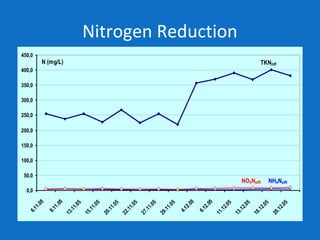
Nitrogen Reduction
0,0
50,0
100,0
150,0
200,0
250,0
300,0
350,0
400,0
450,0
6.11.05
8.11.05
13.11.05
15.11.05
20.11.05
22.11.05
27.11.05
29.11.05
4.12.05
6.12.05
11.12.05
13.12.05
18.12.05
20.12.05
NO3Neffl NH4Neffl
N (mg/L) TKNinfl
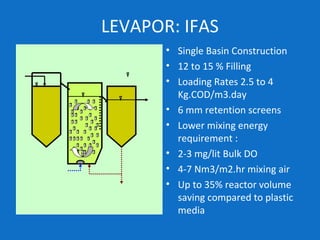
LEVAPOR: IFAS
• Single Basin Construction
• 12 to 15 % Filling
• Loading Rates 2.5 to 4
Kg.COD/m3.day
• 6 mm retention screens
• Lower mixing energy
requirement :
• 2-3 mg/lit Bulk DO
• 4-7 Nm3/m2.hr mixing air
• Up to 35% reactor volume
saving compared to plastic
media
How Can We Associate
• Problem analysis for the treatment of high strength
industrial and municipal wastewater treatment
• Define treatment goals and conceptual process
design
• Development of optimal process and parameters
• Manufacturing of high performance tailor made bio
carriers for the application
• Process Start up
Thank You !!!!

Levapor carriers agro_chemicals

  • 1.
    LEVAPOR – porous,adsorbing carrier for bioprocess improvement Dr. Imre Pascik LEVAPOR GmbH www. levapor.com Leverkusen, Germany
  • 2.
    About us • InnovativeOrganization • Fixed Film Based Process Solutions • Complex Effluent, Municipal Wastewater, Polluted Gas • CEO Dr. Imre Pascik • 40 years of experience with Bayer AG, Environmental Bio Technology Centre, Leverkusen
  • 3.
    About us • Developmentof innovative processes • Two Step nitrification of high Ammonia containing effluents • Landfill Leachate Treatment • Bayer Tower Biology (Otto Award) • Degradation of toxic effluents using Anaerobic-Aerobic Processes
  • 4.
    What We do •Problem analysis for the treatment of high strength industrial and municipal wastewater treatment • Define treatment goals and conceptual process design • Development of optimal process and design parameters with pilot tests • Manufacturing of high performance tailor made bio carriers for the application • Process Start up
  • 5.
    Industries We serve •Chemicals and Pharmaceuticals • Petrochemicals and Refineries • Pulp and Paper • Coal Conversion : coke plant, coal gasification, pyrolysis • Textile finishing and Leather manufacturers • Municipal Wastewater Treatment • Special effluents like land fill leachate and sludge processing unit
  • 6.
    Bio Film Technology •Biodegradation of pollutants occurs via teamwork of microorganisms united in sludge flocs • Important result of research : • Some important, non-flocculating organisms will be washed out from bioreactor, resulting reduced plant efficiency • Solution: Biofilm technology • via immobilisation, cell growth on • solid surfaces, “carriers“ made of • plastics, sand, glass, etc. • Target: Synthesis of biocarrier
  • 7.
    Our REQUESTS onOPTIMAL CARRIER • PROPERTY EFFECT • 1. Adsorbing capacity - binding toxic pollutants - fast colonization + bio film - fast start up at high level • 2. Porosity, high inner surface - protection of the biofilm • (high biomass content) - high space-time-yields • 3. Fast wetting - homogenous fluidisation • 4. Water binding - mass transport, bioactivity • 5. Proper fluidisation - lower energy consumption
  • 8.
    Our Technology • LEVAPORBio Carrier • First synthesized Bio Carrier • Porous, Flexible, Durable PU foam impregnated with surface active pigments like activated carbon • Due to variability of foam and pigment type and their ratios, tailor made carriers can be produced with varying properties
  • 9.
  • 10.
    Properties High Adsorbing Surface •10 to 12 kg of activated carbon per m3 of foam matrix • PU foam surface area 2500 m2/m3 • 1000-2000 m2/g surface area of activated carbon • Extremely high adsorbing surface Benefits: • Reversible Adsorption • Rapid microbial colonization and biofilm formation • Temporary adsorption of toxic and inhibitory substances • Subsequent biodegradation and thus regeneration of surface
  • 11.
    Advantages • Treatment ofeffluents containing toxic substances • Short process start up and higher performance compared to suspended mass based systems (100 to 300%) • Higher process stability against toxic shock loads and fluctuations in reactor conditions • Lower Degree of Filling (12 to 15%) • Smaller foot print • Lower energy consumption for fluidization • Lower sludge production • Simpler process control
  • 12.
    Applications • Up gradation/expansionof existing plants • Anaerobic-Aerobic treatment of high strength , slowly bio degradable pollutants • Nitrification- de nitrification of effluents containing high ammonia concentrations • Biological Treatment of Polluted air/gas (BTF) • Biofilm reactor MBBR/IFAS for the treatment of industrial and municipal wastewater • Treatment of hyper saline effluents containing solvents • Treatment of land fill leachate and groundwater containing PAHs.
  • 13.
    Agro Chemicals, MiddleEast • Pesticides Manufacturing Agrochemicals industries • A Wide variety of agro chemicals manufactured at site due to hectic crop cycle • Effluents Containing : • Biologically active biocides and often inhibiting raw chemicals , active ingredients and their by products • Solvents like methanol, aromates, dicholoromethane, methyl-isobutyl-ketone(MIBK) from the formulations • Higher Salinity
  • 14.
    A typical EffluentCharacteristics • Up to 12,000 mg/lit COD comprising solvents in it • Up to 600 mg/lit inhibitory , active ingredients and their by products • 500 to 800 mg/lit Total Kjehldahl Nitrogen (TKN) containing mostly Organic-N associated with slowly hydrolysable s- triazine. • Up to 1500 mg/lit Sulfates (SO4-) • 10,000 to 25,000 mg/lit Salt Concentration as NaCl
  • 15.
    The Problem • Adverselyaffect the environment • Presence of high amount of biodegradable solvents make wet oxidation processes costly and thus biological degradation would be cost effective alternative • Higher concentrations of inhibitory substances lower the COD removal efficiency of suspended growth only reactors • COD removal also affected due to high fluctuations of load • Severe nitrification inhibition due to fluctuating COD removal efficiency • Aerobic only treatment increases aeration costs and also handling of high amount of toxic sludge
  • 16.
    The solution • MicroAerobic-Anaerobic-Aerobic •Provides most diverse microbial consortia responsible for the biodegradation of complex molecular structures. • During Anaerobic Step the complex molecules are hydrolysed • Much of the COD removed , thus reduce aeration demand • Lower sludge production and thus solids handling costs. • Presence of inhibitory substances, pH changes, salinity fluctuations cause deflocculation and wash out of microbes • Thus, immobilization of microbes on carriers
  • 17.
    Pilot Testing • ProposedMicro Aerobic-Anaerobic-Aerobic Scheme with denitrification • Tested for two years at site •
  • 18.
    Pollutant Removal Pollutant influent concentrations removal % overallin different steps mg/L % microaerob- + anaerobic aerobic Aromatic solvents 1,5-3,0 100,0 90,0 10,0 Methanol 930 - 1980 100,0 95,0-100,0 0-5,0 Dichloromethane 4,0 - 42,0 100,0 100,0 0,0 MIBK 9,0 -330,0 100,0 76,0 24,0 Amines 56,2 - 64,8 100,0 90,0-100,0 0,0-10,0 Triazine derivatives 96,5 - 114,3 100,0 64,2 35,8 Carbamates 17,8 - 24,3 80,0 72,0 28,0 Herbicides total 154,0 - 337,0 91,5 75 25
  • 19.
    Biodegradation of Herbicides Component 26.10.05 Influentdegree of removal, overall % removal in single steps mg/L absol. S D % MAE ANA AER Atrazine 20,4 19,6 96,1 57,1 18,4 24,5 Simazine 1,9 1,9 100,0 57,9 10,5 31,6 Terb.Azine 14,1 13,3 94,3 51,9 34,6 13,5 Ametryn 1,7 1,7 100,0 52,9 11,8 35,3 Prometryn 1,9 1,9 100,0 47,4 31,6 21,0 Tris 12,6 11,9 90,0 52,1 31,9 16,0 Unknown 60,3 53,1 88,1 62,3 23,4 14,3 Terbutryn 1,4 1,4 100,0 42,9 28,6 28,5 Linuron 11,3 11,3 100,0 92,9 7,1 Bromacil 1,0 0,8 80,0 50,0 50,0 0,0 Dicuran 7,4 6,8 91,9 20,6 29,4 50,0 Diuron 3,2 3,2 100,0 43,8 6,3 49,9 SHerbicides 161,9 148,1 91,5 60,6 9,2 30,2
  • 20.
    Full Scale Plant •1.8 MLD • 8-12,000 mg/lit COD • 300-600 mg/lit TKN • 12-25,000 mg/lit Salinity
  • 21.
  • 22.
  • 23.
  • 24.
    LEVAPOR: IFAS • SingleBasin Construction • 12 to 15 % Filling • Loading Rates 2.5 to 4 Kg.COD/m3.day • 6 mm retention screens • Lower mixing energy requirement : • 2-3 mg/lit Bulk DO • 4-7 Nm3/m2.hr mixing air • Up to 35% reactor volume saving compared to plastic media
  • 25.
    How Can WeAssociate • Problem analysis for the treatment of high strength industrial and municipal wastewater treatment • Define treatment goals and conceptual process design • Development of optimal process and parameters • Manufacturing of high performance tailor made bio carriers for the application • Process Start up
  • 26.