ADVANCED WASTE WATER
TREATMENT- NITROGEN REMOVAL
SUBMITTED TO- Dr. BALJINDER KAUR
SUBMITTED BY- NEHA SINGLA
M.Sc.(Hon’s) Biotechnology
ROLL NO.- 18011001
Contents-
• INTRODUCTION (waste water treatment)
• WHY TO REMOVE NITROGEN ?
• NITROGEN REMOVAL METHODS
PHYSICAL METHODS
CHEMICAL METHODS
PHYSICOCHEMICAL METHOD
BIOLOGICAL METHODS
• REFERENCES
INTRODUCTION-WASTE WATER TREATMENT-
• It is the process of removing contaminants from waste water . The
treatment involves three stages-
Primary Treatment - removes the materials that can be easily
collected from the raw wastewater and disposed of. The materials
that are removed during this treatment are- sand , gravels, rocks ,
large settleable solids and floating material.
Secondary Treatment - remove biological content of the sewage
such as are derived from human waste ,food waste , soaps and
detergent. These systems are classified as fixed film or suspended
growth. Fixed film include trickling filter and rotating biological
contractors . Suspended growth systems such as activated sludge –
the biomass is well mixed with the sewage and can be operated in
smaller space than fixed film systems.
In this biological removal of nitrogen take place - ammonia to nitrite
and nitrate and ultimately to nitrogen gas.
Tertiary Treatment - is to provide a final treatment stage to raise the
effluent quality before it is discharged into water bodies. If
disinfection is done , it is always the final process . It is also called
“effluent polishing”
SOURCES OF NITROGEN
• Natural sources- precipitation, dustfall, nonurban runoff, and
biological fixation.
• Man- caused sources- runoff from urban area, municipal
wastewaters, drainage from agricultural lands and industrial wastes.
FORMS OF NITROGEN-
Nitrogen can be present in the form of proteins, urea, ammonia, nitrite
and nitrate.
NITROGEN CYCLE-
WHY TO REMOVE NUTRIENTS ?
• Waste water may contain high level of nutrients nitrogen and
phosphorous. Excessive release to the environment can lead to a
build up of nutrients, called eutrophication ,which can in turn
encourage the growth of weeds , algae and cyanobacteria . This may
cause algal bloom , a rapid growth in the population of algae. The
algae numbers are unsuitable and eventually most of them die. The
decomposition of the algae by bacteria uses up so much of oxygen in
the water that most or all of the animals die, which create more
organic matter for the bacteria to decompose. In addition to this,
some algal species produce toxins that contaminate drinking water
supplies. Therefore different procedures are required to remove
nitrogen and phosphorous.
EUTROPHICATION
NITROGEN REMOVAL METHODS-
• PHYSICAL METHODS-
ELECTRODIALYSIS
REVERSE OSMOSIS
• CHEMICAL METHODS-
AMMONIUMPRECIPITATION AS STRUVITE
CARBON SORPTION
BREAKPOINT CHLORINATION
ION EXCHANGE
OXIDATION PROCESSES
• PHYSICOCHEMICAL METHODS-
AMMONIA STRIPPING
• BIOLOGICAL METHODS-
NITRIFICATION – DENITRIFICATION
NITROGEN REMOVAL VIA SULPHATE OXIDISING BACTERIA
IFAS (INTEGRATED FIXED FILM AND ACTIVATED SLUDGE SYSTEM)
PHYSICAL METHODS-
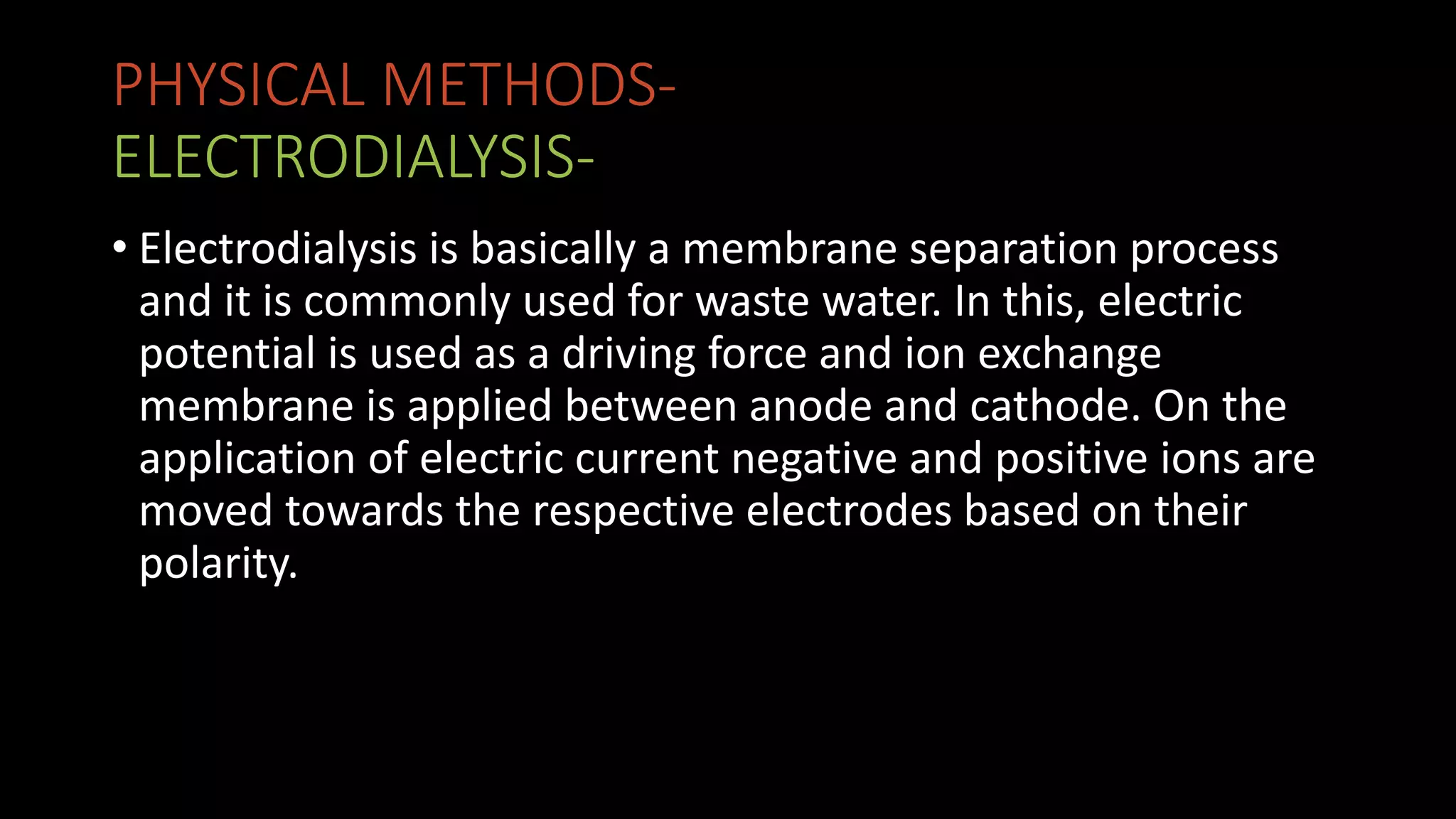
ELECTRODIALYSIS-
• Electrodialysis is basically a membrane separation process
and it is commonly used for waste water. In this, electric
potential is used as a driving force and ion exchange
membrane is applied between anode and cathode. On the
application of electric current negative and positive ions are
moved towards the respective electrodes based on their
polarity.
REVERSE OSMOSIS-
• It is a process where demineralisation or deionisation of
water by pushing it under pressure through a semi
permeable membrane.
• A semi permeable membrane is a membrane that will allow
some atoms or molecules to pass but not others.
• Osmosis occurs naturally without energy required , to
reverse the process of osmosis , there is need to apply
energy to the more saline solution.
Semipermeable membrane
Pure waterconcentrate
Pressure applied is slightly more than osmotic pressure
CHEMICAL METHODS-
AMMONIUM PRECIPITATE AS STRUVITE-
• Precipitation of NH4
+ as Magnesium Ammonium Phosphate
(MAP), also named struvite . Reaction-
Mg2+ + PO4
3- + NH4
+ + 6H2O ⇆ MgNH4PO4⋅6H2O↓
• Has low solubility in water and can be separated from
aqueous phase.
• Implemented for different types of wastewaters such
as tannery effluents of leather industries, digester
supernatant and industrial wastewater treatment
plants.
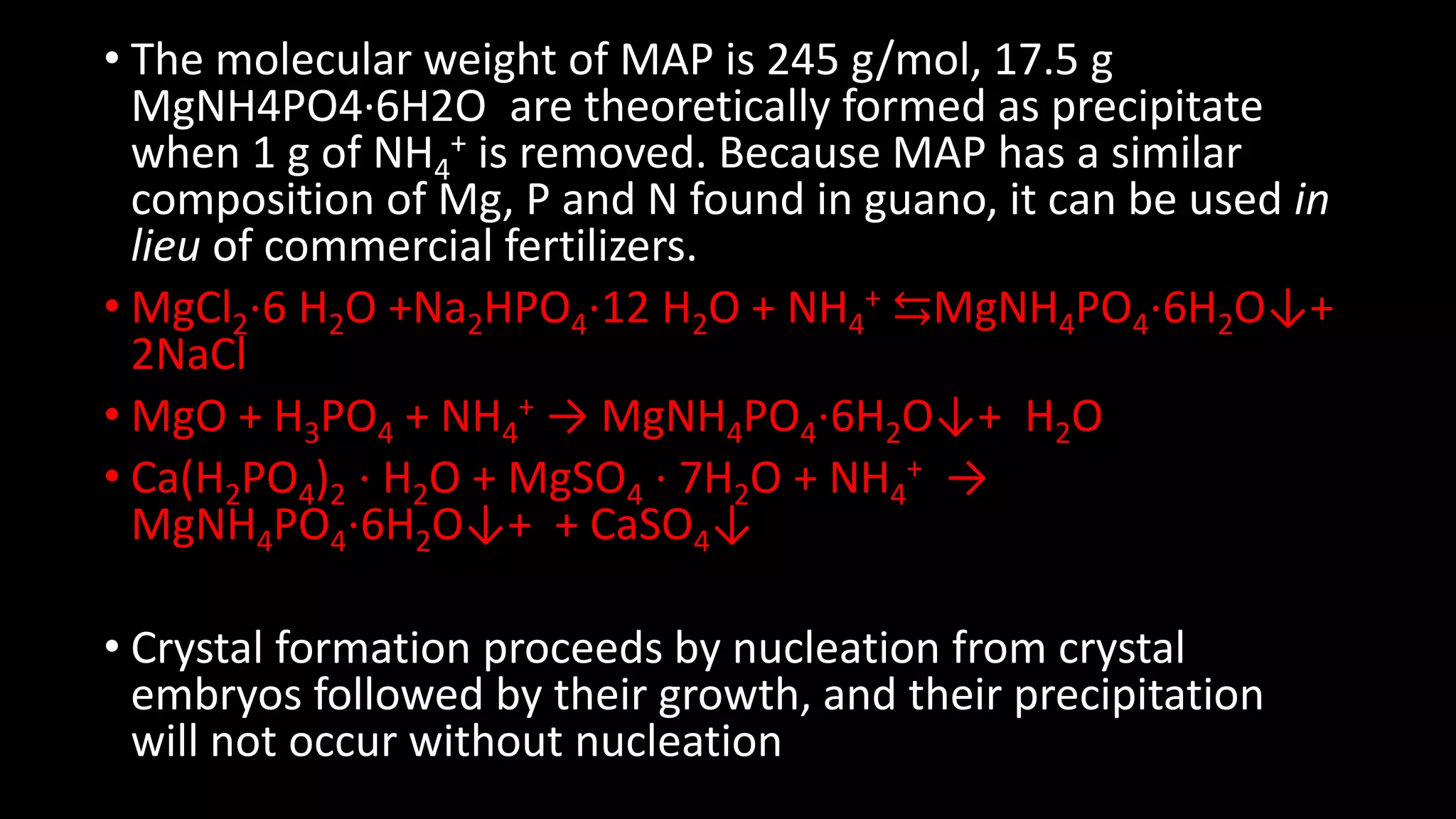
• The molecular weight of MAP is 245 g/mol, 17.5 g
MgNH4PO4·6H2O are theoretically formed as precipitate
when 1 g of NH4
+ is removed. Because MAP has a similar
composition of Mg, P and N found in guano, it can be used in
lieu of commercial fertilizers.
• MgCl2⋅6 H2O +Na2HPO4⋅12 H2O + NH4
+ ⇆MgNH4PO4⋅6H2O↓+
2NaCl
• MgO + H3PO4 + NH4
+ → MgNH4PO4⋅6H2O↓+ H2O
• Ca(H2PO4)2 ⋅ H2O + MgSO4 ⋅ 7H2O + NH4
+ →
MgNH4PO4⋅6H2O↓+ + CaSO4↓
• Crystal formation proceeds by nucleation from crystal
embryos followed by their growth, and their precipitation
will not occur without nucleation
• Cost of adding magnesium salts is the major economic
constraints to the application of struvite crystallisation.
Bittern( solution that remains after precipitation
of halite (common salt) from brine and/or seawater)is low
cost source of magnesium ions because contain mostly
magnesium chloride with other smaller amount of inorganic
compounds.
• It is rich in magnesium chlorides , sulfates , bromides
, iodides , and other chemicals present in the original waters.
• Most used reactors for this are- fluidised bed and stirred
tanks
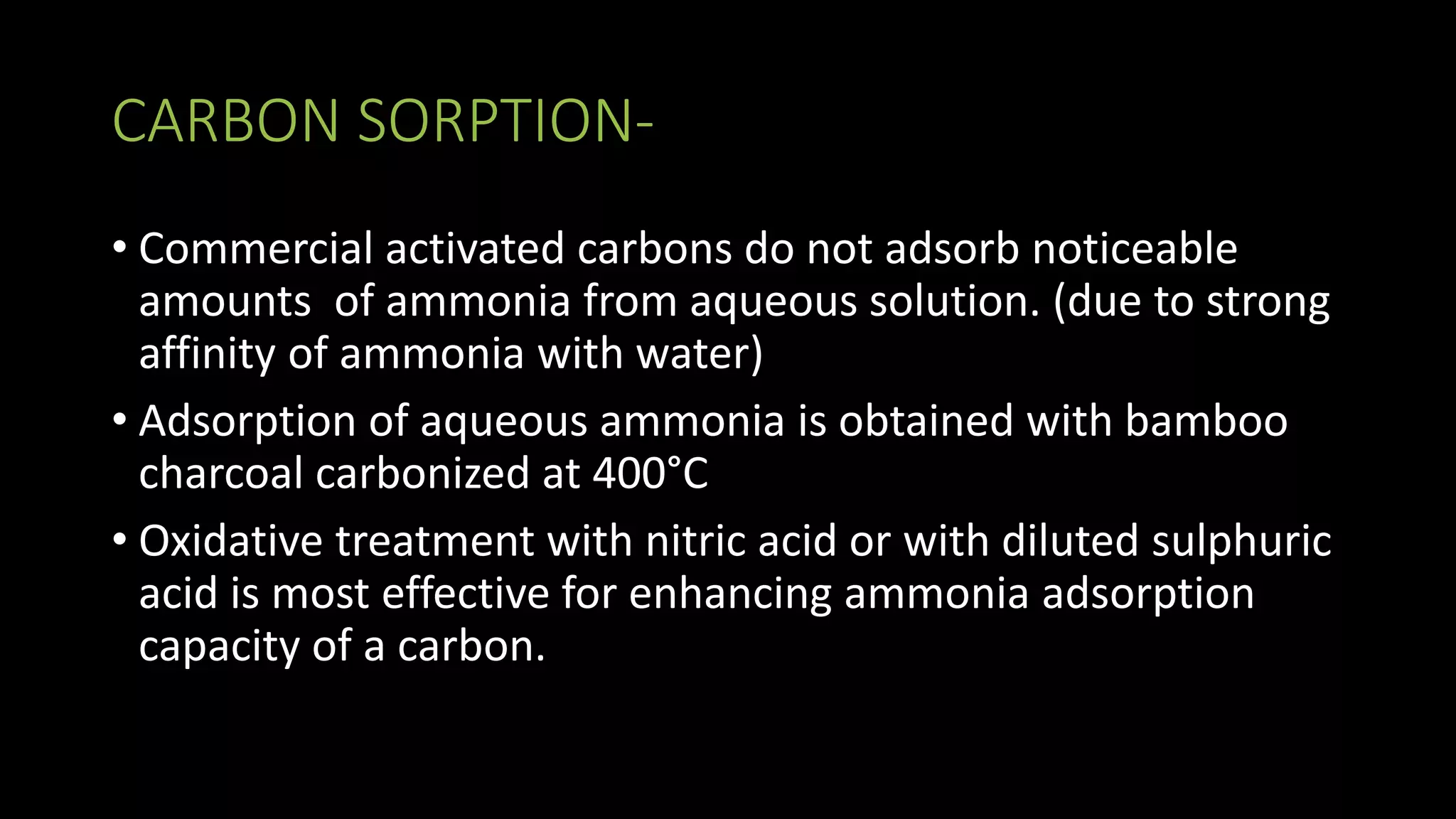
CARBON SORPTION-
• Commercial activated carbons do not adsorb noticeable
amounts of ammonia from aqueous solution. (due to strong
affinity of ammonia with water)
• Adsorption of aqueous ammonia is obtained with bamboo
charcoal carbonized at 400°C
• Oxidative treatment with nitric acid or with diluted sulphuric
acid is most effective for enhancing ammonia adsorption
capacity of a carbon.
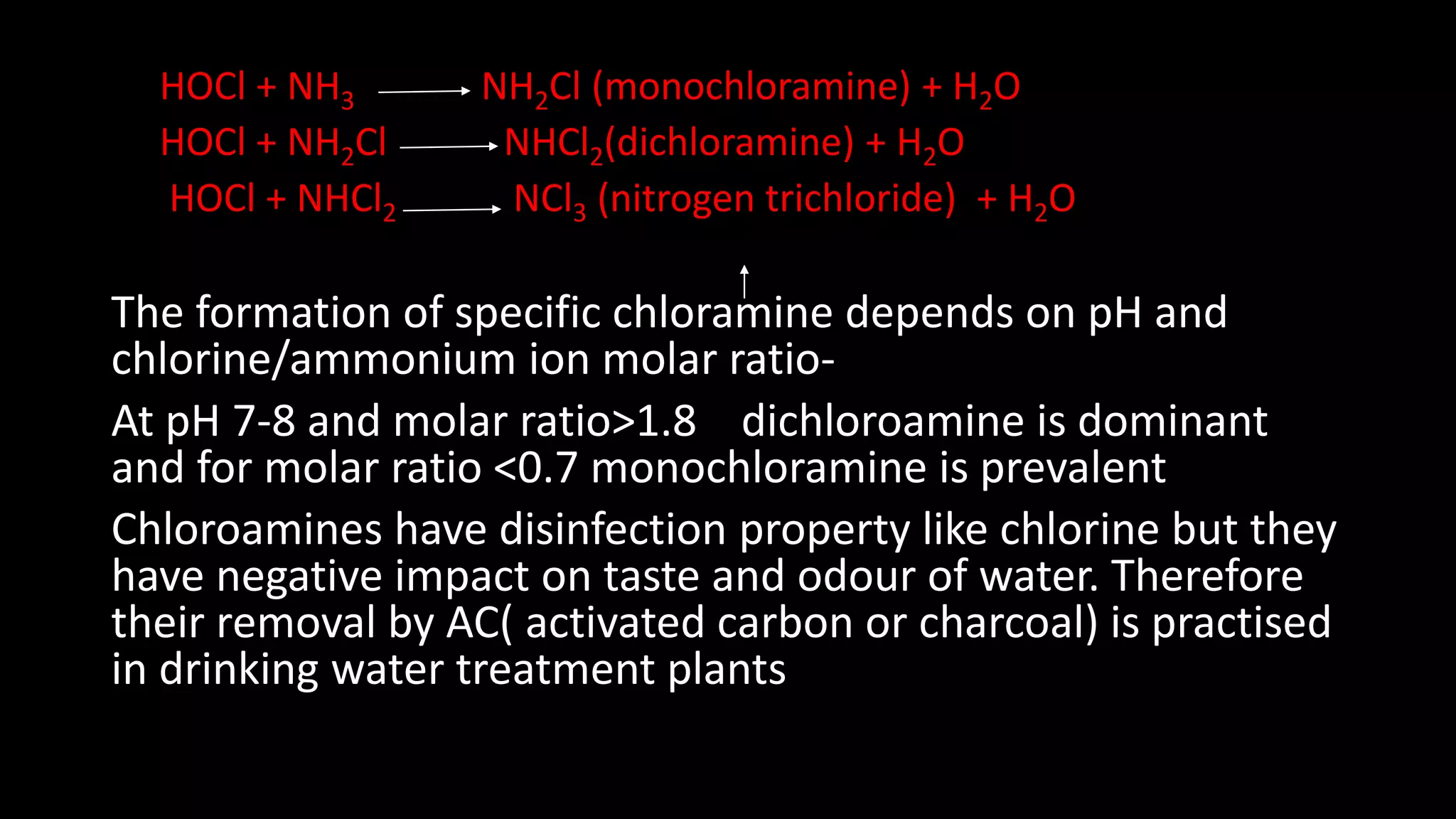
HOCl + NH3 NH2Cl (monochloramine) + H2O
HOCl + NH2Cl NHCl2(dichloramine) + H2O
HOCl + NHCl2 NCl3 (nitrogen trichloride) + H2O
The formation of specific chloramine depends on pH and
chlorine/ammonium ion molar ratio-
At pH 7-8 and molar ratio>1.8 dichloroamine is dominant
and for molar ratio <0.7 monochloramine is prevalent
Chloroamines have disinfection property like chlorine but they
have negative impact on taste and odour of water. Therefore
their removal by AC( activated carbon or charcoal) is practised
in drinking water treatment plants
• Reactions-
AC + 2 Cl2 + 2 H2O 4 HCl + CO2
AC + 4 NHCl2 2 N2 + CO2 + 8 H+ + 8 Cl−
AC doesn't really adsorb chloramines but act as a catalyst for
their chemical breakdown
BREAK POINT CHLORINATION-
• It is widely used process that oxidises ammonia to nitrogen
gas.
• It is effluent polishing technique only not for removal of high
level of nitrogen.
• When chlorine is added to waste water containing
ammonium nitrogen , it initially react with hypochlorous acid
to form chloramines . Continued addition of chlorine after
break point (occuring when free chlorine residues are formed)
converts chloramines to nitrogen gas.
• NH4
++ 1.5HOCl 0.5N2 + 1.5H2O+ 2.5H++ 1.5 Cl−
• Ammonia is oxidised by chlorine to nitrogen gas with a residual ammonia
concentration of less than 0.1ppm
 ZONE1- formation of monochloramines
 ZONE2-increase in dichloramine and
disappearance of ammonia
 ZONE3-appearance of free
chlorine
ION EXCHANGE-
• A filtered waste water is passed through a bed of zeolite to effect a
90-97% ammonium removal.
• ion exchange offers a number of advantages including the ability to
handle shock loadings and the ability to operate over a wider range of
temperatures.
• The ion exchange method usually employs organic resins, which are
very selective. However, they are very expensive. Ion exchange with
natural zeolites is more competitive because of its low cost and
relative simplicity of application and operation. Natural zeolites are
the most important inorganic cation exchangers that exhibit high ion
exchange capacity, selectivity and compatibility with the natural
environment
• There are two types of resins: natural resins such as zeolite
and synthetic resins like silica powder
• For the removal of ammonium ion from wastewater and
culture medium, Clinoptilolite (aluminosilicate), a type of
natural zeolite from volcanic rock has been used extensively .
Chemical regenerants such as sodium hydroxide and
hydrochloride acid are normally used.
• Clinoptilolite{(Na,K,Ca)2-3 Al3 (Al,Si)2Si13O}
is cheaper than synthetic resin but durability, ion exchange
capacity and regeneration capacity of synthetic resin is
higher than clinoptilolite.
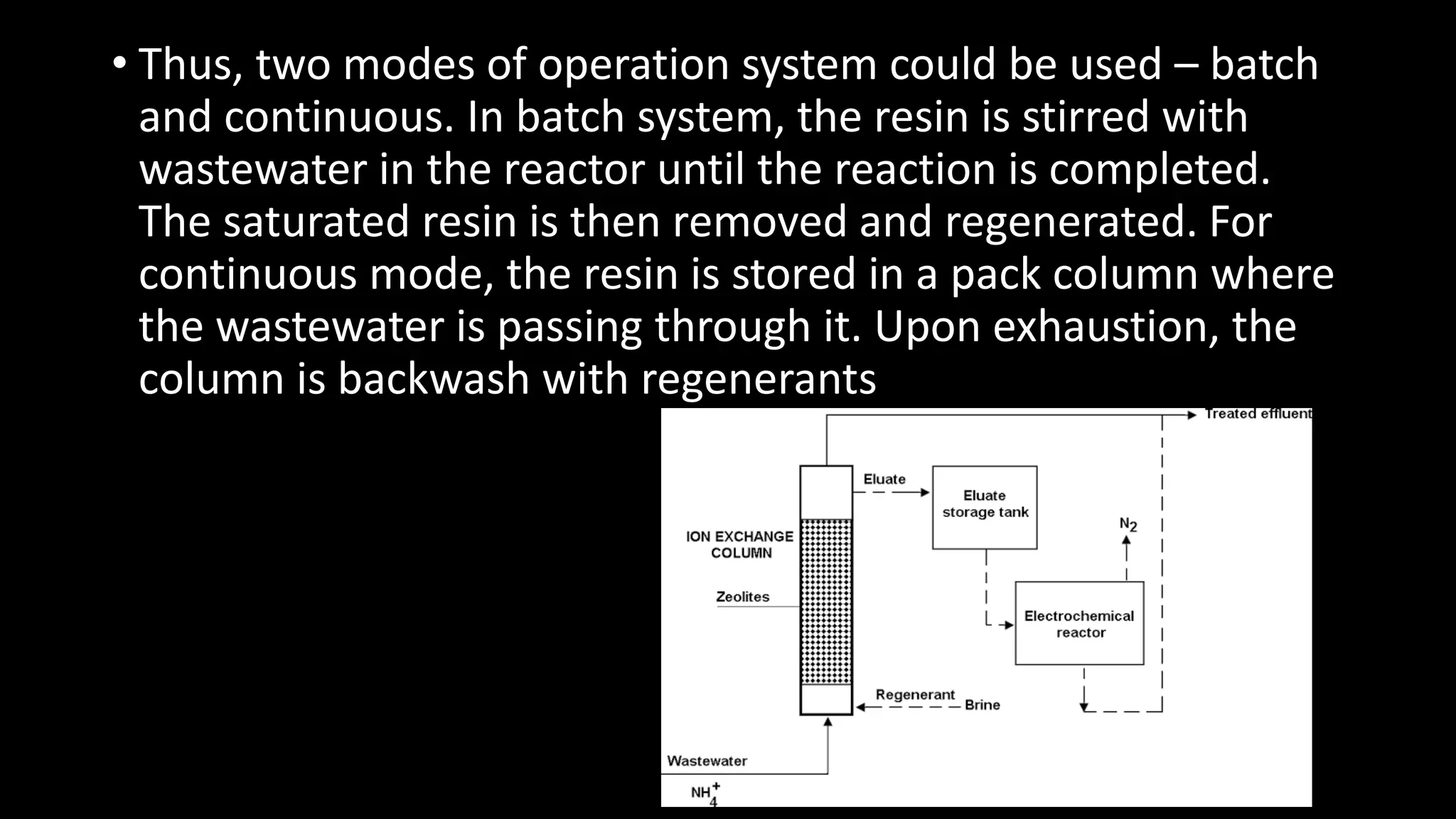
• Thus, two modes of operation system could be used – batch
and continuous. In batch system, the resin is stirred with
wastewater in the reactor until the reaction is completed.
The saturated resin is then removed and regenerated. For
continuous mode, the resin is stored in a pack column where
the wastewater is passing through it. Upon exhaustion, the
column is backwash with regenerants
OXIDATION PROCESSES-
• Ozonation and catalytic wet air oxidation
OZONATION-
One of the method to oxidation of low concentration of ammonia into
nitrates.
NH3 + 4 O3 H+ + NO3
− + H2O + 4 O2
• Rate of reaction of ozone with ammonia is slow as the persistence of
ozone in water is quite short.
• pH has no effect on the ozone-based ammonia oxidation in water
• Nitrogen gas is the primary end product during the ozone-based
ammonia removal in seawater
• OZONATION OF AMMONIA IN THE PRESENCE OF BROMIDE-
O3 +Br- OBr- +O2
O3 + OBr- Br- + 2 O2
2O3 + OBr- BrO3
- + 2 O2
H+ + OBr- HOBr
HOBr + NH3 NH2Br + H2O
HOBr +NH2Br NHBr2 + H2O
HOBr + NHBr2 NBr3 +H2O
2H2O +NHBr2 +NBr3 N2 + 3Br- + 3H+ + 2HOBr
CWAO( CATALYTIC WET AIR OXIDATION)-
• Consists of oxidizing pollutants with oxygen at high pressure (5-200
bar) and temperature (125-320°C) in the presence of a catalyst.
• Aniline and its azoic derivatives are treated by CWAO.
• Applied to the elimination of ammonia with a good efficiency when
associated with cobalt (II) oxide as a catalyst at temperatures up to
260°C.
• Wet oxidation, also known as wet air oxidation, refers to a process of
oxidizing suspended or dissolved material in liquid phase with
dissolved oxygen at elevated temperature. It is a method for
treatment of waste streams that are too dilute to incinerate and too
concentrated for biological treatment.
• Organic N + O2 NH3+ CO2+ RCOOH
• NH3 + 4 O3 H+ + NO3
− + H2O + 4 O2 (cobalt (II) oxide as catalyst)
PHYSICOCHEMICAL METHODS-
AMMONIA STRIPPING-
Ammonia removal from highly concentrated wastewaters can be
accomplished by air or stream stripping.. (eg-landfill leachate,
supernatants of anaerobic digestion processes , petrochemical
industry). In stripping lime or some other caustic soda substance is
generally added to waste water until pH reaches 10.8-11.5 , converting
ammonium hydroxide ions to ammonia gas –
NH4 + OH- H2O + NH3
Releasing ammonia into the atmosphere may be unacceptable due to
air quality concerns. In such cases, air stripping units are coupled with
absorption towers which capture the released ammonia. In modern ,
absorption onto sulphuric acid solutions allow the production of
ammonium sulphate ( marketable product).
Advantage- simple and requires stability of pH and temperature.
Limitations-
Formation of CaCO3 on the tower packing , result in progressive loss of
stripping performance, with the need of frequent cleaning operations
2. Cannot be performed in freezing conditions .
BIOLOGICAL METHODS-
• NITRIFICATION AND DENITRIFICATION
Nitrification is the process by which ammonia is first converted
to nitrite then to nitrate. The processes used in treatment of
waste water for nitrification are as follows-
1. Trickling filters-
The extent of nitrification on trickling filters depend on various
factors including temperature, dissolved oxygen , pH , presence
of inhibitors , filter depths and media type, loading rate. Low
rate trickling filters allowed the development of high nitrifying
population
2.ROTATING BIOLOGICAL CONTRACTOR (RBC)-
First stage of RBC mostly remove organic materials ,whereas
subsequent stages removed ammonia as a result of
nitrification . Ammonia oxidisers could not effectively compete
with the faster growing heterotrophs that oxidise organic
matter.
• Conversion of ammonia to nitrite (Nitrosomonas)
NH4
+ + 2O2 NO2
- + 2H+ + H2O
• Conversion of nitrites to nitrates ( Nitrobacter)
NO2
- + 0.5O2 NO3
-
•Denitrification-
It is the biological process by which nitrate is converted to
nitrogen and other gaseous end products. The requirements
for denitrification are-
Nitrates
Organic carbon
Anaerobic environment
6NO2 + 5CH20H 3N2 + 6OH + 5CO2 + 7H2O
Pseudomonas, Achromobacter, Bacillus and Micrococcus are
denitrifying organisms.
Anaerobic activated sludge, anaerobic filter or anaerobic
lagoon are three possible designs for denitrification process.
NITROGEN REMOVAL VIA BACTERIAL SULPHATE
REDUCTION-(SRAO Process- sulphate reduction
ammonium oxidation)
• Sulphate as an electron acceptor to oxidise ammonium into nitrogen
in a granular activated carbon anaerobic fluidised bed reactor. This
process is condensed into one equation describing the two stage
process-
• 2NH4
+ + SO4
2- S0 + N2 + 4H2O (1)
• The end products are N2 and S0, which are non-pollutants and so the
process could offer great future potential as an energy-saving and
environmentally sound wastewater treatment . This process was
combined with the conventional anammox reaction and the following
steps were proposed -
• 3SO4
2- + 4NH4
+ 3S2- + 4NO2
- + 4H2O + 8H+ (2)
• 3S2- +2NO2
- +8H+ 3S + N2 + 4H2O (3)
• 2NO2
- + 2NH4
+ 2N2 + 4 H20(anammox process) (4)
SRAO PROCESS under autotrophic conditions-
SO4
2- + NH4
+ S + NO2
- + H2O
It is believed that some denitrification processes can be
carried out by the reduction of NO2
− to N2 and accompanied
by the oxidation of sulfide by autotrophic denitrifiers, as
described in Equation (3) . Equation (4) is the reaction in the
traditional anammox process. Therefore, the two anaerobic
ammonium oxidation reactions were achieved during the
SRAO process in Equations (3) and (4).
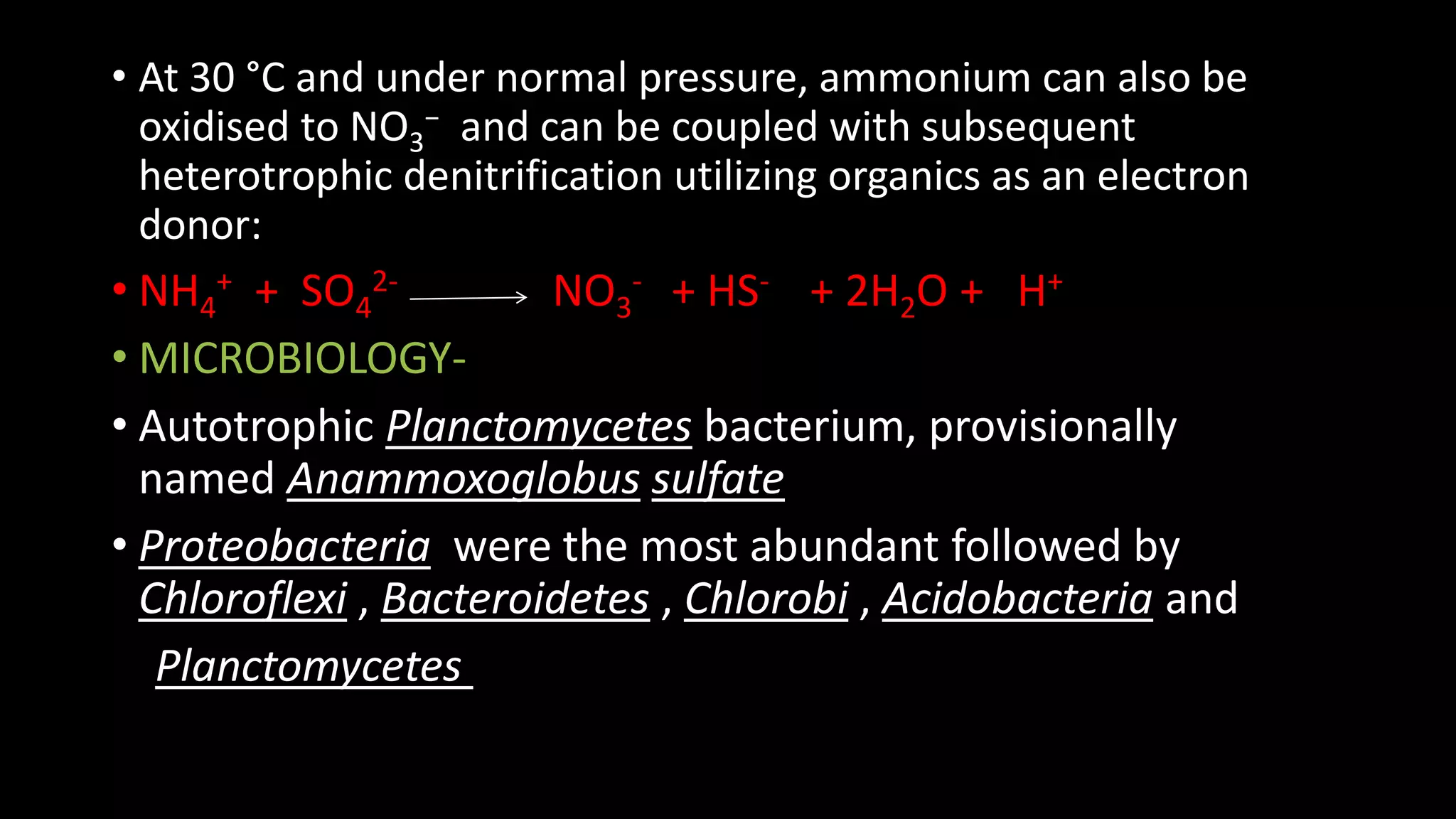
• At 30 °C and under normal pressure, ammonium can also be
oxidised to NO3
− and can be coupled with subsequent
heterotrophic denitrification utilizing organics as an electron
donor:
• NH4
+ + SO4
2- NO3
- + HS- + 2H2O + H+
• MICROBIOLOGY-
• Autotrophic Planctomycetes bacterium, provisionally
named Anammoxoglobus sulfate
• Proteobacteria were the most abundant followed by
Chloroflexi , Bacteroidetes , Chlorobi , Acidobacteria and
Planctomycetes
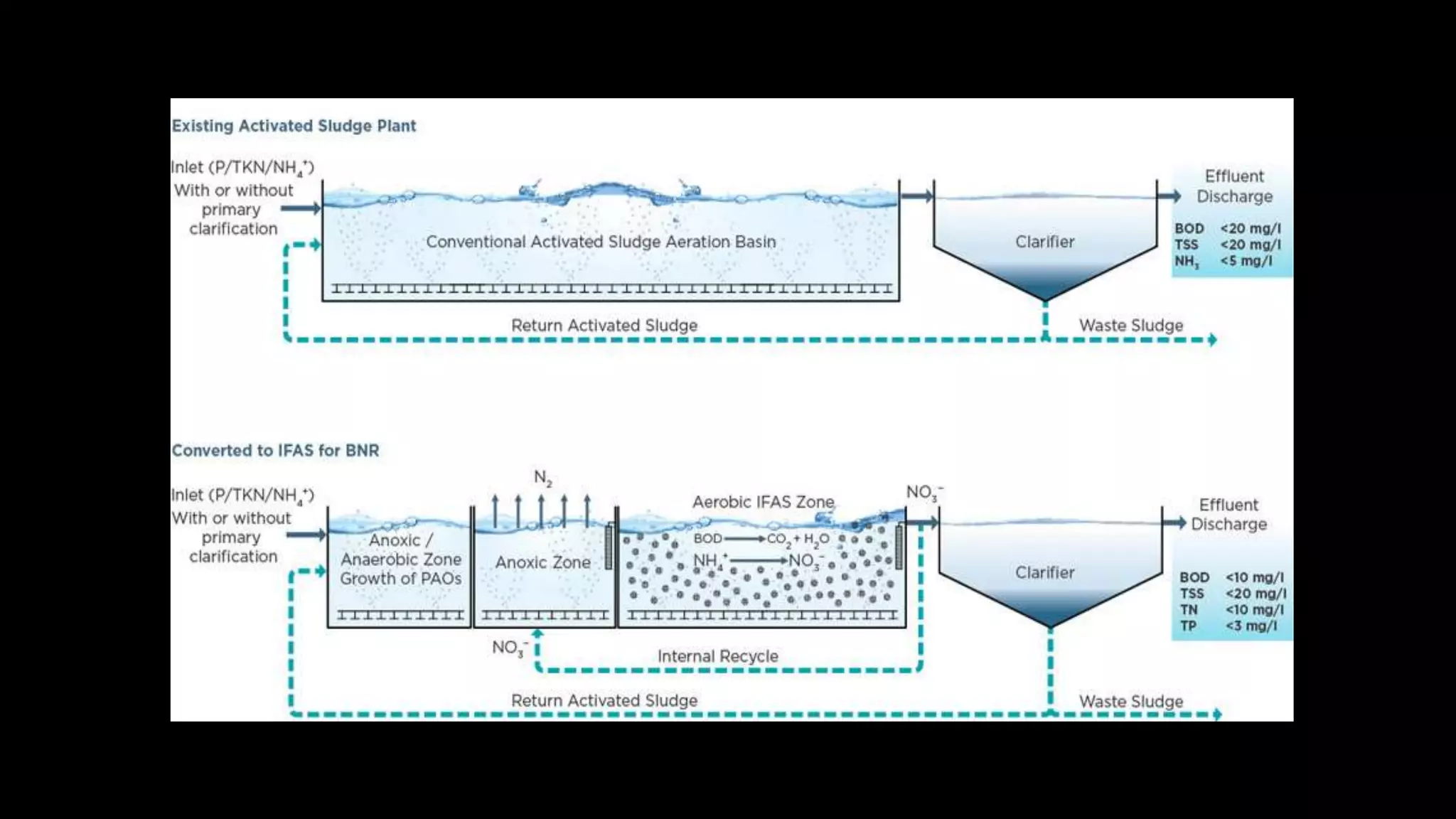
IFAS-(INTEGRATED FIXED FIM AND ACTIVATED
SLUDGE SYSTEM)
• A hybrid process that employs the benefits of fixed-film
systems into the suspended growth activated sludge process.
• It is divided into a series of stages that include anaerobic,
anoxic and aerobic volumes.
• It increases reactor capacity, in terms of organic loading, or
support more advanced treatment of the wastewater due to
longer sludge age.
REFERENCES-
• APPLICATION OF ELECTRODIALYSIS IN WASTE WATER TREATMENT AND IMPACT OF
FOULING ON PROCESS PERFORMANCE (MOHSAN AKHTER, HULAM HABIB AND SANA
ULLAH QAMAR)
• REMOVAL OF AMMONIA FROM WASTEWATER BY ION EXCHANGE TECHNOLOGY
(JIGNASHA C PRAJAPATI, HUMA S SYED, JAGDIAH CHAUHAN )
• NATIONAL SERVICE CENTER FOR ENVIRONMENTAL PUBLICATIONS
(TITLE- ammonia nitrogen removal by breakpoint chlorination)
• NITRIFICATION AND DENITRIFICATIONIN WASTE WATER TREATMENT SYSTEM(EDITORS-
Kozo Ishizuka , D.Sc. Shigeru Hisajima)
• Physico-chemical technologies for nitrogen removal from wastewaters: a review by
Andrea G. Capodaglio, Massimo Raboni and Petr Halvinek.
• http://www.scielo.br/scielo.php?script=sci_arttext&pid=S1980-993X2015000300481
• https://personal.ems.psu.edu/~fkd/courses/geoee408/cm/remediation/2017_5_airstrip
ping.pdf
• https://www.ncbi.nlm.nih.gov/pmc/articles/PMC4199053/pdf/ijerph-11-09835.pdf
• https://iwaponline.com/wst/article/79/1/137/65533/Study-of-sulfate-reducing-
ammonium-oxidation
1 nitrogen removal

1 nitrogen removal

  • 1.
    ADVANCED WASTE WATER TREATMENT-NITROGEN REMOVAL SUBMITTED TO- Dr. BALJINDER KAUR SUBMITTED BY- NEHA SINGLA M.Sc.(Hon’s) Biotechnology ROLL NO.- 18011001
  • 2.
    Contents- • INTRODUCTION (wastewater treatment) • WHY TO REMOVE NITROGEN ? • NITROGEN REMOVAL METHODS PHYSICAL METHODS CHEMICAL METHODS PHYSICOCHEMICAL METHOD BIOLOGICAL METHODS • REFERENCES
  • 3.
    INTRODUCTION-WASTE WATER TREATMENT- •It is the process of removing contaminants from waste water . The treatment involves three stages- Primary Treatment - removes the materials that can be easily collected from the raw wastewater and disposed of. The materials that are removed during this treatment are- sand , gravels, rocks , large settleable solids and floating material. Secondary Treatment - remove biological content of the sewage such as are derived from human waste ,food waste , soaps and detergent. These systems are classified as fixed film or suspended growth. Fixed film include trickling filter and rotating biological contractors . Suspended growth systems such as activated sludge – the biomass is well mixed with the sewage and can be operated in smaller space than fixed film systems.
  • 4.
    In this biologicalremoval of nitrogen take place - ammonia to nitrite and nitrate and ultimately to nitrogen gas. Tertiary Treatment - is to provide a final treatment stage to raise the effluent quality before it is discharged into water bodies. If disinfection is done , it is always the final process . It is also called “effluent polishing”
  • 5.
    SOURCES OF NITROGEN •Natural sources- precipitation, dustfall, nonurban runoff, and biological fixation. • Man- caused sources- runoff from urban area, municipal wastewaters, drainage from agricultural lands and industrial wastes. FORMS OF NITROGEN- Nitrogen can be present in the form of proteins, urea, ammonia, nitrite and nitrate.
  • 6.
  • 7.
    WHY TO REMOVENUTRIENTS ? • Waste water may contain high level of nutrients nitrogen and phosphorous. Excessive release to the environment can lead to a build up of nutrients, called eutrophication ,which can in turn encourage the growth of weeds , algae and cyanobacteria . This may cause algal bloom , a rapid growth in the population of algae. The algae numbers are unsuitable and eventually most of them die. The decomposition of the algae by bacteria uses up so much of oxygen in the water that most or all of the animals die, which create more organic matter for the bacteria to decompose. In addition to this, some algal species produce toxins that contaminate drinking water supplies. Therefore different procedures are required to remove nitrogen and phosphorous.
  • 8.
  • 9.
    NITROGEN REMOVAL METHODS- •PHYSICAL METHODS- ELECTRODIALYSIS REVERSE OSMOSIS • CHEMICAL METHODS- AMMONIUMPRECIPITATION AS STRUVITE CARBON SORPTION BREAKPOINT CHLORINATION ION EXCHANGE OXIDATION PROCESSES • PHYSICOCHEMICAL METHODS- AMMONIA STRIPPING
  • 10.
    • BIOLOGICAL METHODS- NITRIFICATION– DENITRIFICATION NITROGEN REMOVAL VIA SULPHATE OXIDISING BACTERIA IFAS (INTEGRATED FIXED FILM AND ACTIVATED SLUDGE SYSTEM)
  • 11.
    PHYSICAL METHODS- ELECTRODIALYSIS- • Electrodialysisis basically a membrane separation process and it is commonly used for waste water. In this, electric potential is used as a driving force and ion exchange membrane is applied between anode and cathode. On the application of electric current negative and positive ions are moved towards the respective electrodes based on their polarity.
  • 13.
    REVERSE OSMOSIS- • Itis a process where demineralisation or deionisation of water by pushing it under pressure through a semi permeable membrane. • A semi permeable membrane is a membrane that will allow some atoms or molecules to pass but not others. • Osmosis occurs naturally without energy required , to reverse the process of osmosis , there is need to apply energy to the more saline solution.
  • 14.
    Semipermeable membrane Pure waterconcentrate Pressureapplied is slightly more than osmotic pressure
  • 15.
    CHEMICAL METHODS- AMMONIUM PRECIPITATEAS STRUVITE- • Precipitation of NH4 + as Magnesium Ammonium Phosphate (MAP), also named struvite . Reaction- Mg2+ + PO4 3- + NH4 + + 6H2O ⇆ MgNH4PO4⋅6H2O↓ • Has low solubility in water and can be separated from aqueous phase. • Implemented for different types of wastewaters such as tannery effluents of leather industries, digester supernatant and industrial wastewater treatment plants.
  • 16.
    • The molecularweight of MAP is 245 g/mol, 17.5 g MgNH4PO4·6H2O are theoretically formed as precipitate when 1 g of NH4 + is removed. Because MAP has a similar composition of Mg, P and N found in guano, it can be used in lieu of commercial fertilizers. • MgCl2⋅6 H2O +Na2HPO4⋅12 H2O + NH4 + ⇆MgNH4PO4⋅6H2O↓+ 2NaCl • MgO + H3PO4 + NH4 + → MgNH4PO4⋅6H2O↓+ H2O • Ca(H2PO4)2 ⋅ H2O + MgSO4 ⋅ 7H2O + NH4 + → MgNH4PO4⋅6H2O↓+ + CaSO4↓ • Crystal formation proceeds by nucleation from crystal embryos followed by their growth, and their precipitation will not occur without nucleation
  • 17.
    • Cost ofadding magnesium salts is the major economic constraints to the application of struvite crystallisation. Bittern( solution that remains after precipitation of halite (common salt) from brine and/or seawater)is low cost source of magnesium ions because contain mostly magnesium chloride with other smaller amount of inorganic compounds. • It is rich in magnesium chlorides , sulfates , bromides , iodides , and other chemicals present in the original waters. • Most used reactors for this are- fluidised bed and stirred tanks
  • 19.
    CARBON SORPTION- • Commercialactivated carbons do not adsorb noticeable amounts of ammonia from aqueous solution. (due to strong affinity of ammonia with water) • Adsorption of aqueous ammonia is obtained with bamboo charcoal carbonized at 400°C • Oxidative treatment with nitric acid or with diluted sulphuric acid is most effective for enhancing ammonia adsorption capacity of a carbon.
  • 20.
    HOCl + NH3NH2Cl (monochloramine) + H2O HOCl + NH2Cl NHCl2(dichloramine) + H2O HOCl + NHCl2 NCl3 (nitrogen trichloride) + H2O The formation of specific chloramine depends on pH and chlorine/ammonium ion molar ratio- At pH 7-8 and molar ratio>1.8 dichloroamine is dominant and for molar ratio <0.7 monochloramine is prevalent Chloroamines have disinfection property like chlorine but they have negative impact on taste and odour of water. Therefore their removal by AC( activated carbon or charcoal) is practised in drinking water treatment plants
  • 21.
    • Reactions- AC +2 Cl2 + 2 H2O 4 HCl + CO2 AC + 4 NHCl2 2 N2 + CO2 + 8 H+ + 8 Cl− AC doesn't really adsorb chloramines but act as a catalyst for their chemical breakdown
  • 22.
    BREAK POINT CHLORINATION- •It is widely used process that oxidises ammonia to nitrogen gas. • It is effluent polishing technique only not for removal of high level of nitrogen. • When chlorine is added to waste water containing ammonium nitrogen , it initially react with hypochlorous acid to form chloramines . Continued addition of chlorine after break point (occuring when free chlorine residues are formed) converts chloramines to nitrogen gas.
  • 23.
    • NH4 ++ 1.5HOCl0.5N2 + 1.5H2O+ 2.5H++ 1.5 Cl− • Ammonia is oxidised by chlorine to nitrogen gas with a residual ammonia concentration of less than 0.1ppm  ZONE1- formation of monochloramines  ZONE2-increase in dichloramine and disappearance of ammonia  ZONE3-appearance of free chlorine
  • 24.
    ION EXCHANGE- • Afiltered waste water is passed through a bed of zeolite to effect a 90-97% ammonium removal. • ion exchange offers a number of advantages including the ability to handle shock loadings and the ability to operate over a wider range of temperatures. • The ion exchange method usually employs organic resins, which are very selective. However, they are very expensive. Ion exchange with natural zeolites is more competitive because of its low cost and relative simplicity of application and operation. Natural zeolites are the most important inorganic cation exchangers that exhibit high ion exchange capacity, selectivity and compatibility with the natural environment
  • 25.
    • There aretwo types of resins: natural resins such as zeolite and synthetic resins like silica powder • For the removal of ammonium ion from wastewater and culture medium, Clinoptilolite (aluminosilicate), a type of natural zeolite from volcanic rock has been used extensively . Chemical regenerants such as sodium hydroxide and hydrochloride acid are normally used. • Clinoptilolite{(Na,K,Ca)2-3 Al3 (Al,Si)2Si13O} is cheaper than synthetic resin but durability, ion exchange capacity and regeneration capacity of synthetic resin is higher than clinoptilolite.
  • 26.
    • Thus, twomodes of operation system could be used – batch and continuous. In batch system, the resin is stirred with wastewater in the reactor until the reaction is completed. The saturated resin is then removed and regenerated. For continuous mode, the resin is stored in a pack column where the wastewater is passing through it. Upon exhaustion, the column is backwash with regenerants
  • 27.
    OXIDATION PROCESSES- • Ozonationand catalytic wet air oxidation OZONATION- One of the method to oxidation of low concentration of ammonia into nitrates. NH3 + 4 O3 H+ + NO3 − + H2O + 4 O2 • Rate of reaction of ozone with ammonia is slow as the persistence of ozone in water is quite short. • pH has no effect on the ozone-based ammonia oxidation in water • Nitrogen gas is the primary end product during the ozone-based ammonia removal in seawater
  • 28.
    • OZONATION OFAMMONIA IN THE PRESENCE OF BROMIDE- O3 +Br- OBr- +O2 O3 + OBr- Br- + 2 O2 2O3 + OBr- BrO3 - + 2 O2 H+ + OBr- HOBr HOBr + NH3 NH2Br + H2O HOBr +NH2Br NHBr2 + H2O HOBr + NHBr2 NBr3 +H2O 2H2O +NHBr2 +NBr3 N2 + 3Br- + 3H+ + 2HOBr
  • 29.
    CWAO( CATALYTIC WETAIR OXIDATION)- • Consists of oxidizing pollutants with oxygen at high pressure (5-200 bar) and temperature (125-320°C) in the presence of a catalyst. • Aniline and its azoic derivatives are treated by CWAO. • Applied to the elimination of ammonia with a good efficiency when associated with cobalt (II) oxide as a catalyst at temperatures up to 260°C. • Wet oxidation, also known as wet air oxidation, refers to a process of oxidizing suspended or dissolved material in liquid phase with dissolved oxygen at elevated temperature. It is a method for treatment of waste streams that are too dilute to incinerate and too concentrated for biological treatment.
  • 30.
    • Organic N+ O2 NH3+ CO2+ RCOOH • NH3 + 4 O3 H+ + NO3 − + H2O + 4 O2 (cobalt (II) oxide as catalyst)
  • 31.
    PHYSICOCHEMICAL METHODS- AMMONIA STRIPPING- Ammoniaremoval from highly concentrated wastewaters can be accomplished by air or stream stripping.. (eg-landfill leachate, supernatants of anaerobic digestion processes , petrochemical industry). In stripping lime or some other caustic soda substance is generally added to waste water until pH reaches 10.8-11.5 , converting ammonium hydroxide ions to ammonia gas – NH4 + OH- H2O + NH3
  • 33.
    Releasing ammonia intothe atmosphere may be unacceptable due to air quality concerns. In such cases, air stripping units are coupled with absorption towers which capture the released ammonia. In modern , absorption onto sulphuric acid solutions allow the production of ammonium sulphate ( marketable product). Advantage- simple and requires stability of pH and temperature. Limitations- Formation of CaCO3 on the tower packing , result in progressive loss of stripping performance, with the need of frequent cleaning operations 2. Cannot be performed in freezing conditions .
  • 35.
    BIOLOGICAL METHODS- • NITRIFICATIONAND DENITRIFICATION Nitrification is the process by which ammonia is first converted to nitrite then to nitrate. The processes used in treatment of waste water for nitrification are as follows- 1. Trickling filters- The extent of nitrification on trickling filters depend on various factors including temperature, dissolved oxygen , pH , presence of inhibitors , filter depths and media type, loading rate. Low rate trickling filters allowed the development of high nitrifying population
  • 36.
    2.ROTATING BIOLOGICAL CONTRACTOR(RBC)- First stage of RBC mostly remove organic materials ,whereas subsequent stages removed ammonia as a result of nitrification . Ammonia oxidisers could not effectively compete with the faster growing heterotrophs that oxidise organic matter. • Conversion of ammonia to nitrite (Nitrosomonas) NH4 + + 2O2 NO2 - + 2H+ + H2O • Conversion of nitrites to nitrates ( Nitrobacter) NO2 - + 0.5O2 NO3 -
  • 37.
    •Denitrification- It is thebiological process by which nitrate is converted to nitrogen and other gaseous end products. The requirements for denitrification are- Nitrates Organic carbon Anaerobic environment 6NO2 + 5CH20H 3N2 + 6OH + 5CO2 + 7H2O Pseudomonas, Achromobacter, Bacillus and Micrococcus are denitrifying organisms. Anaerobic activated sludge, anaerobic filter or anaerobic lagoon are three possible designs for denitrification process.
  • 39.
    NITROGEN REMOVAL VIABACTERIAL SULPHATE REDUCTION-(SRAO Process- sulphate reduction ammonium oxidation) • Sulphate as an electron acceptor to oxidise ammonium into nitrogen in a granular activated carbon anaerobic fluidised bed reactor. This process is condensed into one equation describing the two stage process- • 2NH4 + + SO4 2- S0 + N2 + 4H2O (1) • The end products are N2 and S0, which are non-pollutants and so the process could offer great future potential as an energy-saving and environmentally sound wastewater treatment . This process was combined with the conventional anammox reaction and the following steps were proposed -
  • 40.
    • 3SO4 2- +4NH4 + 3S2- + 4NO2 - + 4H2O + 8H+ (2) • 3S2- +2NO2 - +8H+ 3S + N2 + 4H2O (3) • 2NO2 - + 2NH4 + 2N2 + 4 H20(anammox process) (4) SRAO PROCESS under autotrophic conditions- SO4 2- + NH4 + S + NO2 - + H2O It is believed that some denitrification processes can be carried out by the reduction of NO2 − to N2 and accompanied by the oxidation of sulfide by autotrophic denitrifiers, as described in Equation (3) . Equation (4) is the reaction in the traditional anammox process. Therefore, the two anaerobic ammonium oxidation reactions were achieved during the SRAO process in Equations (3) and (4).
  • 41.
    • At 30°C and under normal pressure, ammonium can also be oxidised to NO3 − and can be coupled with subsequent heterotrophic denitrification utilizing organics as an electron donor: • NH4 + + SO4 2- NO3 - + HS- + 2H2O + H+ • MICROBIOLOGY- • Autotrophic Planctomycetes bacterium, provisionally named Anammoxoglobus sulfate • Proteobacteria were the most abundant followed by Chloroflexi , Bacteroidetes , Chlorobi , Acidobacteria and Planctomycetes
  • 42.
    IFAS-(INTEGRATED FIXED FIMAND ACTIVATED SLUDGE SYSTEM) • A hybrid process that employs the benefits of fixed-film systems into the suspended growth activated sludge process. • It is divided into a series of stages that include anaerobic, anoxic and aerobic volumes. • It increases reactor capacity, in terms of organic loading, or support more advanced treatment of the wastewater due to longer sludge age.
  • 44.
    REFERENCES- • APPLICATION OFELECTRODIALYSIS IN WASTE WATER TREATMENT AND IMPACT OF FOULING ON PROCESS PERFORMANCE (MOHSAN AKHTER, HULAM HABIB AND SANA ULLAH QAMAR) • REMOVAL OF AMMONIA FROM WASTEWATER BY ION EXCHANGE TECHNOLOGY (JIGNASHA C PRAJAPATI, HUMA S SYED, JAGDIAH CHAUHAN ) • NATIONAL SERVICE CENTER FOR ENVIRONMENTAL PUBLICATIONS (TITLE- ammonia nitrogen removal by breakpoint chlorination) • NITRIFICATION AND DENITRIFICATIONIN WASTE WATER TREATMENT SYSTEM(EDITORS- Kozo Ishizuka , D.Sc. Shigeru Hisajima) • Physico-chemical technologies for nitrogen removal from wastewaters: a review by Andrea G. Capodaglio, Massimo Raboni and Petr Halvinek. • http://www.scielo.br/scielo.php?script=sci_arttext&pid=S1980-993X2015000300481 • https://personal.ems.psu.edu/~fkd/courses/geoee408/cm/remediation/2017_5_airstrip ping.pdf • https://www.ncbi.nlm.nih.gov/pmc/articles/PMC4199053/pdf/ijerph-11-09835.pdf • https://iwaponline.com/wst/article/79/1/137/65533/Study-of-sulfate-reducing- ammonium-oxidation