LEVAPOR GmbH Biofilm Technologies www.levapor.com
NITRIFICATION OF MUNICIPAL SEWAGE AT LOW
TEMPERATURES BY LEVAPOR BIOFILM TECHNOLOGY
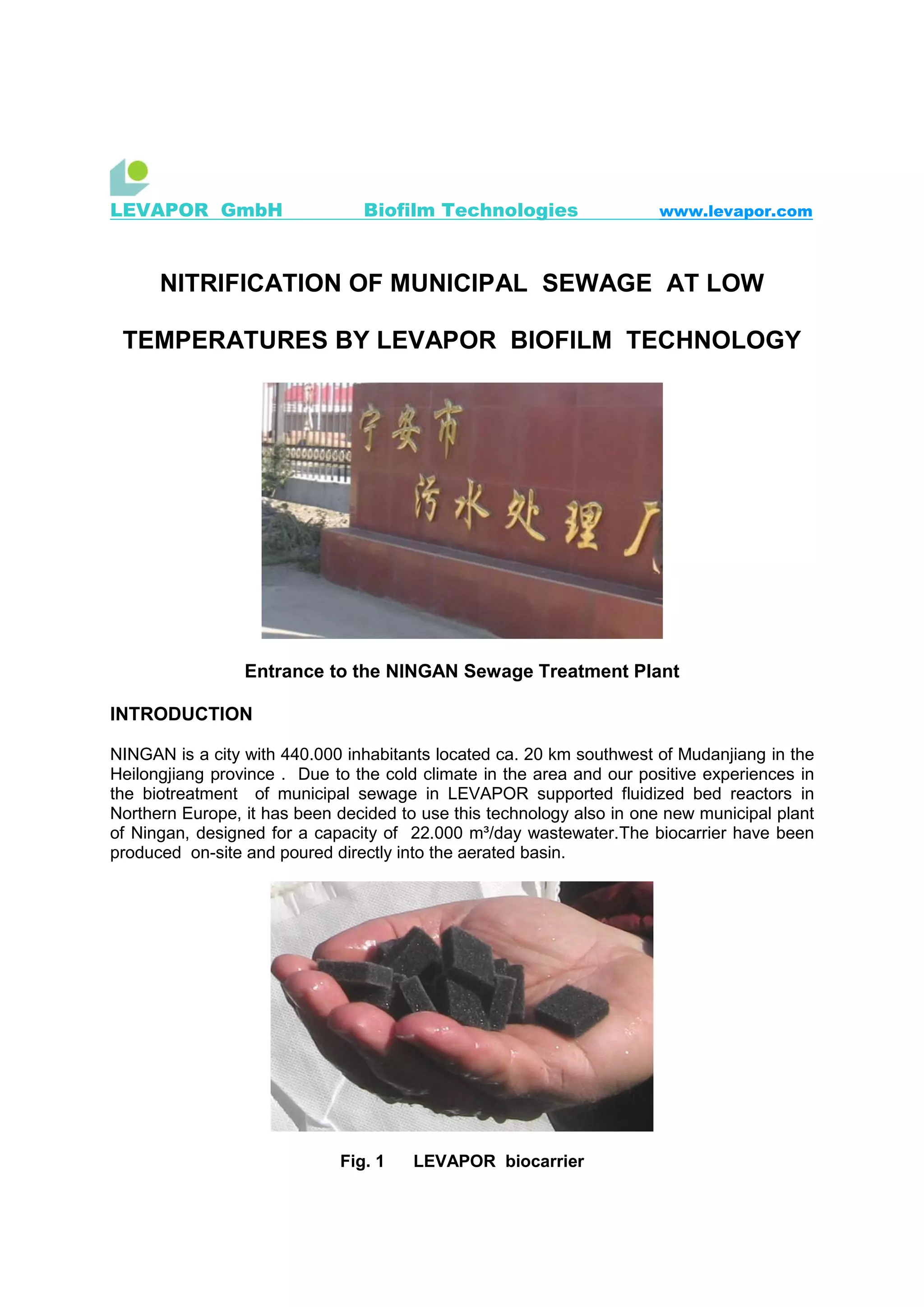
Entrance to the NINGAN Sewage Treatment Plant
INTRODUCTION
NINGAN is a city with 440.000 inhabitants located ca. 20 km southwest of Mudanjiang in the
Heilongjiang province . Due to the cold climate in the area and our positive experiences in
the biotreatment of municipal sewage in LEVAPOR supported fluidized bed reactors in
Northern Europe, it has been decided to use this technology also in one new municipal plant
of Ningan, designed for a capacity of 22.000 m³/day wastewater.The biocarrier have been
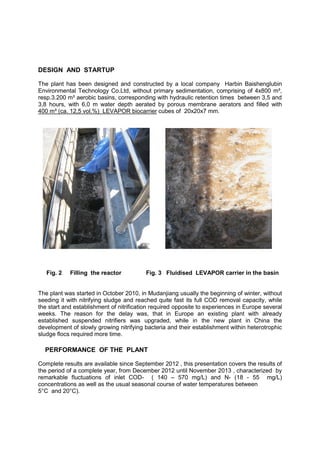
produced on-site and poured directly into the aerated basin.
Fig. 1 LEVAPOR biocarrier
DESIGN AND STARTUP
The plant has been designed and constructed by a local company Harbin Baishenglubin
Environmental Technology Co.Ltd, without primary sedimentation, comprising of 4x800 m³,
resp.3.200 m³ aerobic basins, corresponding with hydraulic retention times between 3,5 and
3,8 hours, with 6,0 m water depth aerated by porous membrane aerators and filled with
400 m³ (ca. 12,5 vol.%) LEVAPOR biocarrier cubes of 20x20x7 mm.
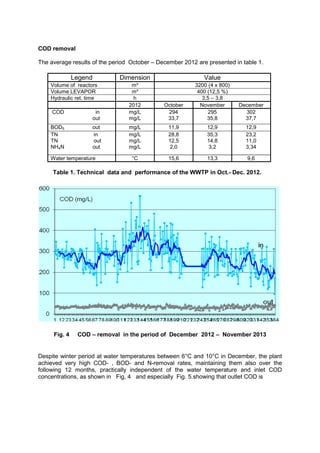
Fig. 2 Filling the reactor Fig. 3 Fluidised LEVAPOR carrier in the basin
The plant was started in October 2010, in Mudanjiang usually the beginning of winter, without
seeding it with nitrifying sludge and reached quite fast its full COD removal capacity, while
the start and establishment of nitrification required opposite to experiences in Europe several
weeks. The reason for the delay was, that in Europe an existing plant with already
established suspended nitrifiers was upgraded, while in the new plant in China the
development of slowly growing nitrifying bacteria and their establishment within heterotrophic
sludge flocs required more time.
PERFORMANCE OF THE PLANT
Complete results are available since September 2012 , this presentation covers the results of
the period of a complete year, from December 2012 until November 2013 , characterized by
remarkable fluctuations of inlet COD- ( 140 – 570 mg/L) and N- (18 - 55 mg/L)
concentrations as well as the usual seasonal course of water temperatures between
5°C and 20°C).
COD removal
The average results of the period October – December 2012 are presented in table 1.
Legend Dimension Value
Volume of reactors m³ 3200 (4 x 800)
Volume LEVAPOR m³ 400 (12,5 %)
Hydraulic ret. time h 3,5 – 3,8
2012 October November December
COD in
out
mg/L
mg/L
294
33,7
295
35,8
302
37,7
BOD5 out mg/L 11,9 12,9 12,9
TN in
TN out
NH4N out
mg/L
mg/L
mg/L
28,8
12,5
2,0
35,3
14,8
3,2
23,2
11,0
3,34
Water temperature °C 15,6 13,3 9,6
Table 1. Technical data and performance of the WWTP in Oct.- Dec. 2012.
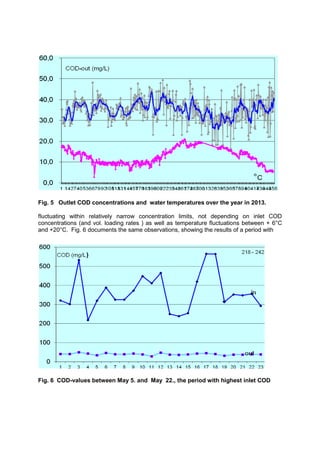
Fig. 4 COD – removal in the period of December 2012 – November 2013
Despite winter period at water temperatures between 6°C and 10°C in December, the plant
achieved very high COD- , BOD- and N-removal rates, maintaining them also over the
following 12 months, practically independent of the water temperature and inlet COD
concentrations, as shown in Fig, 4 and especially Fig. 5.showing that outlet COD is
Fig. 5 Outlet COD concentrations and water temperatures over the year in 2013.
fluctuating within relatively narrow concentration limits, not depending on inlet COD
concentrations (and vol. loading rates ) as well as temperature fluctuations between + 6°C
and +20°C. Fig. 6 documents the same observations, showing the results of a period with
Fig. 6 COD-values between May 5. and May 22., the period with highest inlet COD
intensive fluctuations of inlet COD at relatively high concentrations. Within 9 days (10 - 19)
with relatively high
average inlet COD of 401,4 mg/L and Lv = 2,53 kgCOD/m³ *d, the average outlet COD is
38,8 mg/L or 90,3 % removal, while during the 3 days (17-19) with
highest inlet COD of 516 mg/L and Lv = 3,3 kgCOD/m³ *d the outlet COD is 42,3 mg/L,
meaning 91,8 % COD removal.
During the same period 35,3 mg/L inlet TN ( Lv ~ 223 gN/m³ *d) have been nitrified without
any problem to a final effluent polluted with 2,9 mg/L NH4N and 12,1 mg/L TN-out.
Nitrogen removal
Due to the high sensitivity of the slowly growing and settling, non flocculating nitrifying
bacteria to changing temperature, pH, salinity and certain pollutants, the nitrification
represents the main problem for the biological nutrient removal process. The immobilisation
of nitrifying biomass and nitrification by biofilm technologies represents one of the best and
economic method for a successful a stable process, because especially nitrifying bacteria
tend to build biofilms, enabling a faster establishment of the required quantity of active
biomass in the bioreactor.
Due to the lack of inoculation,seeding the reactors with initial active nitrifying bacteria, after
several months a stable nitrification was established.As result of the high porosity, large inner
surface of LEVAPOR carrier and lower redox potential within the cubes, within the aerated
basin, additionally a further process, typical primarly for porous carrier like LEVAPOR, the
simultaneous aerobic denitrification has been established.
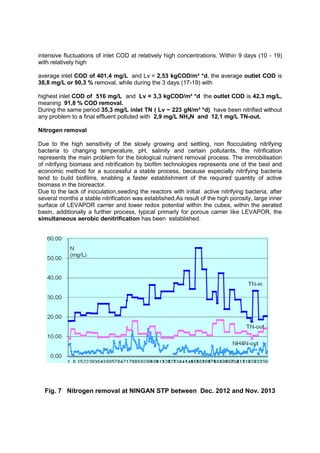
Fig. 7 Nitrogen removal at NINGAN STP between Dec. 2012 and Nov. 2013
Results, presented in Fig.7 show that except two disturbances of the nitrification process,
caused by longer influence of lower pH-values in the range of pH 6,4 -6,6 (resulting of
nitrification) both, a successfull and stable nitrification as well as a remarkable
simultaneous denitrification took place over the whole 12 months, including winter
period, whereby the not yet investigated denitrification showed fluctuations, depending
probably on COD:N-ratio , loading rates, etc.
It is important to register, that under stable conditions, the biofilm oxidized also inlet TN
concentration of 45 to 50 mg/L, what is in the range of remarkably high N-vol. loading
rates of Lv ~ 290 to 310 gN/m³ *d !
The quite low TN-out concentrations mean, that in the biofilm a remarkably denitrification
takes place, whereby the difference of outlet TN and outlet NH4N, might be residual NO3N .
In order to obtain more reliable results during the analysis of those bioprocesses, average
values of ca. 40 selected sequences of 5 to 15 successive days with similar results were
calculated and used for calculations.
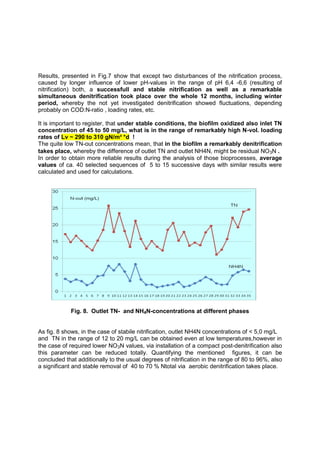
Fig. 8. Outlet TN- and NH4N-concentrations at different phases
As fig. 8 shows, in the case of stabile nitrification, outlet NH4N concentrations of < 5,0 mg/L
and TN in the range of 12 to 20 mg/L can be obtained even at low temperatures,however in
the case of required lower NO3N values, via installation of a compact post-denitrification also
this parameter can be reduced totally. Quantifying the mentioned figures, it can be
concluded that additionally to the usual degrees of nitrification in the range of 80 to 96%, also
a significant and stable removal of 40 to 70 % Ntotal via aerobic denitrification takes place.
Fig.9 Degree of nitrification and TN-removal in different phases of 2013
Temperature dependence of nitrification rates
It is known that rates of biodegradation reactions follow van´tHoff – Arrhenius´ empirical
formula of the rate of change of a biological or chemical system as a consequence of
increasing the temperature by 10 °C.
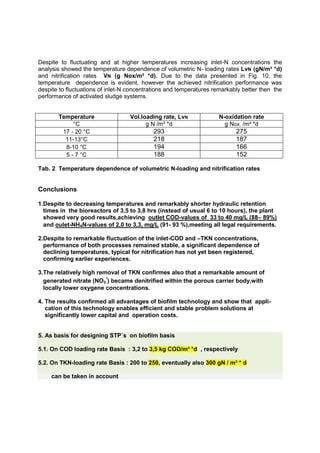
Fig.10. Temperature dependence of volumetric N-loading rates and nitrification rates
Despite to fluctuating and at higher temperatures increasing inlet-N concentrations the
analysis showed the temperature dependence of volumetric N- loading rates LvN (gN/m³ *d)
and nitrification rates VN (g Nox/m³ *d). Due to the data presented in Fig. 10. the
temperature dependence is evident, however the achieved nitrification performance was
despite to fluctuations of inlet-N concentrations and temperatures remarkably better then the
performance of activated sludge systems.
Temperature Vol.loading rate, LvN N-oxidation rate
°C g N /m³ *d g Nox. /m³ *d
17 - 20 °C 293 275
11-13°C 218 187
8-10 °C 194 166
5 - 7 °C 188 152
Tab. 2 Temperature dependence of volumetric N-loading and nitrification rates
Conclusions
1.Despite to decreasing temperatures and remarkably shorter hydraulic retention
times in the bioreactors of 3,5 to 3,8 hrs (instead of usual 6 to 10 hours), the plant
showed very good results,achieving outlet COD-values of 33 to 40 mg/L (88– 89%)
and oulet-NH4N-values of 2,0 to 3,3, mg/L (91- 93 %),meeting all legal requirements.
2.Despite to remarkable fluctuation of the inlet-COD and –TKN concentrations,
performance of both processes remained stable, a significant dependence of
declining temperatures, typical for nitrification has not yet been registered,
confirming earlier experiences.
3.The relatively high removal of TKN confirmes also that a remarkable amount of
generated nitrate (NO3
-
) became denitrified within the porous carrier body,with
locally lower oxygene concentrations.
4. The results confirmed all advantages of biofilm technology and show that appli-
cation of this technology enables efficient and stable problem solutions at
significantly lower capital and operation costs.
5. As basis for designing STP´s on biofilm basis
5.1. On COD loading rate Basis : 3,2 to 3,5 kg COD/m³ *d , respectively
5.2. On TKN-loading rate Basis : 200 to 250, eventually also 300 gN / m³ * d
can be taken in account
Presented informations are based on experiences with application LEVAPOR carrier. Testimonies on expected effects can be
made in individual case only on basis of investigations of given emissions and in some cases on basis of practice relevant
experiments.
LEVAPOR GmbH
Kölner Str. 38
D- 51379-Leverkusen Tel.: ++ 49-2173-938715
Germany Mobile: ++ 49-177-786 5533
www.levapor.com E-mail: levapor@web.de

Low temperature nitrification_ningan_20MLD

  • 1.
    LEVAPOR GmbH BiofilmTechnologies www.levapor.com NITRIFICATION OF MUNICIPAL SEWAGE AT LOW TEMPERATURES BY LEVAPOR BIOFILM TECHNOLOGY Entrance to the NINGAN Sewage Treatment Plant INTRODUCTION NINGAN is a city with 440.000 inhabitants located ca. 20 km southwest of Mudanjiang in the Heilongjiang province . Due to the cold climate in the area and our positive experiences in the biotreatment of municipal sewage in LEVAPOR supported fluidized bed reactors in Northern Europe, it has been decided to use this technology also in one new municipal plant of Ningan, designed for a capacity of 22.000 m³/day wastewater.The biocarrier have been produced on-site and poured directly into the aerated basin. Fig. 1 LEVAPOR biocarrier
  • 2.
    DESIGN AND STARTUP Theplant has been designed and constructed by a local company Harbin Baishenglubin Environmental Technology Co.Ltd, without primary sedimentation, comprising of 4x800 m³, resp.3.200 m³ aerobic basins, corresponding with hydraulic retention times between 3,5 and 3,8 hours, with 6,0 m water depth aerated by porous membrane aerators and filled with 400 m³ (ca. 12,5 vol.%) LEVAPOR biocarrier cubes of 20x20x7 mm. Fig. 2 Filling the reactor Fig. 3 Fluidised LEVAPOR carrier in the basin The plant was started in October 2010, in Mudanjiang usually the beginning of winter, without seeding it with nitrifying sludge and reached quite fast its full COD removal capacity, while the start and establishment of nitrification required opposite to experiences in Europe several weeks. The reason for the delay was, that in Europe an existing plant with already established suspended nitrifiers was upgraded, while in the new plant in China the development of slowly growing nitrifying bacteria and their establishment within heterotrophic sludge flocs required more time. PERFORMANCE OF THE PLANT Complete results are available since September 2012 , this presentation covers the results of the period of a complete year, from December 2012 until November 2013 , characterized by remarkable fluctuations of inlet COD- ( 140 – 570 mg/L) and N- (18 - 55 mg/L) concentrations as well as the usual seasonal course of water temperatures between 5°C and 20°C).
  • 3.
    COD removal The averageresults of the period October – December 2012 are presented in table 1. Legend Dimension Value Volume of reactors m³ 3200 (4 x 800) Volume LEVAPOR m³ 400 (12,5 %) Hydraulic ret. time h 3,5 – 3,8 2012 October November December COD in out mg/L mg/L 294 33,7 295 35,8 302 37,7 BOD5 out mg/L 11,9 12,9 12,9 TN in TN out NH4N out mg/L mg/L mg/L 28,8 12,5 2,0 35,3 14,8 3,2 23,2 11,0 3,34 Water temperature °C 15,6 13,3 9,6 Table 1. Technical data and performance of the WWTP in Oct.- Dec. 2012. Fig. 4 COD – removal in the period of December 2012 – November 2013 Despite winter period at water temperatures between 6°C and 10°C in December, the plant achieved very high COD- , BOD- and N-removal rates, maintaining them also over the following 12 months, practically independent of the water temperature and inlet COD concentrations, as shown in Fig, 4 and especially Fig. 5.showing that outlet COD is
  • 4.
    Fig. 5 OutletCOD concentrations and water temperatures over the year in 2013. fluctuating within relatively narrow concentration limits, not depending on inlet COD concentrations (and vol. loading rates ) as well as temperature fluctuations between + 6°C and +20°C. Fig. 6 documents the same observations, showing the results of a period with Fig. 6 COD-values between May 5. and May 22., the period with highest inlet COD
  • 5.
    intensive fluctuations ofinlet COD at relatively high concentrations. Within 9 days (10 - 19) with relatively high average inlet COD of 401,4 mg/L and Lv = 2,53 kgCOD/m³ *d, the average outlet COD is 38,8 mg/L or 90,3 % removal, while during the 3 days (17-19) with highest inlet COD of 516 mg/L and Lv = 3,3 kgCOD/m³ *d the outlet COD is 42,3 mg/L, meaning 91,8 % COD removal. During the same period 35,3 mg/L inlet TN ( Lv ~ 223 gN/m³ *d) have been nitrified without any problem to a final effluent polluted with 2,9 mg/L NH4N and 12,1 mg/L TN-out. Nitrogen removal Due to the high sensitivity of the slowly growing and settling, non flocculating nitrifying bacteria to changing temperature, pH, salinity and certain pollutants, the nitrification represents the main problem for the biological nutrient removal process. The immobilisation of nitrifying biomass and nitrification by biofilm technologies represents one of the best and economic method for a successful a stable process, because especially nitrifying bacteria tend to build biofilms, enabling a faster establishment of the required quantity of active biomass in the bioreactor. Due to the lack of inoculation,seeding the reactors with initial active nitrifying bacteria, after several months a stable nitrification was established.As result of the high porosity, large inner surface of LEVAPOR carrier and lower redox potential within the cubes, within the aerated basin, additionally a further process, typical primarly for porous carrier like LEVAPOR, the simultaneous aerobic denitrification has been established. Fig. 7 Nitrogen removal at NINGAN STP between Dec. 2012 and Nov. 2013
  • 6.
    Results, presented inFig.7 show that except two disturbances of the nitrification process, caused by longer influence of lower pH-values in the range of pH 6,4 -6,6 (resulting of nitrification) both, a successfull and stable nitrification as well as a remarkable simultaneous denitrification took place over the whole 12 months, including winter period, whereby the not yet investigated denitrification showed fluctuations, depending probably on COD:N-ratio , loading rates, etc. It is important to register, that under stable conditions, the biofilm oxidized also inlet TN concentration of 45 to 50 mg/L, what is in the range of remarkably high N-vol. loading rates of Lv ~ 290 to 310 gN/m³ *d ! The quite low TN-out concentrations mean, that in the biofilm a remarkably denitrification takes place, whereby the difference of outlet TN and outlet NH4N, might be residual NO3N . In order to obtain more reliable results during the analysis of those bioprocesses, average values of ca. 40 selected sequences of 5 to 15 successive days with similar results were calculated and used for calculations. Fig. 8. Outlet TN- and NH4N-concentrations at different phases As fig. 8 shows, in the case of stabile nitrification, outlet NH4N concentrations of < 5,0 mg/L and TN in the range of 12 to 20 mg/L can be obtained even at low temperatures,however in the case of required lower NO3N values, via installation of a compact post-denitrification also this parameter can be reduced totally. Quantifying the mentioned figures, it can be concluded that additionally to the usual degrees of nitrification in the range of 80 to 96%, also a significant and stable removal of 40 to 70 % Ntotal via aerobic denitrification takes place.
  • 7.
    Fig.9 Degree ofnitrification and TN-removal in different phases of 2013 Temperature dependence of nitrification rates It is known that rates of biodegradation reactions follow van´tHoff – Arrhenius´ empirical formula of the rate of change of a biological or chemical system as a consequence of increasing the temperature by 10 °C. Fig.10. Temperature dependence of volumetric N-loading rates and nitrification rates
  • 8.
    Despite to fluctuatingand at higher temperatures increasing inlet-N concentrations the analysis showed the temperature dependence of volumetric N- loading rates LvN (gN/m³ *d) and nitrification rates VN (g Nox/m³ *d). Due to the data presented in Fig. 10. the temperature dependence is evident, however the achieved nitrification performance was despite to fluctuations of inlet-N concentrations and temperatures remarkably better then the performance of activated sludge systems. Temperature Vol.loading rate, LvN N-oxidation rate °C g N /m³ *d g Nox. /m³ *d 17 - 20 °C 293 275 11-13°C 218 187 8-10 °C 194 166 5 - 7 °C 188 152 Tab. 2 Temperature dependence of volumetric N-loading and nitrification rates Conclusions 1.Despite to decreasing temperatures and remarkably shorter hydraulic retention times in the bioreactors of 3,5 to 3,8 hrs (instead of usual 6 to 10 hours), the plant showed very good results,achieving outlet COD-values of 33 to 40 mg/L (88– 89%) and oulet-NH4N-values of 2,0 to 3,3, mg/L (91- 93 %),meeting all legal requirements. 2.Despite to remarkable fluctuation of the inlet-COD and –TKN concentrations, performance of both processes remained stable, a significant dependence of declining temperatures, typical for nitrification has not yet been registered, confirming earlier experiences. 3.The relatively high removal of TKN confirmes also that a remarkable amount of generated nitrate (NO3 - ) became denitrified within the porous carrier body,with locally lower oxygene concentrations. 4. The results confirmed all advantages of biofilm technology and show that appli- cation of this technology enables efficient and stable problem solutions at significantly lower capital and operation costs. 5. As basis for designing STP´s on biofilm basis 5.1. On COD loading rate Basis : 3,2 to 3,5 kg COD/m³ *d , respectively 5.2. On TKN-loading rate Basis : 200 to 250, eventually also 300 gN / m³ * d can be taken in account
  • 9.
    Presented informations arebased on experiences with application LEVAPOR carrier. Testimonies on expected effects can be made in individual case only on basis of investigations of given emissions and in some cases on basis of practice relevant experiments. LEVAPOR GmbH Kölner Str. 38 D- 51379-Leverkusen Tel.: ++ 49-2173-938715 Germany Mobile: ++ 49-177-786 5533 www.levapor.com E-mail: levapor@web.de