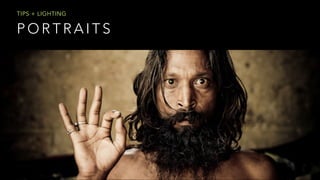
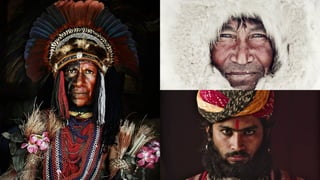
P O R T R A I T S
TIPS + LIGHTING
O U R G O A L …
• A great portrait captures the personality of the subject.
• You want your subject to look “good”; the best version of
themselves.
• However, you also want them to look interesting.
• Typically portraits are shot at eye level angle and framed as
mid or close-up shot
K E E P I T S I M P L E …
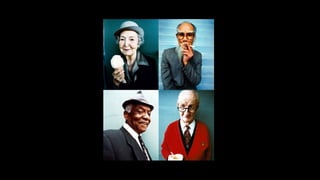
• Many portraits tend to have a neutral background so as not to
distract from the subject.
• Background colours are also important. Try to find colours that will
bring out the colours in your subject (clothes, skin tone, eye-
colour)
• Try not to clash with your subject.
U S E A L A R G E
A P E R T U R E !
Using a large aperture (i.e. f1.4 - 4) will create a narrow DoF
to blur out the background, drawing focus to your subject.
T I P S
HERE ARE SOME TIPS TO HELP IMPROVE YOUR PORTRAITS AND
MAKE THEM VISUALLY INTERESTING.
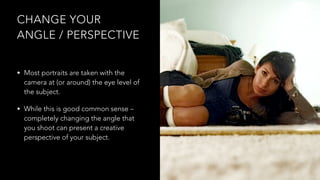
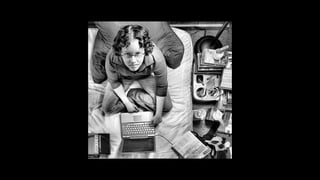
CHANGE YOUR
ANGLE / PERSPECTIVE
• Most portraits are taken with the
camera at (or around) the eye level of
the subject.
• While this is good common sense –
completely changing the angle that
you shoot can present a creative
perspective of your subject.
P L AY W I T H E Y E C O N TA C T
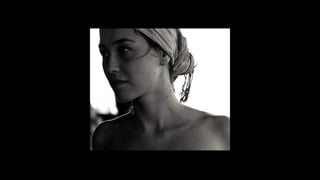
• Looking off camera:
• Have your subject focus their attention on something unseen or outside
the field of view of your camera.
• This can create a feeling of candidness and also create a little intrigue
and interest as the viewer of the shot wonders what they are looking at.

P L AY W I T H E Y E C O N TA C T
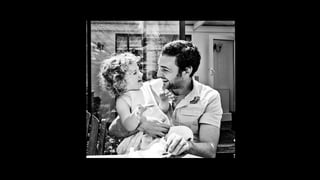
• Looking within the frame
• Alternatively, you could have your subject looking at something
(or someone) within the frame.
• For example, a child looking at a ball, a woman looking at her
new baby, a man looking hungrily at an amazing burrito from
Burrito Boyz
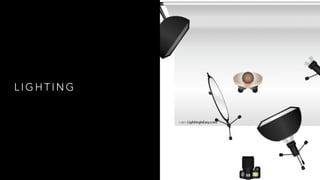
L I G H T I N G
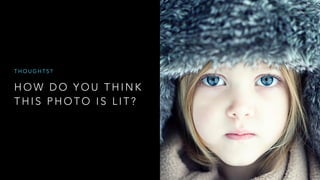
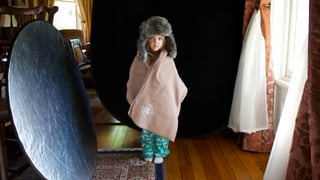
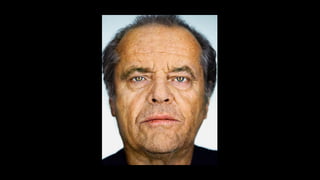
H O W D O Y O U T H I N K
T H I S P H O T O I S L I T ?
T H O U G H T S ?
L I G H T I N G
• Typically, portraits are lit from the front using soft or diffused lighting
• Harsh, bright light is not flattering
• Soft light tends to make subjects look good
E X P E R I M E N T W I T H L I G H T I N G
• There are almost unlimited possibilities when it comes to
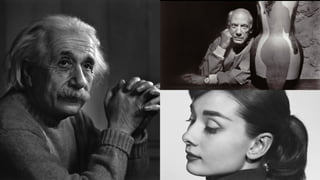
using light in portraits.
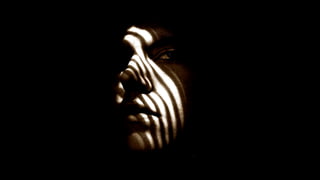
• Directions of light: front, back, top, bottom, and side lighting
can create different moods
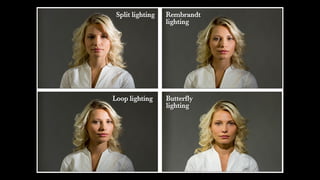
• Using different directions of light can create different patterns
of light
• Various results can be achieved using natural and studio
lighting
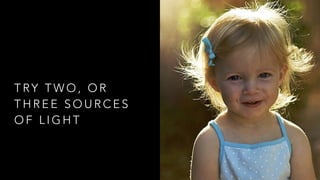
T RY T W O , O R
T H R E E S O U R C E S
O F L I G H T
L I G H T I N G F O R P O R T R A I T S
• As we watch the following video clip, take notes on the lighting patterns
and how the lights are positioned in each pattern
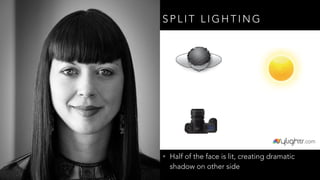
S P L I T L I G H T I N G
• Half of the face is lit, creating dramatic
shadow on other side
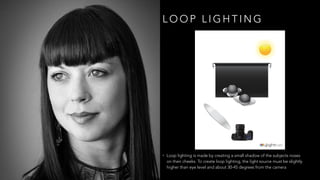
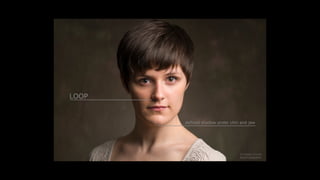
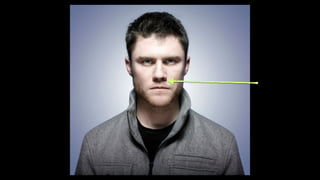
L O O P L I G H T I N G
• Loop lighting is made by creating a small shadow of the subjects noses
on their cheeks. To create loop lighting, the light source must be slightly
higher than eye level and about 30-45 degrees from the camera
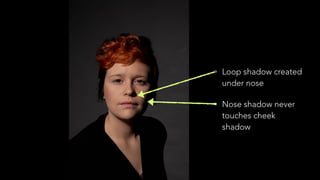
• Loop shadow created
under nose
• Nose shadow never
touches cheek
shadow
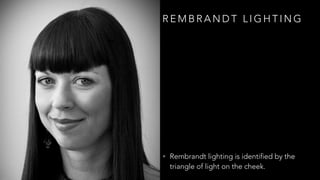
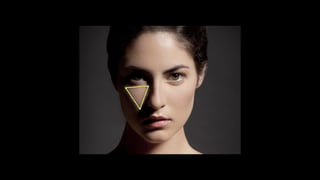
R E M B R A N D T L I G H T I N G
• Rembrandt lighting is identified by the
triangle of light on the cheek.
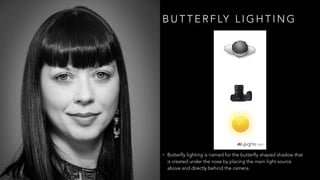
B U T T E R F LY L I G H T I N G
• Butterfly lighting is named for the butterfly shaped shadow that
is created under the nose by placing the main light source
above and directly behind the camera.
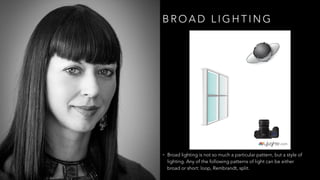
B R O A D L I G H T I N G
• Broad lighting is not so much a particular pattern, but a style of
lighting. Any of the following patterns of light can be either
broad or short: loop, Rembrandt, split.
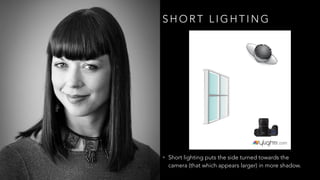
S H O R T L I G H T I N G
• Short lighting puts the side turned towards the
camera (that which appears larger) in more shadow.
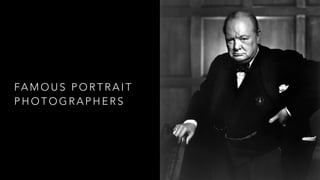
FA M O U S P O R T R A I T
P H O T O G R A P H E R S
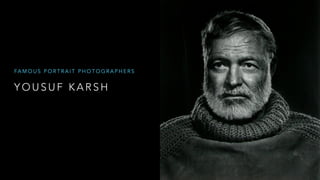
Y O U S U F K A R S H
FA M O U S P O R T R A I T P H O T O G R A P H E R S
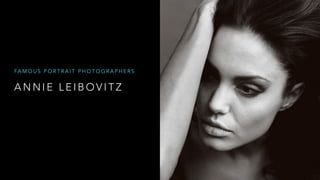
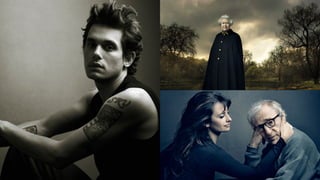
A N N I E L E I B O V I T Z
FA M O U S P O R T R A I T P H O T O G R A P H E R S
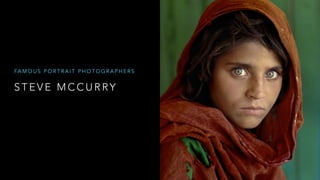
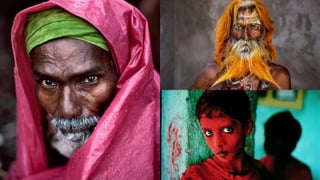
S T E V E M C C U R RY
FA M O U S P O R T R A I T P H O T O G R A P H E R S
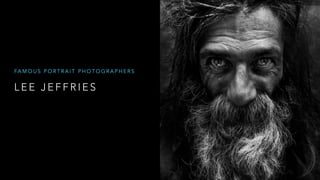
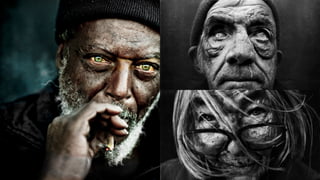
L E E J E F F R I E S
FA M O U S P O R T R A I T P H O T O G R A P H E R S
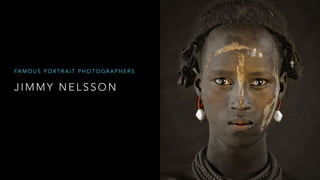
J I M M Y N E L S S O N
FA M O U S P O R T R A I T P H O T O G R A P H E R S
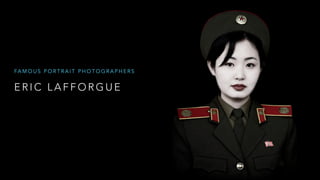
E R I C L A F F O R G U E
FA M O U S P O R T R A I T P H O T O G R A P H E R S
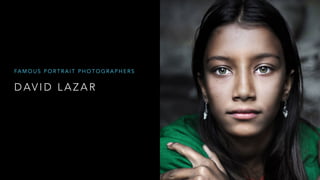
D AV I D L A Z A R
FA M O U S P O R T R A I T P H O T O G R A P H E R S
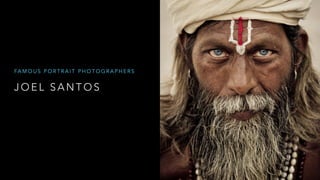
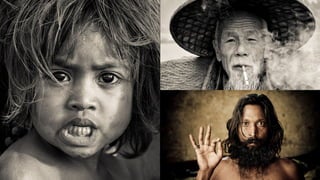
J O E L S A N T O S
FA M O U S P O R T R A I T P H O T O G R A P H E R S
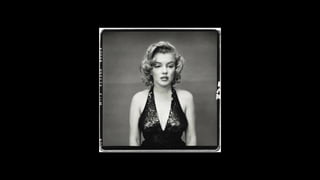
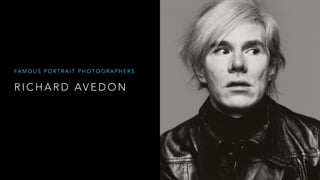
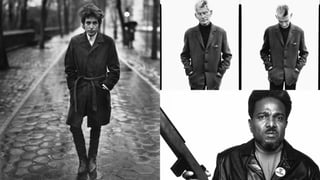
R I C H A R D AV E D O N
FA M O U S P O R T R A I T P H O T O G R A P H E R S
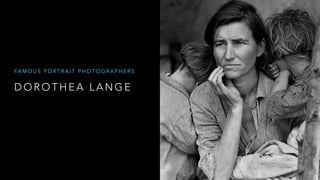
D O R O T H E A L A N G E
FA M O U S P O R T R A I T P H O T O G R A P H E R S
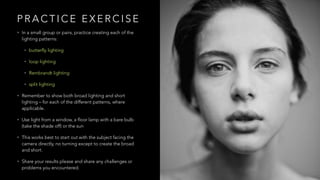
P R A C T I C E E X E R C I S E
• In a small group or pairs, practice creating each of the
lighting patterns:
• butterfly lighting
• loop lighting
• Rembrandt lighting
• split lighting
• Remember to show both broad lighting and short
lighting – for each of the different patterns, where
applicable.
• Use light from a window, a floor lamp with a bare bulb
(take the shade off) or the sun
• This works best to start out with the subject facing the
camera directly, no turning except to create the broad
and short.
• Share your results please and share any challenges or
problems you encountered.

Lesson 6 • Portraits & Lighting

  • 1.
    P O RT R A I T S TIPS + LIGHTING
  • 2.
    O U RG O A L … • A great portrait captures the personality of the subject. • You want your subject to look “good”; the best version of themselves. • However, you also want them to look interesting. • Typically portraits are shot at eye level angle and framed as mid or close-up shot
  • 3.
    K E EP I T S I M P L E … • Many portraits tend to have a neutral background so as not to distract from the subject. • Background colours are also important. Try to find colours that will bring out the colours in your subject (clothes, skin tone, eye- colour) • Try not to clash with your subject.
  • 5.
    U S EA L A R G E A P E R T U R E ! Using a large aperture (i.e. f1.4 - 4) will create a narrow DoF to blur out the background, drawing focus to your subject.
  • 6.
    T I PS HERE ARE SOME TIPS TO HELP IMPROVE YOUR PORTRAITS AND MAKE THEM VISUALLY INTERESTING.
  • 7.
    CHANGE YOUR ANGLE /PERSPECTIVE • Most portraits are taken with the camera at (or around) the eye level of the subject. • While this is good common sense – completely changing the angle that you shoot can present a creative perspective of your subject.
  • 9.
    P L AYW I T H E Y E C O N TA C T • Looking off camera: • Have your subject focus their attention on something unseen or outside the field of view of your camera. • This can create a feeling of candidness and also create a little intrigue and interest as the viewer of the shot wonders what they are looking at.

  • 12.
    P L AYW I T H E Y E C O N TA C T • Looking within the frame • Alternatively, you could have your subject looking at something (or someone) within the frame. • For example, a child looking at a ball, a woman looking at her new baby, a man looking hungrily at an amazing burrito from Burrito Boyz
  • 14.
    L I GH T I N G
  • 15.
    H O WD O Y O U T H I N K T H I S P H O T O I S L I T ? T H O U G H T S ?
  • 17.
    L I GH T I N G • Typically, portraits are lit from the front using soft or diffused lighting • Harsh, bright light is not flattering • Soft light tends to make subjects look good
  • 18.
    E X PE R I M E N T W I T H L I G H T I N G • There are almost unlimited possibilities when it comes to using light in portraits. • Directions of light: front, back, top, bottom, and side lighting can create different moods • Using different directions of light can create different patterns of light • Various results can be achieved using natural and studio lighting
  • 21.
    T RY TW O , O R T H R E E S O U R C E S O F L I G H T
  • 22.
    L I GH T I N G F O R P O R T R A I T S • As we watch the following video clip, take notes on the lighting patterns and how the lights are positioned in each pattern
  • 25.
    S P LI T L I G H T I N G • Half of the face is lit, creating dramatic shadow on other side
  • 26.
    L O OP L I G H T I N G • Loop lighting is made by creating a small shadow of the subjects noses on their cheeks. To create loop lighting, the light source must be slightly higher than eye level and about 30-45 degrees from the camera
  • 28.
    • Loop shadowcreated under nose • Nose shadow never touches cheek shadow
  • 29.
    R E MB R A N D T L I G H T I N G • Rembrandt lighting is identified by the triangle of light on the cheek.
  • 31.
    B U TT E R F LY L I G H T I N G • Butterfly lighting is named for the butterfly shaped shadow that is created under the nose by placing the main light source above and directly behind the camera.
  • 33.
    B R OA D L I G H T I N G • Broad lighting is not so much a particular pattern, but a style of lighting. Any of the following patterns of light can be either broad or short: loop, Rembrandt, split.
  • 34.
    S H OR T L I G H T I N G • Short lighting puts the side turned towards the camera (that which appears larger) in more shadow.
  • 35.
    FA M OU S P O R T R A I T P H O T O G R A P H E R S
  • 36.
    Y O US U F K A R S H FA M O U S P O R T R A I T P H O T O G R A P H E R S
  • 38.
    A N NI E L E I B O V I T Z FA M O U S P O R T R A I T P H O T O G R A P H E R S
  • 40.
    S T EV E M C C U R RY FA M O U S P O R T R A I T P H O T O G R A P H E R S
  • 42.
    L E EJ E F F R I E S FA M O U S P O R T R A I T P H O T O G R A P H E R S
  • 44.
    J I MM Y N E L S S O N FA M O U S P O R T R A I T P H O T O G R A P H E R S
  • 46.
    E R IC L A F F O R G U E FA M O U S P O R T R A I T P H O T O G R A P H E R S
  • 47.
    D AV ID L A Z A R FA M O U S P O R T R A I T P H O T O G R A P H E R S
  • 49.
    J O EL S A N T O S FA M O U S P O R T R A I T P H O T O G R A P H E R S
  • 51.
    R I CH A R D AV E D O N FA M O U S P O R T R A I T P H O T O G R A P H E R S
  • 53.
    D O RO T H E A L A N G E FA M O U S P O R T R A I T P H O T O G R A P H E R S
  • 55.
    P R AC T I C E E X E R C I S E • In a small group or pairs, practice creating each of the lighting patterns: • butterfly lighting • loop lighting • Rembrandt lighting • split lighting • Remember to show both broad lighting and short lighting – for each of the different patterns, where applicable. • Use light from a window, a floor lamp with a bare bulb (take the shade off) or the sun • This works best to start out with the subject facing the camera directly, no turning except to create the broad and short. • Share your results please and share any challenges or problems you encountered.