PHOTOGRAPHY BASICSSiddhantpatil
Basics of Equipment•Megapixel Myth•Photography Jargons Explained•Concepts: Aperture, Depth of Field, Shutter Speed, ISO, Noise •Understanding Digital Photography•Styles/Modes of Photography•Tools & Techniques of Composition
Choosing the Best Camera •Not a once in a lifetime purchase anymore.•Select one which can do the job you want Today and as per your future requirement•Some kinds of cameras do.some kinds of things better or more easily e.g., Sports photography vs. Close-up portraits.•Price isn’t the best indicator.
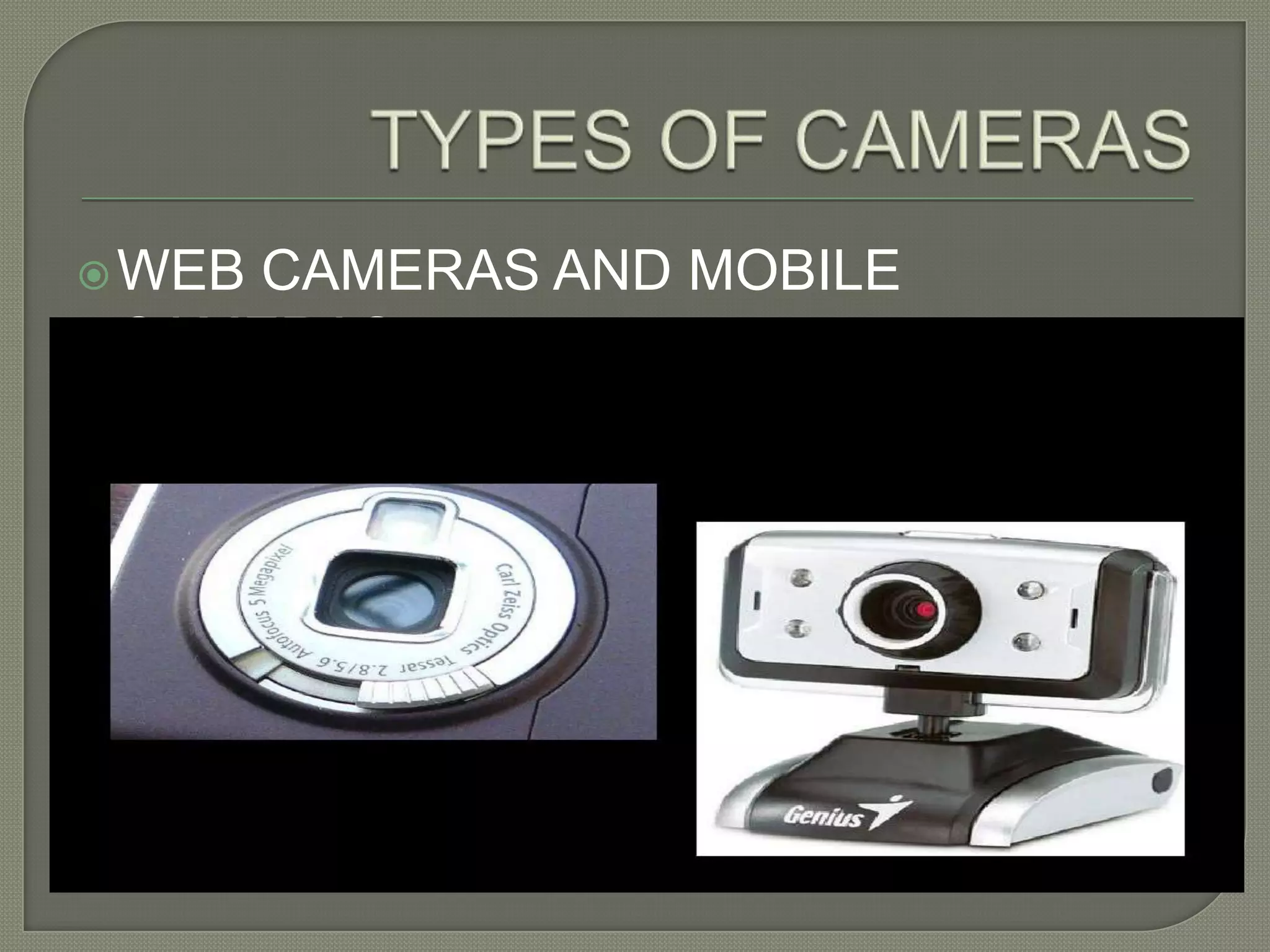
TYPES OF CAMERASWEB CAMERAS AND MOBILE CAMERAS
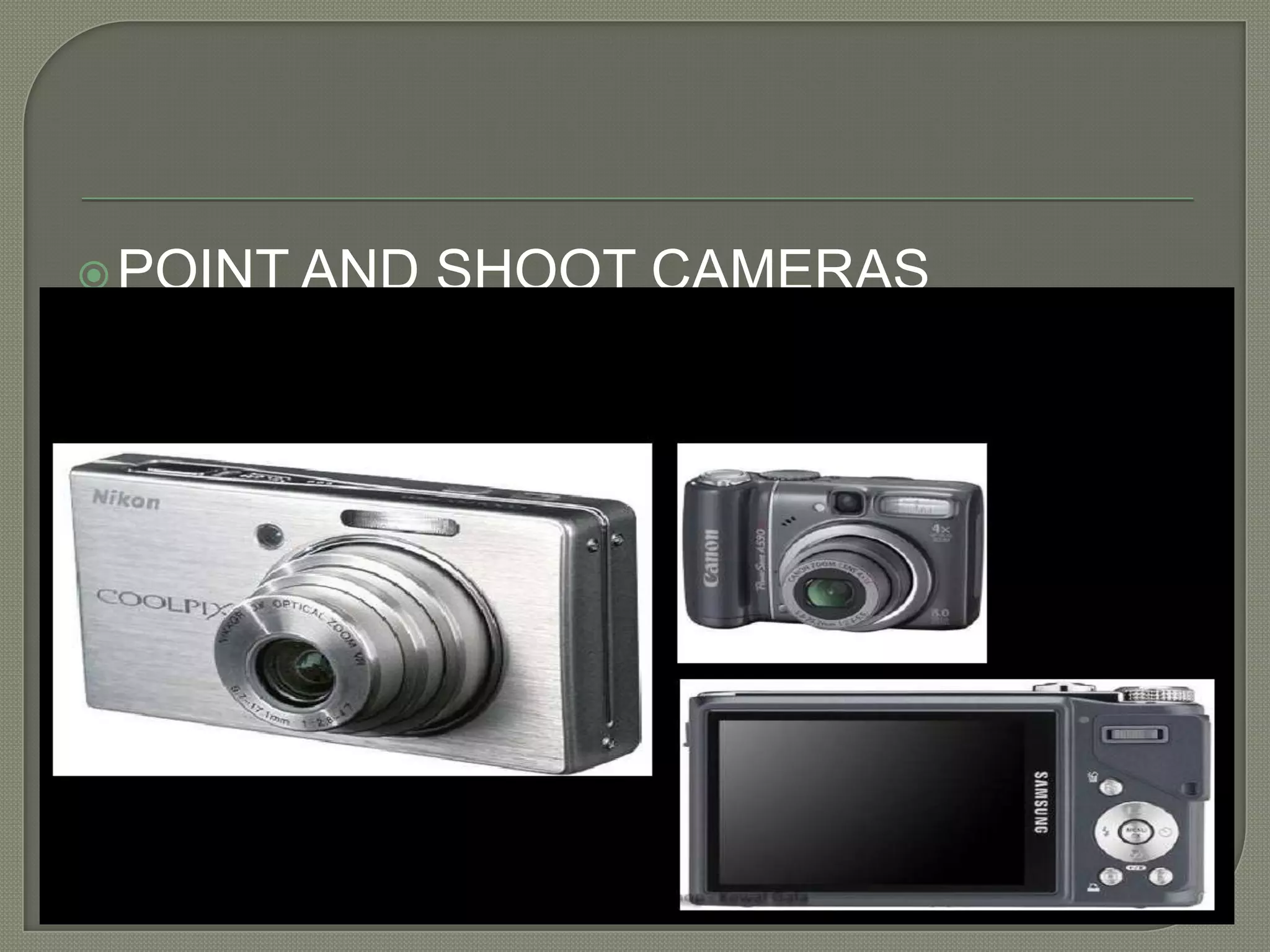
POINT AND SHOOT CAMERAS
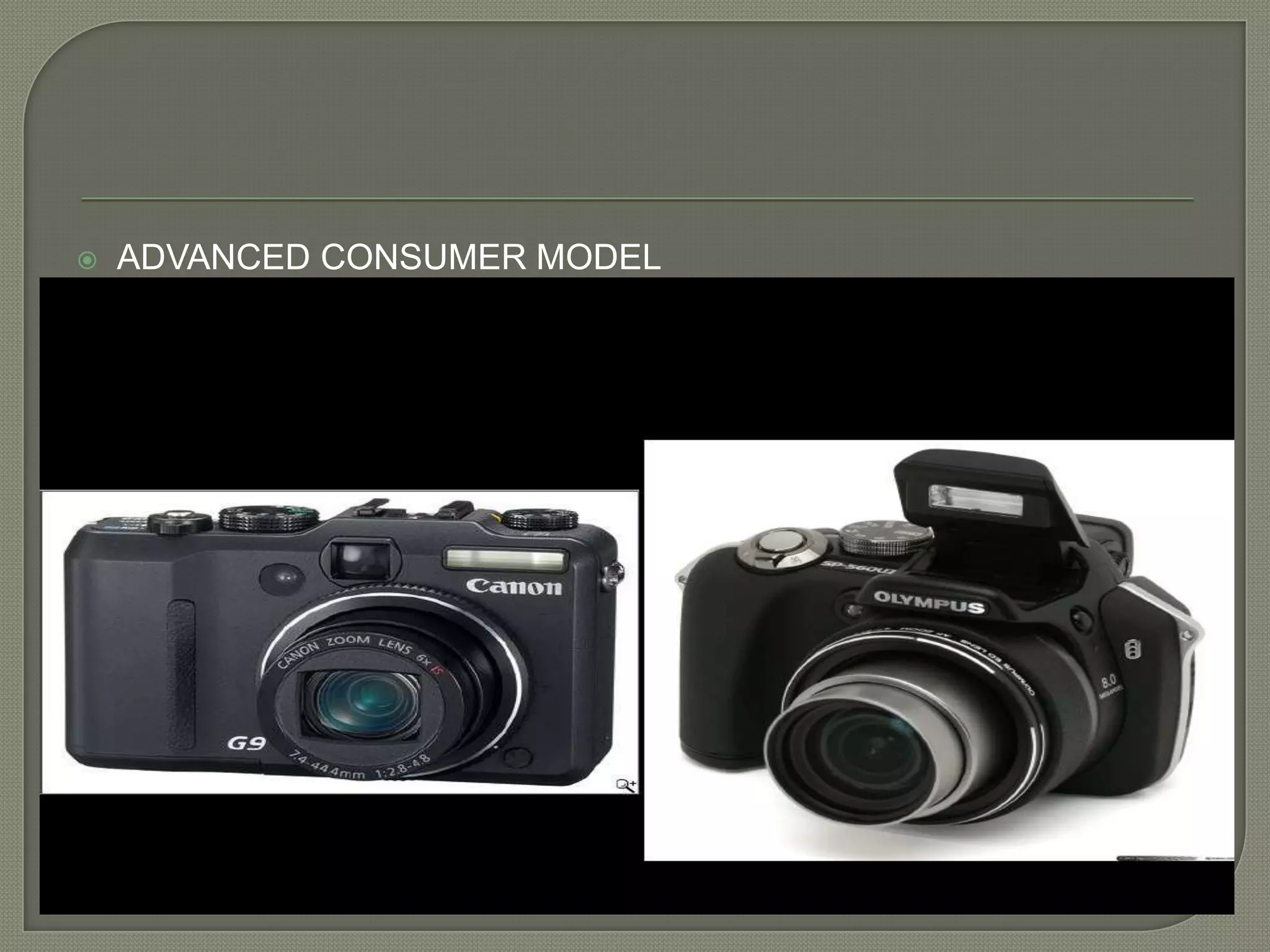
ADVANCED CONSUMER MODEL
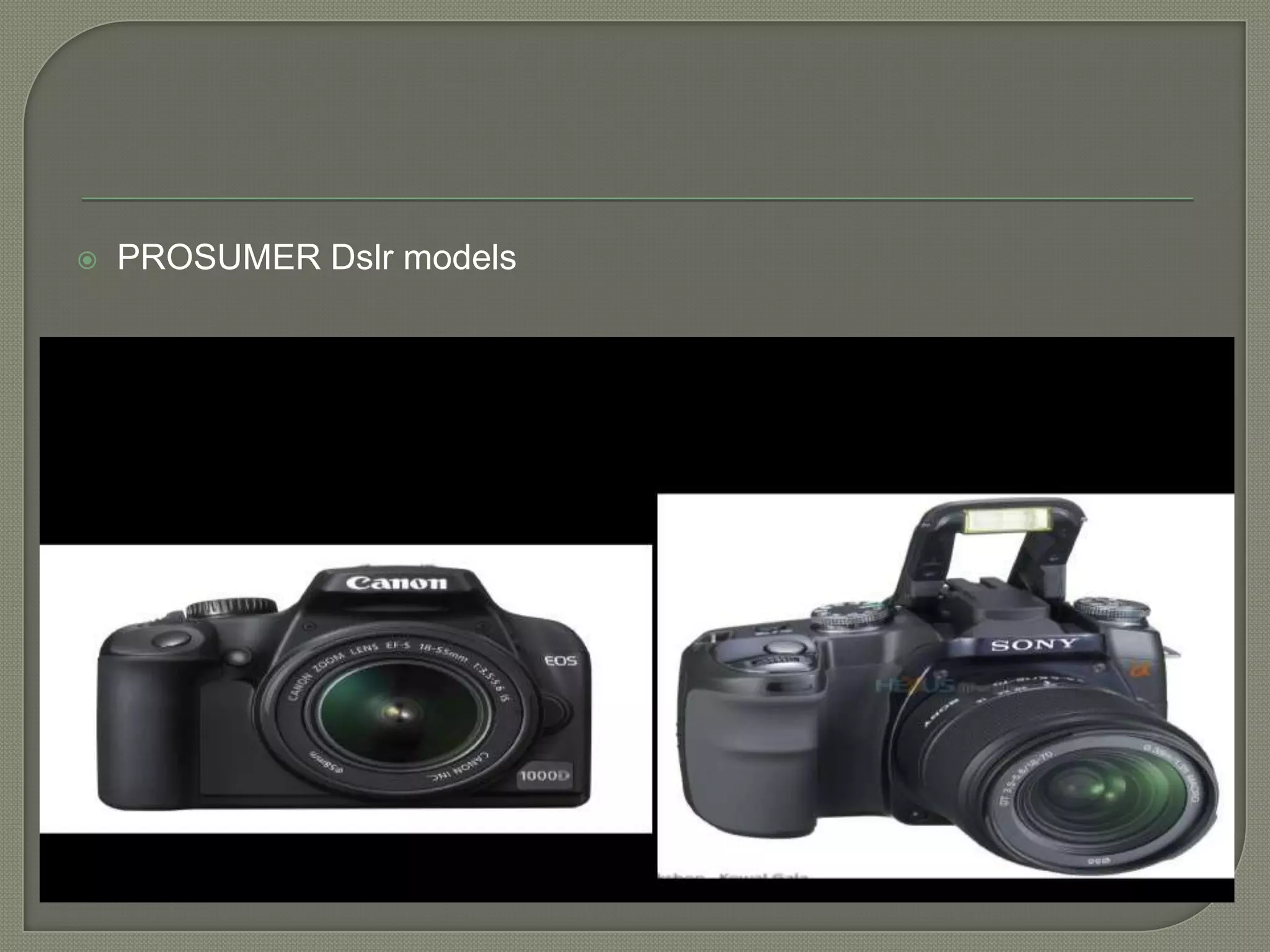
PROSUMER Dslr models
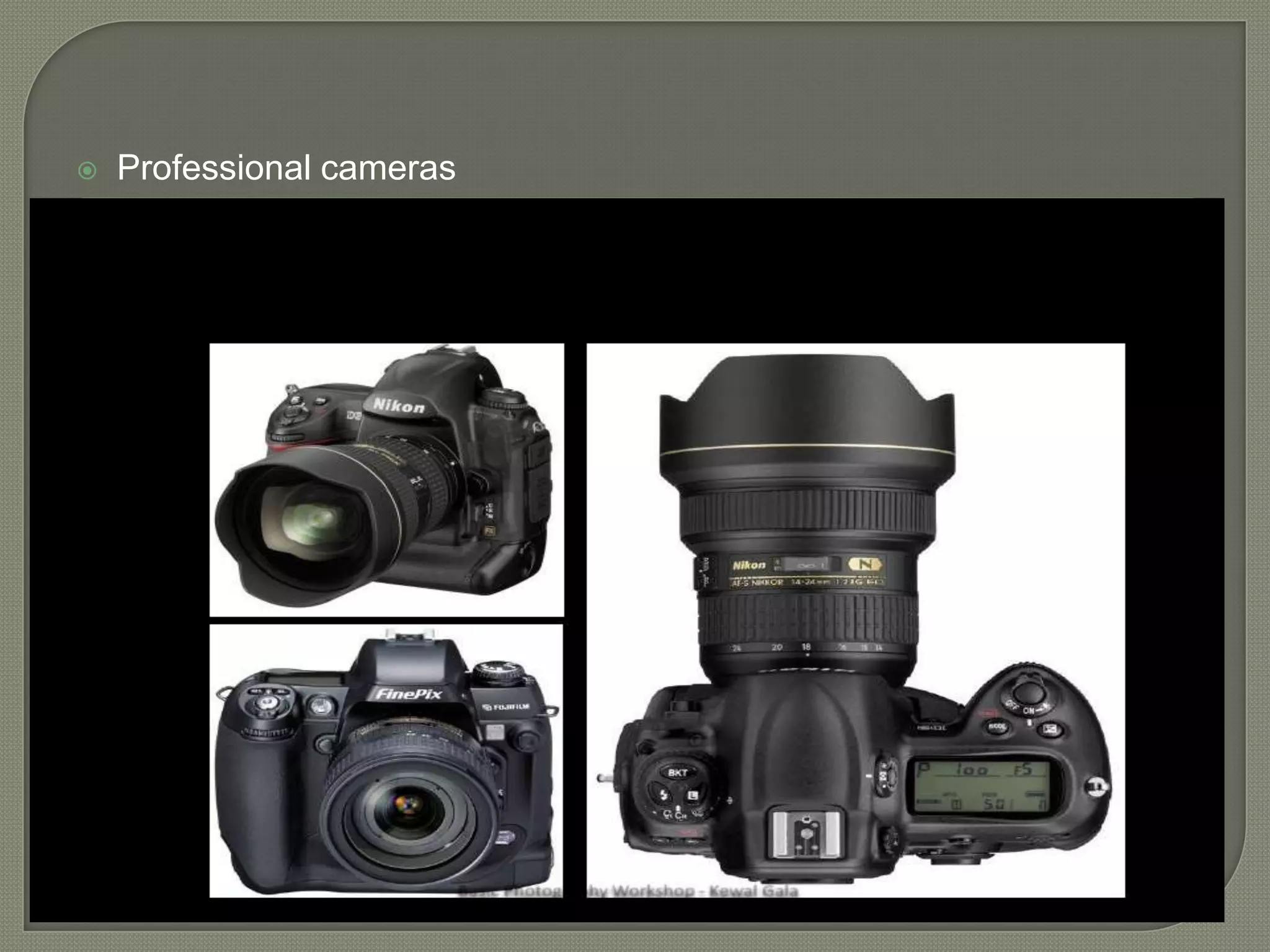
Professional cameras
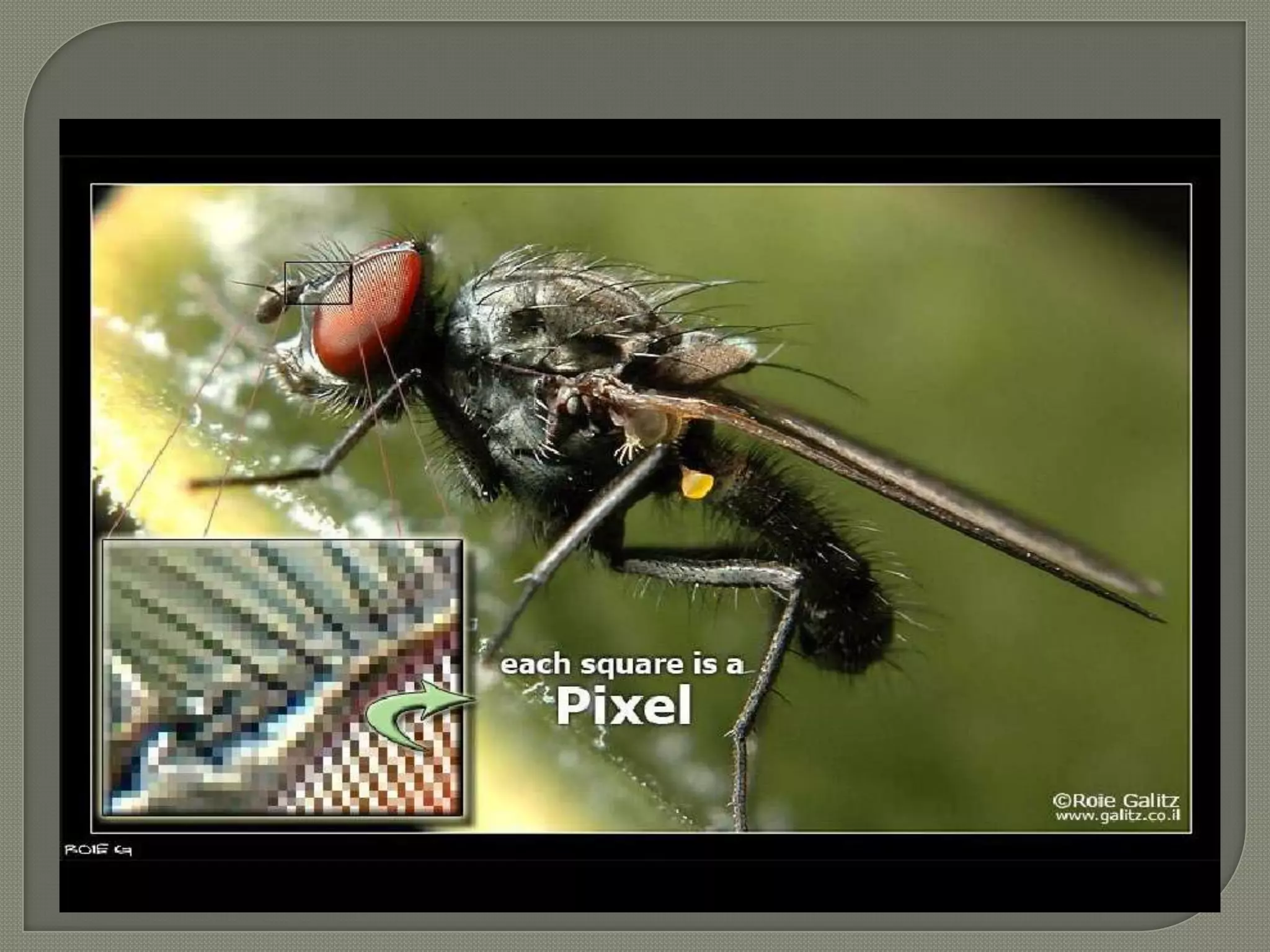
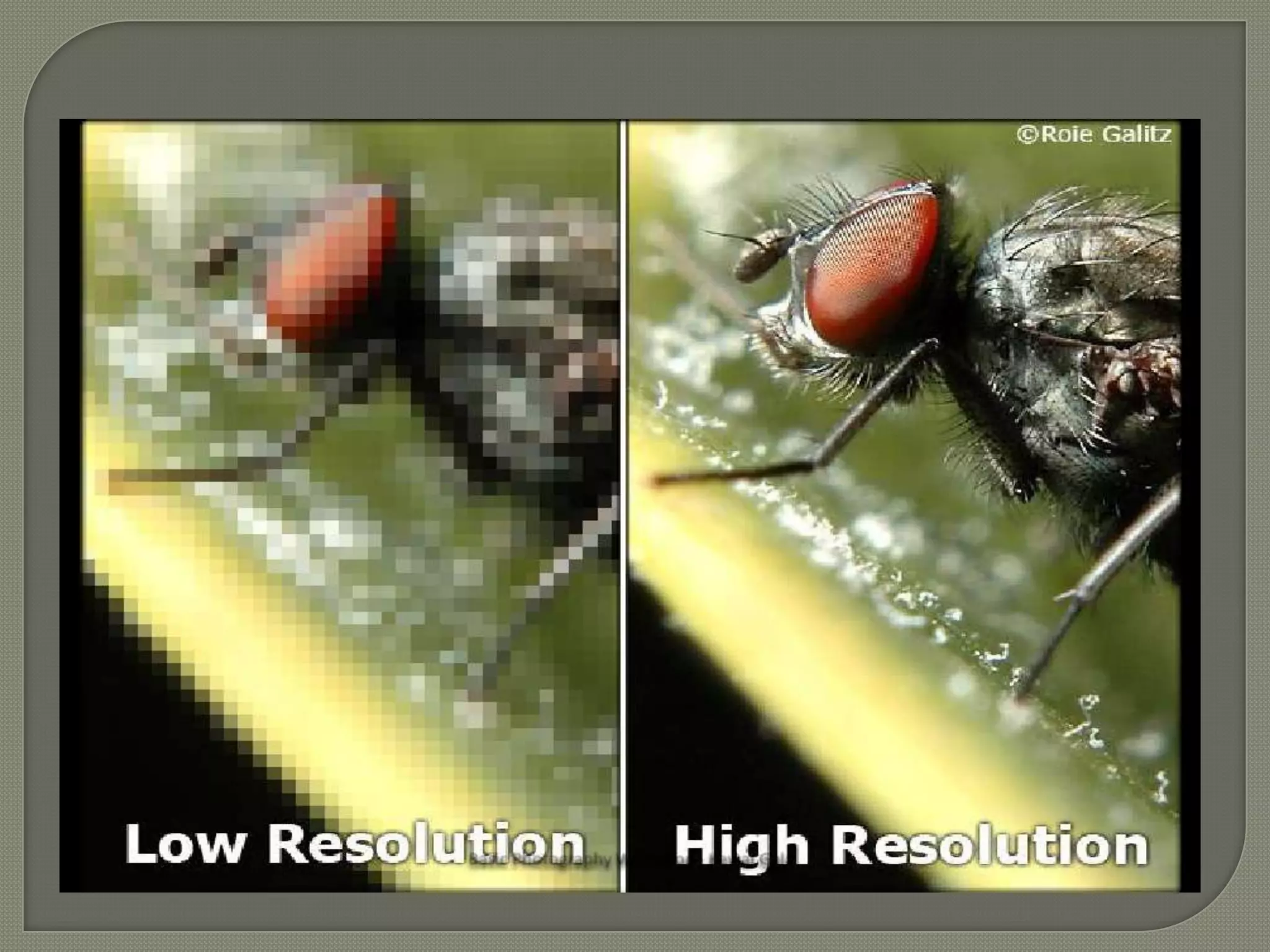
MEGAPIXEL MYTHHow much do you need? •Often, cameras are categorized by the no. of Megapixels they can capture .•As if that resolution figure is the only measure of the camera’s value.•This value can be quite misleading.
ZOOM: OPTICAL AND DIGITALOptical vs. Digital Zoom •An optical zoom uses the optics (lens) of the digital camera to move you closer to your subject.•A digital zoom simply enlarges the existing image digitally. It is not really zoom, in the strictest definition of the term.•Enlarging the image digitally reduces picture quality, and should therefore usually be avoided. •Some manufacturers label their lenses with the "total zoom" by multiplying the optical with the digital. Ignore It.•When comparing digital cameras: Go for higher optical zoom. Digital zoom can always be achieved later in an image editing software.
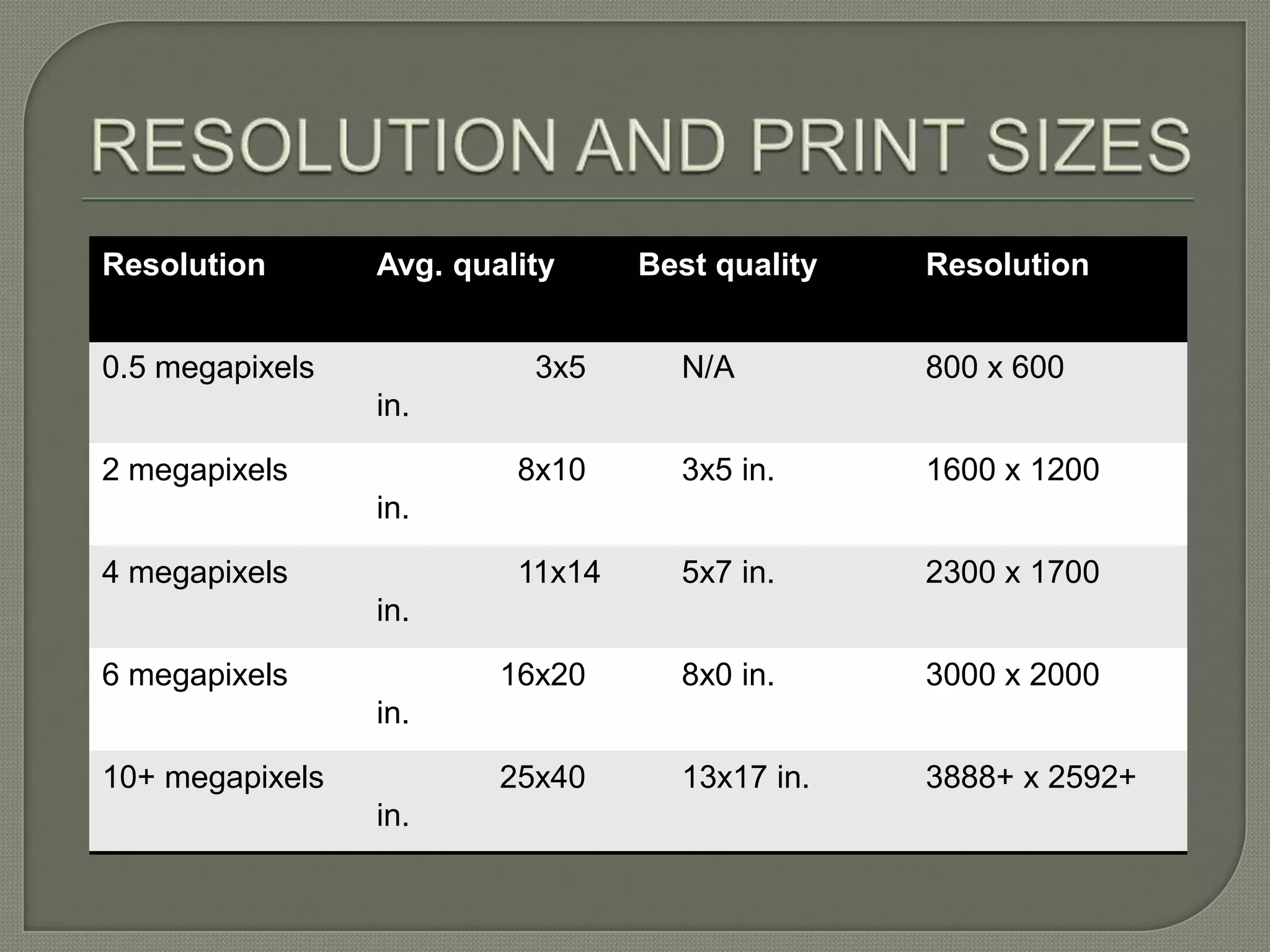
For megapixels you should keep in mind the following thingsWhat you plan to do with the photos you take: 8 x 10” Photo Prints or. 20 x 30” Posters •Do most of the photos you take end up as your wallpaper on networking sites
RESOLUTION AND PRINT SIZES
Do you plan to manipulate your photos?Are you a photo hobbyist?How often do you plan to upgrade?
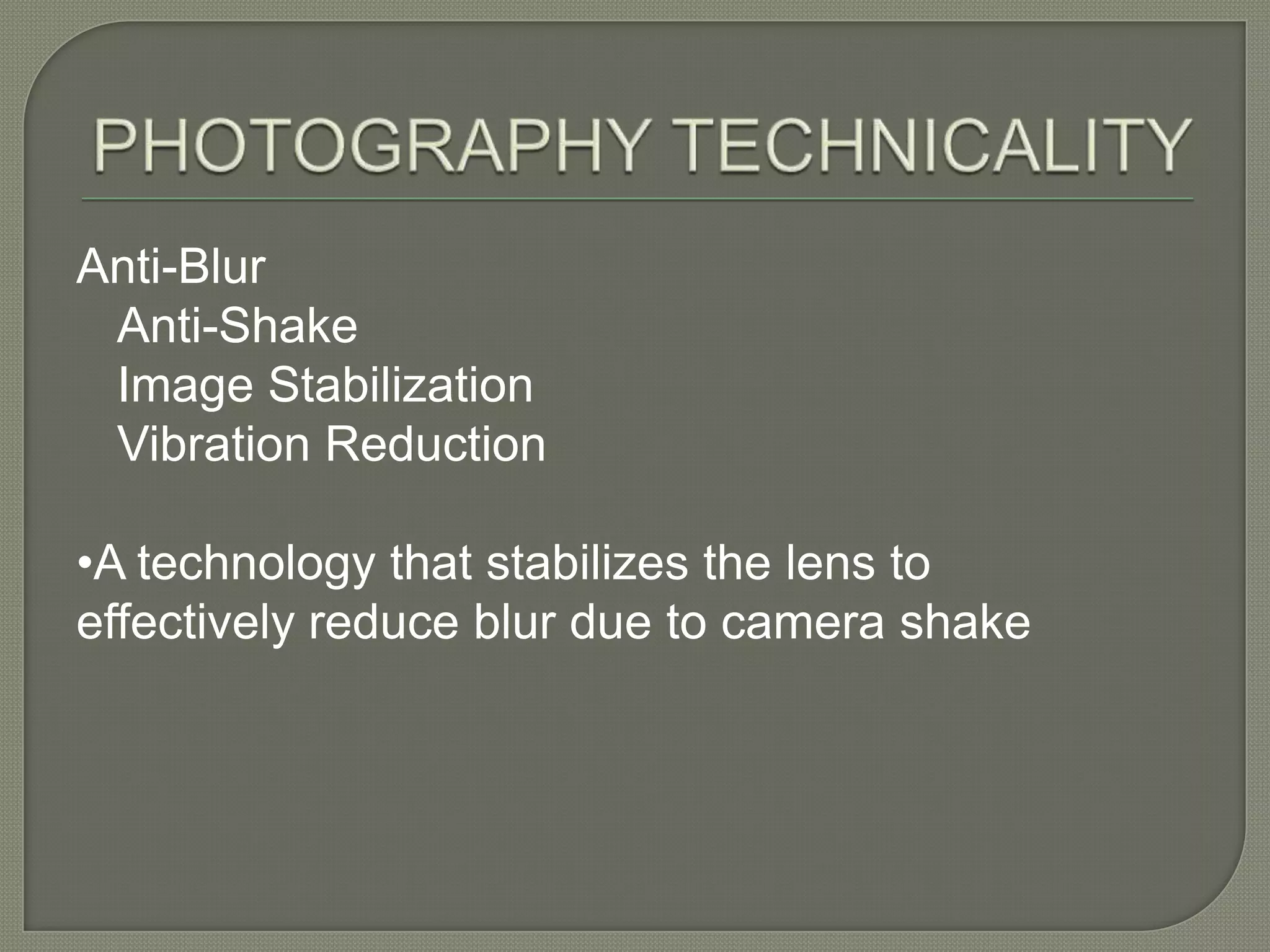
PHOTOGRAPHY TECHNICALITYAnti-BlurAnti-ShakeImage StabilizationVibration Reduction•A technology that stabilizes the lens to effectively reduce blur due to camera shake
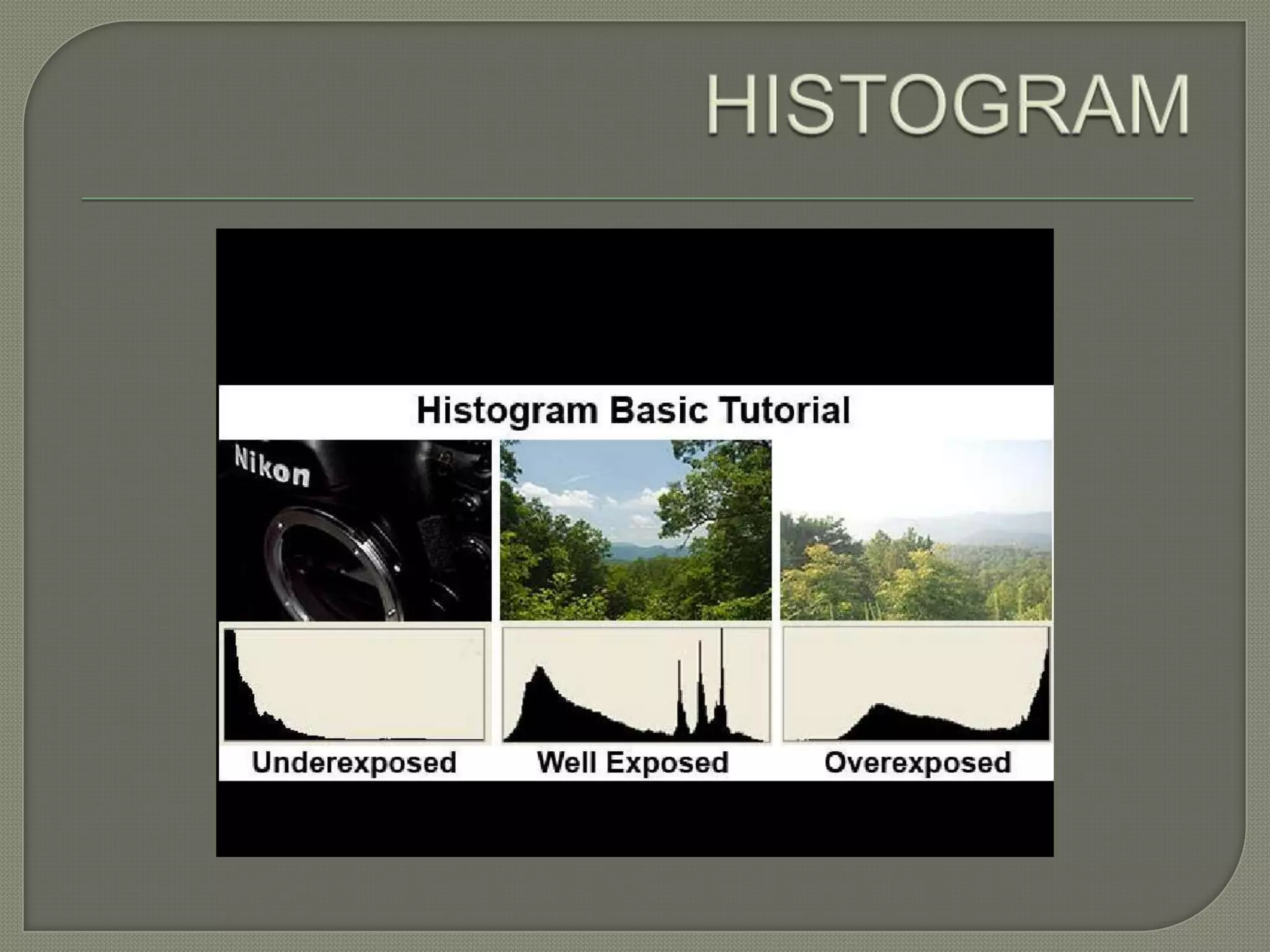
HISTOGRAM
METERINGHow the camera measures the amount of light available to expose a picture •Centre-Weighted: Readings are taken at various part of the picture, with a special emphasis for the centre.•Spot: Readings are taken at a specific point.•Each camera manufacturer has its own variations (Evaluative Metering)
WHITE BALANCEThe ability to adjust colours based on white as a reference colour to give as true a white as possible •All other colours are corrected accordingly•Auto WB (AWB): the camera determines and selects the correct colour temperature for white.
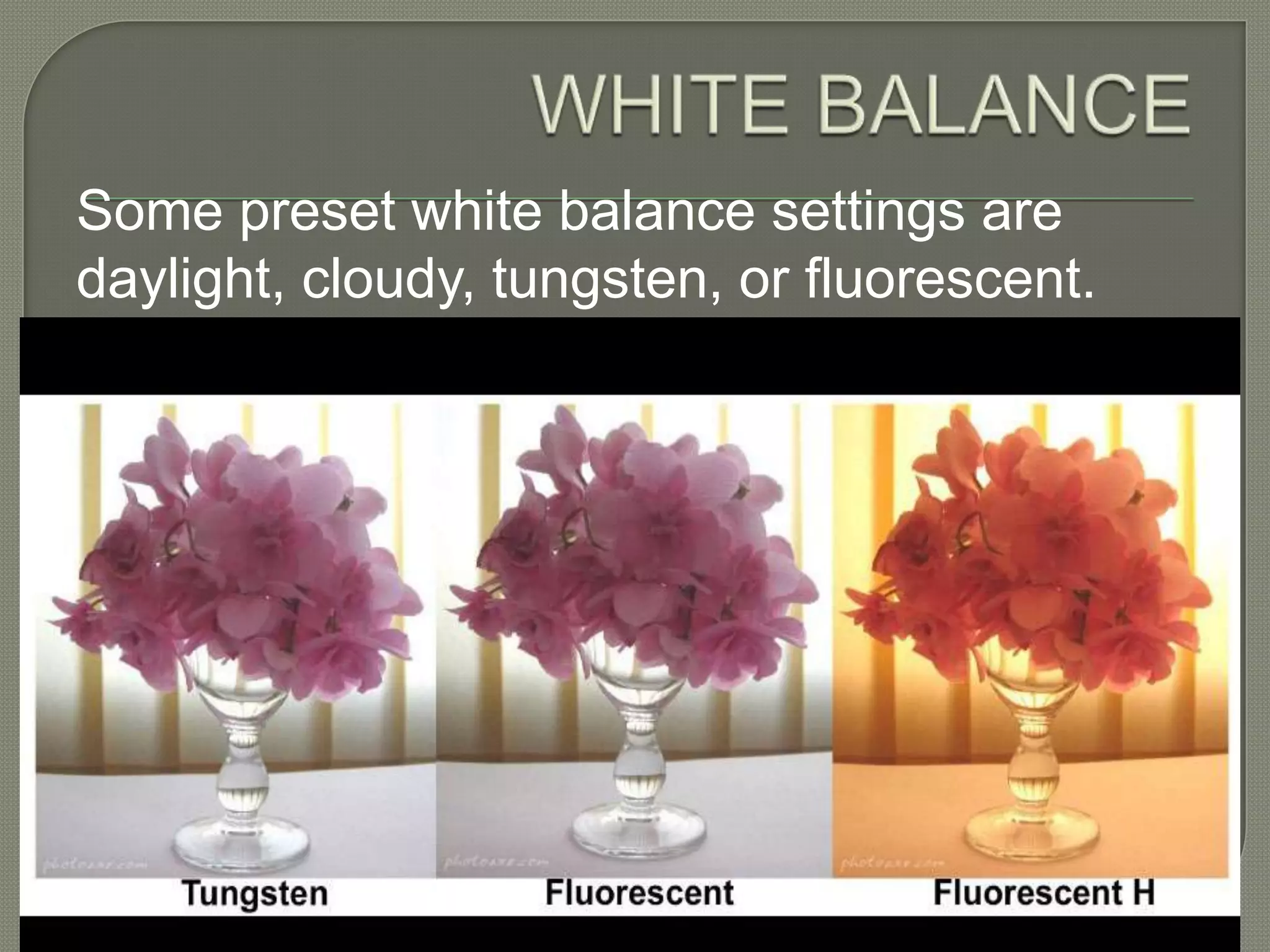
WHITE BALANCESome preset white balance settings are daylight, cloudy, tungsten, or fluorescent.
[ Ev +/-] Exposure-Compensation
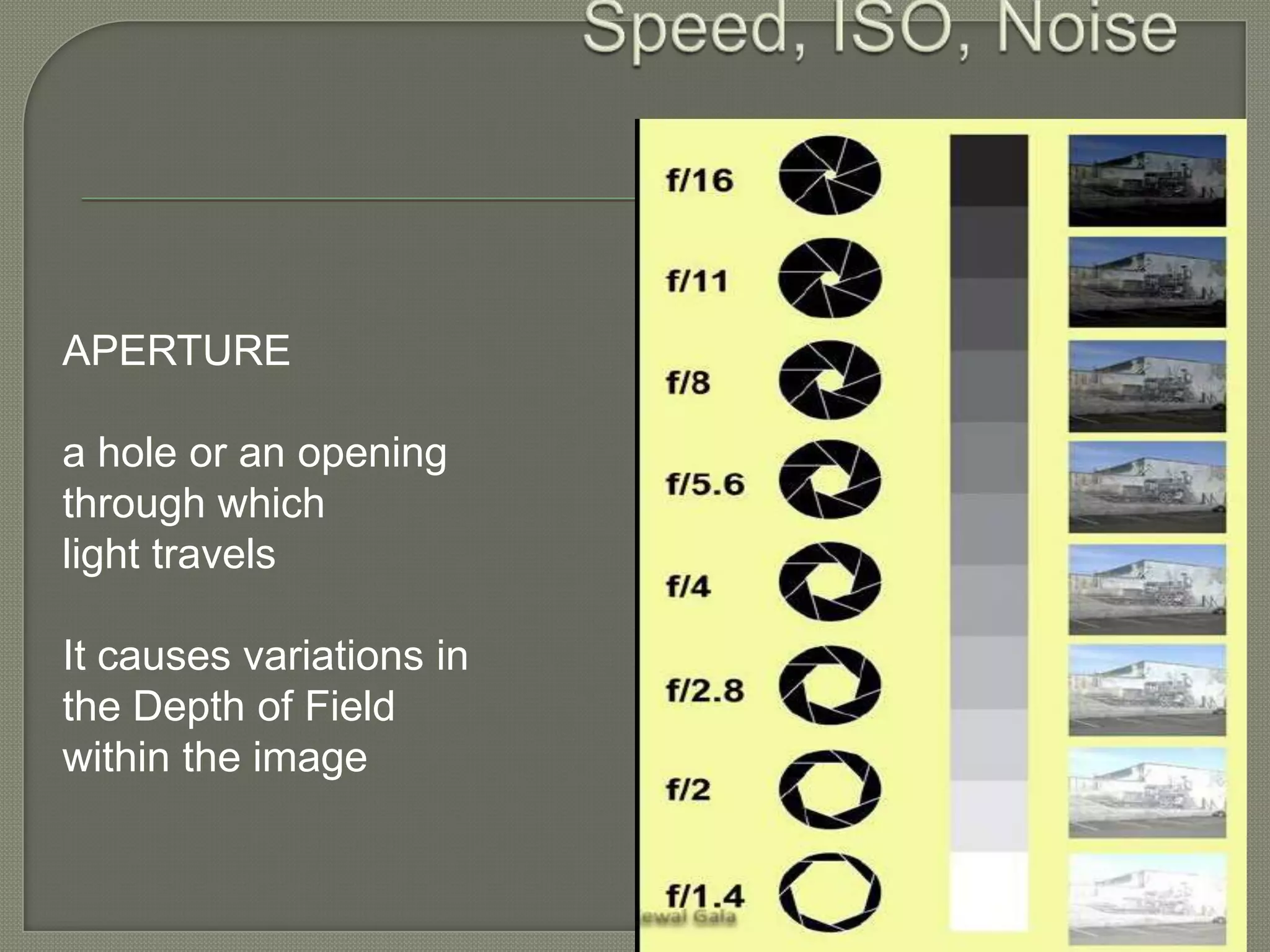
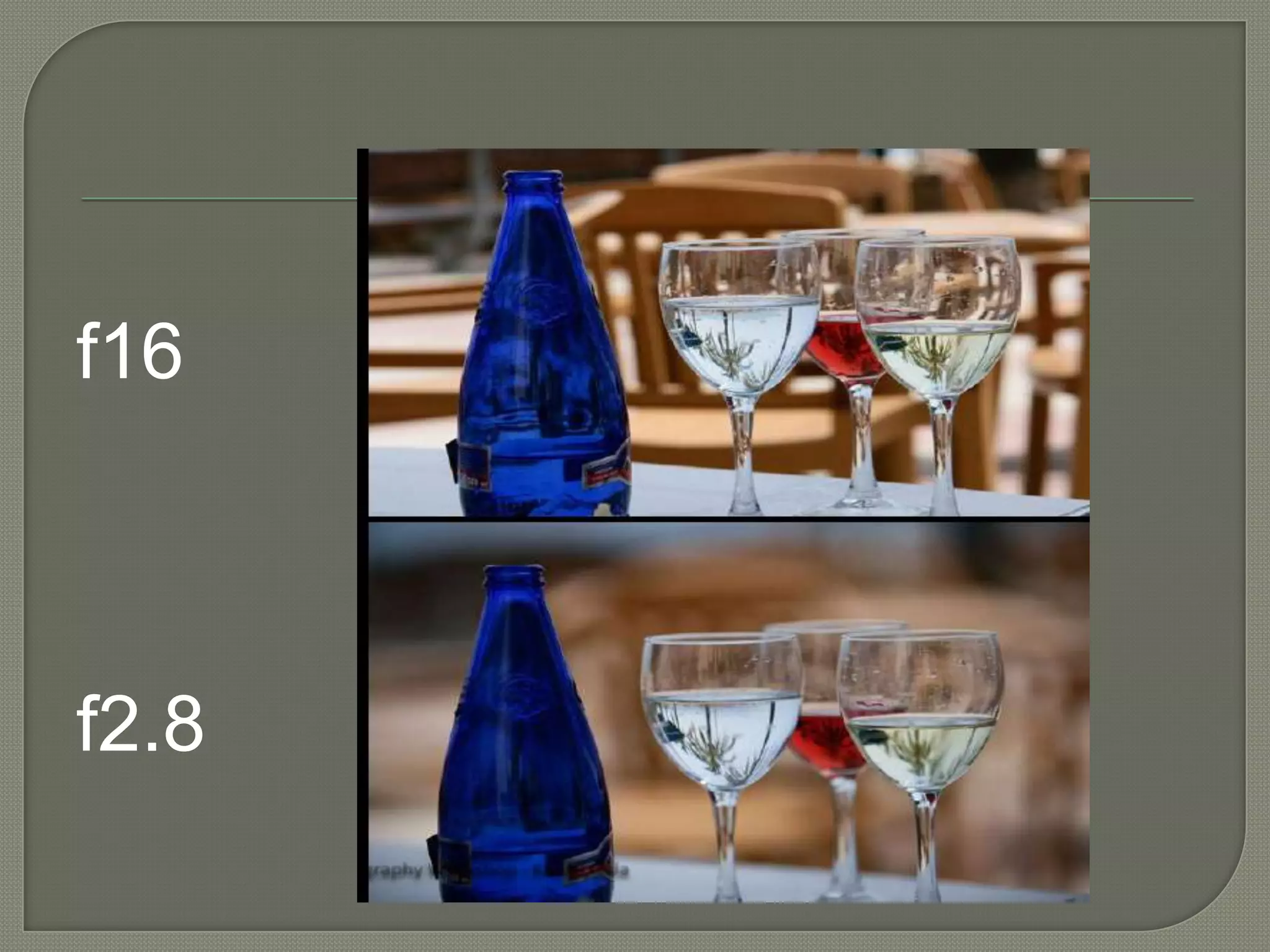
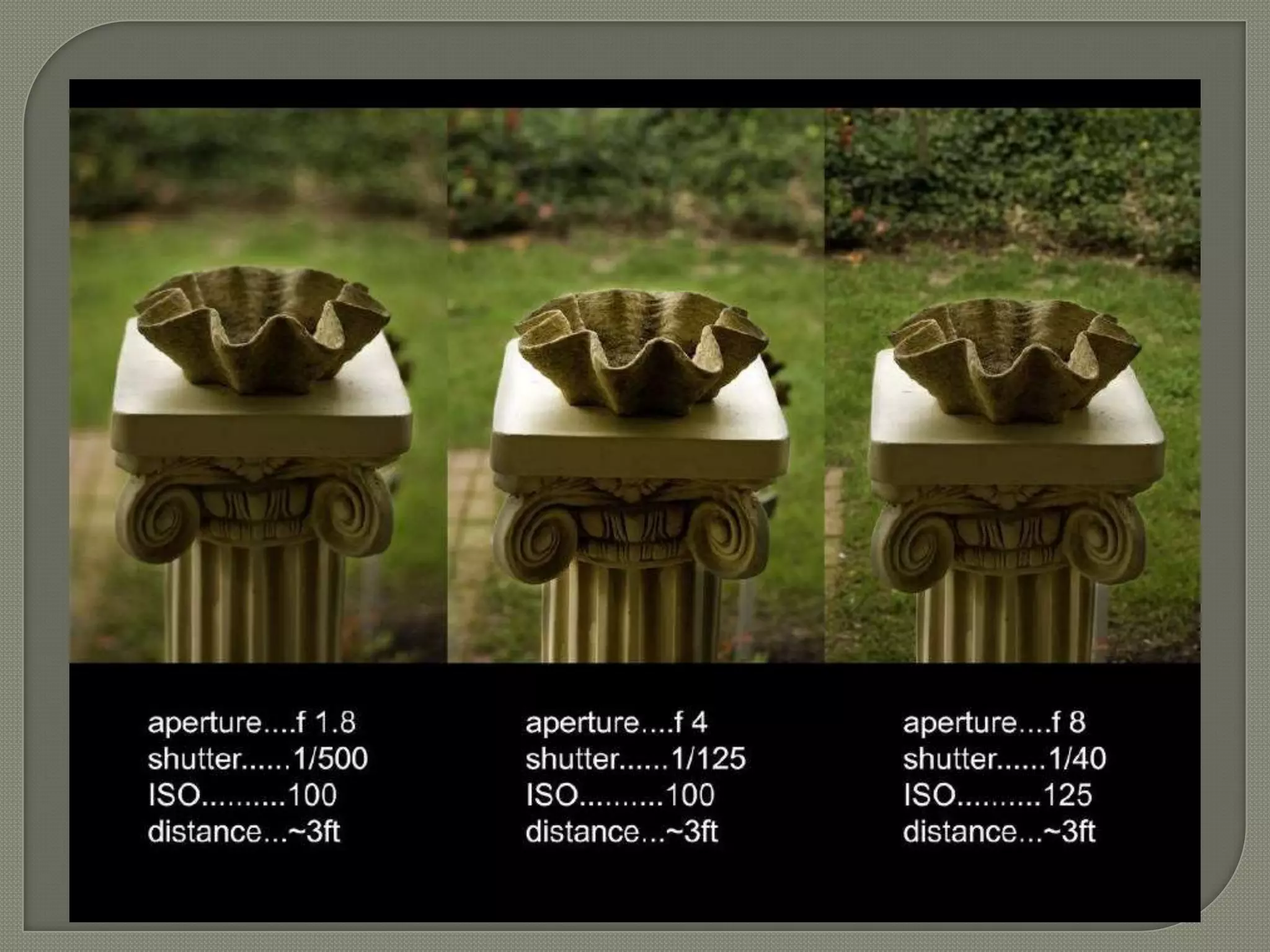
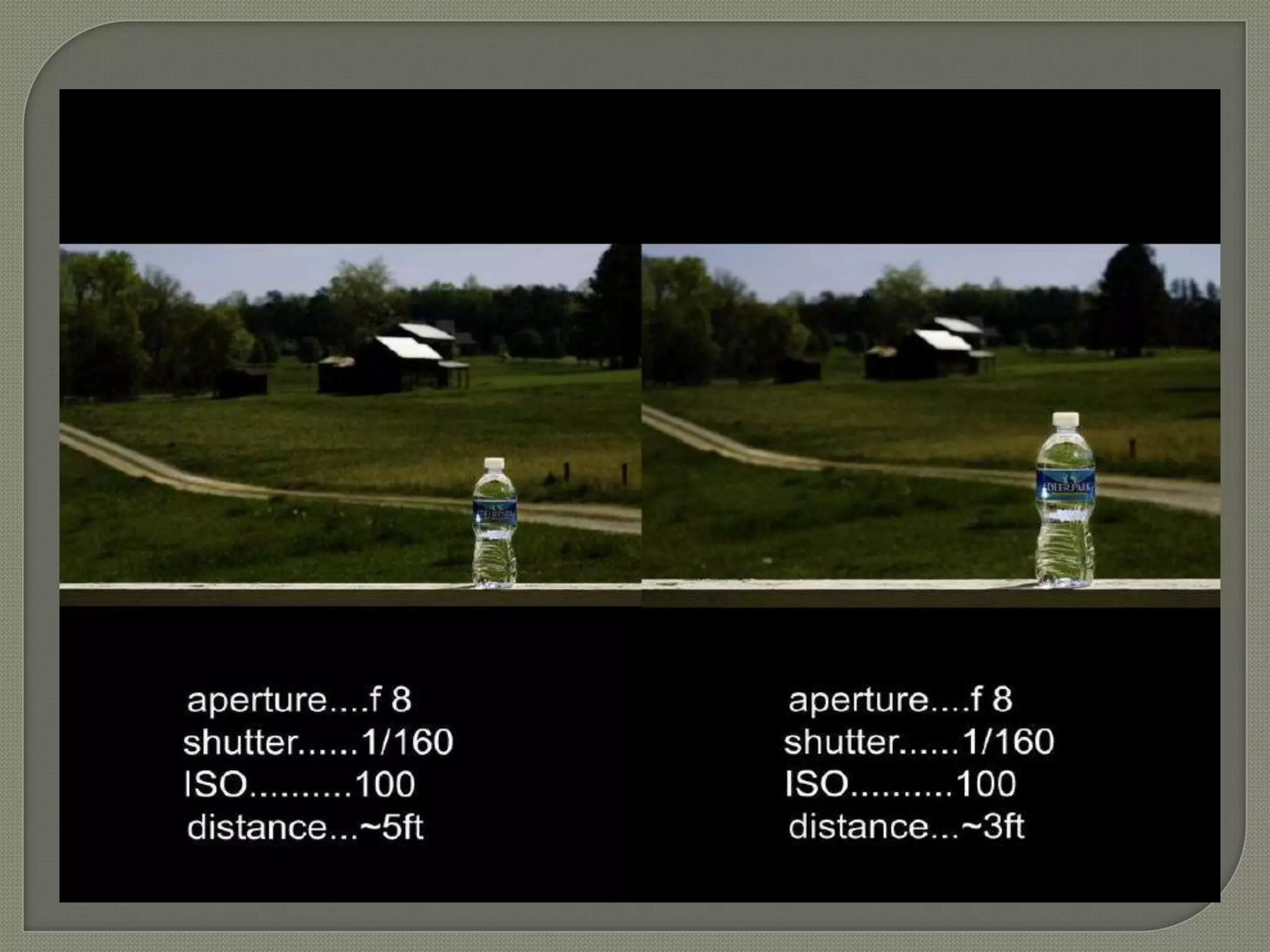
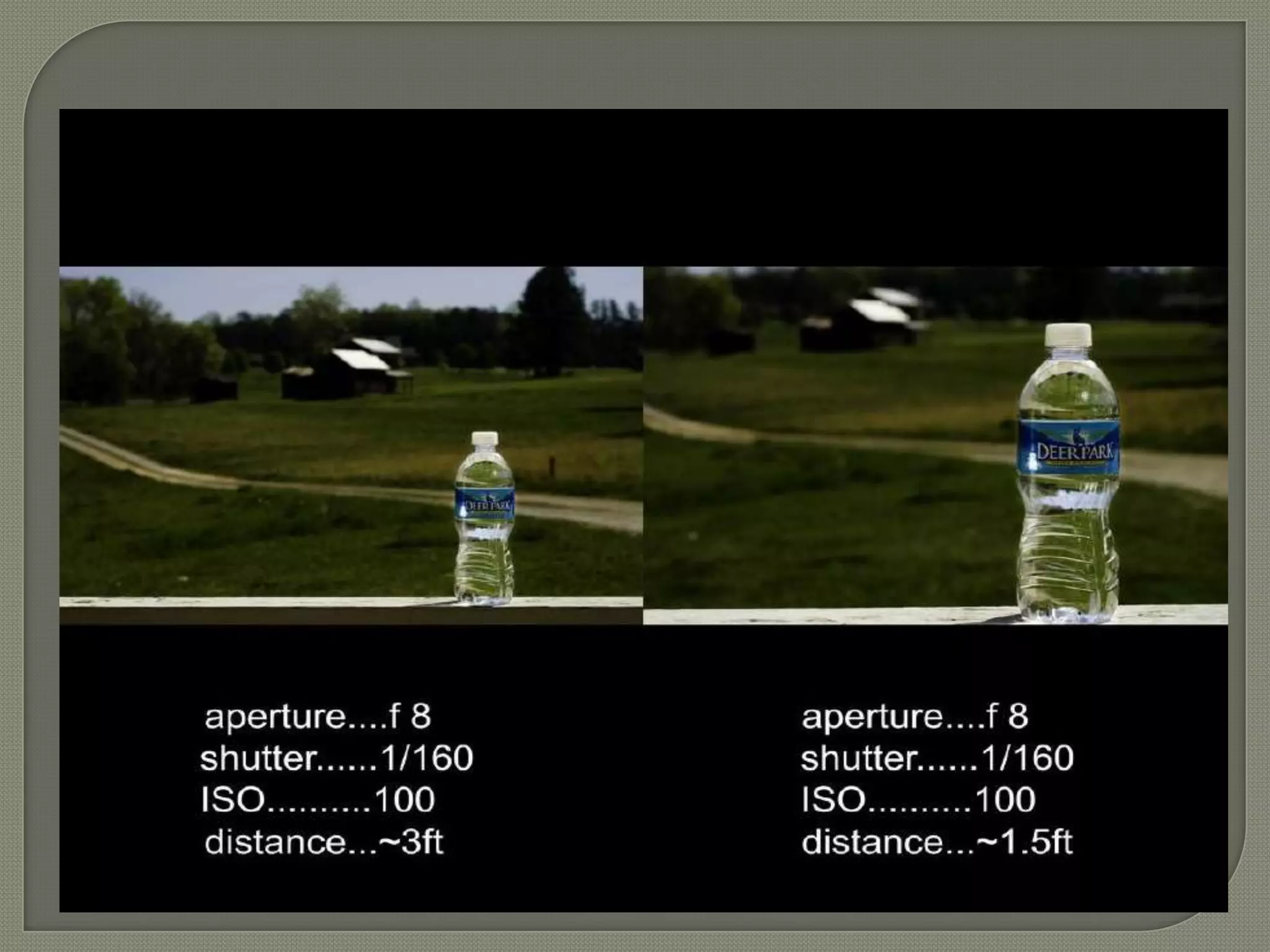
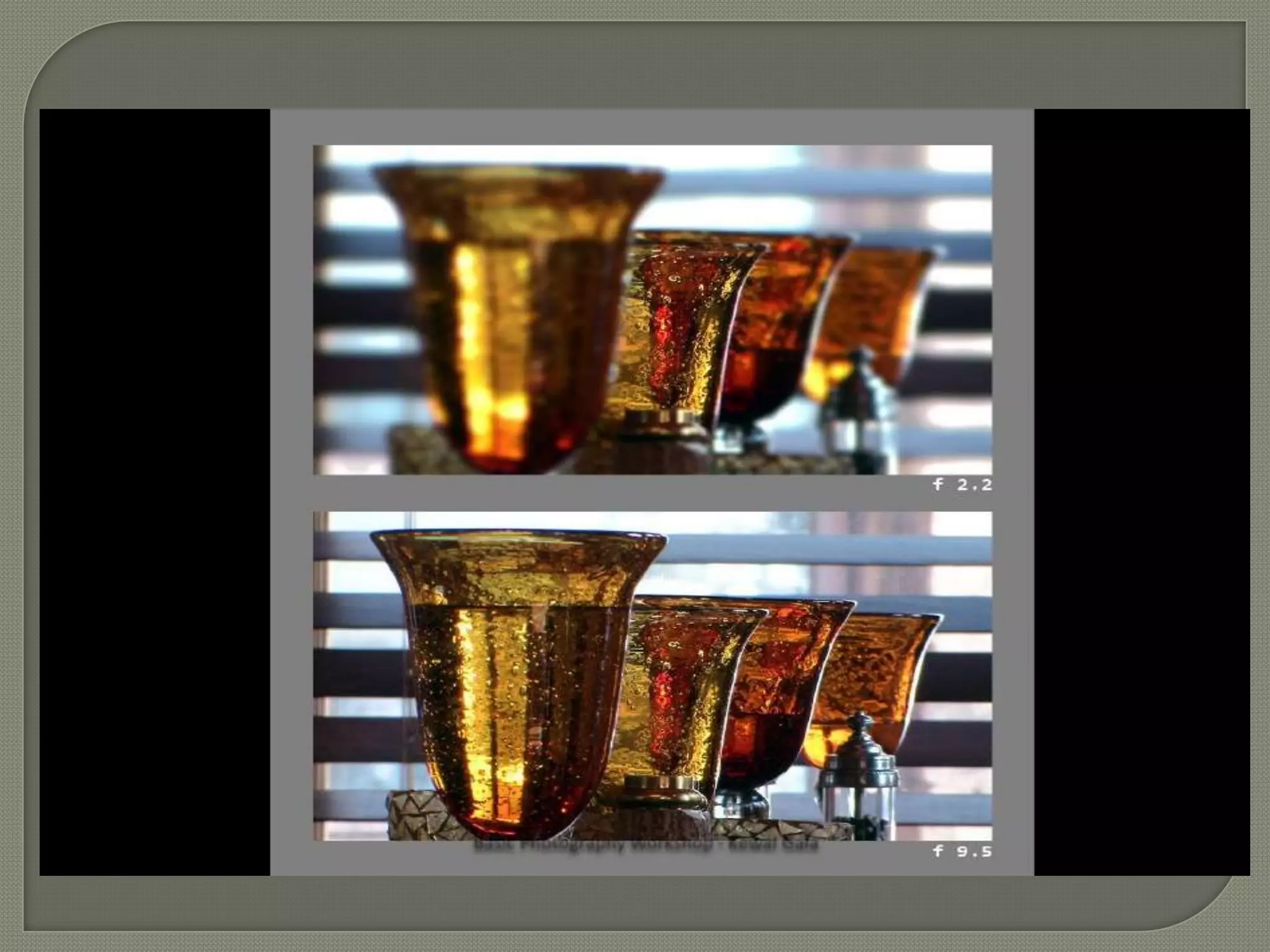
Aperture, Depth of Field, Shutter Speed, ISO, Noise APERTUREa hole or an opening through which light travels It causes variations in the Depth of Field within the image
f16f2.8
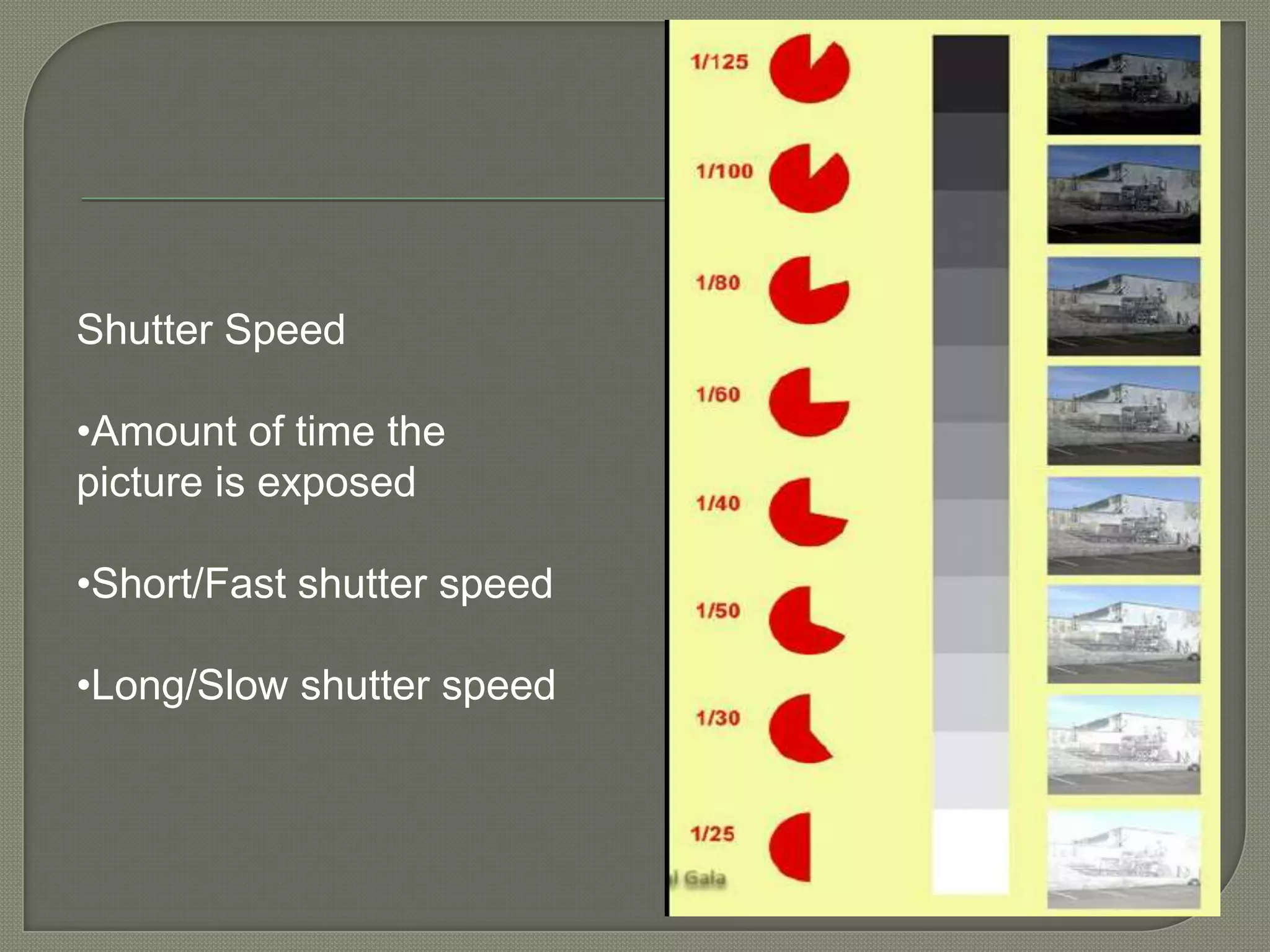
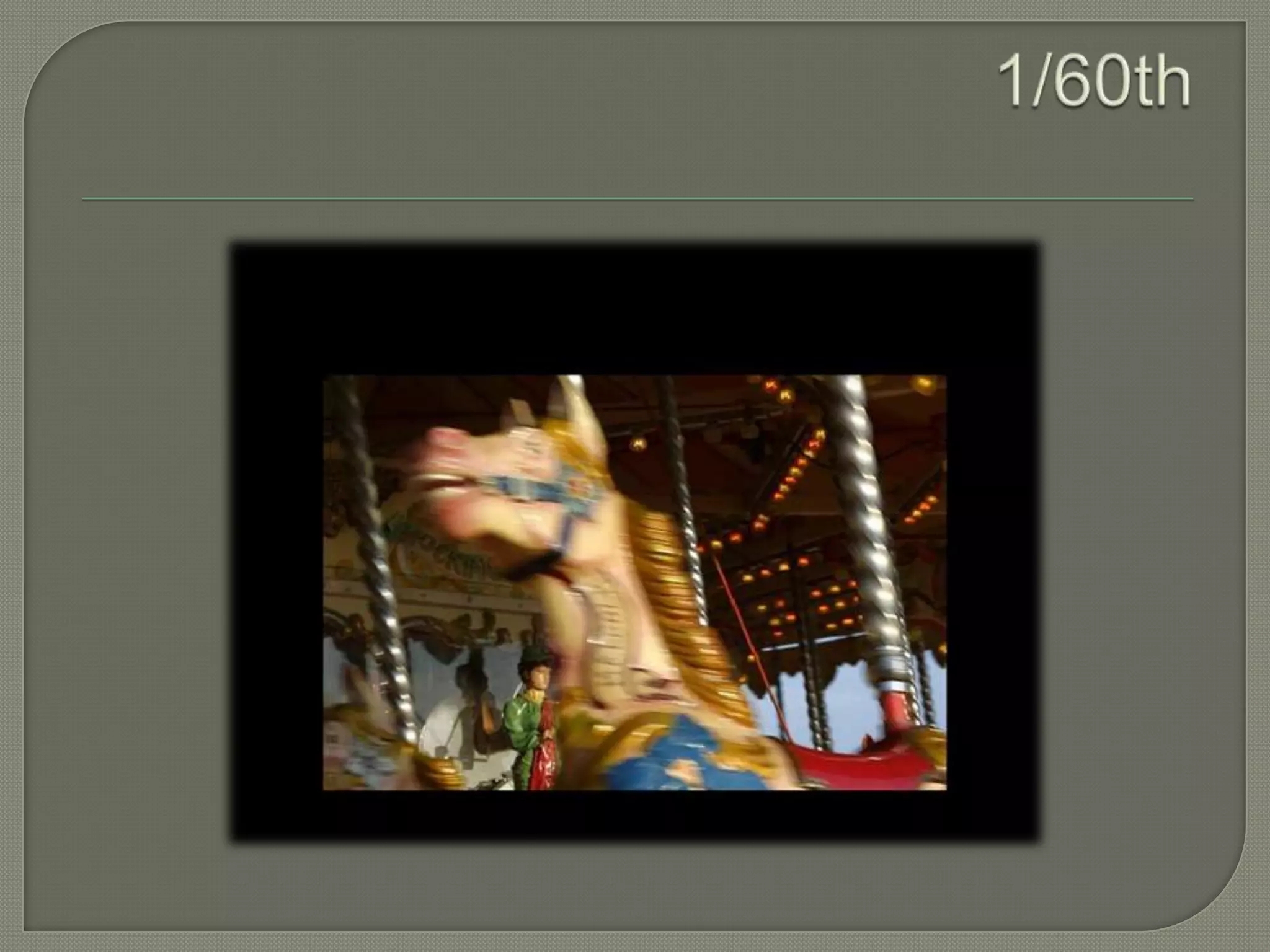
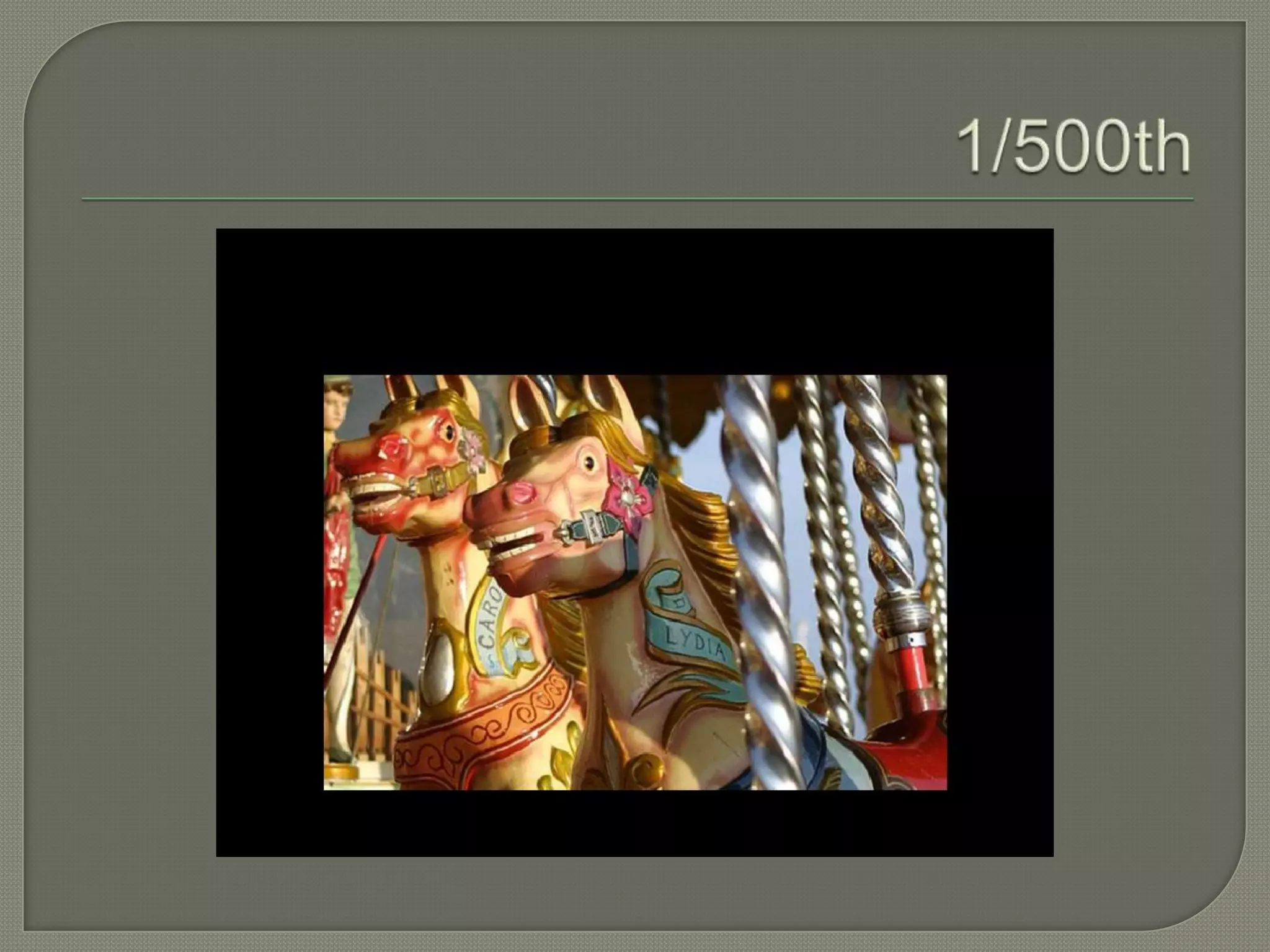
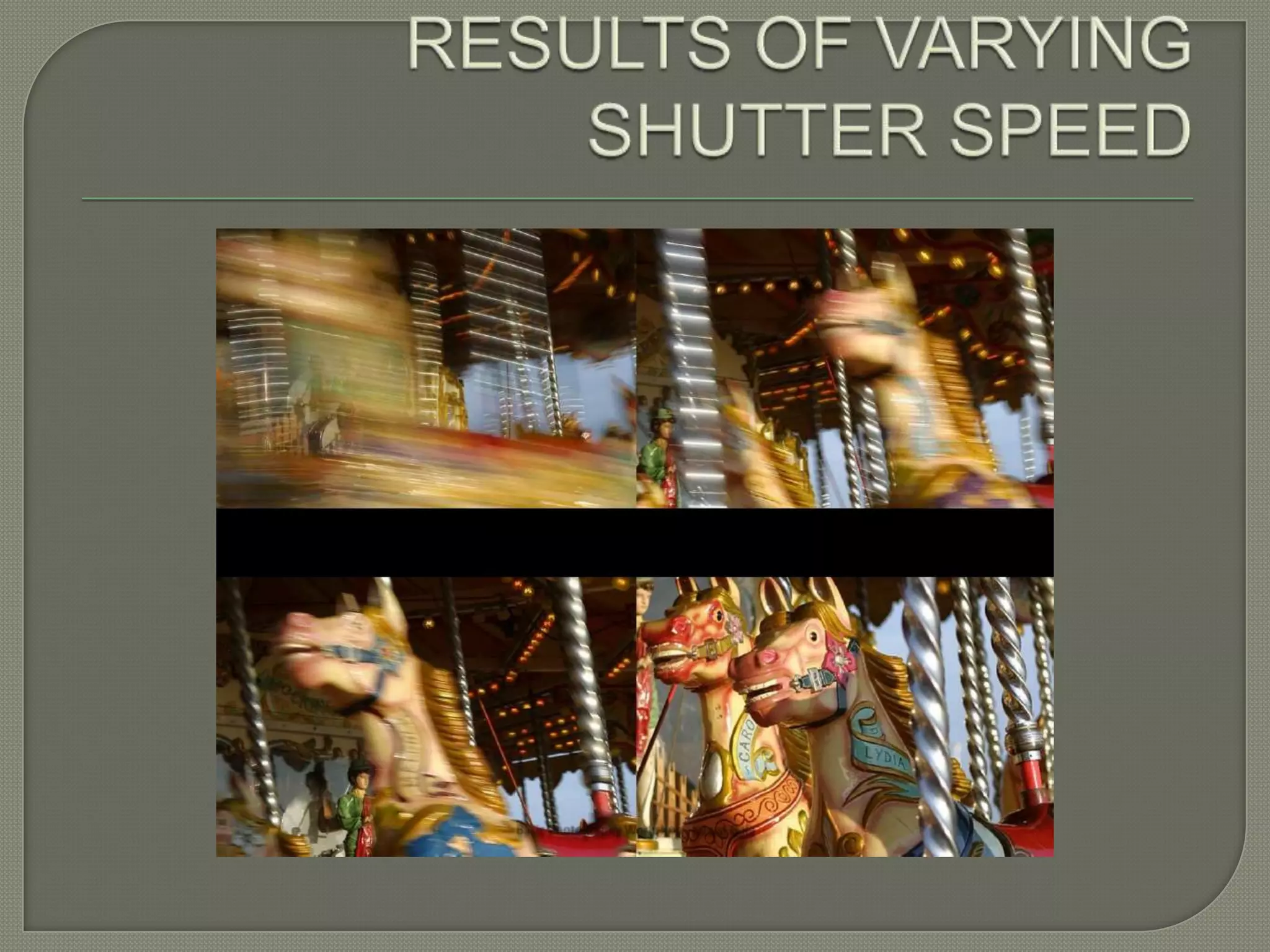
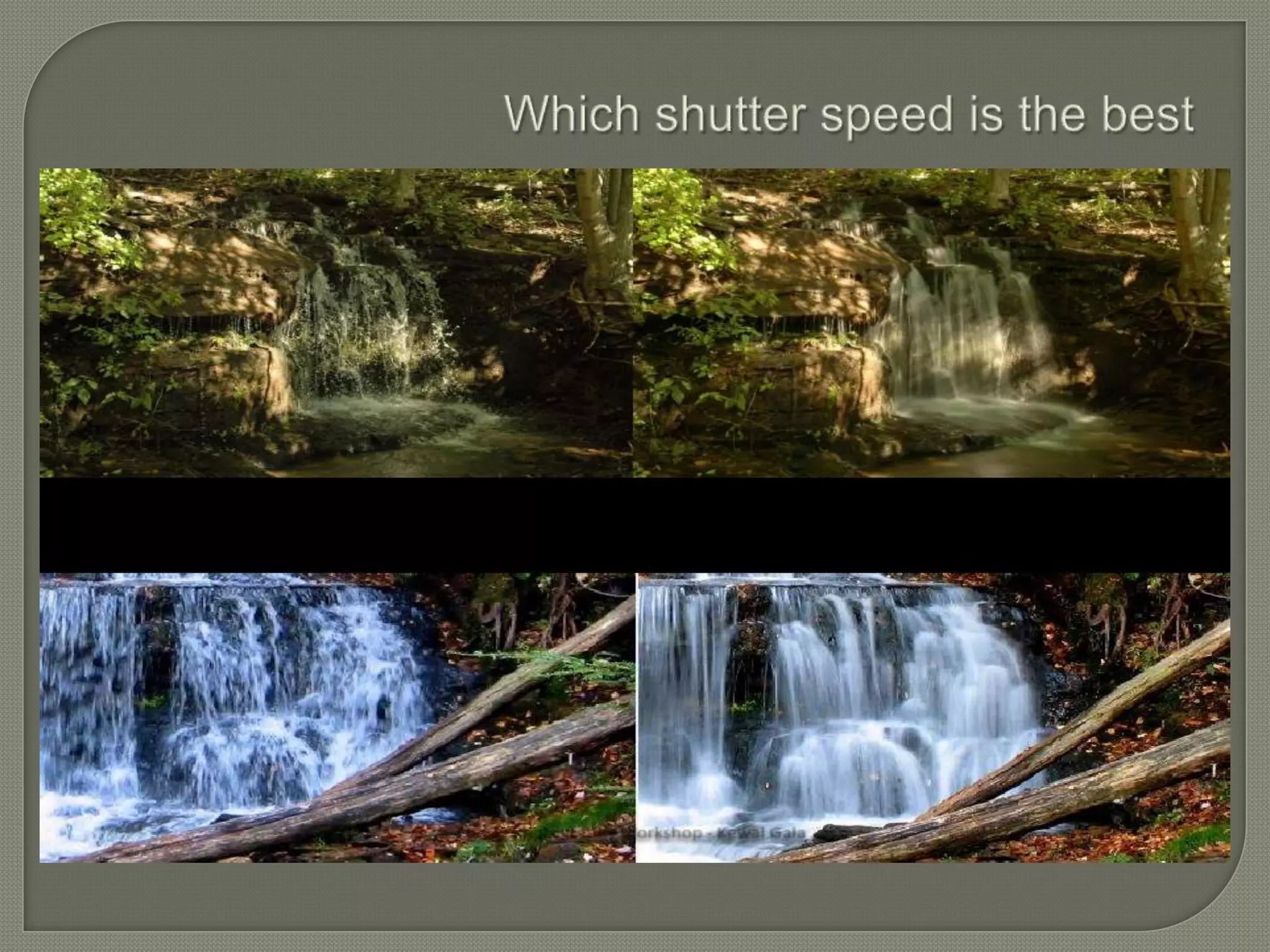
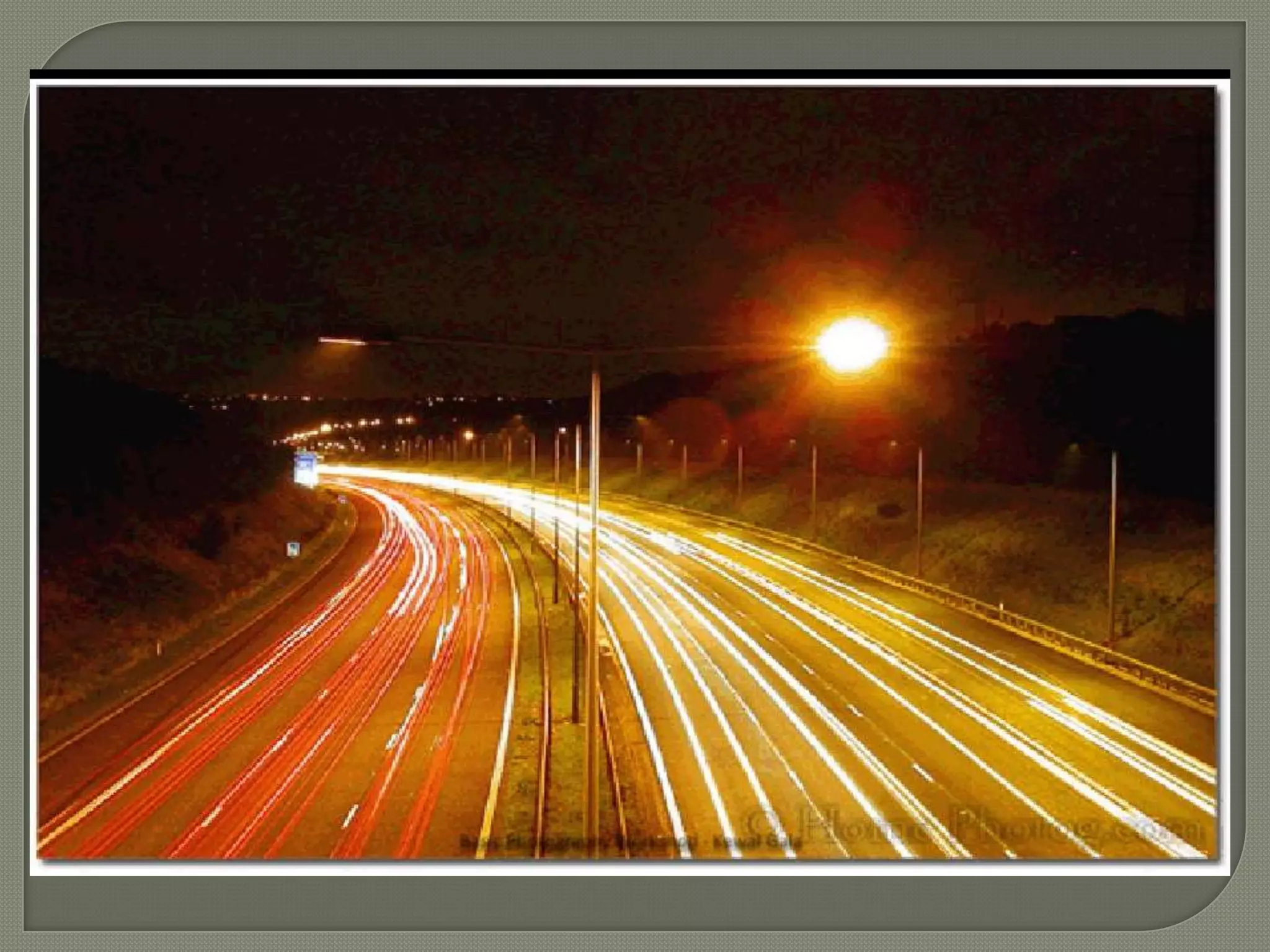
Shutter Speed•Amount of time the picture is exposed•Short/Fast shutter speed•Long/Slow shutter speed
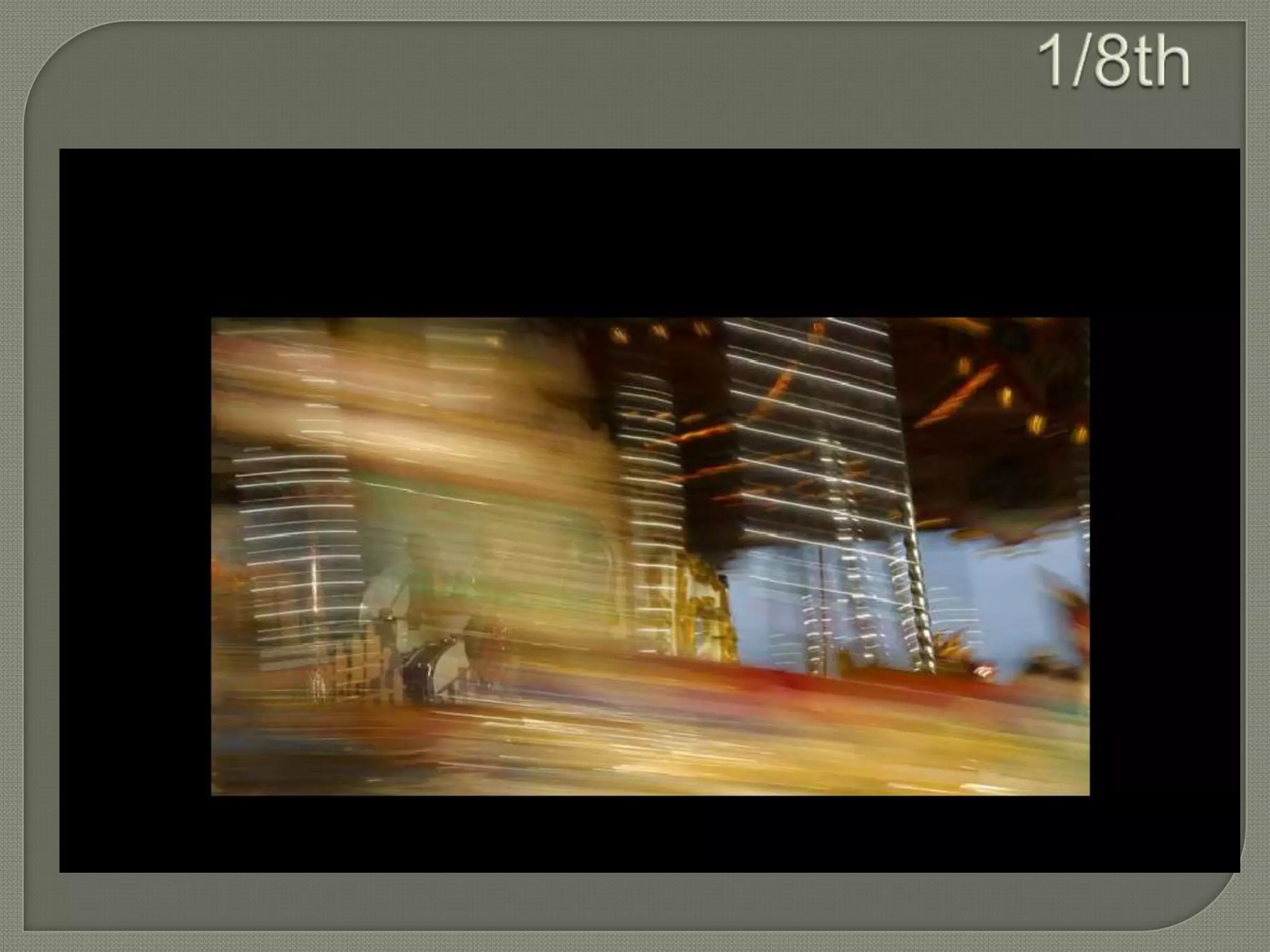
1/8th
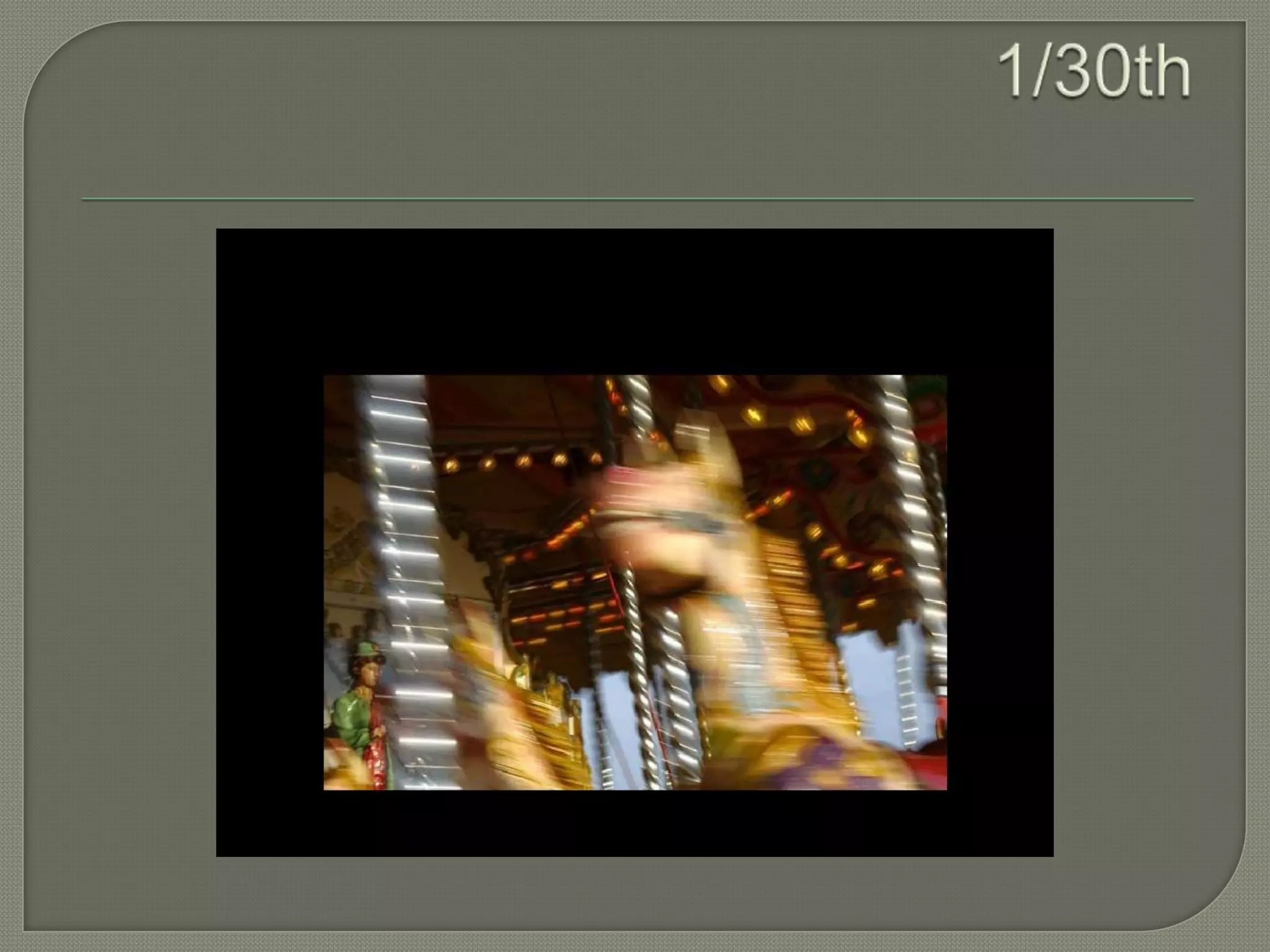
 1/30th
 1/60th
 1/500th
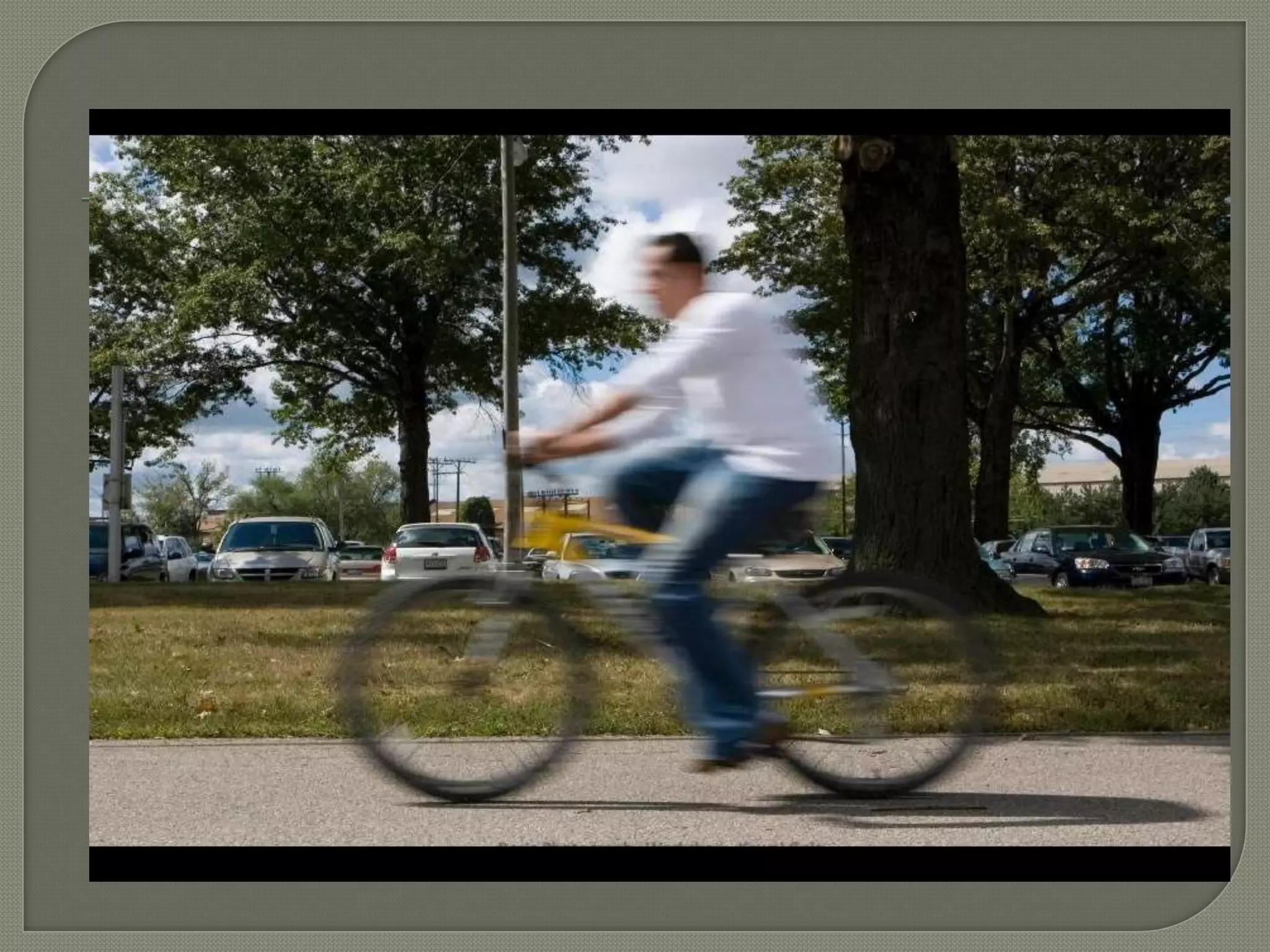
RESULTS OF VARYING SHUTTER SPEED
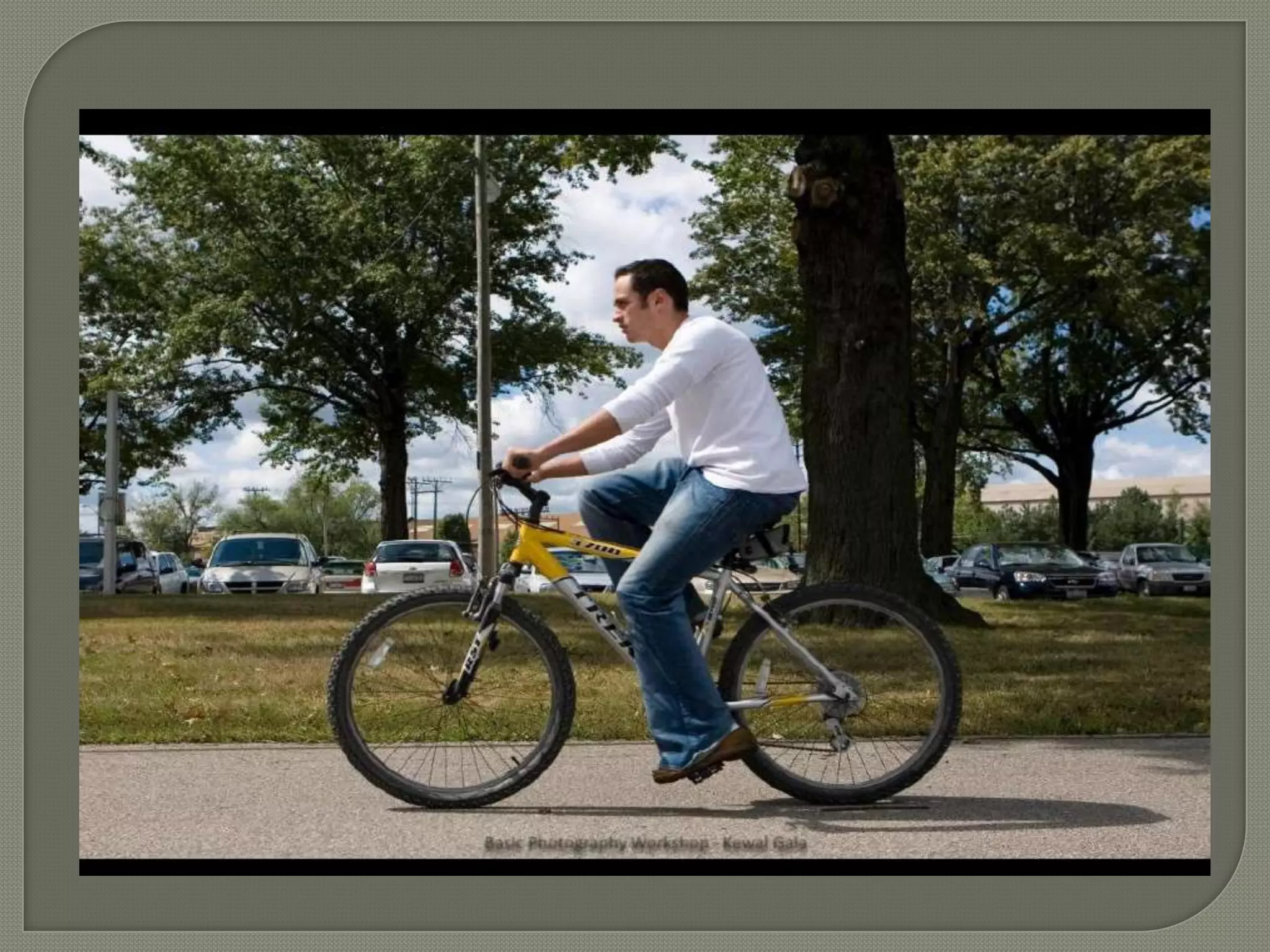
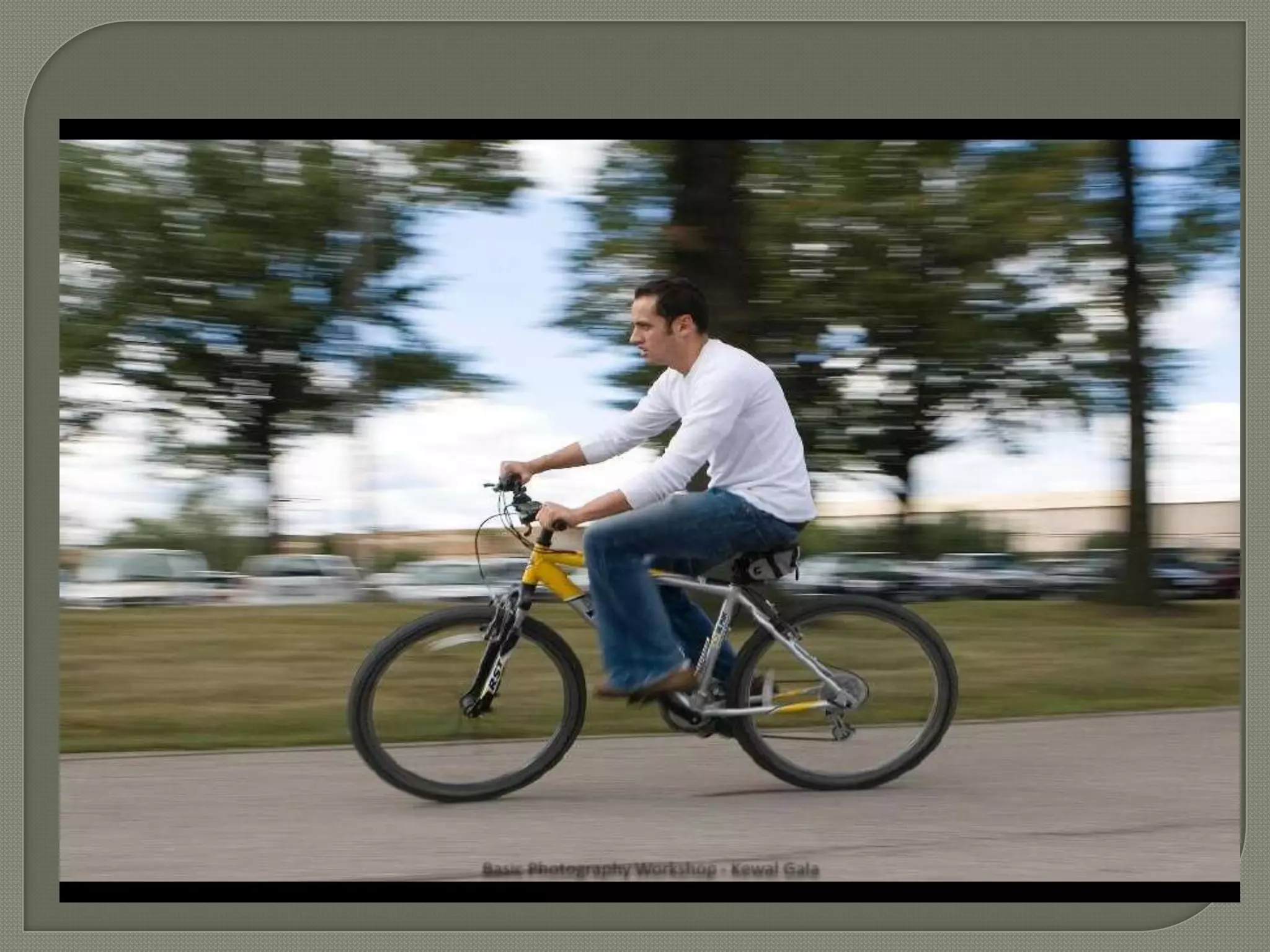
USING THE TECHNIQUE OF…PANNING
Which shutter speed is the best
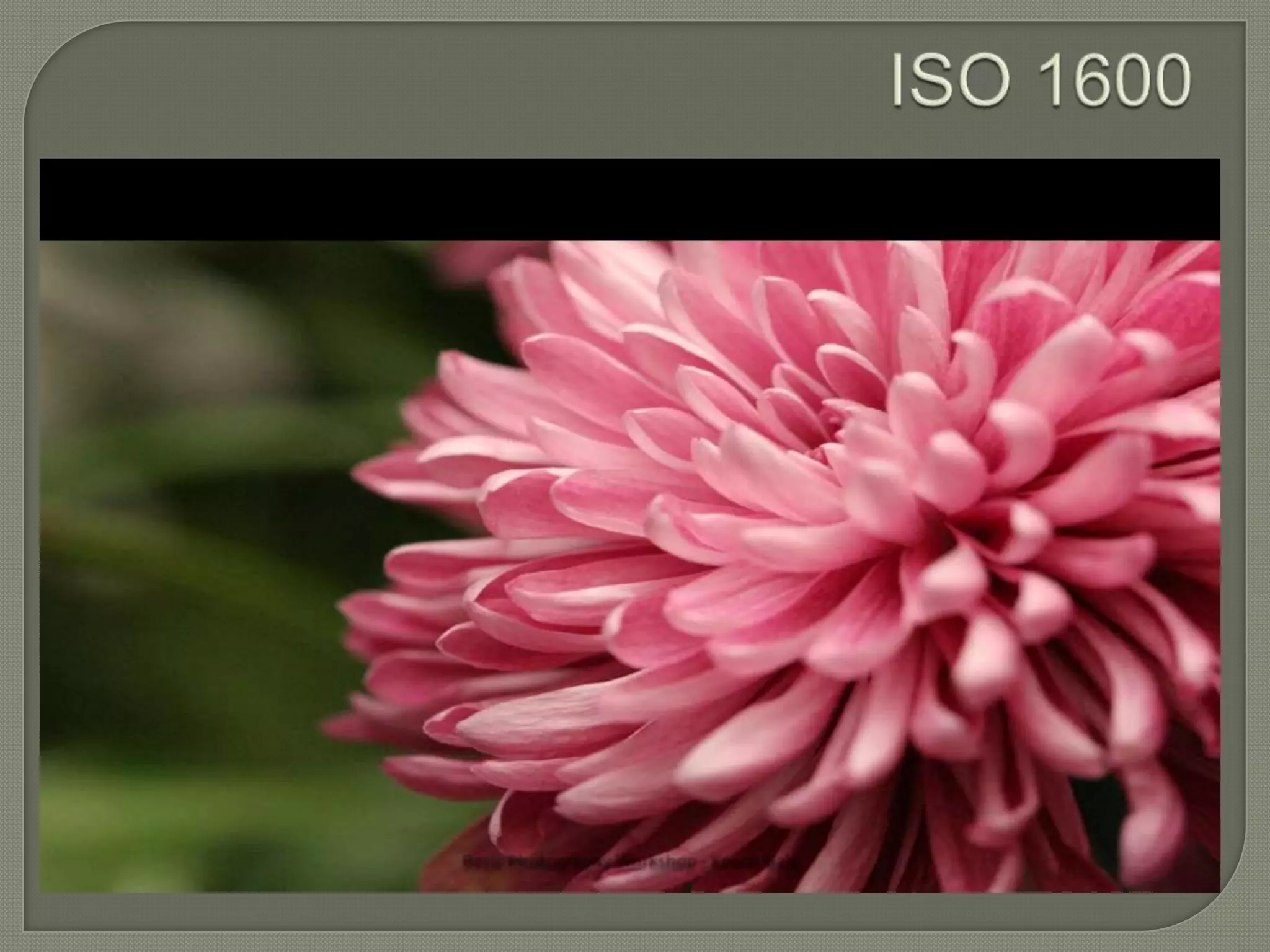
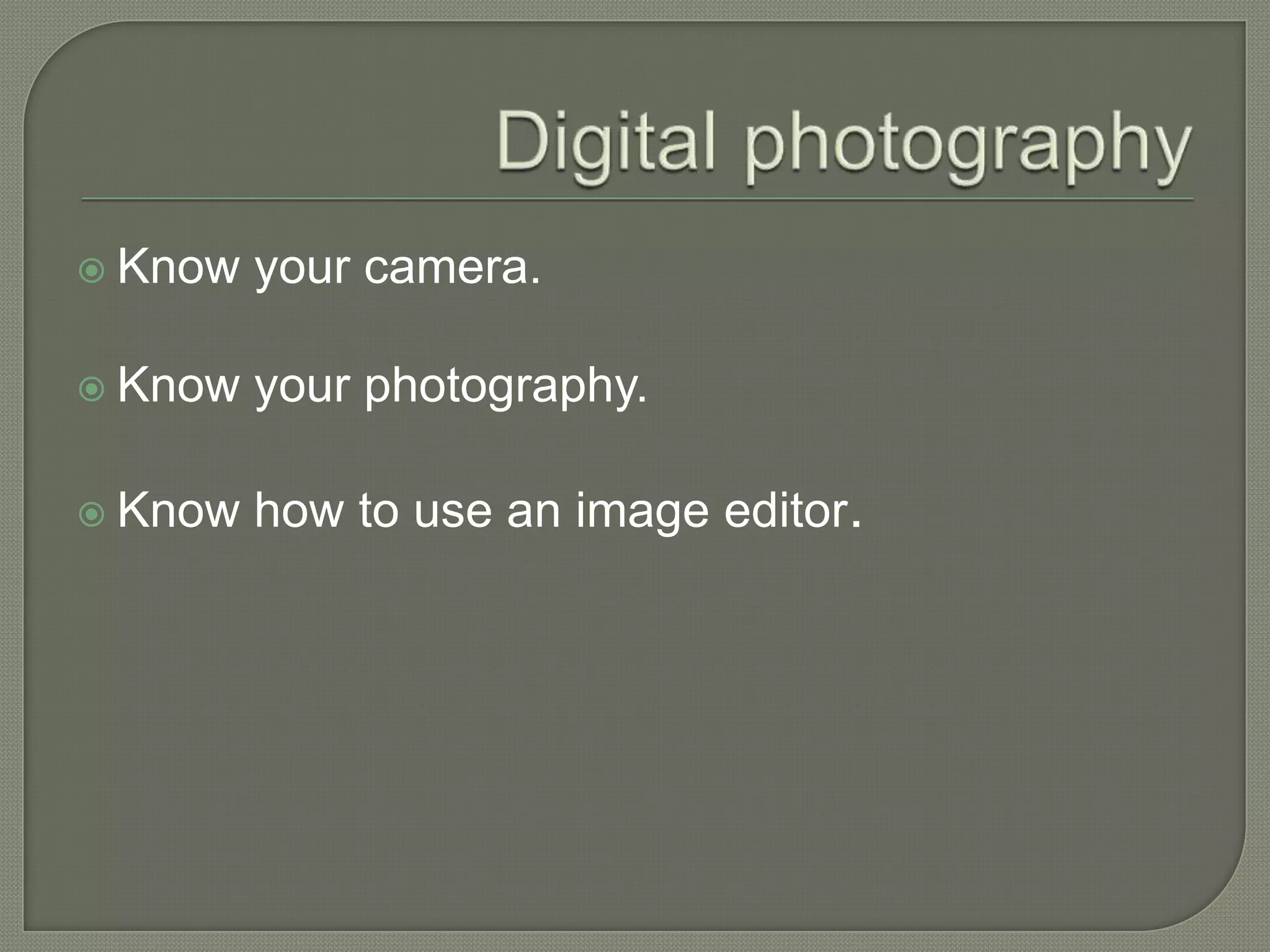
ISO •the measure of a digital camera sensor’s sensitivity to light•a higher number indicates higher sensitivity •This is usually expressed as a range, e.g. ISO 100 - 1600.•A higher sensitivity allows us to take pictures in low light without using flash•Higher ISO causes more "noise" than lower ISO
ISO 100
ISO 1600
Digital photographyKnow your camera.Know your photography.Know how to use an image editor.
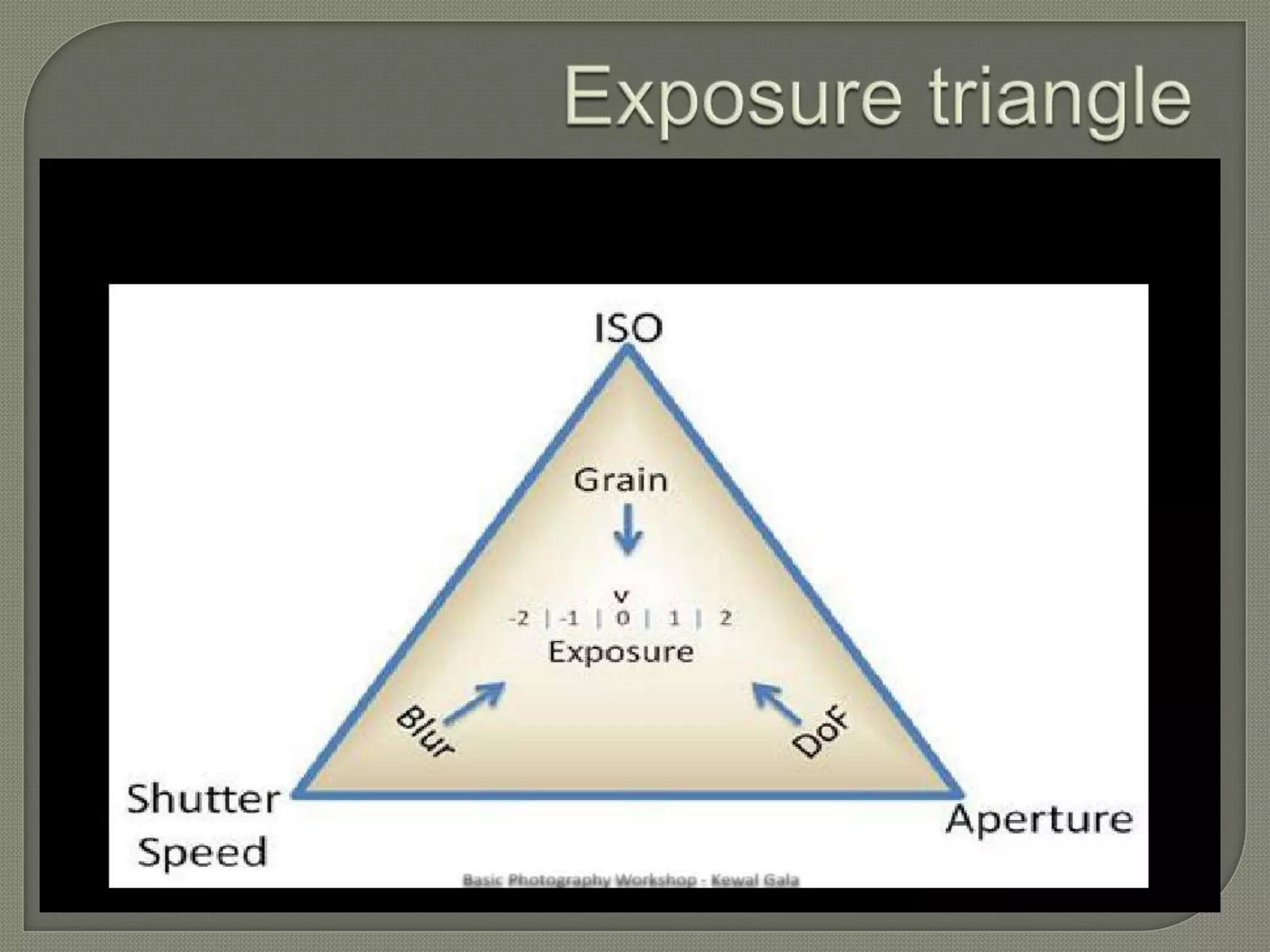
Exposure triangle
Photography modes
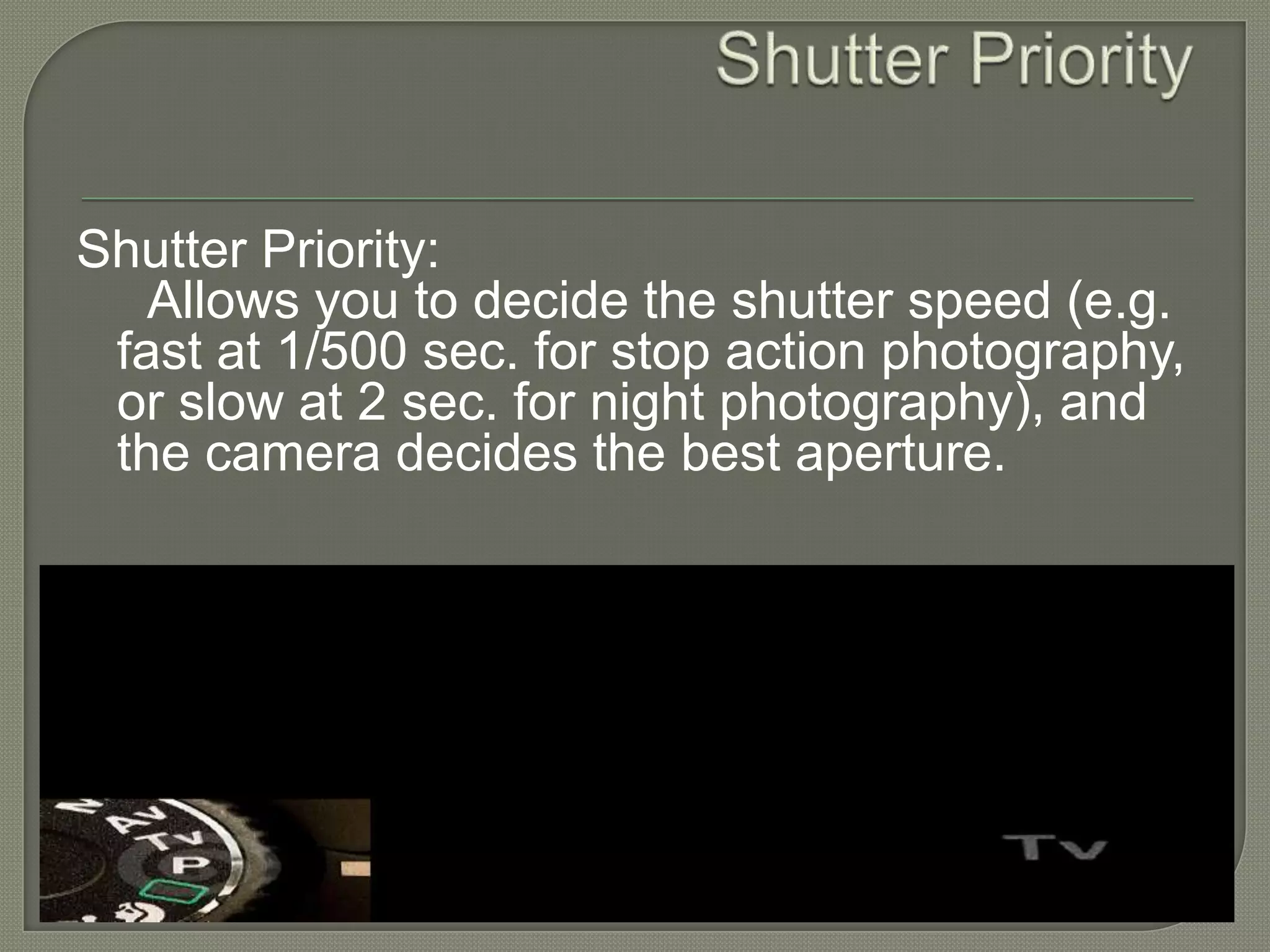
Shutter Priority Shutter Priority:      Allows you to decide the shutter speed (e.g. fast at 1/500 sec. for stop action photography, or slow at 2 sec. for night photography), and the camera decides the best aperture.
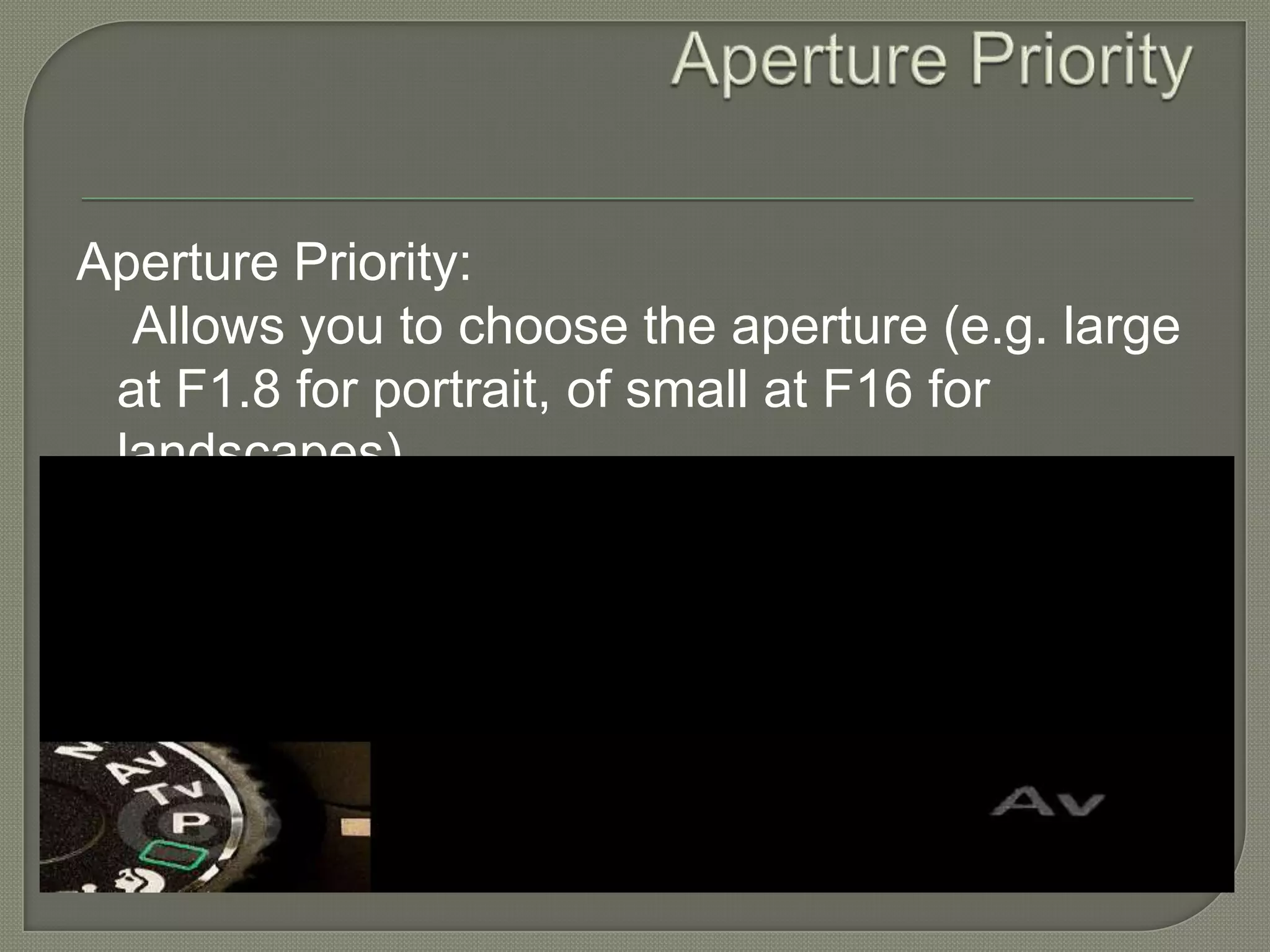
Aperture Priority Aperture Priority:     Allows you to choose the aperture (e.g. large at F1.8 for portrait, of small at F16 for landscapes).
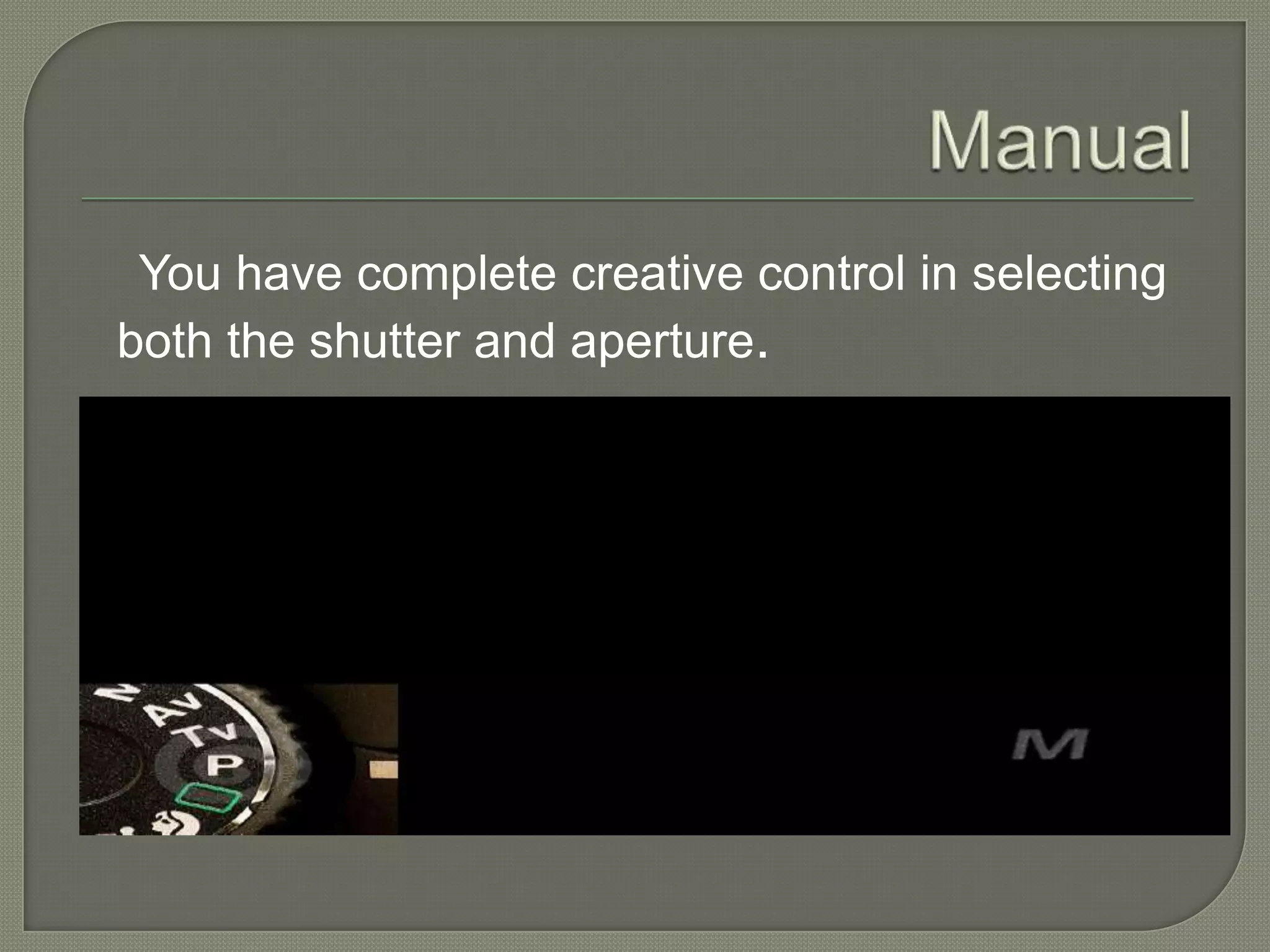
Manual You have complete creative control in selecting both the shutter and aperture.
Auto All digital cameras usually have an Auto mode: the camera decides for you the best shutter speed/aperture settings. AUTO
Landscape photographyPrimary function is to allow a large depth of field.Landscape mode tells the camera to default to a large Depth of Field (Small Aperture)–f16.
Portrait Photography This mode is not well suited for full-length portraits or groups of people Portrait mode tells the camera to default to a: •Small Depth of Field (Large Aperture)– f1.8
Sports/Action Photography tells the camera to default its settings toward capturing images faster This is done by: •Increasing Shutter Speed •Increasing ISO
Night Photography This preset slows down the shutter speed to allow a lot of light into the camera.•Both the foreground and background of the image are properly exposed.•very useful in taking low-light images where you do not want the background to be black
Macro Photography This setting works with your camera lens to allow it to focus from a very short distance. •Depth of Field becomes very Small (Large Aperture)– f1.8 •Does not have a lot of alternative uses.
Why compose your images? Create the picture.Decide what is in and what is left out.“Convince” the eye to glance at it  moment longer.“Composition" means "Putting Together"
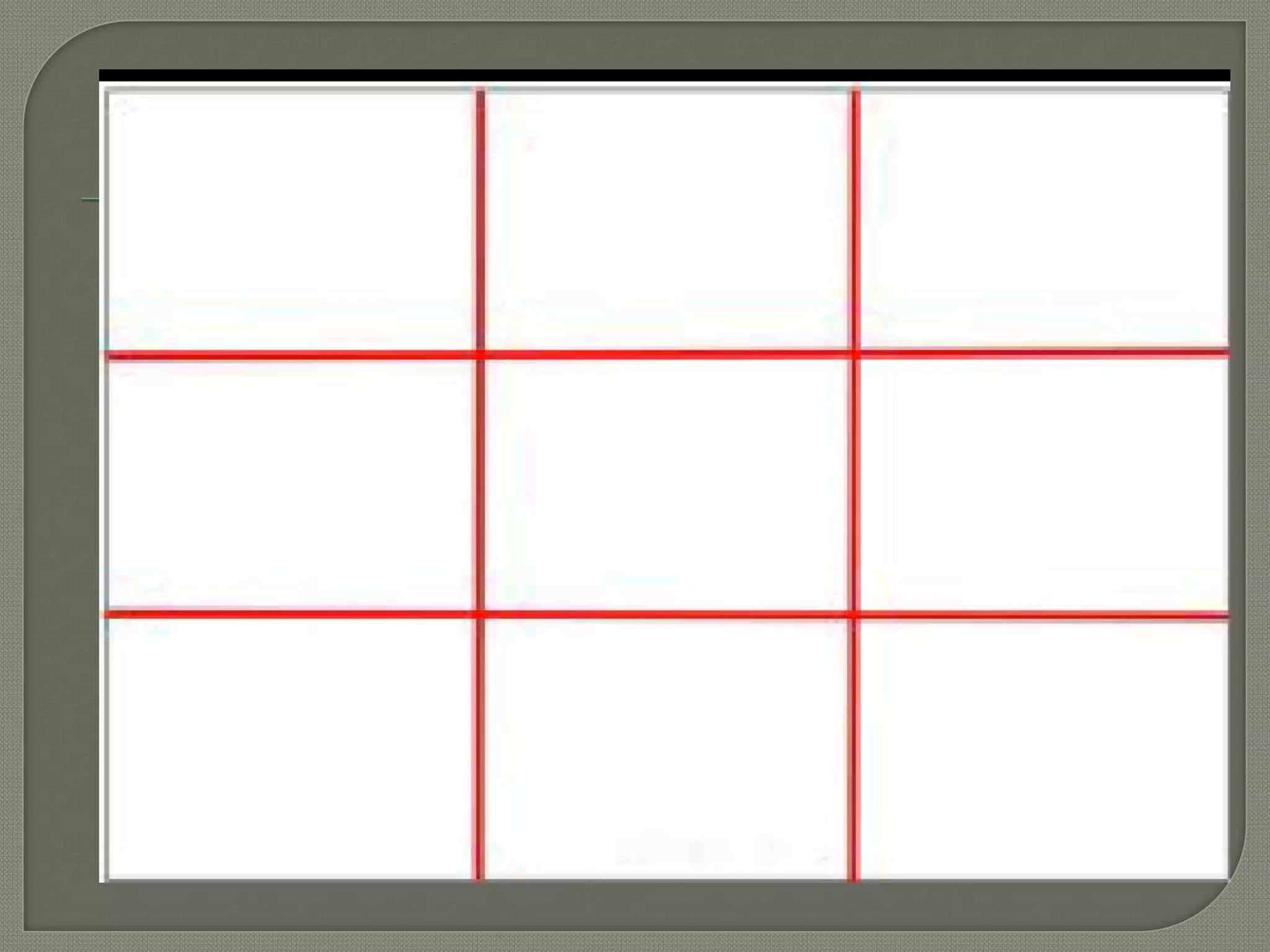
Rule Of Thirds
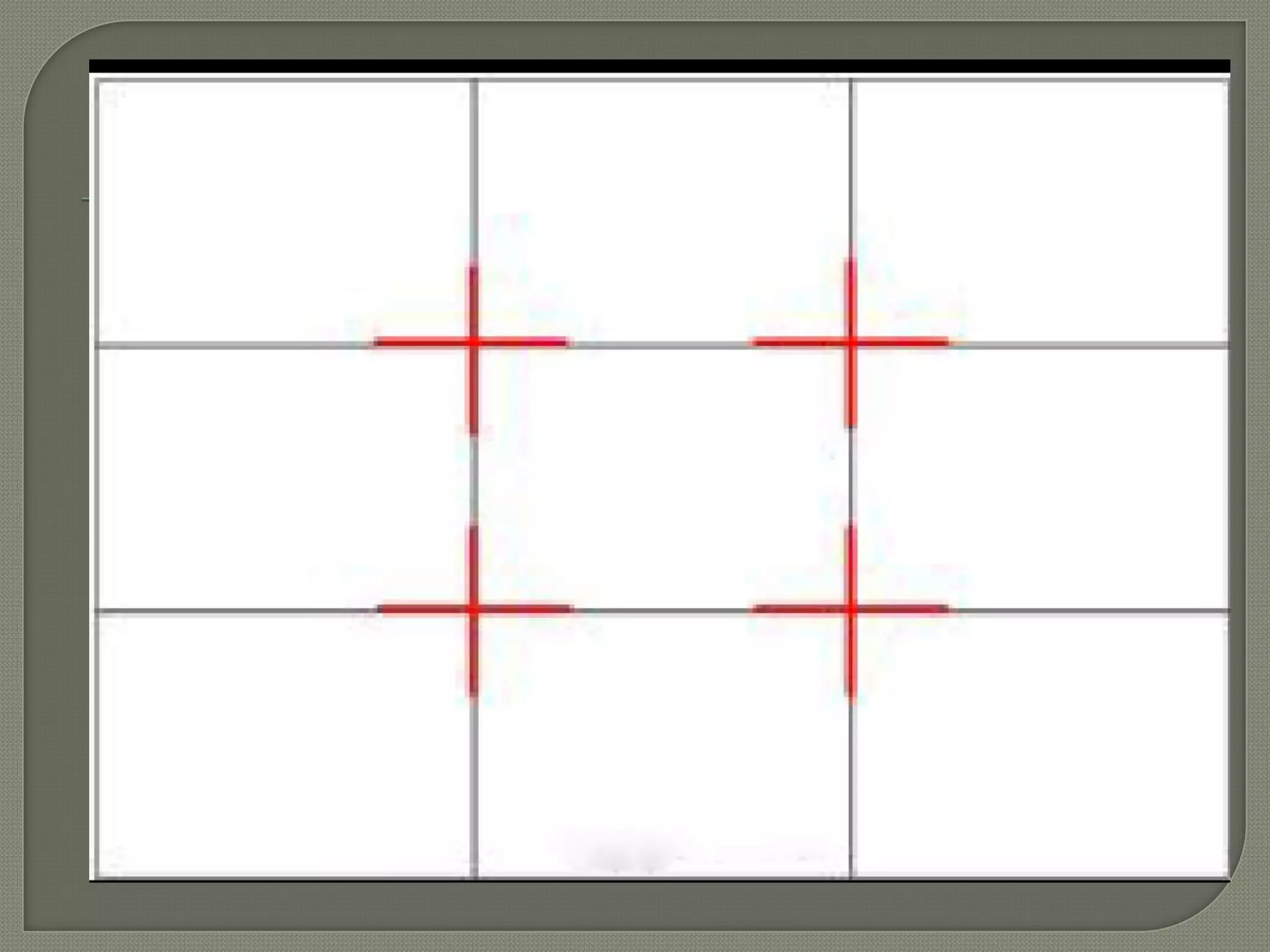
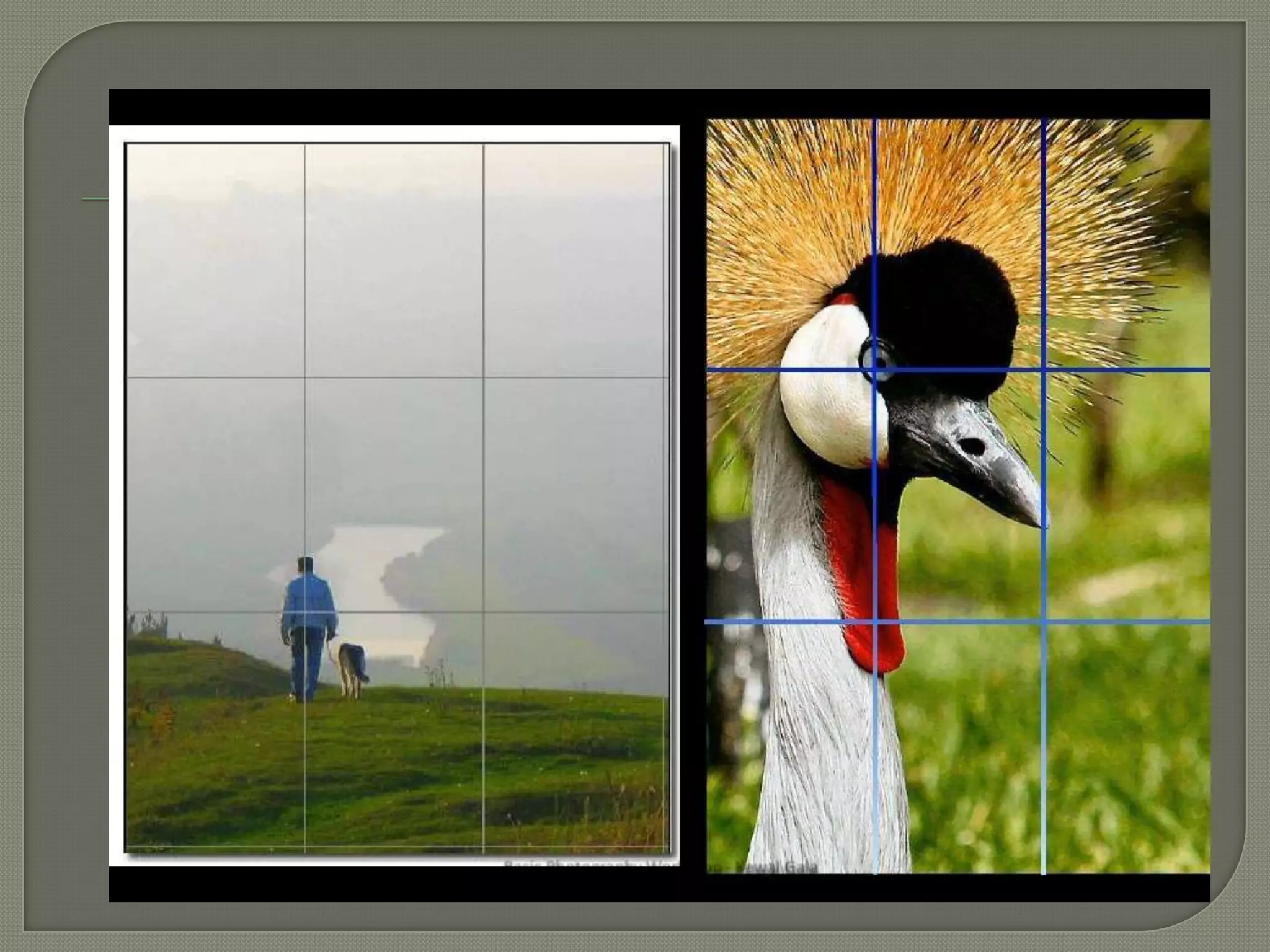
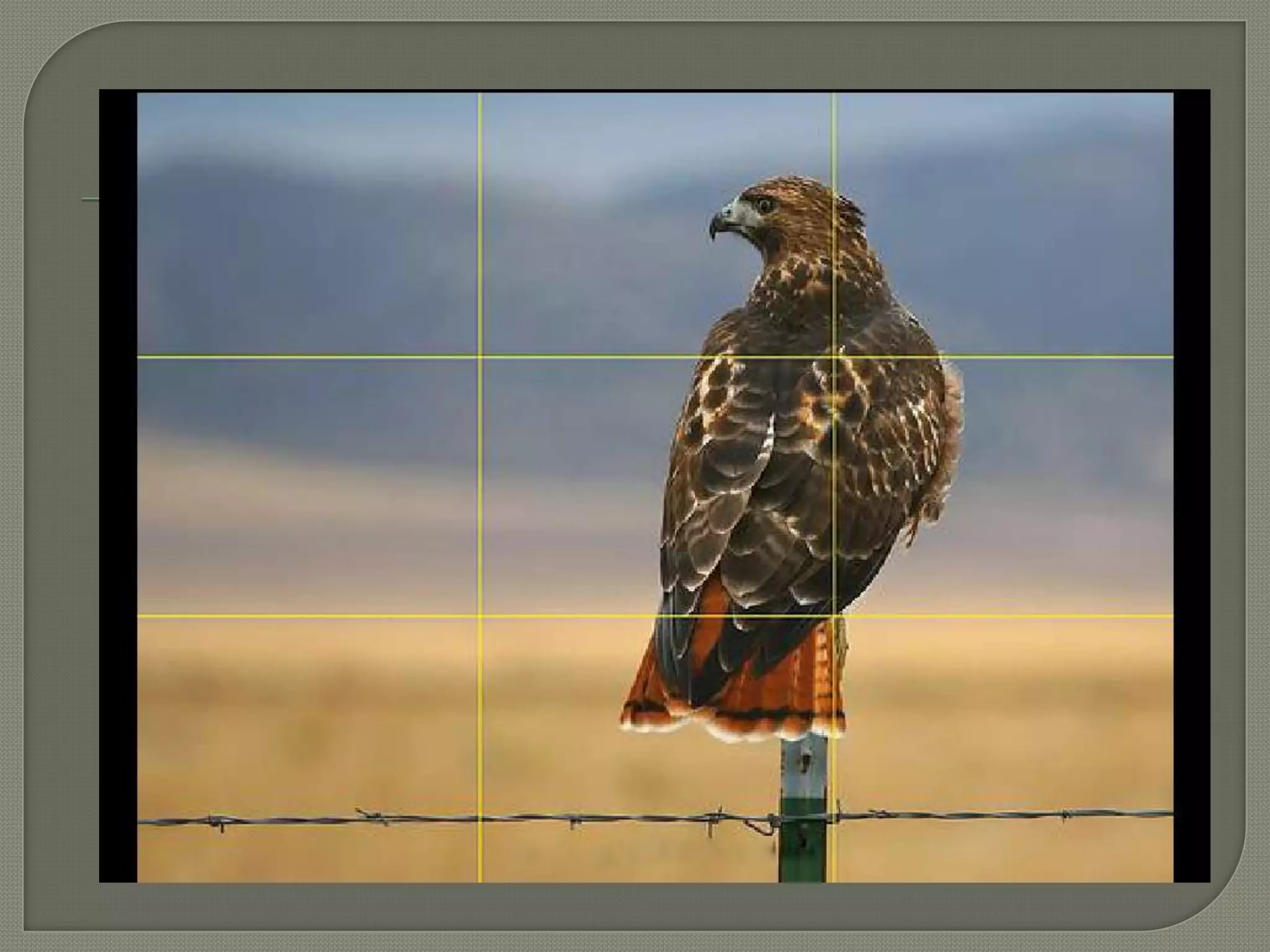
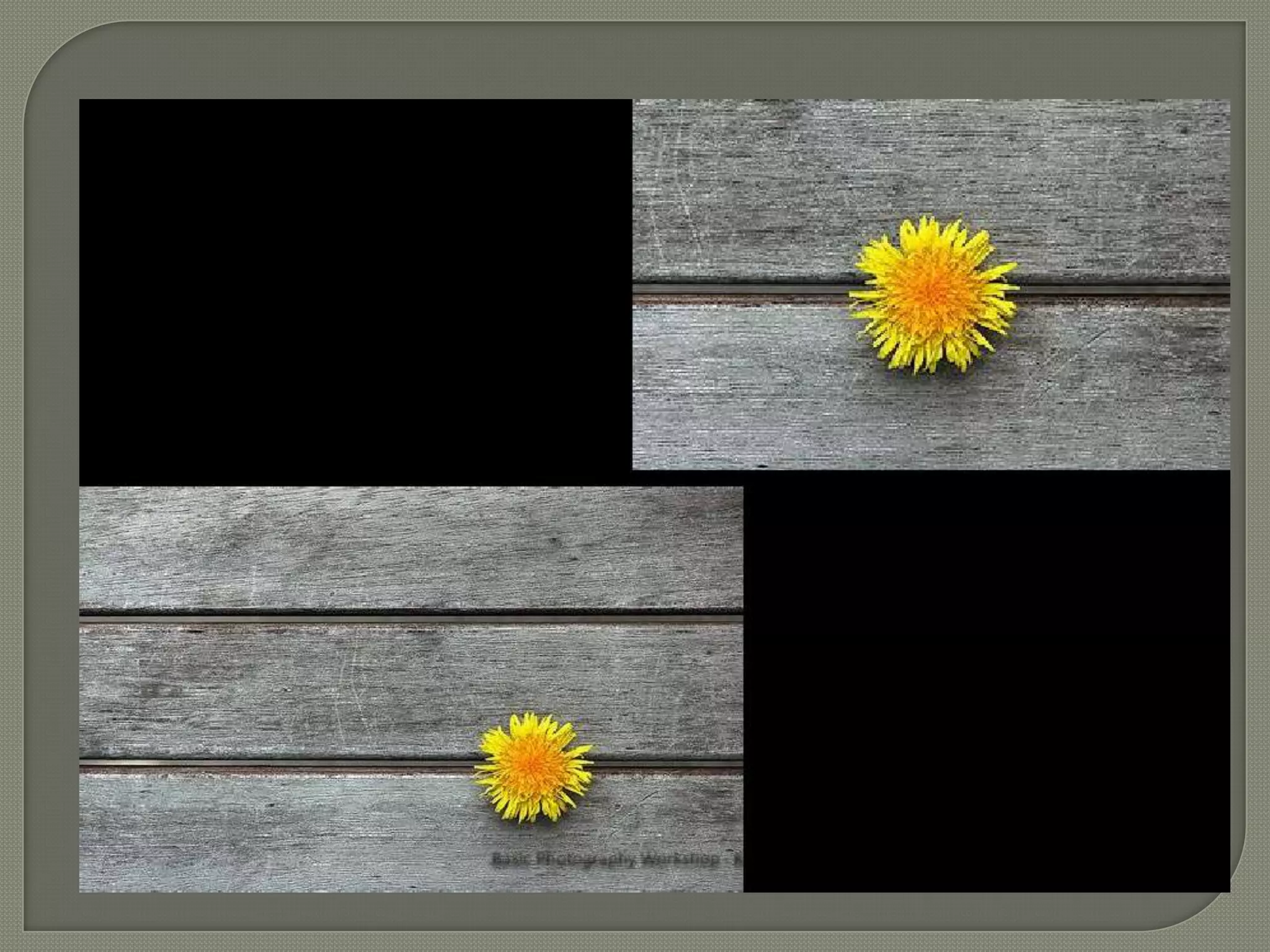
Rule of thirds The theory is that your photo becomes more balanced and will enable a viewer of the image to interact with it more naturally.People’s eyes usually go to one of the intersection points most naturally rather than the centre of the shot.It works with this natural way of viewing an image rather than working against it
Important to experiment to overcome the natural tendency to centre everything.•But, sometimes you may find situations where it's difficult to follow the rule of thirds.•If you know why you're doing it -feel free!•But when you're first starting out it's a good idea to try to follow it whenever you can.
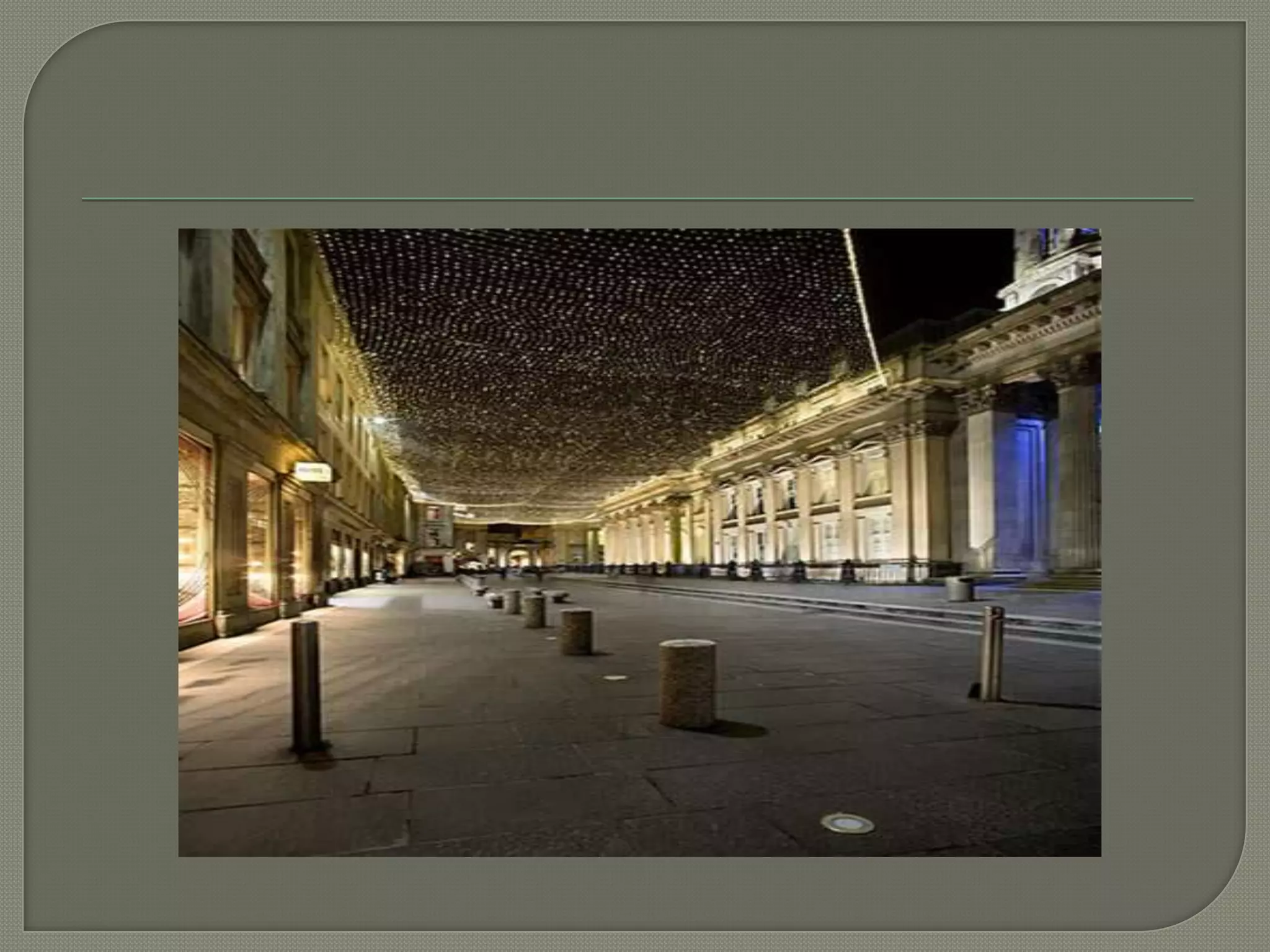
Converging composition leads the viewer’s eye into the depth of the Photo.Usually, centre it and create a symmetrical composition leading to the centre.
Camera lens filters still have many uses in digital photography, and should be an important part of any photographer's camera bag....Here is the major filters and their function...1 - Protective Filters    UV Filters - Absorbs ultraviolet rays. Gives cleaner, sharper pictures with less haze. Also serves as a permanent lens protector. Personally, i have a UV filter on every lens :)
Polarizing Filters -Neutral Density Filters Special Effects FiltersClose-up - For close-up photography. they come as a kit with many magnifications 2X,4X,....Colored Filters
EXIF (exchangeable image file)EXIF (exchangeable image file) data is a record of what camera settings were used to take a photograph.EXIF data stores information like camera model, exposure, aperture, ISO, what camera mode was used .....To interpret this EXIF data, you will need an EXIF viewer. There are many ways to go about this. Your image processing program should provide that functionality within the program.For beginners, reading an images EXIF data can be a very useful learning tool....
Night photography     Take a number of shots at different shutter speed/aperture combinations.Ensure your LCD brightness is set to Normal, not Bright, for a truer representation of your recorded image. A good aperture to start with is F4.0 or F5.6 (for greatest depth of field), and adjust shutter speed up or down until you're satisfied with the shot.Always bring and use a tripod. It's quite common to have exposures of an entire second or more during night-time photography.     Bring along a flashlight. A pocket flashlight is essential when you're doing photography at night.
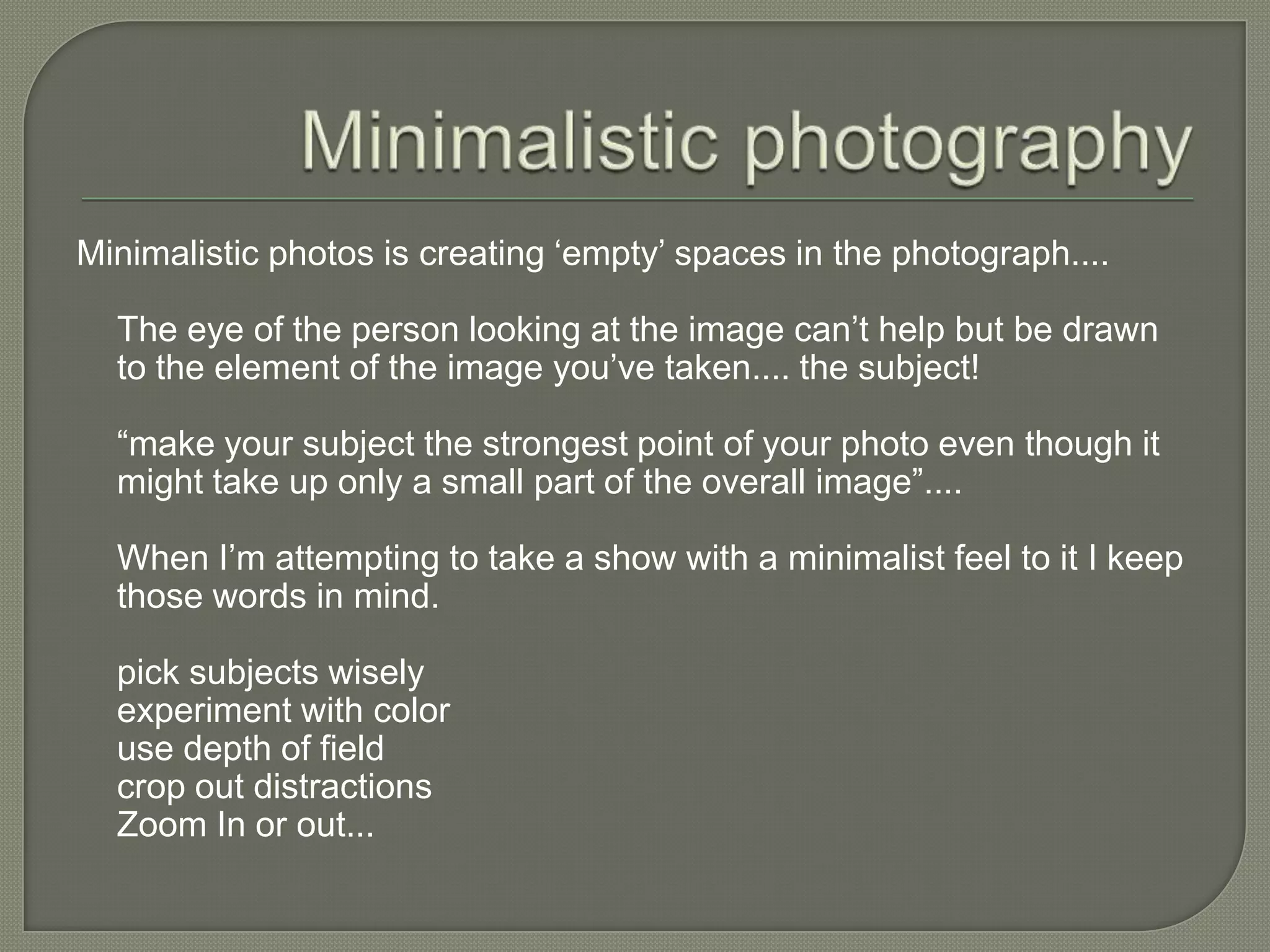
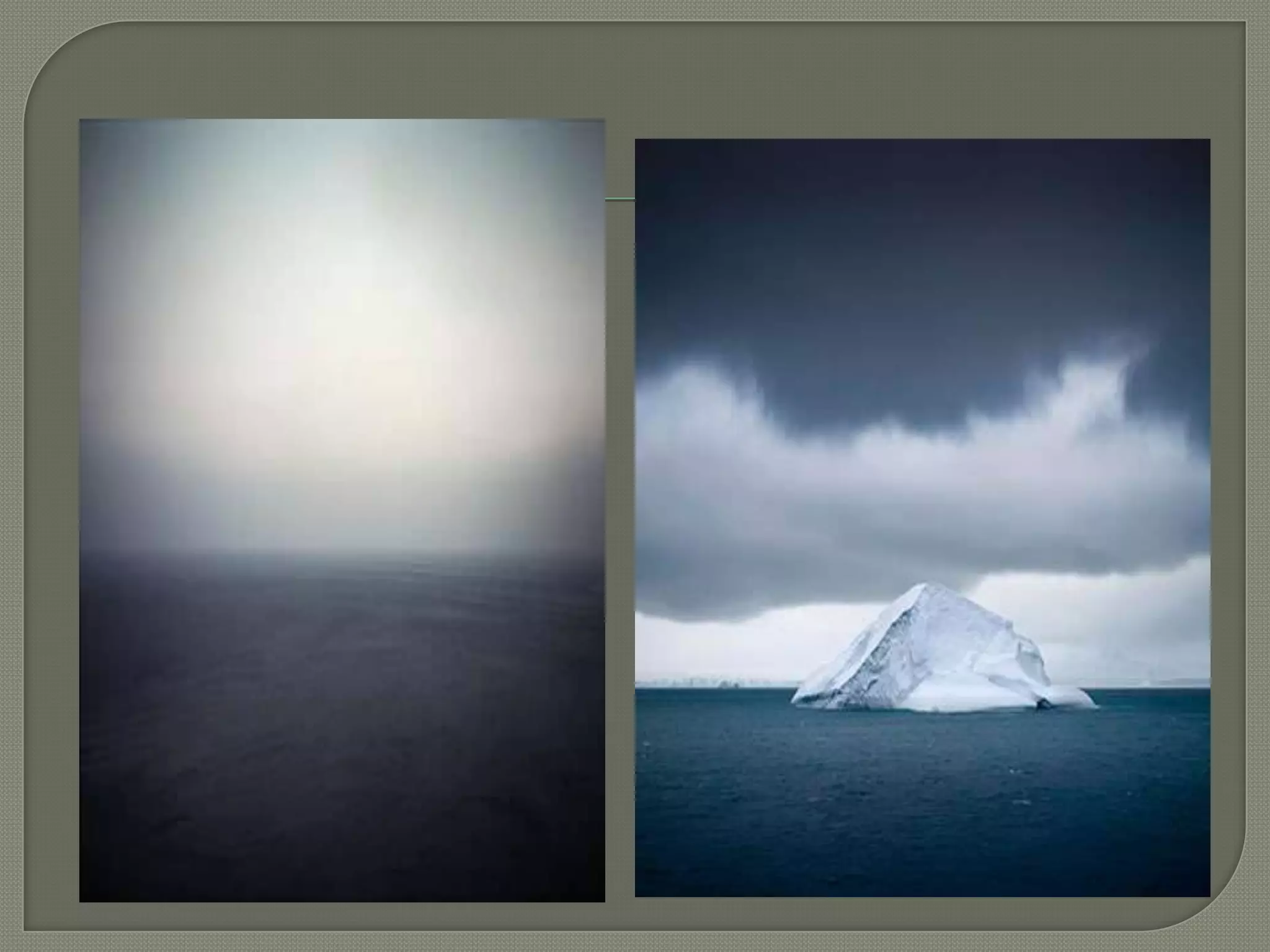
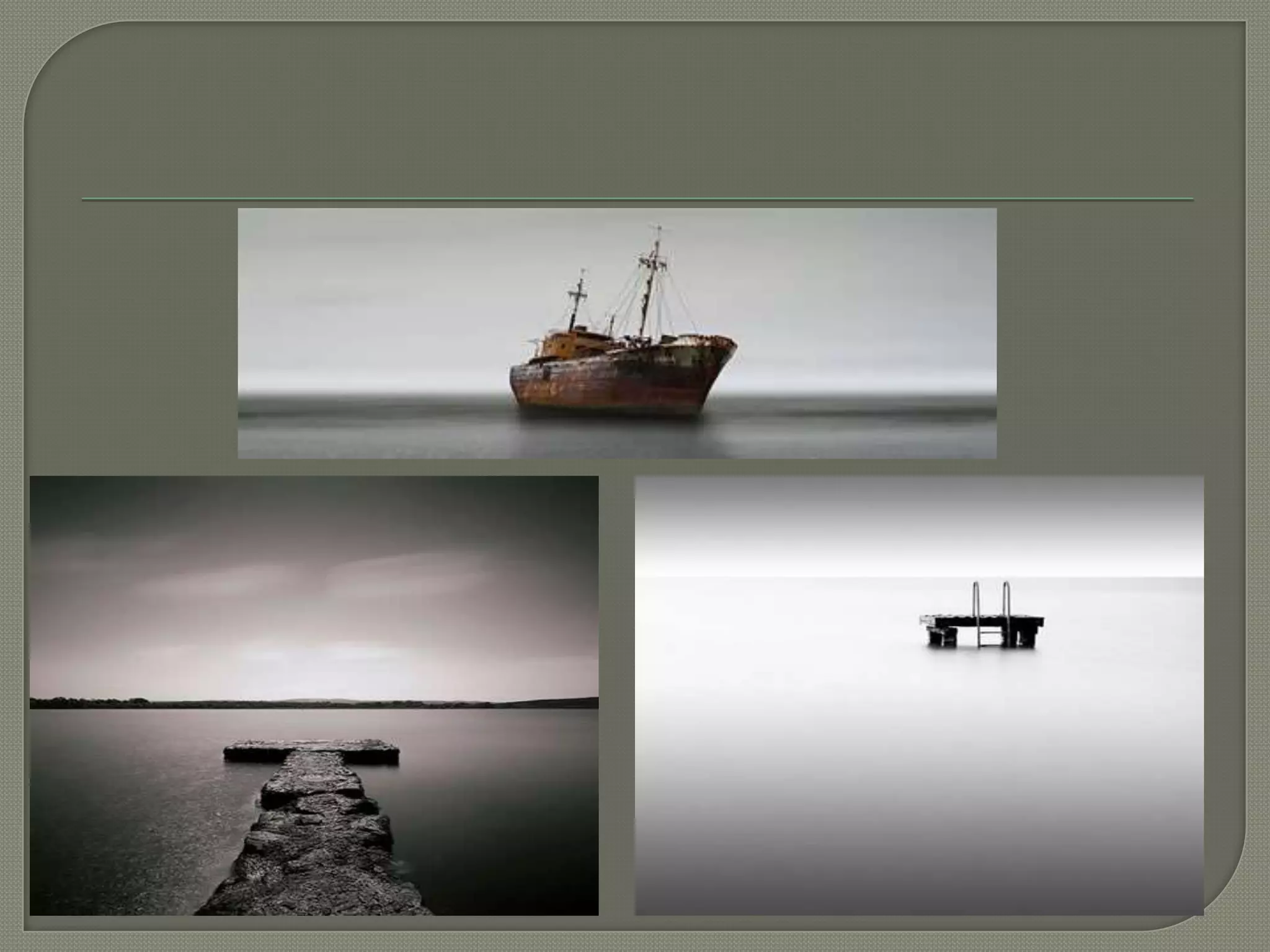
Minimalistic photographyMinimalistic photos is creating ‘empty’ spaces in the photograph....The eye of the person looking at the image can’t help but be drawn to the element of the image you’ve taken.... the subject!“make your subject the strongest point of your photo even though it might take up only a small part of the overall image”....When I’m attempting to take a show with a minimalist feel to it I keep those words in mind.pick subjects wisely experiment with color use depth of fieldcrop out distractionsZoom In or out...
try new angles.•When taking pictures of live objects, try to be at eye’s level with the subject.If we are higher– itdiminishes them, if weare lower– it augmentsthem
Thank you

Basics of Photography

  • 1.
  • 2.
    Basics of Equipment•MegapixelMyth•Photography Jargons Explained•Concepts: Aperture, Depth of Field, Shutter Speed, ISO, Noise •Understanding Digital Photography•Styles/Modes of Photography•Tools & Techniques of Composition
  • 3.
    Choosing the BestCamera •Not a once in a lifetime purchase anymore.•Select one which can do the job you want Today and as per your future requirement•Some kinds of cameras do.some kinds of things better or more easily e.g., Sports photography vs. Close-up portraits.•Price isn’t the best indicator.
  • 4.
    TYPES OF CAMERASWEBCAMERAS AND MOBILE CAMERAS
  • 5.
  • 6.
  • 7.
  • 8.
  • 9.
    MEGAPIXEL MYTHHow muchdo you need? •Often, cameras are categorized by the no. of Megapixels they can capture .•As if that resolution figure is the only measure of the camera’s value.•This value can be quite misleading.
  • 12.
    ZOOM: OPTICAL ANDDIGITALOptical vs. Digital Zoom •An optical zoom uses the optics (lens) of the digital camera to move you closer to your subject.•A digital zoom simply enlarges the existing image digitally. It is not really zoom, in the strictest definition of the term.•Enlarging the image digitally reduces picture quality, and should therefore usually be avoided. •Some manufacturers label their lenses with the "total zoom" by multiplying the optical with the digital. Ignore It.•When comparing digital cameras: Go for higher optical zoom. Digital zoom can always be achieved later in an image editing software.
  • 13.
    For megapixels youshould keep in mind the following thingsWhat you plan to do with the photos you take: 8 x 10” Photo Prints or. 20 x 30” Posters •Do most of the photos you take end up as your wallpaper on networking sites
  • 14.
  • 15.
    Do you planto manipulate your photos?Are you a photo hobbyist?How often do you plan to upgrade?
  • 16.
    PHOTOGRAPHY TECHNICALITYAnti-BlurAnti-ShakeImage StabilizationVibrationReduction•A technology that stabilizes the lens to effectively reduce blur due to camera shake
  • 17.
  • 18.
    METERINGHow the camerameasures the amount of light available to expose a picture •Centre-Weighted: Readings are taken at various part of the picture, with a special emphasis for the centre.•Spot: Readings are taken at a specific point.•Each camera manufacturer has its own variations (Evaluative Metering)
  • 19.
    WHITE BALANCEThe abilityto adjust colours based on white as a reference colour to give as true a white as possible •All other colours are corrected accordingly•Auto WB (AWB): the camera determines and selects the correct colour temperature for white.
  • 20.
    WHITE BALANCESome presetwhite balance settings are daylight, cloudy, tungsten, or fluorescent.
  • 21.
    [ Ev +/-]Exposure-Compensation
  • 22.
    Aperture, Depth ofField, Shutter Speed, ISO, Noise APERTUREa hole or an opening through which light travels It causes variations in the Depth of Field within the image
  • 23.
  • 28.
    Shutter Speed•Amount oftime the picture is exposed•Short/Fast shutter speed•Long/Slow shutter speed
  • 29.
  • 30.
  • 31.
  • 32.
  • 33.
    RESULTS OF VARYINGSHUTTER SPEED
  • 36.
    USING THE TECHNIQUEOF…PANNING
  • 38.
  • 40.
    ISO •the measureof a digital camera sensor’s sensitivity to light•a higher number indicates higher sensitivity •This is usually expressed as a range, e.g. ISO 100 - 1600.•A higher sensitivity allows us to take pictures in low light without using flash•Higher ISO causes more "noise" than lower ISO
  • 41.
  • 42.
  • 43.
    Digital photographyKnow yourcamera.Know your photography.Know how to use an image editor.
  • 44.
  • 45.
  • 46.
    Shutter Priority ShutterPriority: Allows you to decide the shutter speed (e.g. fast at 1/500 sec. for stop action photography, or slow at 2 sec. for night photography), and the camera decides the best aperture.
  • 47.
    Aperture Priority AperturePriority: Allows you to choose the aperture (e.g. large at F1.8 for portrait, of small at F16 for landscapes).
  • 48.
    Manual You havecomplete creative control in selecting both the shutter and aperture.
  • 49.
    Auto All digitalcameras usually have an Auto mode: the camera decides for you the best shutter speed/aperture settings. AUTO
  • 50.
    Landscape photographyPrimary functionis to allow a large depth of field.Landscape mode tells the camera to default to a large Depth of Field (Small Aperture)–f16.
  • 51.
    Portrait Photography Thismode is not well suited for full-length portraits or groups of people Portrait mode tells the camera to default to a: •Small Depth of Field (Large Aperture)– f1.8
  • 52.
    Sports/Action Photography tellsthe camera to default its settings toward capturing images faster This is done by: •Increasing Shutter Speed •Increasing ISO
  • 53.
    Night Photography Thispreset slows down the shutter speed to allow a lot of light into the camera.•Both the foreground and background of the image are properly exposed.•very useful in taking low-light images where you do not want the background to be black
  • 54.
    Macro Photography Thissetting works with your camera lens to allow it to focus from a very short distance. •Depth of Field becomes very Small (Large Aperture)– f1.8 •Does not have a lot of alternative uses.
  • 55.
    Why compose yourimages? Create the picture.Decide what is in and what is left out.“Convince” the eye to glance at it moment longer.“Composition" means "Putting Together"
  • 56.
  • 59.
    Rule of thirdsThe theory is that your photo becomes more balanced and will enable a viewer of the image to interact with it more naturally.People’s eyes usually go to one of the intersection points most naturally rather than the centre of the shot.It works with this natural way of viewing an image rather than working against it
  • 63.
    Important to experimentto overcome the natural tendency to centre everything.•But, sometimes you may find situations where it's difficult to follow the rule of thirds.•If you know why you're doing it -feel free!•But when you're first starting out it's a good idea to try to follow it whenever you can.
  • 64.
    Converging composition leadsthe viewer’s eye into the depth of the Photo.Usually, centre it and create a symmetrical composition leading to the centre.
  • 66.
    Camera lens filtersstill have many uses in digital photography, and should be an important part of any photographer's camera bag....Here is the major filters and their function...1 - Protective Filters UV Filters - Absorbs ultraviolet rays. Gives cleaner, sharper pictures with less haze. Also serves as a permanent lens protector. Personally, i have a UV filter on every lens :)
  • 67.
    Polarizing Filters -NeutralDensity Filters Special Effects FiltersClose-up - For close-up photography. they come as a kit with many magnifications 2X,4X,....Colored Filters
  • 68.
    EXIF (exchangeable imagefile)EXIF (exchangeable image file) data is a record of what camera settings were used to take a photograph.EXIF data stores information like camera model, exposure, aperture, ISO, what camera mode was used .....To interpret this EXIF data, you will need an EXIF viewer. There are many ways to go about this. Your image processing program should provide that functionality within the program.For beginners, reading an images EXIF data can be a very useful learning tool....
  • 69.
    Night photography Take a number of shots at different shutter speed/aperture combinations.Ensure your LCD brightness is set to Normal, not Bright, for a truer representation of your recorded image. A good aperture to start with is F4.0 or F5.6 (for greatest depth of field), and adjust shutter speed up or down until you're satisfied with the shot.Always bring and use a tripod. It's quite common to have exposures of an entire second or more during night-time photography. Bring along a flashlight. A pocket flashlight is essential when you're doing photography at night.
  • 70.
    Minimalistic photographyMinimalistic photosis creating ‘empty’ spaces in the photograph....The eye of the person looking at the image can’t help but be drawn to the element of the image you’ve taken.... the subject!“make your subject the strongest point of your photo even though it might take up only a small part of the overall image”....When I’m attempting to take a show with a minimalist feel to it I keep those words in mind.pick subjects wisely experiment with color use depth of fieldcrop out distractionsZoom In or out...
  • 73.
    try new angles.•Whentaking pictures of live objects, try to be at eye’s level with the subject.If we are higher– itdiminishes them, if weare lower– it augmentsthem
  • 74.