Assignment 14
            Photography
   Research and Practice


Kaya                       Rahel


Gledis                 Joanne
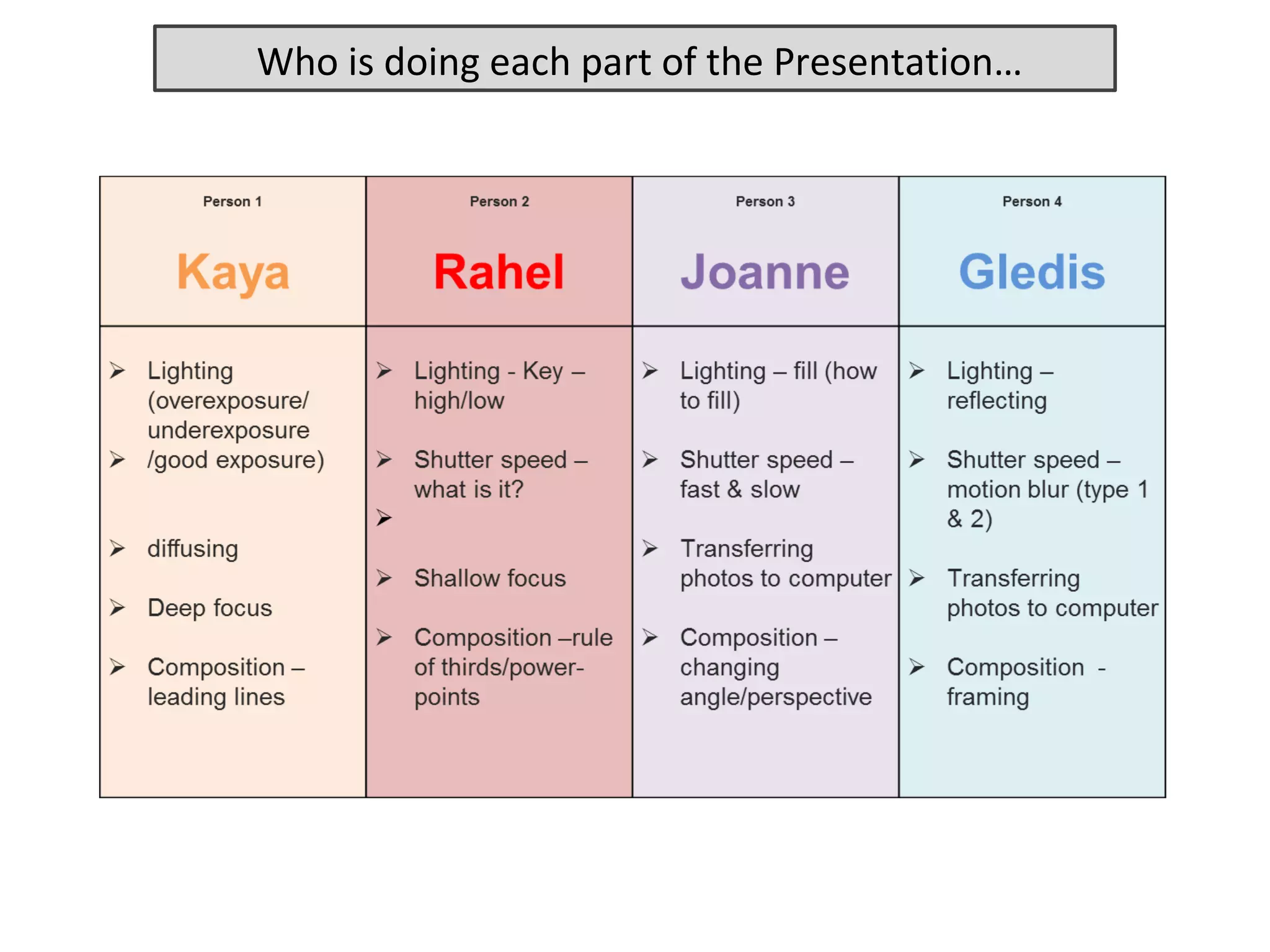
Who is doing each part of the Presentation…
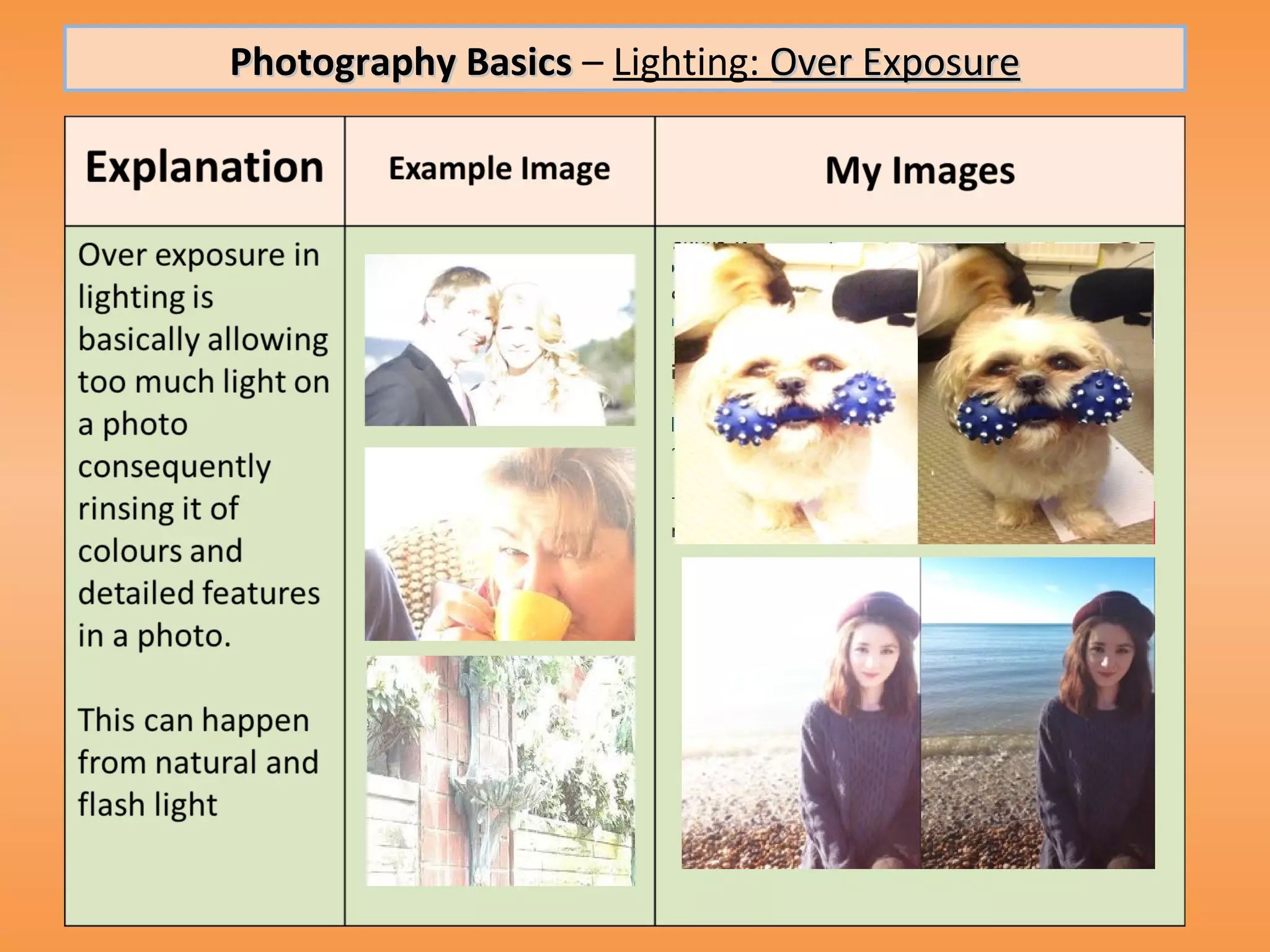
Photography Basics – Lighting: Over Exposure
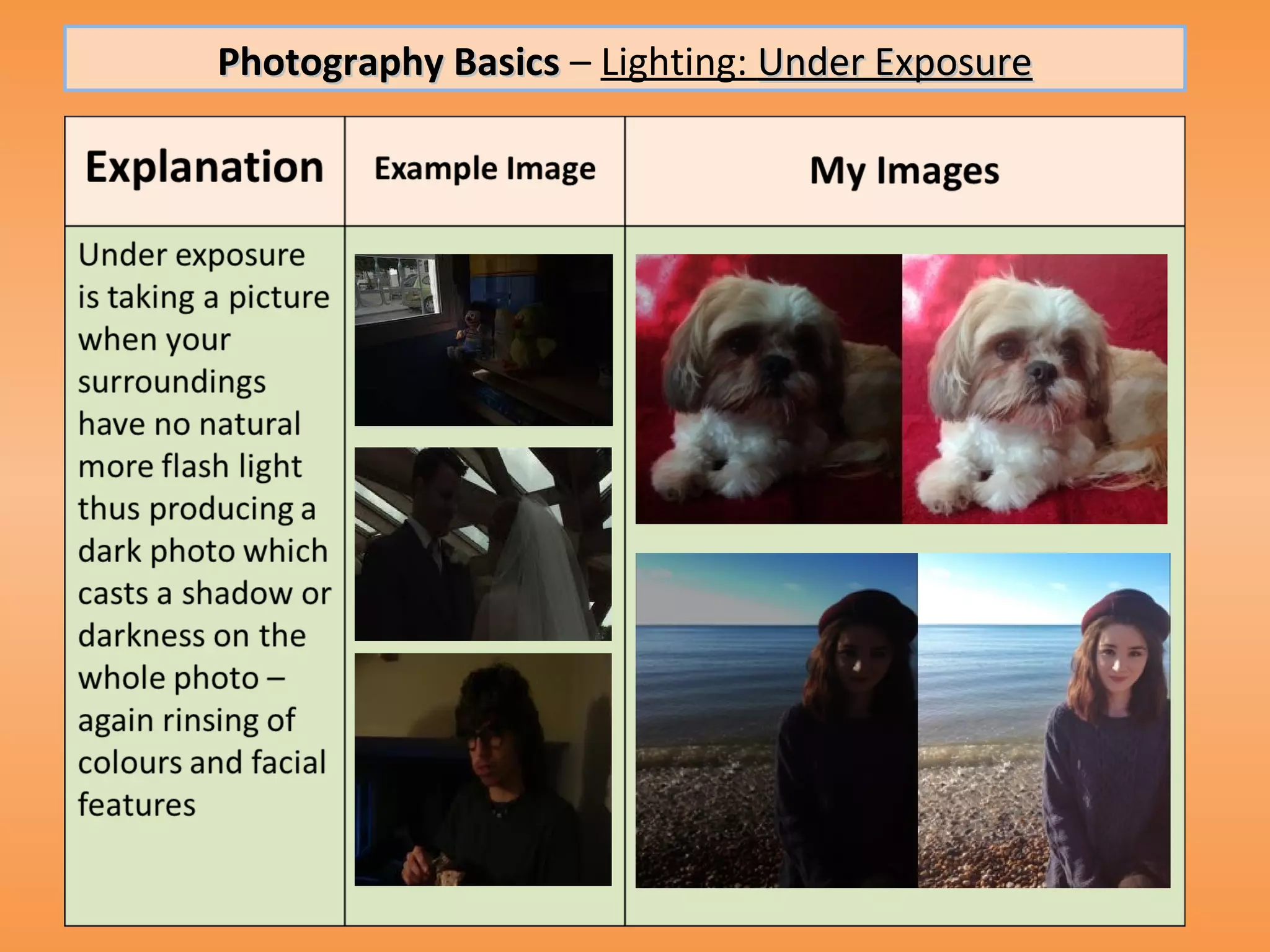
Photography Basics – Lighting: Under Exposure
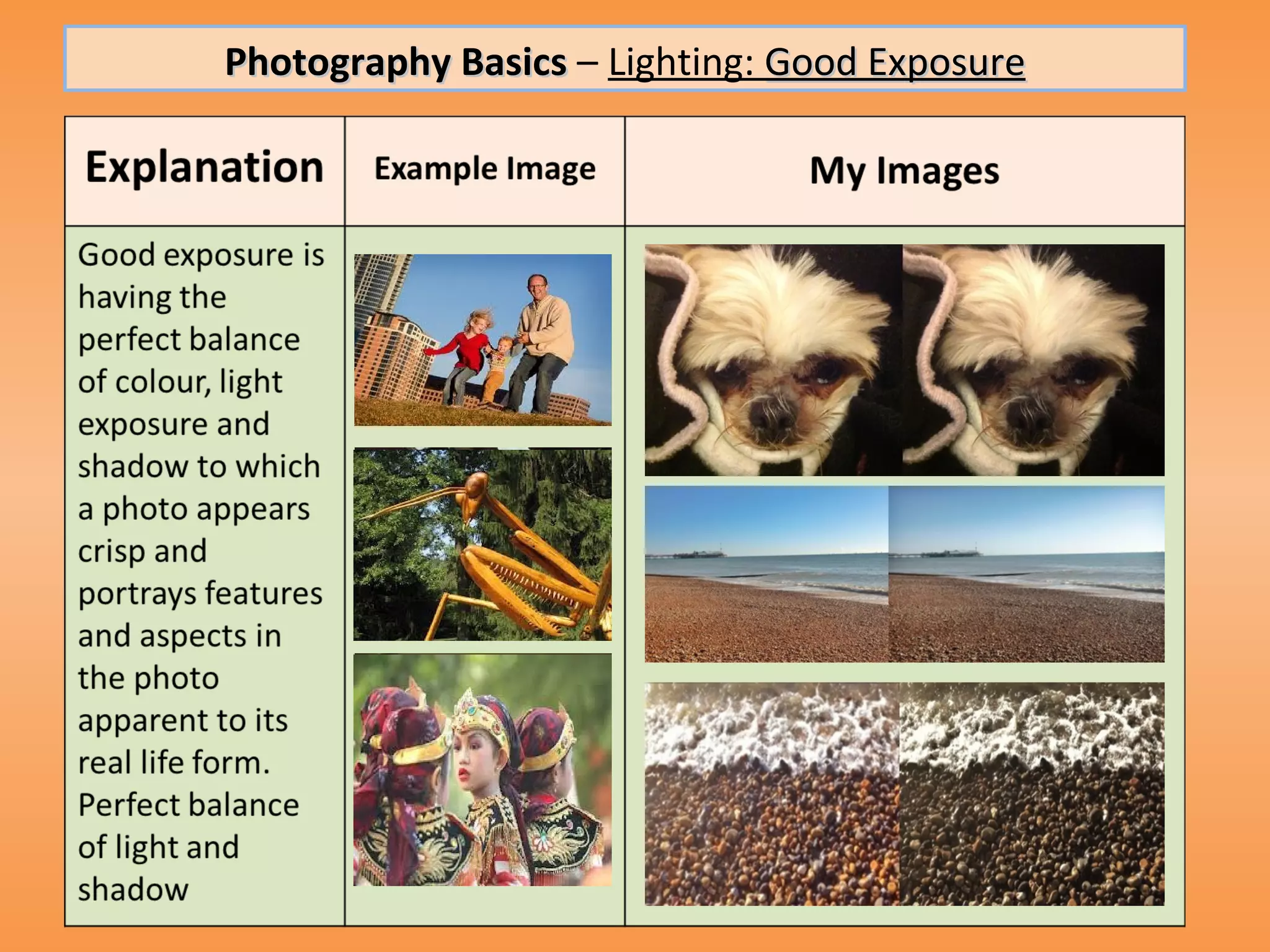
Photography Basics – Lighting: Good Exposure
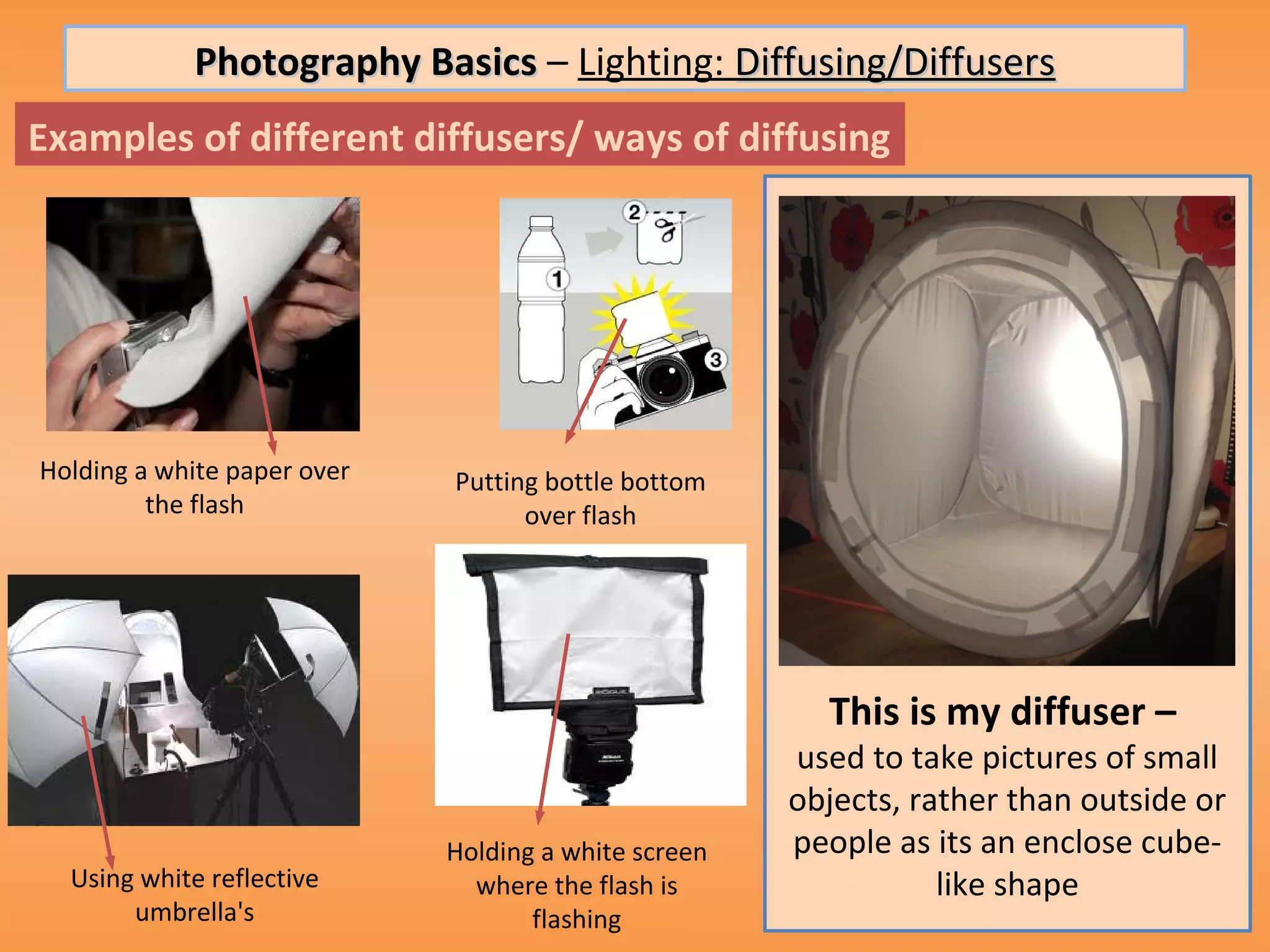
Photography Basics – Lighting: Diffusing/Diffusers
Examples of different diffusers/ ways of diffusing


Holding a white paper over   Putting bottle bottom
         the flash                 over flash


                                                        This is my diffuser –
                                                      used to take pictures of small
                                                      objects, rather than outside or
                             Holding a white screen   people as its an enclose cube-
  Using white reflective       where the flash is                like shape
       umbrella's                   flashing
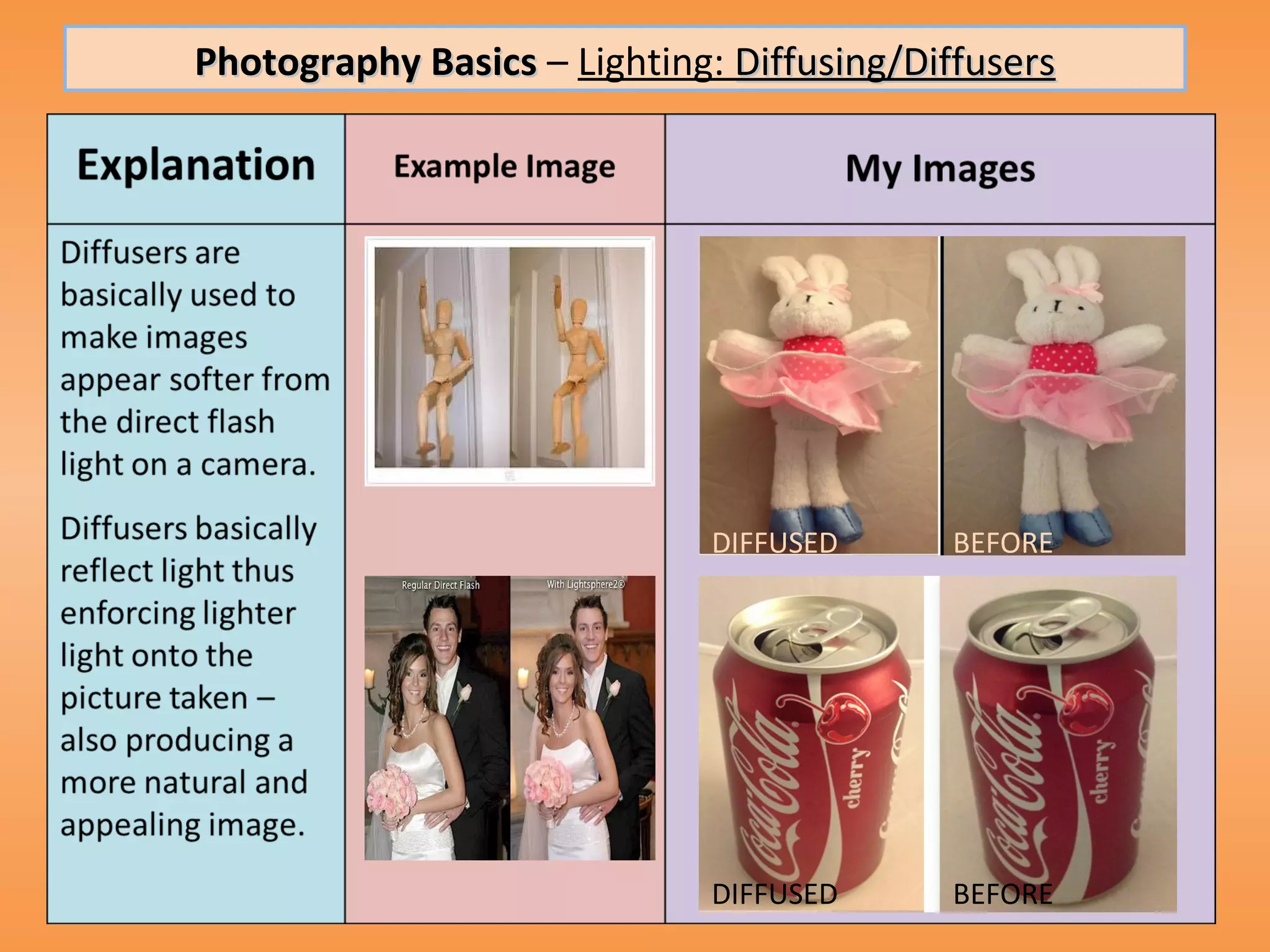
Photography Basics – Lighting: Diffusing/Diffusers


                             DIFFUSED      BEFORE


                             DIFFUSED      BEFORE
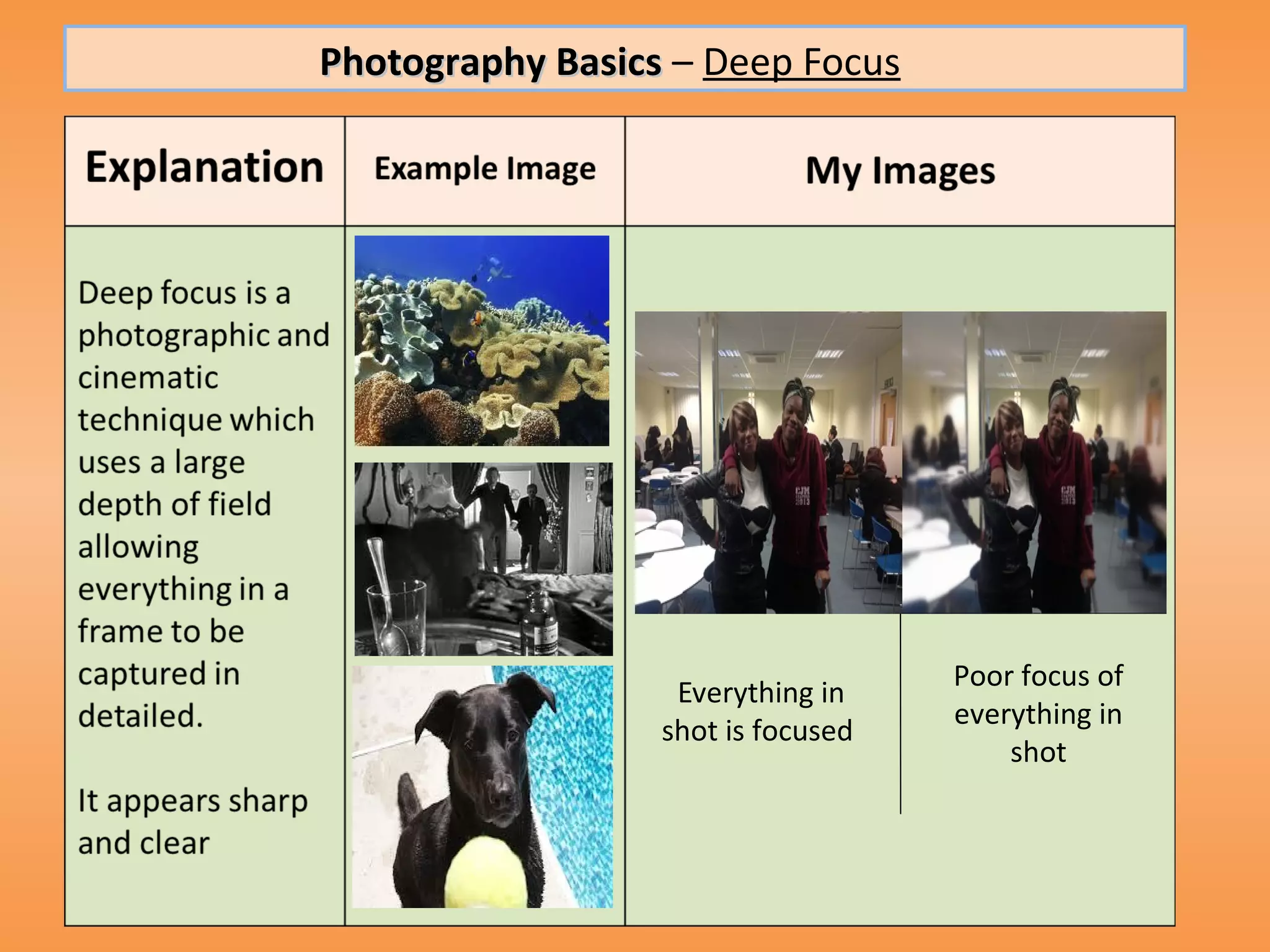
Photography Basics – Deep Focus


                                    Poor focus of
                   Everything in
                                    everything in
                  shot is focused
                                        shot
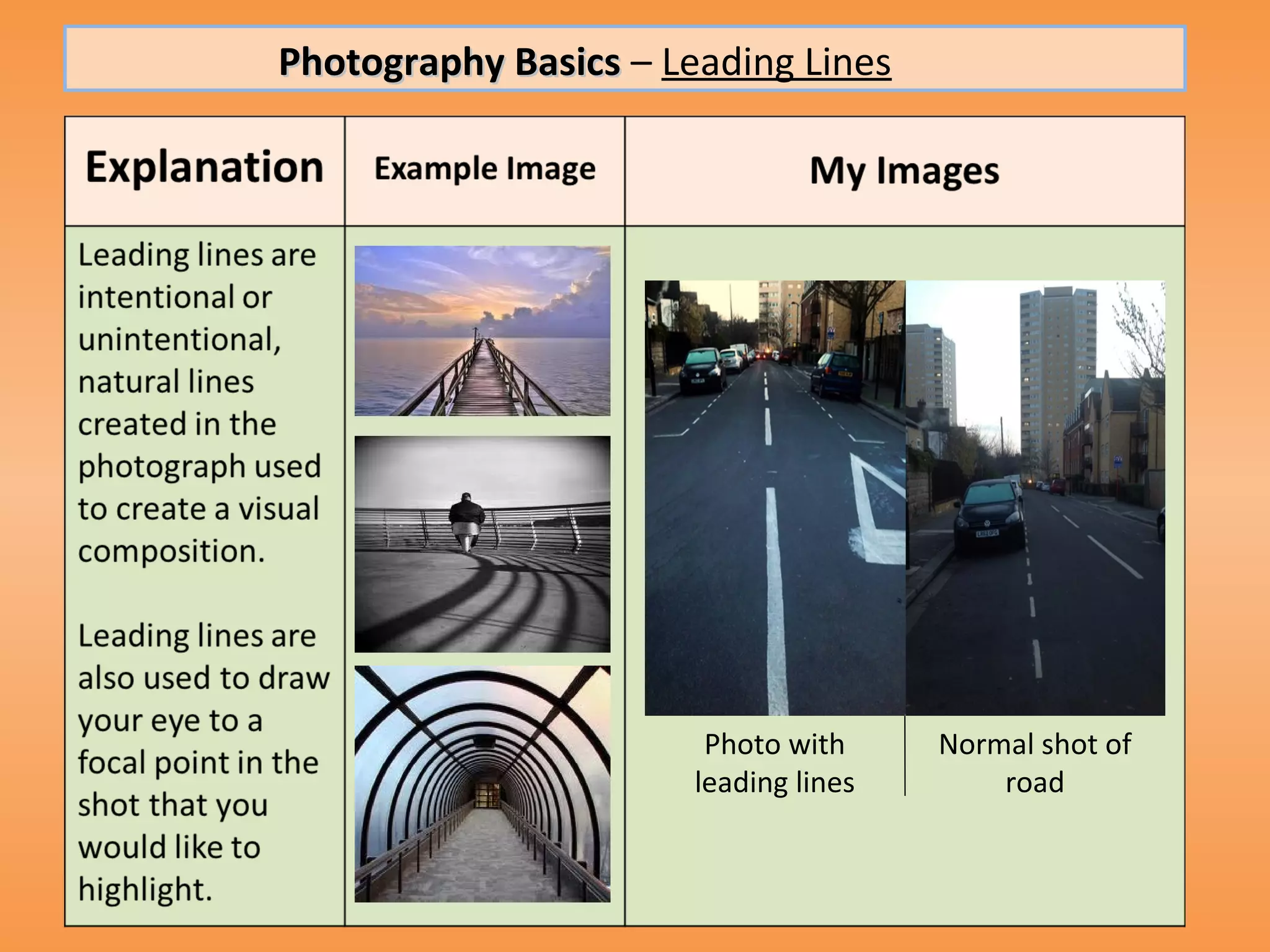
Photography Basics – Leading Lines


                        Photo with     Normal shot of
                       leading lines       road
Lighting – High Key
  What is high key lighting?

• reduces the lighting ratio present in the scene
• High key photos are very bright
• Doesn’t have very strong contrasts
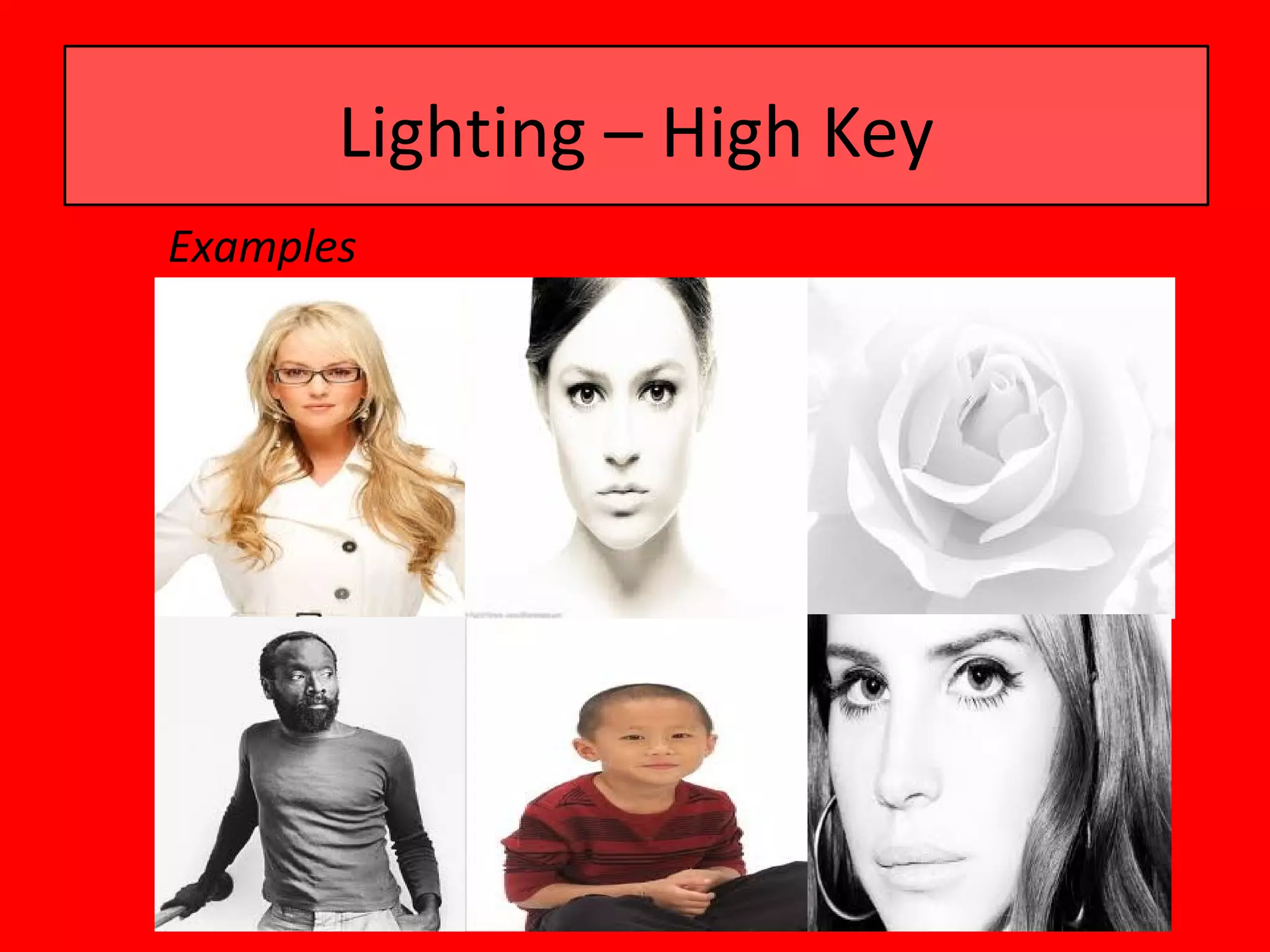
Lighting – High Key
Examples
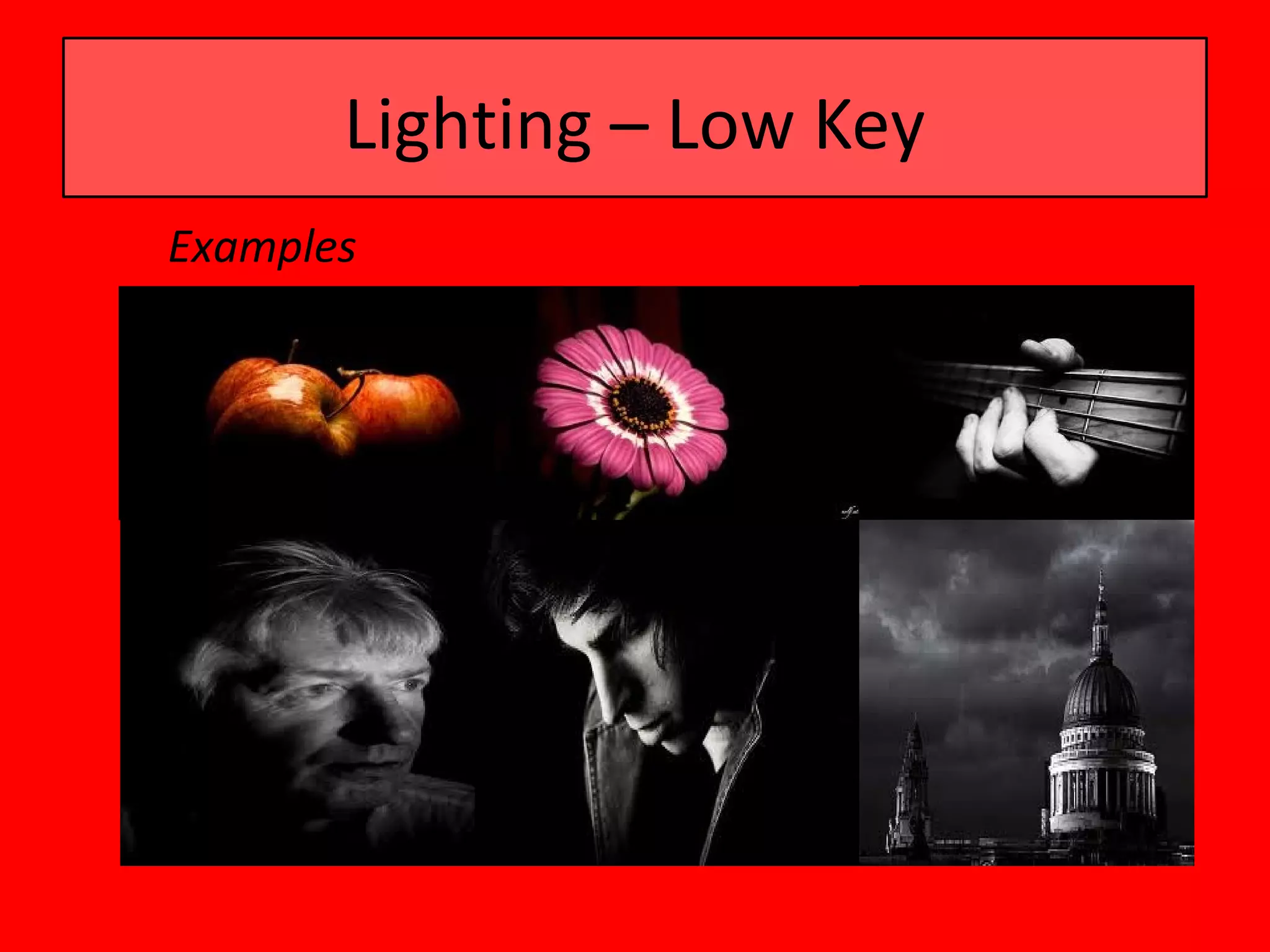
Lighting – Low Key
  What is low key lighting?

• Creates dark looking photographs
• Low-key lighting often uses only one key light,
    optionally controlled with a fill light or a
    simple reflector
• Creates strong contrast
• Low key lighting describes any scene with a high
    lighting ratio,
Lighting – Low Key
Examples
Shutter speed – what is it?
• It’s the exposure time - the length of time a
     camera's shutter is open
•
• It is how quickly a shutter opens
Shallow focus
  What is shallow focus?

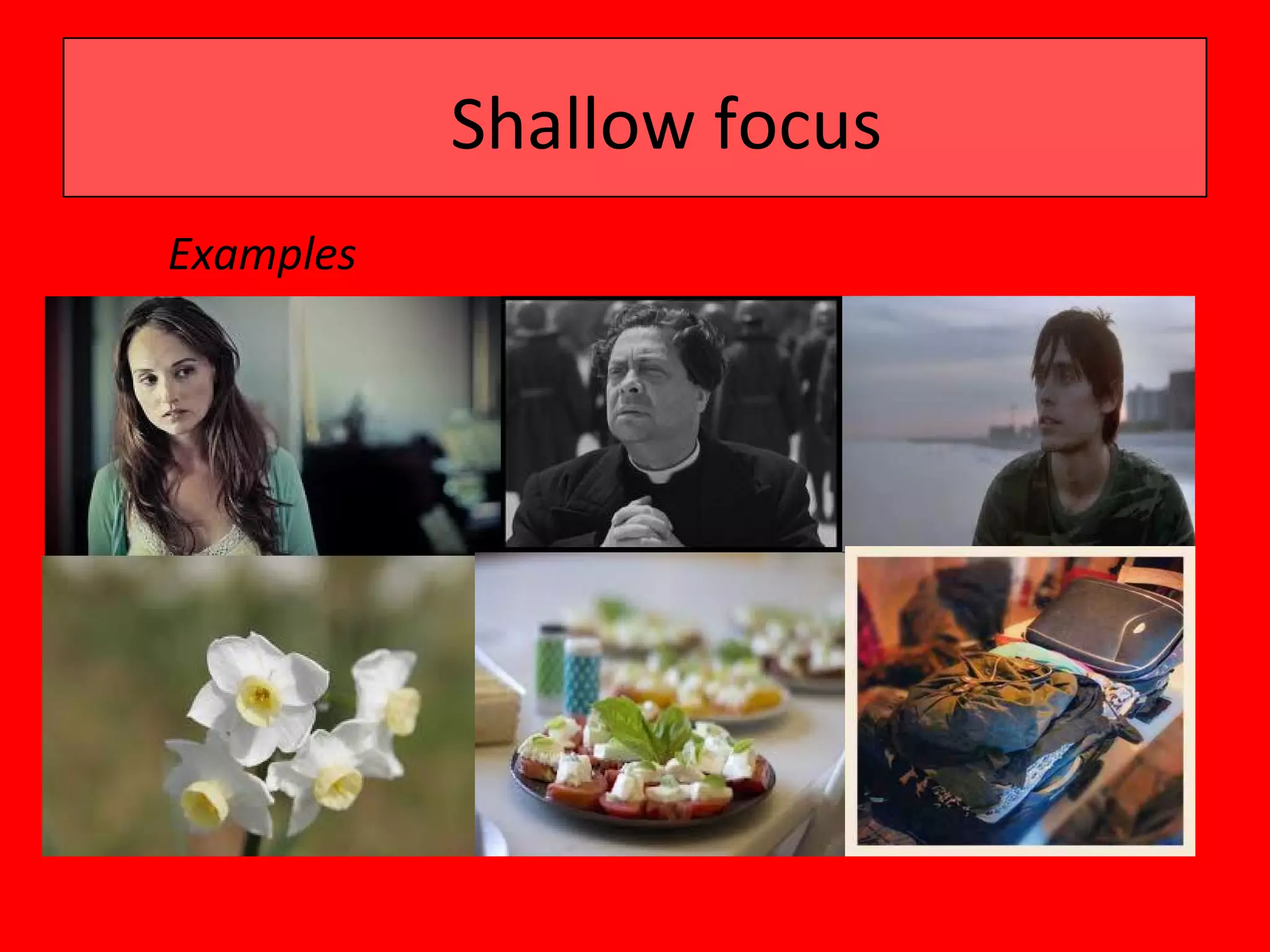
• When the main object or person is in focus
    and the background is blurry
• Incorporates a small depth of field
Shallow focus
Examples
Composition – rule of
                   thirds/powerpoints
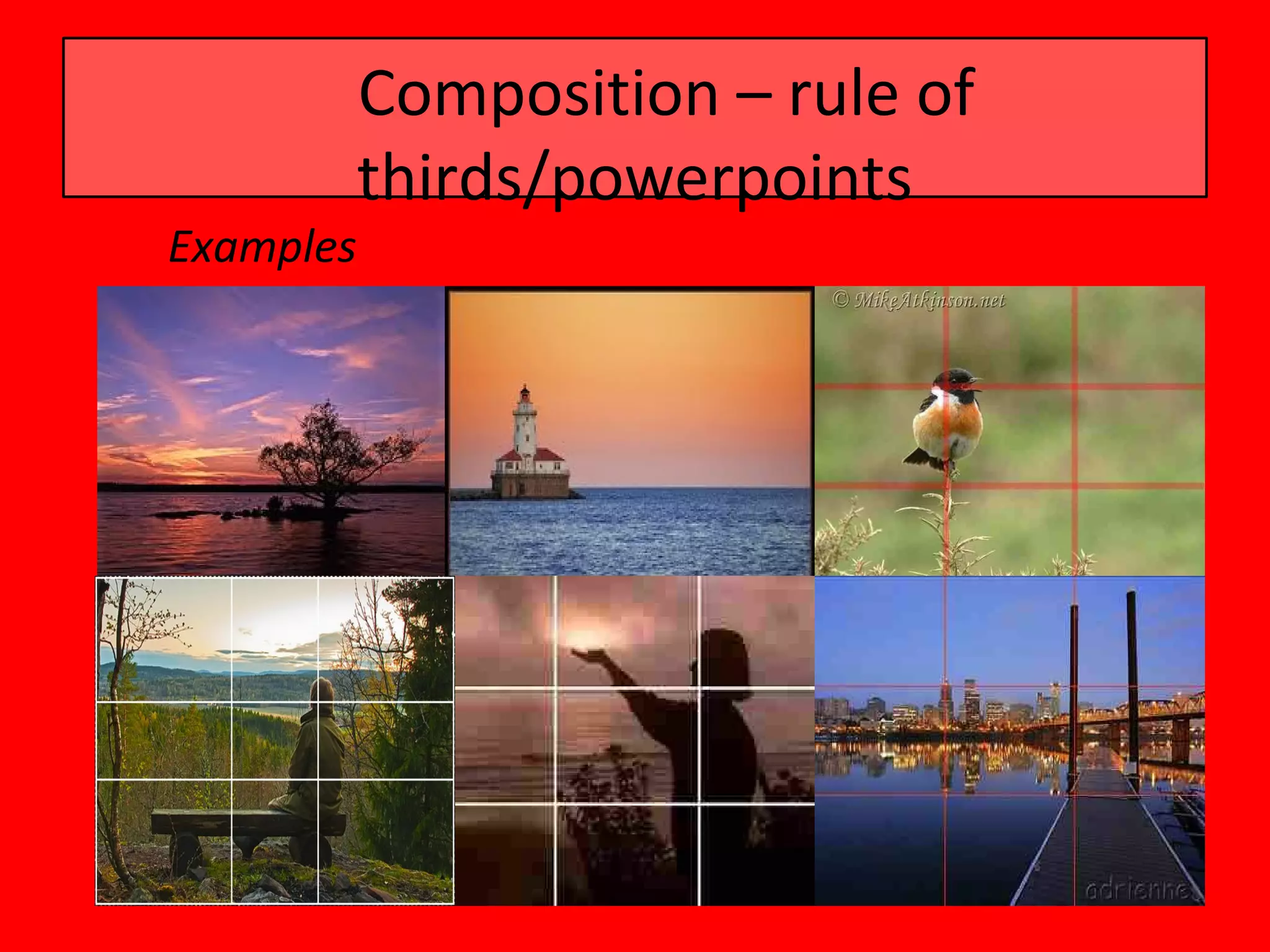
  Rule of thirds
• It is the theory that an image should be imagined as divided
     into nine equal parts by two equally-spaced horizontal lines
     and two equally-spaced vertical lines
•
• Also the idea that important compositional elements should be
     placed along these lines or their intersections
•
• Purpose is to make photographs look more pleasant to view
•
Composition – rule of
             thirds/powerpoints
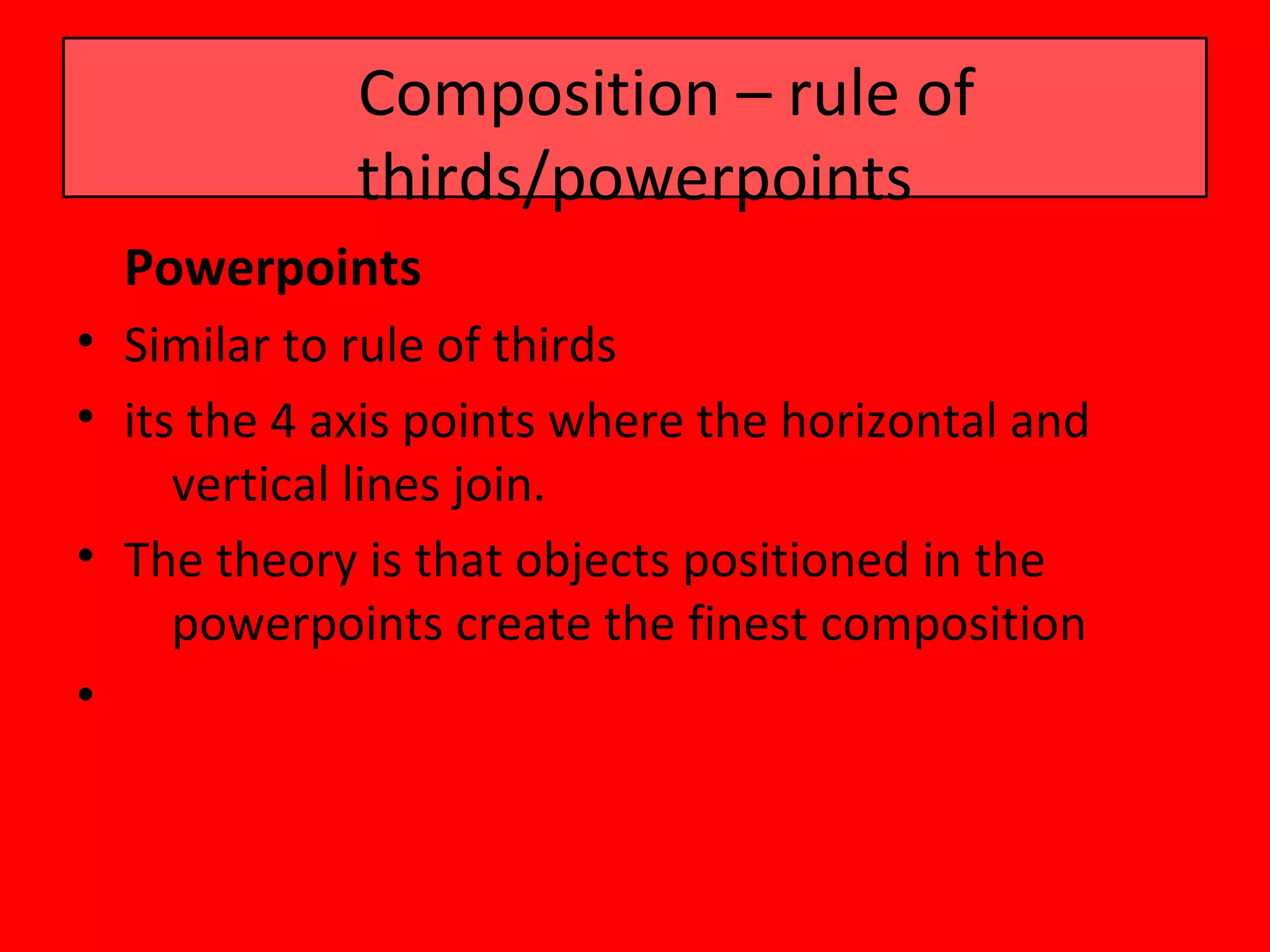
  Powerpoints
• Similar to rule of thirds
• its the 4 axis points where the horizontal and
     vertical lines join.
• The theory is that objects positioned in the
     powerpoints create the finest composition
•
Composition – rule of
           thirds/powerpoints
Examples
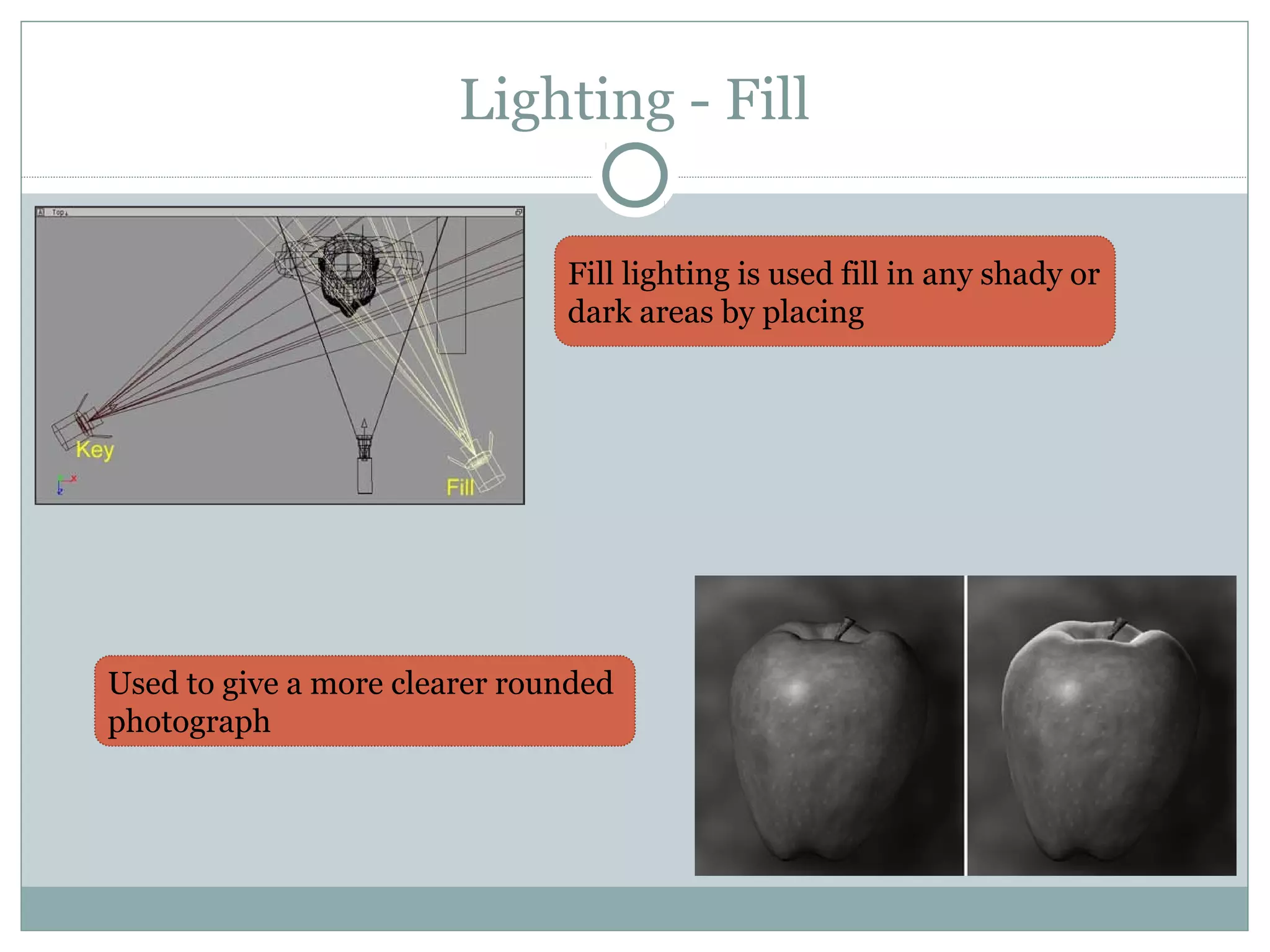
Lighting - Fill

                               Fill lighting is used fill in any shady or
                               dark areas by placing


Used to give a more clearer rounded
photograph
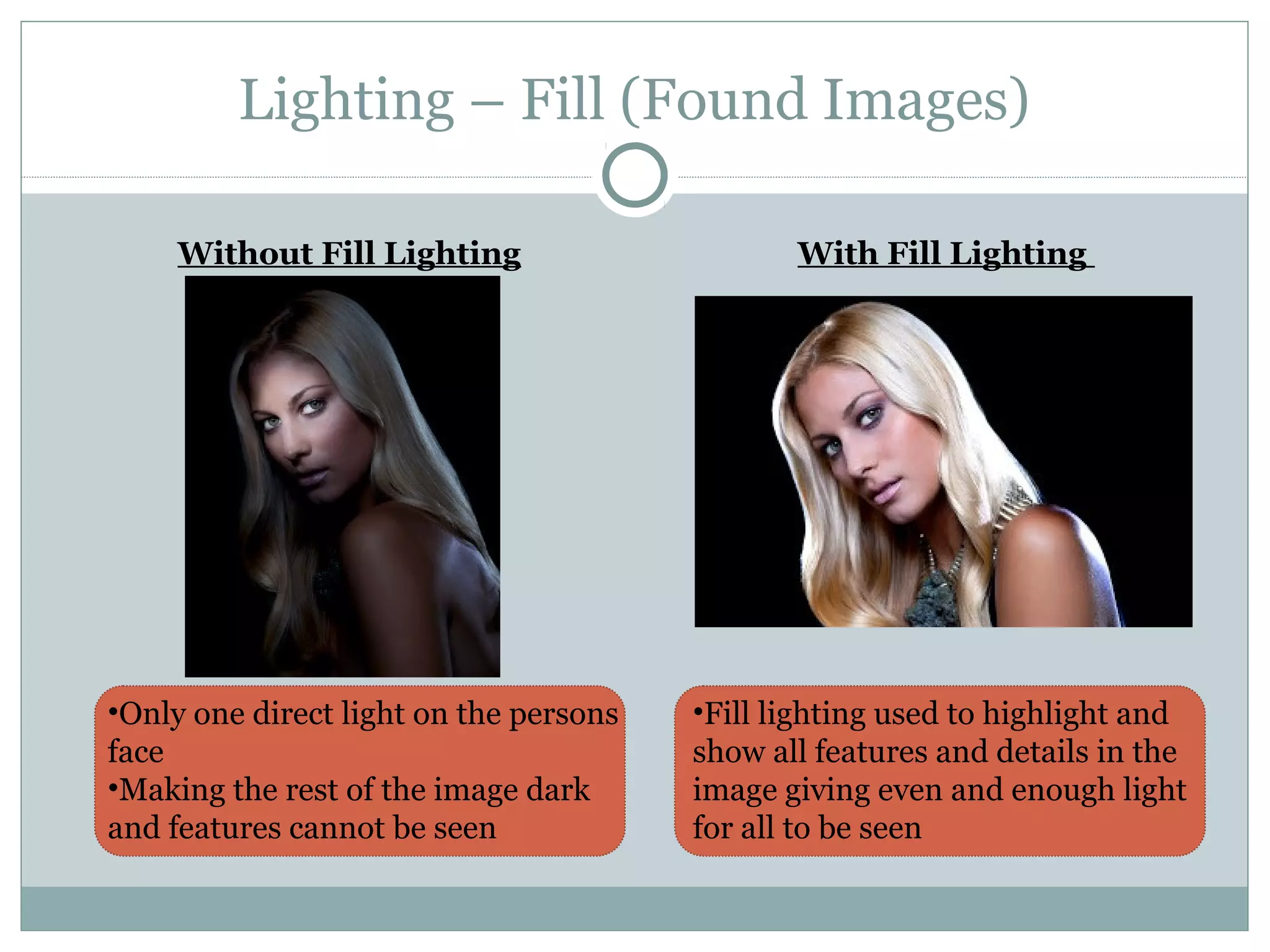
Lighting – Fill (Found Images)

     Without Fill Lighting                     With Fill Lighting


•Only one direct light on the persons   •Fill lighting used to highlight and
face                                    show all features and details in the
•Making the rest of the image dark      image giving even and enough light
and features cannot be seen             for all to be seen
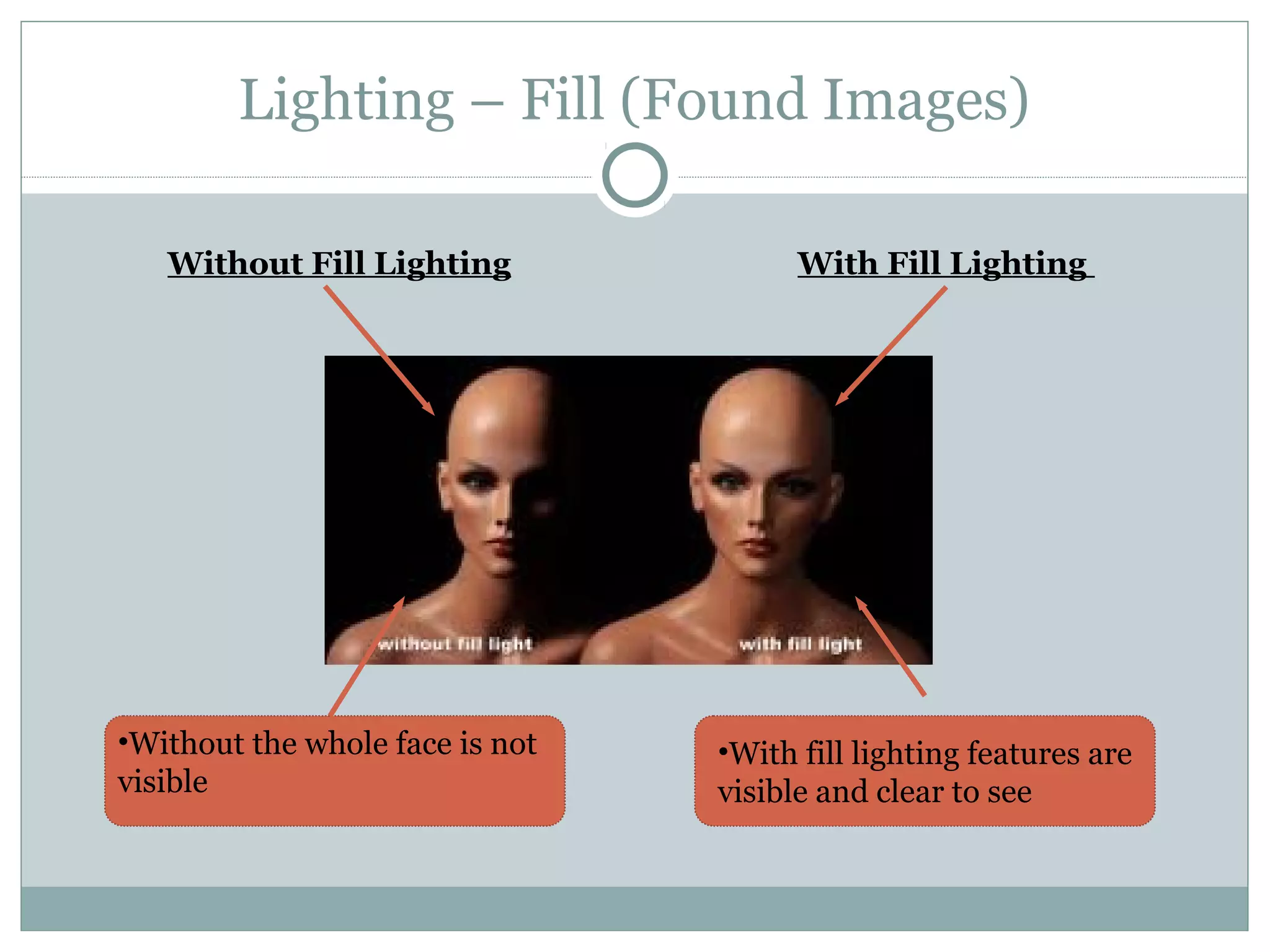
Lighting – Fill (Found Images)

   Without Fill Lighting               With Fill Lighting


•Without the whole face is not   •With fill lighting features are
visible                          visible and clear to see
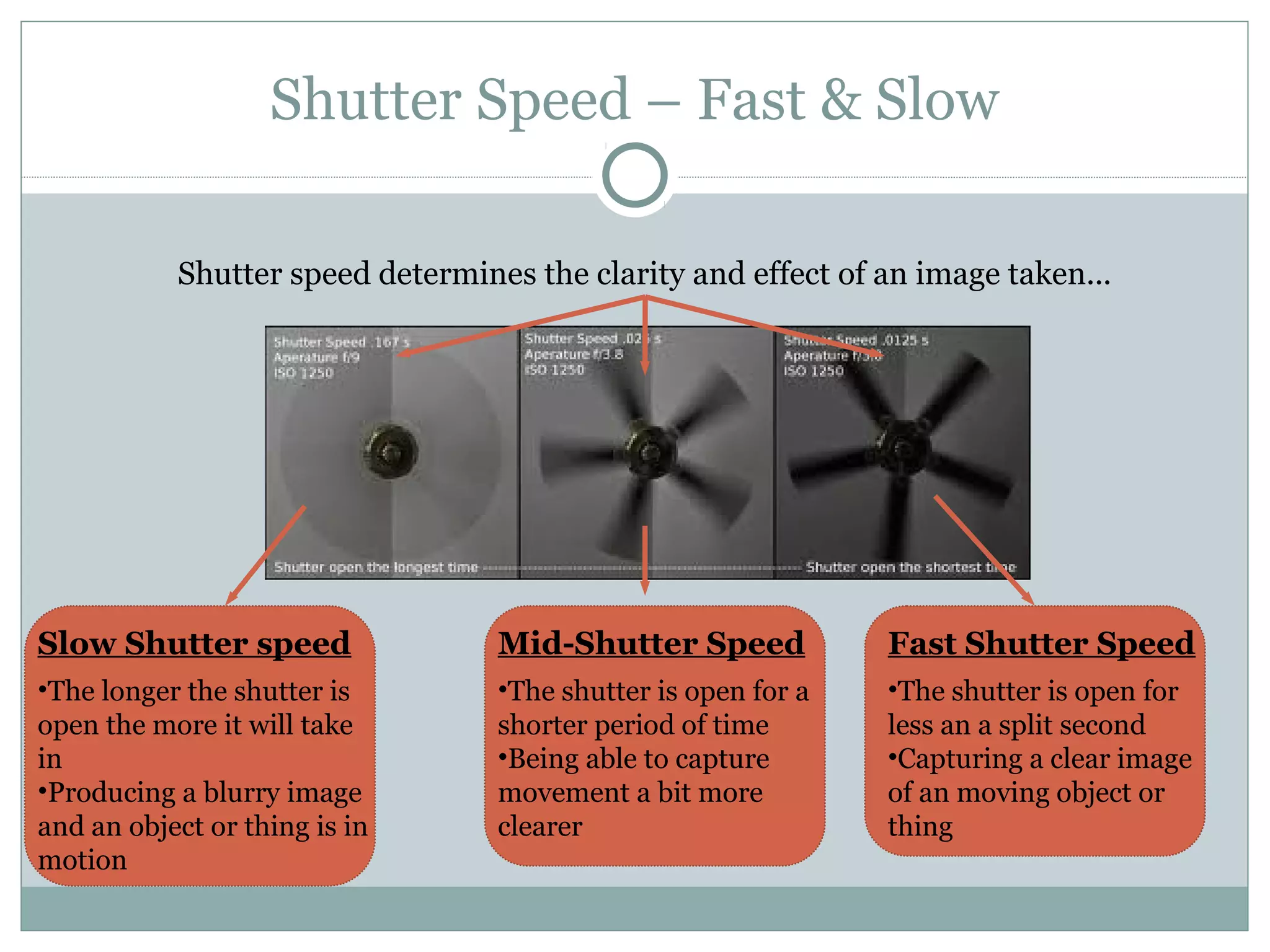
Shutter Speed – Fast & Slow

           Shutter speed determines the clarity and effect of an image taken...


Slow Shutter speed                Mid-Shutter Speed            Fast Shutter Speed
•The longer the shutter is        •The shutter is open for a   •The shutter is open for
open the more it will take        shorter period of time       less an a split second
in                                •Being able to capture       •Capturing a clear image
•Producing a blurry image         movement a bit more          of an moving object or
and an object or thing is in      clearer                      thing
motion
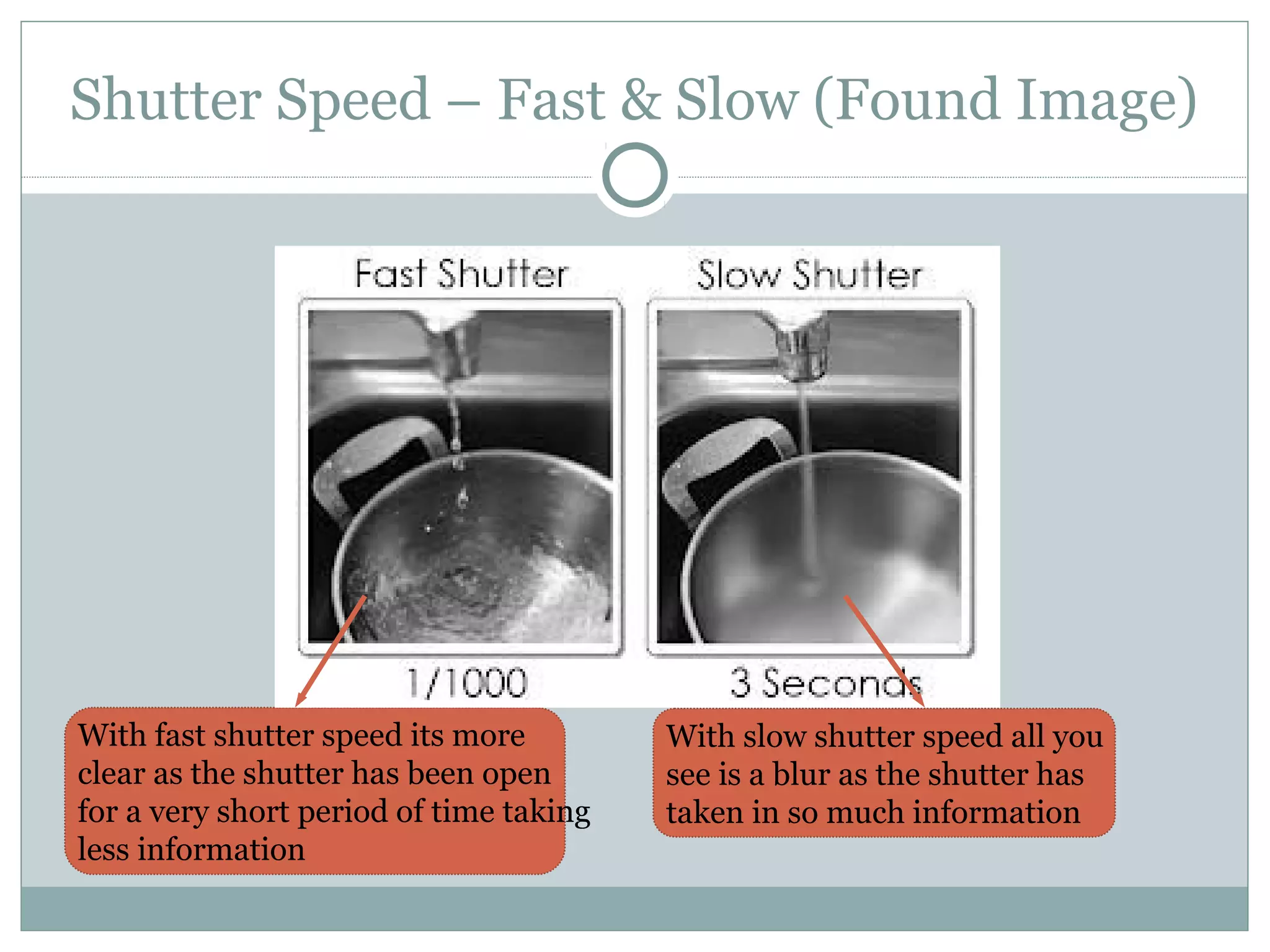
Shutter Speed – Fast & Slow (Found Image)


With fast shutter speed its more         With slow shutter speed all you
clear as the shutter has been open       see is a blur as the shutter has
for a very short period of time taking   taken in so much information
less information
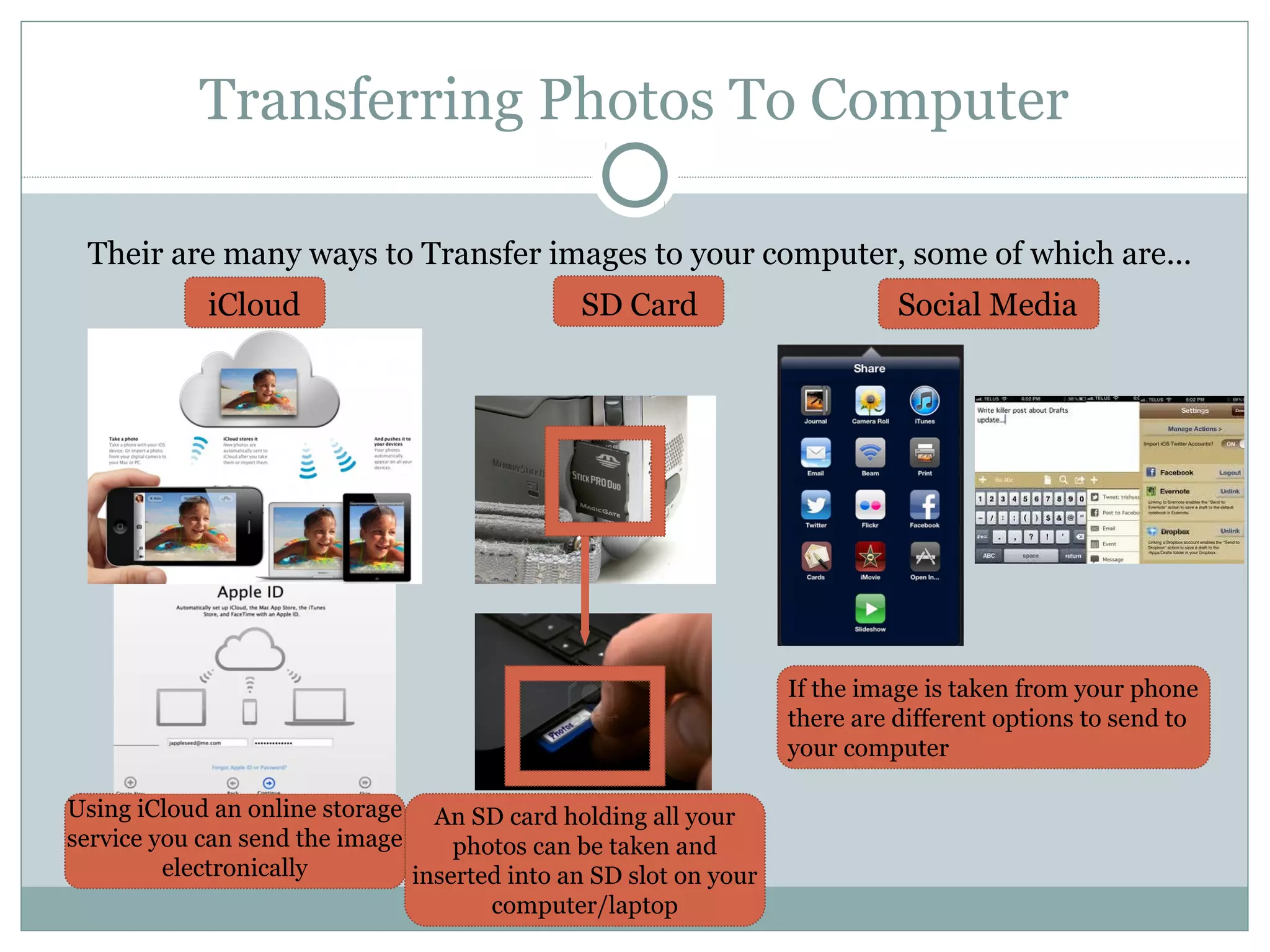
Transferring Photos To Computer

 Their are many ways to Transfer images to your computer, some of which are...
            iCloud                            SD Card                       Social Media


                                                                  If the image is taken from your phone
                                                                  there are different options to send to
                                                                  your computer

Using iCloud an online storage An SD card holding all your
service you can send the image     photos can be taken and
         electronically        inserted into an SD slot on your
                                      computer/laptop
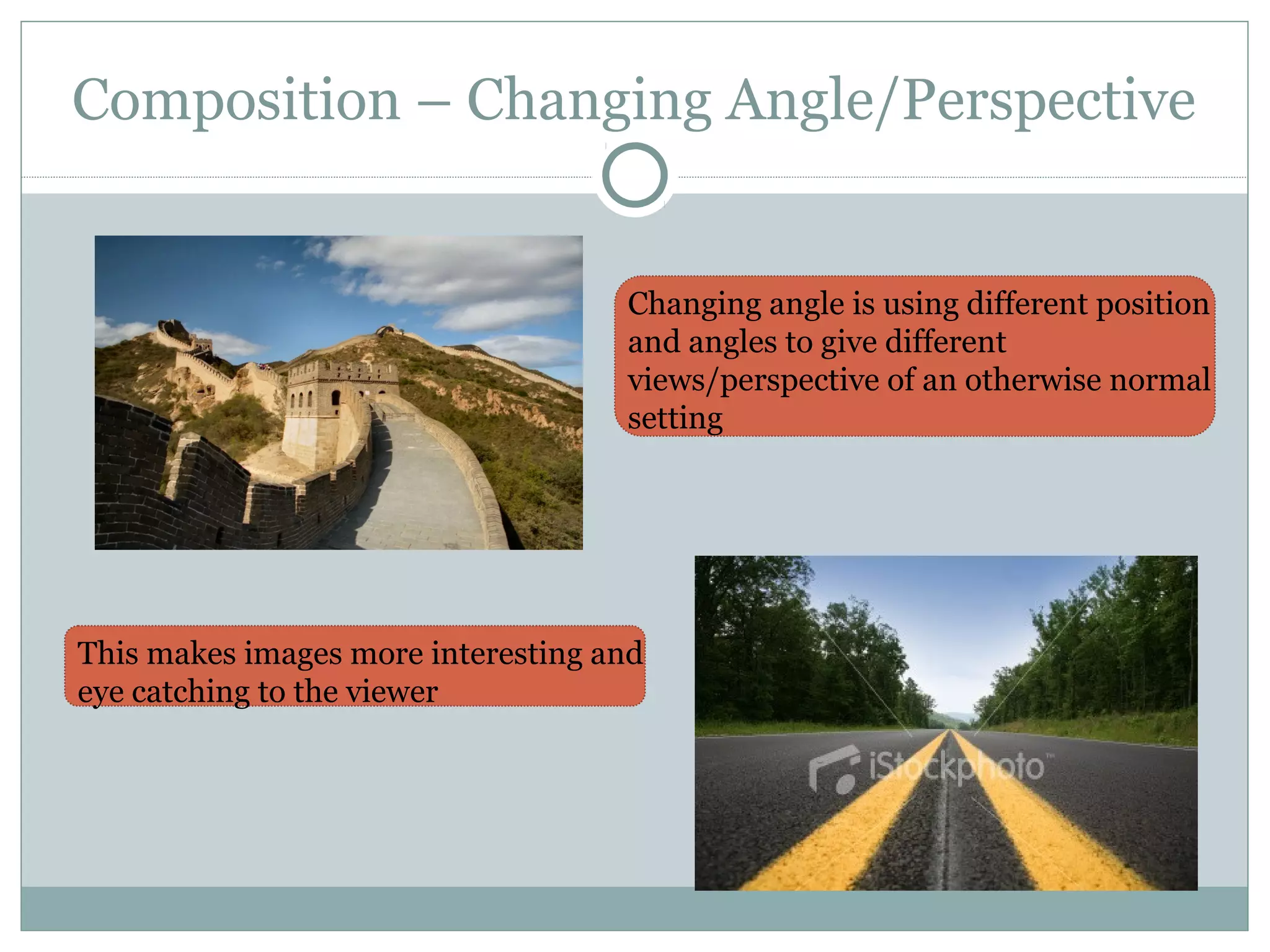
Composition – Changing Angle/Perspective


                                    Changing angle is using different position
                                    and angles to give different
                                    views/perspective of an otherwise normal
                                    setting


This makes images more interesting and
eye catching to the viewer
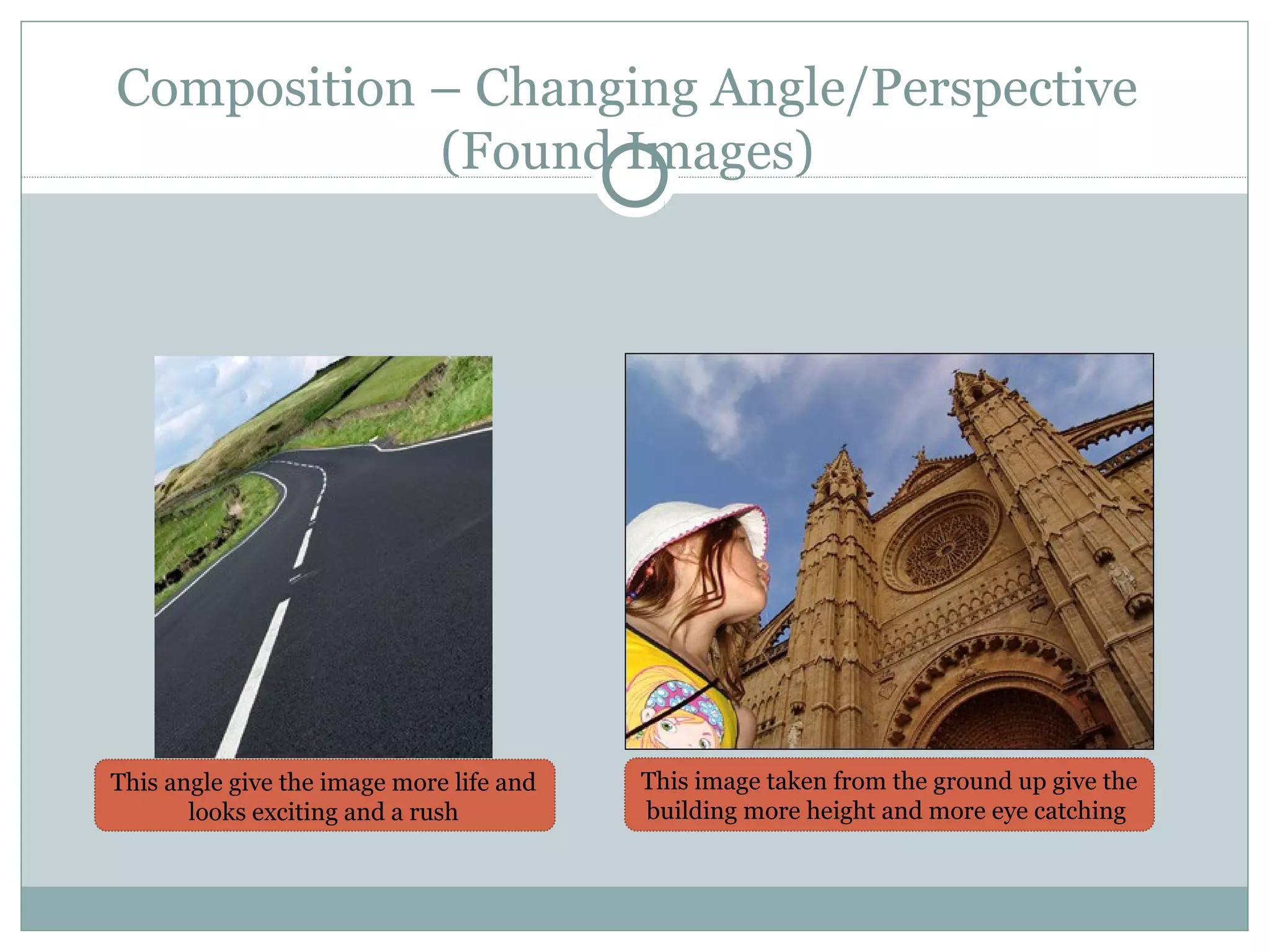
Composition – Changing Angle/Perspective
            (Found Images)


This angle give the image more life and   This image taken from the ground up give the
       looks exciting and a rush          building more height and more eye catching
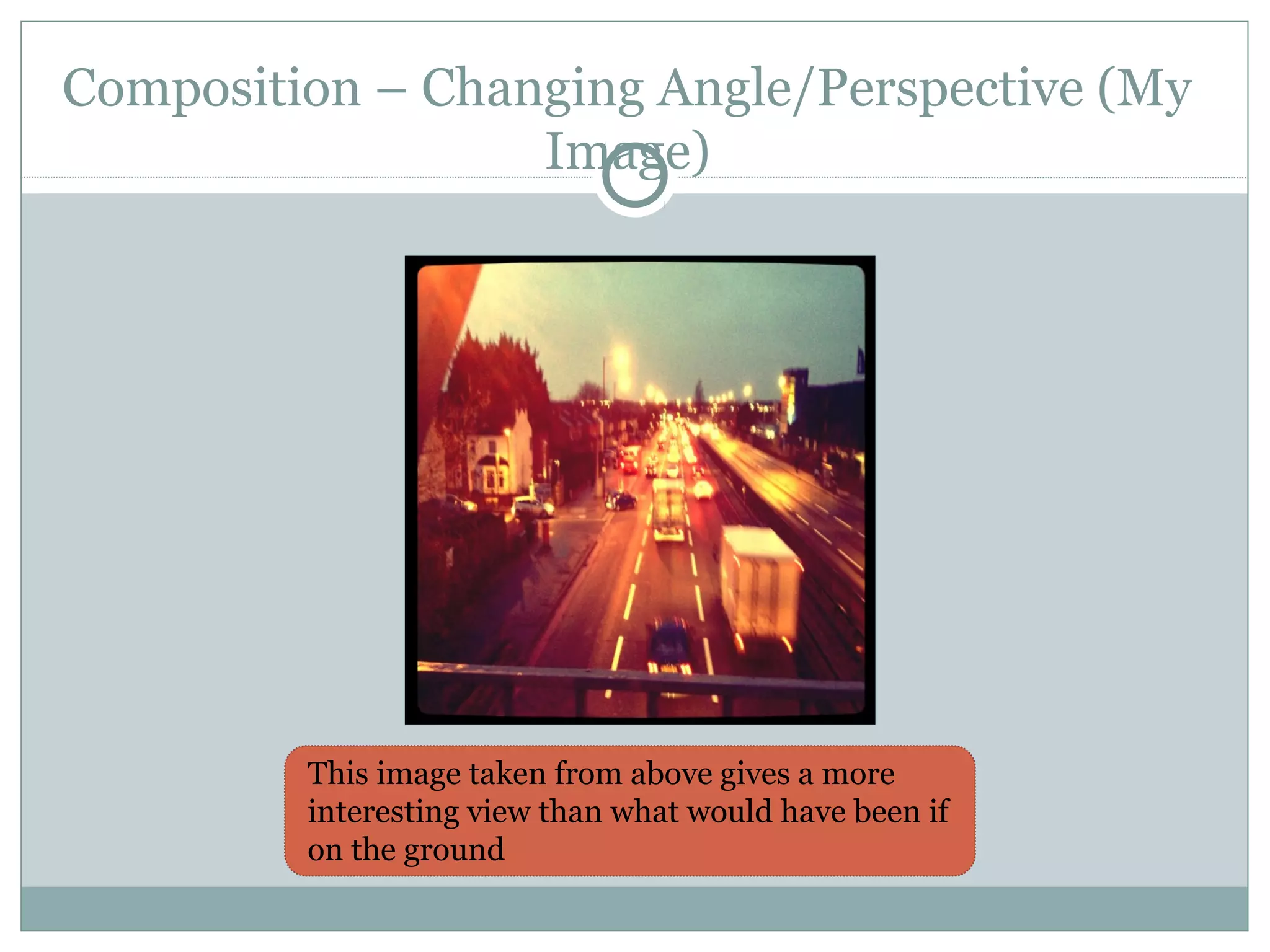
Composition – Changing Angle/Perspective (My
                  Image)


         This image taken from above gives a more
         interesting view than what would have been if
         on the ground
What Does Reflecting
           light Mean?

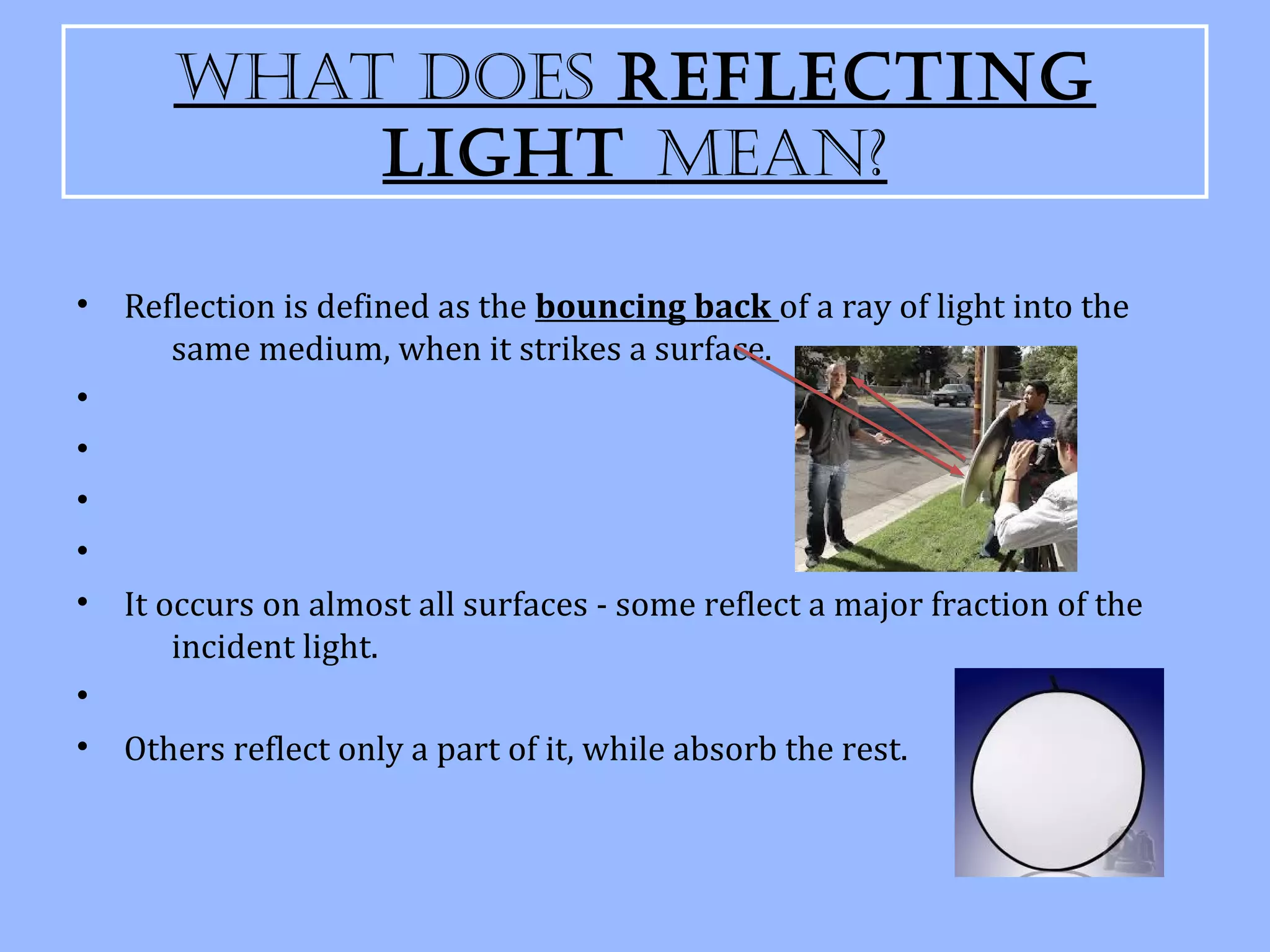
•   Reflection is defined as the bouncing back of a ray of light into the
       same medium, when it strikes a surface.
•
•
•
•
•   It occurs on almost all surfaces - some reflect a major fraction of the
        incident light.
•
•   Others reflect only a part of it, while absorb the rest.
a founD exaMple
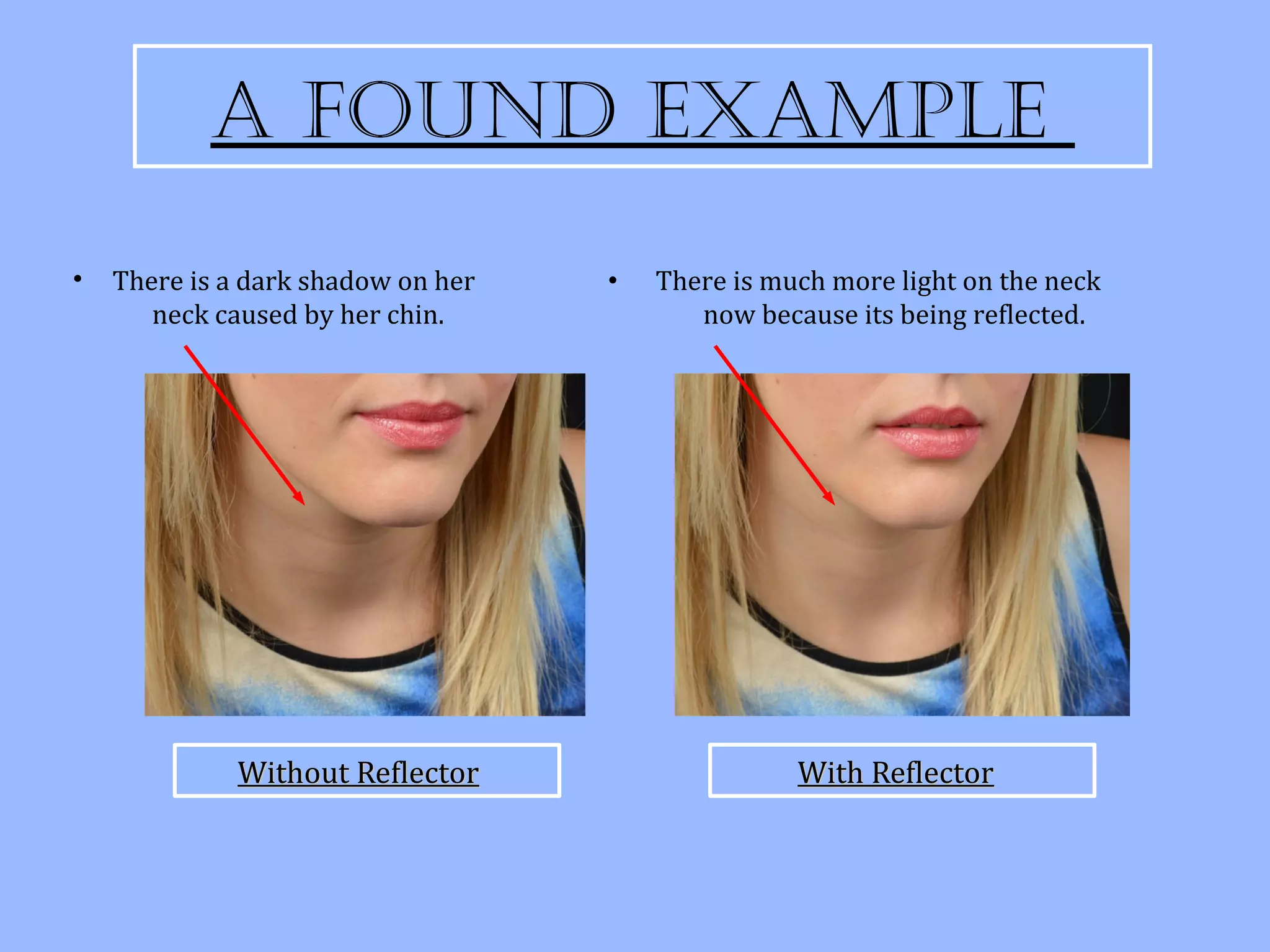
•   There is a dark shadow on her   •   There is much more light on the neck
       neck caused by her chin.            now because its being reflected.


              Without Reflector                    With Reflector
a founD exaMple
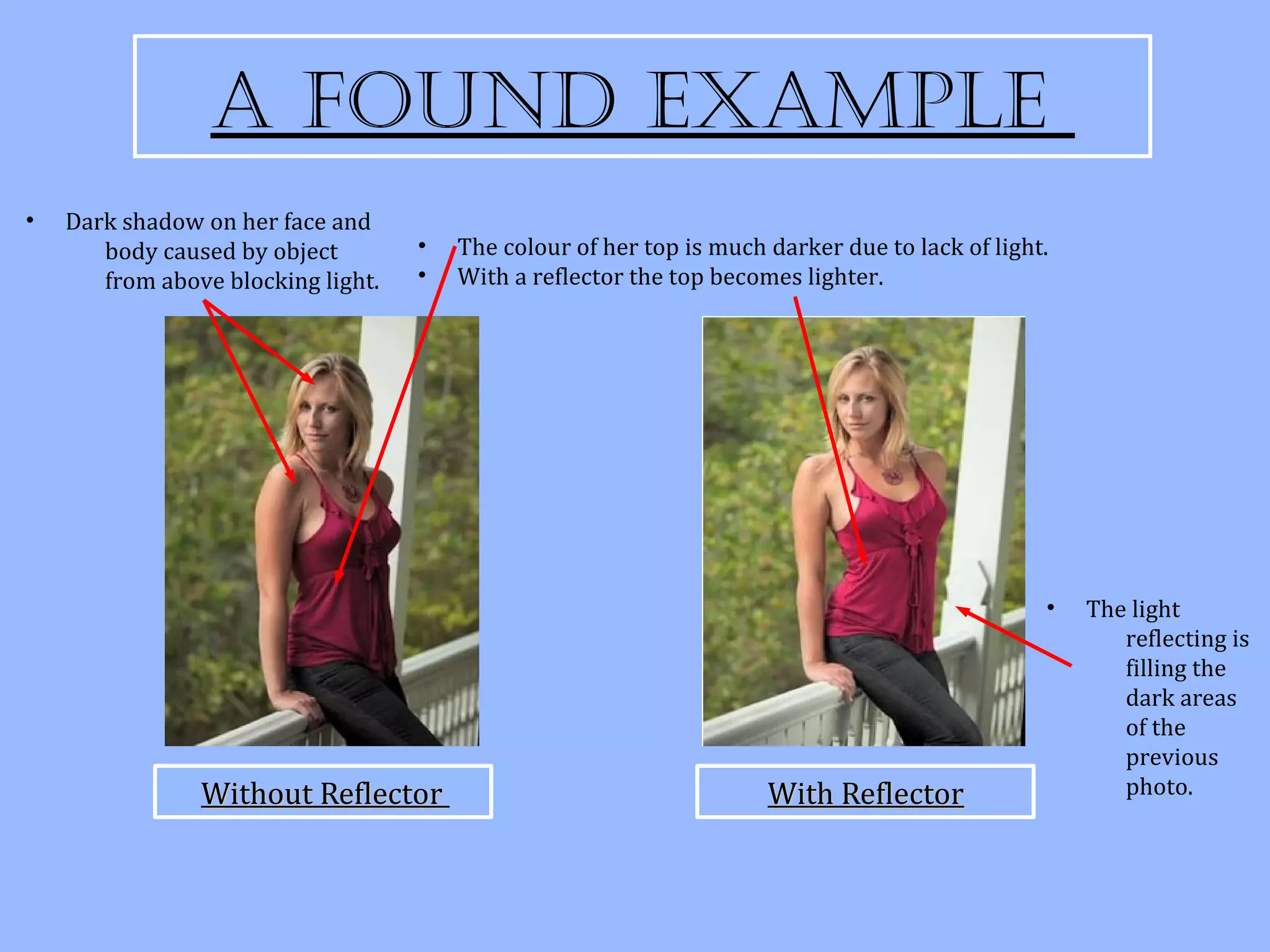
•   Dark shadow on her face and
       body caused by object        •   The colour of her top is much darker due to lack of light.
       from above blocking light.   •   With a reflector the top becomes lighter.


                                                                                                 •   The light
                                                                                                        reflecting is
                                                                                                        filling the
                                                                                                        dark areas
                                                                                                        of the
                                                                                                        previous
                Without Reflector                                     With Reflector                    photo.
My exaMple

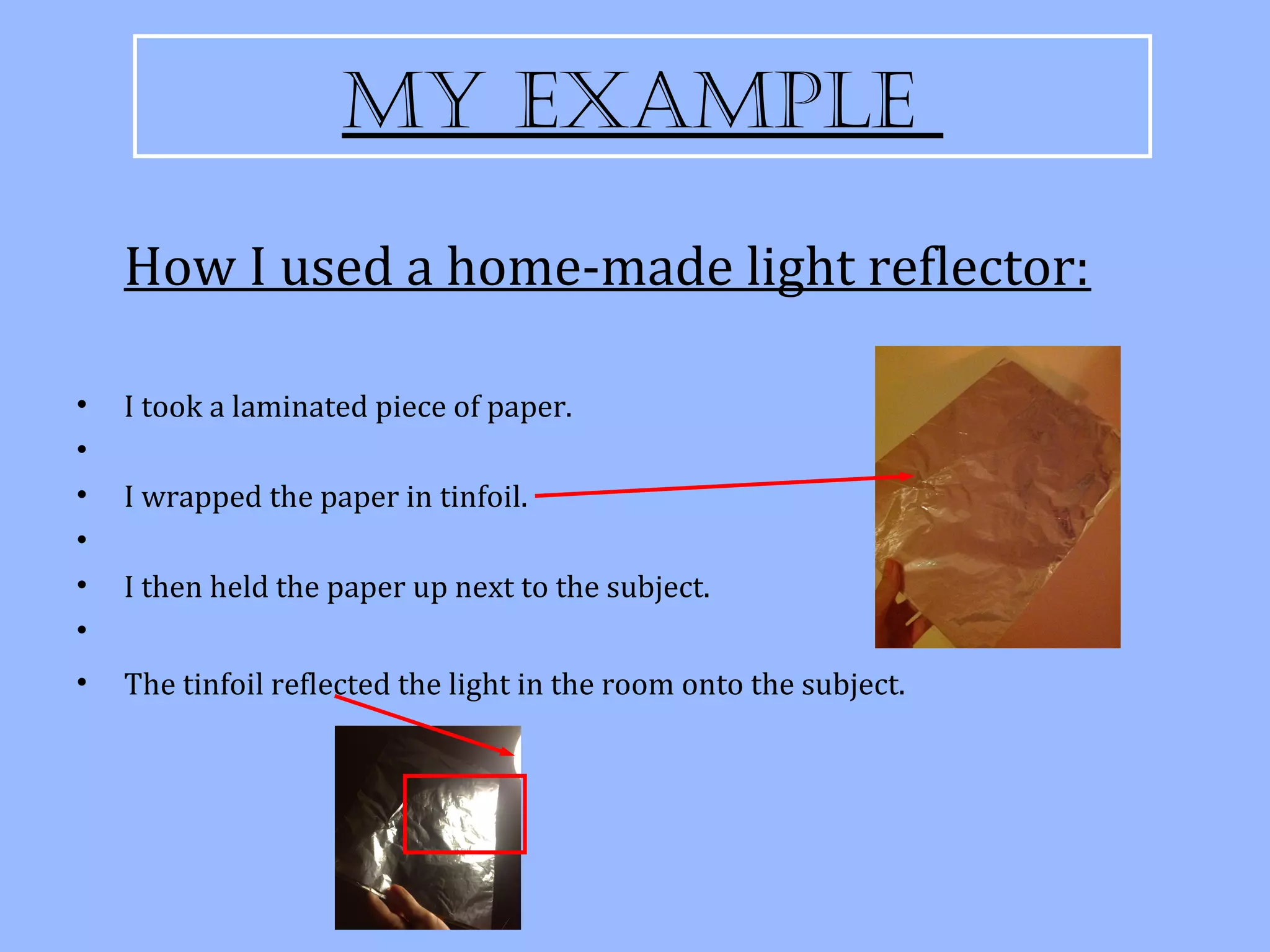
    How I used a home-made light reflector:

•   I took a laminated piece of paper.
•
•   I wrapped the paper in tinfoil.
•
•   I then held the paper up next to the subject.
•
•   The tinfoil reflected the light in the room onto the subject.

Assignment 14 part 1

  • 1.
    Assignment 14 Photography Research and Practice Kaya Rahel Gledis Joanne
  • 2.
    Who is doingeach part of the Presentation…
  • 3.
    Photography Basics –Lighting: Over Exposure
  • 4.
    Photography Basics –Lighting: Under Exposure
  • 5.
    Photography Basics –Lighting: Good Exposure
  • 6.
    Photography Basics –Lighting: Diffusing/Diffusers Examples of different diffusers/ ways of diffusing Holding a white paper over Putting bottle bottom the flash over flash This is my diffuser – used to take pictures of small objects, rather than outside or Holding a white screen people as its an enclose cube- Using white reflective where the flash is like shape umbrella's flashing
  • 7.
    Photography Basics –Lighting: Diffusing/Diffusers DIFFUSED BEFORE DIFFUSED BEFORE
  • 8.
    Photography Basics –Deep Focus Poor focus of Everything in everything in shot is focused shot
  • 9.
    Photography Basics –Leading Lines Photo with Normal shot of leading lines road
  • 10.
    Lighting – HighKey What is high key lighting? • reduces the lighting ratio present in the scene • High key photos are very bright • Doesn’t have very strong contrasts
  • 11.
    Lighting – HighKey Examples
  • 12.
    Lighting – LowKey What is low key lighting? • Creates dark looking photographs • Low-key lighting often uses only one key light, optionally controlled with a fill light or a simple reflector • Creates strong contrast • Low key lighting describes any scene with a high lighting ratio,
  • 13.
    Lighting – LowKey Examples
  • 14.
    Shutter speed –what is it? • It’s the exposure time - the length of time a camera's shutter is open • • It is how quickly a shutter opens
  • 15.
    Shallow focus What is shallow focus? • When the main object or person is in focus and the background is blurry • Incorporates a small depth of field
  • 16.
  • 17.
    Composition – ruleof thirds/powerpoints Rule of thirds • It is the theory that an image should be imagined as divided into nine equal parts by two equally-spaced horizontal lines and two equally-spaced vertical lines • • Also the idea that important compositional elements should be placed along these lines or their intersections • • Purpose is to make photographs look more pleasant to view •
  • 18.
    Composition – ruleof thirds/powerpoints Powerpoints • Similar to rule of thirds • its the 4 axis points where the horizontal and vertical lines join. • The theory is that objects positioned in the powerpoints create the finest composition •
  • 19.
    Composition – ruleof thirds/powerpoints Examples
  • 20.
    Lighting - Fill Fill lighting is used fill in any shady or dark areas by placing Used to give a more clearer rounded photograph
  • 21.
    Lighting – Fill(Found Images) Without Fill Lighting With Fill Lighting •Only one direct light on the persons •Fill lighting used to highlight and face show all features and details in the •Making the rest of the image dark image giving even and enough light and features cannot be seen for all to be seen
  • 22.
    Lighting – Fill(Found Images) Without Fill Lighting With Fill Lighting •Without the whole face is not •With fill lighting features are visible visible and clear to see
  • 23.
    Shutter Speed –Fast & Slow Shutter speed determines the clarity and effect of an image taken... Slow Shutter speed Mid-Shutter Speed Fast Shutter Speed •The longer the shutter is •The shutter is open for a •The shutter is open for open the more it will take shorter period of time less an a split second in •Being able to capture •Capturing a clear image •Producing a blurry image movement a bit more of an moving object or and an object or thing is in clearer thing motion
  • 24.
    Shutter Speed –Fast & Slow (Found Image) With fast shutter speed its more With slow shutter speed all you clear as the shutter has been open see is a blur as the shutter has for a very short period of time taking taken in so much information less information
  • 25.
    Transferring Photos ToComputer Their are many ways to Transfer images to your computer, some of which are... iCloud SD Card Social Media If the image is taken from your phone there are different options to send to your computer Using iCloud an online storage An SD card holding all your service you can send the image photos can be taken and electronically inserted into an SD slot on your computer/laptop
  • 26.
    Composition – ChangingAngle/Perspective Changing angle is using different position and angles to give different views/perspective of an otherwise normal setting This makes images more interesting and eye catching to the viewer
  • 27.
    Composition – ChangingAngle/Perspective (Found Images) This angle give the image more life and This image taken from the ground up give the looks exciting and a rush building more height and more eye catching
  • 28.
    Composition – ChangingAngle/Perspective (My Image) This image taken from above gives a more interesting view than what would have been if on the ground
  • 29.
    What Does Reflecting light Mean? • Reflection is defined as the bouncing back of a ray of light into the same medium, when it strikes a surface. • • • • • It occurs on almost all surfaces - some reflect a major fraction of the incident light. • • Others reflect only a part of it, while absorb the rest.
  • 30.
    a founD exaMple • There is a dark shadow on her • There is much more light on the neck neck caused by her chin. now because its being reflected. Without Reflector With Reflector
  • 31.
    a founD exaMple • Dark shadow on her face and body caused by object • The colour of her top is much darker due to lack of light. from above blocking light. • With a reflector the top becomes lighter. • The light reflecting is filling the dark areas of the previous Without Reflector With Reflector photo.
  • 32.
    My exaMple How I used a home-made light reflector: • I took a laminated piece of paper. • • I wrapped the paper in tinfoil. • • I then held the paper up next to the subject. • • The tinfoil reflected the light in the room onto the subject.