Today, I will learn…
Exposure:
Aperture
Shutter Speed
ISO
The Exposure Triangle
Learning Goals
Exposure
What is
Exposure?
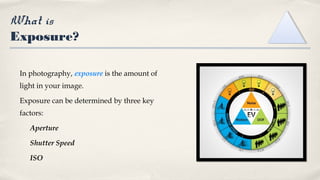
In photography, exposure is the amount of
light in your image.
Exposure can be determined by three key
factors:
Aperture
Shutter Speed
ISO
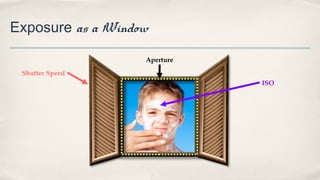
Exposure as a Window
Shutter Speed
Aperture
ISO
Aperture
Aperture refers to the diaphragm within
your camera lens, and how big or small the
opening is
The smaller the opening = less light
Larger the opening = more light
Measured in f-stops
Smaller f-stop number = more light
Larger f-stop number = less light
Aperture
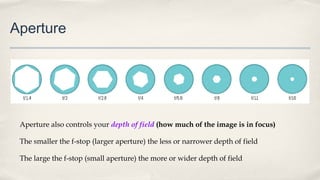
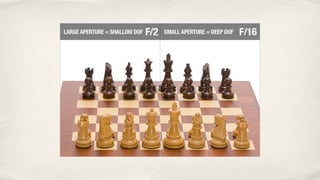
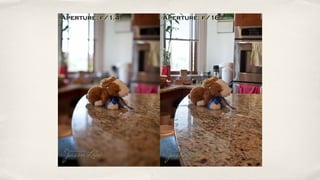
Aperture also controls your depth of field (how much of the image is in focus)
The smaller the f-stop (larger aperture) the less or narrower depth of field
The large the f-stop (small aperture) the more or wider depth of field
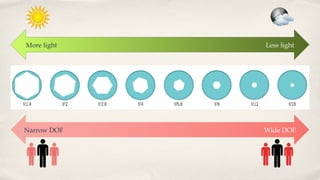
More light Less light
Narrow DOF Wide DOF
f 1.4
Shutter Speed
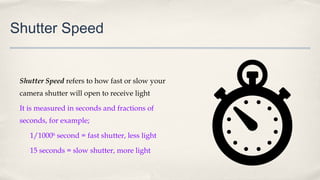
Shutter Speed refers to how fast or slow your
camera shutter will open to receive light
It is measured in seconds and fractions of
seconds, for example;
1/1000th
second = fast shutter, less light
15 seconds = slow shutter, more light
Shutter Speed
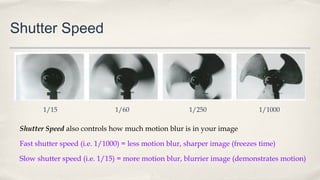
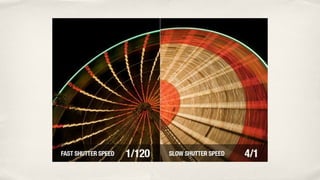
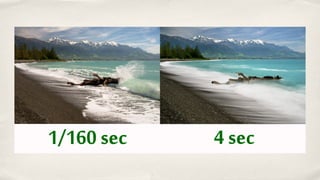
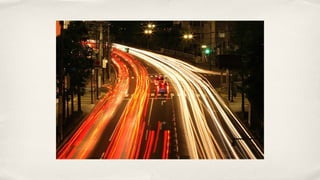
Shutter Speed also controls how much motion blur is in your image
Fast shutter speed (i.e. 1/1000) = less motion blur, sharper image (freezes time)
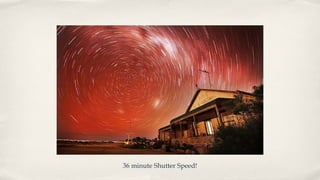
Slow shutter speed (i.e. 1/15) = more motion blur, blurrier image (demonstrates motion)
1/15 1/60 1/250 1/1000
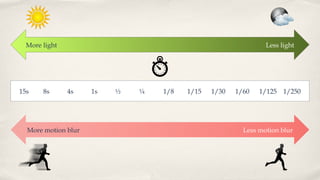
More light Less light
More motion blur Less motion blur
15s 8s 4s 1s ½ ¼ 1/8 1/15 1/30 1/60 1/125 1/250
36 minute Shutter Speed!
ISO
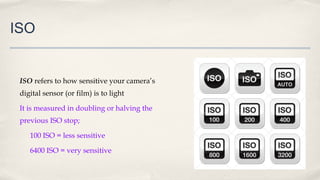
ISO refers to how sensitive your camera’s
digital sensor (or film) is to light
It is measured in doubling or halving the
previous ISO stop;
100 ISO = less sensitive
6400 ISO = very sensitive
ISO
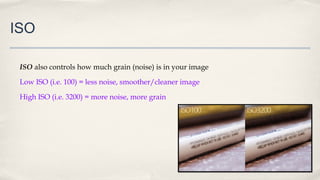
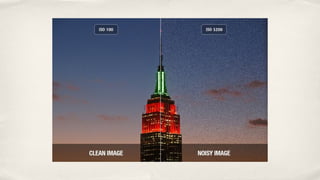
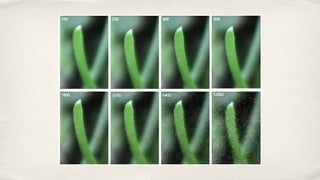
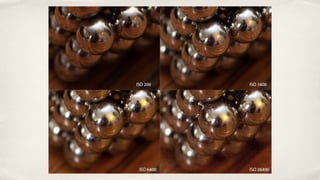
ISO also controls how much grain (noise) is in your image
Low ISO (i.e. 100) = less noise, smoother/cleaner image
High ISO (i.e. 3200) = more noise, more grain
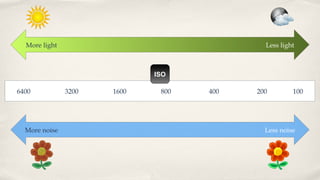
More light Less light
More noise Less noise
6400 3200 1600 800 400 200 100
ISO
Exposure
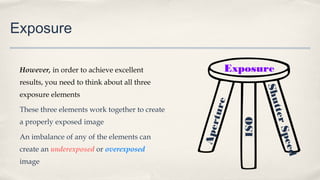
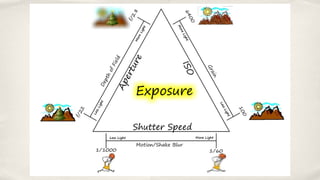
However, in order to achieve excellent
results, you need to think about all three
exposure elements
These three elements work together to create
a properly exposed image
An imbalance of any of the elements can
create an underexposed or overexposed
image
Exposure
Aperture
ShutterSpeed
ISO
Exposure
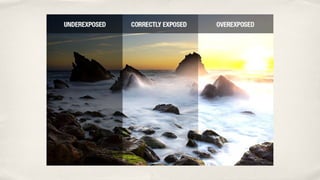
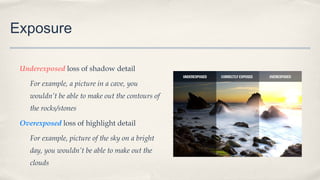
Underexposed loss of shadow detail
For example, a picture in a cave, you
wouldn’t be able to make out the contours of
the rocks/stones
Overexposed loss of highlight detail
For example, picture of the sky on a bright
day, you wouldn’t be able to make out the
clouds
Practice
Aperture
Use Aperture Priority mode
Place items on a table at different
distances
Experiment with adjusting your aperture
(f-stop) to focus on the different elements,
and then have all elements in focus

Lesson 4 • Exposure

  • 1.
    Today, I willlearn… Exposure: Aperture Shutter Speed ISO The Exposure Triangle Learning Goals
  • 2.
  • 3.
    What is Exposure? In photography,exposure is the amount of light in your image. Exposure can be determined by three key factors: Aperture Shutter Speed ISO
  • 4.
    Exposure as aWindow Shutter Speed Aperture ISO
  • 5.
    Aperture Aperture refers tothe diaphragm within your camera lens, and how big or small the opening is The smaller the opening = less light Larger the opening = more light Measured in f-stops Smaller f-stop number = more light Larger f-stop number = less light
  • 6.
    Aperture Aperture also controlsyour depth of field (how much of the image is in focus) The smaller the f-stop (larger aperture) the less or narrower depth of field The large the f-stop (small aperture) the more or wider depth of field
  • 7.
    More light Lesslight Narrow DOF Wide DOF
  • 10.
  • 11.
    Shutter Speed Shutter Speedrefers to how fast or slow your camera shutter will open to receive light It is measured in seconds and fractions of seconds, for example; 1/1000th second = fast shutter, less light 15 seconds = slow shutter, more light
  • 12.
    Shutter Speed Shutter Speedalso controls how much motion blur is in your image Fast shutter speed (i.e. 1/1000) = less motion blur, sharper image (freezes time) Slow shutter speed (i.e. 1/15) = more motion blur, blurrier image (demonstrates motion) 1/15 1/60 1/250 1/1000
  • 13.
    More light Lesslight More motion blur Less motion blur 15s 8s 4s 1s ½ ¼ 1/8 1/15 1/30 1/60 1/125 1/250
  • 17.
  • 18.
    ISO ISO refers tohow sensitive your camera’s digital sensor (or film) is to light It is measured in doubling or halving the previous ISO stop; 100 ISO = less sensitive 6400 ISO = very sensitive
  • 19.
    ISO ISO also controlshow much grain (noise) is in your image Low ISO (i.e. 100) = less noise, smoother/cleaner image High ISO (i.e. 3200) = more noise, more grain
  • 20.
    More light Lesslight More noise Less noise 6400 3200 1600 800 400 200 100 ISO
  • 24.
    Exposure However, in orderto achieve excellent results, you need to think about all three exposure elements These three elements work together to create a properly exposed image An imbalance of any of the elements can create an underexposed or overexposed image Exposure Aperture ShutterSpeed ISO
  • 26.
    Exposure Underexposed loss ofshadow detail For example, a picture in a cave, you wouldn’t be able to make out the contours of the rocks/stones Overexposed loss of highlight detail For example, picture of the sky on a bright day, you wouldn’t be able to make out the clouds
  • 28.
    Practice Aperture Use Aperture Prioritymode Place items on a table at different distances Experiment with adjusting your aperture (f-stop) to focus on the different elements, and then have all elements in focus