Exposure Triangle
From Auto to Manual
HELLO
My name is Mu Tah Buk. I love
photography and share the
passion by giving free
presentations.
You can find me @mutahbuk
“There is one thing the
photograph must contain, the
humanity of the moment.”
— Robert Frank
WHAT IS EXPOSURE?
• When the camera sensor is
exposed to light to take a photo, an
exposure is made.
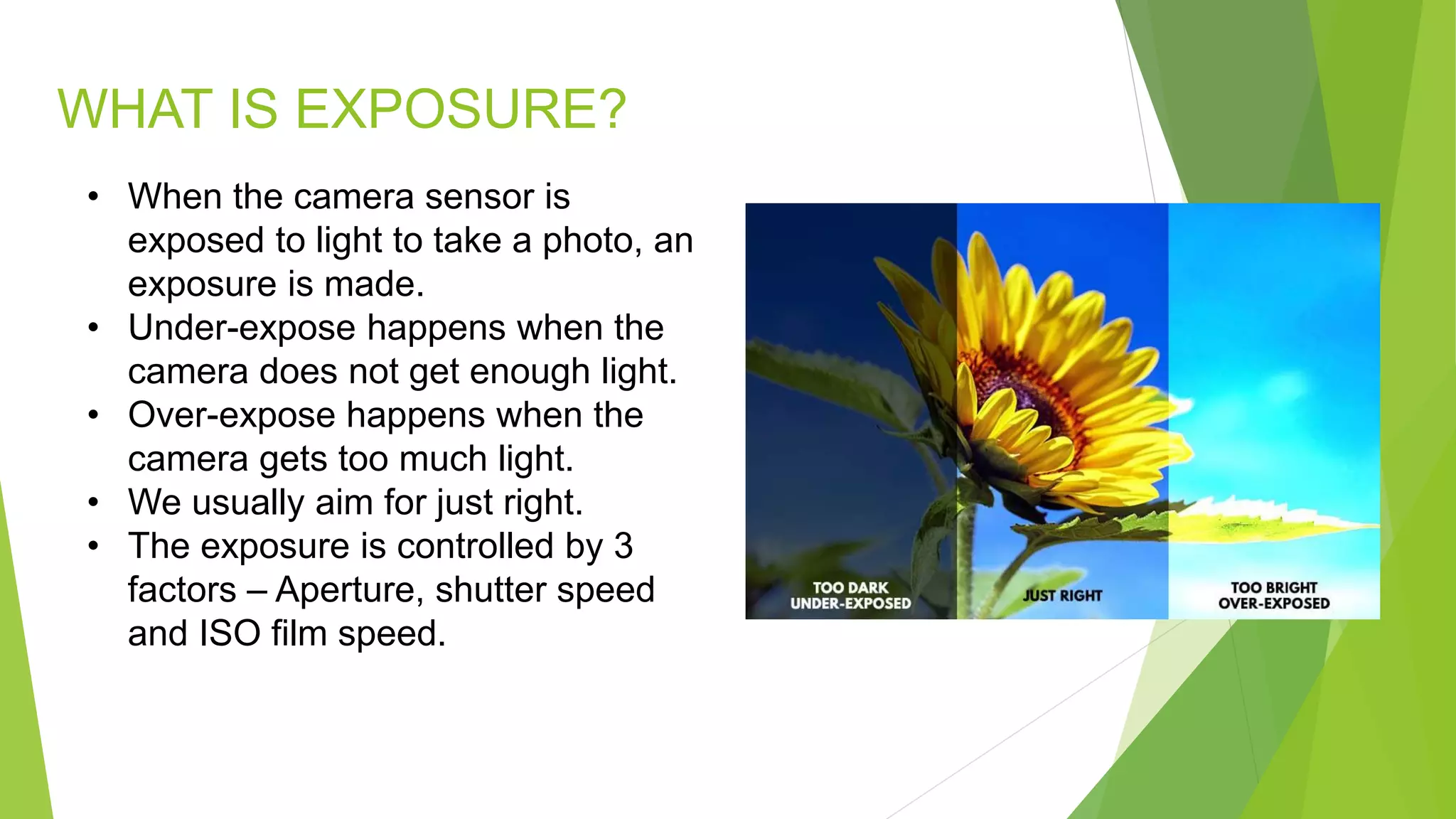
• Under-expose happens when the
camera does not get enough light.
• Over-expose happens when the
camera gets too much light.
• We usually aim for just right.
• The exposure is controlled by 3
factors – Aperture, shutter speed
and ISO film speed.
APERTURE
• Aperture is simply a hole in the lens that
allows light to enter the camera.
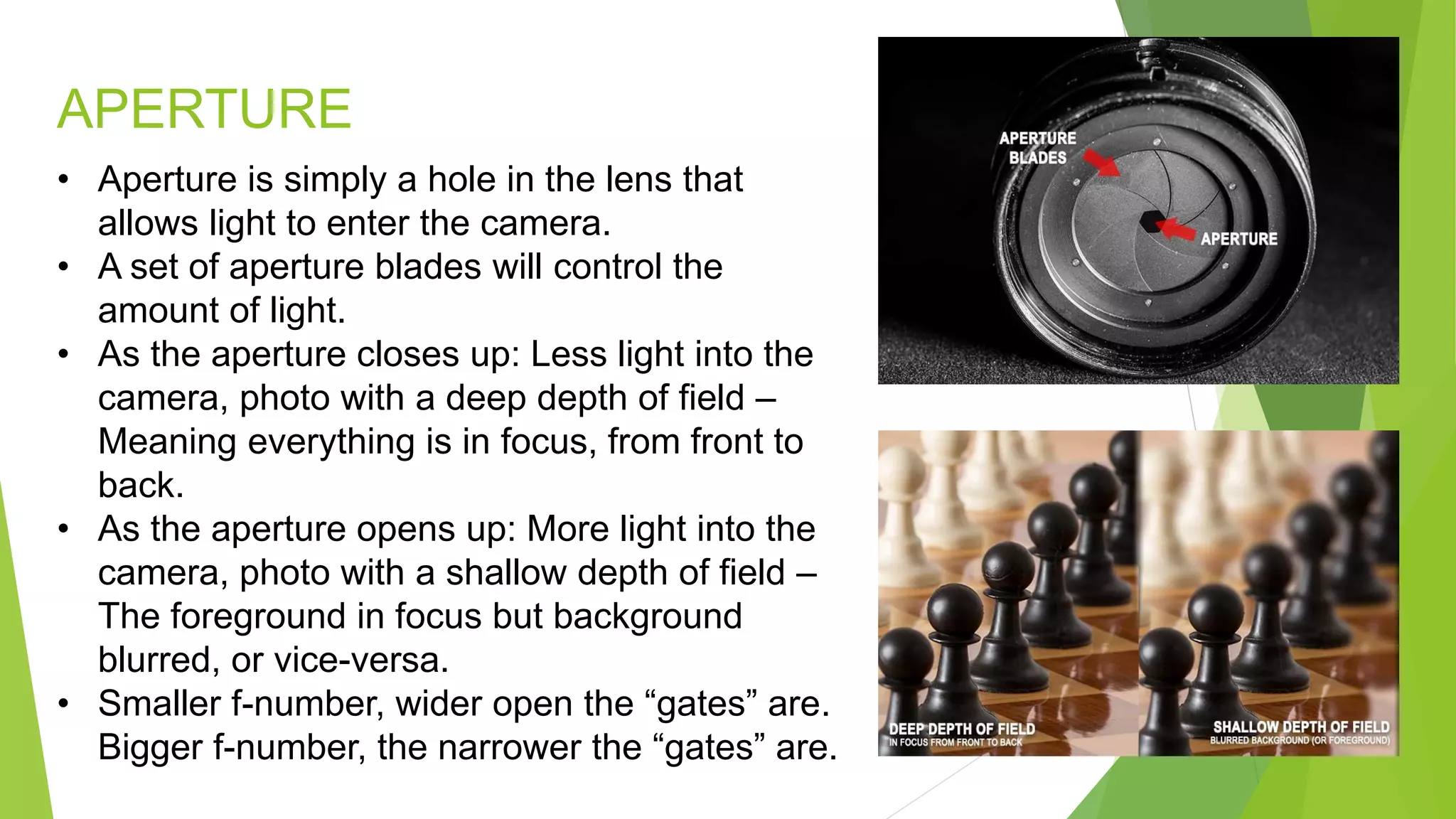
• A set of aperture blades will control the
amount of light.
• As the aperture closes up: Less light into the
camera, photo with a deep depth of field –
Meaning everything is in focus, from front to
back.
• As the aperture opens up: More light into the
camera, photo with a shallow depth of field –
The foreground in focus but background
blurred, or vice-versa.
• Smaller f-number, wider open the “gates” are.
Bigger f-number, the narrower the “gates” are.
SHUTTER SPEED
• Shutter speed is simply “how long to
expose the camera to light”.
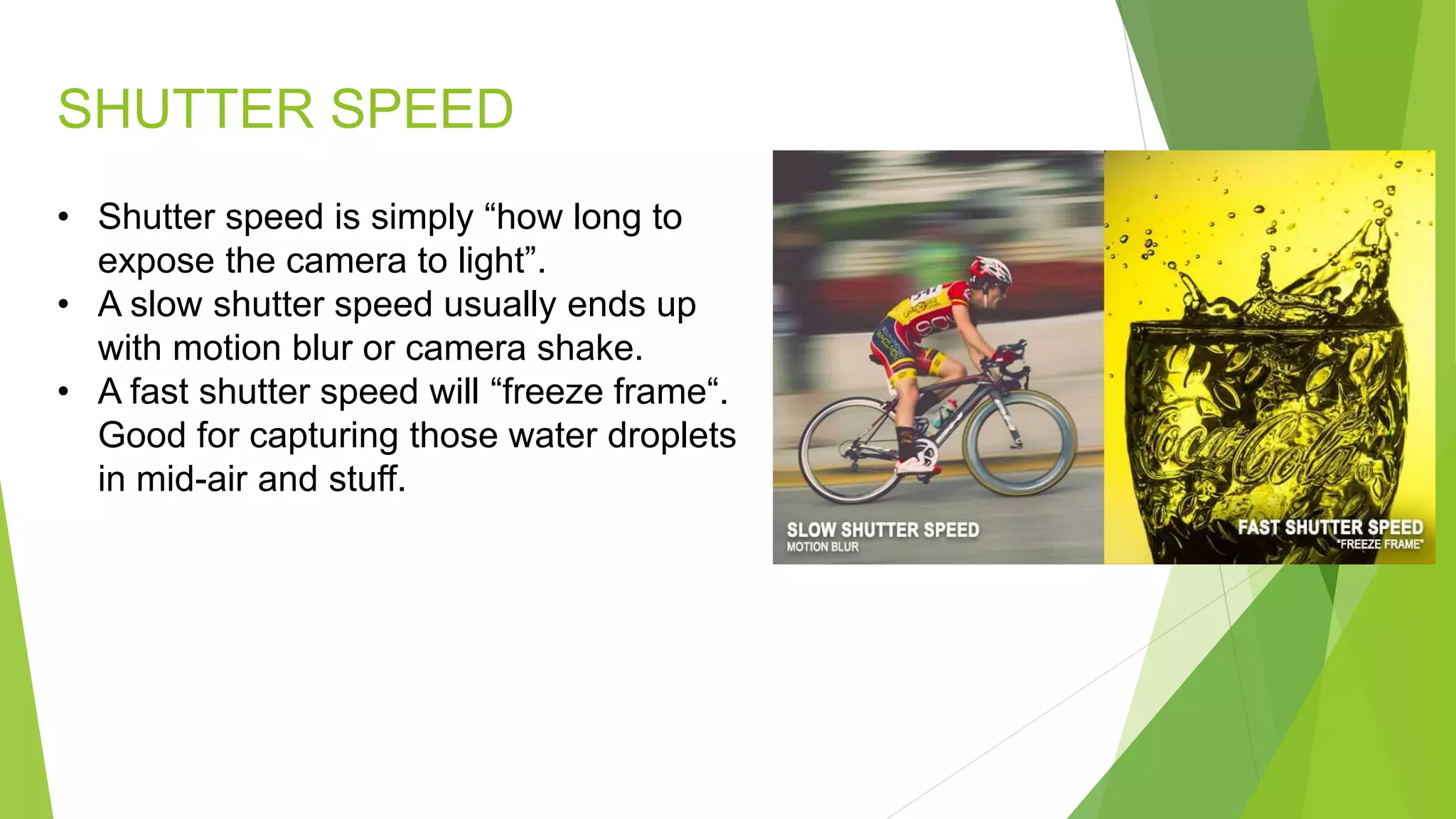
• A slow shutter speed usually ends up
with motion blur or camera shake.
• A fast shutter speed will “freeze frame“.
Good for capturing those water droplets
in mid-air and stuff.
ISO FILM SPEED
• In the past, we use film to capture
photos.
• Each roll of film is rated by an ISO
number as according to how sensitive it
is to light.
• The bigger the ISO number, the more
sensitive it is to light. (ISO 1600 is more
sensitive than ISO 400)
• We do not use film anymore, but ISO
film speed is still used.
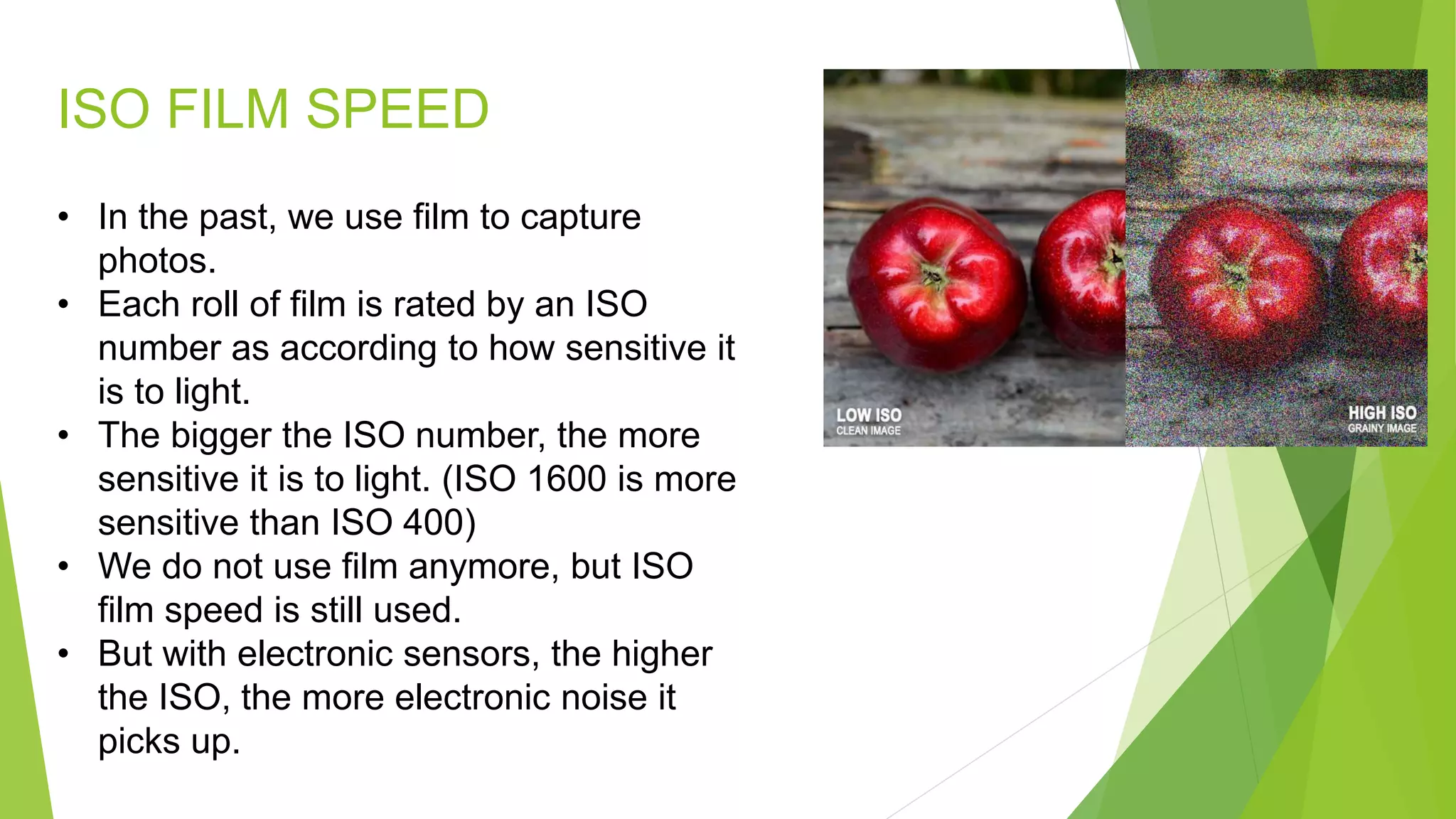
• But with electronic sensors, the higher
the ISO, the more electronic noise it
picks up.
THE BALANCE
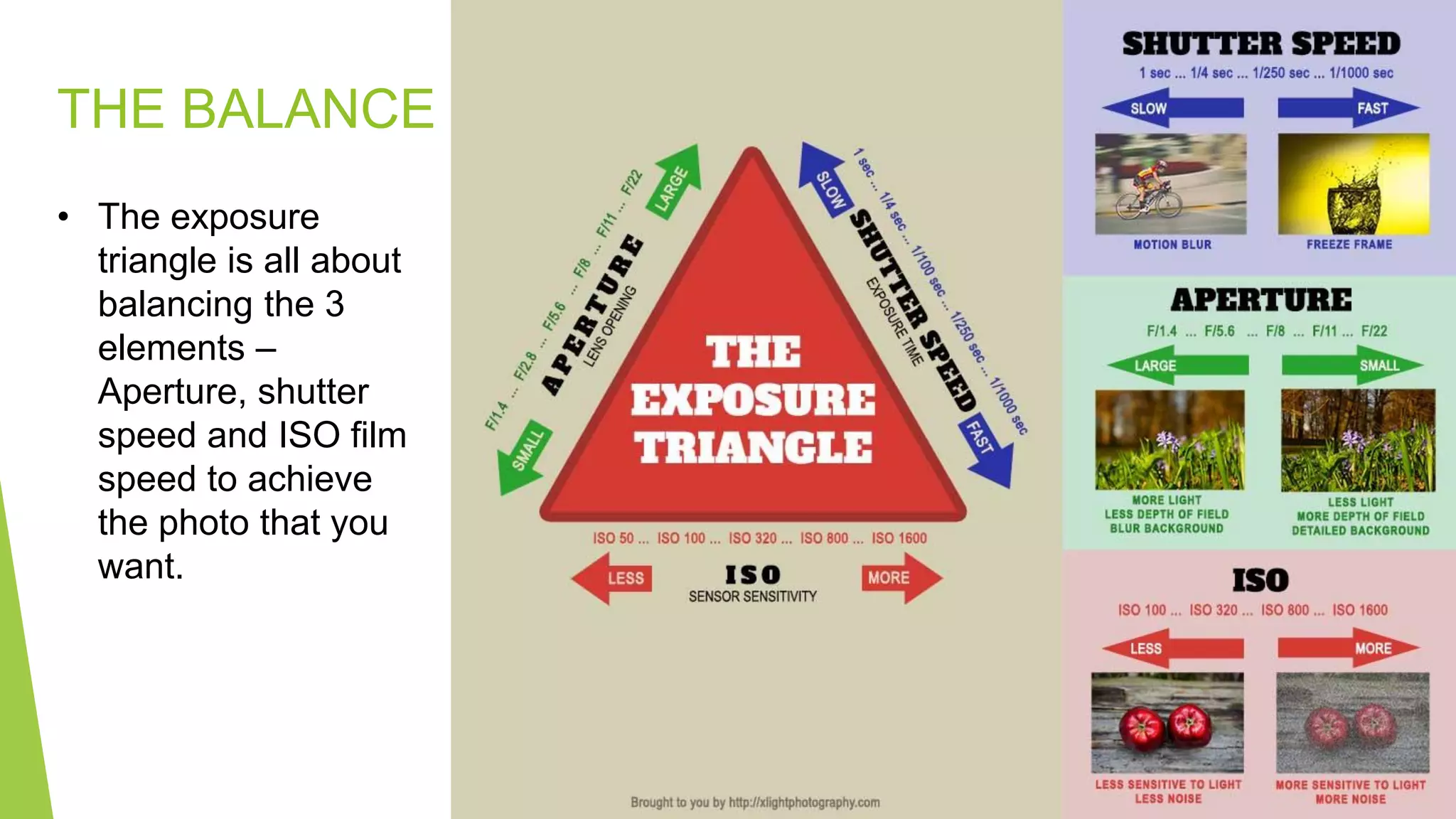
• The exposure
triangle is all about
balancing the 3
elements –
Aperture, shutter
speed and ISO film
speed to achieve
the photo that you
want.
JUST RIGHT NOT ALWAYS RIGHT
• While we usually seek to achieve a
well balanced exposure, it is not
always the best.
• There are times when we
underexpose or overexpose to
achieve certain creative effects.
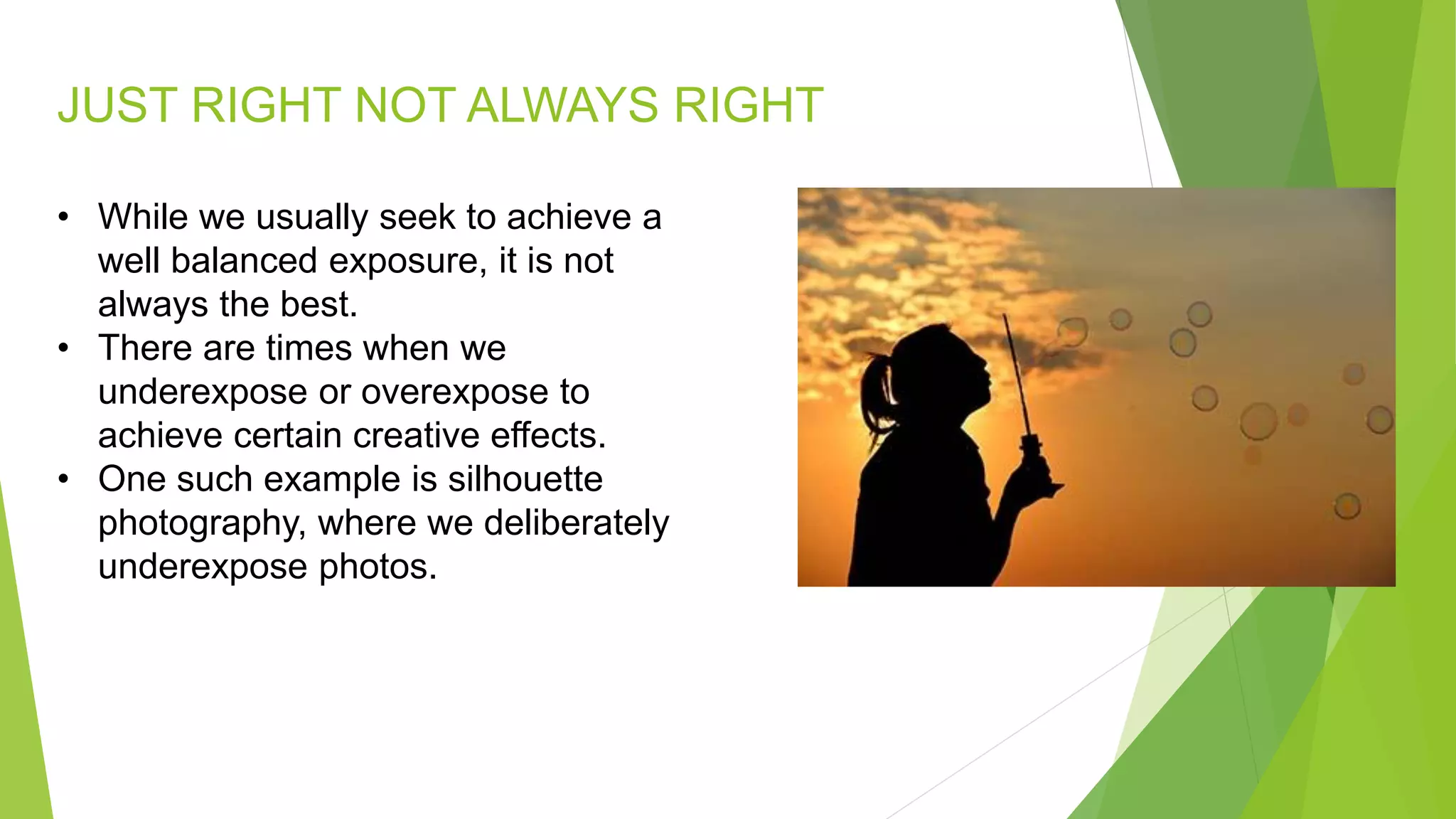
• One such example is silhouette
photography, where we deliberately
underexpose photos.
THANK YOU
For the full guide, please visit –
https://xlightphotography.com/ex
posure-triangle-photography/

Exposure Triangle

  • 1.
  • 2.
    HELLO My name isMu Tah Buk. I love photography and share the passion by giving free presentations. You can find me @mutahbuk
  • 3.
    “There is onething the photograph must contain, the humanity of the moment.” — Robert Frank
  • 4.
    WHAT IS EXPOSURE? •When the camera sensor is exposed to light to take a photo, an exposure is made. • Under-expose happens when the camera does not get enough light. • Over-expose happens when the camera gets too much light. • We usually aim for just right. • The exposure is controlled by 3 factors – Aperture, shutter speed and ISO film speed.
  • 5.
    APERTURE • Aperture issimply a hole in the lens that allows light to enter the camera. • A set of aperture blades will control the amount of light. • As the aperture closes up: Less light into the camera, photo with a deep depth of field – Meaning everything is in focus, from front to back. • As the aperture opens up: More light into the camera, photo with a shallow depth of field – The foreground in focus but background blurred, or vice-versa. • Smaller f-number, wider open the “gates” are. Bigger f-number, the narrower the “gates” are.
  • 6.
    SHUTTER SPEED • Shutterspeed is simply “how long to expose the camera to light”. • A slow shutter speed usually ends up with motion blur or camera shake. • A fast shutter speed will “freeze frame“. Good for capturing those water droplets in mid-air and stuff.
  • 7.
    ISO FILM SPEED •In the past, we use film to capture photos. • Each roll of film is rated by an ISO number as according to how sensitive it is to light. • The bigger the ISO number, the more sensitive it is to light. (ISO 1600 is more sensitive than ISO 400) • We do not use film anymore, but ISO film speed is still used. • But with electronic sensors, the higher the ISO, the more electronic noise it picks up.
  • 8.
    THE BALANCE • Theexposure triangle is all about balancing the 3 elements – Aperture, shutter speed and ISO film speed to achieve the photo that you want.
  • 9.
    JUST RIGHT NOTALWAYS RIGHT • While we usually seek to achieve a well balanced exposure, it is not always the best. • There are times when we underexpose or overexpose to achieve certain creative effects. • One such example is silhouette photography, where we deliberately underexpose photos.
  • 10.
    THANK YOU For thefull guide, please visit – https://xlightphotography.com/ex posure-triangle-photography/