Glycolysis and ATP synthesis

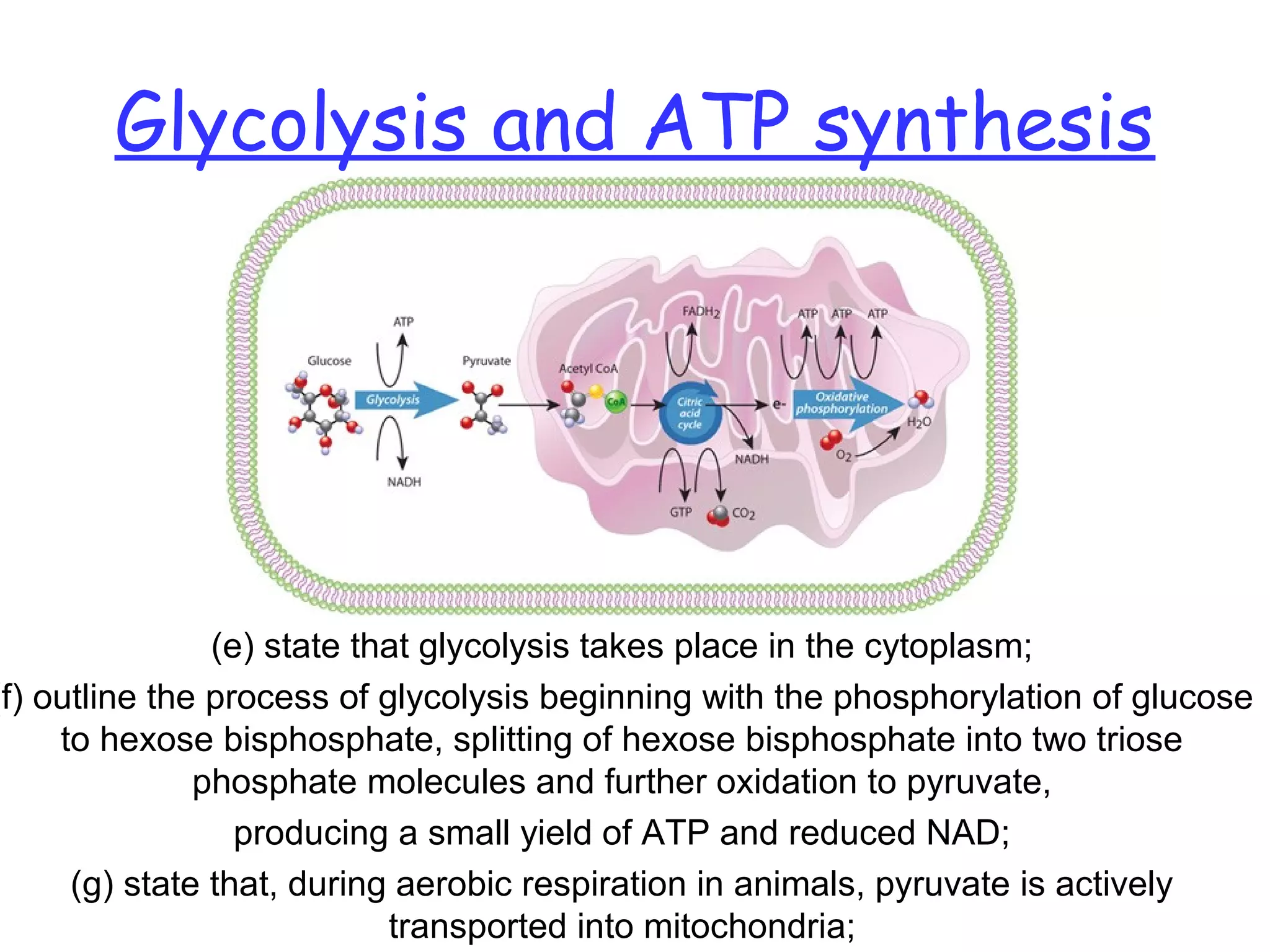
(e) state that glycolysis takes place in the cytoplasm;
(f) outline the process of glycolysis beginning with the phosphorylation of glucose
to hexose bisphosphate, splitting of hexose bisphosphate into two triose
phosphate molecules and further oxidation to pyruvate,
producing a small yield of ATP and reduced NAD;
(g) state that, during aerobic respiration in animals, pyruvate is actively
transported into mitochondria;
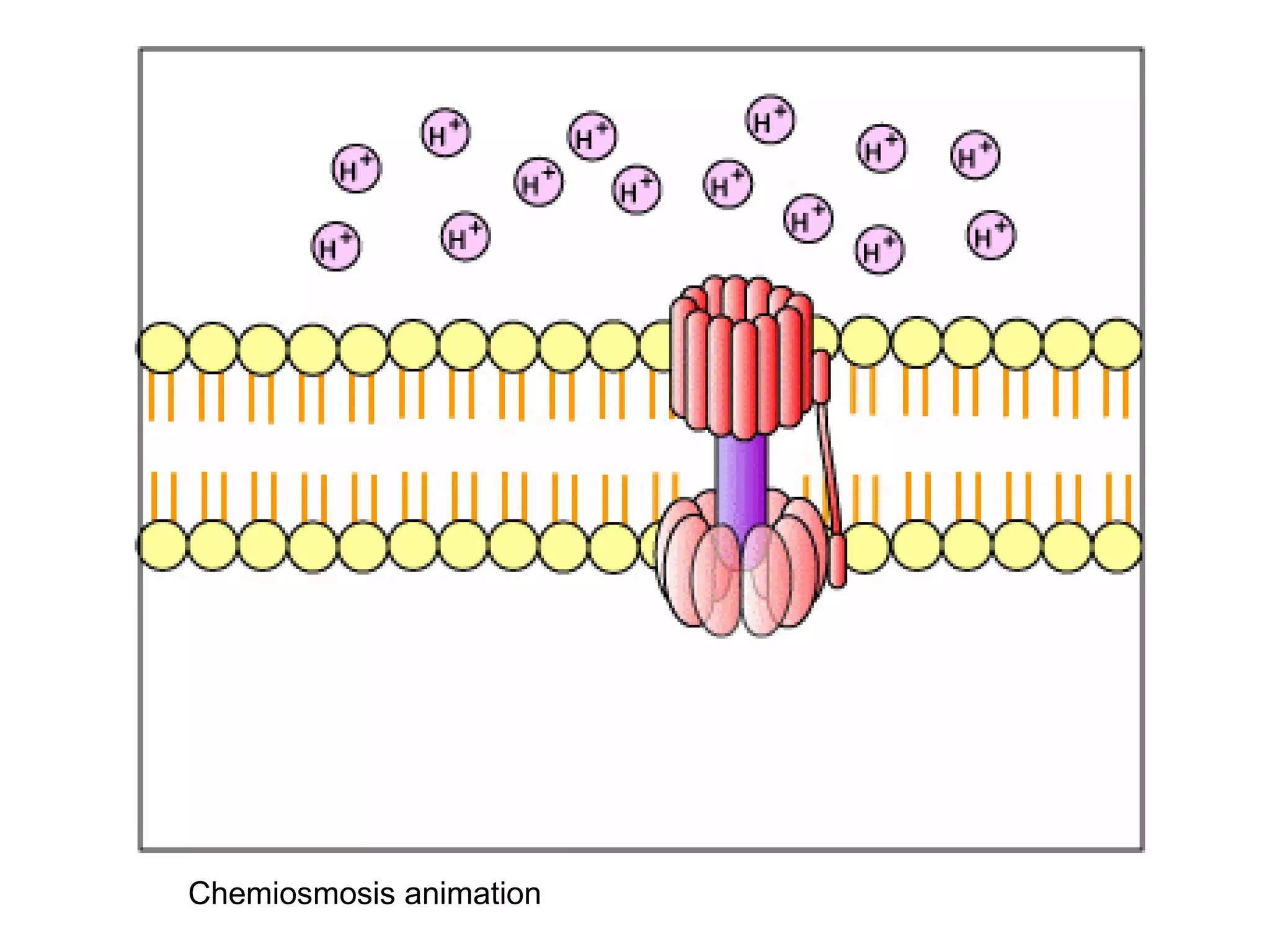
Chemiosmosis animation
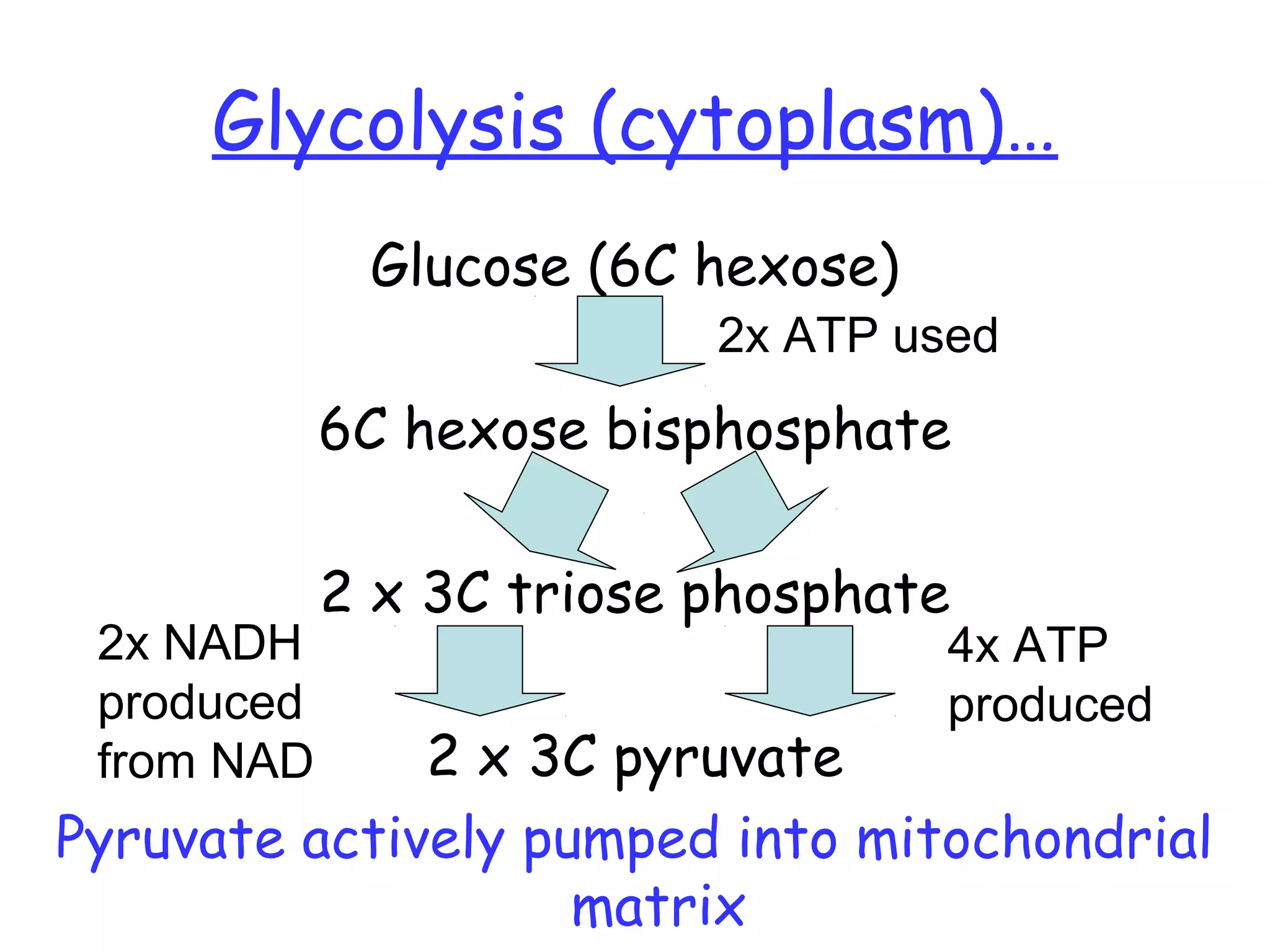
Glycolysis (cytoplasm)…
Glucose (6C hexose)
2x ATP used

6C hexose bisphosphate

2x NADH
produced
from NAD

2 x 3C triose phosphate

4x ATP
produced

2 x 3C pyruvate
Pyruvate actively pumped into mitochondrial
matrix
Substrate Level
Phosphorylation
• Formation of ATP from ADP and Pi during
glycolysis and the Krebs cycle
http://www.northland.cc.mn.us/biology/biolo
gy1111/animations/glycolysis.html
http://www.science.smith.edu/departments/B
iology/Bio231/glycolysis.html
Summary test…

• Glycolysis takes place in the (1) of the cells and
begins with the activation of the main respiratory
substrate; the hexose sugar called (2). This
activation involves the addition of 2 (3) molecules
provided by 2 molecules of (4). The resultant
molecule is known as (5) and in the next stage of
glycolysis it is split into 2 molecules called (6).
The third stage entails the oxidation of these
molecules by the removal of (7), which are
transferred to a carrier called (8). The final
stage of glycolysis is the production of the 3
carbon molecule (9), which also results in the
formation of 2 molecules of (10).
Stretch and Challenge Q P85
Notes pgs 84-87…
• The 4 stages in glycolysis
–
–
–
–
–

Structure and names of molecules
ATP/ADP/Pi involved
NAD+/NADH + H+ involved
The products of glycolysis
Uses of products

• How ATP is formed

– Roles of ETC and ATP synthase
– The importance of a proton gradient across the
inner membrane of the mitochondria
Link Reaction…
• Multi-enzyme complex
 pyruvate dehydrogenase
• Pyruvate  acetyl coenzyme A

• Pyruvate + NAD+ + Coenzyme A
 Acetyl coA + reduced NAD + carbon dioxide
Krebs Cycle…
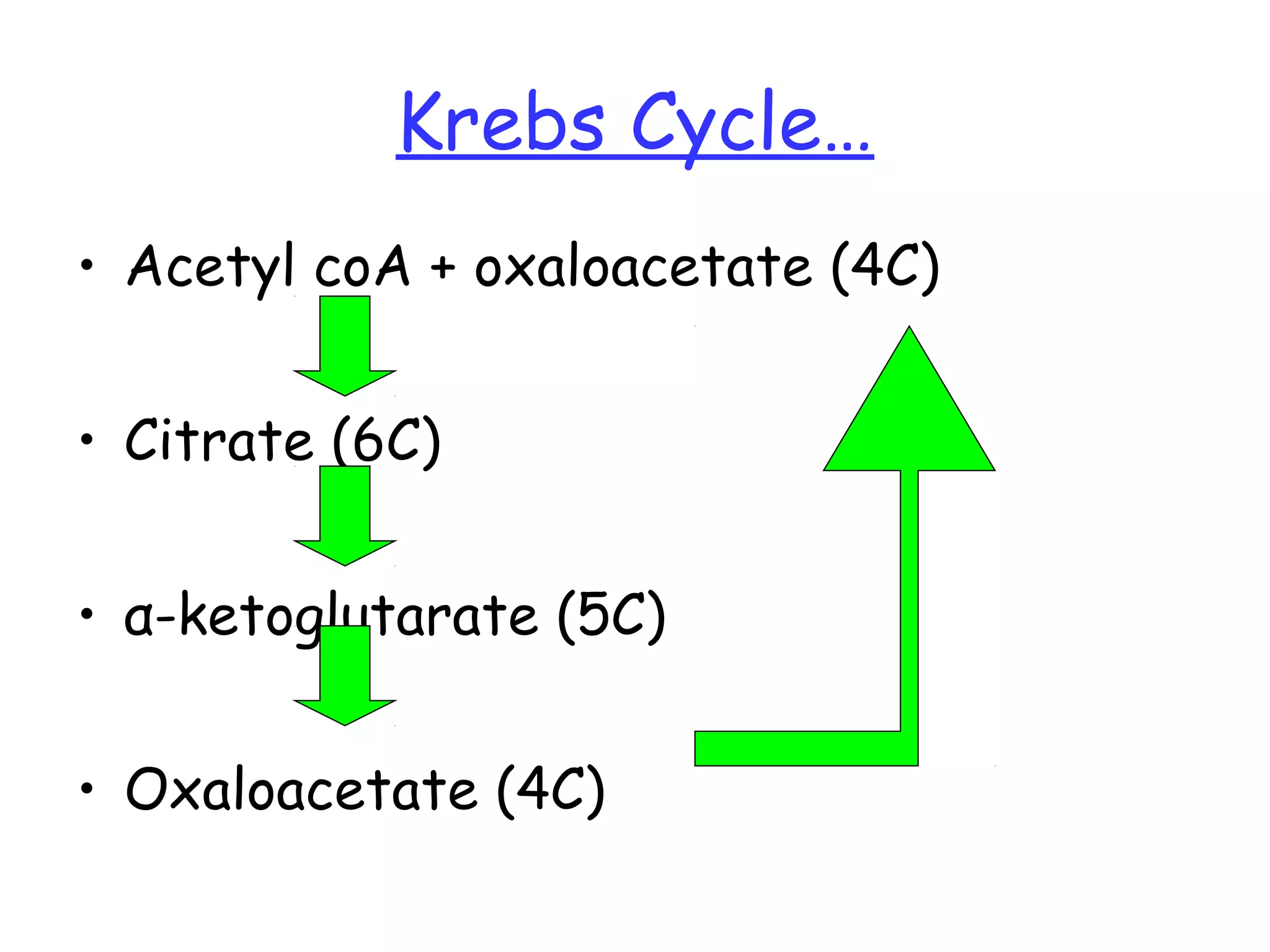
• Acetyl coA + oxaloacetate (4C)
• Citrate (6C)
• α-ketoglutarate (5C)
• Oxaloacetate (4C)
Respiration summary…
Learning objectives…
•Review stages of aerobic respiration
and practice exam technique
Products of respiration…
• Products of glycolysis??
• Products of link reaction??
• Products of Krebs Cycle??
• Products of oxidative phosphorylation??
Summary test…
• Pyruvate molecules produced during (1) are moved
into the (2) of the mitochondria by the process of
(3). Before pyruvate can enter the Krebs cycle, it
first has a carbon dioxide molecule removed – a
process known as (4), and also a pair of hydrogen
atoms removed – a process known as (5). The
resultant molecule that can enter Krebs cycle is
called (6). This 2-carbon molecule enters the
Krebs cycle and combines with a 4-carbon molecule
called (7) to produce a 6-carbon molecule called (8).
The progressive loss of 2 carbon dioxide molecules
and 8 hydrogen atoms produces the original 4carbon molecule. Most of the hydrogen atoms are
transferred to a hydrogen carrier called (9) or (10)
and enter a process called (11) that is used to
produce (12).
Lesson 3   glycolysis and atp synthesis

Lesson 3 glycolysis and atp synthesis

  • 1.
    Glycolysis and ATPsynthesis (e) state that glycolysis takes place in the cytoplasm; (f) outline the process of glycolysis beginning with the phosphorylation of glucose to hexose bisphosphate, splitting of hexose bisphosphate into two triose phosphate molecules and further oxidation to pyruvate, producing a small yield of ATP and reduced NAD; (g) state that, during aerobic respiration in animals, pyruvate is actively transported into mitochondria;
  • 2.
  • 3.
    Glycolysis (cytoplasm)… Glucose (6Chexose) 2x ATP used 6C hexose bisphosphate 2x NADH produced from NAD 2 x 3C triose phosphate 4x ATP produced 2 x 3C pyruvate Pyruvate actively pumped into mitochondrial matrix
  • 4.
    Substrate Level Phosphorylation • Formationof ATP from ADP and Pi during glycolysis and the Krebs cycle http://www.northland.cc.mn.us/biology/biolo gy1111/animations/glycolysis.html http://www.science.smith.edu/departments/B iology/Bio231/glycolysis.html
  • 5.
    Summary test… • Glycolysistakes place in the (1) of the cells and begins with the activation of the main respiratory substrate; the hexose sugar called (2). This activation involves the addition of 2 (3) molecules provided by 2 molecules of (4). The resultant molecule is known as (5) and in the next stage of glycolysis it is split into 2 molecules called (6). The third stage entails the oxidation of these molecules by the removal of (7), which are transferred to a carrier called (8). The final stage of glycolysis is the production of the 3 carbon molecule (9), which also results in the formation of 2 molecules of (10).
  • 6.
  • 9.
    Notes pgs 84-87… •The 4 stages in glycolysis – – – – – Structure and names of molecules ATP/ADP/Pi involved NAD+/NADH + H+ involved The products of glycolysis Uses of products • How ATP is formed – Roles of ETC and ATP synthase – The importance of a proton gradient across the inner membrane of the mitochondria
  • 10.
    Link Reaction… • Multi-enzymecomplex  pyruvate dehydrogenase • Pyruvate  acetyl coenzyme A • Pyruvate + NAD+ + Coenzyme A  Acetyl coA + reduced NAD + carbon dioxide
  • 11.
    Krebs Cycle… • AcetylcoA + oxaloacetate (4C) • Citrate (6C) • α-ketoglutarate (5C) • Oxaloacetate (4C)
  • 13.
    Respiration summary… Learning objectives… •Reviewstages of aerobic respiration and practice exam technique
  • 14.
    Products of respiration… •Products of glycolysis?? • Products of link reaction?? • Products of Krebs Cycle?? • Products of oxidative phosphorylation??
  • 15.
    Summary test… • Pyruvatemolecules produced during (1) are moved into the (2) of the mitochondria by the process of (3). Before pyruvate can enter the Krebs cycle, it first has a carbon dioxide molecule removed – a process known as (4), and also a pair of hydrogen atoms removed – a process known as (5). The resultant molecule that can enter Krebs cycle is called (6). This 2-carbon molecule enters the Krebs cycle and combines with a 4-carbon molecule called (7) to produce a 6-carbon molecule called (8). The progressive loss of 2 carbon dioxide molecules and 8 hydrogen atoms produces the original 4carbon molecule. Most of the hydrogen atoms are transferred to a hydrogen carrier called (9) or (10) and enter a process called (11) that is used to produce (12).