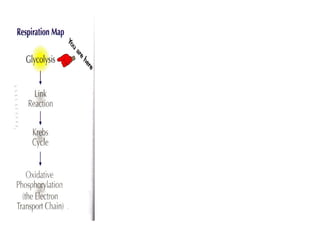
Glycolysis
The first stage of respiration
Glycolysis
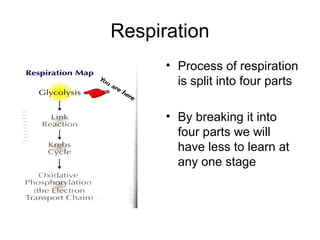
Respiration
• Process of respiration
is split into four parts
• By breaking it into
four parts we will
have less to learn at
any one stage
Glycolysis is the first stage of respiration!
Glycolysis splits one molecule of glucose
into two smaller molecules of pyruvate
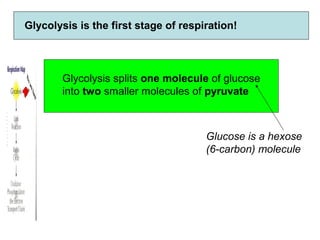
Glycolysis is the first stage of respiration!
Glycolysis splits one molecule of glucose
into two smaller molecules of pyruvate
Glucose is a hexose
(6-carbon) molecule
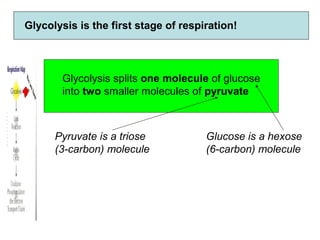
Glycolysis is the first stage of respiration!
Glycolysis splits one molecule of glucose
into two smaller molecules of pyruvate
Glucose is a hexose
(6-carbon) molecule
Pyruvate is a triose
(3-carbon) molecule
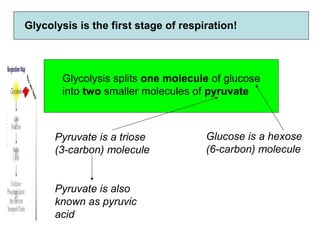
Glycolysis is the first stage of respiration!
Glycolysis splits one molecule of glucose
into two smaller molecules of pyruvate
Glucose is a hexose
(6-carbon) molecule
Pyruvate is a triose
(3-carbon) molecule
Pyruvate is also
known as pyruvic
acid
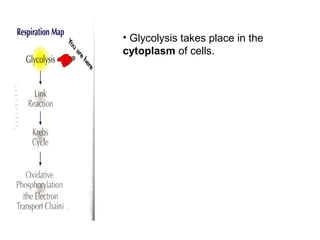
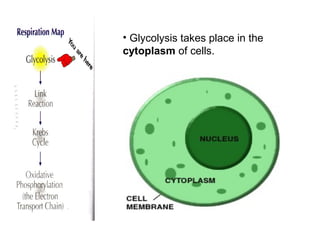
• Glycolysis takes place in the
cytoplasm of cells.
• Glycolysis takes place in the
cytoplasm of cells.
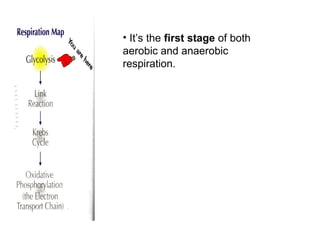
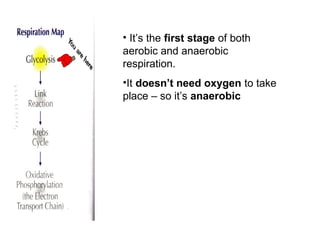
• It’s the first stage of both
aerobic and anaerobic
respiration.
• It’s the first stage of both
aerobic and anaerobic
respiration.
•It doesn’t need oxygen to take
place – so it’s anaerobic
• It’s the first stage of both
aerobic and anaerobic
respiration.
•It doesn’t need oxygen to take
place – so it’s anaerobic
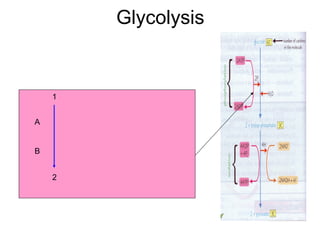
There are TWO STAGES of GLYCOLYSIS –
Phosphorylation and Oxidation
Glycolysis
Glycolysis
1
2
A
B
Glycolysis
1
2
A
B
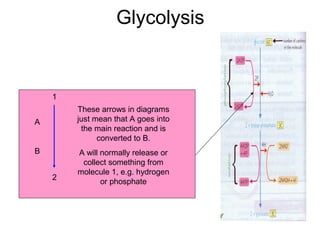
These arrows in diagrams
just mean that A goes into
the main reaction and is
converted to B.
A will normally release or
collect something from
molecule 1, e.g. hydrogen
or phosphate
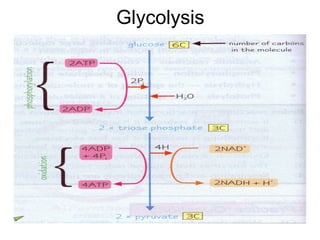
Stage One - Phosphorylation
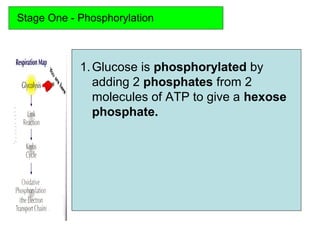
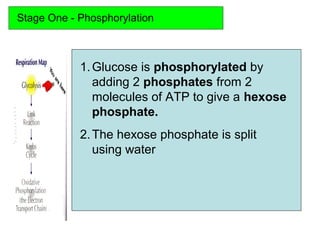
1.Glucose is phosphorylated by
adding 2 phosphates from 2
molecules of ATP to give a hexose
phosphate.
Stage One - Phosphorylation
1.Glucose is phosphorylated by
adding 2 phosphates from 2
molecules of ATP to give a hexose
phosphate.
2.The hexose phosphate is split
using water
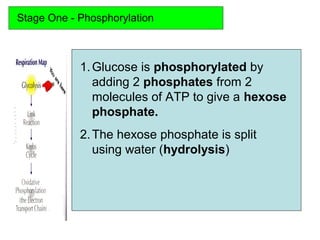
Stage One - Phosphorylation
1.Glucose is phosphorylated by
adding 2 phosphates from 2
molecules of ATP to give a hexose
phosphate.
2.The hexose phosphate is split
using water (hydrolysis)
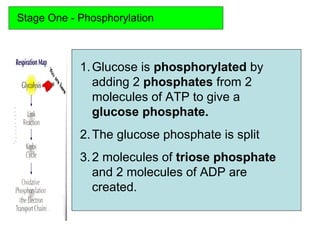
Stage One - Phosphorylation
1.Glucose is phosphorylated by
adding 2 phosphates from 2
molecules of ATP to give a
glucose phosphate.
2.The glucose phosphate is split
3.2 molecules of triose phosphate
and 2 molecules of ADP are
created.
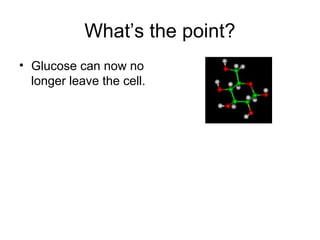
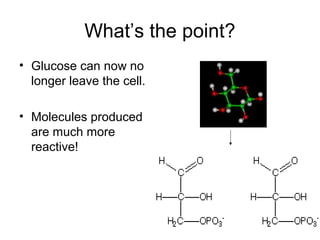
What’s the point?
• Glucose can now no
longer leave the cell.
What’s the point?
• Glucose can now no
longer leave the cell.
• Molecules produced
are much more
reactive!
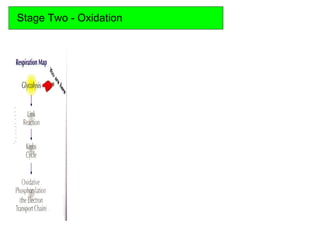
Stage Two - Oxidation
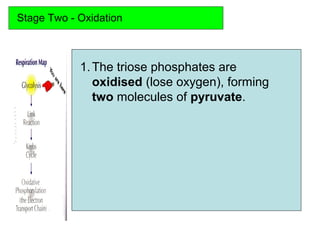
1.The triose phosphates are
oxidised (lose oxygen), forming
two molecules of pyruvate.
Stage Two - Oxidation
1.The triose phosphates are
oxidised (lose oxygen), forming
two molecules of pyruvate.
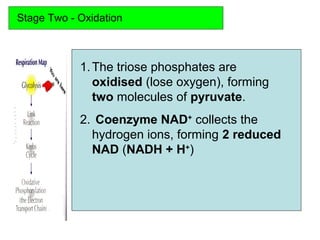
2. Coenzyme NAD+
collects the
hydrogen ions, forming 2 reduced
NAD (NADH + H+
)
Stage Two - Oxidation
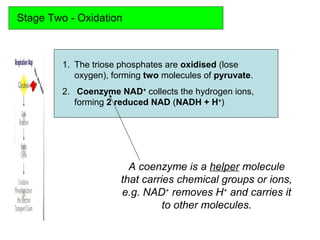
1. The triose phosphates are oxidised (lose
oxygen), forming two molecules of pyruvate.
2. Coenzyme NAD+
collects the hydrogen ions,
forming 2 reduced NAD (NADH + H+
)
A coenzyme is a helper molecule
that carries chemical groups or ions,
e.g. NAD+
removes H+
and carries it
to other molecules.
Stage Two - Oxidation
1.The triose phosphates are
oxidised (lose oxygen), forming
two molecules of pyruvate.
2. Coenzyme NAD+
collects the
hydrogen ions, forming 2 reduced
NAD (NADH + H+
)
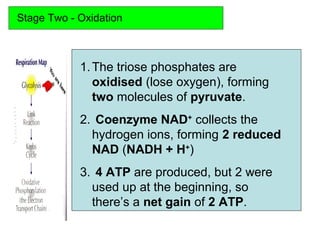
3. 4 ATP are produced, but 2 were
used up at the beginning, so
there’s a net gain of 2 ATP.
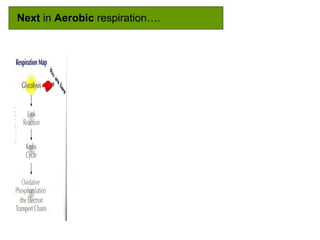
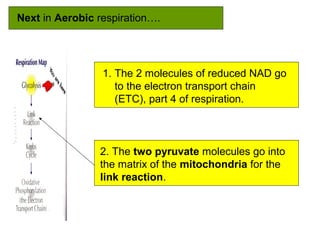
Next in Aerobic respiration….
1. The 2 molecules of reduced NAD go
to the electron transport chain
(ETC), part 4 of respiration.
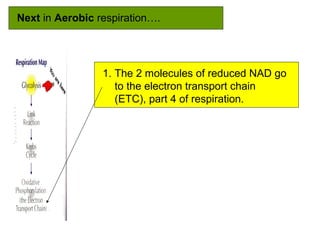
Next in Aerobic respiration….
1. The 2 molecules of reduced NAD go
to the electron transport chain
(ETC), part 4 of respiration.
2. The two pyruvate molecules go into
the matrix of the mitochondria for the
link reaction.

Glycolysis

  • 1.
  • 2.
    The first stageof respiration Glycolysis
  • 3.
    Respiration • Process ofrespiration is split into four parts • By breaking it into four parts we will have less to learn at any one stage
  • 4.
    Glycolysis is thefirst stage of respiration!
  • 5.
    Glycolysis is thefirst stage of respiration! Glycolysis splits one molecule of glucose into two smaller molecules of pyruvate
  • 6.
    Glycolysis is thefirst stage of respiration! Glycolysis splits one molecule of glucose into two smaller molecules of pyruvate Glucose is a hexose (6-carbon) molecule
  • 7.
    Glycolysis is thefirst stage of respiration! Glycolysis splits one molecule of glucose into two smaller molecules of pyruvate Glucose is a hexose (6-carbon) molecule Pyruvate is a triose (3-carbon) molecule
  • 8.
    Glycolysis is thefirst stage of respiration! Glycolysis splits one molecule of glucose into two smaller molecules of pyruvate Glucose is a hexose (6-carbon) molecule Pyruvate is a triose (3-carbon) molecule Pyruvate is also known as pyruvic acid
  • 10.
    • Glycolysis takesplace in the cytoplasm of cells.
  • 11.
    • Glycolysis takesplace in the cytoplasm of cells.
  • 12.
    • It’s thefirst stage of both aerobic and anaerobic respiration.
  • 13.
    • It’s thefirst stage of both aerobic and anaerobic respiration. •It doesn’t need oxygen to take place – so it’s anaerobic
  • 14.
    • It’s thefirst stage of both aerobic and anaerobic respiration. •It doesn’t need oxygen to take place – so it’s anaerobic
  • 15.
    There are TWOSTAGES of GLYCOLYSIS – Phosphorylation and Oxidation
  • 16.
  • 17.
  • 18.
    Glycolysis 1 2 A B These arrows indiagrams just mean that A goes into the main reaction and is converted to B. A will normally release or collect something from molecule 1, e.g. hydrogen or phosphate
  • 19.
    Stage One -Phosphorylation
  • 20.
    Stage One -Phosphorylation 1.Glucose is phosphorylated by adding 2 phosphates from 2 molecules of ATP to give a hexose phosphate.
  • 21.
    Stage One -Phosphorylation 1.Glucose is phosphorylated by adding 2 phosphates from 2 molecules of ATP to give a hexose phosphate. 2.The hexose phosphate is split using water
  • 22.
    Stage One -Phosphorylation 1.Glucose is phosphorylated by adding 2 phosphates from 2 molecules of ATP to give a hexose phosphate. 2.The hexose phosphate is split using water (hydrolysis)
  • 23.
    Stage One -Phosphorylation 1.Glucose is phosphorylated by adding 2 phosphates from 2 molecules of ATP to give a glucose phosphate. 2.The glucose phosphate is split 3.2 molecules of triose phosphate and 2 molecules of ADP are created.
  • 24.
    What’s the point? •Glucose can now no longer leave the cell.
  • 25.
    What’s the point? •Glucose can now no longer leave the cell. • Molecules produced are much more reactive!
  • 26.
    Stage Two -Oxidation
  • 27.
    Stage Two -Oxidation 1.The triose phosphates are oxidised (lose oxygen), forming two molecules of pyruvate.
  • 28.
    Stage Two -Oxidation 1.The triose phosphates are oxidised (lose oxygen), forming two molecules of pyruvate. 2. Coenzyme NAD+ collects the hydrogen ions, forming 2 reduced NAD (NADH + H+ )
  • 29.
    Stage Two -Oxidation 1. The triose phosphates are oxidised (lose oxygen), forming two molecules of pyruvate. 2. Coenzyme NAD+ collects the hydrogen ions, forming 2 reduced NAD (NADH + H+ ) A coenzyme is a helper molecule that carries chemical groups or ions, e.g. NAD+ removes H+ and carries it to other molecules.
  • 30.
    Stage Two -Oxidation 1.The triose phosphates are oxidised (lose oxygen), forming two molecules of pyruvate. 2. Coenzyme NAD+ collects the hydrogen ions, forming 2 reduced NAD (NADH + H+ ) 3. 4 ATP are produced, but 2 were used up at the beginning, so there’s a net gain of 2 ATP.
  • 31.
    Next in Aerobicrespiration….
  • 32.
    Next in Aerobicrespiration…. 1. The 2 molecules of reduced NAD go to the electron transport chain (ETC), part 4 of respiration.
  • 33.
    Next in Aerobicrespiration…. 1. The 2 molecules of reduced NAD go to the electron transport chain (ETC), part 4 of respiration. 2. The two pyruvate molecules go into the matrix of the mitochondria for the link reaction.