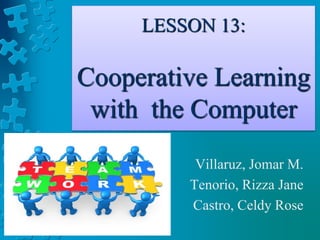
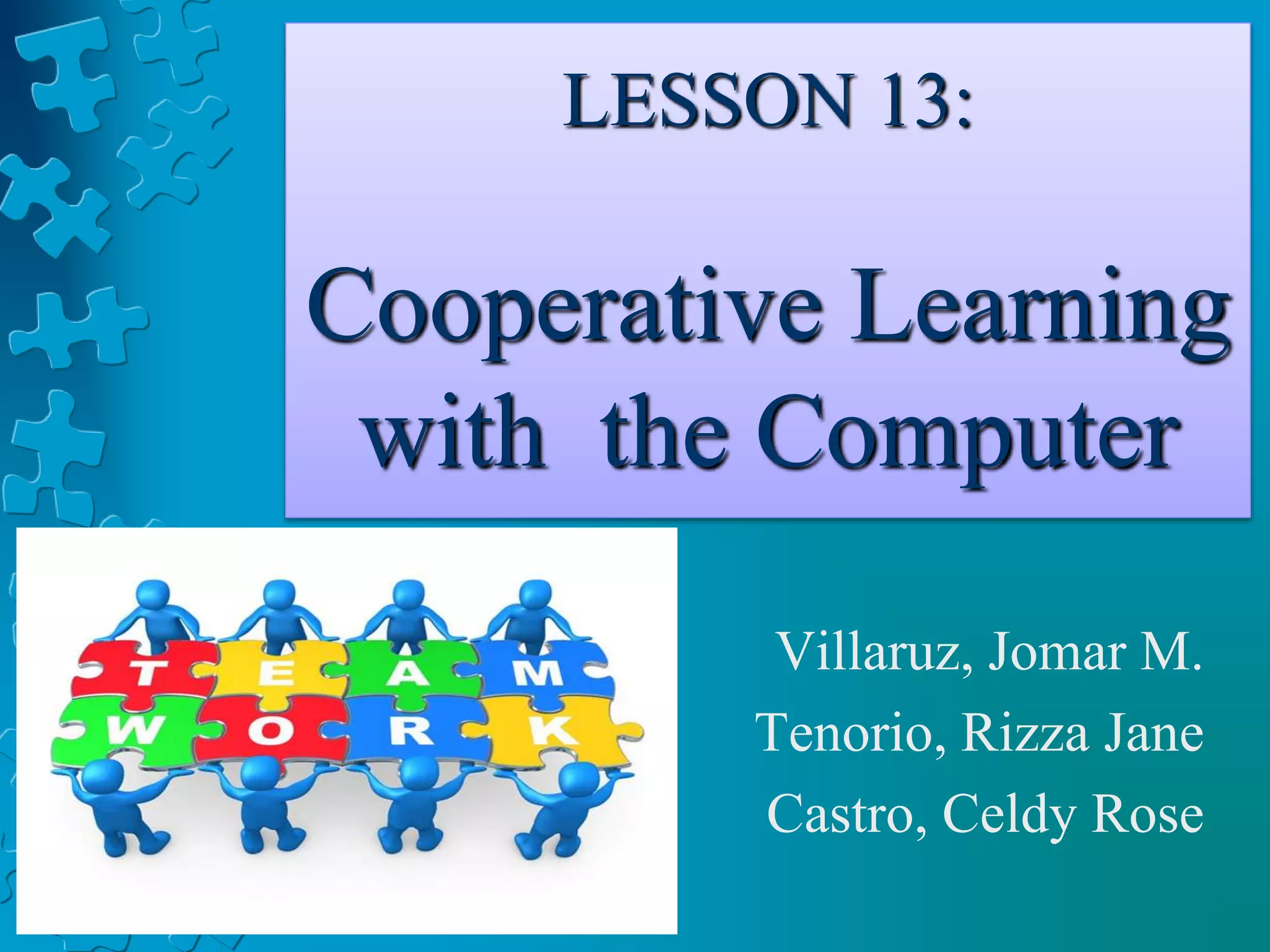
LESSON 13:
Cooperative Learning
with the Computer
Villaruz, Jomar M.
Tenorio, Rizza Jane
Castro, Celdy Rose
OBJECTIVES
• To discuss the different elements of
cooperative learning with the use of the
computer.
• To compare what are the advantages and
disadvantages of cooperative learning using
computer.
ACTIVITY!
ANSWER THE FOLLOWING:
QUESTION 1
COME – E + PUT +
(GINGER – GING) =
COMPUTER
QUESTION 2
LEAN – N + (BURN –BU)
+ (FISHING – FISH) =
LEARNING
QUESTION 3
COW – W + (OPEN–N) +
(RATE – E) + ION =
COOPERATION
QUESTION 4
INTELLIGENT – LLIGENT +
R + DEPEND + (FENCE – F) =
INTERDEPENDENCE
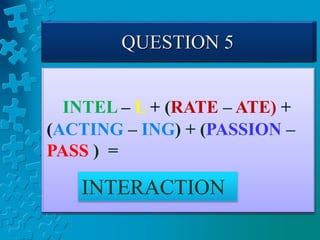
QUESTION 5
INTEL – L + (RATE – ATE) +
(ACTING – ING) + (PASSION –
PASS ) =
INTERACTION
• Singapore has set the global pace for
student-centered learning with 2:1 ( 2
pupils with one computer) ratio in its
masterplan for IT in education. This
shows that even in other progressive
countries is still an ideal to be
achieved.
• Reality dictates that school face the
fact that each classroom, especially in
public or government schools, may not
be equipped with appropriate number
of computers.
• The creativity of the teacher will have to
respond to the situation, and so
cooperative learning will likely be the
answer to the implementation of IT
supported learning in our schools.
• But the situation may not be bad since
there are motivational and social
benefits to cooperative learning and
these can compensate for the lack of
hardware that educators face.
Defining Cooperative Learning
• Is learning by small groups of
students who work together in a
common learning task.
• It is also called Group Learning.
Five Elements Needed to be Truly
Cooperative Learning
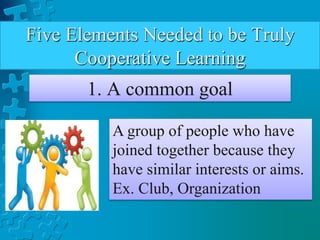
1. A common goal
A group of people who have
joined together because they
have similar interests or aims.
Ex. Club, Organization
Five Elements Needed to be Truly
Cooperative Learning
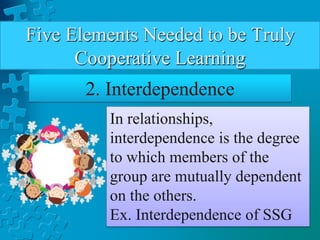
2. Interdependence
In relationships,
interdependence is the degree
to which members of the
group are mutually dependent
on the others.
Ex. Interdependence of SSG
Five Elements Needed to be Truly
Cooperative Learning
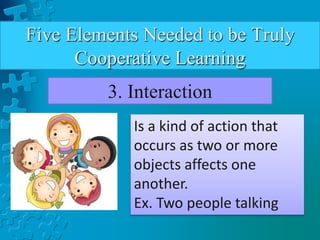
3. Interaction
Is a kind of action that
occurs as two or more
objects affects one
another.
Ex. Two people talking
Five Elements Needed to be Truly
Cooperative Learning
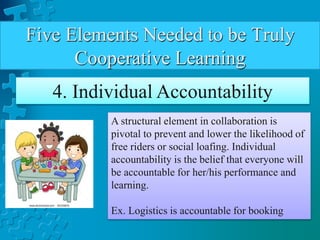
4. Individual Accountability
A structural element in collaboration is
pivotal to prevent and lower the likelihood of
free riders or social loafing. Individual
accountability is the belief that everyone will
be accountable for her/his performance and
learning.
Ex. Logistics is accountable for booking
Five Elements Needed to be Truly
Cooperative Learning
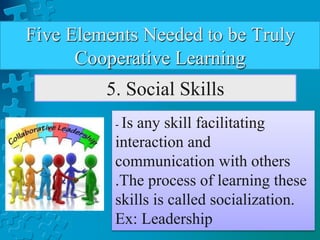
5. Social Skills
- Is any skill facilitating
interaction and
communication with others
.The process of learning these
skills is called socialization.
Ex: Leadership
• Therefore not every group work is
cooperative learning since students
working on their work sheets
physically sat around a table may
be working together without these
features of cooperative learning.
Advantages of Cooperative Learning
a) Encourages active learning, while motivating
students.
b) Increases academic performance.
c) Promotes literacy and language skills
d) Improves teacher effectiveness
In addition, there are studies which show
that cooperative learning enhances:
1. Personal and social development
among students of all ages.
2. Self- esteem
3. Social relations between racially and
culturally different students.
Disadvantages of Cooperative Learning
a) Students in the group are having
conversations that has nothing to do with
the lesson.
b) Students becoming impatient with
others in the group ceasing to work
cooperatively.
c) One bright students doing the most of
the work.
Cooperative Learning and the
Computer
• Researches have made studies on the
learning interaction between the students
and the computer.
• The studies have great value since it has
been a long standing fear that the computer
may foster student learning in isolation that
hinders the development of the students
social skills.
• Now this mythical fear has been
contradicted by the studies which show that
when students work with computer in
groups, they cluster interact with each other
for advice and mutual help.
• And given the option to work individually or
in a group, the students generally wish to
work together in computer-based and non-
computer-based activities.
• Reflecting on this phenomenon, psychologists
think the computer fosters this positive social
behaviour due to the fact that it has a display
monitor just like a television set that is looked
upon as something communal.
• Therefore researchers agree that the computer
is a fairly natural learning vehicle for cooperative
(at times called promotive) learning.
Components of Cooperative Learning
• Educators are still wary about the
computer’s role in cooperative learning.
Thus they pose the position that the use
of computers do not automatically result
in cooperative learning.
• In that case, therefore, assign the teacher
several tasks in order to ensure
collaborative learning. These are:
1. Assigning students to mixed-ability teams;
2. Establishing positive interdependence;
3. Teaching cooperative social skills;
4. Ensuring individual accountability, and
5. Helping groups process information.
ACTIVITY!!!
• BY GROUP
• ANSWER THE FOLLOWING
QUESTION GIVEN BY THE
FACILITATOR
• WRITE IT IN A SHORT SIZED- BOND
PAPER
REFERENCES
• http://www.slideshare.net/ybrahimz/cooperat
ive-learning-with-the-computer
• http://www.slideshare.net/ms_yhda26/lesson
-13
• http://www.slideshare.net/jemarmata/cooper
ative-learning-with-the-computer-32359266
Lesson 13

Lesson 13

  • 1.
    LESSON 13: Cooperative Learning withthe Computer Villaruz, Jomar M. Tenorio, Rizza Jane Castro, Celdy Rose
  • 2.
    OBJECTIVES • To discussthe different elements of cooperative learning with the use of the computer. • To compare what are the advantages and disadvantages of cooperative learning using computer.
  • 3.
  • 4.
    QUESTION 1 COME –E + PUT + (GINGER – GING) = COMPUTER QUESTION 2 LEAN – N + (BURN –BU) + (FISHING – FISH) = LEARNING QUESTION 3 COW – W + (OPEN–N) + (RATE – E) + ION = COOPERATION QUESTION 4 INTELLIGENT – LLIGENT + R + DEPEND + (FENCE – F) = INTERDEPENDENCE QUESTION 5 INTEL – L + (RATE – ATE) + (ACTING – ING) + (PASSION – PASS ) = INTERACTION
  • 5.
    • Singapore hasset the global pace for student-centered learning with 2:1 ( 2 pupils with one computer) ratio in its masterplan for IT in education. This shows that even in other progressive countries is still an ideal to be achieved. • Reality dictates that school face the fact that each classroom, especially in public or government schools, may not be equipped with appropriate number of computers.
  • 6.
    • The creativityof the teacher will have to respond to the situation, and so cooperative learning will likely be the answer to the implementation of IT supported learning in our schools. • But the situation may not be bad since there are motivational and social benefits to cooperative learning and these can compensate for the lack of hardware that educators face.
  • 7.
    Defining Cooperative Learning •Is learning by small groups of students who work together in a common learning task. • It is also called Group Learning.
  • 8.
    Five Elements Neededto be Truly Cooperative Learning 1. A common goal A group of people who have joined together because they have similar interests or aims. Ex. Club, Organization
  • 9.
    Five Elements Neededto be Truly Cooperative Learning 2. Interdependence In relationships, interdependence is the degree to which members of the group are mutually dependent on the others. Ex. Interdependence of SSG
  • 10.
    Five Elements Neededto be Truly Cooperative Learning 3. Interaction Is a kind of action that occurs as two or more objects affects one another. Ex. Two people talking
  • 11.
    Five Elements Neededto be Truly Cooperative Learning 4. Individual Accountability A structural element in collaboration is pivotal to prevent and lower the likelihood of free riders or social loafing. Individual accountability is the belief that everyone will be accountable for her/his performance and learning. Ex. Logistics is accountable for booking
  • 12.
    Five Elements Neededto be Truly Cooperative Learning 5. Social Skills - Is any skill facilitating interaction and communication with others .The process of learning these skills is called socialization. Ex: Leadership
  • 13.
    • Therefore notevery group work is cooperative learning since students working on their work sheets physically sat around a table may be working together without these features of cooperative learning.
  • 14.
    Advantages of CooperativeLearning a) Encourages active learning, while motivating students. b) Increases academic performance. c) Promotes literacy and language skills d) Improves teacher effectiveness In addition, there are studies which show that cooperative learning enhances: 1. Personal and social development among students of all ages. 2. Self- esteem 3. Social relations between racially and culturally different students.
  • 15.
    Disadvantages of CooperativeLearning a) Students in the group are having conversations that has nothing to do with the lesson. b) Students becoming impatient with others in the group ceasing to work cooperatively. c) One bright students doing the most of the work.
  • 16.
    Cooperative Learning andthe Computer • Researches have made studies on the learning interaction between the students and the computer. • The studies have great value since it has been a long standing fear that the computer may foster student learning in isolation that hinders the development of the students social skills. • Now this mythical fear has been contradicted by the studies which show that when students work with computer in groups, they cluster interact with each other for advice and mutual help. • And given the option to work individually or in a group, the students generally wish to work together in computer-based and non- computer-based activities. • Reflecting on this phenomenon, psychologists think the computer fosters this positive social behaviour due to the fact that it has a display monitor just like a television set that is looked upon as something communal. • Therefore researchers agree that the computer is a fairly natural learning vehicle for cooperative (at times called promotive) learning.
  • 17.
    Components of CooperativeLearning • Educators are still wary about the computer’s role in cooperative learning. Thus they pose the position that the use of computers do not automatically result in cooperative learning. • In that case, therefore, assign the teacher several tasks in order to ensure collaborative learning. These are: 1. Assigning students to mixed-ability teams; 2. Establishing positive interdependence; 3. Teaching cooperative social skills; 4. Ensuring individual accountability, and 5. Helping groups process information.
  • 18.
    ACTIVITY!!! • BY GROUP •ANSWER THE FOLLOWING QUESTION GIVEN BY THE FACILITATOR • WRITE IT IN A SHORT SIZED- BOND PAPER
  • 19.