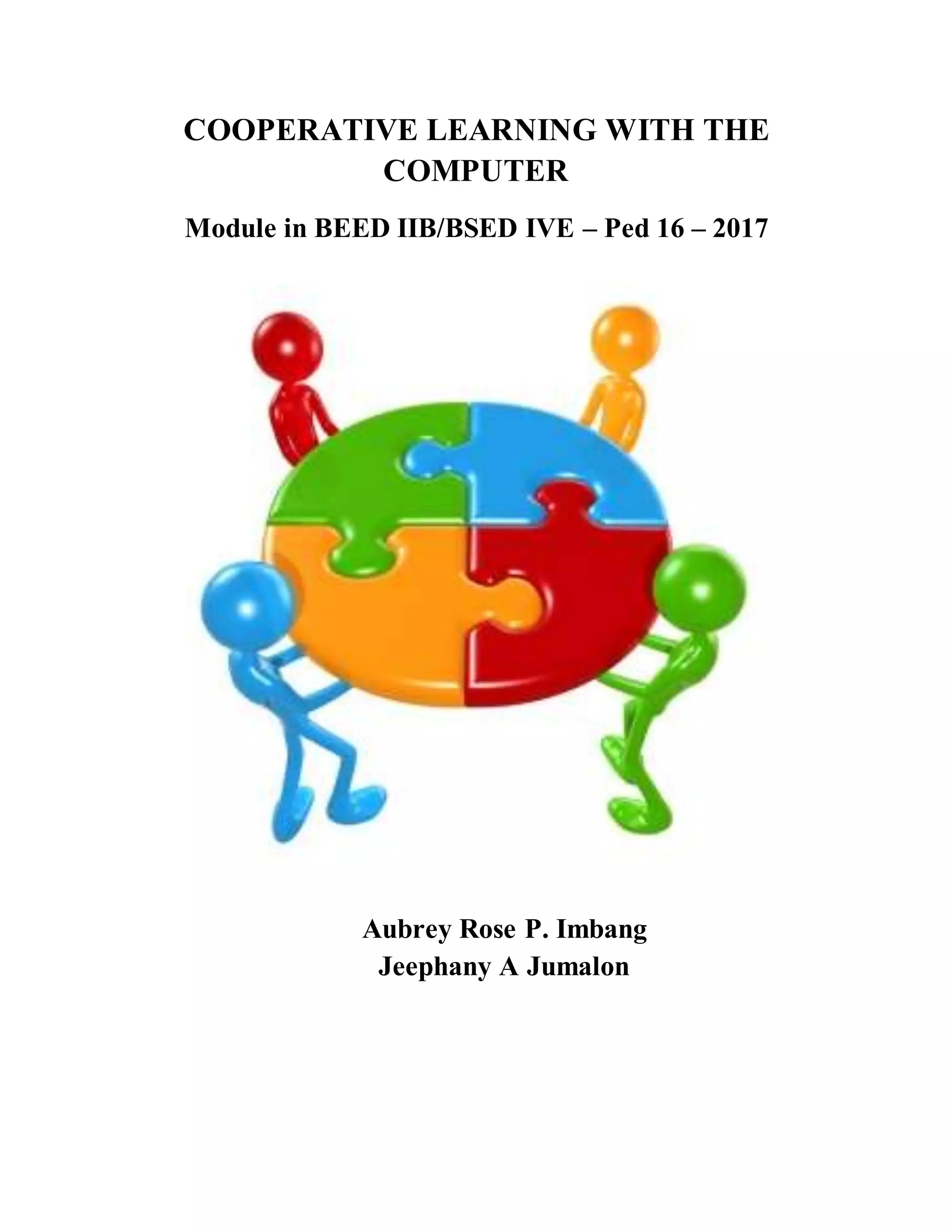
COOPERATIVE LEARNING WITH THE
COMPUTER
Module in BEED IIB/BSED IVE – Ped 16 – 2017
Aubrey Rose P. Imbang
Jeephany A Jumalon
COOPERATIVE LEARNING WITH THE
COMPUTER
Cooperative Learning
Cooperative Learning with the Computer
1. Defining cooperative learning
2. Cooperative learning and the computer
3. Components of cooperative learning
Learning Outcomes
1. To understand cooperative learning and its meaning;
2. To relate the importance of cooperative learning and the computer;
and
3. To enhance the learner’s ability through the use of components of
cooperative learning.
Cooperative learning with the computer
Introduction
 Without the cooperation of its members society cannot survive
because the cooperativeness of its members made survival possible.
 In other progressive countries, the 1:1 pupil-computer ratio is still an
ideal to be achieved.
 Reality dictates that schools may not be equipped with the appropriate
number of computers.
 Therefore teachers’ creativity is likely be used to implement IT
supported learning in schools.
 There are motivational and social benefits to cooperative learning that
can compensatefor the lack of hardware that educators face.
A. Defining cooperative learning
 Collaborative or cooperative learning is learning by small groups of
students who work together in a common learning task.
 Wikipedia. An educational approachwhich aims to organize
classroomactivities into academic and social learning experiences.
 (Johnson& Johnson) Cooperation is working together to accomplish
shared goals. Individuals seek outcomes that are beneficial to
themselves and beneficial to all other group members.
a. Elements of Cooperative Learning
i. a common goal – group members should work together to
achieve common goal
ii. interdependence -
iii. interaction -
iv. individual accountability -
v. socialskills –
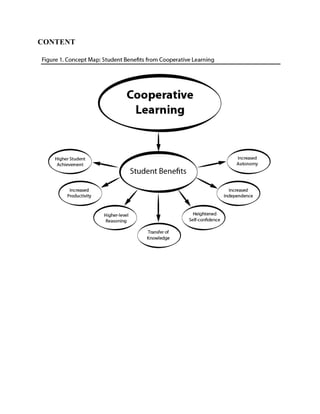
b. Advantages of Cooperative Learning
i. encourages active learning while motivating students
ii. increases academic performance
iii. promotes literacy and language skills
iv. improves teacher effectiveness
v. enhances personal and social development among students
vi. improve social relationship between racially and culturally
different students
B. Cooperative learning and the computer
 Students that work with computers in groups cluster and interact with
each other for advice and mutual help.
 Students work together in computer-based and non-computer-based
activities.
 Computer is a natural learning vehicle for cooperative learning.
C. Components of cooperative learning
Teacher assigns several tasks in order to ensure collaborative learning. These
are:
 Assigning students to mixed-ability teams
 Establishing positive interdependence
 Teaching cooperative social skills
 Insuring individual accountability
 Helping groups process information
 Limits learning group clusters (6 is the ideal number in a group) so
that there will be closer involvement in thinking and learning
LEARNING ACTIVITIES
Activity 1. Students constructa graphic organizer containing the process of
scientific method.
Activity 2. An envelope is given to the group, inside the envelope are papers used
in a puzzle. Solve the puzzle and then solve the problem written in the
puzzle. Then present it in the class.
Activity 3. The group is given checklists, to assess or judge their classmates’
behavior.
Activity 4. In a group, present to the class the five basic steps of folk dance.
MASTERYTEST
Do skills in listening, negotiating, compromising, punctuality, tolerance (giving
others a chance to speak) part of the social skills needed in group work? Why?
PRE-TEST
1. What is cooperative learning?
2. What are the elements of cooperative learning?
3. Does computer foster student learning in isolation that hinders the
development of students’ social skills?
4. What tool to be used to assess collaborative activities?
5. What can be done in case some members of a group do not show positive
interpersonal skills?
CONTENT

Cooperative learning with the computer

  • 1.
    COOPERATIVE LEARNING WITHTHE COMPUTER Module in BEED IIB/BSED IVE – Ped 16 – 2017 Aubrey Rose P. Imbang Jeephany A Jumalon
  • 2.
    COOPERATIVE LEARNING WITHTHE COMPUTER Cooperative Learning Cooperative Learning with the Computer 1. Defining cooperative learning 2. Cooperative learning and the computer 3. Components of cooperative learning Learning Outcomes 1. To understand cooperative learning and its meaning; 2. To relate the importance of cooperative learning and the computer; and 3. To enhance the learner’s ability through the use of components of cooperative learning.
  • 3.
    Cooperative learning withthe computer Introduction  Without the cooperation of its members society cannot survive because the cooperativeness of its members made survival possible.  In other progressive countries, the 1:1 pupil-computer ratio is still an ideal to be achieved.  Reality dictates that schools may not be equipped with the appropriate number of computers.  Therefore teachers’ creativity is likely be used to implement IT supported learning in schools.  There are motivational and social benefits to cooperative learning that can compensatefor the lack of hardware that educators face. A. Defining cooperative learning  Collaborative or cooperative learning is learning by small groups of students who work together in a common learning task.  Wikipedia. An educational approachwhich aims to organize classroomactivities into academic and social learning experiences.  (Johnson& Johnson) Cooperation is working together to accomplish shared goals. Individuals seek outcomes that are beneficial to themselves and beneficial to all other group members. a. Elements of Cooperative Learning i. a common goal – group members should work together to achieve common goal ii. interdependence - iii. interaction - iv. individual accountability - v. socialskills – b. Advantages of Cooperative Learning i. encourages active learning while motivating students ii. increases academic performance iii. promotes literacy and language skills iv. improves teacher effectiveness v. enhances personal and social development among students
  • 4.
    vi. improve socialrelationship between racially and culturally different students B. Cooperative learning and the computer  Students that work with computers in groups cluster and interact with each other for advice and mutual help.  Students work together in computer-based and non-computer-based activities.  Computer is a natural learning vehicle for cooperative learning. C. Components of cooperative learning Teacher assigns several tasks in order to ensure collaborative learning. These are:  Assigning students to mixed-ability teams  Establishing positive interdependence  Teaching cooperative social skills  Insuring individual accountability  Helping groups process information  Limits learning group clusters (6 is the ideal number in a group) so that there will be closer involvement in thinking and learning LEARNING ACTIVITIES Activity 1. Students constructa graphic organizer containing the process of scientific method. Activity 2. An envelope is given to the group, inside the envelope are papers used in a puzzle. Solve the puzzle and then solve the problem written in the puzzle. Then present it in the class. Activity 3. The group is given checklists, to assess or judge their classmates’ behavior. Activity 4. In a group, present to the class the five basic steps of folk dance.
  • 5.
    MASTERYTEST Do skills inlistening, negotiating, compromising, punctuality, tolerance (giving others a chance to speak) part of the social skills needed in group work? Why? PRE-TEST 1. What is cooperative learning? 2. What are the elements of cooperative learning? 3. Does computer foster student learning in isolation that hinders the development of students’ social skills? 4. What tool to be used to assess collaborative activities? 5. What can be done in case some members of a group do not show positive interpersonal skills?
  • 6.