Group 3

1. Diky ramdani

2. Munardi
3. M. Yusup
4. Arsyi
   Technology has led to the drastic changes
    in almost aspect of life, including
    education
   Technology in education
    ◦ It can improve teaching and learning
    ◦ Digital technology has intersected computer
      and instructional elements and traditional
      learning practices ( face to face learning)
    ◦ The most important outcome of the integration
      between technology and education is “e-
      learning”
   In education, technology is quite familiar
    because the use of computer technology such
    as e-learning opens the posssibility of a long
    learning process with the various types.

   E-learning has grown and expanded
    exponentially in the tradional learning (face
    to face) that has been running about a
    century.
   Hopper (2003) states blended classes have been
    proved more effective than full on-line
    classes, because it is able to create positive
    collaboration between direct (face to face) and on-
    line environment.
   Dziuban, Hartman, and moskal (2004) highlights the
    positive learning outcomes of integrating traditional
    learning (face to face) and on-line instruction.
   Garrison and Kanuta (2004) says that blended
    learning has the power to promote profound
    learning.
   Stacey and Gerbic (2008), the advantages of blended
    learning have been guaranteed in a prime position in
    higher education
   2. Blended Learning ; What and Why?
    ◦ A. Blended e-Learning (BeL)
    ◦ B. Blended Learning Levels
    ◦ C. Why Blended Learning
    ◦ D. Blended Learning Approach
    ◦ E. Blended Learning Application in Language
      Learning
    ◦ F. Blended Learning Prospect
    ◦ G. Factors that Promote Successful Blended
      Learning
Blended Learning is an approach to learning and
teaching which combines and aligns learning
undertaken in face to face sessions with learning
opportunities created online (University of
Wolverhampton, 2010).

Blended Learning is new type of learning
activities challenging our thinking as how
learning might be facilitated, creating new
etiquettes of learning and teaching, and shifting
the focus of control from the teacher to the
learner (Littlejohn and Pegler, 2006,p4).
   A Blended Learning approach combines face-
    to-face classroom methods with computer -
    mediated activities to form an integrated
    instructional approach (Pensylvania State
    University, 2009).

   The integrated combination of traditional
    learning with web-based online approaches
    (Whitelock and Jelts (2003).
   Activity level; face-to-face activity than
    followed up by on-line activity
   Class level; combination of some face-to-
    face and some on-line courses.
   Program level; apply face-to-face and on-line
    class to higher education to get degree.
   Institutional level; apply face-to-face at the
    beginning and on-line activity at the end of
    the class.
   Some reasons;

   Because the aim of blended learning is to
    intersect best aspects of face-to-face with
    on-line learning.
   Due to the developing critical thinking and
    the need of students’ satisfaction (Owson
    2006).
   Graham (2006,6) states that Blended learning
    integrates the best things of both world
    (face-to-face and on-line).
   Graham, Allen, and Ure (2005) state the
    common reasons to choose blended learning;

   Improving education; interactive and effective
    learning experience.
   Improving access and flexibility;
   Cost efficiency
   From the definitions above Blended Learning
    is an approach that combines, integrates, or
    mixes traditional, face-to-face activities with
    computer-mediated activities, or on-line
    learning activities in order to make the
    teaching and learning activities more
    effective, efficient, and flexible.
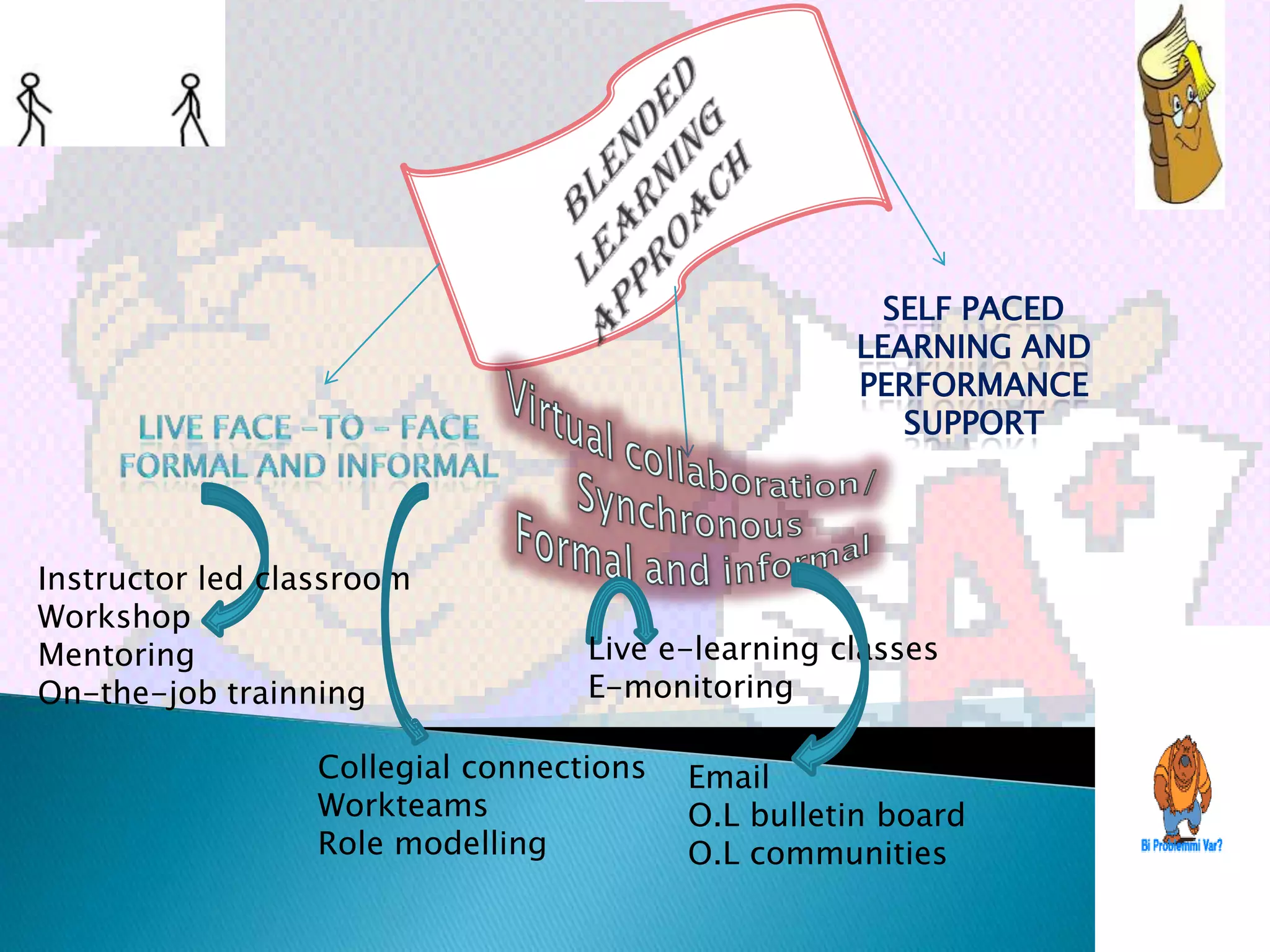
SELF PACED
                                                   LEARNING AND
                                                   PERFORMANCE
                                                      SUPPORT


Instructor led classroom
Workshop
Mentoring                         Live e-learning classes
On-the-job trainning              E-monitoring

                 Collegial connections   Email
                 Workteams               O.L bulletin board
                 Role modelling          O.L communities
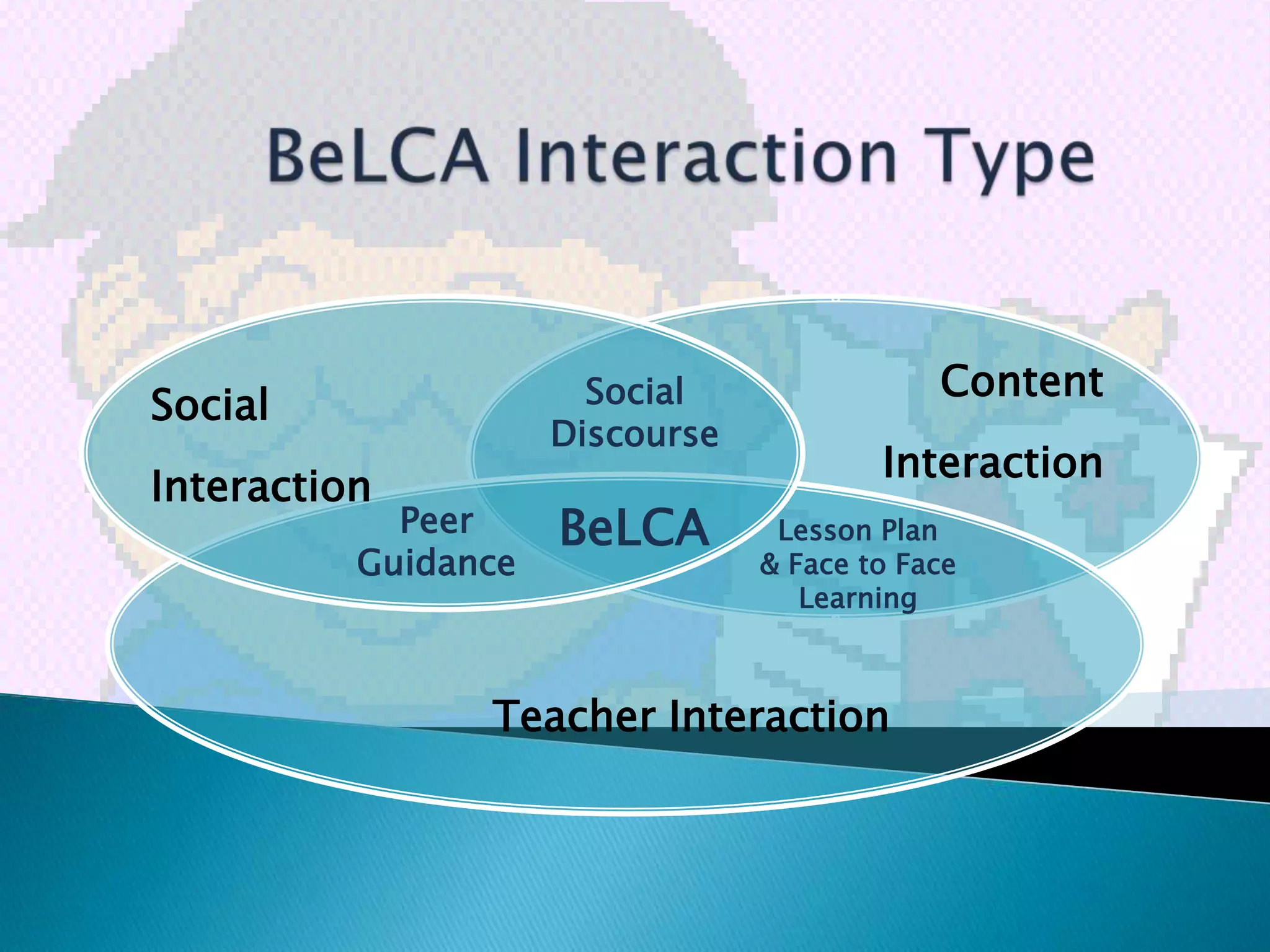
Social                Content
Social
                     Discourse
                                         Interaction
Interaction
            Peer     BeLCA        Lesson Plan
          Guidance               & Face to Face
                                    Learning


                Teacher Interaction
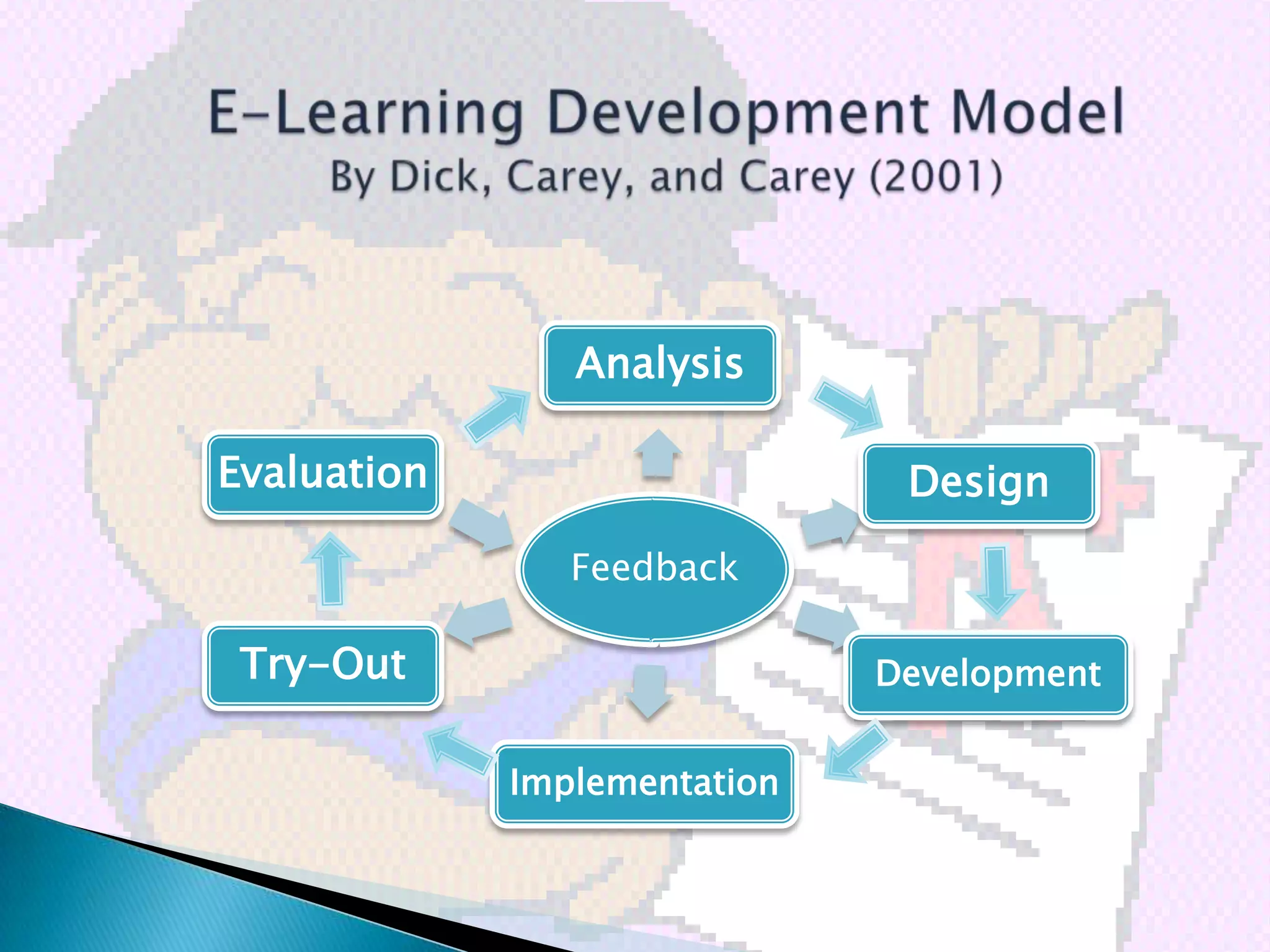
Analysis

Evaluation                     Design
                Feedback

 Try-Out                      Development


             Implementation
Blended learning all

Blended learning all

  • 1.
    Group 3 1. Dikyramdani 2. Munardi 3. M. Yusup 4. Arsyi
  • 2.
    Technology has led to the drastic changes in almost aspect of life, including education  Technology in education ◦ It can improve teaching and learning ◦ Digital technology has intersected computer and instructional elements and traditional learning practices ( face to face learning) ◦ The most important outcome of the integration between technology and education is “e- learning”
  • 3.
    In education, technology is quite familiar because the use of computer technology such as e-learning opens the posssibility of a long learning process with the various types.  E-learning has grown and expanded exponentially in the tradional learning (face to face) that has been running about a century.
  • 4.
    Hopper (2003) states blended classes have been proved more effective than full on-line classes, because it is able to create positive collaboration between direct (face to face) and on- line environment.  Dziuban, Hartman, and moskal (2004) highlights the positive learning outcomes of integrating traditional learning (face to face) and on-line instruction.  Garrison and Kanuta (2004) says that blended learning has the power to promote profound learning.  Stacey and Gerbic (2008), the advantages of blended learning have been guaranteed in a prime position in higher education
  • 5.
    2. Blended Learning ; What and Why? ◦ A. Blended e-Learning (BeL) ◦ B. Blended Learning Levels ◦ C. Why Blended Learning ◦ D. Blended Learning Approach ◦ E. Blended Learning Application in Language Learning ◦ F. Blended Learning Prospect ◦ G. Factors that Promote Successful Blended Learning
  • 6.
    Blended Learning isan approach to learning and teaching which combines and aligns learning undertaken in face to face sessions with learning opportunities created online (University of Wolverhampton, 2010). Blended Learning is new type of learning activities challenging our thinking as how learning might be facilitated, creating new etiquettes of learning and teaching, and shifting the focus of control from the teacher to the learner (Littlejohn and Pegler, 2006,p4).
  • 7.
    A Blended Learning approach combines face- to-face classroom methods with computer - mediated activities to form an integrated instructional approach (Pensylvania State University, 2009).  The integrated combination of traditional learning with web-based online approaches (Whitelock and Jelts (2003).
  • 8.
    Activity level; face-to-face activity than followed up by on-line activity  Class level; combination of some face-to- face and some on-line courses.  Program level; apply face-to-face and on-line class to higher education to get degree.  Institutional level; apply face-to-face at the beginning and on-line activity at the end of the class.
  • 9.
    Some reasons;  Because the aim of blended learning is to intersect best aspects of face-to-face with on-line learning.  Due to the developing critical thinking and the need of students’ satisfaction (Owson 2006).  Graham (2006,6) states that Blended learning integrates the best things of both world (face-to-face and on-line).
  • 10.
    Graham, Allen, and Ure (2005) state the common reasons to choose blended learning;  Improving education; interactive and effective learning experience.  Improving access and flexibility;  Cost efficiency
  • 11.
    From the definitions above Blended Learning is an approach that combines, integrates, or mixes traditional, face-to-face activities with computer-mediated activities, or on-line learning activities in order to make the teaching and learning activities more effective, efficient, and flexible.
  • 12.
    SELF PACED LEARNING AND PERFORMANCE SUPPORT Instructor led classroom Workshop Mentoring Live e-learning classes On-the-job trainning E-monitoring Collegial connections Email Workteams O.L bulletin board Role modelling O.L communities
  • 14.
    Social Content Social Discourse Interaction Interaction Peer BeLCA Lesson Plan Guidance & Face to Face Learning Teacher Interaction
  • 15.
    Analysis Evaluation Design Feedback Try-Out Development Implementation