Cooperative Learning
with the Computer
Leo Birth M. Canoy
Cristle Doreen S.Retoriano
Ailyn G. Jontilano
Jenalyn M. Pablo
BEED III-A
Introduction
Reality dictates that school
face the fact that each
classroom, especially in
public or government
schools, may not be
equipped with appropriate
number of computers.
The creativity of the teacher
will have to respond to the
situation, and so cooperative
learning will likely be the
answer to the implementation
of IT.
Defining
Cooperative
Learning
Cooperative or Collaborative
Learning
Is learning by small groups of
students who work together
in a common learning task.
Is also called Group
Learning.
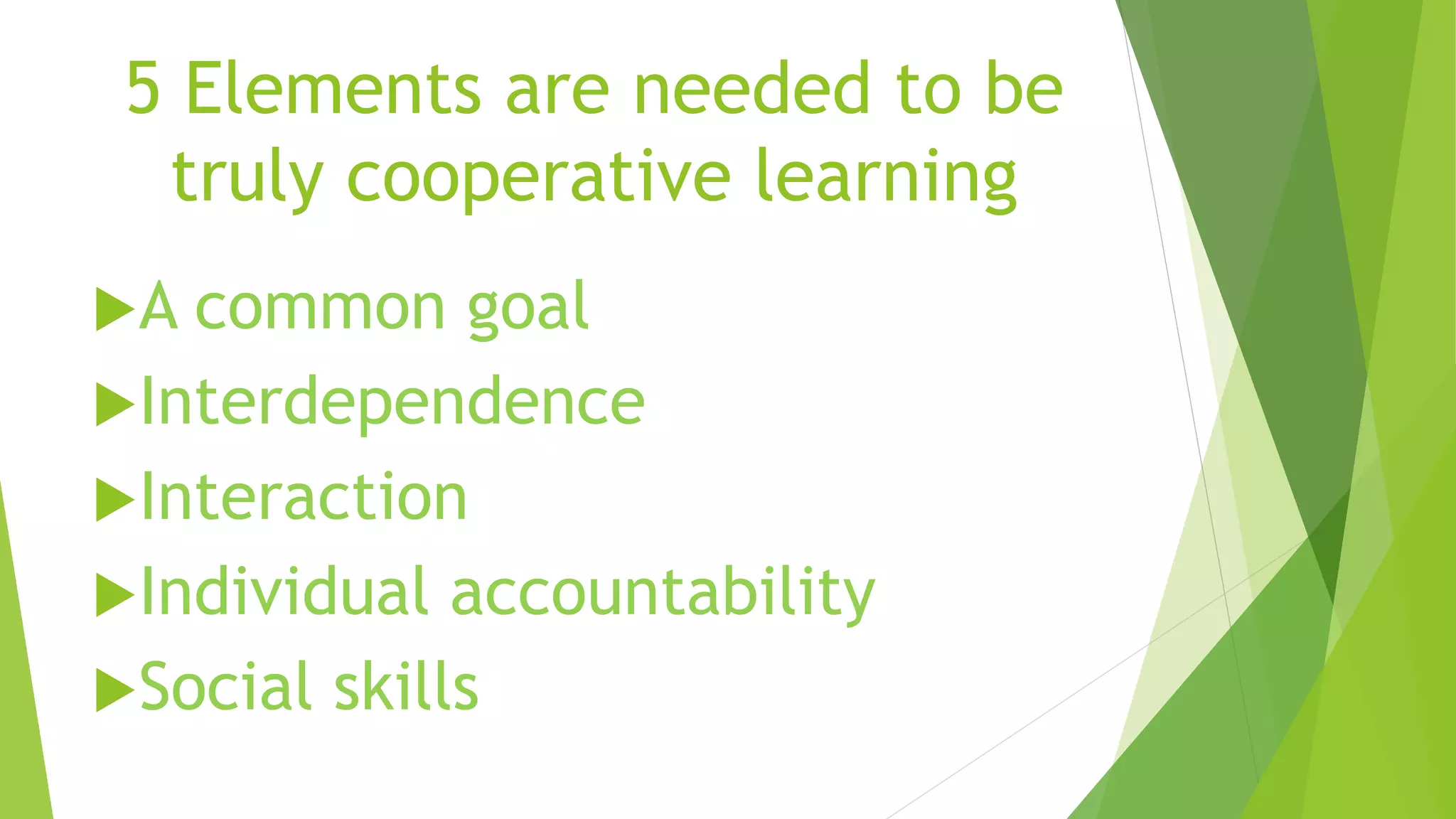
5 Elements are needed to be
truly cooperative learning
A common goal
Interdependence
Interaction
Individual accountability
Social skills
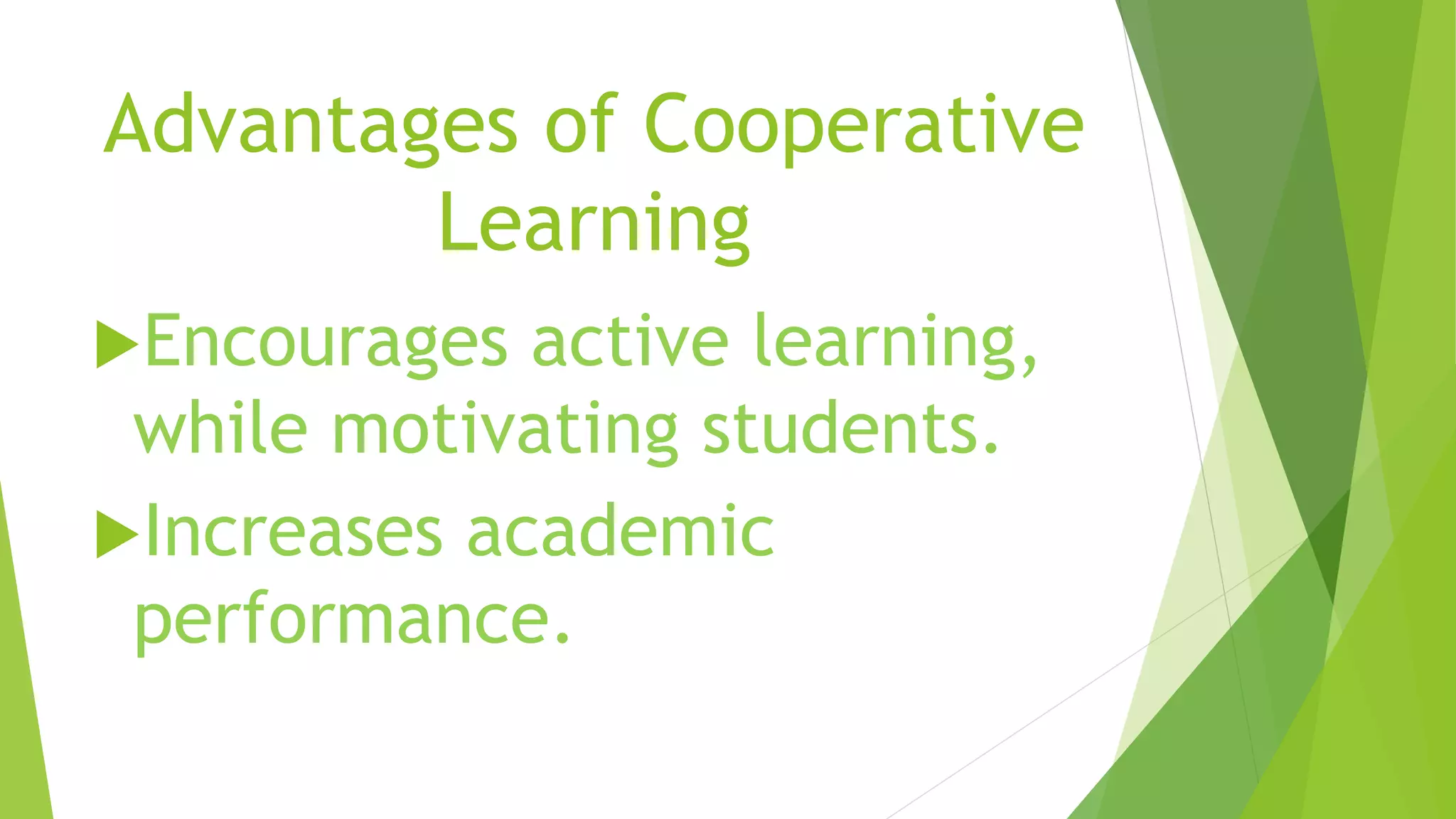
Advantages of Cooperative
Learning
Encourages active learning,
while motivating students.
Increases academic
performance.
Improves teachers
effectiveness.
Promotes literacy and
language skills.
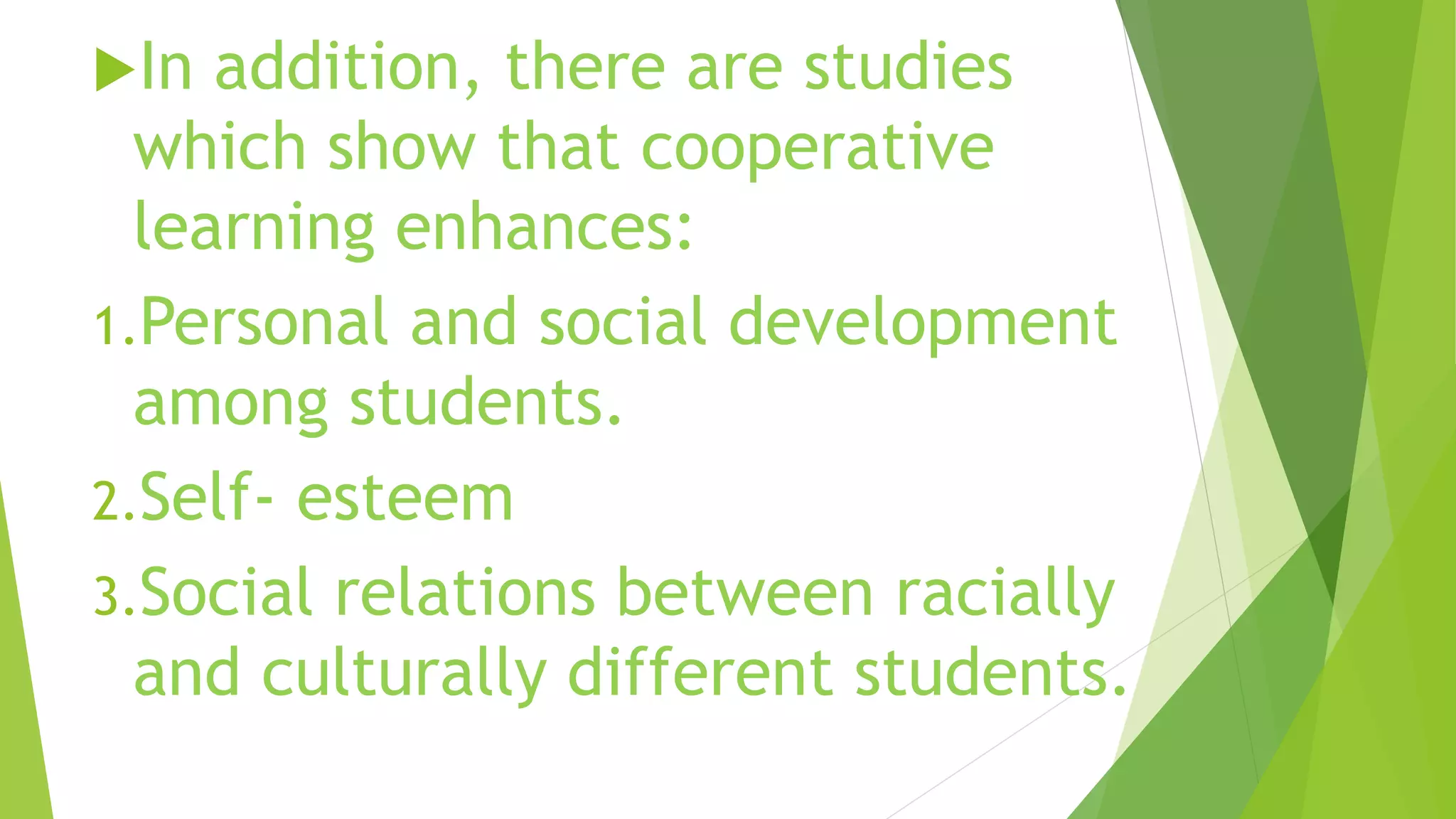
In addition, there are studies
which show that cooperative
learning enhances:
1.Personal and social development
among students.
2.Self- esteem
3.Social relations between racially
and culturally different students.
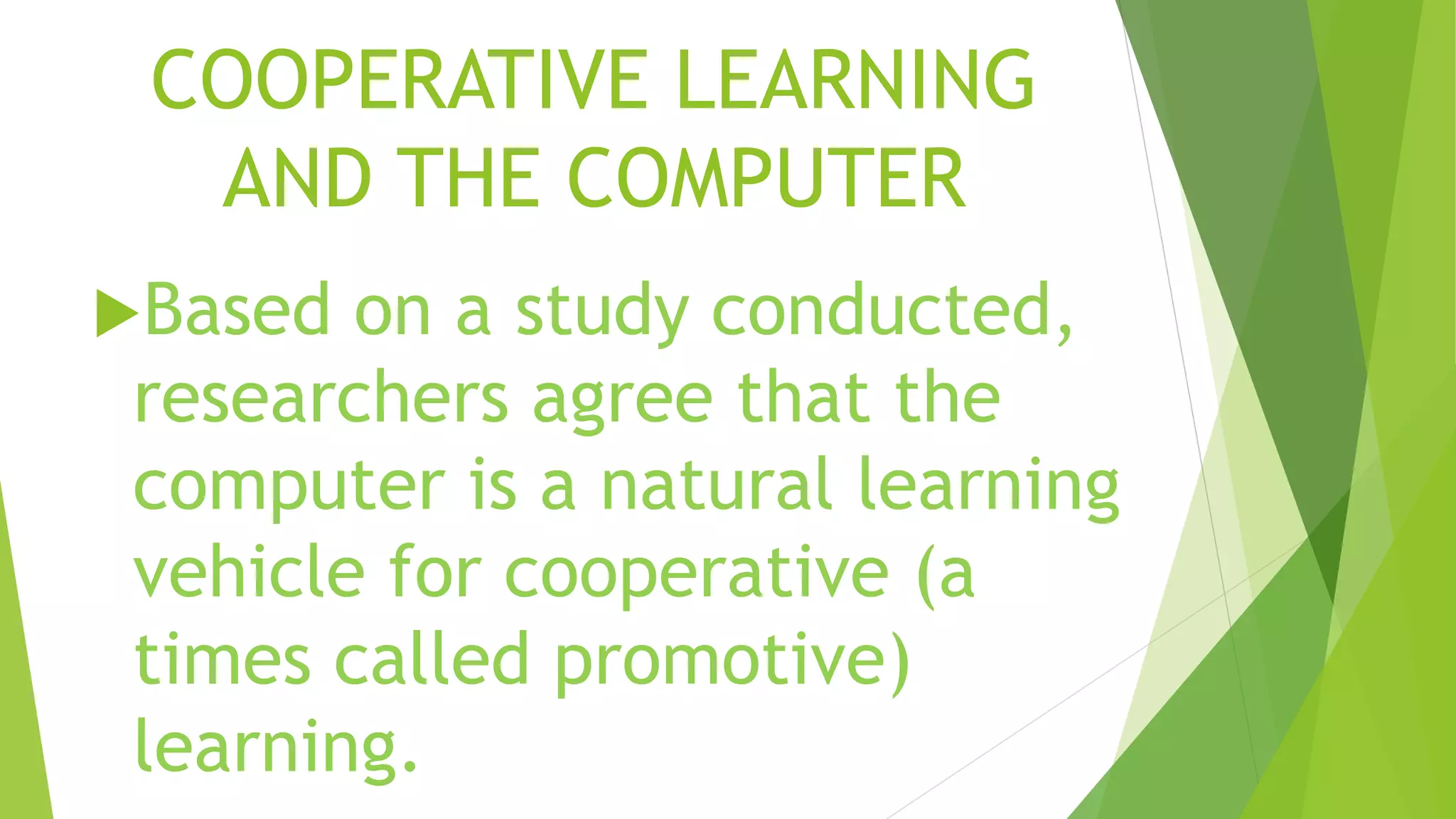
COOPERATIVE LEARNING
AND THE COMPUTER
Based on a study conducted,
researchers agree that the
computer is a natural learning
vehicle for cooperative (a
times called promotive)
learning.
Thus, it shows that when
students work with
computers in groups, they
cluster and interact with
each other for advice and
mutual help.
Moreover, given the option
to work individually or in a
group, the students
generally wish to work
together in computer-
based and non-computer-
based activities.
Reflecting on this,
psychologists think the
computer fosters this
positive social behaviour
because it has a display
monitor- where they look
something in common.
Components of Cooperative
Learning
Educators are still wary about
the computer’s role in
cooperative learning. Thus,
they pose the position that the
use of computers do not
automatically result in
cooperative learning.
Therefore, assign the teacher several
tasks in order to ensure collaborative
learning. These are:
-Assigning students to mixed-ability
teams
-Establishing positive interdependence
-Teaching cooperative social skills
-Ensuring individual accountability, and
-Helping groups process information
These are in addition to
assigning a common work
goal in which each member
of the group will realize that
their group will not succeed
unless everyone contributes
to the groups’ success.
It is also important for
the teacher limits
learning group clusters
(six is the ideal number in
a group) so there can be
closer involvement in
thinking and learning.
“We all do better when we work
together. Our differences do matter, but
our common humanity matters more.”
-Bill Clinton
Reference:
www.slideshare.net/ybrahimz/cooperative
-learning-with-the-computer
Lesson 12 Cooperative Learning with the Computer

Lesson 12 Cooperative Learning with the Computer

  • 1.
    Cooperative Learning with theComputer Leo Birth M. Canoy Cristle Doreen S.Retoriano Ailyn G. Jontilano Jenalyn M. Pablo BEED III-A
  • 2.
    Introduction Reality dictates thatschool face the fact that each classroom, especially in public or government schools, may not be equipped with appropriate number of computers.
  • 3.
    The creativity ofthe teacher will have to respond to the situation, and so cooperative learning will likely be the answer to the implementation of IT.
  • 4.
  • 5.
    Cooperative or Collaborative Learning Islearning by small groups of students who work together in a common learning task. Is also called Group Learning.
  • 6.
    5 Elements areneeded to be truly cooperative learning A common goal Interdependence Interaction Individual accountability Social skills
  • 7.
    Advantages of Cooperative Learning Encouragesactive learning, while motivating students. Increases academic performance.
  • 8.
  • 9.
    In addition, thereare studies which show that cooperative learning enhances: 1.Personal and social development among students. 2.Self- esteem 3.Social relations between racially and culturally different students.
  • 10.
    COOPERATIVE LEARNING AND THECOMPUTER Based on a study conducted, researchers agree that the computer is a natural learning vehicle for cooperative (a times called promotive) learning.
  • 11.
    Thus, it showsthat when students work with computers in groups, they cluster and interact with each other for advice and mutual help.
  • 12.
    Moreover, given theoption to work individually or in a group, the students generally wish to work together in computer- based and non-computer- based activities.
  • 13.
    Reflecting on this, psychologiststhink the computer fosters this positive social behaviour because it has a display monitor- where they look something in common.
  • 14.
    Components of Cooperative Learning Educatorsare still wary about the computer’s role in cooperative learning. Thus, they pose the position that the use of computers do not automatically result in cooperative learning.
  • 15.
    Therefore, assign theteacher several tasks in order to ensure collaborative learning. These are: -Assigning students to mixed-ability teams -Establishing positive interdependence -Teaching cooperative social skills -Ensuring individual accountability, and -Helping groups process information
  • 16.
    These are inaddition to assigning a common work goal in which each member of the group will realize that their group will not succeed unless everyone contributes to the groups’ success.
  • 17.
    It is alsoimportant for the teacher limits learning group clusters (six is the ideal number in a group) so there can be closer involvement in thinking and learning.
  • 18.
    “We all dobetter when we work together. Our differences do matter, but our common humanity matters more.” -Bill Clinton Reference: www.slideshare.net/ybrahimz/cooperative -learning-with-the-computer