POL 252-01
Spring 2016
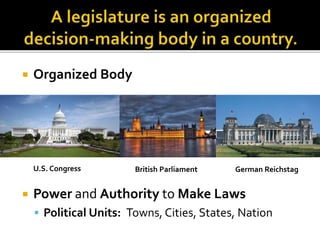
 Organized Body
 Power and Authority to Make Laws
 Political Units: Towns, Cities, States, Nation
U.S. Congress British Parliament German Reichstag
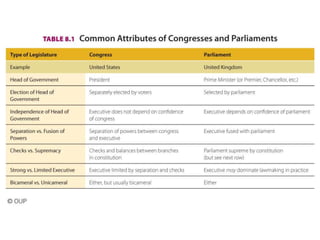
 Found in parliamentary systems
 Executive selected from within legislature
 Executive responsible to legislature
 Legislative vote of no confidence
 Parliaments = Fused-Powers Systems
 Example: United Kingdom
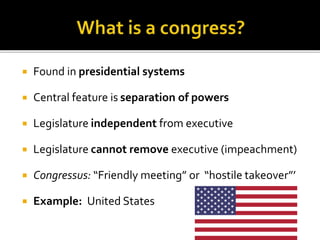
 Found in presidential systems
 Central feature is separation of powers
 Legislature independent from executive
 Legislature cannot remove executive (impeachment)
 Congressus: “Friendly meeting” or “hostile takeover”’
 Example: United States
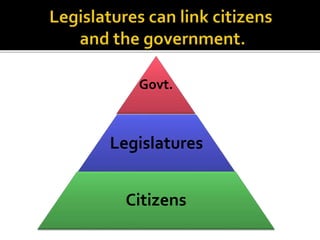
Govt.
Legislatures
Citizens
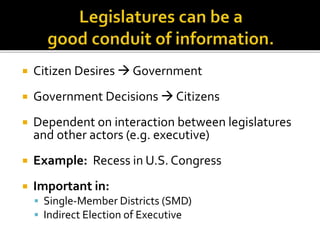
 Citizen Desires  Government
 Government Decisions  Citizens
 Dependent on interaction between legislatures
and other actors (e.g. executive)
 Example: Recess in U.S. Congress
 Important in:
 Single-Member Districts (SMD)
 Indirect Election of Executive
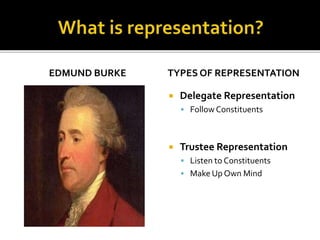
EDMUND BURKE TYPES OF REPRESENTATION
 Delegate Representation
 Follow Constituents
 Trustee Representation
 Listen to Constituents
 Make Up Own Mind
 Foster Compromise
 Participation of Minority Groups
 Impact on larger societal conflict
 Larger problems (e.g. trust in government)
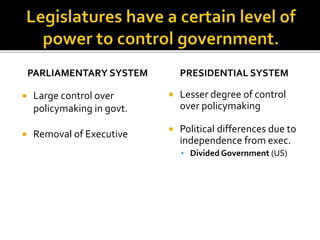
PARLIAMENTARY SYSTEM
 Large control over
policymaking in govt.
 Removal of Executive
PRESIDENTIAL SYSTEM
 Lesser degree of control
over policymaking
 Political differences due to
independence from exec.
 Divided Government (US)
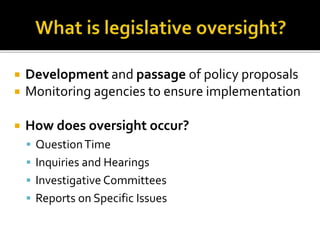
 Development and passage of policy proposals
 Monitoring agencies to ensure implementation
 How does oversight occur?
 QuestionTime
 Inquiries and Hearings
 Investigative Committees
 Reports on Specific Issues
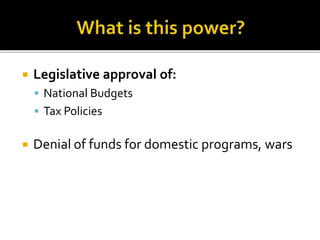
 Legislative approval of:
 National Budgets
 Tax Policies
 Denial of funds for domestic programs, wars
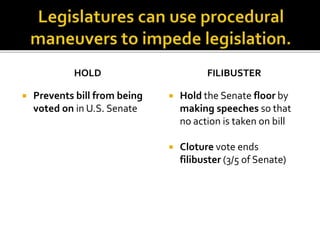
HOLD
 Prevents bill from being
voted on in U.S. Senate
FILIBUSTER
 Hold the Senate floor by
making speeches so that
no action is taken on bill
 Cloture vote ends
filibuster (3/5 of Senate)
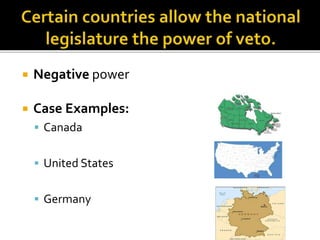
 Negative power
 Case Examples:
 Canada
 United States
 Germany
 Number andType of Chambers
 Number: Unicameral (1) vs. Bicameral (2)
 Type: Lower Chamber vs. Upper Chamber
 Relationship Between Chambers
▪ Breakdown of legislative power
▪ Equally Shared?
▪ Equally Divided?
▪ Unequally Divided?
 Size
 Degree of Legislative Professionalism
 Days of Legislative Session
 Member Pay and Staff
 Turnover Rate
 Stability and Expertise of Body
 Independence of Institution as Whole
 Independence of Individual Members
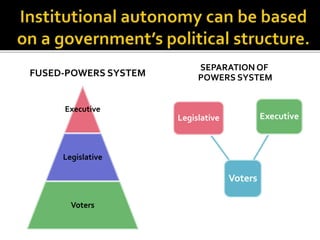
FUSED-POWERS SYSTEM
SEPARATION OF
POWERS SYSTEM
Executive
Legislative
Voters
Voters
Legislative Executive
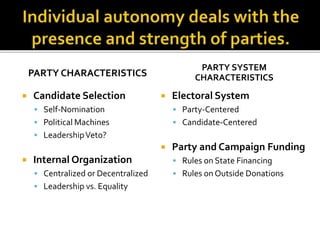
PARTY CHARACTERISTICS
 Candidate Selection
 Self-Nomination
 Political Machines
 LeadershipVeto?
 Internal Organization
 Centralized or Decentralized
 Leadership vs. Equality
PARTY SYSTEM
CHARACTERISTICS
 Electoral System
 Party-Centered
 Candidate-Centered
 Party and Campaign Funding
 Rules on State Financing
 Rules on Outside Donations
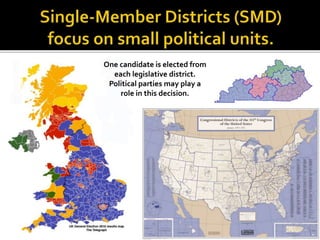
One candidate is elected from
each legislative district.
Political parties may play a
role in this decision.
FIRST-PAST-THE-POST (FPTP)
 Candidate w/ most votes wins
 Do NOT have to win majority
of vote, just plurality
 Consequences: Districts
represented by other party!
RUNOFF
 Top two candidates after
first round of voting
compete in additional
elections until majority
 Case Study: France
 More than one candidate chosen from area
 What would happen if U.S. adopted this?
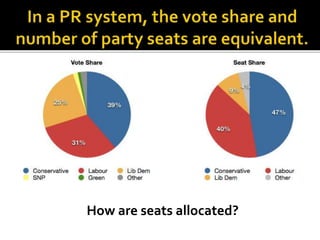
How are seats allocated?
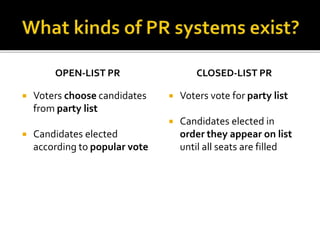
OPEN-LIST PR
 Voters choose candidates
from party list
 Candidates elected
according to popular vote
CLOSED-LIST PR
 Voters vote for party list
 Candidates elected in
order they appear on list
until all seats are filled
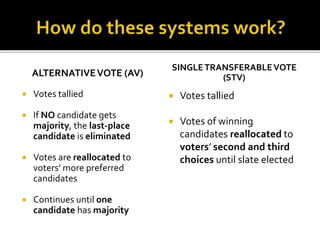
ALTERNATIVEVOTE (AV)
 Votes tallied
 If NO candidate gets
majority, the last-place
candidate is eliminated
 Votes are reallocated to
voters’ more preferred
candidates
 Continues until one
candidate has majority
SINGLETRANSFERABLEVOTE
(STV)
 Votes tallied
 Votes of winning
candidates reallocated to
voters’ second and third
choices until slate elected
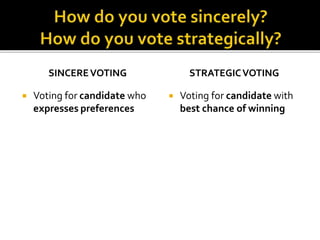
SINCEREVOTING
 Voting for candidate who
expresses preferences
STRATEGICVOTING
 Voting for candidate with
best chance of winning
 Representation vs. National Issues
 Voters get two votes
 Individual Candidate
▪ Member with most votes from constituency elected (SMD)
 Political Party
▪ Party votes tallied; seats based on party strength (PR)
 Can you see U.S. adopting hybrid system?

Legislatures and Legislative Elections

  • 1.
  • 5.
     Organized Body Power and Authority to Make Laws  Political Units: Towns, Cities, States, Nation U.S. Congress British Parliament German Reichstag
  • 8.
     Found inparliamentary systems  Executive selected from within legislature  Executive responsible to legislature  Legislative vote of no confidence  Parliaments = Fused-Powers Systems  Example: United Kingdom
  • 10.
     Found inpresidential systems  Central feature is separation of powers  Legislature independent from executive  Legislature cannot remove executive (impeachment)  Congressus: “Friendly meeting” or “hostile takeover”’  Example: United States
  • 15.
  • 16.
     Citizen Desires Government  Government Decisions  Citizens  Dependent on interaction between legislatures and other actors (e.g. executive)  Example: Recess in U.S. Congress  Important in:  Single-Member Districts (SMD)  Indirect Election of Executive
  • 18.
    EDMUND BURKE TYPESOF REPRESENTATION  Delegate Representation  Follow Constituents  Trustee Representation  Listen to Constituents  Make Up Own Mind
  • 20.
     Foster Compromise Participation of Minority Groups  Impact on larger societal conflict  Larger problems (e.g. trust in government)
  • 25.
    PARLIAMENTARY SYSTEM  Largecontrol over policymaking in govt.  Removal of Executive PRESIDENTIAL SYSTEM  Lesser degree of control over policymaking  Political differences due to independence from exec.  Divided Government (US)
  • 27.
     Development andpassage of policy proposals  Monitoring agencies to ensure implementation  How does oversight occur?  QuestionTime  Inquiries and Hearings  Investigative Committees  Reports on Specific Issues
  • 31.
     Legislative approvalof:  National Budgets  Tax Policies  Denial of funds for domestic programs, wars
  • 35.
    HOLD  Prevents billfrom being voted on in U.S. Senate FILIBUSTER  Hold the Senate floor by making speeches so that no action is taken on bill  Cloture vote ends filibuster (3/5 of Senate)
  • 37.
     Negative power Case Examples:  Canada  United States  Germany
  • 40.
     Number andTypeof Chambers  Number: Unicameral (1) vs. Bicameral (2)  Type: Lower Chamber vs. Upper Chamber  Relationship Between Chambers ▪ Breakdown of legislative power ▪ Equally Shared? ▪ Equally Divided? ▪ Unequally Divided?
  • 41.
     Size  Degreeof Legislative Professionalism  Days of Legislative Session  Member Pay and Staff  Turnover Rate  Stability and Expertise of Body
  • 43.
     Independence ofInstitution as Whole  Independence of Individual Members
  • 44.
    FUSED-POWERS SYSTEM SEPARATION OF POWERSSYSTEM Executive Legislative Voters Voters Legislative Executive
  • 45.
    PARTY CHARACTERISTICS  CandidateSelection  Self-Nomination  Political Machines  LeadershipVeto?  Internal Organization  Centralized or Decentralized  Leadership vs. Equality PARTY SYSTEM CHARACTERISTICS  Electoral System  Party-Centered  Candidate-Centered  Party and Campaign Funding  Rules on State Financing  Rules on Outside Donations
  • 49.
    One candidate iselected from each legislative district. Political parties may play a role in this decision.
  • 50.
    FIRST-PAST-THE-POST (FPTP)  Candidatew/ most votes wins  Do NOT have to win majority of vote, just plurality  Consequences: Districts represented by other party! RUNOFF  Top two candidates after first round of voting compete in additional elections until majority  Case Study: France
  • 51.
     More thanone candidate chosen from area  What would happen if U.S. adopted this?
  • 53.
    How are seatsallocated?
  • 54.
    OPEN-LIST PR  Voterschoose candidates from party list  Candidates elected according to popular vote CLOSED-LIST PR  Voters vote for party list  Candidates elected in order they appear on list until all seats are filled
  • 56.
    ALTERNATIVEVOTE (AV)  Votestallied  If NO candidate gets majority, the last-place candidate is eliminated  Votes are reallocated to voters’ more preferred candidates  Continues until one candidate has majority SINGLETRANSFERABLEVOTE (STV)  Votes tallied  Votes of winning candidates reallocated to voters’ second and third choices until slate elected
  • 60.
    SINCEREVOTING  Voting forcandidate who expresses preferences STRATEGICVOTING  Voting for candidate with best chance of winning
  • 62.
     Representation vs.National Issues  Voters get two votes  Individual Candidate ▪ Member with most votes from constituency elected (SMD)  Political Party ▪ Party votes tallied; seats based on party strength (PR)  Can you see U.S. adopting hybrid system?