POL 140-07
Fall 2015
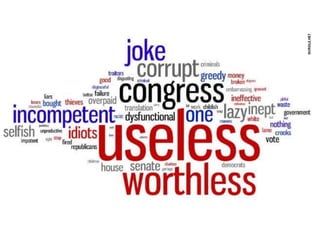
INSTRUCTIONS
Write down five words
that come to mind
when you hear this word:
CONGRESS
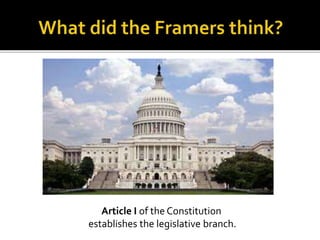
Article I of the Constitution
establishes the legislative branch.
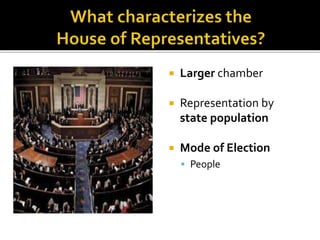
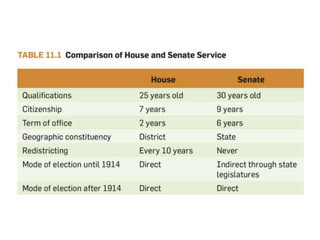
 Larger chamber
 Representation by
state population
 Mode of Election
 People
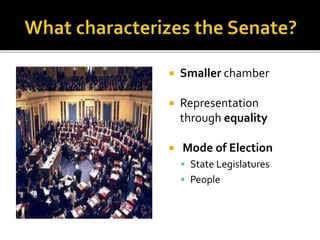
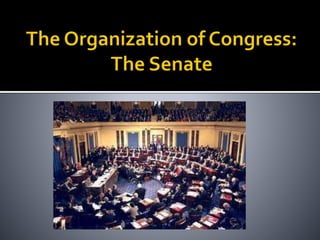
 Smaller chamber
 Representation
through equality
 Mode of Election
 State Legislatures
 People
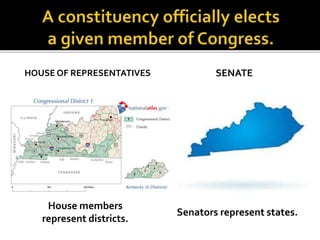
HOUSE OF REPRESENTATIVES SENATE
House members
represent districts.
Senators represent states.
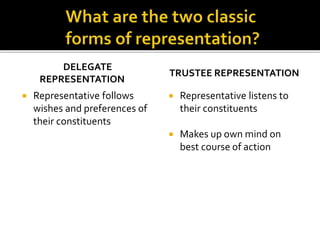
DELEGATE
REPRESENTATION
 Representative follows
wishes and preferences of
their constituents
TRUSTEE REPRESENTATION
 Representative listens to
their constituents
 Makes up own mind on
best course of action
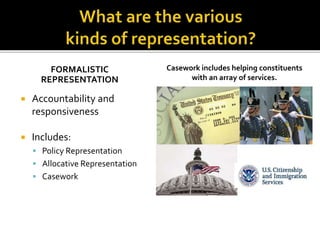
FORMALISTIC
REPRESENTATION
 Accountability and
responsiveness
 Includes:
 Policy Representation
 Allocative Representation
 Casework
Casework includes helping constituents
with an array of services.
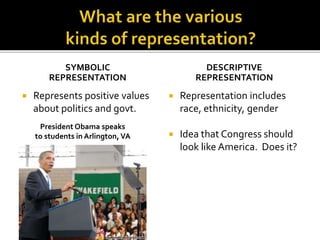
SYMBOLIC
REPRESENTATION
 Represents positive values
about politics and govt.
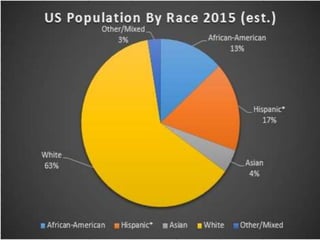
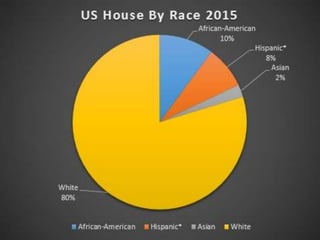
DESCRIPTIVE
REPRESENTATION
 Representation includes
race, ethnicity, gender
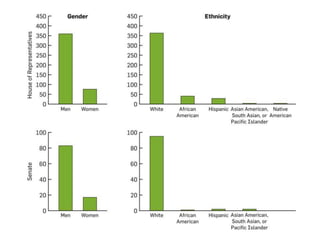
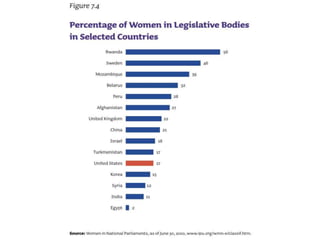
 Idea that Congress should
look like America. Does it?
President Obama speaks
to students in Arlington, VA
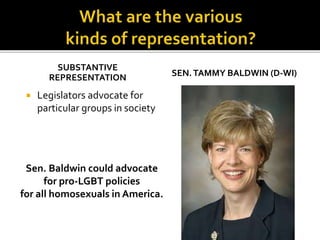
SUBSTANTIVE
REPRESENTATION SEN.TAMMY BALDWIN (D-WI)
 Legislators advocate for
particular groups in society
Sen. Baldwin could advocate
for pro-LGBT policies
for all homosexuals in America.
 #1: Lawmaking
 “Necessary and Proper Clause”, Implied Powers
 #2:War and Foreign Policy
 Formal Declarations and Military Operations
 #3: Regulation of Commerce
 Monopolies, Labor Unions, Wages, Discrimination
 #4: Appropriations
 “Power of the Purse”
 #5: Impeachment
 “High Crimes and Misdemeanors”
 House brings charges; Senate conducts trial
 #6: Oversight
 Hearings, Feedback, Reports, Investigations
 #7:Treaties and Appointments
 Senate ratifies treaties, confirms appointments
 #8:Taxation
 All bills for raising revenue must originate in the House.
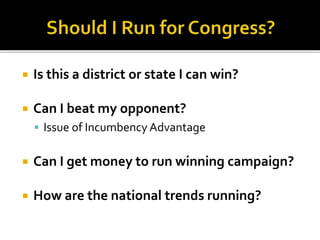
 Is this a district or state I can win?
 Can I beat my opponent?
 Issue of Incumbency Advantage
 Can I get money to run winning campaign?
 How are the national trends running?
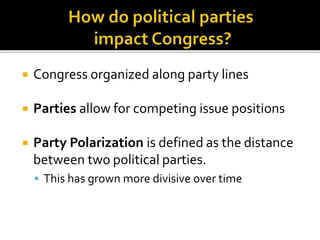
 Congress organized along party lines
 Parties allow for competing issue positions
 Party Polarization is defined as the distance
between two political parties.
 This has grown more divisive over time
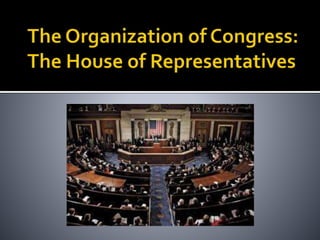
 Speaker of the House: John Boehner (R-OH)
 Serves as the presiding officer of the House
 Leader and chief spokesman for majority party
 House Majority Leader: Kevin McCarthy (R-CA)
 Works with Speaker to decide party agenda
 Coordinates with committees on legislation
 House Minority Leader: Nancy Pelosi (D-CA)
 Highest-ranking minority party member
 Spokeswoman for minority and helps craft minority party
positions on issues
 President of the Senate: Vice Pres. Joe Biden
 Presides over Senate and votes in case of a tie
 Rarely performs this job today
 President ProTempore: Orrin Hatch (R-UT)
 Majority party senator with longest tenure
 Largely ceremonial position but can appoint
members to committees, etc.
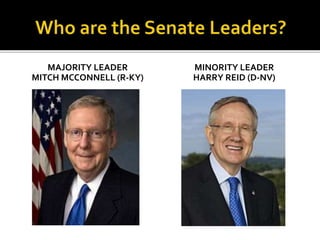
MAJORITY LEADER
MITCH MCCONNELL (R-KY)
MINORITY LEADER
HARRY REID (D-NV)
 Managing party membership
 Scheduling Senate business for members
 Monitoring deliberations on Senate floor
 Intermediary for Congress andWhite House
 Representing party/Senate to media
 All legislation that passes the House and
Senate goes through a committee
 Majority party has majority of seats on cmte.
 Republicans in House
 Republicans in Senate
 Committee Chair from majority party
 Ranking Member from minority party
 Standing Committees
 Permanent Committees
 Major Policy Areas (e.g. Budget, Judiciary)
 Select or Special Committees
 Temporary Committees (e.g. investigations)
 Focused on narrow issues
 Joint Committees
 Both House and Senate membership
 Conference Committees
 Resolve House and Senate versions of passed legislation
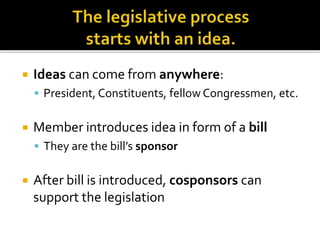
 Ideas can come from anywhere:
 President, Constituents, fellow Congressmen, etc.
 Member introduces idea in form of a bill
 They are the bill’s sponsor
 After bill is introduced, cosponsors can
support the legislation
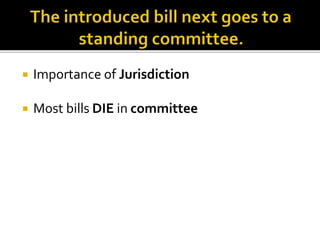
 Importance of Jurisdiction
 Most bills DIE in committee
 Bill assigned to a subcommittee
 Smaller group of legislators who focuses on one
part of committee’s issues
 Testimony on content and impact of a bill
 Main Purposes of Hearings:
 Draw attention to problem or issue
 Advantages and disadvantages to bill
 Express constituents’ questions and concerns
 Subcommittee drafts (marks up) the bill
 Bill goes back to full committee
 Committee can conduct additional hearings
and debate on the bill
 If accepted, bill reported out of committee
 To proceed to the House floor, all bills must
pass through the House Rules Committee
 What is a rule?
 Influence of the majority on Rules Cmte.
 Prevents bill from being voted on for 24 hours
 Why would senators hold up a bill?
 More information on policy issue
 Get something from leadership orWhite House
 What is a filibuster?
 Powerful tool in Senate
 Endless speeches on topic
 Can it be stopped?
 Cloture is motion to end debate
 Requires three-fifths vote (60 senators)
 Personal Opinion / Judgment
 Constituent Opinion
 Interest Groups
 Political Parties
 The President
 Logrolling
 What if different versions of same bill?
 Conference committee resolves differences
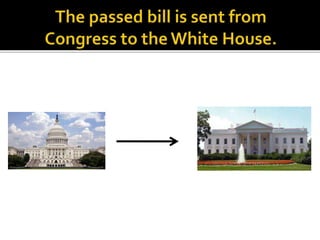
 Bill sent to president if both chambers
approve work of conference committee
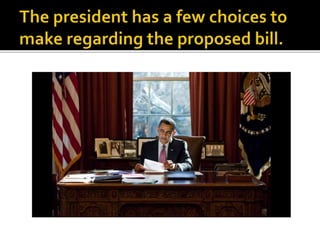
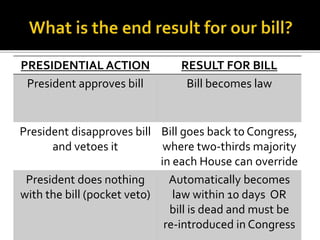
PRESIDENTIAL ACTION RESULT FOR BILL
President approves bill Bill becomes law
President disapproves bill
and vetoes it
Bill goes back to Congress,
where two-thirds majority
in each House can override
President does nothing
with the bill (pocket veto)
Automatically becomes
law within 10 days OR
bill is dead and must be
re-introduced in Congress
140 FA 15 Congress

140 FA 15 Congress

  • 1.
  • 3.
    INSTRUCTIONS Write down fivewords that come to mind when you hear this word: CONGRESS
  • 8.
    Article I ofthe Constitution establishes the legislative branch.
  • 9.
     Larger chamber Representation by state population  Mode of Election  People
  • 10.
     Smaller chamber Representation through equality  Mode of Election  State Legislatures  People
  • 13.
    HOUSE OF REPRESENTATIVESSENATE House members represent districts. Senators represent states.
  • 14.
    DELEGATE REPRESENTATION  Representative follows wishesand preferences of their constituents TRUSTEE REPRESENTATION  Representative listens to their constituents  Makes up own mind on best course of action
  • 15.
    FORMALISTIC REPRESENTATION  Accountability and responsiveness Includes:  Policy Representation  Allocative Representation  Casework Casework includes helping constituents with an array of services.
  • 16.
    SYMBOLIC REPRESENTATION  Represents positivevalues about politics and govt. DESCRIPTIVE REPRESENTATION  Representation includes race, ethnicity, gender  Idea that Congress should look like America. Does it? President Obama speaks to students in Arlington, VA
  • 19.
    SUBSTANTIVE REPRESENTATION SEN.TAMMY BALDWIN(D-WI)  Legislators advocate for particular groups in society Sen. Baldwin could advocate for pro-LGBT policies for all homosexuals in America.
  • 21.
     #1: Lawmaking “Necessary and Proper Clause”, Implied Powers  #2:War and Foreign Policy  Formal Declarations and Military Operations  #3: Regulation of Commerce  Monopolies, Labor Unions, Wages, Discrimination  #4: Appropriations  “Power of the Purse”
  • 22.
     #5: Impeachment “High Crimes and Misdemeanors”  House brings charges; Senate conducts trial  #6: Oversight  Hearings, Feedback, Reports, Investigations  #7:Treaties and Appointments  Senate ratifies treaties, confirms appointments  #8:Taxation  All bills for raising revenue must originate in the House.
  • 26.
     Is thisa district or state I can win?  Can I beat my opponent?  Issue of Incumbency Advantage  Can I get money to run winning campaign?  How are the national trends running?
  • 31.
     Congress organizedalong party lines  Parties allow for competing issue positions  Party Polarization is defined as the distance between two political parties.  This has grown more divisive over time
  • 33.
     Speaker ofthe House: John Boehner (R-OH)  Serves as the presiding officer of the House  Leader and chief spokesman for majority party  House Majority Leader: Kevin McCarthy (R-CA)  Works with Speaker to decide party agenda  Coordinates with committees on legislation  House Minority Leader: Nancy Pelosi (D-CA)  Highest-ranking minority party member  Spokeswoman for minority and helps craft minority party positions on issues
  • 35.
     President ofthe Senate: Vice Pres. Joe Biden  Presides over Senate and votes in case of a tie  Rarely performs this job today  President ProTempore: Orrin Hatch (R-UT)  Majority party senator with longest tenure  Largely ceremonial position but can appoint members to committees, etc.
  • 36.
    MAJORITY LEADER MITCH MCCONNELL(R-KY) MINORITY LEADER HARRY REID (D-NV)
  • 37.
     Managing partymembership  Scheduling Senate business for members  Monitoring deliberations on Senate floor  Intermediary for Congress andWhite House  Representing party/Senate to media
  • 39.
     All legislationthat passes the House and Senate goes through a committee  Majority party has majority of seats on cmte.  Republicans in House  Republicans in Senate  Committee Chair from majority party  Ranking Member from minority party
  • 40.
     Standing Committees Permanent Committees  Major Policy Areas (e.g. Budget, Judiciary)  Select or Special Committees  Temporary Committees (e.g. investigations)  Focused on narrow issues  Joint Committees  Both House and Senate membership  Conference Committees  Resolve House and Senate versions of passed legislation
  • 44.
     Ideas cancome from anywhere:  President, Constituents, fellow Congressmen, etc.  Member introduces idea in form of a bill  They are the bill’s sponsor  After bill is introduced, cosponsors can support the legislation
  • 46.
     Importance ofJurisdiction  Most bills DIE in committee
  • 47.
     Bill assignedto a subcommittee  Smaller group of legislators who focuses on one part of committee’s issues
  • 48.
     Testimony oncontent and impact of a bill  Main Purposes of Hearings:  Draw attention to problem or issue  Advantages and disadvantages to bill  Express constituents’ questions and concerns
  • 49.
     Subcommittee drafts(marks up) the bill  Bill goes back to full committee  Committee can conduct additional hearings and debate on the bill  If accepted, bill reported out of committee
  • 51.
     To proceedto the House floor, all bills must pass through the House Rules Committee  What is a rule?  Influence of the majority on Rules Cmte.
  • 52.
     Prevents billfrom being voted on for 24 hours  Why would senators hold up a bill?  More information on policy issue  Get something from leadership orWhite House
  • 53.
     What isa filibuster?  Powerful tool in Senate  Endless speeches on topic  Can it be stopped?  Cloture is motion to end debate  Requires three-fifths vote (60 senators)
  • 55.
     Personal Opinion/ Judgment  Constituent Opinion  Interest Groups
  • 56.
     Political Parties The President  Logrolling
  • 58.
     What ifdifferent versions of same bill?  Conference committee resolves differences  Bill sent to president if both chambers approve work of conference committee
  • 62.
    PRESIDENTIAL ACTION RESULTFOR BILL President approves bill Bill becomes law President disapproves bill and vetoes it Bill goes back to Congress, where two-thirds majority in each House can override President does nothing with the bill (pocket veto) Automatically becomes law within 10 days OR bill is dead and must be re-introduced in Congress