
Political Parties Dr. Christopher S. Rice
What is a political party?
Political Party An ongoing coalition of interests joined together in an effort to get its candidates for public office elected under a common label.
2
Parties give citizens the capacity to act together
Enables people from diverse backgrounds with diverse interests to unite behind a single alternative
“ It is the competition of [parties] that provides the people with an opportunity to make a choice. Without this opportunity popular sovereignty amounts to nothing.”  - E.E. Schattschneider
Party Coalition the groups and interests that support a party
The Necessity of Coalitions
Democratic coalition  tends to draw from society’s “underdogs”
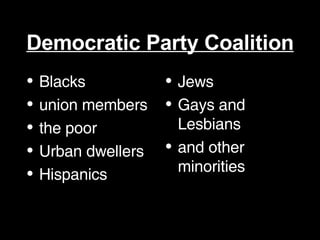
Democratic Party Coalition Blacks union members the poor Urban dwellers Hispanics Jews Gays and Lesbians and other minorities
Republican Party Coalition Consists primarily of white, middle-class Protestants (largely evangelical).  GOP tends to do better in the suburbs, the South and Midwest, and among white fundamentalist Christians.
Party Organization the formal organizational apparatus of a political party
Party Organizations Roles and Functions of Party Organizations Structure of Party Organizations Differences between Republican and Democratic Party Organizations
Roles and Functions of  Party Organizations Primary purpose of a party organization is to run candidates for election. Aggregate Interests Facilitate Participation Simplify Alternatives Stimulate Interest in Politics and Government
Some of these functions are being taken over by  527 groups
Structure of Party Organizations
loose associations of national, state and local party organizations
Cooperation, not control
Levels of Party Organizations Local State National
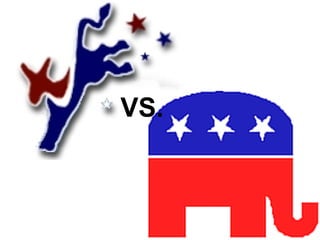
VS.
Republicans: Ahead of the Game?
Democrats: Lagging Behind but Catching Up
Blogs & the Emerging “Netroots”
Change in Nomination Process + Decline in Patronage __________________________ Decline in Party Organizations
Nomination selection of individual who will run as the party’s candidate in the general election.
3 Types of Party Systems
One-party system A political system in which representatives of one political party hold all or almost all the major offices in government.
Two-party system A political system in which only two political parties have a realistic chance of controlling the major offices of government.
Multi-party system A political system in which three or more political parties effectively compete for political office and no one party can win control of all offices.
Why does the US have  a two party system? Electoral Rules Restrictions on Minor Parties Attitudes of the American Public
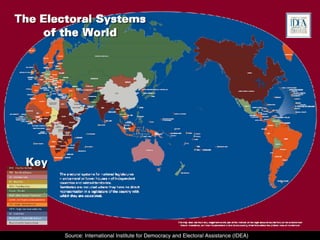
Most democratic nations use a  proportional representation  system.
Source: International Institute for Democracy and Electoral Assistance (IDEA)

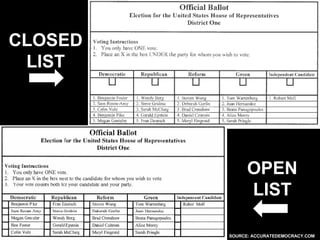
CLOSED LIST OPEN LIST SOURCE: ACCURATEDEMOCRACY.COM
United States uses a  First Past The Post (FPTP)  System
aka, Plurality, Single-Member District system
“ Winner Takes All”
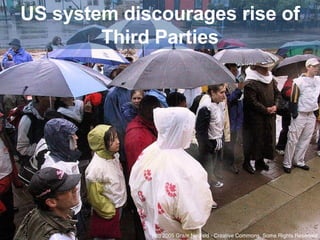
US system discourages rise of Third Parties (cc) 2005 Grant Neufeld - Creative Commons, Some Rights Reserved
Why does the US have  a two party system? Electoral Rules Restrictions on Minor Parties Attitudes of the American Public
The major parties often establish rules that make it difficult for other parties to get on the ballot. (cc) 2006 Adrian Liem - Creative Commons Some Rights Reserved
Qualification rules for third-party presidential candidates can create financial difficulties… (cc) 2006 Steven Hoang - Some Rights Reserved
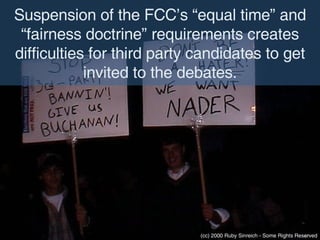
Suspension of the FCC’s “equal time” and “fairness doctrine” requirements creates difficulties for third party candidates to get invited to the debates. (cc) 2000 Ruby Sinreich - Some Rights Reserved
Why does the US have  a two party system? Electoral Rules Restrictions on Minor Parties Attitudes of the American Public
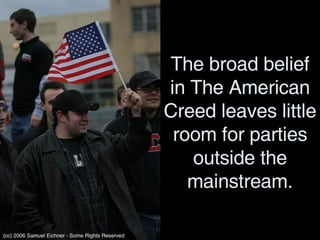
The broad belief in The American Creed leaves little room for parties outside the mainstream. (cc) 2006 Samuel Eichner - Some Rights Reserved
People grow comfortable with the system they are used to… (cc) 2006 Mattias Berg - Some Rights Reserved
“ Human institutions have an impressive capacity to perpetuate themselves, or at least to preserve their form.”   ~ V.O. Key
Minor parties in the two-party system
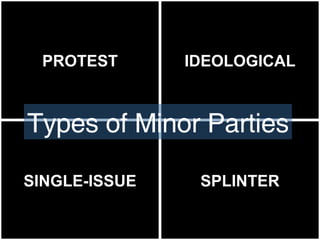
PROTEST IDEOLOGICAL SINGLE-ISSUE SPLINTER Types of Minor Parties
The Role of Minor Parties
Articulate and popularize new ideas
Allow people with grievances to express themselves in a way not possible within the major parties.
Minor parties are usually not as  cautious as the major parties Tend to be loud, unambiguous about policies, ideologically committed. Expand the scope of conflict in American politics. Increase interest and attention among at least some segments of the public. Bring a few more Americans into the political process.
Realignment When a new party system has taken the place of the old system because of a fundamental shift in the types of groups that support the parties.
Realignment Why are they caused?
Realignment When do they tend to occur?
Critical elections?
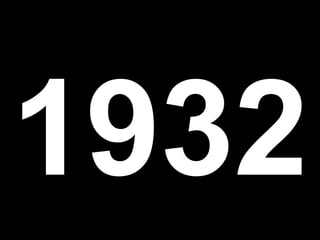
1932
Dealignment Transformation of the party system in which a previously dominant party loses its dominant status but no new party takes its place.
Parity  isn’t just for the NFL or College Basketball!
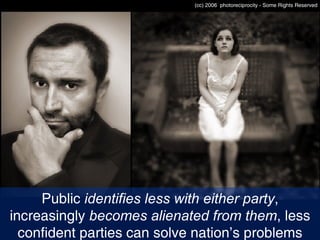
Public  identifies less with either party , increasingly  becomes alienated from them ,   less confident parties can solve nation’s problems (cc) 2006  photoreciprocity - Some Rights Reserved
Evidence supporting  dealignment analysis: Decline in strong party identifiers among American citizens. Rise in those claiming to be independents. Wide-spread distrust in capacities, intentions of both parties & their leadership. Proliferation of independent candidates and third-party efforts, 1992-2000. Americans did NOT support a conservative shift in national policies in the 1994, 2000 elections.

PS 101 Political Parties

  • 1.
    Political Parties Dr.Christopher S. Rice
  • 2.
    What is apolitical party?
  • 3.
    Political Party Anongoing coalition of interests joined together in an effort to get its candidates for public office elected under a common label.
  • 4.
  • 5.
    Parties give citizensthe capacity to act together
  • 6.
    Enables people fromdiverse backgrounds with diverse interests to unite behind a single alternative
  • 7.
    “ It isthe competition of [parties] that provides the people with an opportunity to make a choice. Without this opportunity popular sovereignty amounts to nothing.” - E.E. Schattschneider
  • 8.
    Party Coalition thegroups and interests that support a party
  • 9.
    The Necessity ofCoalitions
  • 10.
    Democratic coalition tends to draw from society’s “underdogs”
  • 11.
    Democratic Party CoalitionBlacks union members the poor Urban dwellers Hispanics Jews Gays and Lesbians and other minorities
  • 12.
    Republican Party CoalitionConsists primarily of white, middle-class Protestants (largely evangelical). GOP tends to do better in the suburbs, the South and Midwest, and among white fundamentalist Christians.
  • 13.
    Republican Party CoalitionConsists primarily of white, middle-class Protestants (largely evangelical). GOP tends to do better in the suburbs, the South and Midwest, and among white fundamentalist Christians.
  • 14.
    Party Organization theformal organizational apparatus of a political party
  • 15.
    Party Organizations Rolesand Functions of Party Organizations Structure of Party Organizations Differences between Republican and Democratic Party Organizations
  • 16.
    Roles and Functionsof Party Organizations Primary purpose of a party organization is to run candidates for election. Aggregate Interests Facilitate Participation Simplify Alternatives Stimulate Interest in Politics and Government
  • 17.
    Some of thesefunctions are being taken over by 527 groups
  • 18.
    Structure of PartyOrganizations
  • 19.
    loose associations ofnational, state and local party organizations
  • 20.
  • 21.
    Levels of PartyOrganizations Local State National
  • 22.
  • 23.
  • 24.
  • 25.
    Blogs & theEmerging “Netroots”
  • 26.
    Change in NominationProcess + Decline in Patronage __________________________ Decline in Party Organizations
  • 27.
    Nomination selection ofindividual who will run as the party’s candidate in the general election.
  • 28.
    3 Types ofParty Systems
  • 29.
    One-party system Apolitical system in which representatives of one political party hold all or almost all the major offices in government.
  • 30.
    Two-party system Apolitical system in which only two political parties have a realistic chance of controlling the major offices of government.
  • 31.
    Multi-party system Apolitical system in which three or more political parties effectively compete for political office and no one party can win control of all offices.
  • 32.
    Why does theUS have a two party system? Electoral Rules Restrictions on Minor Parties Attitudes of the American Public
  • 33.
    Most democratic nationsuse a proportional representation system.
  • 34.
    Source: International Institutefor Democracy and Electoral Assistance (IDEA)
  • 35.
    CLOSED LIST OPENLIST SOURCE: ACCURATEDEMOCRACY.COM
  • 36.
    United States usesa First Past The Post (FPTP) System
  • 37.
  • 38.
  • 39.
    US system discouragesrise of Third Parties (cc) 2005 Grant Neufeld - Creative Commons, Some Rights Reserved
  • 40.
    Why does theUS have a two party system? Electoral Rules Restrictions on Minor Parties Attitudes of the American Public
  • 41.
    The major partiesoften establish rules that make it difficult for other parties to get on the ballot. (cc) 2006 Adrian Liem - Creative Commons Some Rights Reserved
  • 42.
    Qualification rules forthird-party presidential candidates can create financial difficulties… (cc) 2006 Steven Hoang - Some Rights Reserved
  • 43.
    Suspension of theFCC’s “equal time” and “fairness doctrine” requirements creates difficulties for third party candidates to get invited to the debates. (cc) 2000 Ruby Sinreich - Some Rights Reserved
  • 44.
    Why does theUS have a two party system? Electoral Rules Restrictions on Minor Parties Attitudes of the American Public
  • 45.
    The broad beliefin The American Creed leaves little room for parties outside the mainstream. (cc) 2006 Samuel Eichner - Some Rights Reserved
  • 46.
    People grow comfortablewith the system they are used to… (cc) 2006 Mattias Berg - Some Rights Reserved
  • 47.
    “ Human institutionshave an impressive capacity to perpetuate themselves, or at least to preserve their form.” ~ V.O. Key
  • 48.
    Minor parties inthe two-party system
  • 49.
    PROTEST IDEOLOGICAL SINGLE-ISSUESPLINTER Types of Minor Parties
  • 50.
    PROTEST IDEOLOGICAL SINGLE-ISSUESPLINTER Types of Minor Parties
  • 51.
    PROTEST IDEOLOGICAL SINGLE-ISSUESPLINTER Types of Minor Parties
  • 52.
    PROTEST IDEOLOGICAL SINGLE-ISSUESPLINTER Types of Minor Parties
  • 53.
    PROTEST IDEOLOGICAL SINGLE-ISSUESPLINTER Types of Minor Parties
  • 54.
    The Role ofMinor Parties
  • 55.
  • 56.
    Allow people withgrievances to express themselves in a way not possible within the major parties.
  • 57.
    Minor parties areusually not as cautious as the major parties Tend to be loud, unambiguous about policies, ideologically committed. Expand the scope of conflict in American politics. Increase interest and attention among at least some segments of the public. Bring a few more Americans into the political process.
  • 58.
    Realignment When anew party system has taken the place of the old system because of a fundamental shift in the types of groups that support the parties.
  • 59.
    Realignment Why arethey caused?
  • 60.
    Realignment When dothey tend to occur?
  • 61.
  • 62.
  • 63.
    Dealignment Transformation ofthe party system in which a previously dominant party loses its dominant status but no new party takes its place.
  • 64.
    Parity isn’tjust for the NFL or College Basketball!
  • 65.
    Public identifiesless with either party , increasingly becomes alienated from them , less confident parties can solve nation’s problems (cc) 2006 photoreciprocity - Some Rights Reserved
  • 66.
    Evidence supporting dealignment analysis: Decline in strong party identifiers among American citizens. Rise in those claiming to be independents. Wide-spread distrust in capacities, intentions of both parties & their leadership. Proliferation of independent candidates and third-party efforts, 1992-2000. Americans did NOT support a conservative shift in national policies in the 1994, 2000 elections.