POL 252-01
Spring 2016
INSTRUCTIONS
You have been appointed by President Obama to be on the
2016 Commission to Redraft the United States Constitution.
Write a detailed outline discussing the
general layout of this new document.
What would the new document look like?
What provisions would be added and what would be taken out? Why?
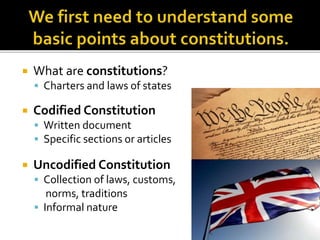
 What are constitutions?
 Charters and laws of states
 Codified Constitution
 Written document
 Specific sections or articles
 Uncodified Constitution
 Collection of laws, customs,
norms, traditions
 Informal nature
 #1: Absolutist Constitution
 Centralized power to produce, change legal docs
 No popular participation in govt.
 Examples: Communist countries, Post-Coup
 #2: Legislative Supremacy Constitution
 Provides (1) institutions and (2) elections
 Three main characteristics:
▪ (1) Majority vote, (2) No authority, (3) No Bill of Rights
 #3: Higher Law Constitution
 Presence of State institutions
 Govt. power / authority given to people
 Scope of legislative authority
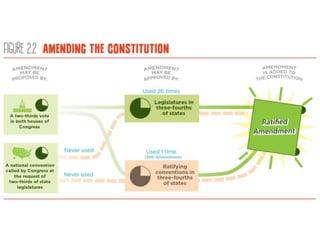
 Gives (1) rights and (2) amendment process
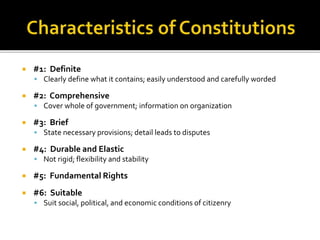
 #1: Definite
 Clearly define what it contains; easily understood and carefully worded
 #2: Comprehensive
 Cover whole of government; information on organization
 #3: Brief
 State necessary provisions; detail leads to disputes
 #4: Durable and Elastic
 Not rigid; flexibility and stability
 #5: Fundamental Rights
 #6: Suitable
 Suit social, political, and economic conditions of citizenry
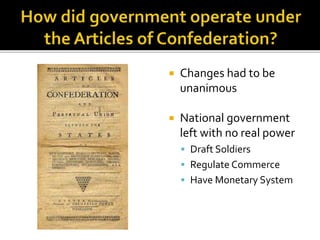
 Changes had to be
unanimous
 National government
left with no real power
 Draft Soldiers
 Regulate Commerce
 Have Monetary System
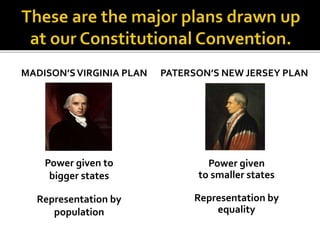
MADISON’SVIRGINIA PLAN PATERSON’S NEW JERSEY PLAN
Power given
to smaller states
Representation by
equality
Power given to
bigger states
Representation by
population
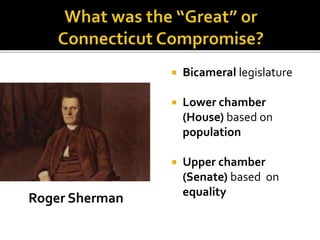
 Bicameral legislature
 Lower chamber
(House) based on
population
 Upper chamber
(Senate) based on
equality
Roger Sherman
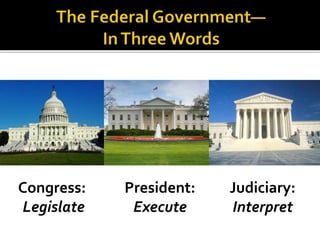
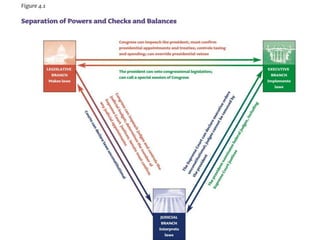
Congress:
Legislate
President:
Execute
Judiciary:
Interpret
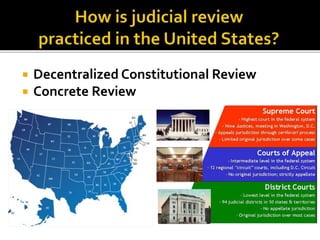
 Decentralized Constitutional Review
 Concrete Review
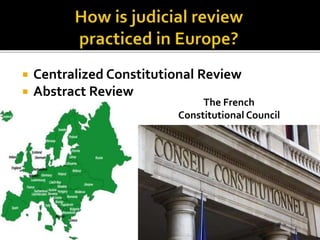
 Centralized Constitutional Review
 Abstract Review
The French
Constitutional Council
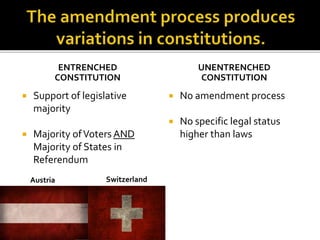
ENTRENCHED
CONSTITUTION
 Support of legislative
majority
 Majority ofVoters AND
Majority of States in
Referendum
UNENTRENCHED
CONSTITUTION
 No amendment process
 No specific legal status
higher than laws
Austria Switzerland
 Protects AgainstTyranny
 Dispersion and Diffusion of Power
 Increases Participation
 Officeholders and Citizens
 Improves Efficiency
 Ensures Policy Responsiveness / Innovation
 Reduces Conflict
 Creates Complexity and Confusion;
Reduces Accountability
 Increases Conflict
 “NIMBY” – Not in My BackYard
 Creates Inequality
 Economic Inequality, Racial Discrimination
 Law enforcement and justice are uneven
 Expertise and money
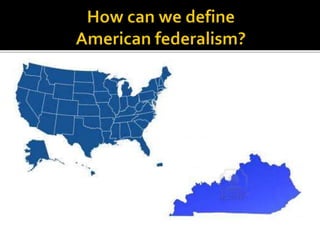
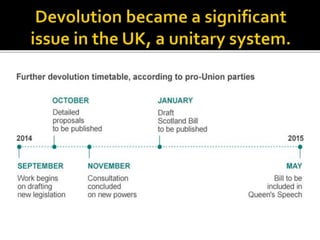
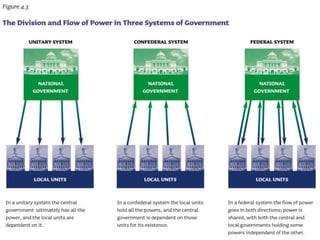
 Power rests with national government
 National government delegates authority to
subnational (state / local) governments
 Case Examples:
 Subnational governments hold power
 State/local governments delegate authority
to central government
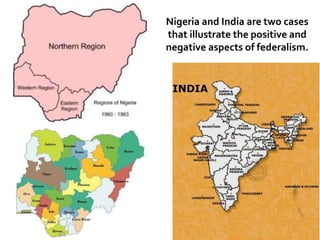
Nigeria and India are two cases
that illustrate the positive and
negative aspects of federalism.
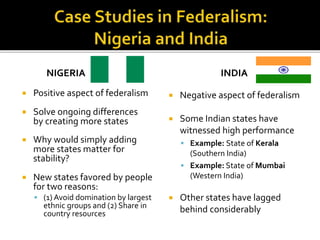
NIGERIA
 Positive aspect of federalism
 Solve ongoing differences
by creating more states
 Why would simply adding
more states matter for
stability?
 New states favored by people
for two reasons:
 (1) Avoid domination by largest
ethnic groups and (2) Share in
country resources
INDIA
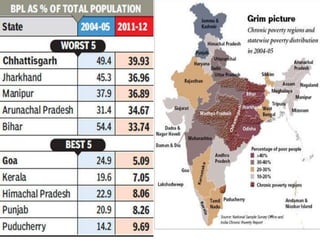
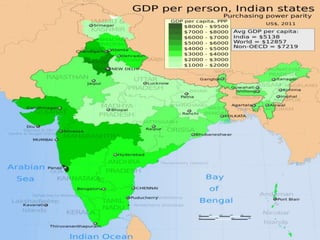
 Negative aspect of federalism
 Some Indian states have
witnessed high performance
 Example: State of Kerala
(Southern India)
 Example: State of Mumbai
(Western India)
 Other states have lagged
behind considerably
Constitutions and Constitutional Design

Constitutions and Constitutional Design

  • 1.
  • 5.
    INSTRUCTIONS You have beenappointed by President Obama to be on the 2016 Commission to Redraft the United States Constitution. Write a detailed outline discussing the general layout of this new document. What would the new document look like? What provisions would be added and what would be taken out? Why?
  • 7.
     What areconstitutions?  Charters and laws of states  Codified Constitution  Written document  Specific sections or articles  Uncodified Constitution  Collection of laws, customs, norms, traditions  Informal nature
  • 8.
     #1: AbsolutistConstitution  Centralized power to produce, change legal docs  No popular participation in govt.  Examples: Communist countries, Post-Coup  #2: Legislative Supremacy Constitution  Provides (1) institutions and (2) elections  Three main characteristics: ▪ (1) Majority vote, (2) No authority, (3) No Bill of Rights
  • 9.
     #3: HigherLaw Constitution  Presence of State institutions  Govt. power / authority given to people  Scope of legislative authority  Gives (1) rights and (2) amendment process
  • 11.
     #1: Definite Clearly define what it contains; easily understood and carefully worded  #2: Comprehensive  Cover whole of government; information on organization  #3: Brief  State necessary provisions; detail leads to disputes  #4: Durable and Elastic  Not rigid; flexibility and stability  #5: Fundamental Rights  #6: Suitable  Suit social, political, and economic conditions of citizenry
  • 14.
     Changes hadto be unanimous  National government left with no real power  Draft Soldiers  Regulate Commerce  Have Monetary System
  • 18.
    MADISON’SVIRGINIA PLAN PATERSON’SNEW JERSEY PLAN Power given to smaller states Representation by equality Power given to bigger states Representation by population
  • 19.
     Bicameral legislature Lower chamber (House) based on population  Upper chamber (Senate) based on equality Roger Sherman
  • 21.
  • 22.
     Decentralized ConstitutionalReview  Concrete Review
  • 23.
     Centralized ConstitutionalReview  Abstract Review The French Constitutional Council
  • 27.
    ENTRENCHED CONSTITUTION  Support oflegislative majority  Majority ofVoters AND Majority of States in Referendum UNENTRENCHED CONSTITUTION  No amendment process  No specific legal status higher than laws Austria Switzerland
  • 32.
     Protects AgainstTyranny Dispersion and Diffusion of Power  Increases Participation  Officeholders and Citizens  Improves Efficiency  Ensures Policy Responsiveness / Innovation  Reduces Conflict
  • 33.
     Creates Complexityand Confusion; Reduces Accountability  Increases Conflict  “NIMBY” – Not in My BackYard  Creates Inequality  Economic Inequality, Racial Discrimination  Law enforcement and justice are uneven  Expertise and money
  • 35.
     Power restswith national government  National government delegates authority to subnational (state / local) governments  Case Examples:
  • 37.
     Subnational governmentshold power  State/local governments delegate authority to central government
  • 39.
    Nigeria and Indiaare two cases that illustrate the positive and negative aspects of federalism.
  • 40.
    NIGERIA  Positive aspectof federalism  Solve ongoing differences by creating more states  Why would simply adding more states matter for stability?  New states favored by people for two reasons:  (1) Avoid domination by largest ethnic groups and (2) Share in country resources INDIA  Negative aspect of federalism  Some Indian states have witnessed high performance  Example: State of Kerala (Southern India)  Example: State of Mumbai (Western India)  Other states have lagged behind considerably

Editor's Notes

  • #3 We will now be moving into discussing constitutions and constitutional design. These are both fundamental issues for establishing a working government. I have placed a link on Canvas to the Comparative Constitutions Project. On this site, you can compare two constitutions. I highly encourage you to look at this page and see the differences between different countries’ constitutional structures.
  • #8 Constitutions are charters and laws of modern states. The constitution of a given country may take different formats: A codified constitution is a written document with specific sections or articles detailing the different branches of government, etc. The United States is a classic example of this constitutional type. An uncodified constitution is a collection of laws, customs, norms, and traditions that are codified over time. Only a few countries, including the United Kingdom, still have uncodified constitutions
  • #9 #1: Absolutist Constitution The authority to produce and change legal documents, including constitutions, is centralized and absolute. These documents reject popular participation in government, separation of powers, etc. Examples: Communist Party countries (e.g. USSR) and those following military coups in Africa and South America. #2: Legislative Supremacy Constitution These constitutions provide for a set of governmental institutions (i.e. three branches of government), as well as legislative elections. Main Characteristics: Can be changed by majority vote of legislature No institution can review constitutional legitimacy of laws Example: U.S. Court System – Supreme Court is highest court in U.S., no court above them to take case if lose at federal level. 3) No Bill of Rights to constrain legislative authority
  • #10 #3: Higher Law Constitution State institutions (e.g. legislative, executive, judicial branches) come from a written constitution. Ultimate power given to people through elections / referendums . Legislative authority must be in line with constitutional law. Constitution provides for set of rights and justice to defend rights. Constitution provides specific amendment process
  • #11 Think about your answer to this question.
  • #12 There are six major characteristics of constitutions: #1: Definite - The constitution must clearly define what it contains. - Easily understood by people; carefully worded.   #2: Comprehensive - A good constitution should cover the whole field of government. - Include information on the general organization and powers of the various institutions or components of government.   #3: Brief  - Constitution should only state necessary provisions - If the constitution is too detailed, it may lead to disputes in political system   #4: Durable and Elastic - Constitution should not be so rigid to prevent change nor so flexible as to encourage tampering with basic principles - Flexibility and stability in a constitution should go together   #5: Fundamental Rights - Constitution should contain list of fundamental rights of citizens   #6: Suitable - Should suit the social, political, and economic conditions of its citizenry
  • #13 Our own country provides a good example of constitutional design.
  • #14 Our nation’s first constitution was the Articles of Confederation .