Cabling 
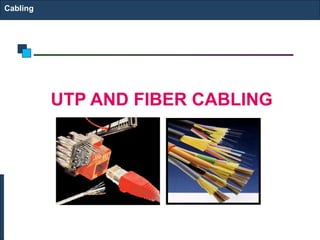
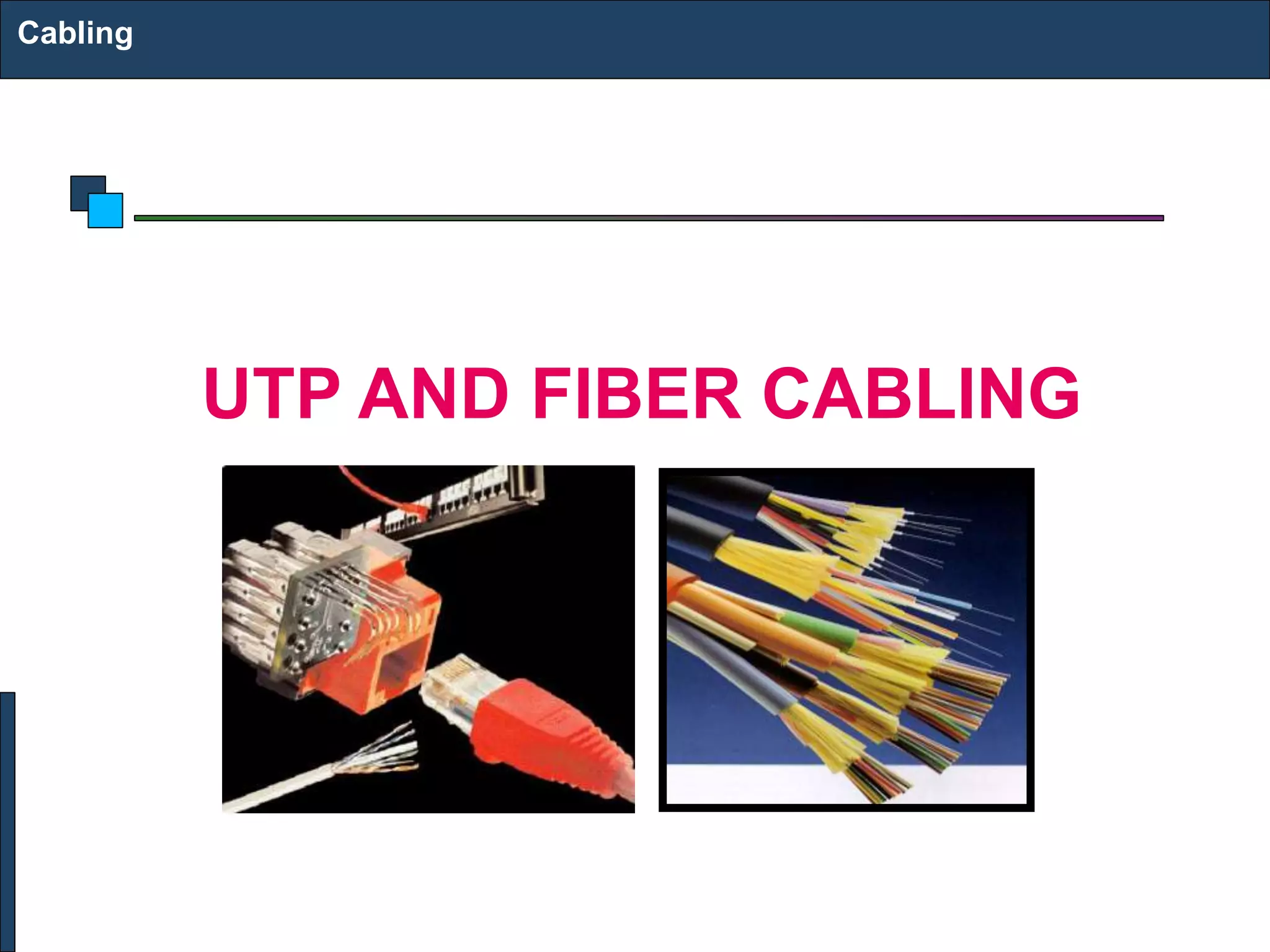
UTP AND FIBER CABLING
Structured Cabling Infrastructure 
Mounted and permanent 
Allows patching 
Comfort that infrastructure 
is OK 
Components: 
Information Outlet with Face 
Plate 
Patch Panel 
UTP Cable 
Patch Cord 
Cabling
I/O & Faceplates 
Cabling 
Faceplate mounts on or 
in wall or in raceway 
Single or Dual 
Information Outlet (I/O) 
Provide network 
connectivity to the 
Hosts through a Patch 
Cord
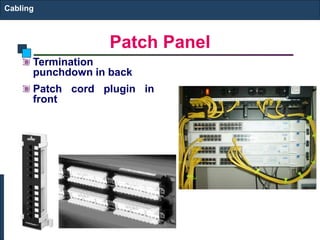
Patch Panel 
Cabling 
Termination 
punchdown in back 
Patch cord plugin in 
front
Cabling 
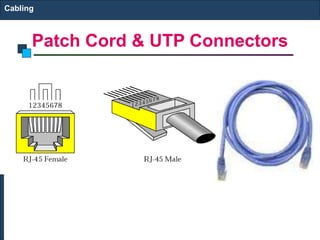
Patch Cord & UTP Connectors
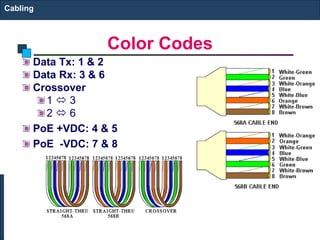
Color Codes 
Cabling 
Data Tx: 1 & 2 
Data Rx: 3 & 6 
Crossover 
1  3 
2  6 
PoE +VDC: 4 & 5 
PoE -VDC: 7 & 8
Cabling 
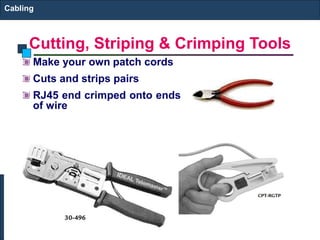
Cutting, Striping & Crimping Tools 
Make your own patch cords 
Cuts and strips pairs 
RJ45 end crimped onto ends 
of wire
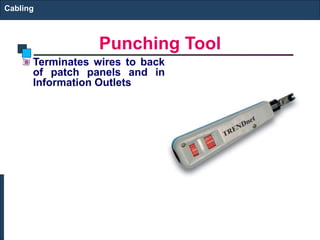
Punching Tool 
Cabling 
Terminates wires to back 
of patch panels and in 
Information Outlets
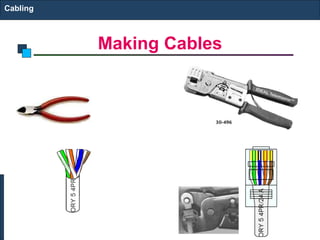
Making Cables 
Cabling
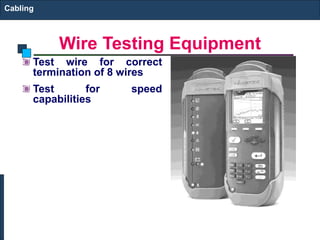
Wire Testing Equipment 
Cabling 
Test wire for correct 
termination of 8 wires 
Test for speed 
capabilities
Cabling Rules 
Cabling 
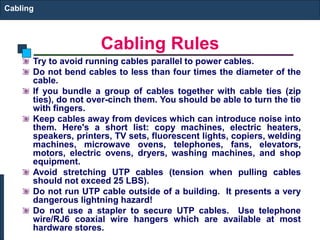
Try to avoid running cables parallel to power cables. 
Do not bend cables to less than four times the diameter of the 
cable. 
If you bundle a group of cables together with cable ties (zip 
ties), do not over-cinch them. You should be able to turn the tie 
with fingers. 
Keep cables away from devices which can introduce noise into 
them. Here's a short list: copy machines, electric heaters, 
speakers, printers, TV sets, fluorescent lights, copiers, welding 
machines, microwave ovens, telephones, fans, elevators, 
motors, electric ovens, dryers, washing machines, and shop 
equipment. 
Avoid stretching UTP cables (tension when pulling cables 
should not exceed 25 LBS). 
Do not run UTP cable outside of a building. It presents a very 
dangerous lightning hazard! 
Do not use a stapler to secure UTP cables. Use telephone 
wire/RJ6 coaxial wire hangers which are available at most 
hardware stores.
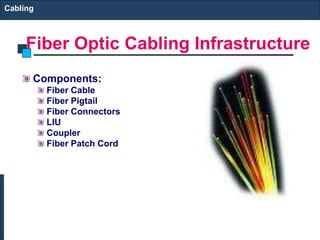
Fiber Optic Cabling Infrastructure 
Components: 
Fiber Cable 
Fiber Pigtail 
Fiber Connectors 
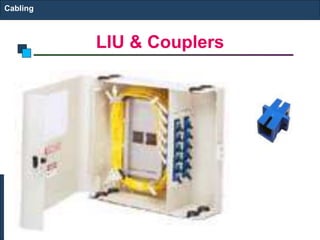
LIU 
Coupler 
Fiber Patch Cord 
Cabling
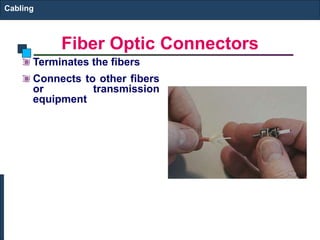
Fiber Optic Connectors 
Cabling 
Terminates the fibers 
Connects to other fibers 
or transmission 
equipment
Cabling 
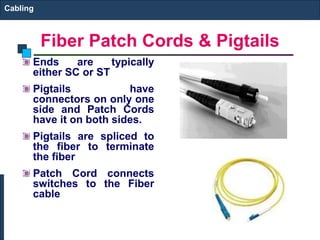
Fiber Patch Cords & Pigtails 
Ends are typically 
either SC or ST 
Pigtails have 
connectors on only one 
side and Patch Cords 
have it on both sides. 
Pigtails are spliced to 
the fiber to terminate 
the fiber 
Patch Cord connects 
switches to the Fiber 
cable
LIU & Couplers 
Cabling
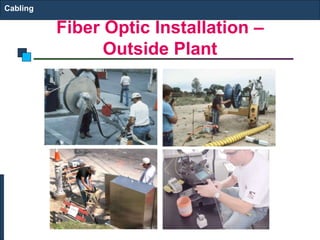
Fiber Optic Installation – 
Outside Plant 
Cabling
Fiber Optic Installation – 
Outside Plant 
Cabling 
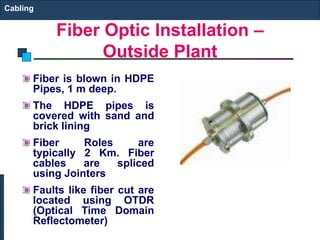
Fiber is blown in HDPE 
Pipes, 1 m deep. 
The HDPE pipes is 
covered with sand and 
brick lining 
Fiber Roles are 
typically 2 Km. Fiber 
cables are spliced 
using Jointers 
Faults like fiber cut are 
located using OTDR 
(Optical Time Domain 
Reflectometer)

Lecture4

  • 1.
    Cabling UTP ANDFIBER CABLING
  • 2.
    Structured Cabling Infrastructure Mounted and permanent Allows patching Comfort that infrastructure is OK Components: Information Outlet with Face Plate Patch Panel UTP Cable Patch Cord Cabling
  • 3.
    I/O & Faceplates Cabling Faceplate mounts on or in wall or in raceway Single or Dual Information Outlet (I/O) Provide network connectivity to the Hosts through a Patch Cord
  • 4.
    Patch Panel Cabling Termination punchdown in back Patch cord plugin in front
  • 5.
    Cabling Patch Cord& UTP Connectors
  • 6.
    Color Codes Cabling Data Tx: 1 & 2 Data Rx: 3 & 6 Crossover 1  3 2  6 PoE +VDC: 4 & 5 PoE -VDC: 7 & 8
  • 7.
    Cabling Cutting, Striping& Crimping Tools Make your own patch cords Cuts and strips pairs RJ45 end crimped onto ends of wire
  • 8.
    Punching Tool Cabling Terminates wires to back of patch panels and in Information Outlets
  • 9.
  • 10.
    Wire Testing Equipment Cabling Test wire for correct termination of 8 wires Test for speed capabilities
  • 11.
    Cabling Rules Cabling Try to avoid running cables parallel to power cables. Do not bend cables to less than four times the diameter of the cable. If you bundle a group of cables together with cable ties (zip ties), do not over-cinch them. You should be able to turn the tie with fingers. Keep cables away from devices which can introduce noise into them. Here's a short list: copy machines, electric heaters, speakers, printers, TV sets, fluorescent lights, copiers, welding machines, microwave ovens, telephones, fans, elevators, motors, electric ovens, dryers, washing machines, and shop equipment. Avoid stretching UTP cables (tension when pulling cables should not exceed 25 LBS). Do not run UTP cable outside of a building. It presents a very dangerous lightning hazard! Do not use a stapler to secure UTP cables. Use telephone wire/RJ6 coaxial wire hangers which are available at most hardware stores.
  • 12.
    Fiber Optic CablingInfrastructure Components: Fiber Cable Fiber Pigtail Fiber Connectors LIU Coupler Fiber Patch Cord Cabling
  • 13.
    Fiber Optic Connectors Cabling Terminates the fibers Connects to other fibers or transmission equipment
  • 14.
    Cabling Fiber PatchCords & Pigtails Ends are typically either SC or ST Pigtails have connectors on only one side and Patch Cords have it on both sides. Pigtails are spliced to the fiber to terminate the fiber Patch Cord connects switches to the Fiber cable
  • 15.
  • 16.
    Fiber Optic Installation– Outside Plant Cabling
  • 17.
    Fiber Optic Installation– Outside Plant Cabling Fiber is blown in HDPE Pipes, 1 m deep. The HDPE pipes is covered with sand and brick lining Fiber Roles are typically 2 Km. Fiber cables are spliced using Jointers Faults like fiber cut are located using OTDR (Optical Time Domain Reflectometer)