INTRODUCTION TO 
METABOLISM
• Metabolism = the totality of an organisms 
chemical processes 
• Inside cells thousands of chemical reactions 
occur within microscopic spaces 
• Metabolism is concerned with the 
management of energy and chemical 
resources of the cell
• Pathways that build up complex compounds 
are called Anabolic 
• Pathways that breakdown complex 
compounds are called Catabolic 
• Often these complimentary reactions are 
paired
Energy 
• Energy is the capacity to do work 
• Kinetic energy is the energy of things in 
motion 
• Potential energy is energy of non-moving 
matter; by virtue of its location or 
arrangement 
• Energy can be converted from one form to 
another
Thermodynamics 
• Thermodynamics is the study of energy 
transformations 
• 1st Law of Thermodynamics = Energy 
cannot be created or destroyed 
• 2nd Law of Thermodynamics = Every 
energy transfer or transformation increases 
the entropy (disorder) in the universe
Free Energy 
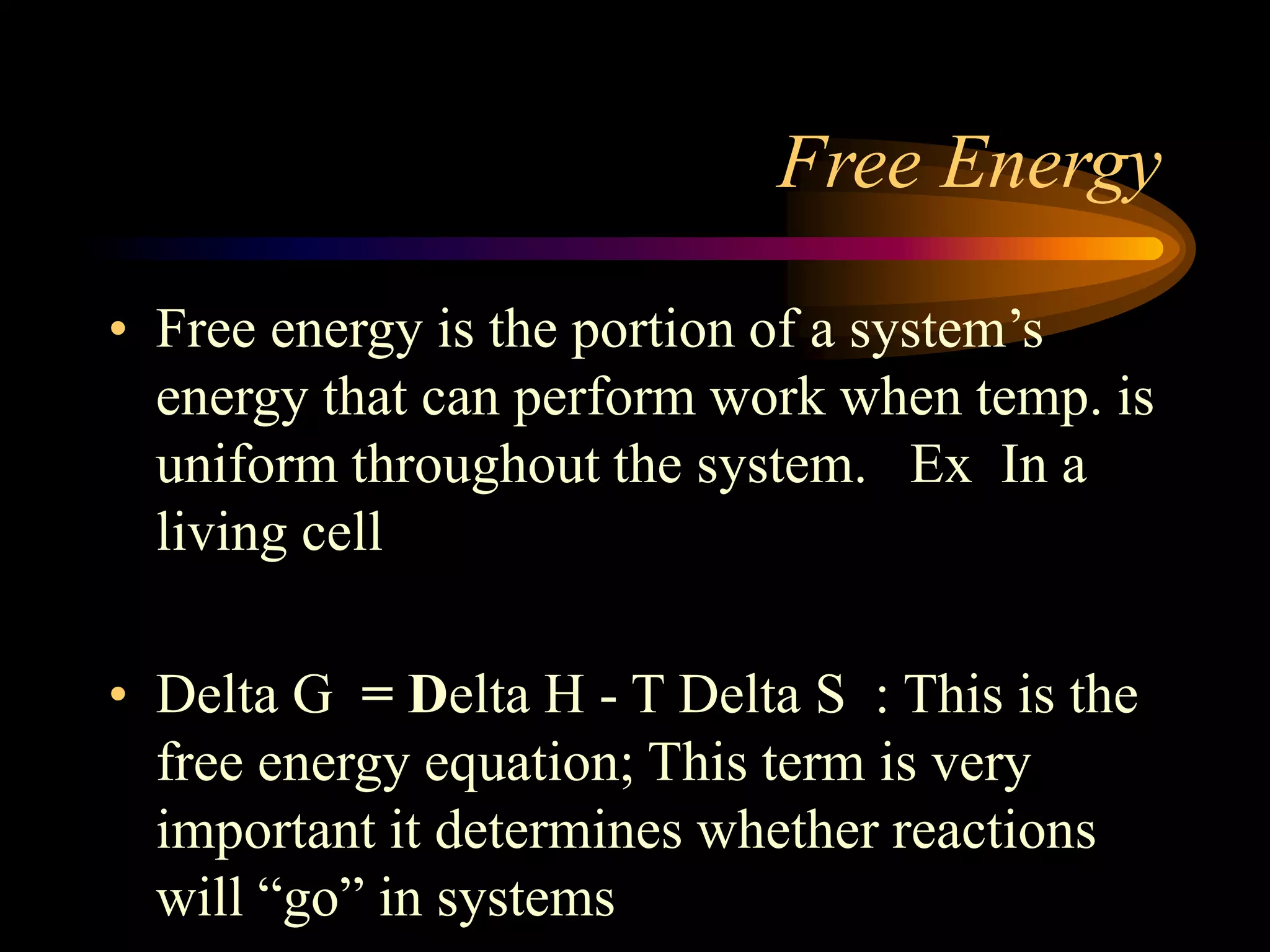
• Free energy is the portion of a system’s 
energy that can perform work when temp. is 
uniform throughout the system. Ex In a 
living cell 
• Delta G = Delta H - T Delta S : This is the 
free energy equation; This term is very 
important it determines whether reactions 
will “go” in systems
Free Energy Cont. 
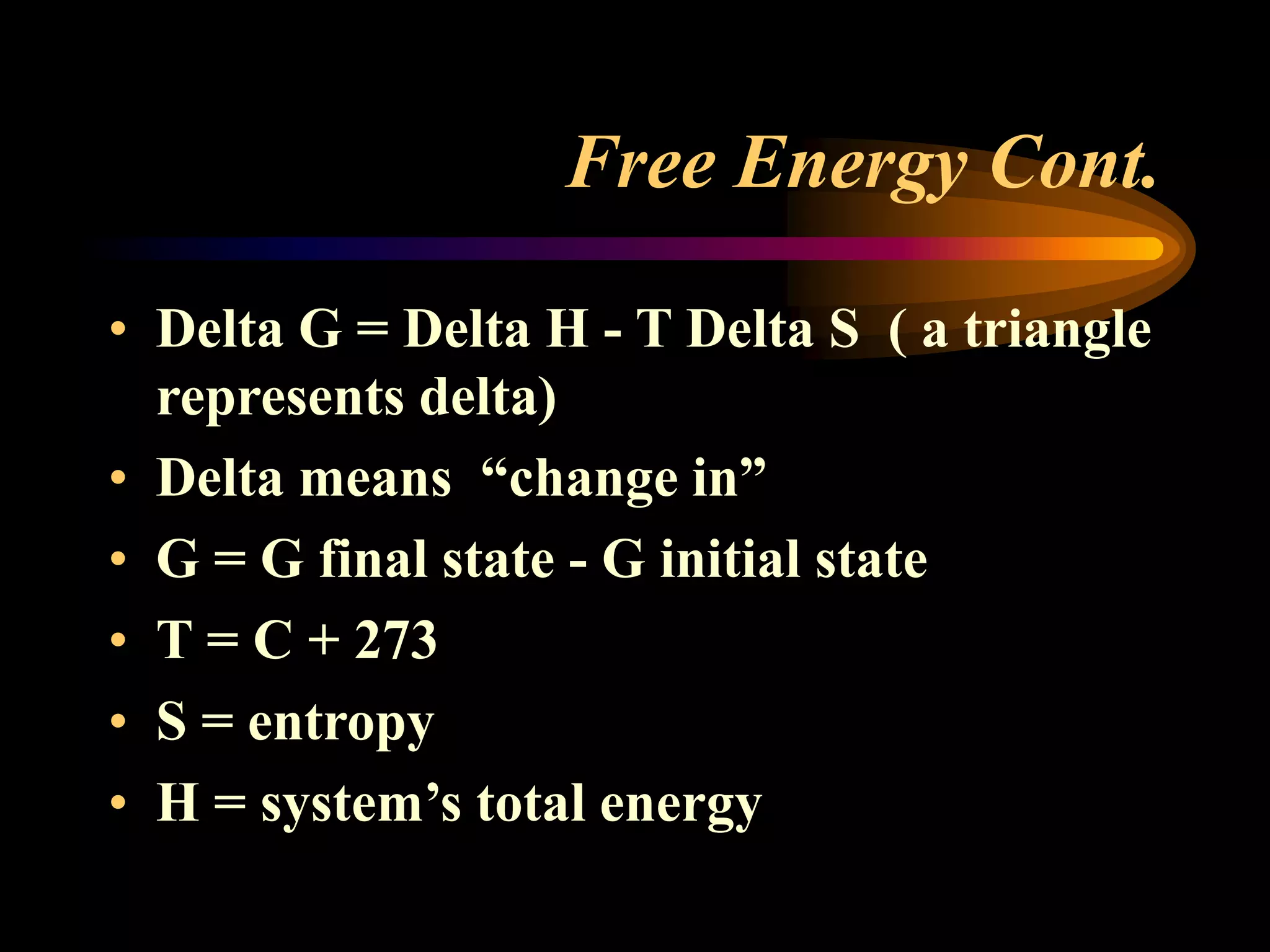
• Delta G = Delta H - T Delta S ( a triangle 
represents delta) 
• Delta means “change in” 
• G = G final state - G initial state 
• T = C + 273 
• S = entropy 
• H = system’s total energy
Reactions in Biological Systems 
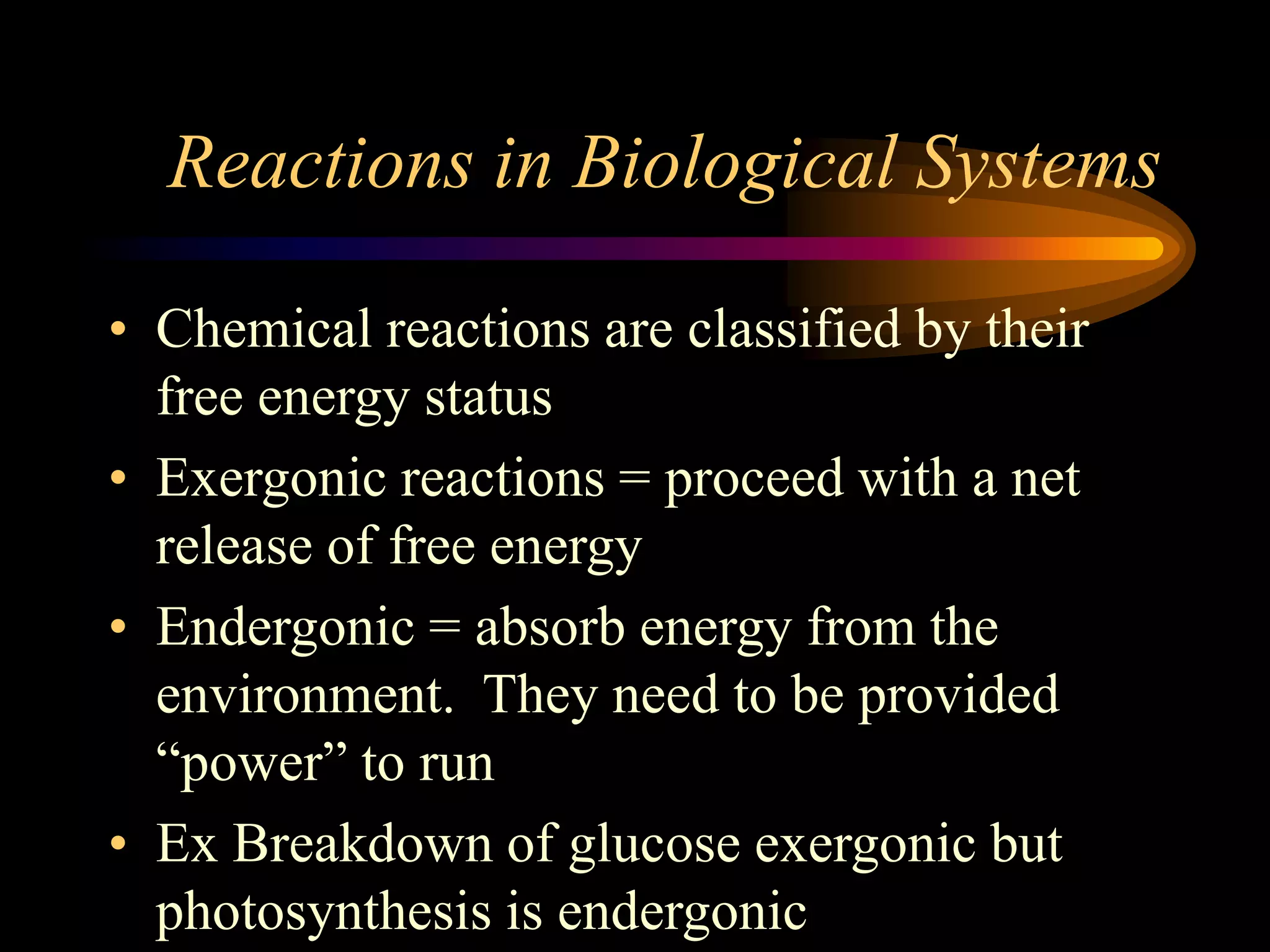
• Chemical reactions are classified by their 
free energy status 
• Exergonic reactions = proceed with a net 
release of free energy 
• Endergonic = absorb energy from the 
environment. They need to be provided 
“power” to run 
• Ex Breakdown of glucose exergonic but 
photosynthesis is endergonic
ATP and Cellular work 
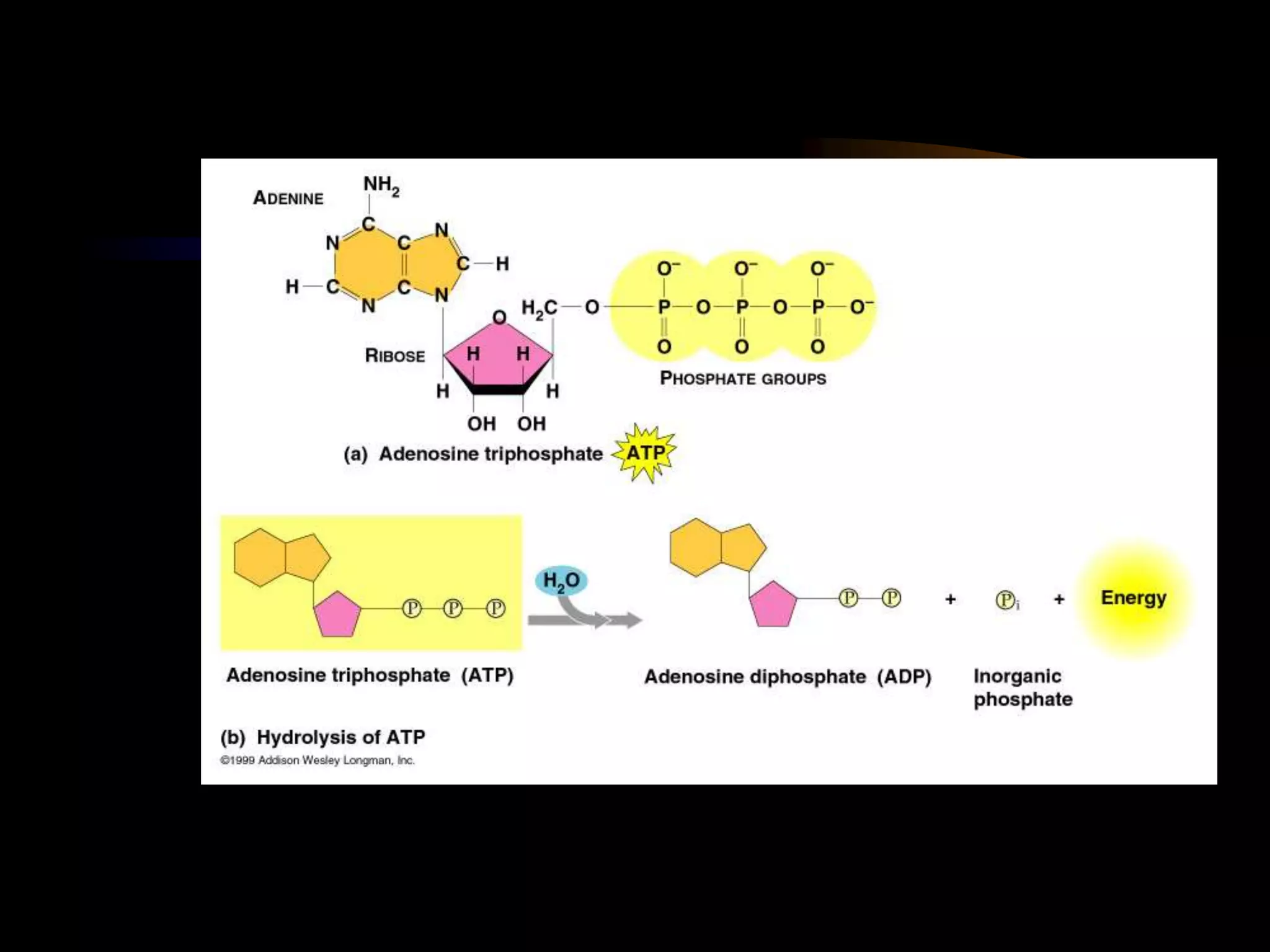
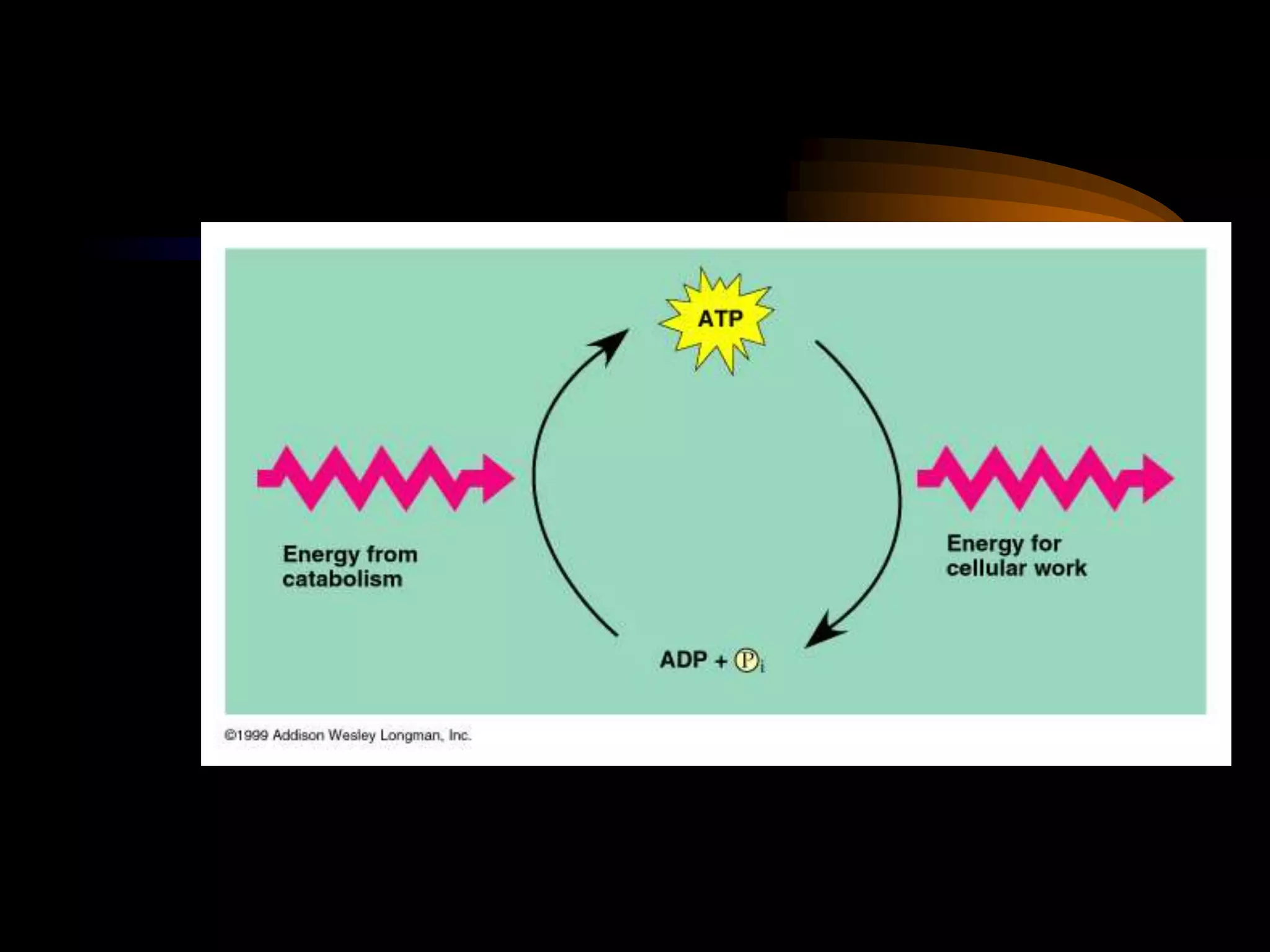
• ATP is a nucleoside that the cell uses to 
power the cell. It is the main energy 
currency of cells. 
• ATP is composed of an adenine, a ribose, 
and PO4 group: the tri PO4 tail is unstable 
• The bonds can be broken by hydrolysis 
• The terminal phosphate is most unstable, 
when removed it yields - ( negative) 7.3 
kcal of energy.
ATP Cont. 
• Negative delta Gs mean the reaction is 
exergonic ( gives off energy) 
• Positive delta Gs mean the reaction is 
endergonic ( needs energy to go) 
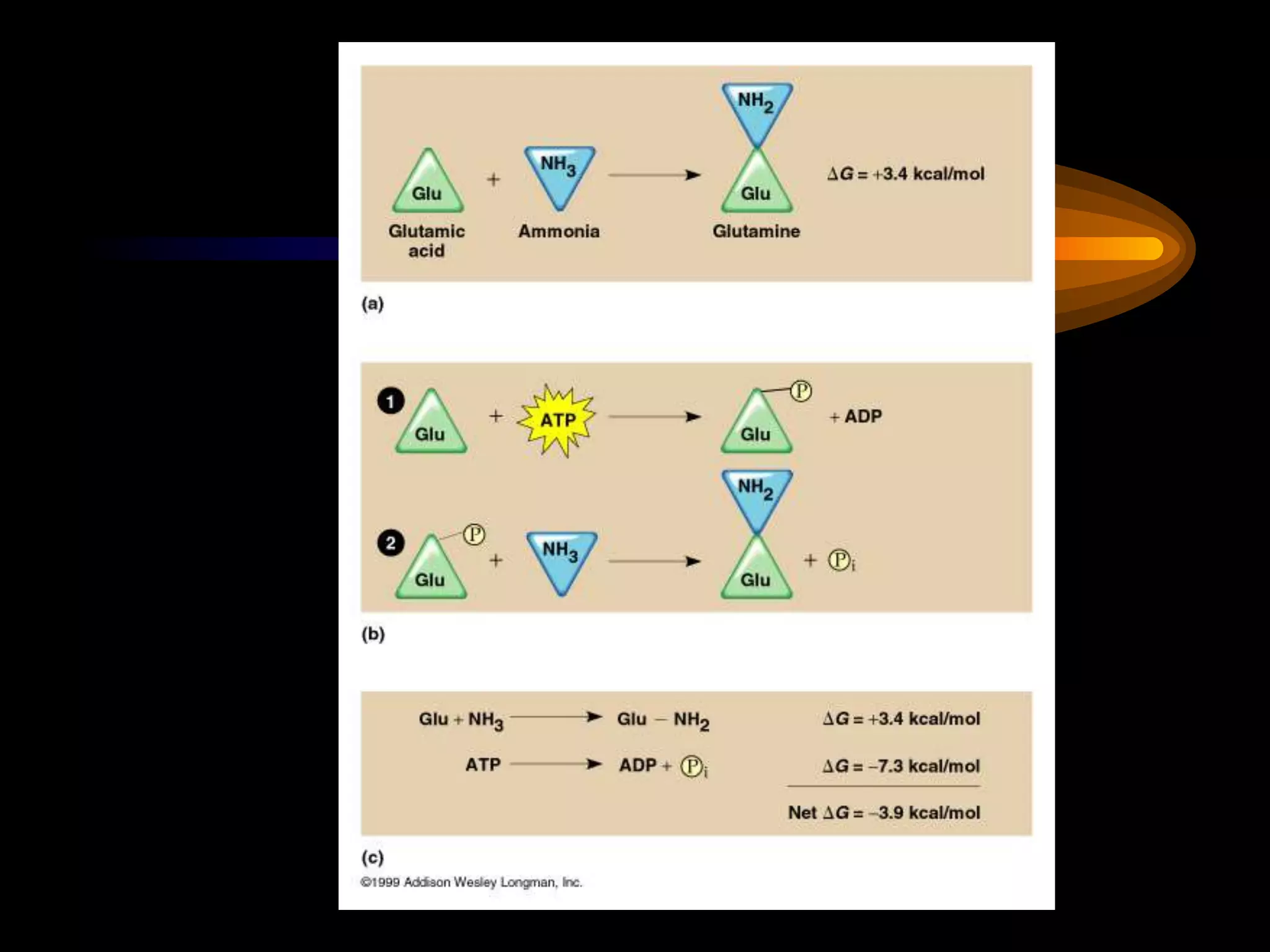
• The cell can couple reaction yielding and 
needing ATP to make complex biochemical 
pathways go. 
• ATP is a renewable resource it is recycled
Enzymes 
• Most chemical reactions would occur too 
slowly in bio systems because the temps are 
fairly low 
• Enzymes are chemical agents that change 
the reaction rate without being consumed or 
converted in the reaction process 
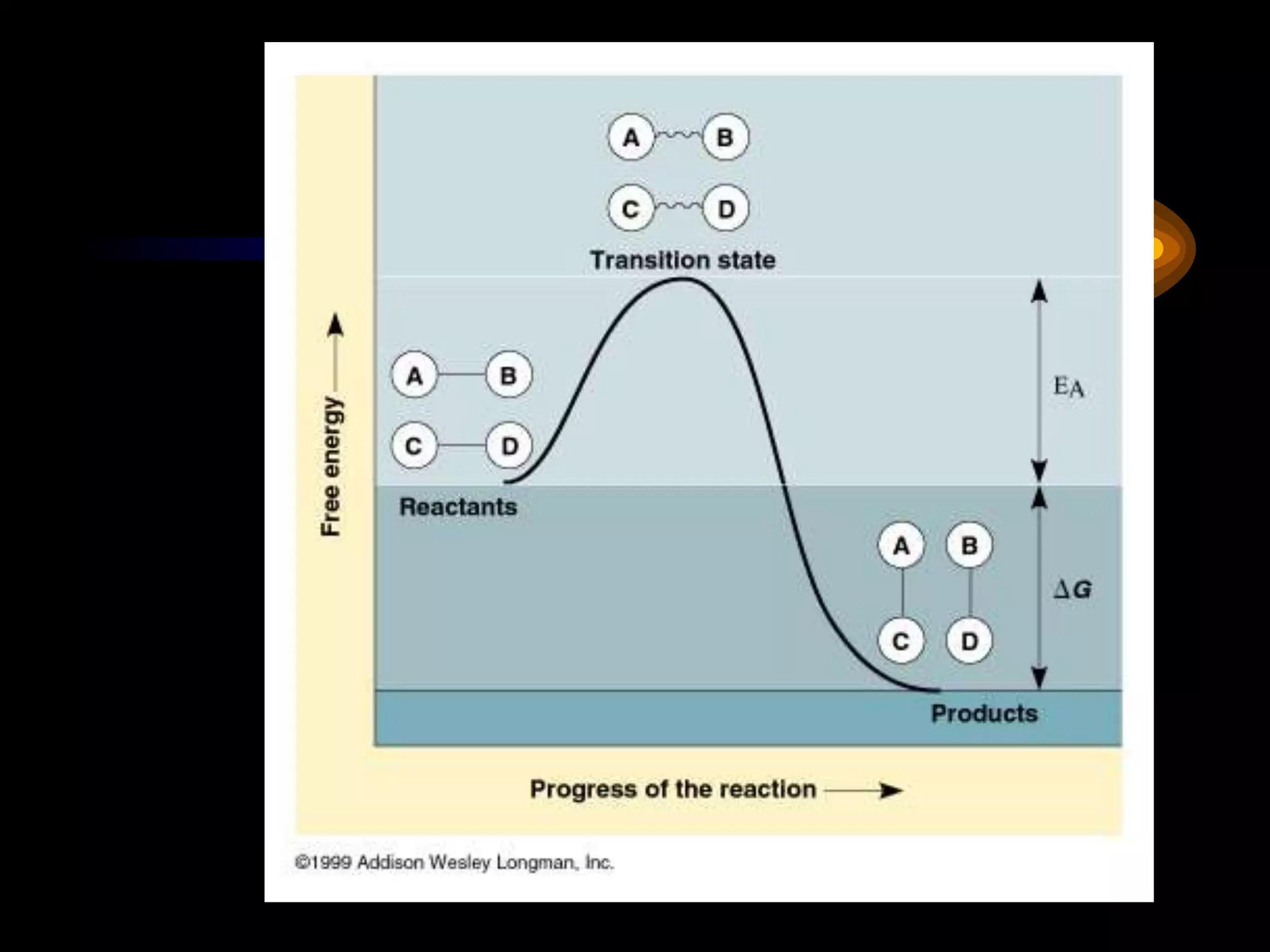
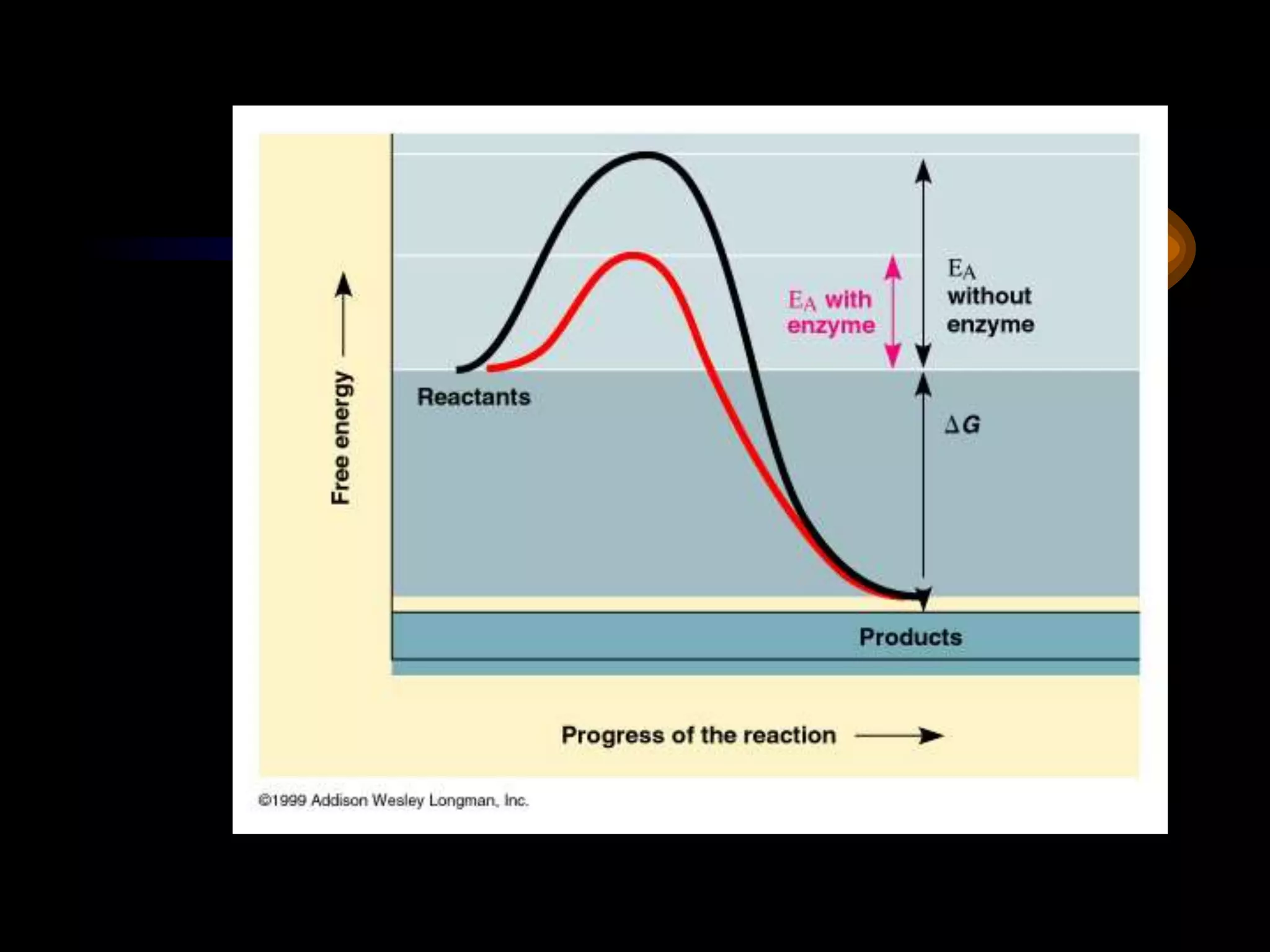
• Enzymes speed reactions by lowering the 
activation energy
Enzymes cont. 
• Enzymes are very specific 
• Enzymes are proteins 
• Chemical reactions involve bond a making 
and breaking 
• The initial energy necessary to start the 
reaction is called activation energy 
• Enzymes can “ recognize” their substrates 
WHY?
Enzymes Cont. 
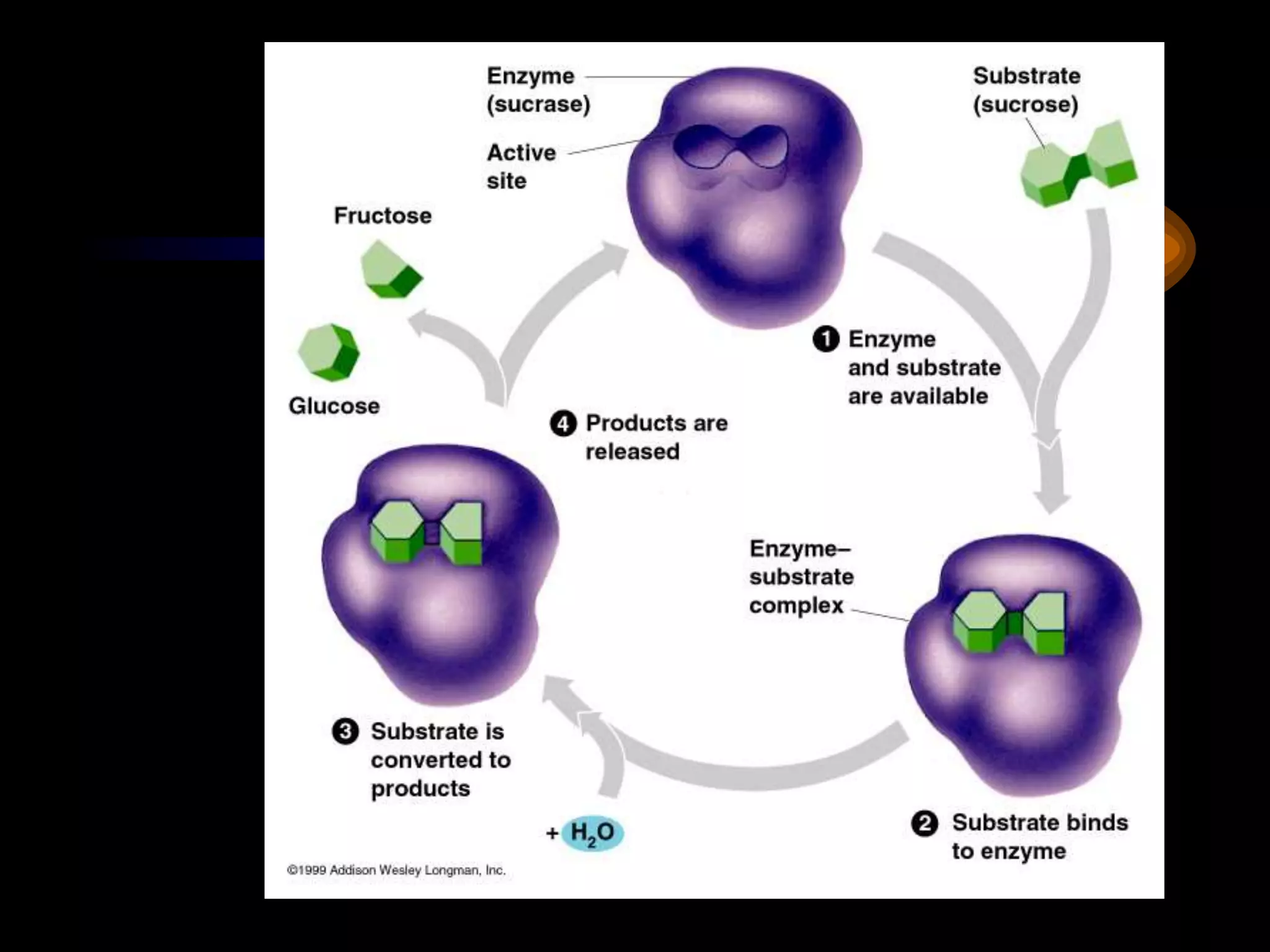
• The active site of an enzyme is the pocket 
where it attaches to the substrate 
• Substrate------Product ( Enzyme) ; 
cofactors = helpers 
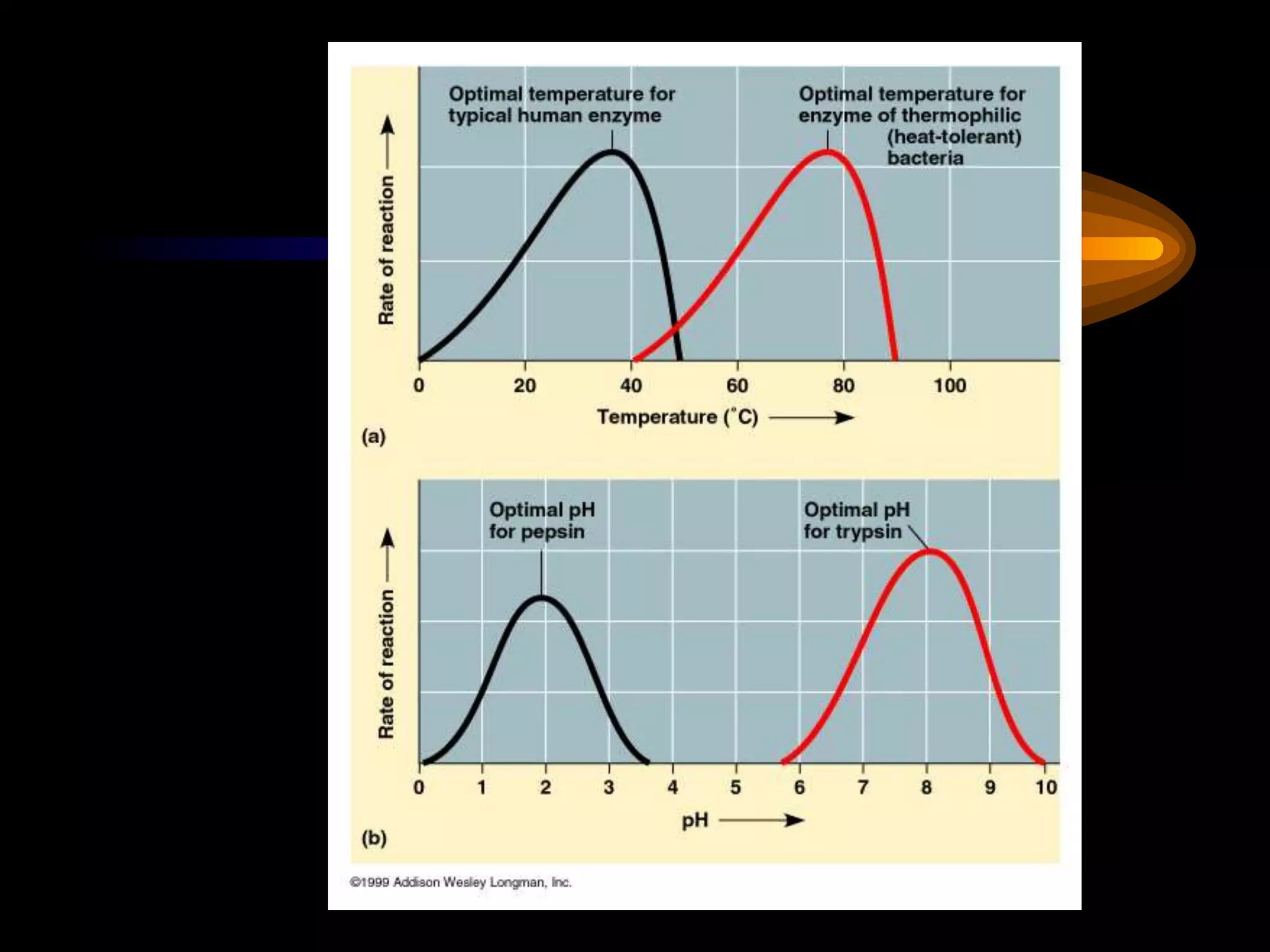
• Factors affecting enzyme function and 
stability 
– Temp 
– pH 
– Salinity
Inhibitors 
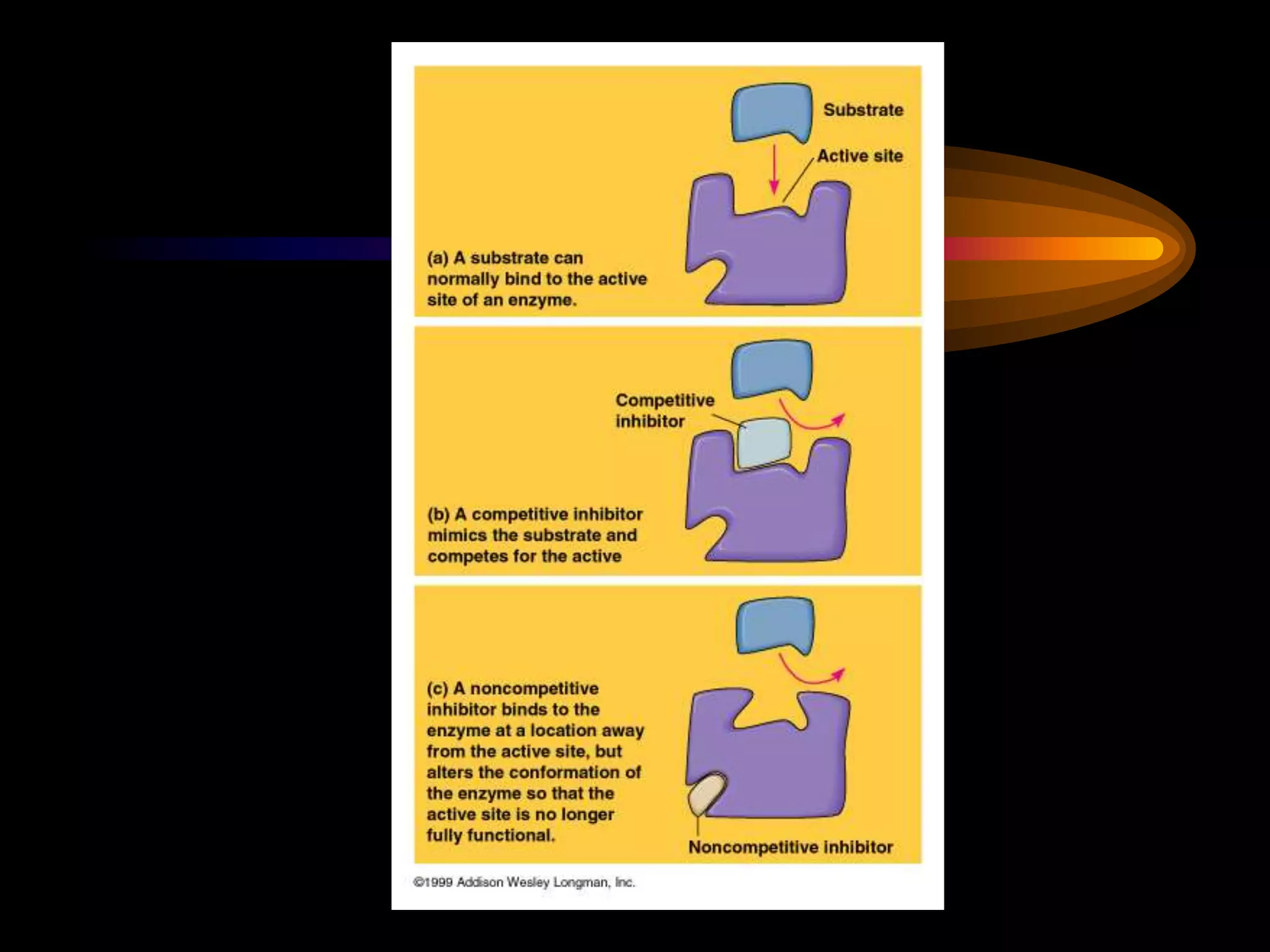
• Enzyme inhibition 
– Competitive = bind to active site 
– Non-competitive = bind to another area
Metabolic Control 
• Not all metabolic pathways are 
simultaneously activated 
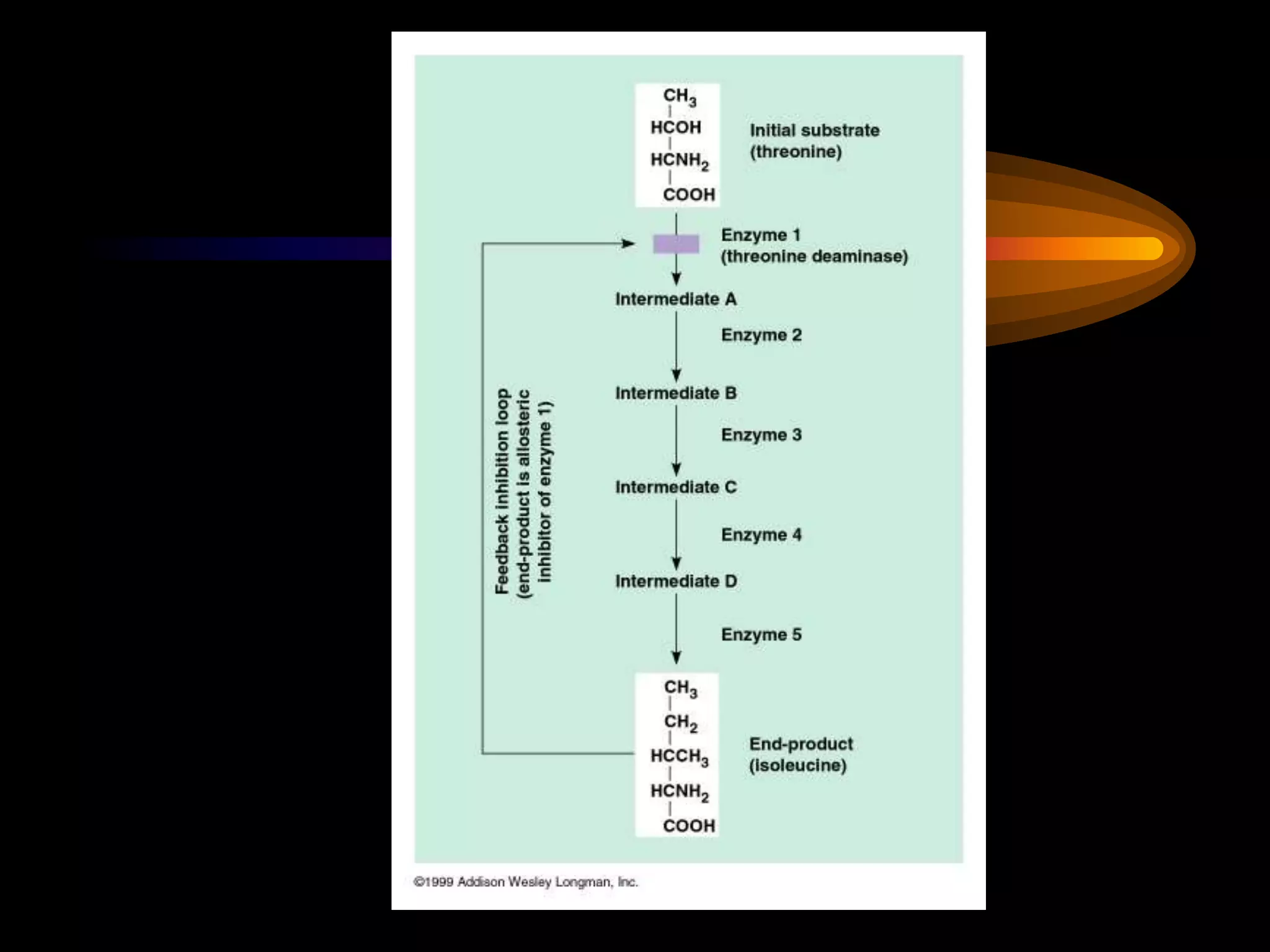
• Feedback inhibition control is most 
common = pathway is turned off by a 
specific concentration of the end product
Chapter06 metabolism to be taught

Chapter06 metabolism to be taught

  • 1.
  • 2.
    • Metabolism =the totality of an organisms chemical processes • Inside cells thousands of chemical reactions occur within microscopic spaces • Metabolism is concerned with the management of energy and chemical resources of the cell
  • 3.
    • Pathways thatbuild up complex compounds are called Anabolic • Pathways that breakdown complex compounds are called Catabolic • Often these complimentary reactions are paired
  • 4.
    Energy • Energyis the capacity to do work • Kinetic energy is the energy of things in motion • Potential energy is energy of non-moving matter; by virtue of its location or arrangement • Energy can be converted from one form to another
  • 5.
    Thermodynamics • Thermodynamicsis the study of energy transformations • 1st Law of Thermodynamics = Energy cannot be created or destroyed • 2nd Law of Thermodynamics = Every energy transfer or transformation increases the entropy (disorder) in the universe
  • 6.
    Free Energy •Free energy is the portion of a system’s energy that can perform work when temp. is uniform throughout the system. Ex In a living cell • Delta G = Delta H - T Delta S : This is the free energy equation; This term is very important it determines whether reactions will “go” in systems
  • 7.
    Free Energy Cont. • Delta G = Delta H - T Delta S ( a triangle represents delta) • Delta means “change in” • G = G final state - G initial state • T = C + 273 • S = entropy • H = system’s total energy
  • 8.
    Reactions in BiologicalSystems • Chemical reactions are classified by their free energy status • Exergonic reactions = proceed with a net release of free energy • Endergonic = absorb energy from the environment. They need to be provided “power” to run • Ex Breakdown of glucose exergonic but photosynthesis is endergonic
  • 9.
    ATP and Cellularwork • ATP is a nucleoside that the cell uses to power the cell. It is the main energy currency of cells. • ATP is composed of an adenine, a ribose, and PO4 group: the tri PO4 tail is unstable • The bonds can be broken by hydrolysis • The terminal phosphate is most unstable, when removed it yields - ( negative) 7.3 kcal of energy.
  • 11.
    ATP Cont. •Negative delta Gs mean the reaction is exergonic ( gives off energy) • Positive delta Gs mean the reaction is endergonic ( needs energy to go) • The cell can couple reaction yielding and needing ATP to make complex biochemical pathways go. • ATP is a renewable resource it is recycled
  • 14.
    Enzymes • Mostchemical reactions would occur too slowly in bio systems because the temps are fairly low • Enzymes are chemical agents that change the reaction rate without being consumed or converted in the reaction process • Enzymes speed reactions by lowering the activation energy
  • 17.
    Enzymes cont. •Enzymes are very specific • Enzymes are proteins • Chemical reactions involve bond a making and breaking • The initial energy necessary to start the reaction is called activation energy • Enzymes can “ recognize” their substrates WHY?
  • 18.
    Enzymes Cont. •The active site of an enzyme is the pocket where it attaches to the substrate • Substrate------Product ( Enzyme) ; cofactors = helpers • Factors affecting enzyme function and stability – Temp – pH – Salinity
  • 21.
    Inhibitors • Enzymeinhibition – Competitive = bind to active site – Non-competitive = bind to another area
  • 23.
    Metabolic Control •Not all metabolic pathways are simultaneously activated • Feedback inhibition control is most common = pathway is turned off by a specific concentration of the end product