Minerals 
Dr. Betty J. Larson, LRD, FADA
Objectives 
• Identify the essential minerals for human 
nutrition 
• Identify the function of each mineral in 
human nutrition. 
• Identify the significant sources for each 
mineral.
Minerals in Human Nutrition 
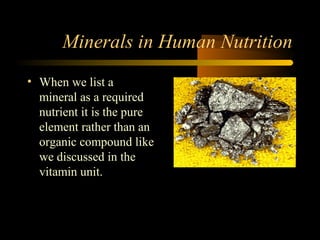
• When we list a 
mineral as a required 
nutrient it is the pure 
element rather than an 
organic compound like 
we discussed in the 
vitamin unit.
Characteristics of the Minerals 
• It is the element that is essential rather than 
an organic compound as we examined in 
the vitamin unit. 
• Minerals perform vital functions 
– Enzymes 
– Body compounds 
– Electrolytes 
– Growth and development
• Deficiency symptoms develop when 
minerals are not available in the diet. 
• They are required in very small amounts. 
• Quantity of a mineral in the body is 
controlled by: 
– Amount absorbed 
– Amount excreted 
– Skin loss 
• Greater quantities of minerals in foods of 
animal origin. 
• Bioavailability
• Minerals are classified as macromineral or 
major minerals if the requirement is 100 mg 
or more. 
• Minerals are classified as microminerals or 
trace minerals if the requirement is less than 
100 mg. 
• There is a safe range of intake for the 
minerals just like for the vitamins. 
• Minerals interact with each other and with 
vitamins.
What minerals are you aware of 
as nutrients and what do you 
know about them? 
What minerals do you want to learn 
more about?
Minerals in Human Nutrition 
• Calcium 
• Phosphorus 
• Magnesium 
• Sulfur 
• Chloride 
• Sodium 
• Potassium 
• Iron 
• Iodine 
• Zinc 
• Copper 
• Selenium 
• Fluoride 
• Chromium 
• Molybdenum 
• Cobalt
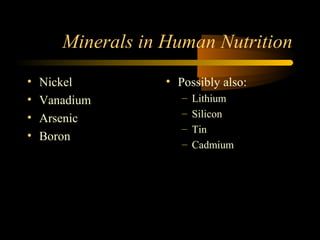
Minerals in Human Nutrition 
• Nickel 
• Vanadium 
• Arsenic 
• Boron 
• Possibly also: 
– Lithium 
– Silicon 
– Tin 
– Cadmium
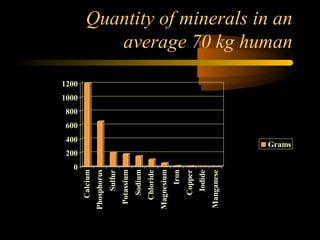
Quantity of minerals in an 
average 70 kg human 
1200 
1000 
800 
600 
400 
200 
0 
Calcium 
Phosphorus 
Sulfur 
Potassium 
Sodium 
Chloride 
Magnesium 
Iron 
Copper 
Iodide 
Manganese 
Grams
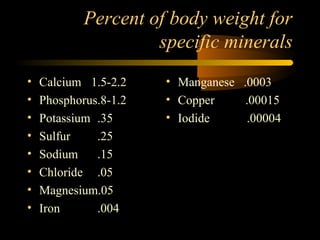
Percent of body weight for 
specific minerals 
• Calcium 1.5-2.2 
• Phosphorus.8-1.2 
• Potassium .35 
• Sulfur .25 
• Sodium .15 
• Chloride .05 
• Magnesium.05 
• Iron .004 
• Manganese .0003 
• Copper .00015 
• Iodide .00004
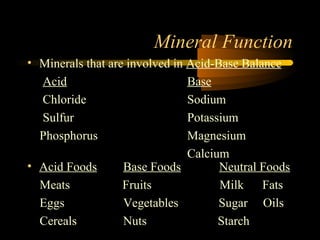
Mineral Function 
• Minerals that are involved in Acid-Base Balance 
Acid Base 
Chloride Sodium 
Sulfur Potassium 
Phosphorus Magnesium 
Calcium 
• Acid Foods Base Foods Neutral Foods 
Meats Fruits Milk Fats 
Eggs Vegetables Sugar Oils 
Cereals Nuts Starch
Minerals that become part of our 
body compounds 
• Iodine 
• Iron 
• Chlorine 
• Copper 
• Molybdenum 
• Zinc
Minerals required for 
transmission of nerve impulses 
• Sodium 
• Potassium 
• Calcium
Maintenance of Fluid Balance 
• Sodium 
• Potasssium
Minerals that are required for 
muscle contraction 
• Potassium 
• Sodium 
• Calcium 
• Magnesium
Minerals that are required for 
growth 
• Calcium 
• Phosphorus 
• Magnesium 
• Iron
Phosphorus 
• Functions 
– All biological reactions require ATP 
– Phospholipid component of cell membranes 
– Important in pH regulation 
– Essential compounds such as phospholipids 
• Sources: protein foods, phytates, additives, 
SODA 
• Toxicity: An issue with renal patients
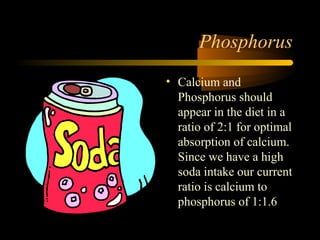
Phosphorus 
• Calcium and 
Phosphorus should 
appear in the diet in a 
ratio of 2:1 for optimal 
absorption of calcium. 
Since we have a high 
soda intake our current 
ratio is calcium to 
phosphorus of 1:1.6
Magnesium 
• Function 
– Catalyst in biological 
reactions where energy 
is expended to 
facilitate the transfer of 
phosphorus 
– Create environment for 
conduction of nerve 
impulses and muscle 
contraction 
– Over 300 enzyme 
reactions. 
Sources: green foods, vegetables 
legumes, seafood, nuts, cereals. 
Deficiency: Possible for clients on 
diuretics due to losses.
Sulfur 
• Found in every cell 
• Amino Acids: 
cysteine, methionine 
• Function: 
metabolism, blood 
clots, transfer energy, 
part of vitamins, 
detoxify, collagen 
synthesis. 
FDA restrictions on 
sulfur due to allergies.
Iodine 
• Minute Amount 
required (1 microg/kg) 
• 3/4 of iodide in the 
body is in the thyroid 
• Thyroxin 
– Regulator of growth 
and development 
– Synthesis of protein 
– Synthesis of 
cholesterol 
– Conversion of carotene 
Deficiency: Goiter, Cretin 
Evaluation of Iodine 
Status: 
Myxedema 
Grave’s Disease
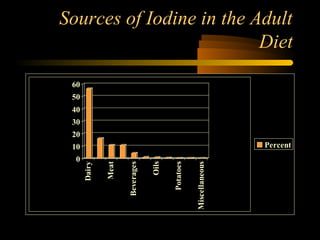
Sources of Iodine in the Adult 
Diet 
60 
50 
40 
30 
20 
10 
0 
Dairy 
Meat 
Beverages 
Oils 
Potatoes 
Miscellaneous 
Percent
Copper as a Mineral 
• Function: (Enzymes) 
– Aid iron absorption 
– Stimulate synthesis of heme 
– Release stored iron 
– Synthesis of phospholipids 
– Ctochrome oxidase 
– Tyrosine to melanin (albinism) 
• Deficiency: Menke’s Kinky Hair 
Syndrome, microcytic anemia 
• Toxicity: Wilson’s Disease
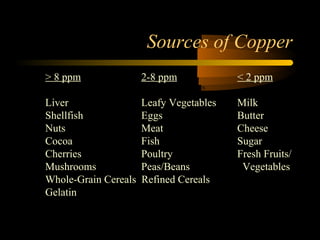
Sources of Copper 
> 8 ppm 2-8 ppm < 2 ppm 
Liver Liver 
Shell Fish 
Leafy Leafy Veg 
Milk 
Eggs 
Vegetables Butter 
Milk 
Shellfish Nuts 
Cocoa 
Eggs Meat 
Cheese 
Fish 
Sugar 
Butter 
Nuts Cherries 
Meat Poultry 
Fresh 
Cheese 
Mushrooms 
Peas/Beans 
Fruits/Veg 
Cocoa Whole-Grain 
Fish Refined 
Sugar 
Cherries Cereals 
Gelatin 
Poultry Cereals 
Fresh Fruits/ 
Mushrooms Peas/Beans Vegetables 
Whole-Grain Cereals Refined Cereals 
Gelatin
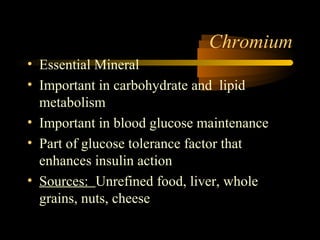
Chromium 
• Essential Mineral 
• Important in carbohydrate and lipid 
metabolism 
• Important in blood glucose maintenance 
• Part of glucose tolerance factor that 
enhances insulin action 
• Sources: Unrefined food, liver, whole 
grains, nuts, cheese
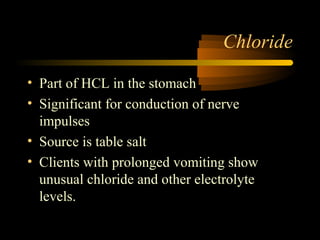
Chloride 
• Part of HCL in the stomach 
• Significant for conduction of nerve 
impulses 
• Source is table salt 
• Clients with prolonged vomiting show 
unusual chloride and other electrolyte 
levels.
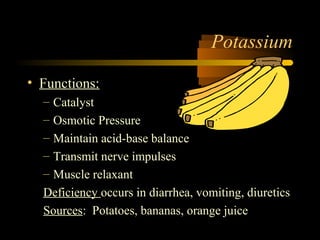
Potassium 
• Functions: 
– Catalyst 
– Osmotic Pressure 
– Maintain acid-base balance 
– Transmit nerve impulses 
– Muscle relaxant 
Deficiency occurs in diarrhea, vomiting, diuretics 
Sources: Potatoes, bananas, orange juice
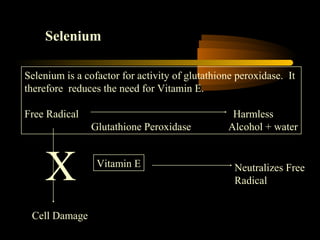
Selenium 
Selenium is a cofactor for activity of glutathione peroxidase. It 
therefore reduces the need for Vitamin E. 
Free Radical Harmless 
Glutathione Peroxidase Alcohol + water 
Radical X 
Cell Damage 
Vitamin E Neutralizes Free
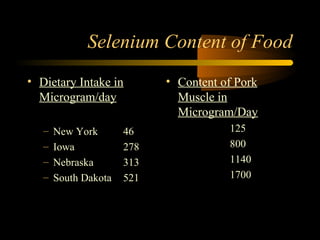
Selenium Content of Food 
• Dietary Intake in 
Microgram/day 
– New York 46 
– Iowa 278 
– Nebraska 313 
– South Dakota 521 
• Content of Pork 
Muscle in 
Microgram/Day 
125 
800 
1140 
1700
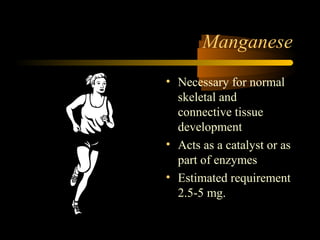
Manganese 
• Necessary for normal 
skeletal and 
connective tissue 
development 
• Acts as a catalyst or as 
part of enzymes 
• Estimated requirement 
2.5-5 mg.
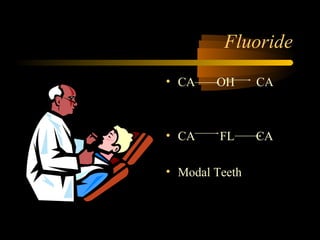
Fluoride 
• CA OH CA 
• CA FL CA 
• Modal Teeth

Minerals1 complete to be taught

  • 1.
    Minerals Dr. BettyJ. Larson, LRD, FADA
  • 2.
    Objectives • Identifythe essential minerals for human nutrition • Identify the function of each mineral in human nutrition. • Identify the significant sources for each mineral.
  • 3.
    Minerals in HumanNutrition • When we list a mineral as a required nutrient it is the pure element rather than an organic compound like we discussed in the vitamin unit.
  • 4.
    Characteristics of theMinerals • It is the element that is essential rather than an organic compound as we examined in the vitamin unit. • Minerals perform vital functions – Enzymes – Body compounds – Electrolytes – Growth and development
  • 5.
    • Deficiency symptomsdevelop when minerals are not available in the diet. • They are required in very small amounts. • Quantity of a mineral in the body is controlled by: – Amount absorbed – Amount excreted – Skin loss • Greater quantities of minerals in foods of animal origin. • Bioavailability
  • 6.
    • Minerals areclassified as macromineral or major minerals if the requirement is 100 mg or more. • Minerals are classified as microminerals or trace minerals if the requirement is less than 100 mg. • There is a safe range of intake for the minerals just like for the vitamins. • Minerals interact with each other and with vitamins.
  • 7.
    What minerals areyou aware of as nutrients and what do you know about them? What minerals do you want to learn more about?
  • 8.
    Minerals in HumanNutrition • Calcium • Phosphorus • Magnesium • Sulfur • Chloride • Sodium • Potassium • Iron • Iodine • Zinc • Copper • Selenium • Fluoride • Chromium • Molybdenum • Cobalt
  • 9.
    Minerals in HumanNutrition • Nickel • Vanadium • Arsenic • Boron • Possibly also: – Lithium – Silicon – Tin – Cadmium
  • 10.
    Quantity of mineralsin an average 70 kg human 1200 1000 800 600 400 200 0 Calcium Phosphorus Sulfur Potassium Sodium Chloride Magnesium Iron Copper Iodide Manganese Grams
  • 11.
    Percent of bodyweight for specific minerals • Calcium 1.5-2.2 • Phosphorus.8-1.2 • Potassium .35 • Sulfur .25 • Sodium .15 • Chloride .05 • Magnesium.05 • Iron .004 • Manganese .0003 • Copper .00015 • Iodide .00004
  • 12.
    Mineral Function •Minerals that are involved in Acid-Base Balance Acid Base Chloride Sodium Sulfur Potassium Phosphorus Magnesium Calcium • Acid Foods Base Foods Neutral Foods Meats Fruits Milk Fats Eggs Vegetables Sugar Oils Cereals Nuts Starch
  • 13.
    Minerals that becomepart of our body compounds • Iodine • Iron • Chlorine • Copper • Molybdenum • Zinc
  • 14.
    Minerals required for transmission of nerve impulses • Sodium • Potassium • Calcium
  • 15.
    Maintenance of FluidBalance • Sodium • Potasssium
  • 16.
    Minerals that arerequired for muscle contraction • Potassium • Sodium • Calcium • Magnesium
  • 17.
    Minerals that arerequired for growth • Calcium • Phosphorus • Magnesium • Iron
  • 18.
    Phosphorus • Functions – All biological reactions require ATP – Phospholipid component of cell membranes – Important in pH regulation – Essential compounds such as phospholipids • Sources: protein foods, phytates, additives, SODA • Toxicity: An issue with renal patients
  • 19.
    Phosphorus • Calciumand Phosphorus should appear in the diet in a ratio of 2:1 for optimal absorption of calcium. Since we have a high soda intake our current ratio is calcium to phosphorus of 1:1.6
  • 20.
    Magnesium • Function – Catalyst in biological reactions where energy is expended to facilitate the transfer of phosphorus – Create environment for conduction of nerve impulses and muscle contraction – Over 300 enzyme reactions. Sources: green foods, vegetables legumes, seafood, nuts, cereals. Deficiency: Possible for clients on diuretics due to losses.
  • 21.
    Sulfur • Foundin every cell • Amino Acids: cysteine, methionine • Function: metabolism, blood clots, transfer energy, part of vitamins, detoxify, collagen synthesis. FDA restrictions on sulfur due to allergies.
  • 22.
    Iodine • MinuteAmount required (1 microg/kg) • 3/4 of iodide in the body is in the thyroid • Thyroxin – Regulator of growth and development – Synthesis of protein – Synthesis of cholesterol – Conversion of carotene Deficiency: Goiter, Cretin Evaluation of Iodine Status: Myxedema Grave’s Disease
  • 23.
    Sources of Iodinein the Adult Diet 60 50 40 30 20 10 0 Dairy Meat Beverages Oils Potatoes Miscellaneous Percent
  • 24.
    Copper as aMineral • Function: (Enzymes) – Aid iron absorption – Stimulate synthesis of heme – Release stored iron – Synthesis of phospholipids – Ctochrome oxidase – Tyrosine to melanin (albinism) • Deficiency: Menke’s Kinky Hair Syndrome, microcytic anemia • Toxicity: Wilson’s Disease
  • 25.
    Sources of Copper > 8 ppm 2-8 ppm < 2 ppm > 8 ppm 2-8 ppm < 2 ppm Liver Liver Shell Fish Leafy Leafy Veg Milk Eggs Vegetables Butter Milk Shellfish Nuts Cocoa Eggs Meat Cheese Fish Sugar Butter Nuts Cherries Meat Poultry Fresh Cheese Mushrooms Peas/Beans Fruits/Veg Cocoa Whole-Grain Fish Refined Sugar Cherries Cereals Gelatin Poultry Cereals Fresh Fruits/ Mushrooms Peas/Beans Vegetables Whole-Grain Cereals Refined Cereals Gelatin
  • 26.
    Chromium • EssentialMineral • Important in carbohydrate and lipid metabolism • Important in blood glucose maintenance • Part of glucose tolerance factor that enhances insulin action • Sources: Unrefined food, liver, whole grains, nuts, cheese
  • 27.
    Chloride • Partof HCL in the stomach • Significant for conduction of nerve impulses • Source is table salt • Clients with prolonged vomiting show unusual chloride and other electrolyte levels.
  • 28.
    Potassium • Functions: – Catalyst – Osmotic Pressure – Maintain acid-base balance – Transmit nerve impulses – Muscle relaxant Deficiency occurs in diarrhea, vomiting, diuretics Sources: Potatoes, bananas, orange juice
  • 29.
    Selenium Selenium isa cofactor for activity of glutathione peroxidase. It therefore reduces the need for Vitamin E. Free Radical Harmless Glutathione Peroxidase Alcohol + water Radical X Cell Damage Vitamin E Neutralizes Free
  • 30.
    Selenium Content ofFood • Dietary Intake in Microgram/day – New York 46 – Iowa 278 – Nebraska 313 – South Dakota 521 • Content of Pork Muscle in Microgram/Day 125 800 1140 1700
  • 31.
    Manganese • Necessaryfor normal skeletal and connective tissue development • Acts as a catalyst or as part of enzymes • Estimated requirement 2.5-5 mg.
  • 32.
    Fluoride • CAOH CA • CA FL CA • Modal Teeth