Lecture 4 – BackfillingLecture 4 – Backfilling
Objectives:-
1.To learn the backfill to existing structures.
2.To relate the backfilling as per clauses in
SMM2
3.To determine the various clauses applied to
the backfilling
Outcomes:-
1.Able to differentiate the different clauses
used for backfilling
2.Able to write down the dimensions clearly.
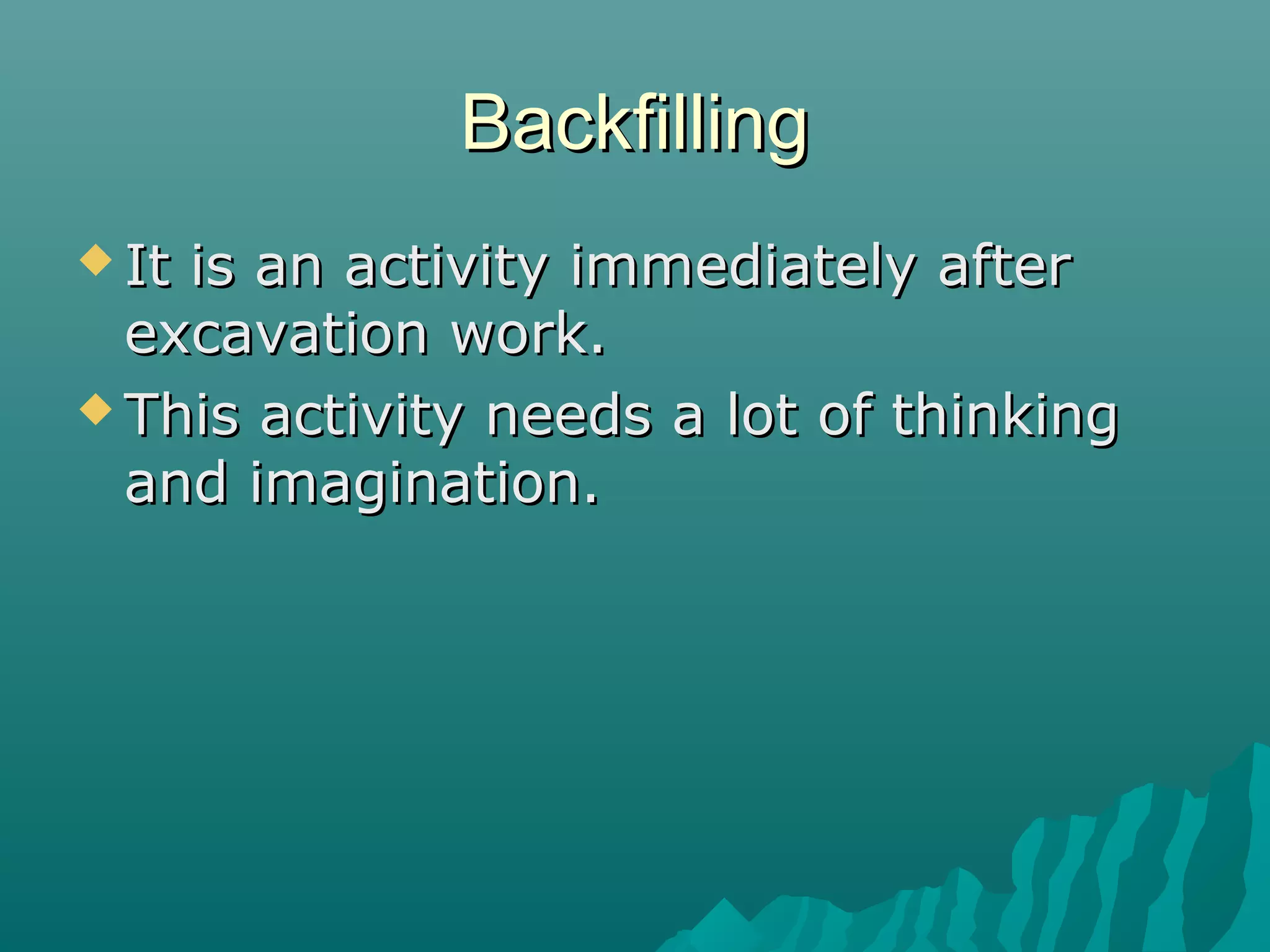
BackfillingBackfilling
 It is an activity immediately afterIt is an activity immediately after
excavation work.excavation work.
 This activity needs a lot of thinkingThis activity needs a lot of thinking
and imagination.and imagination.
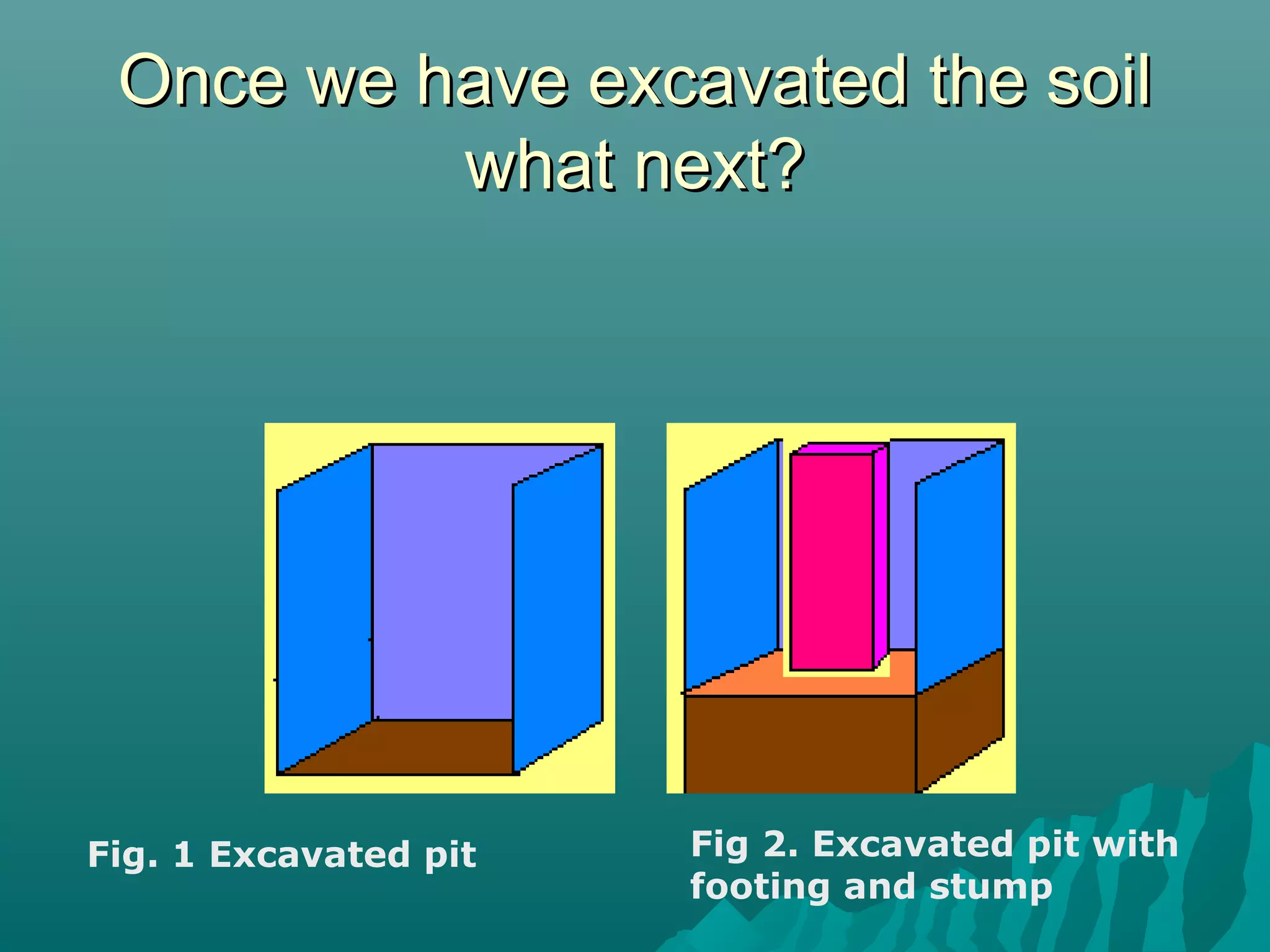
Once we have excavated the soilOnce we have excavated the soil
what next?what next?
Fig. 1 Excavated pit Fig 2. Excavated pit with
footing and stump
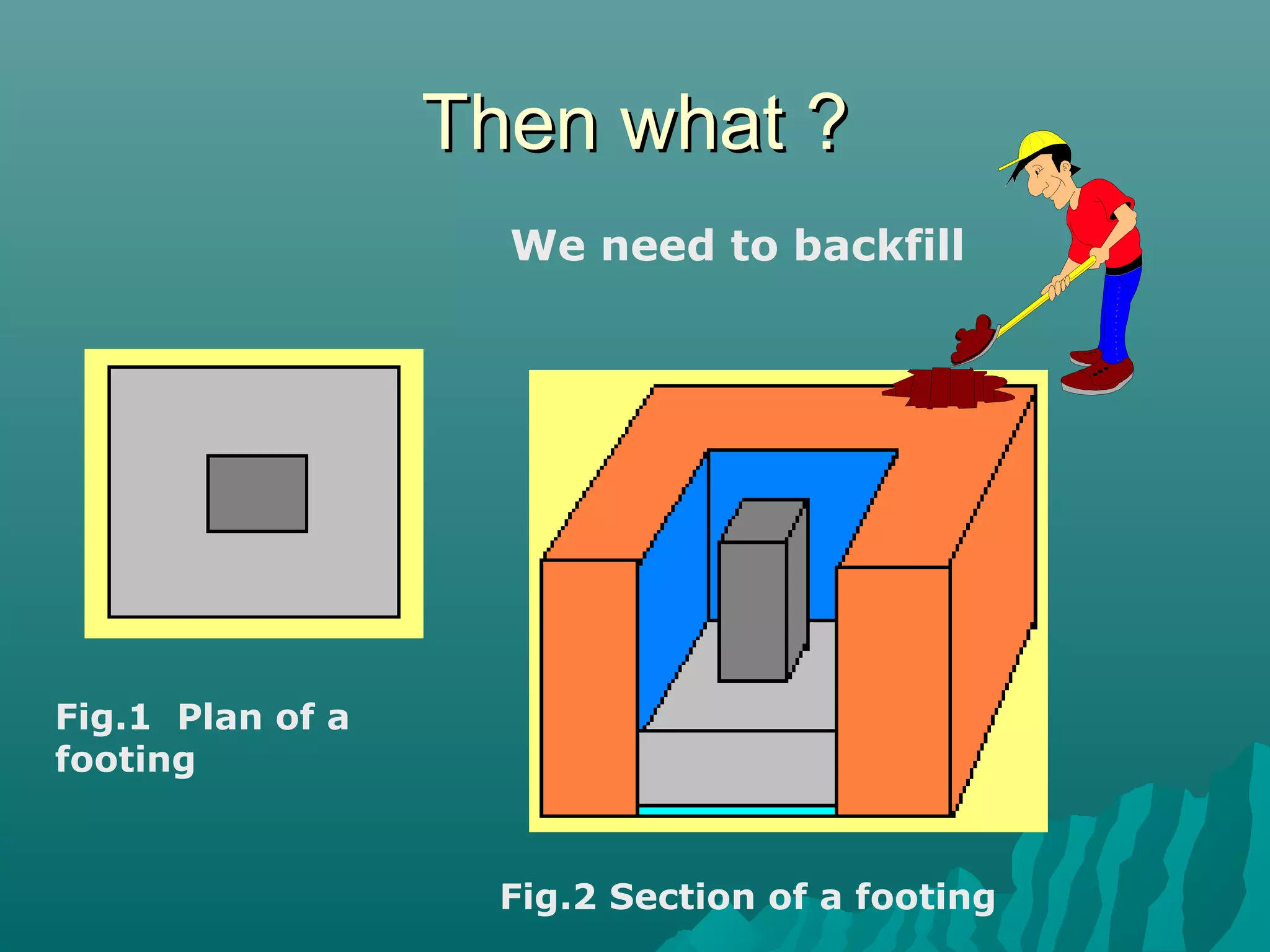
Then what ?Then what ?
Fig.1 Plan of a
footing
Fig.2 Section of a footing
We need to backfill
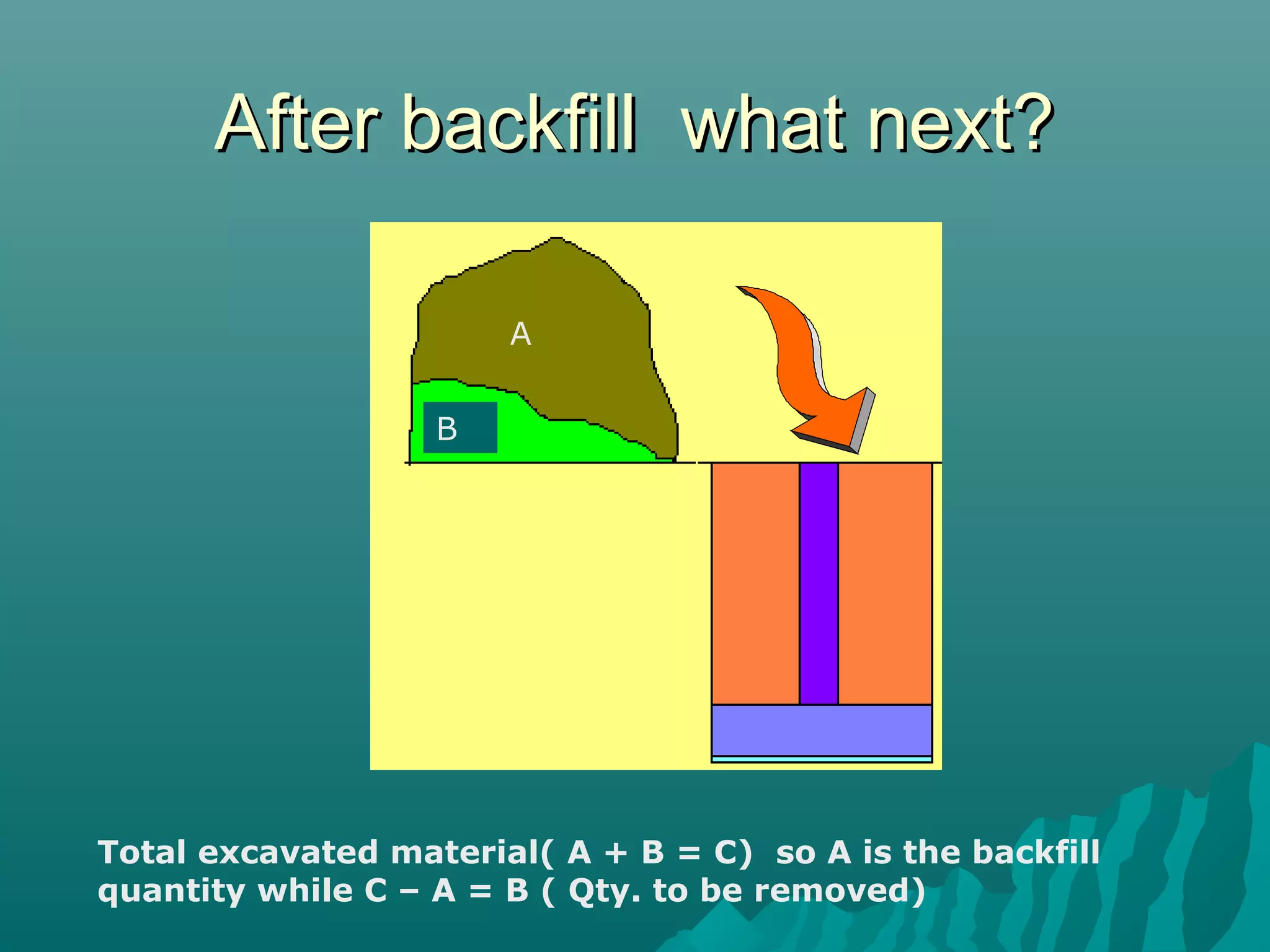
After backfill what next?After backfill what next?
A
B
Total excavated material( A + B = C) so A is the backfill
quantity while C – A = B ( Qty. to be removed)
Lets look at a simple structureLets look at a simple structure
F1
(1.00m x
1.00m )
Ground beam 150mm x 450mm
Stump 150mm
x 150mm
Plan of a Guard house
Testing your eye sightTesting your eye sight
View A
View B
View A
View B
GB1
GB2 GB3
GB4
GB1
GB4GB3
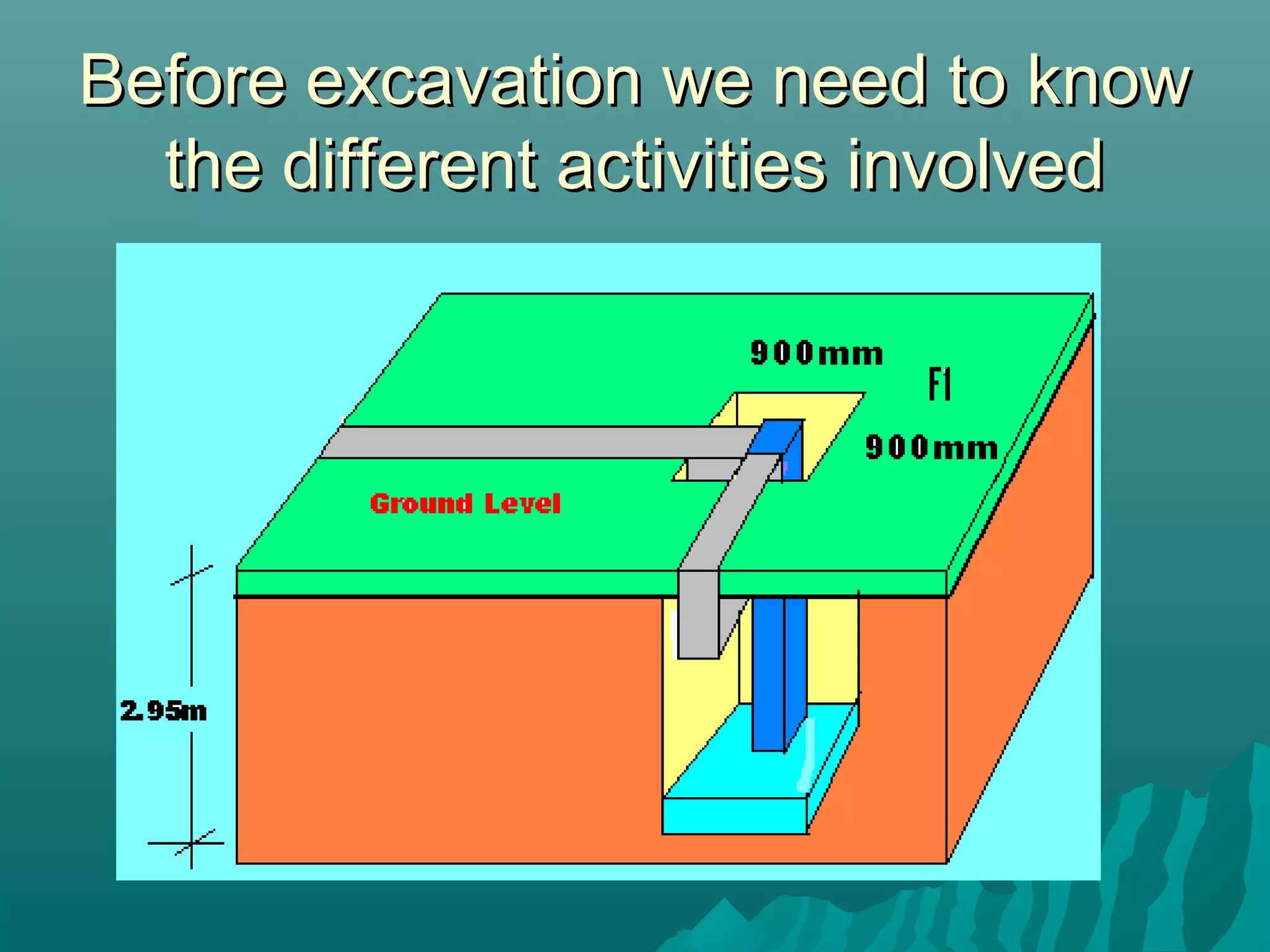
Before excavation we need to knowBefore excavation we need to know
the different activities involvedthe different activities involved
11stst
. Measure the oversite. Measure the oversite
excavation with average depth ofexcavation with average depth of
150mm150mm5.00m
5.00m
Area of oversite excavationArea of oversite excavation
5.00m
5.00m
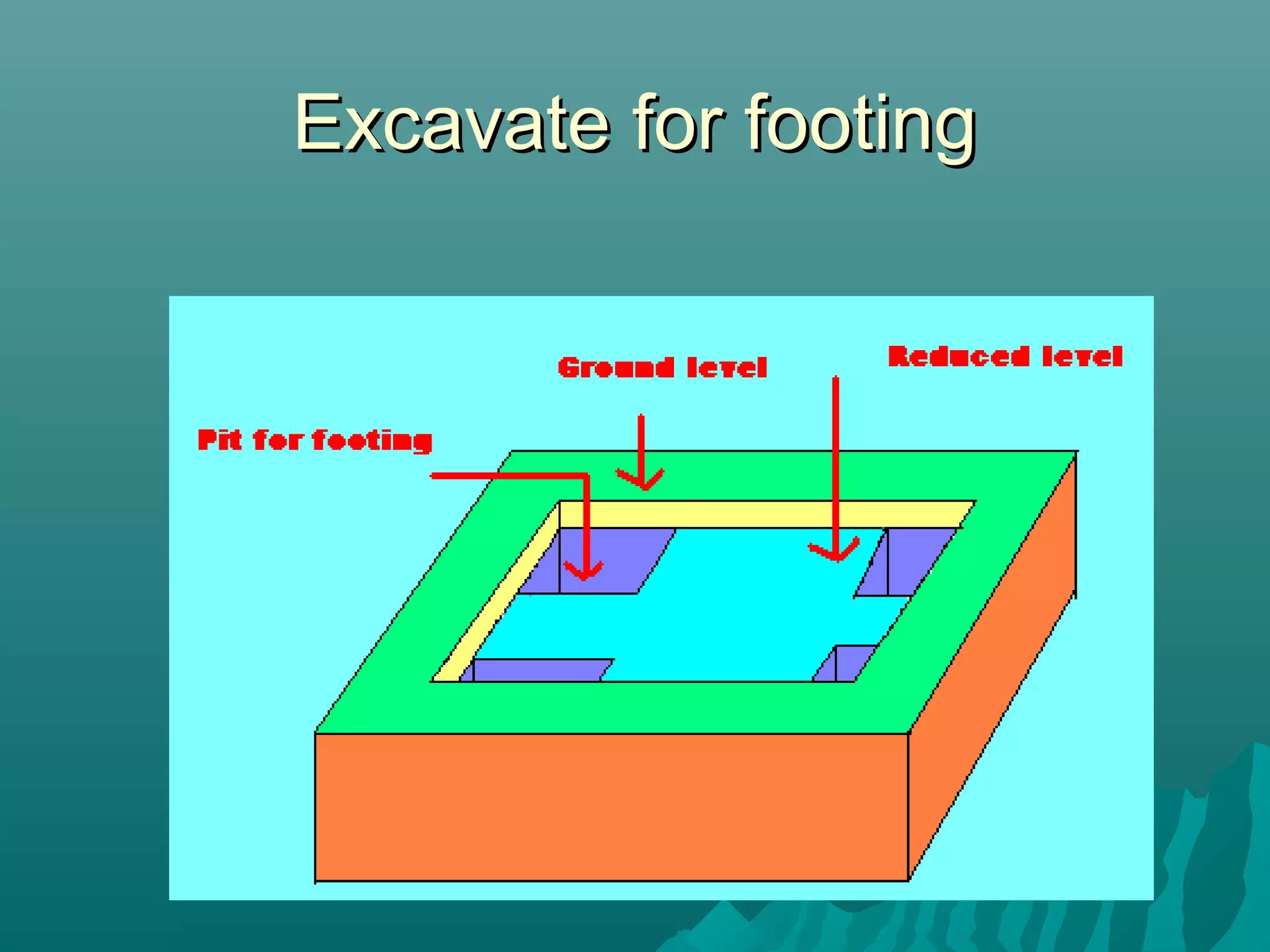
Excavate for footingExcavate for footing
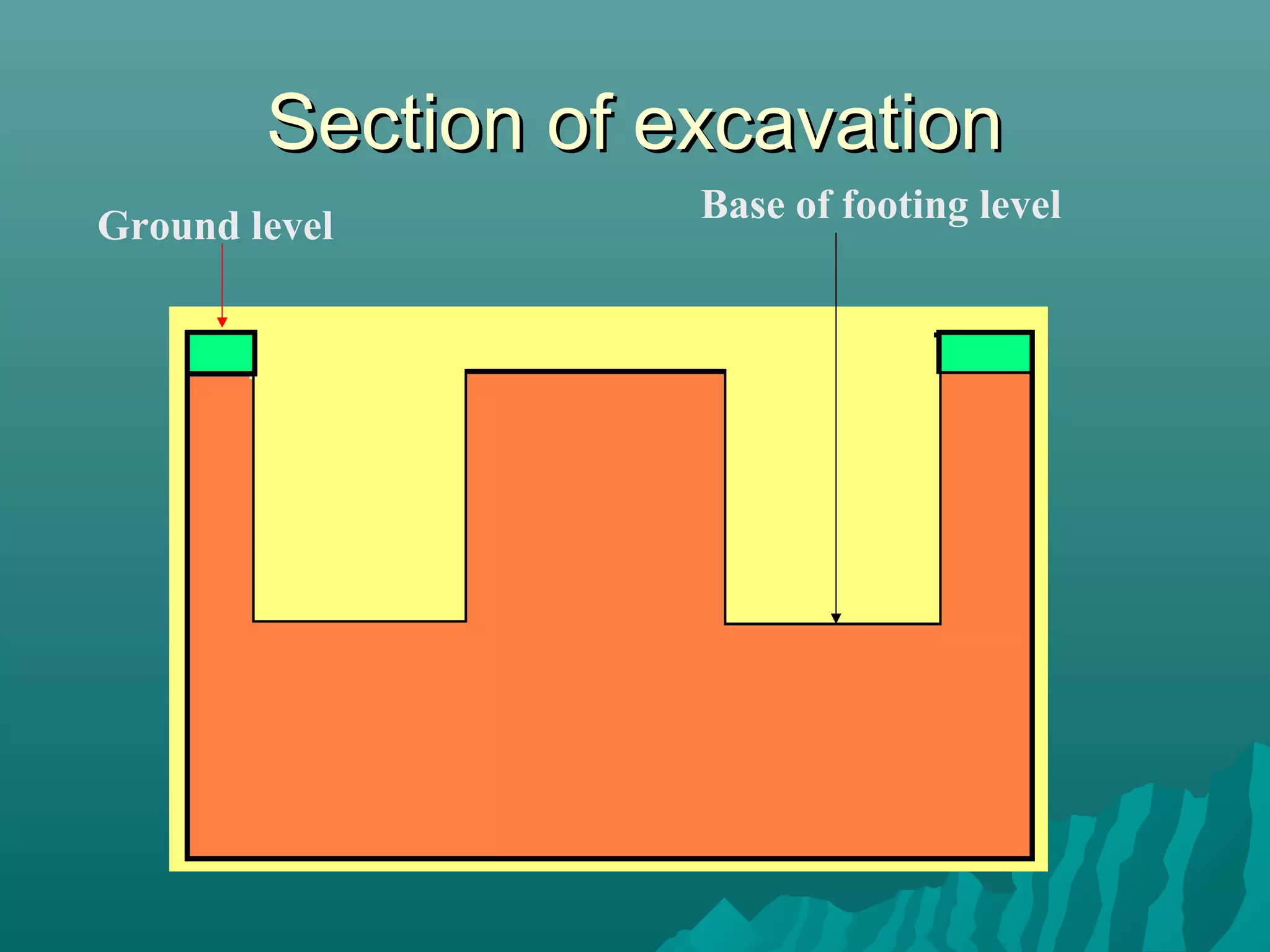
Section of excavationSection of excavation
Ground level
Base of footing level
Lets put in the structureLets put in the structure
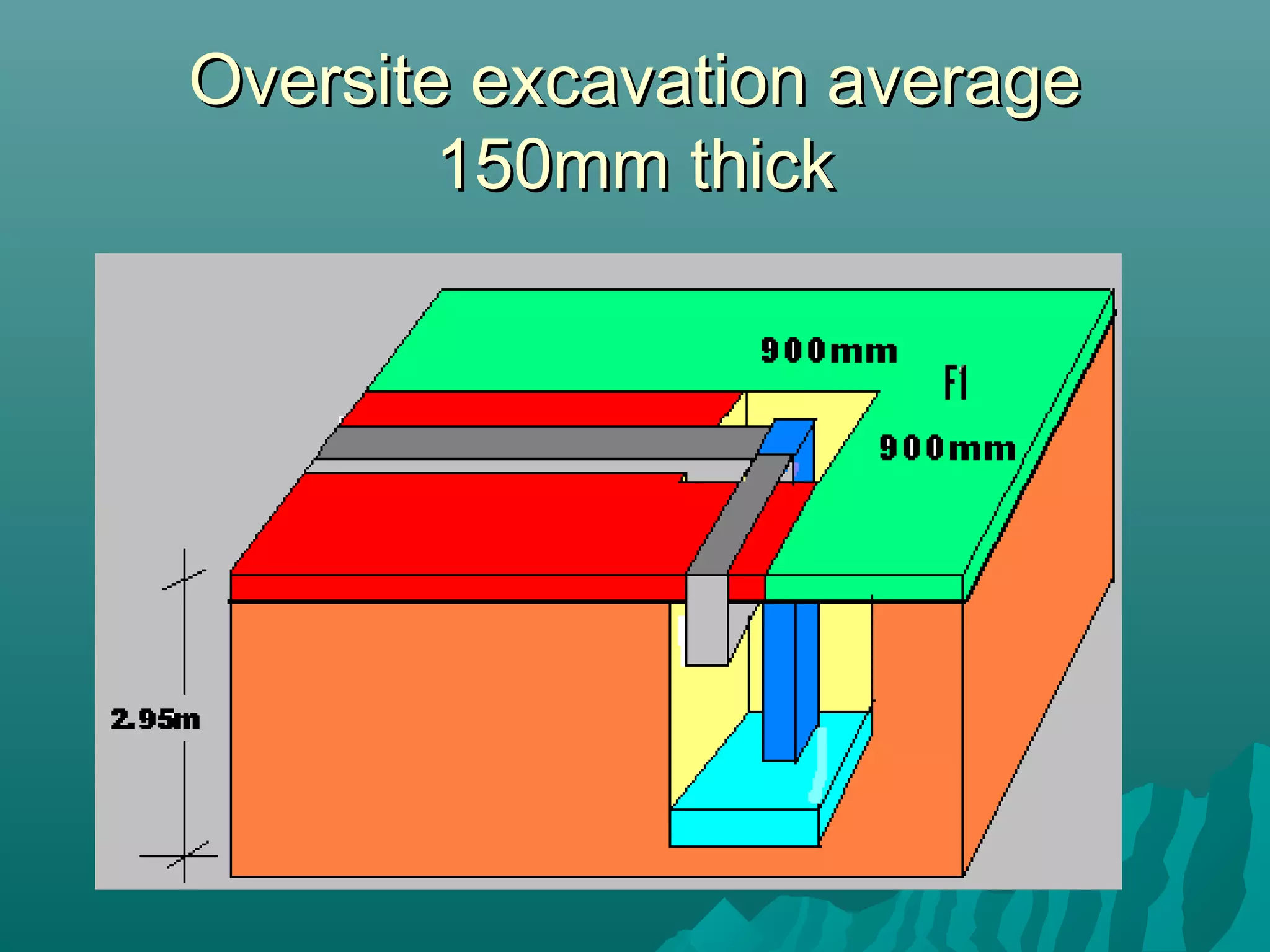
Oversite excavation averageOversite excavation average
150mm thick150mm thick
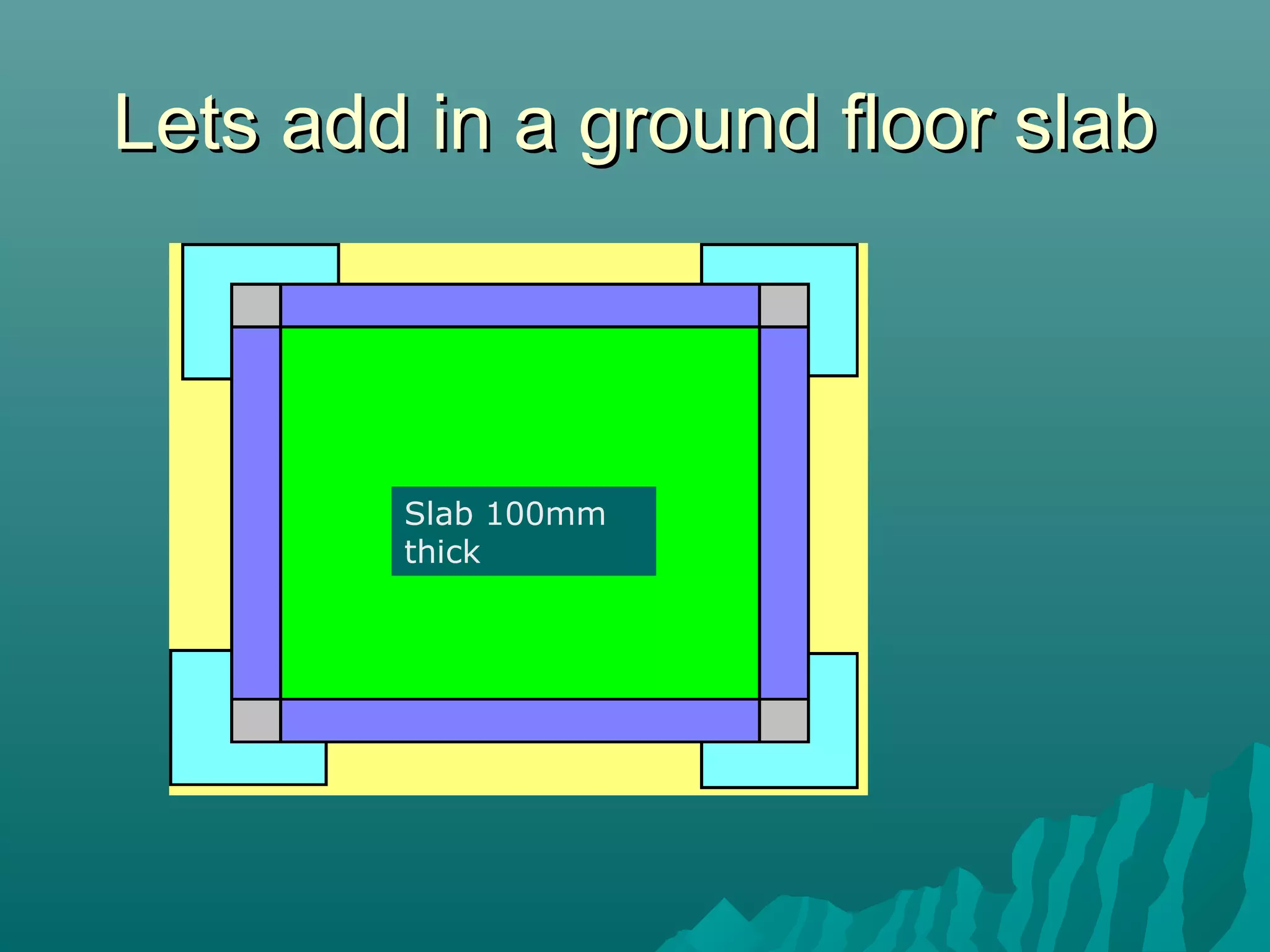
Lets add in a ground floor slabLets add in a ground floor slab
Slab 100mm
thick
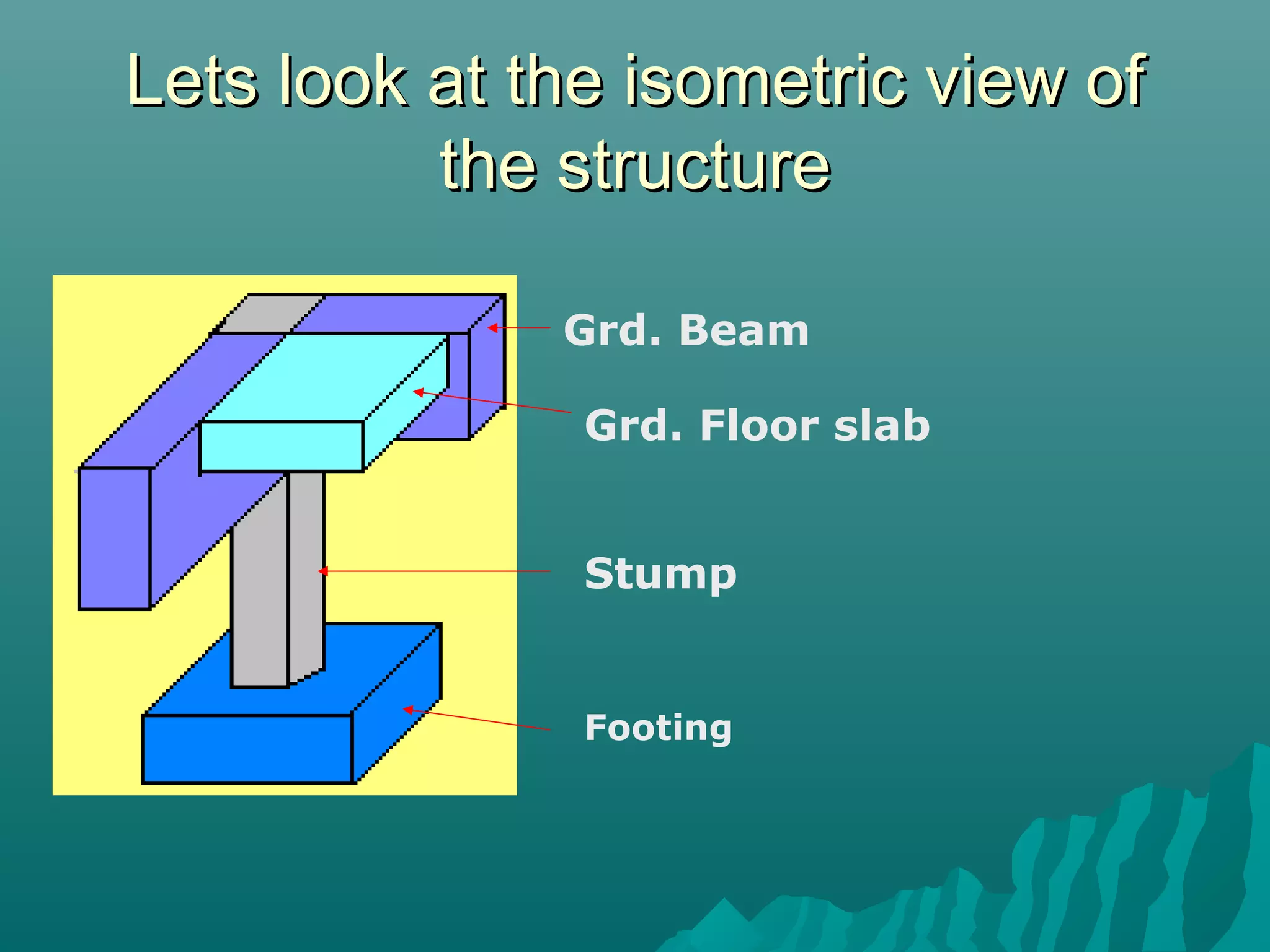
Lets look at the isometric view ofLets look at the isometric view of
the structurethe structure
Grd. Beam
Grd. Floor slab
Stump
Footing
Look at the sequence carefullyLook at the sequence carefully
A B C D
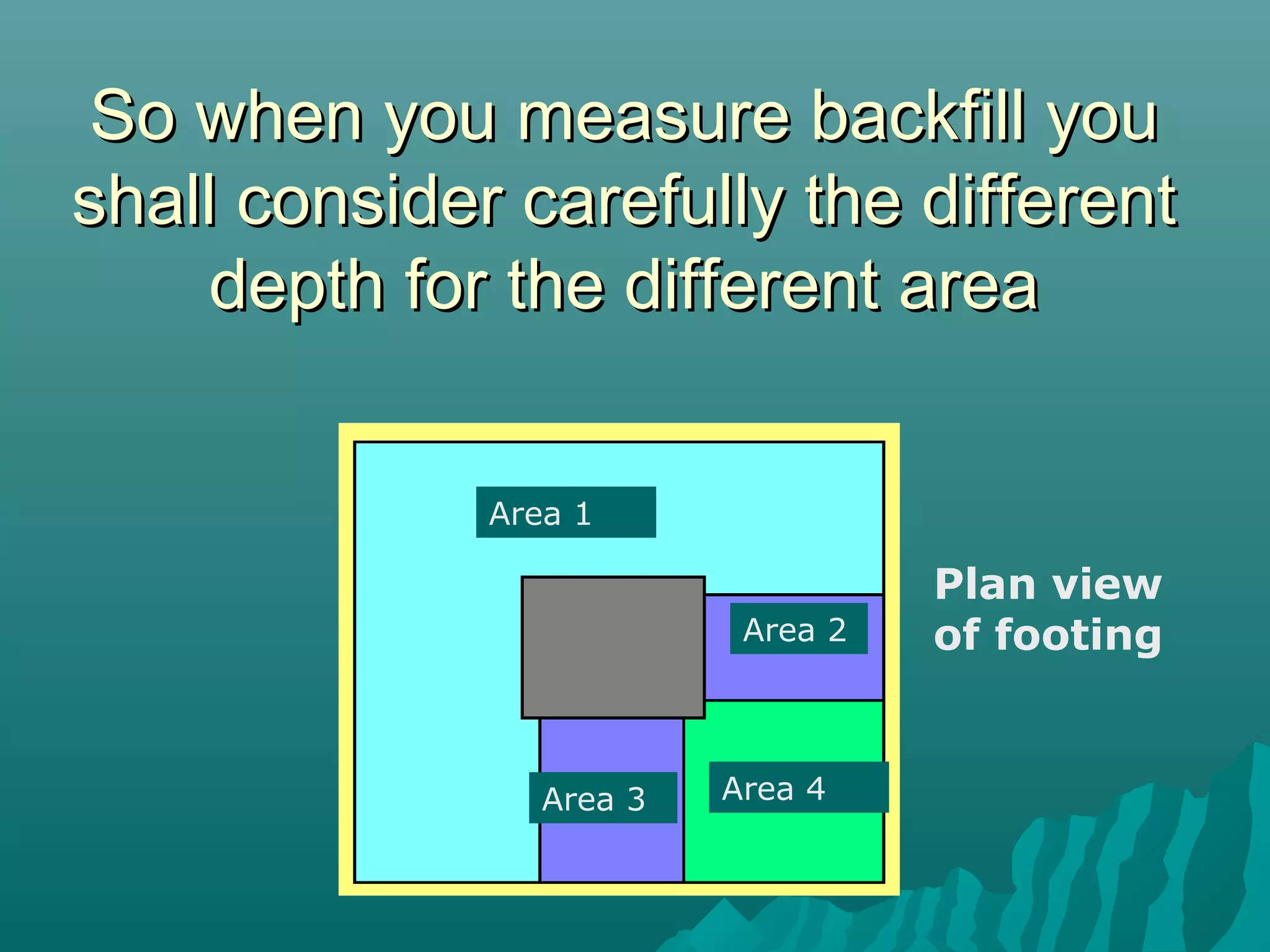
So when you measure backfill youSo when you measure backfill you
shall consider carefully the differentshall consider carefully the different
depth for the different areadepth for the different area
Area 1
Area 2
Area 3 Area 4
Plan view
of footing
Description for excavation, backfill andDescription for excavation, backfill and
removal.removal.
 Excavate pit for footingExcavate pit for footing
commencing from ground levelcommencing from ground level
with plan dimension less thanwith plan dimension less than
1.25m and with depth not1.25m and with depth not
exceeding 2.00m (5 nos.)exceeding 2.00m (5 nos.)
 Selected backfill to requiredSelected backfill to required
formation level, spread, levelledformation level, spread, levelled
and well rammed andand well rammed and
consolidated.consolidated.
 Removing surplus excavatedRemoving surplus excavated
material from site includingmaterial from site including
transporting to contractor’s owntransporting to contractor’s own
Description for oversiteDescription for oversite
excavationexcavation
 Oversite excavation average 200mmOversite excavation average 200mm
thick including transporting top soilthick including transporting top soil
to site to be determined by theto site to be determined by the
architect for re-use.architect for re-use.
 Oversite excavation commencingOversite excavation commencing
from ground level to a depth notfrom ground level to a depth not
exceeding 250mm.exceeding 250mm.
Exercise no. 1: measure the backfillExercise no. 1: measure the backfill
quantity using the descriptionquantity using the description
providedprovided
Footing F1 ( 12 nos.)
1000mm
1000mm
1.85m
650mm
Stump 300mm x
300mm
Exercise no. 2- Measure the backfillExercise no. 2- Measure the backfill
to footing F2to footing F2
900mm
900mm
F2 ( 20 nos.)
1.65m
450mm
Stump 150mm
x 150mm
Grd.
Beam
125mm x
450mm
125mm
450mm
Section of ground beam
Exercise no. 3 – Measure theExercise no. 3 – Measure the
following:following:
 1. Oversite excavation to footing F1.1. Oversite excavation to footing F1.
 2. Excavation to Footing F1.2. Excavation to Footing F1.
 3. Backfilling to Footing F1.3. Backfilling to Footing F1.
 4. Removing surplus earth of footing4. Removing surplus earth of footing
F1.F1.
 5. Write down your answer in the5. Write down your answer in the
correct format with correctcorrect format with correct
description.description.
Footing F1 ( 25 nos.)Footing F1 ( 25 nos.)
950mm
950mm
GL
Oversite excavation
150mm depth
2.00m
50mm lean concrete
Stump 250mm x
250mm
450mm
GB
250mm x
600mm
Plan
Section

Backfilling 2014a-Lecture4

  • 1.
    Lecture 4 –BackfillingLecture 4 – Backfilling Objectives:- 1.To learn the backfill to existing structures. 2.To relate the backfilling as per clauses in SMM2 3.To determine the various clauses applied to the backfilling Outcomes:- 1.Able to differentiate the different clauses used for backfilling 2.Able to write down the dimensions clearly.
  • 2.
    BackfillingBackfilling  It isan activity immediately afterIt is an activity immediately after excavation work.excavation work.  This activity needs a lot of thinkingThis activity needs a lot of thinking and imagination.and imagination.
  • 3.
    Once we haveexcavated the soilOnce we have excavated the soil what next?what next? Fig. 1 Excavated pit Fig 2. Excavated pit with footing and stump
  • 4.
    Then what ?Thenwhat ? Fig.1 Plan of a footing Fig.2 Section of a footing We need to backfill
  • 5.
    After backfill whatnext?After backfill what next? A B Total excavated material( A + B = C) so A is the backfill quantity while C – A = B ( Qty. to be removed)
  • 6.
    Lets look ata simple structureLets look at a simple structure F1 (1.00m x 1.00m ) Ground beam 150mm x 450mm Stump 150mm x 150mm Plan of a Guard house
  • 7.
    Testing your eyesightTesting your eye sight View A View B View A View B GB1 GB2 GB3 GB4 GB1 GB4GB3
  • 8.
    Before excavation weneed to knowBefore excavation we need to know the different activities involvedthe different activities involved
  • 9.
    11stst . Measure theoversite. Measure the oversite excavation with average depth ofexcavation with average depth of 150mm150mm5.00m 5.00m
  • 10.
    Area of oversiteexcavationArea of oversite excavation 5.00m 5.00m
  • 11.
  • 12.
    Section of excavationSectionof excavation Ground level Base of footing level
  • 13.
    Lets put inthe structureLets put in the structure
  • 14.
    Oversite excavation averageOversiteexcavation average 150mm thick150mm thick
  • 15.
    Lets add ina ground floor slabLets add in a ground floor slab Slab 100mm thick
  • 16.
    Lets look atthe isometric view ofLets look at the isometric view of the structurethe structure Grd. Beam Grd. Floor slab Stump Footing
  • 17.
    Look at thesequence carefullyLook at the sequence carefully A B C D
  • 18.
    So when youmeasure backfill youSo when you measure backfill you shall consider carefully the differentshall consider carefully the different depth for the different areadepth for the different area Area 1 Area 2 Area 3 Area 4 Plan view of footing
  • 19.
    Description for excavation,backfill andDescription for excavation, backfill and removal.removal.  Excavate pit for footingExcavate pit for footing commencing from ground levelcommencing from ground level with plan dimension less thanwith plan dimension less than 1.25m and with depth not1.25m and with depth not exceeding 2.00m (5 nos.)exceeding 2.00m (5 nos.)  Selected backfill to requiredSelected backfill to required formation level, spread, levelledformation level, spread, levelled and well rammed andand well rammed and consolidated.consolidated.  Removing surplus excavatedRemoving surplus excavated material from site includingmaterial from site including transporting to contractor’s owntransporting to contractor’s own
  • 20.
    Description for oversiteDescriptionfor oversite excavationexcavation  Oversite excavation average 200mmOversite excavation average 200mm thick including transporting top soilthick including transporting top soil to site to be determined by theto site to be determined by the architect for re-use.architect for re-use.  Oversite excavation commencingOversite excavation commencing from ground level to a depth notfrom ground level to a depth not exceeding 250mm.exceeding 250mm.
  • 21.
    Exercise no. 1:measure the backfillExercise no. 1: measure the backfill quantity using the descriptionquantity using the description providedprovided Footing F1 ( 12 nos.) 1000mm 1000mm 1.85m 650mm Stump 300mm x 300mm
  • 22.
    Exercise no. 2-Measure the backfillExercise no. 2- Measure the backfill to footing F2to footing F2 900mm 900mm F2 ( 20 nos.) 1.65m 450mm Stump 150mm x 150mm Grd. Beam 125mm x 450mm 125mm 450mm Section of ground beam
  • 23.
    Exercise no. 3– Measure theExercise no. 3 – Measure the following:following:  1. Oversite excavation to footing F1.1. Oversite excavation to footing F1.  2. Excavation to Footing F1.2. Excavation to Footing F1.  3. Backfilling to Footing F1.3. Backfilling to Footing F1.  4. Removing surplus earth of footing4. Removing surplus earth of footing F1.F1.  5. Write down your answer in the5. Write down your answer in the correct format with correctcorrect format with correct description.description.
  • 24.
    Footing F1 (25 nos.)Footing F1 ( 25 nos.) 950mm 950mm GL Oversite excavation 150mm depth 2.00m 50mm lean concrete Stump 250mm x 250mm 450mm GB 250mm x 600mm Plan Section