Managing Communication CHAPTER 18 0
Learning Outcomes Explain why communication is essential for  effective management  and describe how  nonverbal behavior  and  listening  affect communication among people. Describe the concept of  channel richness , and explain how communication channels influence the quality of communication. Understand how  gender differences , nonverbal communication, and listening affect the effectiveness of communication Explain the difference between  Downward, Upward and Horizontal Communication Channels  and the importance of each for organizational management. Copyright ©2010 by South-Western, a division of  Cengage Learning.  All rights reserved. 0
Are You Building a  Personal Network? Personal networking is an important skill for managers Networking enables managers to get things done Networking builds social, work, and career relationships that are mutually beneficial Today’s organizations depend on effective communication that starts with managers Copyright ©2010 by South-Western, a division of  Cengage Learning.  All rights reserved. 0
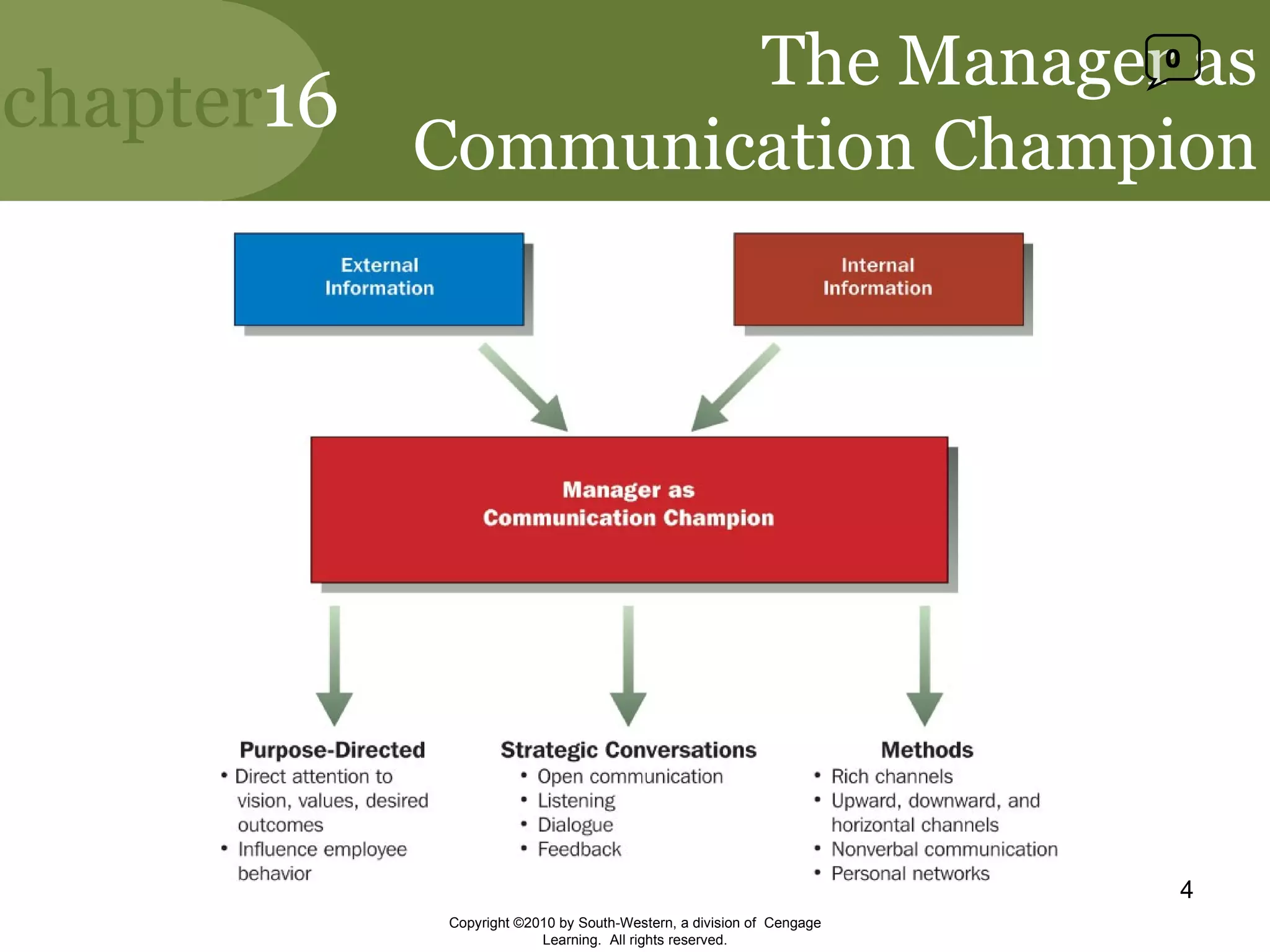
The Manager as Communication Champion Copyright ©2010 by South-Western, a division of  Cengage Learning.  All rights reserved. 0
What is Communication? Communication is the manager’s job Managers facilitate strategic conversations Open communication Active listening Dialogue Feedback and learning to induce change Communication means  “sharing”, not speaking Communication is the  process  by which information is  exchanged  and understood by two or more people Copyright ©2010 by South-Western, a division of  Cengage Learning.  All rights reserved. 0
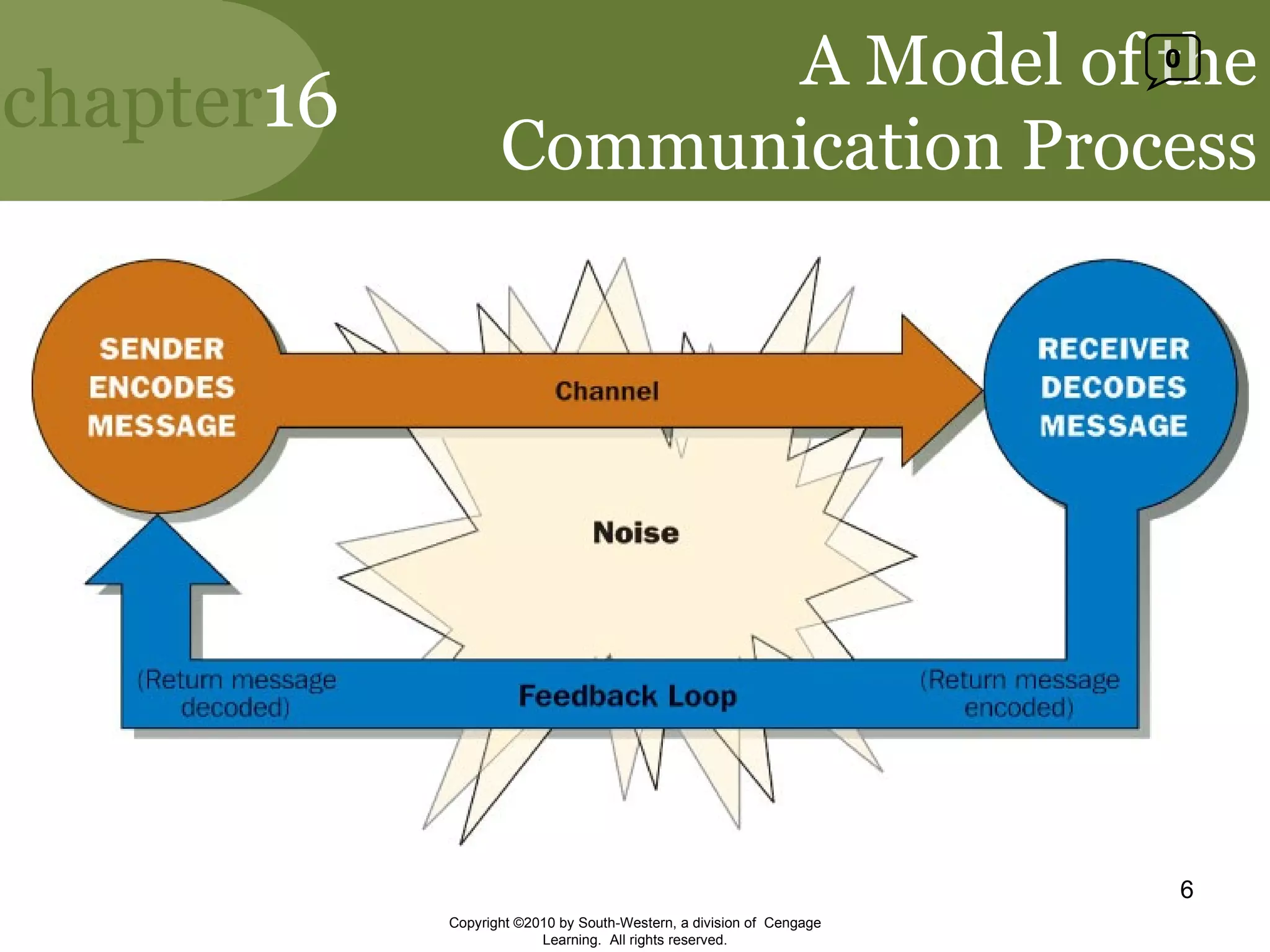
A Model of the Communication Process Copyright ©2010 by South-Western, a division of  Cengage Learning.  All rights reserved. 0
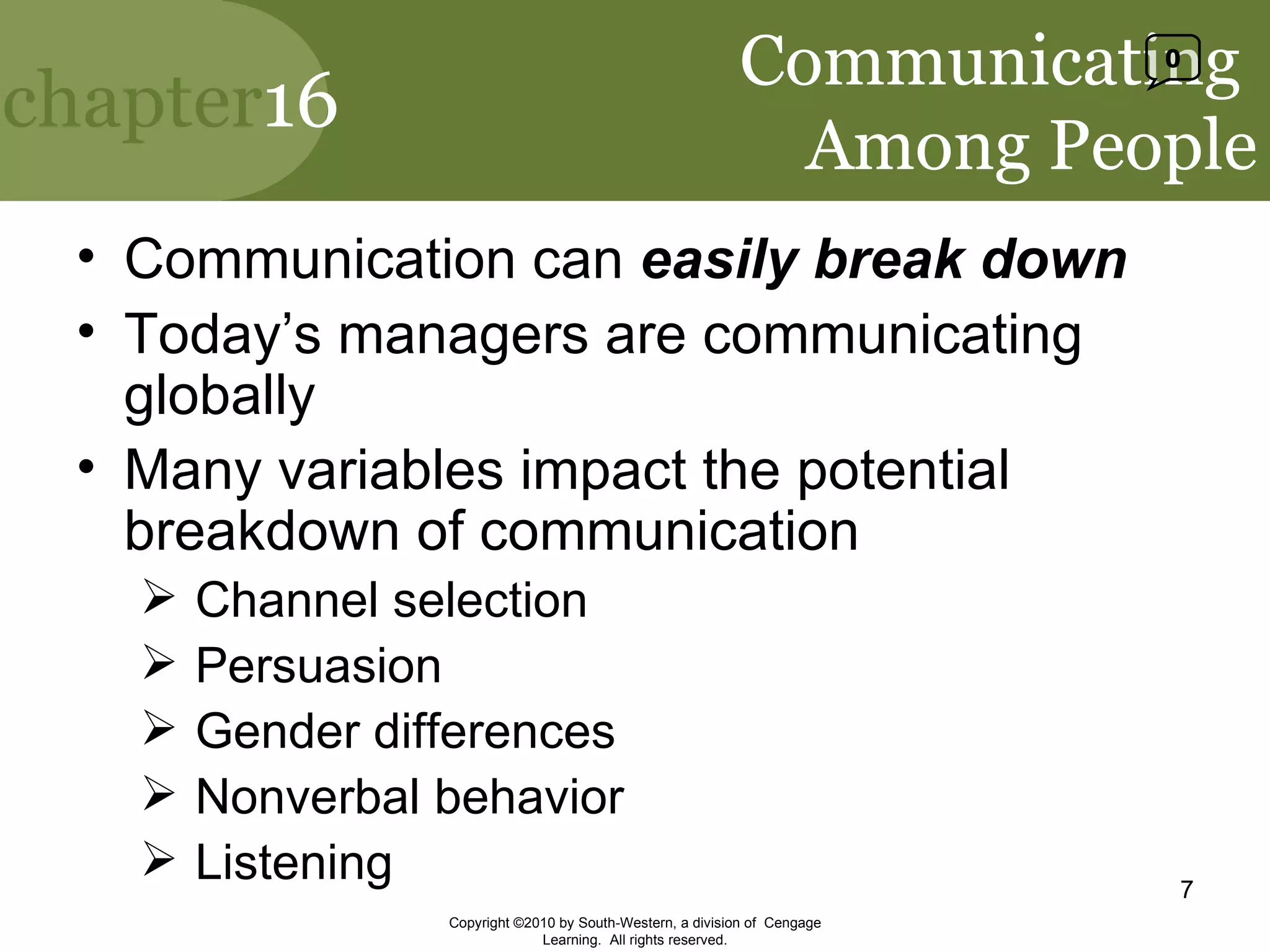
Communicating  Among People Communication can  easily break down Today’s managers are communicating globally Many variables impact the potential breakdown of communication Channel selection Persuasion Gender differences Nonverbal behavior Listening Copyright ©2010 by South-Western, a division of  Cengage Learning.  All rights reserved. 0
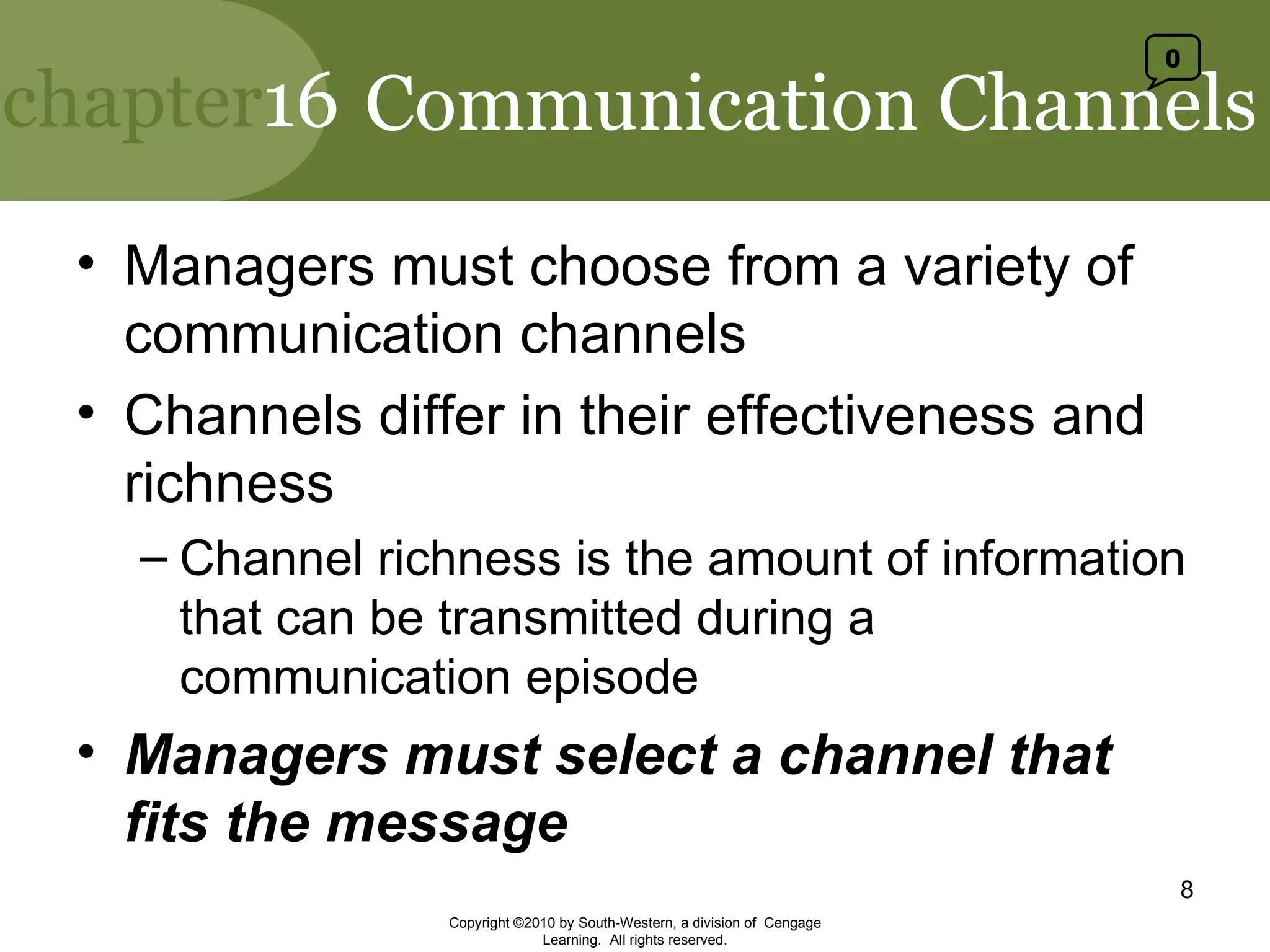
Communication Channels Managers must choose from a variety of communication channels Channels differ in their effectiveness and richness Channel richness is the amount of information that can be transmitted during a communication episode Managers must select a channel that fits the message Copyright ©2010 by South-Western, a division of  Cengage Learning.  All rights reserved. 0
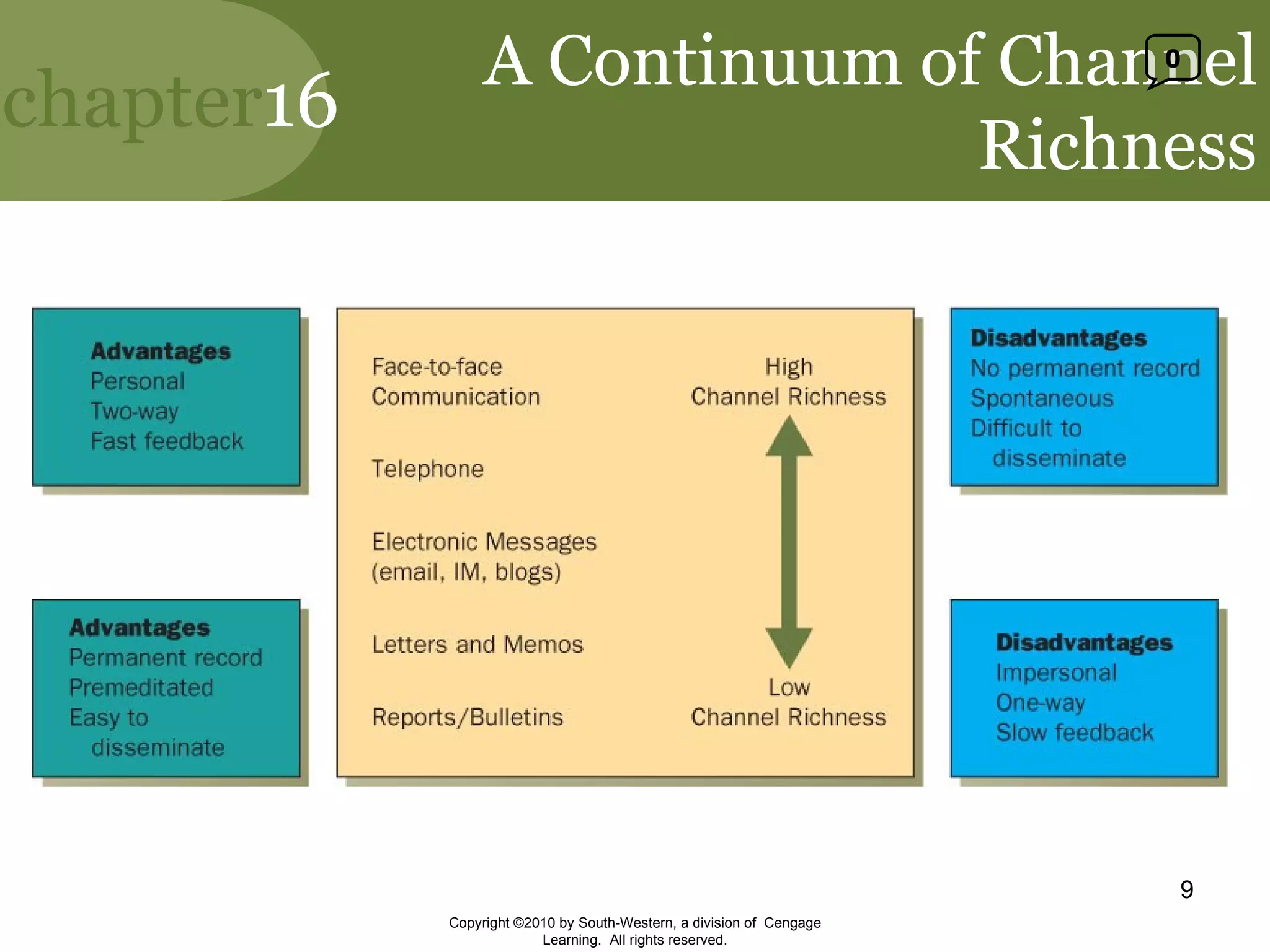
A Continuum of Channel Richness Copyright ©2010 by South-Western, a division of  Cengage Learning.  All rights reserved. 0
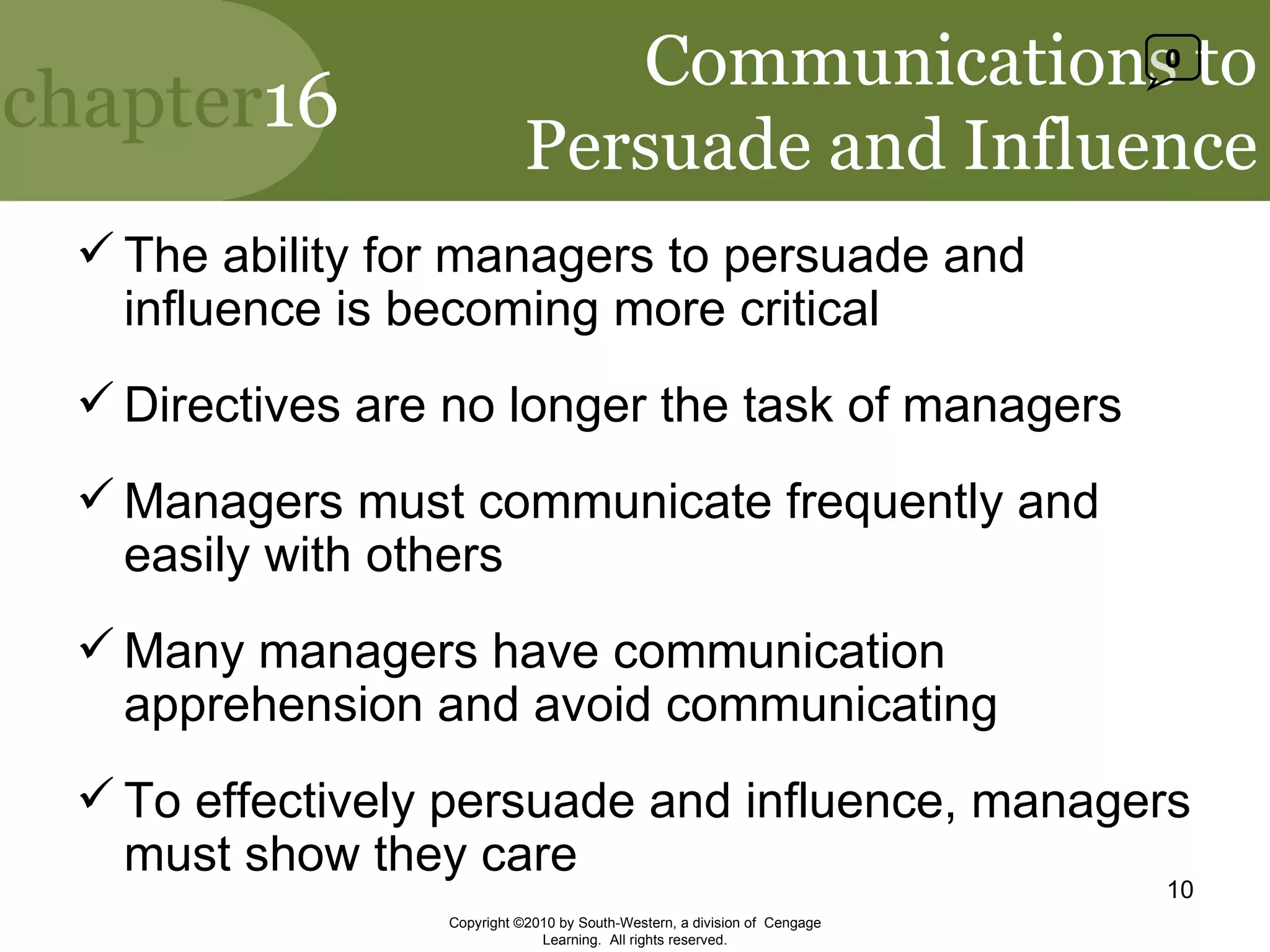
Communications to Persuade and Influence The ability for managers to persuade and influence is becoming more critical Directives are no longer the task of managers Managers must communicate frequently and easily with others Many managers have communication apprehension and avoid communicating To effectively persuade and influence, managers must show they care Copyright ©2010 by South-Western, a division of  Cengage Learning.  All rights reserved. 0
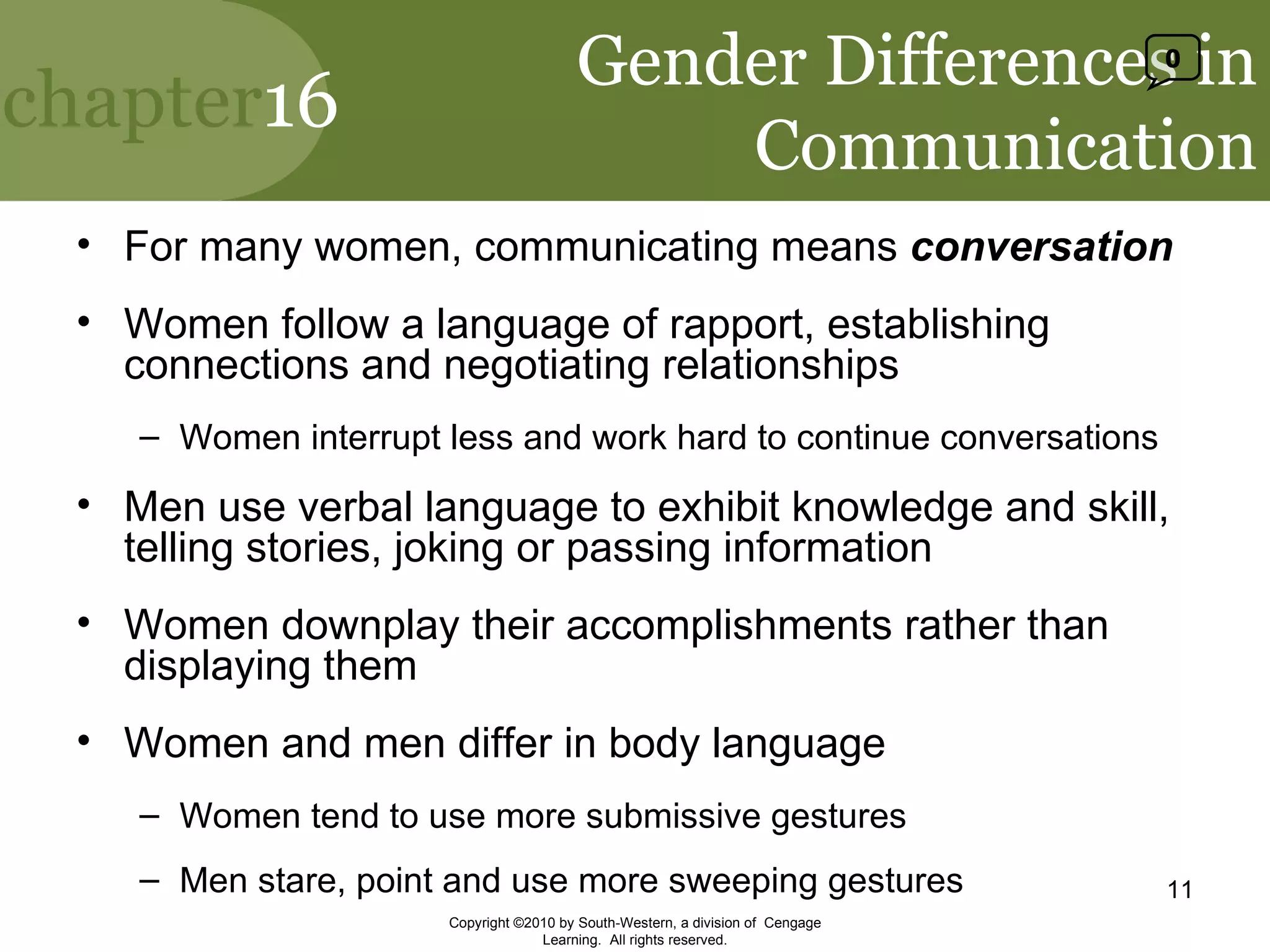
Gender Differences in Communication For many women, communicating means  conversation Women follow a language of rapport, establishing connections and negotiating relationships Women interrupt less and work hard to continue conversations Men use verbal language to exhibit knowledge and skill, telling stories, joking or passing information Women downplay their accomplishments rather than displaying them Women and men differ in body language Women tend to use more submissive gestures Men stare, point and use more sweeping gestures Copyright ©2010 by South-Western, a division of  Cengage Learning.  All rights reserved. 0
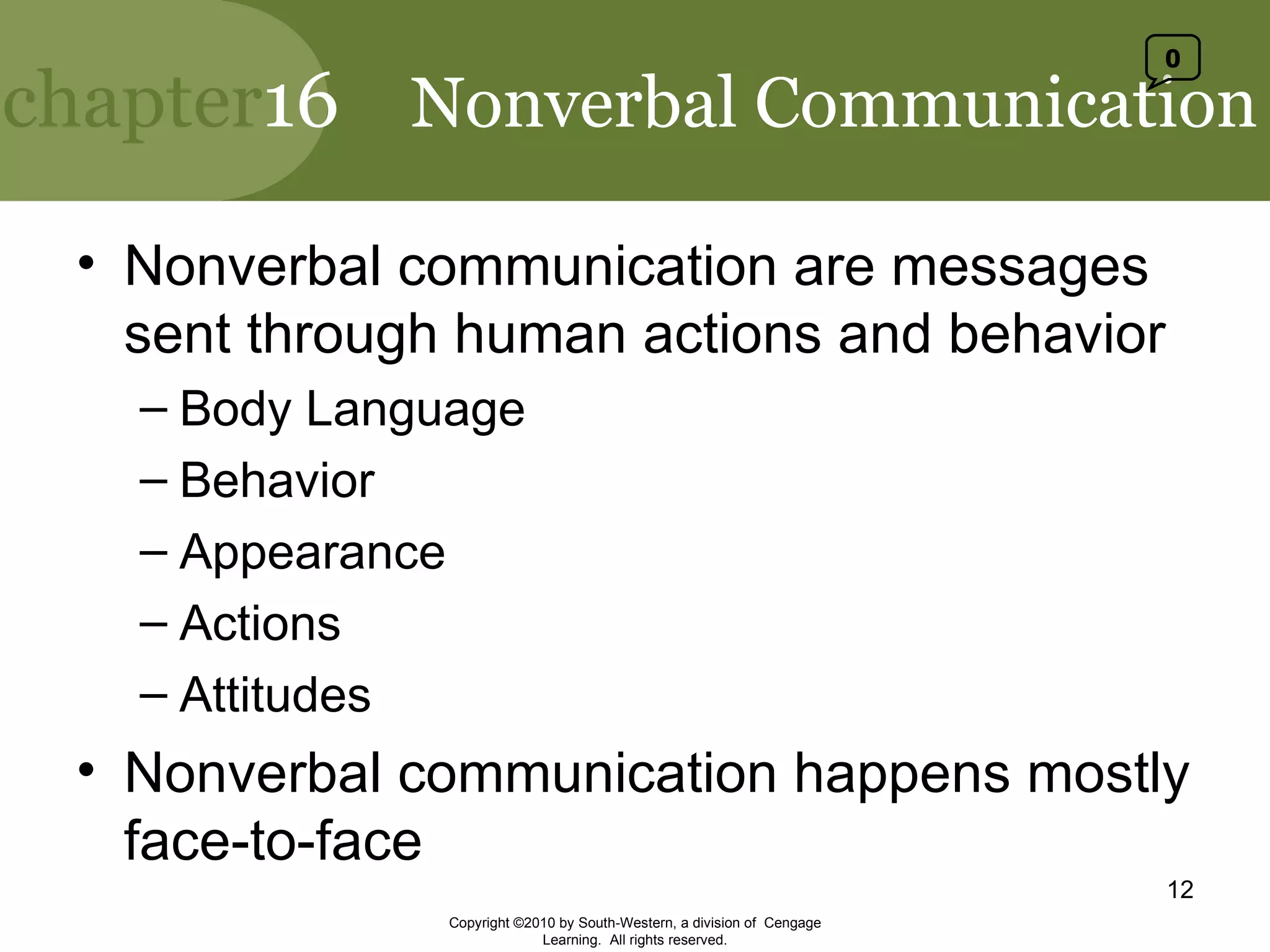
Nonverbal Communication Nonverbal communication are messages sent through human actions and behavior Body Language Behavior Appearance Actions Attitudes Nonverbal communication happens mostly face-to-face Copyright ©2010 by South-Western, a division of  Cengage Learning.  All rights reserved. 0
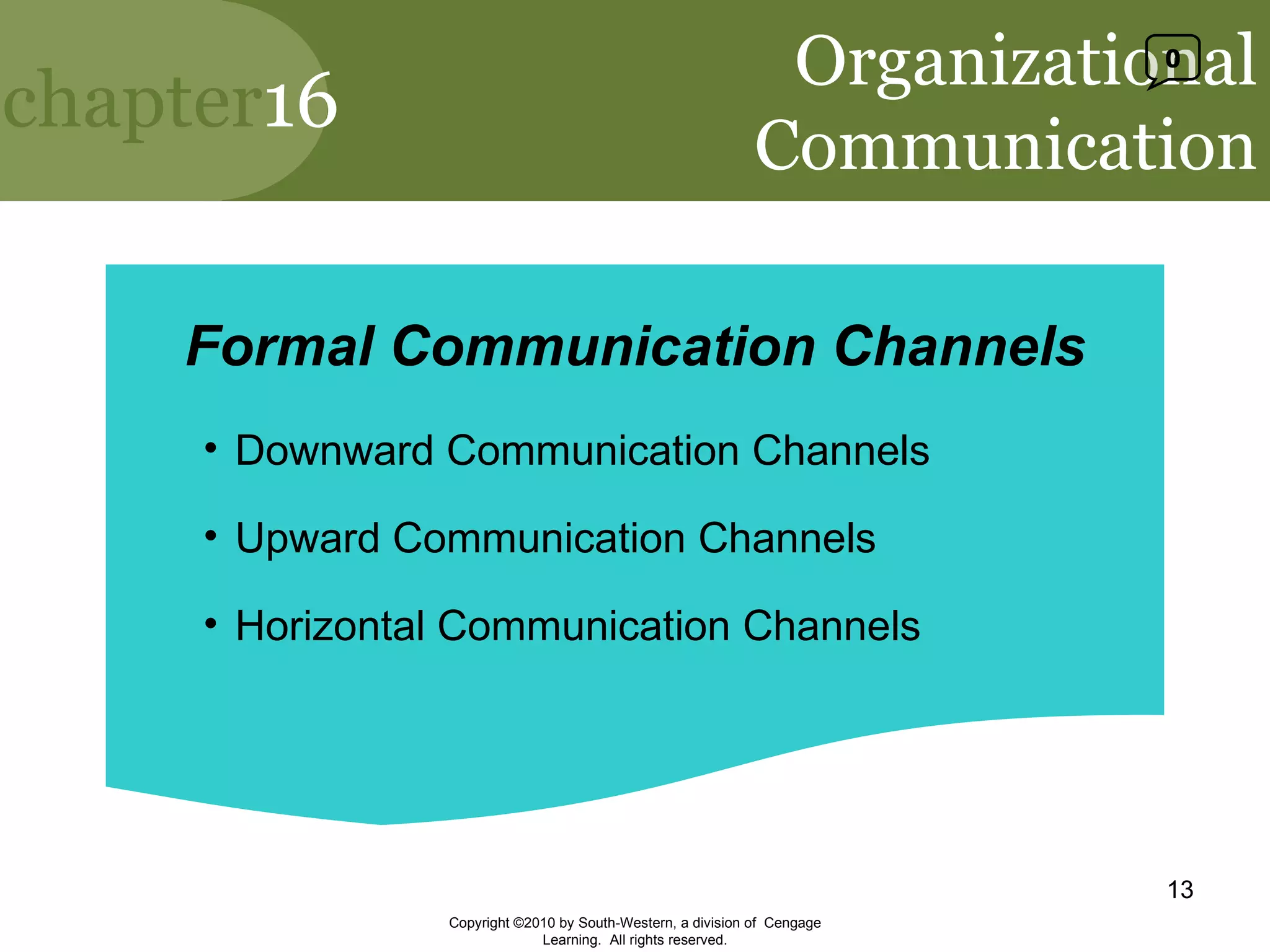
Organizational Communication Formal Communication Channels Downward Communication Channels Upward Communication Channels Horizontal Communication Channels Copyright ©2010 by South-Western, a division of  Cengage Learning.  All rights reserved. 0
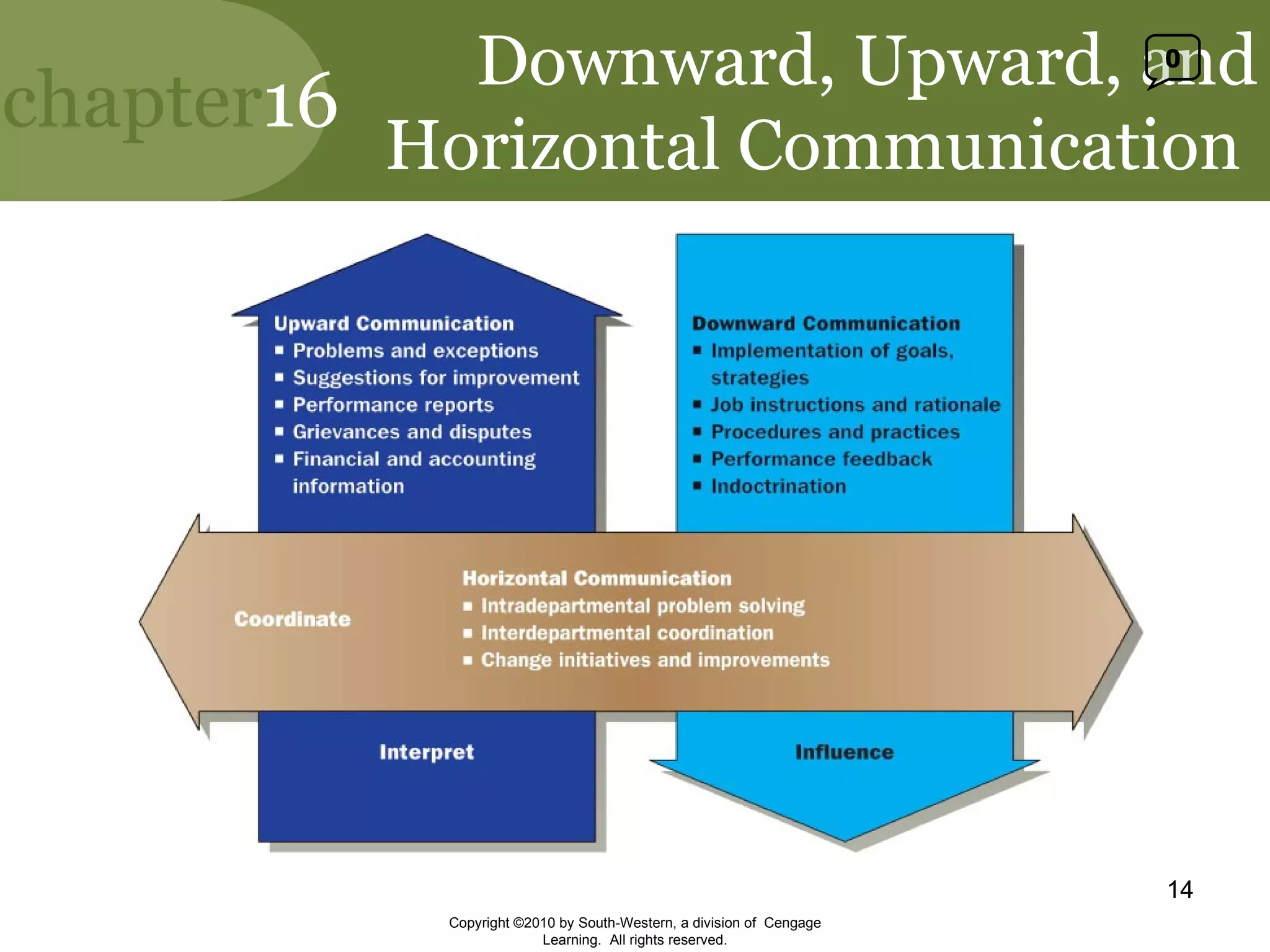
Downward, Upward, and Horizontal Communication  Copyright ©2010 by South-Western, a division of  Cengage Learning.  All rights reserved. 0

Lec12 chp18

  • 1.
  • 2.
    Learning Outcomes Explainwhy communication is essential for effective management and describe how nonverbal behavior and listening affect communication among people. Describe the concept of channel richness , and explain how communication channels influence the quality of communication. Understand how gender differences , nonverbal communication, and listening affect the effectiveness of communication Explain the difference between Downward, Upward and Horizontal Communication Channels and the importance of each for organizational management. Copyright ©2010 by South-Western, a division of Cengage Learning.  All rights reserved. 0
  • 3.
    Are You Buildinga Personal Network? Personal networking is an important skill for managers Networking enables managers to get things done Networking builds social, work, and career relationships that are mutually beneficial Today’s organizations depend on effective communication that starts with managers Copyright ©2010 by South-Western, a division of Cengage Learning.  All rights reserved. 0
  • 4.
    The Manager asCommunication Champion Copyright ©2010 by South-Western, a division of Cengage Learning.  All rights reserved. 0
  • 5.
    What is Communication?Communication is the manager’s job Managers facilitate strategic conversations Open communication Active listening Dialogue Feedback and learning to induce change Communication means “sharing”, not speaking Communication is the process by which information is exchanged and understood by two or more people Copyright ©2010 by South-Western, a division of Cengage Learning.  All rights reserved. 0
  • 6.
    A Model ofthe Communication Process Copyright ©2010 by South-Western, a division of Cengage Learning.  All rights reserved. 0
  • 7.
    Communicating AmongPeople Communication can easily break down Today’s managers are communicating globally Many variables impact the potential breakdown of communication Channel selection Persuasion Gender differences Nonverbal behavior Listening Copyright ©2010 by South-Western, a division of Cengage Learning.  All rights reserved. 0
  • 8.
    Communication Channels Managersmust choose from a variety of communication channels Channels differ in their effectiveness and richness Channel richness is the amount of information that can be transmitted during a communication episode Managers must select a channel that fits the message Copyright ©2010 by South-Western, a division of Cengage Learning.  All rights reserved. 0
  • 9.
    A Continuum ofChannel Richness Copyright ©2010 by South-Western, a division of Cengage Learning.  All rights reserved. 0
  • 10.
    Communications to Persuadeand Influence The ability for managers to persuade and influence is becoming more critical Directives are no longer the task of managers Managers must communicate frequently and easily with others Many managers have communication apprehension and avoid communicating To effectively persuade and influence, managers must show they care Copyright ©2010 by South-Western, a division of Cengage Learning.  All rights reserved. 0
  • 11.
    Gender Differences inCommunication For many women, communicating means conversation Women follow a language of rapport, establishing connections and negotiating relationships Women interrupt less and work hard to continue conversations Men use verbal language to exhibit knowledge and skill, telling stories, joking or passing information Women downplay their accomplishments rather than displaying them Women and men differ in body language Women tend to use more submissive gestures Men stare, point and use more sweeping gestures Copyright ©2010 by South-Western, a division of Cengage Learning.  All rights reserved. 0
  • 12.
    Nonverbal Communication Nonverbalcommunication are messages sent through human actions and behavior Body Language Behavior Appearance Actions Attitudes Nonverbal communication happens mostly face-to-face Copyright ©2010 by South-Western, a division of Cengage Learning.  All rights reserved. 0
  • 13.
    Organizational Communication FormalCommunication Channels Downward Communication Channels Upward Communication Channels Horizontal Communication Channels Copyright ©2010 by South-Western, a division of Cengage Learning.  All rights reserved. 0
  • 14.
    Downward, Upward, andHorizontal Communication Copyright ©2010 by South-Western, a division of Cengage Learning.  All rights reserved. 0