
BASICS OF
COMMUNICATION
By,
Dr. Subin K.Mohan, MVSc, PGD, PhD
Assistant Professor
Department of Vety. & AH Extension
COVAS, Mannuthy, Thrissur, Kerala-680651
subinkmohan@gmail.com
HEARTY
WELCOME
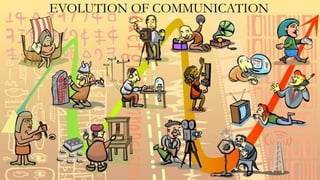
EVOLUTION OF COMMUNICATION
What is communication?
Definitions:
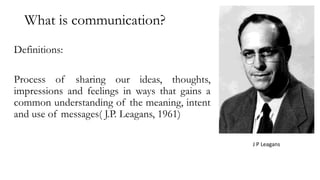
Process of sharing our ideas, thoughts,
impressions and feelings in ways that gains a
common understanding of the meaning, intent
and use of messages( J.P. Leagans, 1961)
J P Leagans
Contd.
• All the procedures by which one mind can affect another
(Weaver, 1964)
• Process by which messages are transferred from a source to
receiver. (Everett M. Rogers & Shoemaker, F. F., 1971)
• Imparting or exchanging of information by speaking, writing,
or using some other medium (Oxford Dictionary meaning)
In brief
Process of sharing/ imparting/ exchanging –
 Information, Ideas, Thoughts, Feelings, Impressions, Emotions, Messages
By-
 Source to Receiver
Through –
 Speech, Signals, Writing, Behavior or some other medium
That gains-
 a common understanding of the meaning, intent and use of messages
Contd.
Functions of Communication
• Information
• Instructive
• Influence
• Integrative
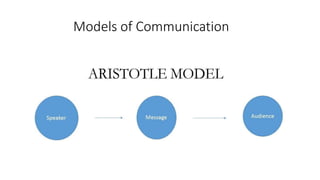
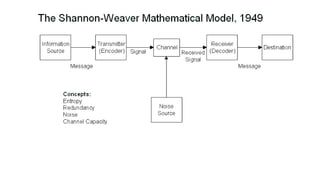
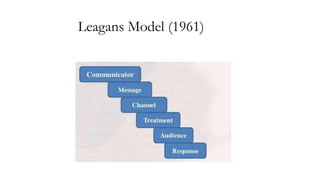
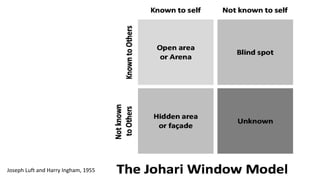
Models of Communication
Leagans Model (1961)
Frank Dance (1967)
Joseph Luft and Harry Ingham, 1955
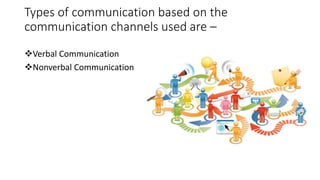
Types of communication based on the
communication channels used are –
Verbal Communication
Nonverbal Communication
Verbal Communication
Message is transmitted verbally.
Communication is done by word of mouth and a piece of
writing.
In verbal communication remember the acronym “KISS”
Verbal Communication is divided into:
Oral Communication
Written Communication
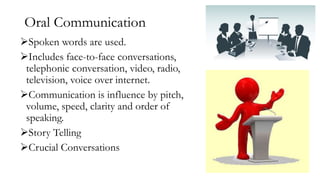
Oral Communication
Spoken words are used.
Includes face-to-face conversations,
telephonic conversation, video, radio,
television, voice over internet.
Communication is influence by pitch,
volume, speed, clarity and order of
speaking.
Story Telling
Crucial Conversations
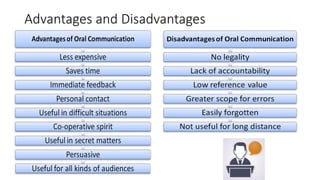
Advantages and Disadvantages
Written Communication
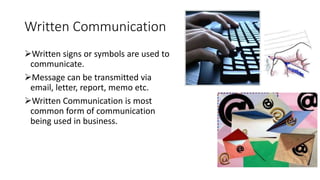
Written signs or symbols are used to
communicate.
Message can be transmitted via
email, letter, report, memo etc.
Written Communication is most
common form of communication
being used in business.
Advantages and Disadvantages
Advantages –
Messages can be edited and revised
Written communication provide record and backup.
A written message enables receiver to fully understand it and send
appropriate feedback.
Disadvantages –
Written communication doesn’t bring instant feedback.
It take more time in composing a written message as compared to
word-of-mouth and number of people struggles for writing ability.
Non Verbal Communication
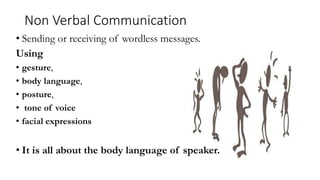
• Sending or receiving of wordless messages.
Using
• gesture,
• body language,
• posture,
• tone of voice
• facial expressions
• It is all about the body language of speaker.
Levels of Communication
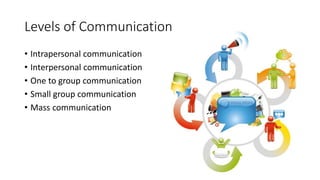
• Intrapersonal communication
• Interpersonal communication
• One to group communication
• Small group communication
• Mass communication
Intrapersonal communication
• Communication that occurs in your own mind.
• It is the basis of your feelings, biases, prejudices, and beliefs.
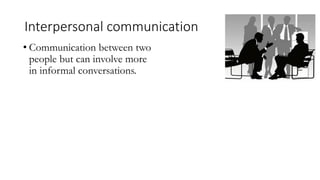
Interpersonal communication
• Communication between two
people but can involve more
in informal conversations.
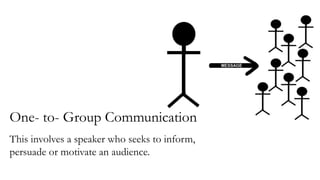
One- to- Group Communication
This involves a speaker who seeks to inform,
persuade or motivate an audience.
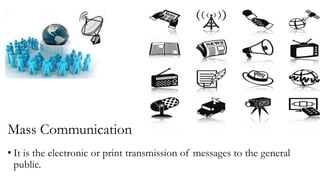
Mass Communication
• It is the electronic or print transmission of messages to the general
public.
Barriers of effective communication
Environmental / physical barriers
• Time
• Place
• Space
• Climate
• Noise.
Semantic/ Language Barriers
• Connotation meanings of words
• Choose the correct and precise word
depending on context and the receiver’s
felicity in the use of language.
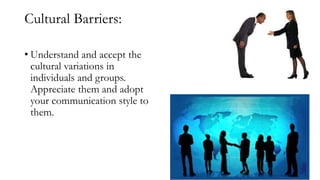
Cultural Barriers:
• Understand and accept the
cultural variations in
individuals and groups.
Appreciate them and adopt
your communication style to
them.
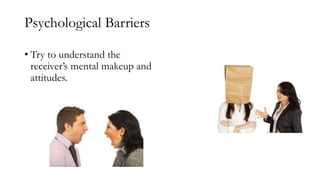
Psychological Barriers
• Try to understand the
receiver’s mental makeup and
attitudes.
Perception barriers
• Try to understand the different levels of
perceptions of a situation and an issue.
• Be open, flexible and transparent.
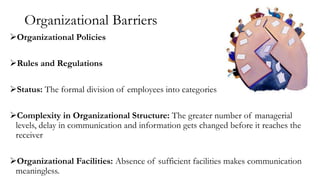
Organizational Barriers
Organizational Policies
Rules and Regulations
Status: The formal division of employees into categories
Complexity in Organizational Structure: The greater number of managerial
levels, delay in communication and information gets changed before it reaches the
receiver
Organizational Facilities: Absence of sufficient facilities makes communication
meaningless.
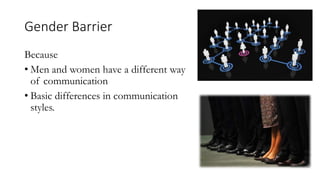
Gender Barrier
Because
• Men and women have a different way
of communication
• Basic differences in communication
styles.
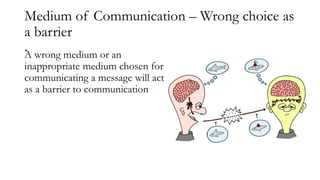
Medium of Communication – Wrong choice as
a barrier
.
A wrong medium or an
inappropriate medium chosen for
communicating a message will act
as a barrier to communication
Thank You
For patiently hearing my presentation

Communication1

  • 1.
    BASICS OF COMMUNICATION By, Dr. SubinK.Mohan, MVSc, PGD, PhD Assistant Professor Department of Vety. & AH Extension COVAS, Mannuthy, Thrissur, Kerala-680651 subinkmohan@gmail.com
  • 2.
  • 3.
  • 4.
    What is communication? Definitions: Processof sharing our ideas, thoughts, impressions and feelings in ways that gains a common understanding of the meaning, intent and use of messages( J.P. Leagans, 1961) J P Leagans
  • 5.
    Contd. • All theprocedures by which one mind can affect another (Weaver, 1964) • Process by which messages are transferred from a source to receiver. (Everett M. Rogers & Shoemaker, F. F., 1971) • Imparting or exchanging of information by speaking, writing, or using some other medium (Oxford Dictionary meaning)
  • 6.
    In brief Process ofsharing/ imparting/ exchanging –  Information, Ideas, Thoughts, Feelings, Impressions, Emotions, Messages By-  Source to Receiver Through –  Speech, Signals, Writing, Behavior or some other medium That gains-  a common understanding of the meaning, intent and use of messages Contd.
  • 7.
    Functions of Communication •Information • Instructive • Influence • Integrative
  • 8.
  • 10.
  • 11.
  • 12.
    Joseph Luft andHarry Ingham, 1955
  • 13.
    Types of communicationbased on the communication channels used are – Verbal Communication Nonverbal Communication
  • 14.
    Verbal Communication Message istransmitted verbally. Communication is done by word of mouth and a piece of writing. In verbal communication remember the acronym “KISS” Verbal Communication is divided into: Oral Communication Written Communication
  • 15.
    Oral Communication Spoken wordsare used. Includes face-to-face conversations, telephonic conversation, video, radio, television, voice over internet. Communication is influence by pitch, volume, speed, clarity and order of speaking. Story Telling Crucial Conversations
  • 16.
  • 17.
    Written Communication Written signsor symbols are used to communicate. Message can be transmitted via email, letter, report, memo etc. Written Communication is most common form of communication being used in business.
  • 18.
    Advantages and Disadvantages Advantages– Messages can be edited and revised Written communication provide record and backup. A written message enables receiver to fully understand it and send appropriate feedback. Disadvantages – Written communication doesn’t bring instant feedback. It take more time in composing a written message as compared to word-of-mouth and number of people struggles for writing ability.
  • 19.
    Non Verbal Communication •Sending or receiving of wordless messages. Using • gesture, • body language, • posture, • tone of voice • facial expressions • It is all about the body language of speaker.
  • 20.
    Levels of Communication •Intrapersonal communication • Interpersonal communication • One to group communication • Small group communication • Mass communication
  • 21.
    Intrapersonal communication • Communicationthat occurs in your own mind. • It is the basis of your feelings, biases, prejudices, and beliefs.
  • 22.
    Interpersonal communication • Communicationbetween two people but can involve more in informal conversations.
  • 23.
    One- to- GroupCommunication This involves a speaker who seeks to inform, persuade or motivate an audience.
  • 24.
    Mass Communication • Itis the electronic or print transmission of messages to the general public.
  • 25.
    Barriers of effectivecommunication
  • 26.
    Environmental / physicalbarriers • Time • Place • Space • Climate • Noise.
  • 27.
    Semantic/ Language Barriers •Connotation meanings of words • Choose the correct and precise word depending on context and the receiver’s felicity in the use of language.
  • 28.
    Cultural Barriers: • Understandand accept the cultural variations in individuals and groups. Appreciate them and adopt your communication style to them.
  • 29.
    Psychological Barriers • Tryto understand the receiver’s mental makeup and attitudes.
  • 30.
    Perception barriers • Tryto understand the different levels of perceptions of a situation and an issue. • Be open, flexible and transparent.
  • 31.
    Organizational Barriers Organizational Policies Rulesand Regulations Status: The formal division of employees into categories Complexity in Organizational Structure: The greater number of managerial levels, delay in communication and information gets changed before it reaches the receiver Organizational Facilities: Absence of sufficient facilities makes communication meaningless.
  • 32.
    Gender Barrier Because • Menand women have a different way of communication • Basic differences in communication styles.
  • 33.
    Medium of Communication– Wrong choice as a barrier . A wrong medium or an inappropriate medium chosen for communicating a message will act as a barrier to communication
  • 34.
    Thank You For patientlyhearing my presentation