Group 2
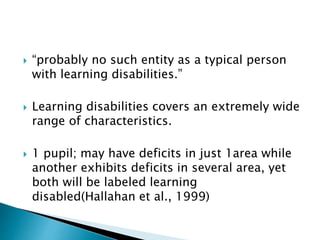
 “probably no such entity as a typical person
with learning disabilities.”
 Learning disabilities covers an extremely wide
range of characteristics.
 1 pupil; may have deficits in just 1area while
another exhibits deficits in several area, yet
both will be labeled learning
disabled(Hallahan et al., 1999)
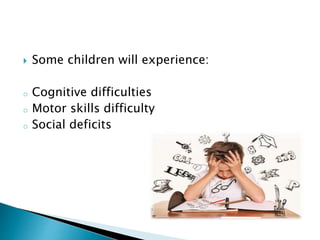
 Some children will experience:
o Cognitive difficulties
o Motor skills difficulty
o Social deficits
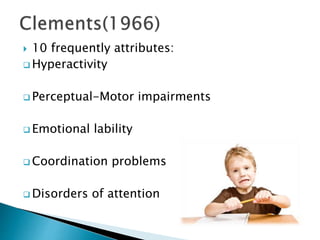
 10 frequently attributes:
 Hyperactivity
 Perceptual-Motor impairments
 Emotional lability
 Coordination problems
 Disorders of attention
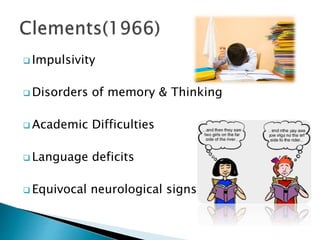
 Impulsivity
 Disorders of memory & Thinking
 Academic Difficulties
 Language deficits
 Equivocal neurological signs
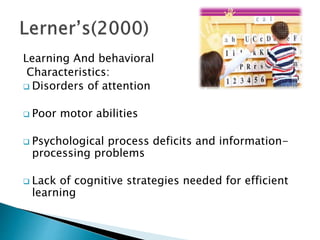
Learning And behavioral
Characteristics:
 Disorders of attention
 Poor motor abilities
 Psychological process deficits and information-
processing problems
 Lack of cognitive strategies needed for efficient
learning
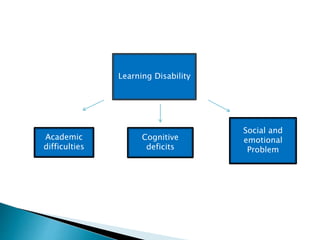
Learning Disability
Social and
emotional
Problem
Cognitive
deficits
Academic
difficulties
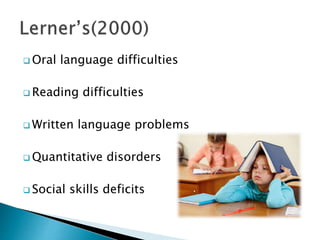
 Oral language difficulties
 Reading difficulties
 Written language problems
 Quantitative disorders
 Social skills deficits
 Hyperactive vs. Hypoactive
 Boys are 4 times as likely as girls to be
identified as learning disabled.
 Boys
 physical aggression
 Loss of control
 Girls
 More cognitive problems
 Language problems
 Social problems
 deficits in reading and Math
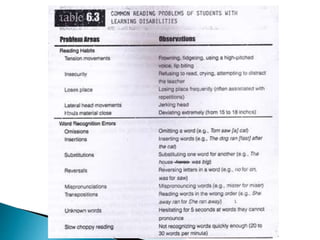
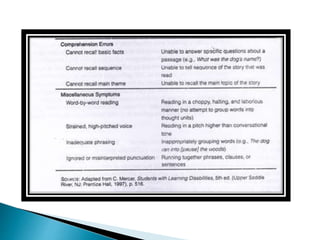
 Reading comprehension
 Word recognition errors
 Lack word analysis
 Deficient in oral reading
 Student fails to recognize and comprehend
written words
 Pupil may have difficulty with:
• Computational skill
• Word problems
• Spatial relationships or writing numbers
• Copying shapes
• Problems in telling time
• Understanding fraction and decimals
• measuring
Characteristics of persons with learning disability

Characteristics of persons with learning disability

  • 1.
  • 2.
     “probably nosuch entity as a typical person with learning disabilities.”  Learning disabilities covers an extremely wide range of characteristics.  1 pupil; may have deficits in just 1area while another exhibits deficits in several area, yet both will be labeled learning disabled(Hallahan et al., 1999)
  • 3.
     Some childrenwill experience: o Cognitive difficulties o Motor skills difficulty o Social deficits
  • 4.
     10 frequentlyattributes:  Hyperactivity  Perceptual-Motor impairments  Emotional lability  Coordination problems  Disorders of attention
  • 5.
     Impulsivity  Disordersof memory & Thinking  Academic Difficulties  Language deficits  Equivocal neurological signs
  • 6.
    Learning And behavioral Characteristics: Disorders of attention  Poor motor abilities  Psychological process deficits and information- processing problems  Lack of cognitive strategies needed for efficient learning
  • 7.
  • 8.
     Oral languagedifficulties  Reading difficulties  Written language problems  Quantitative disorders  Social skills deficits
  • 9.
  • 10.
     Boys are4 times as likely as girls to be identified as learning disabled.  Boys  physical aggression  Loss of control  Girls  More cognitive problems  Language problems  Social problems  deficits in reading and Math
  • 11.
     Reading comprehension Word recognition errors  Lack word analysis  Deficient in oral reading
  • 12.
     Student failsto recognize and comprehend written words
  • 13.
     Pupil mayhave difficulty with: • Computational skill • Word problems • Spatial relationships or writing numbers • Copying shapes • Problems in telling time • Understanding fraction and decimals • measuring