Learning beyond the classroom University of Colombo School of Computing Prof. Gihan Wikramanayake
Overview Changes due to Technology Virtual Learning Environments Continuing Professional Development Informal Learning Learning Tools Conclusion
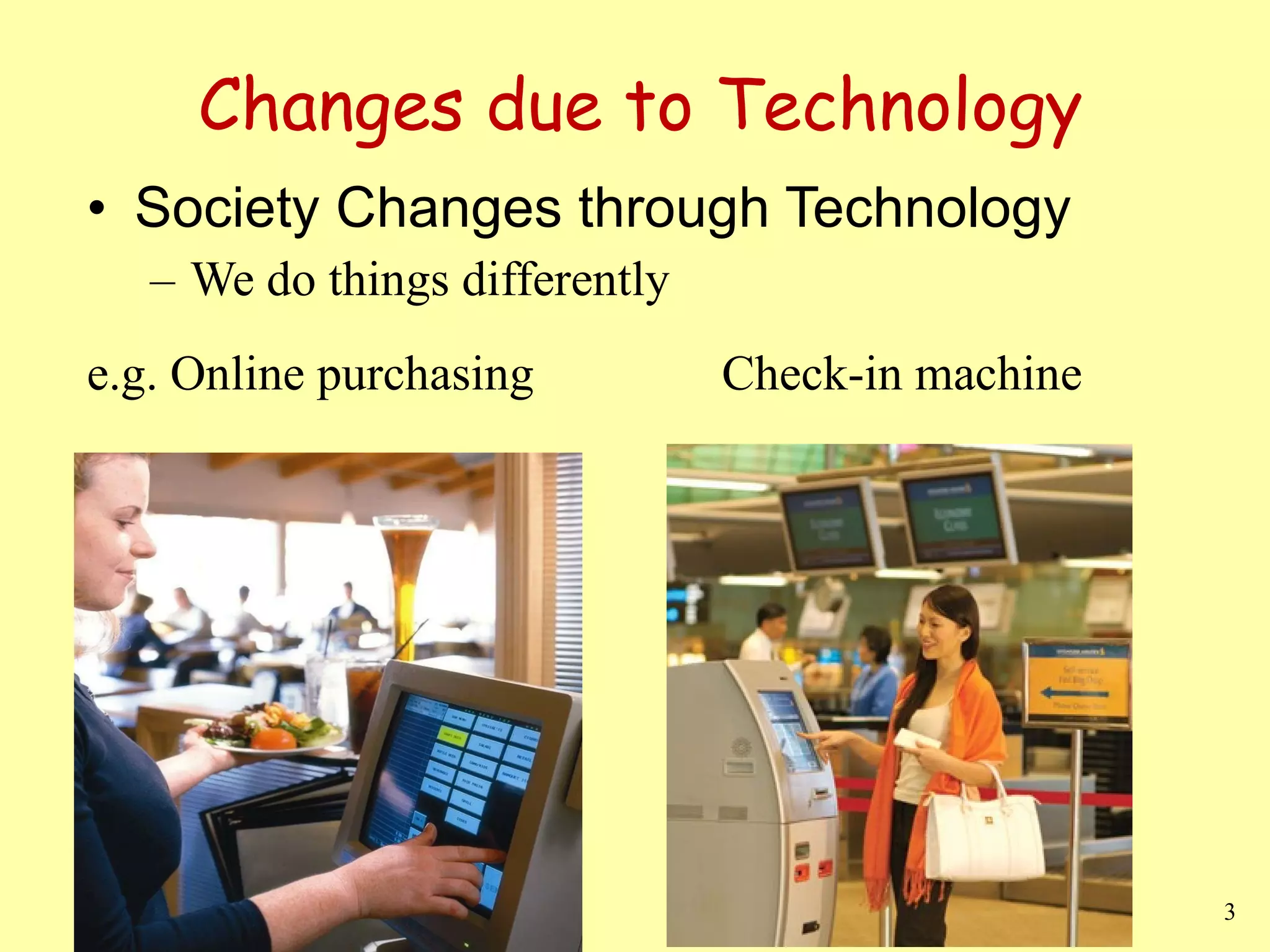
Changes due to Technology Society Changes through Technology We do things differently e.g. Online purchasing Check-in machine
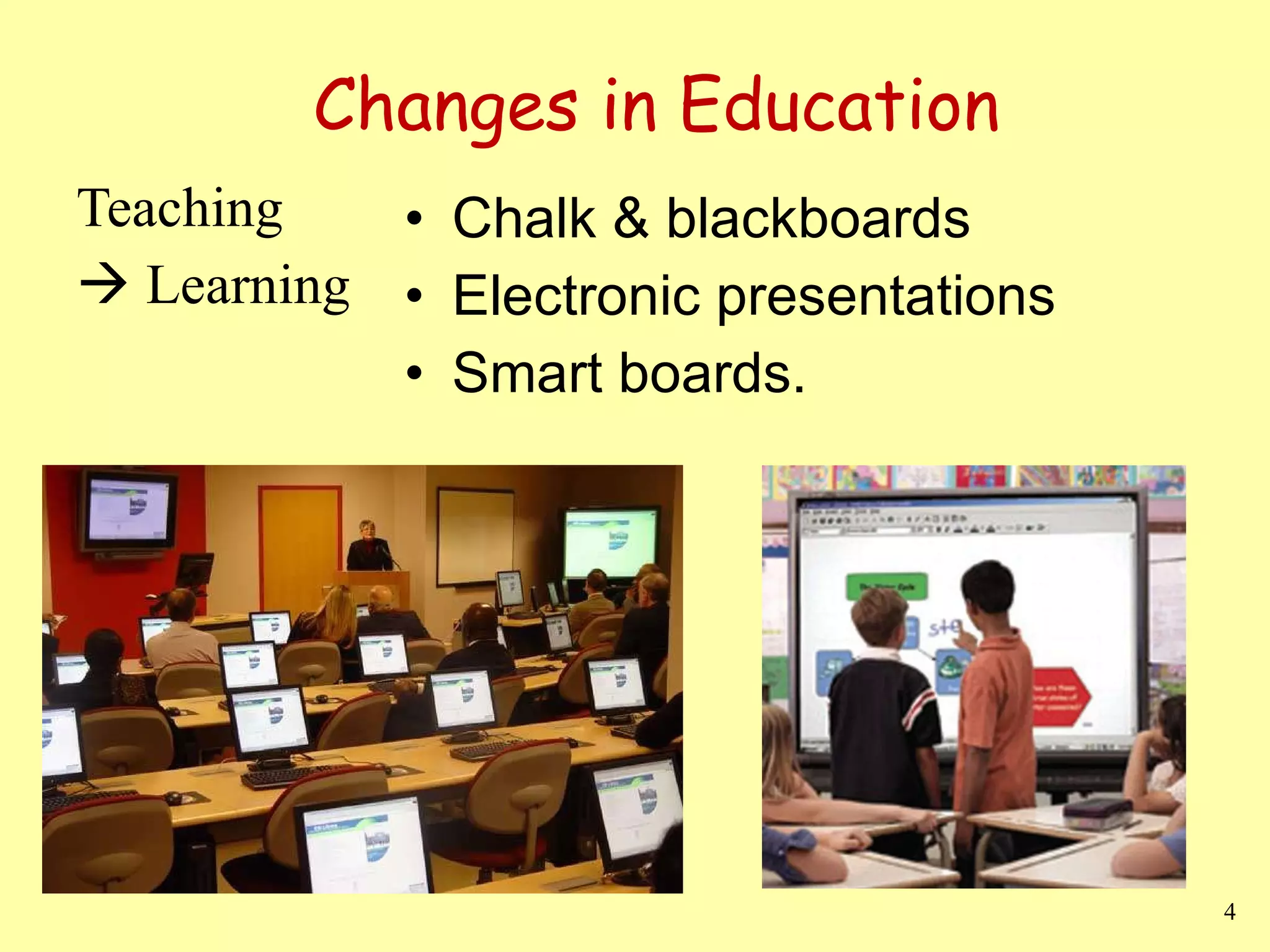
Changes in Education Chalk & blackboards Electronic presentations Smart boards. Teaching    Learning
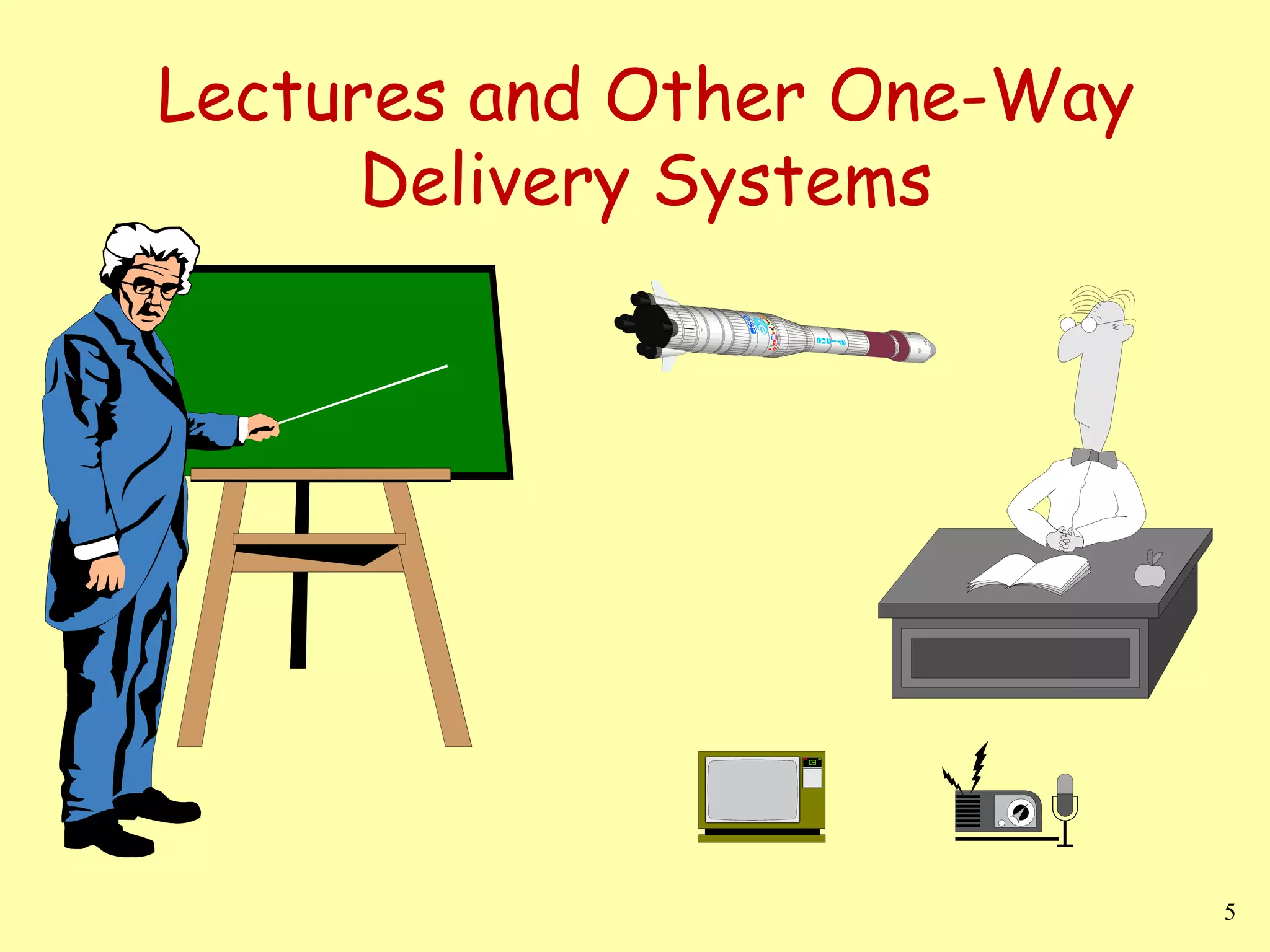
Lectures and Other One-Way Delivery Systems
New way of thinking about teaching and learning teacher - learner relationship Learner centered learning based on constructivism and socio-constructivism Process of learning problem solving, critical thinking  Hypertext & hypermedia Paradigm Shift to Networked Learning
Paradigm Shift to Networked Learning Learner interdependence / collaborative learning Opportunity for everyone to participate Learner as active participant Synchronous real time conversations  Asynchronous Time to reflect before responding Teacher facilitator, coach
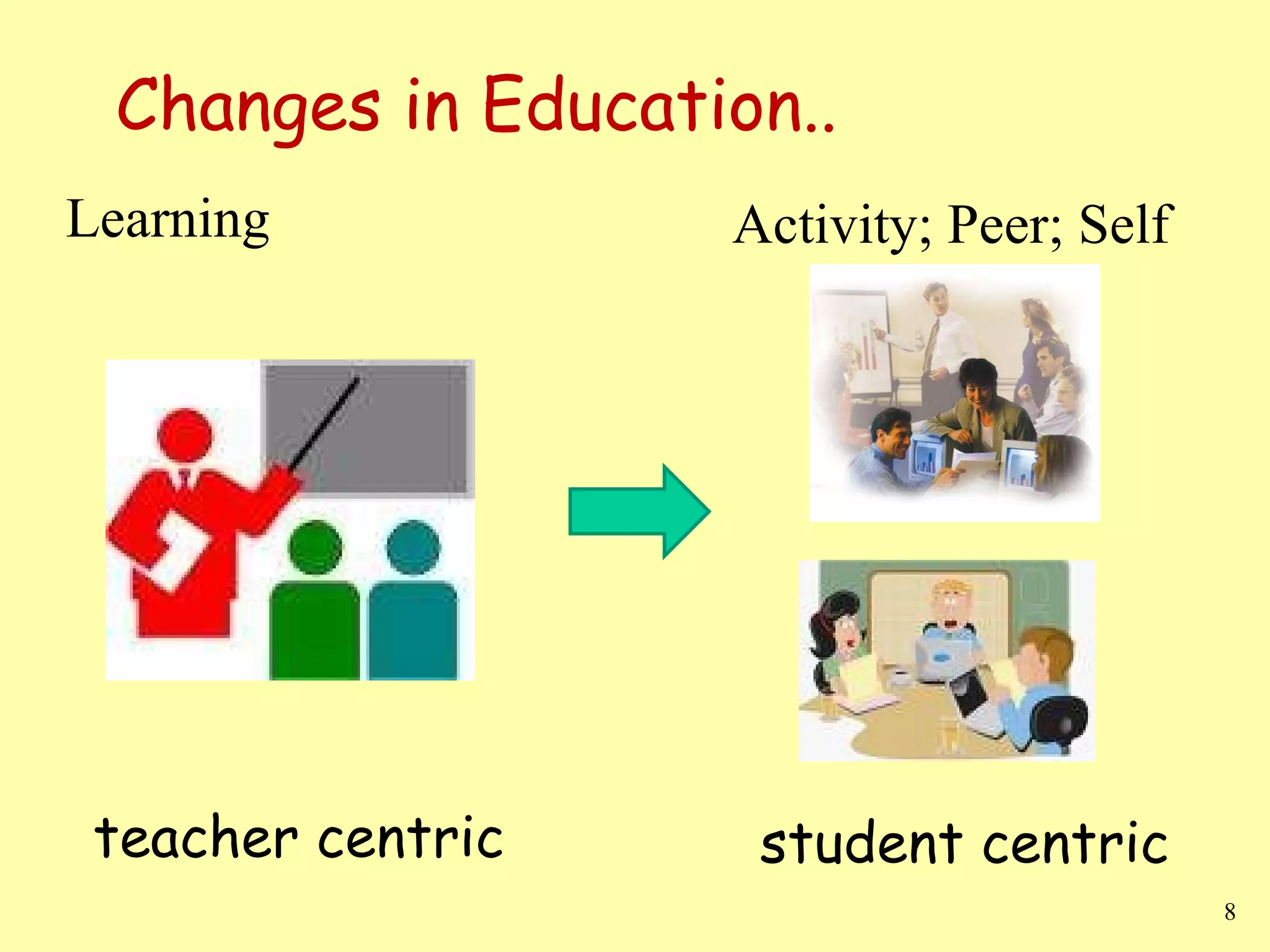
Changes in Education.. Learning  student centric teacher centric Activity; Peer; Self
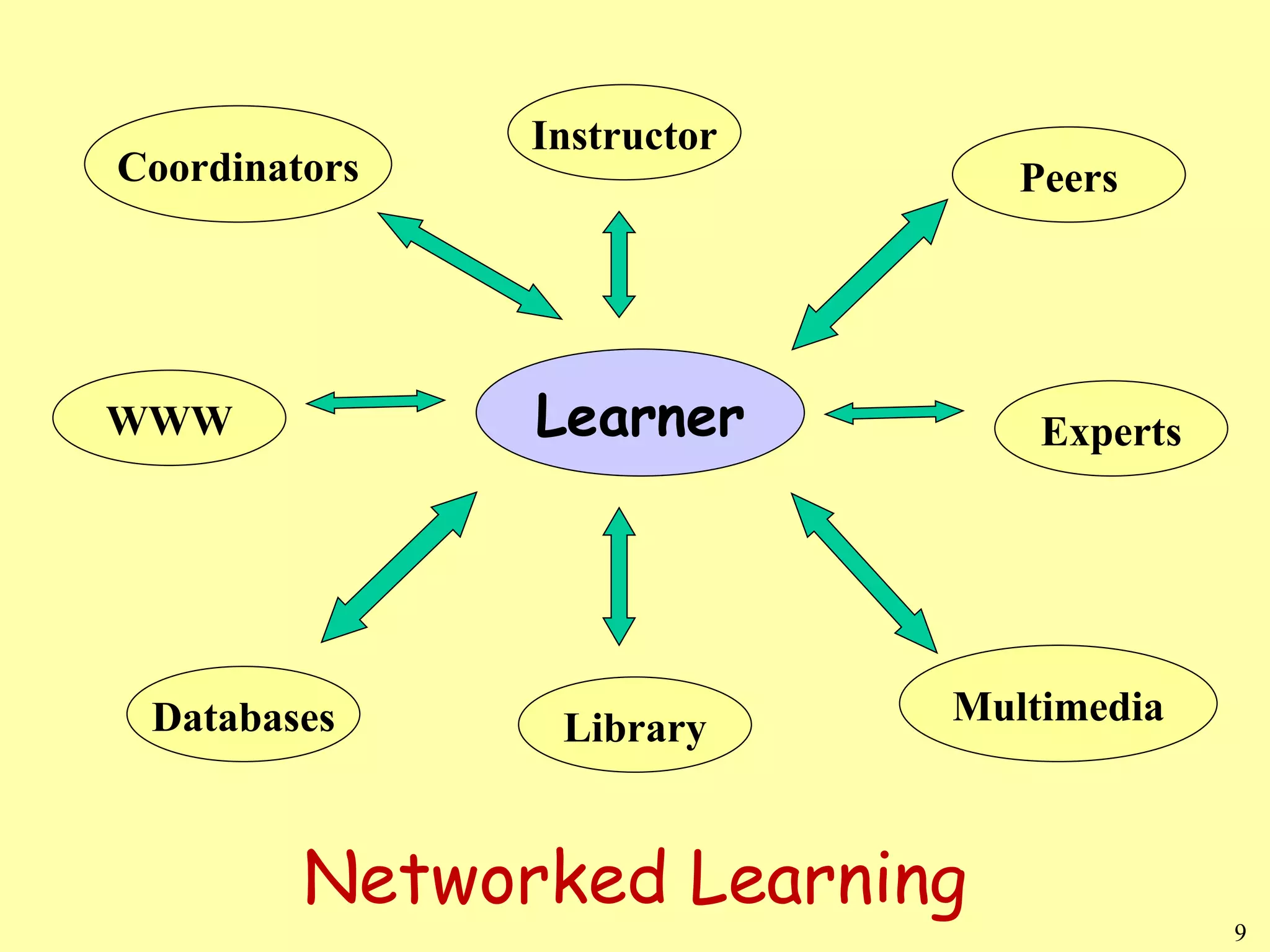
Coordinators WWW Databases Library Peers Instructor Multimedia Experts Learner Networked Learning
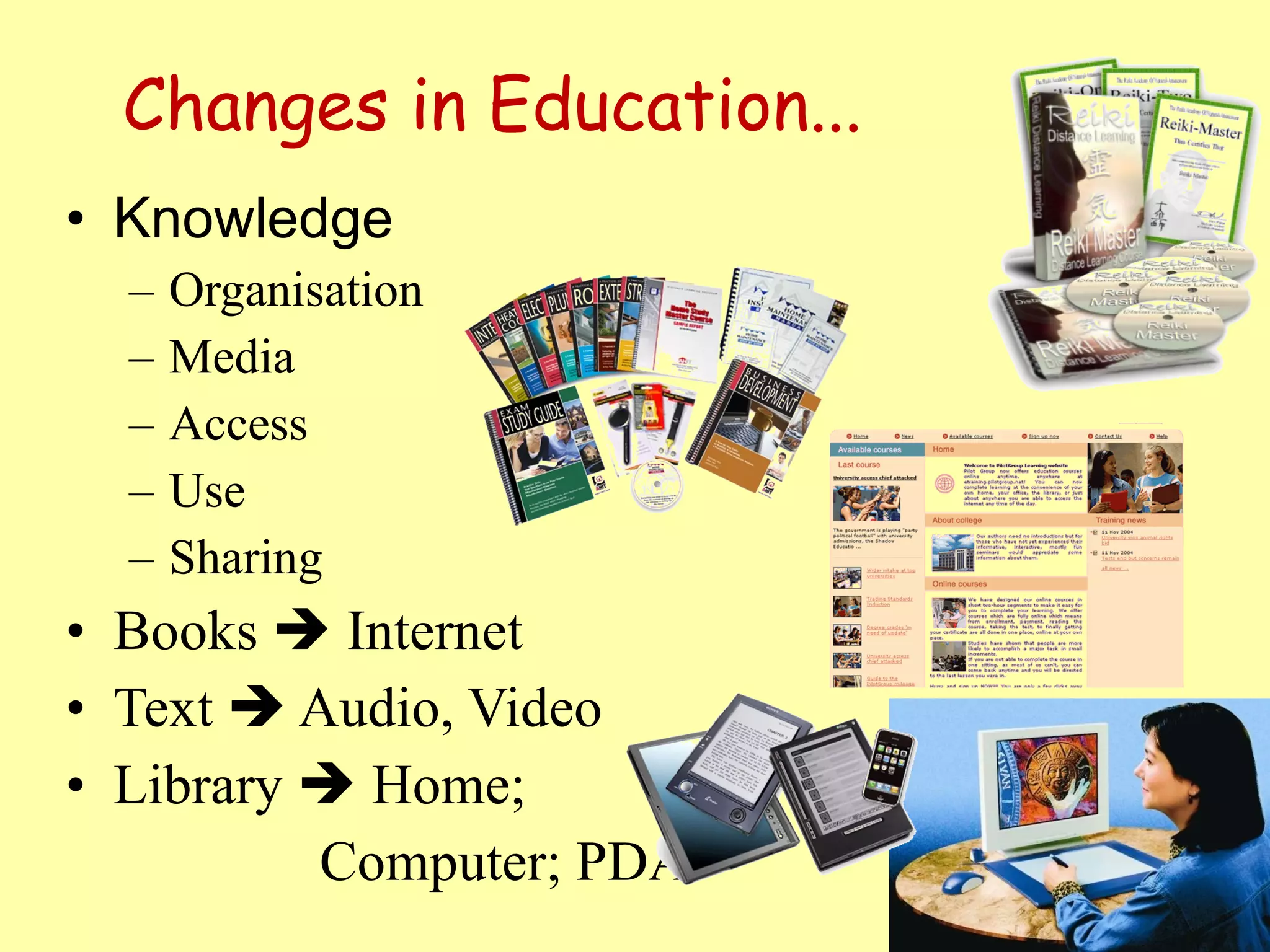
Changes in Education... Knowledge Organisation Media Access Use Sharing Books    Internet Text    Audio, Video Library    Home;  Computer; PDA
Impact in Education Learning Skills Infrastructure Requirements Read, Write    Spellings, Grammar, Teacher depended    Keyboard, Internet, Tools, Community depended
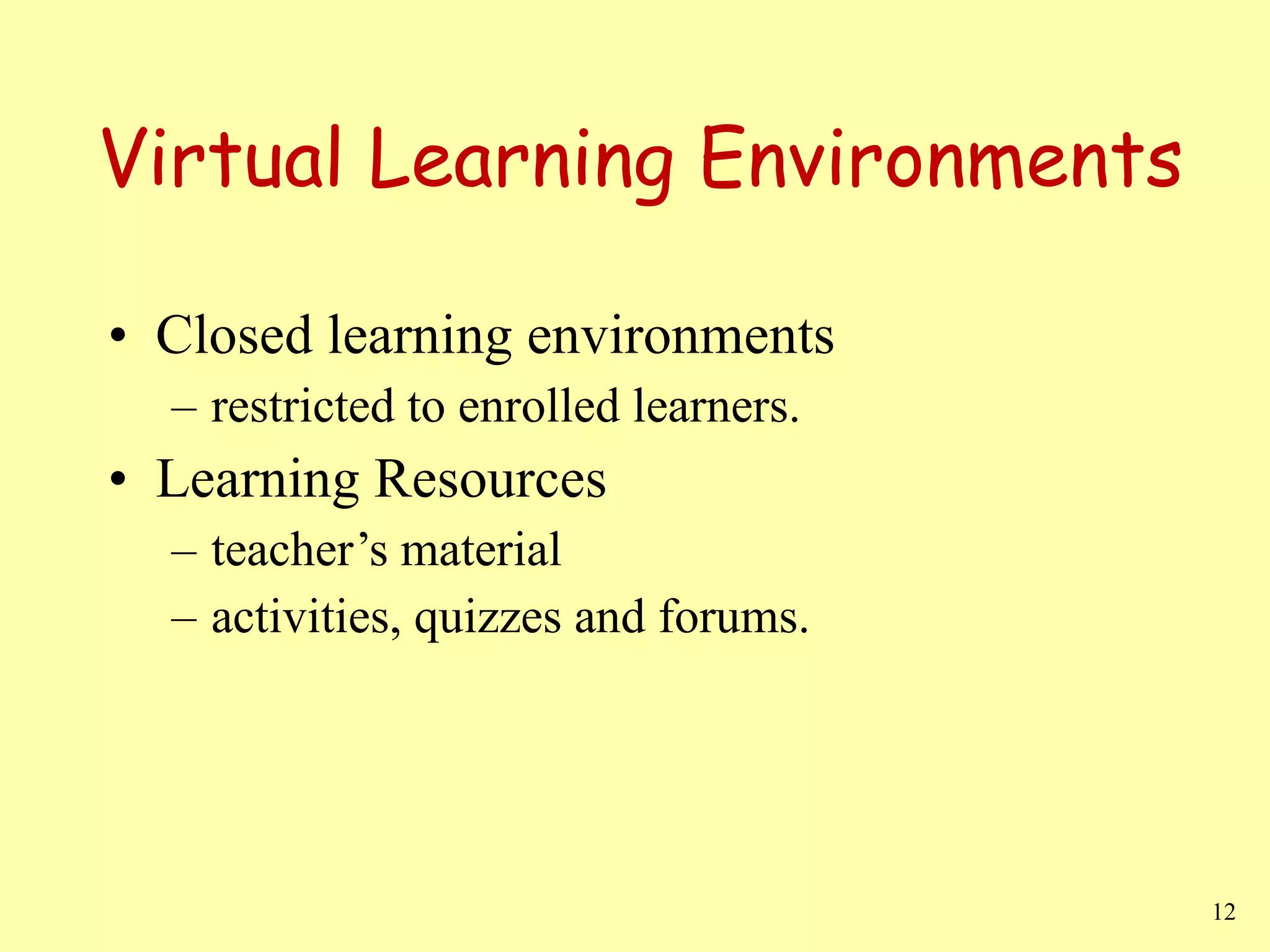
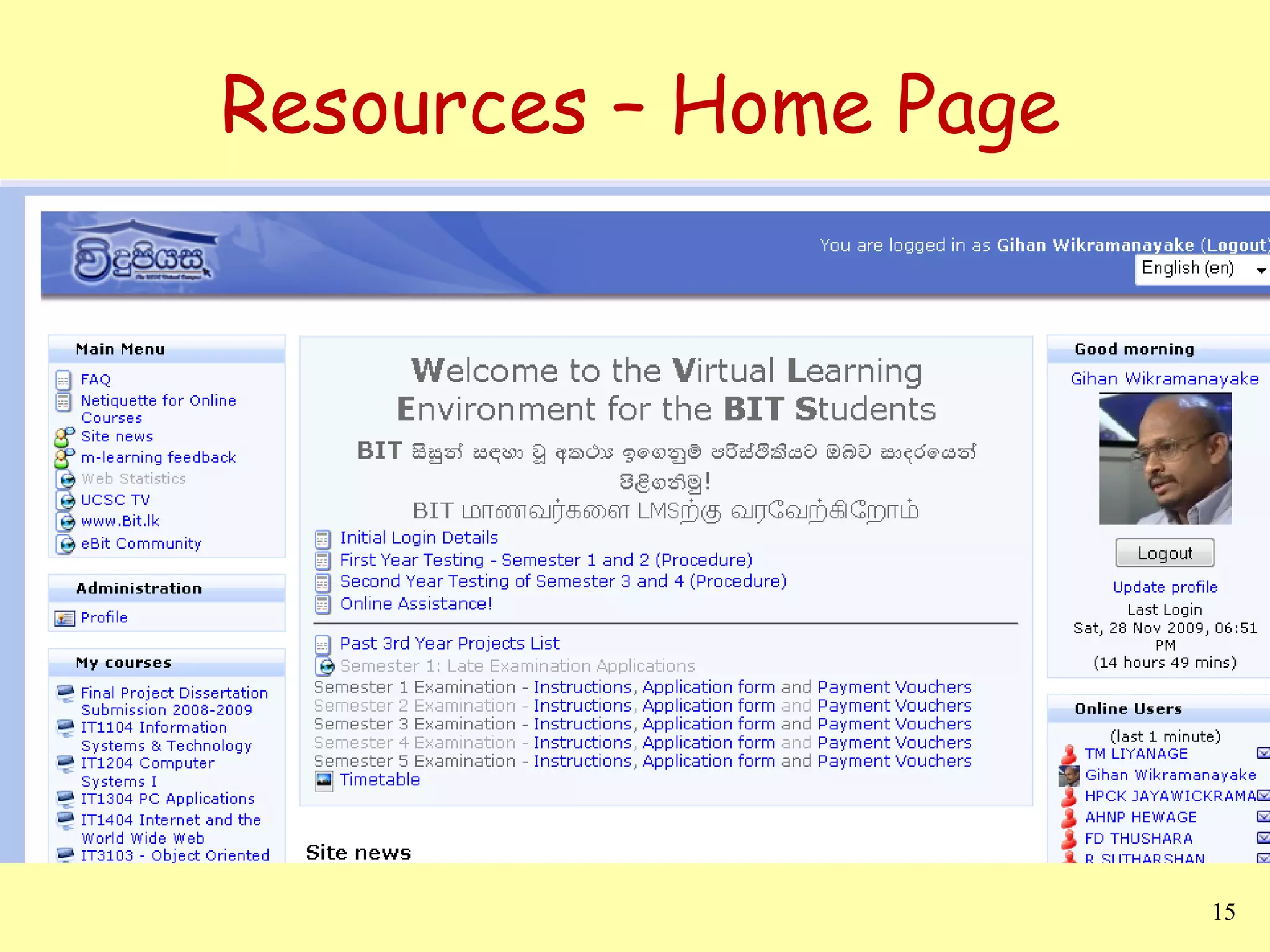
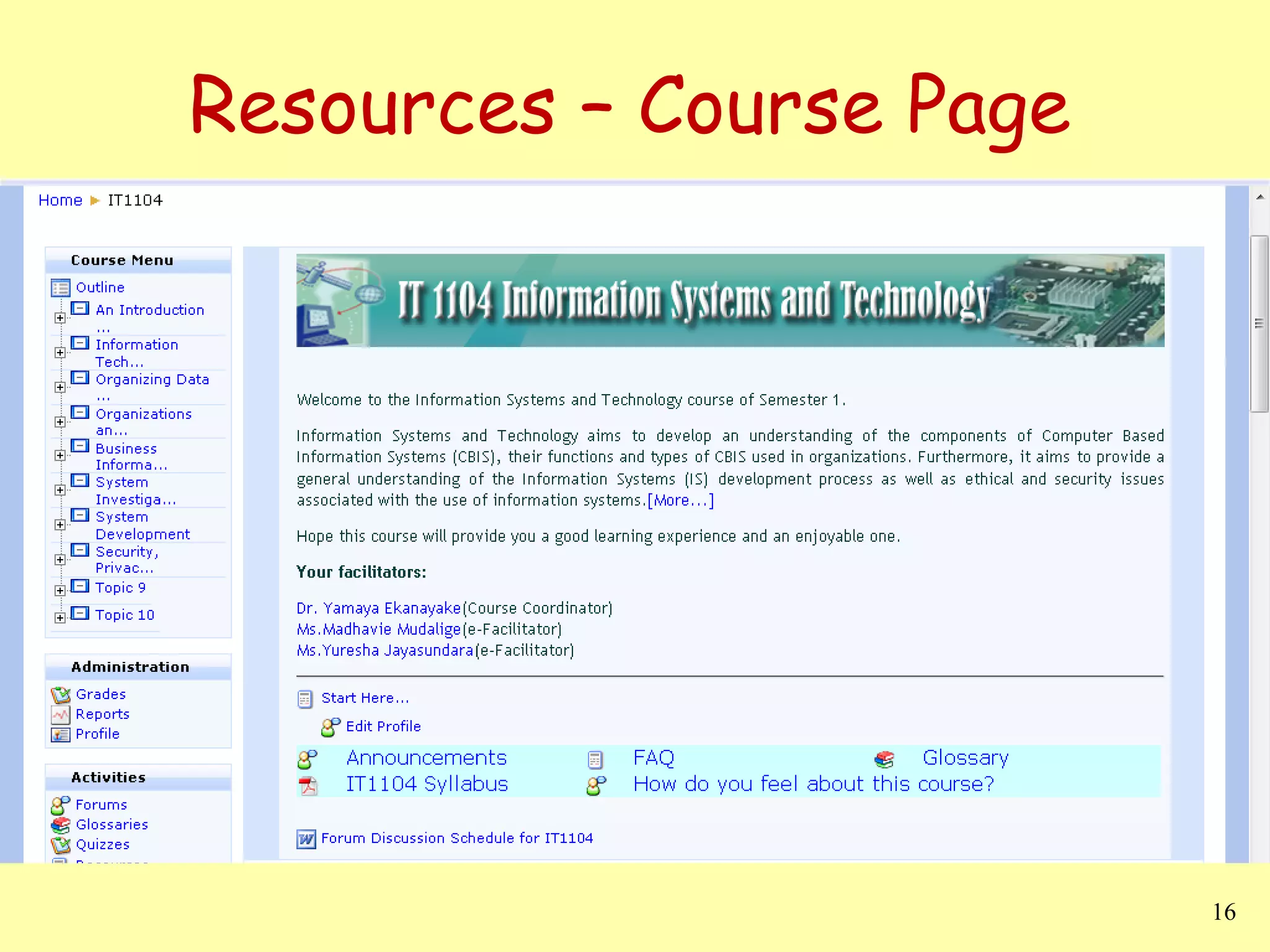
Virtual Learning Environments Closed learning environments  restricted to enrolled learners.  Learning Resources teacher’s material activities, quizzes and forums.
Learning Management Systems Free and Open-source e-Learning Software  Affordable access to Internet Not just PowerPoint Slides
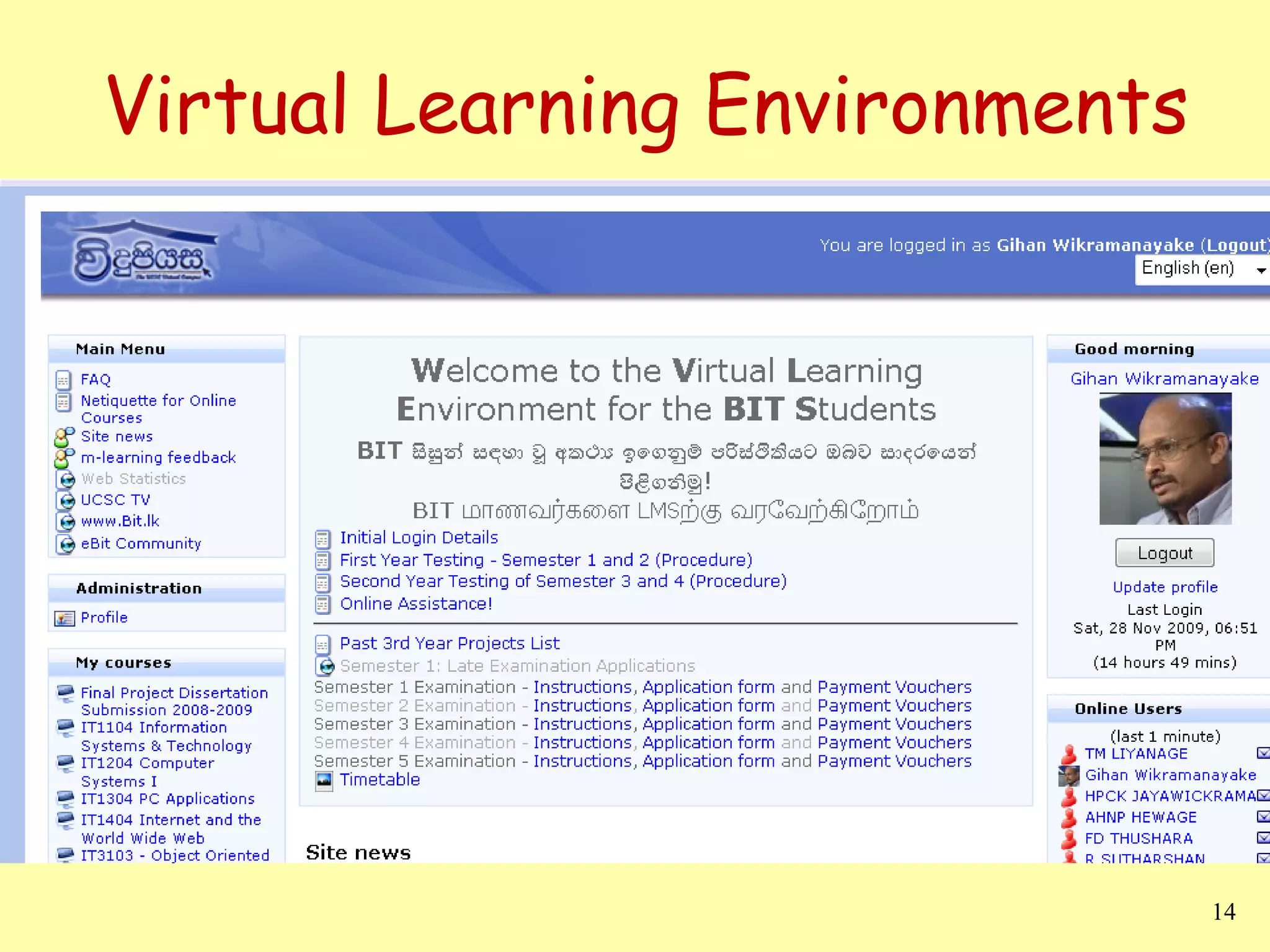
Virtual Learning Environments
Resources – Home Page
Resources – Course Page
Resources – Syllabus
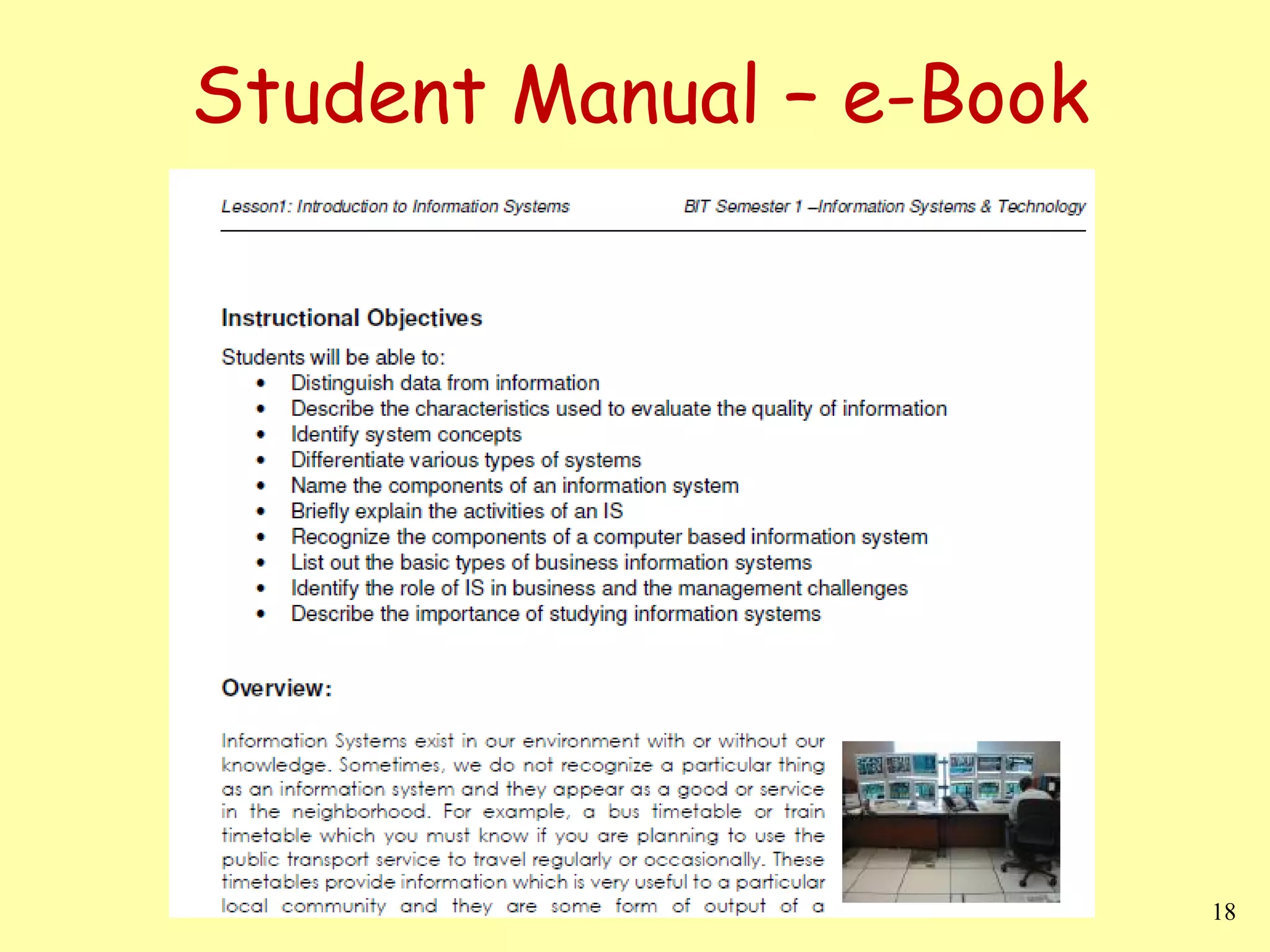
Student Manual – e-Book
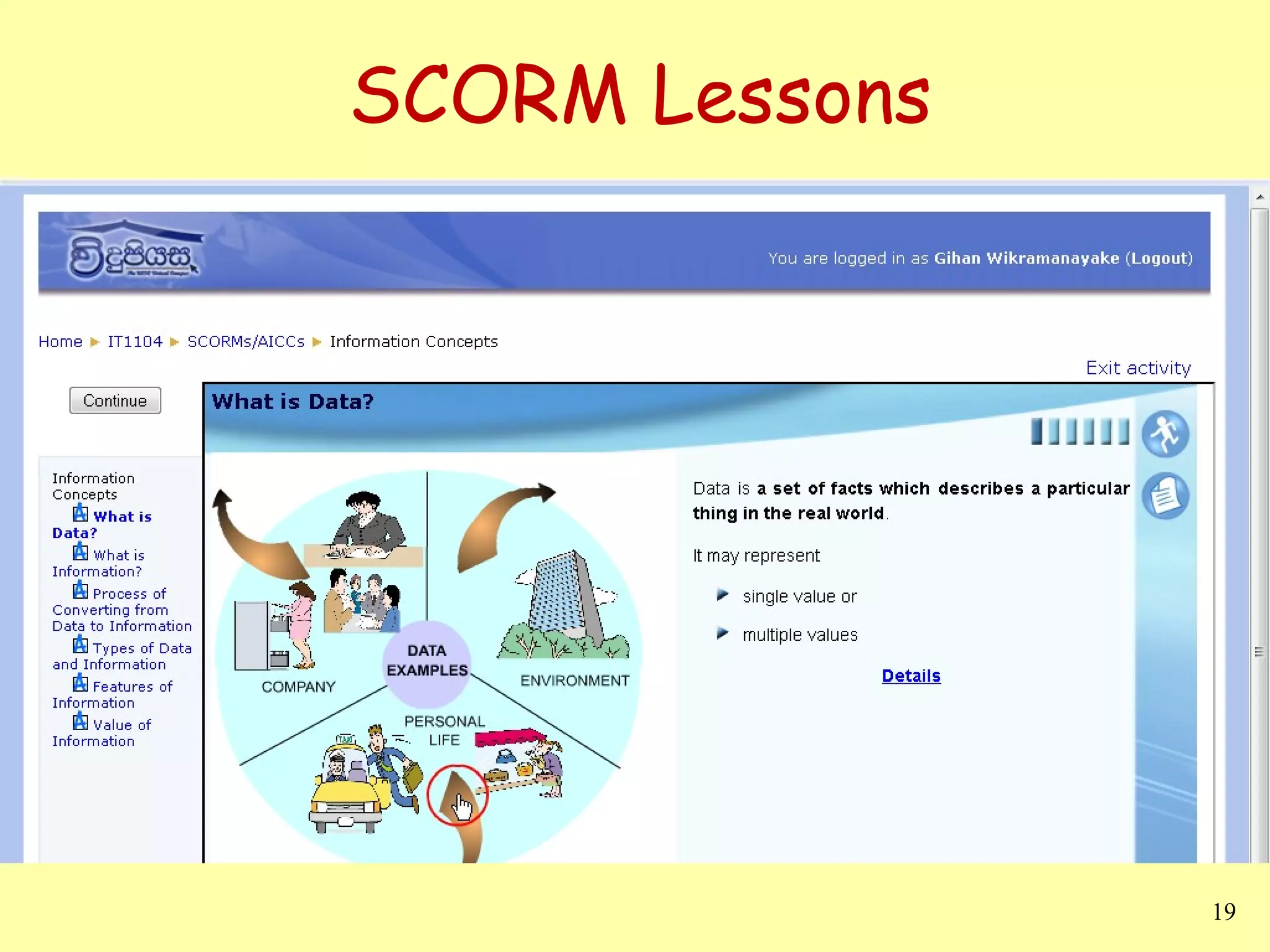
SCORM Lessons
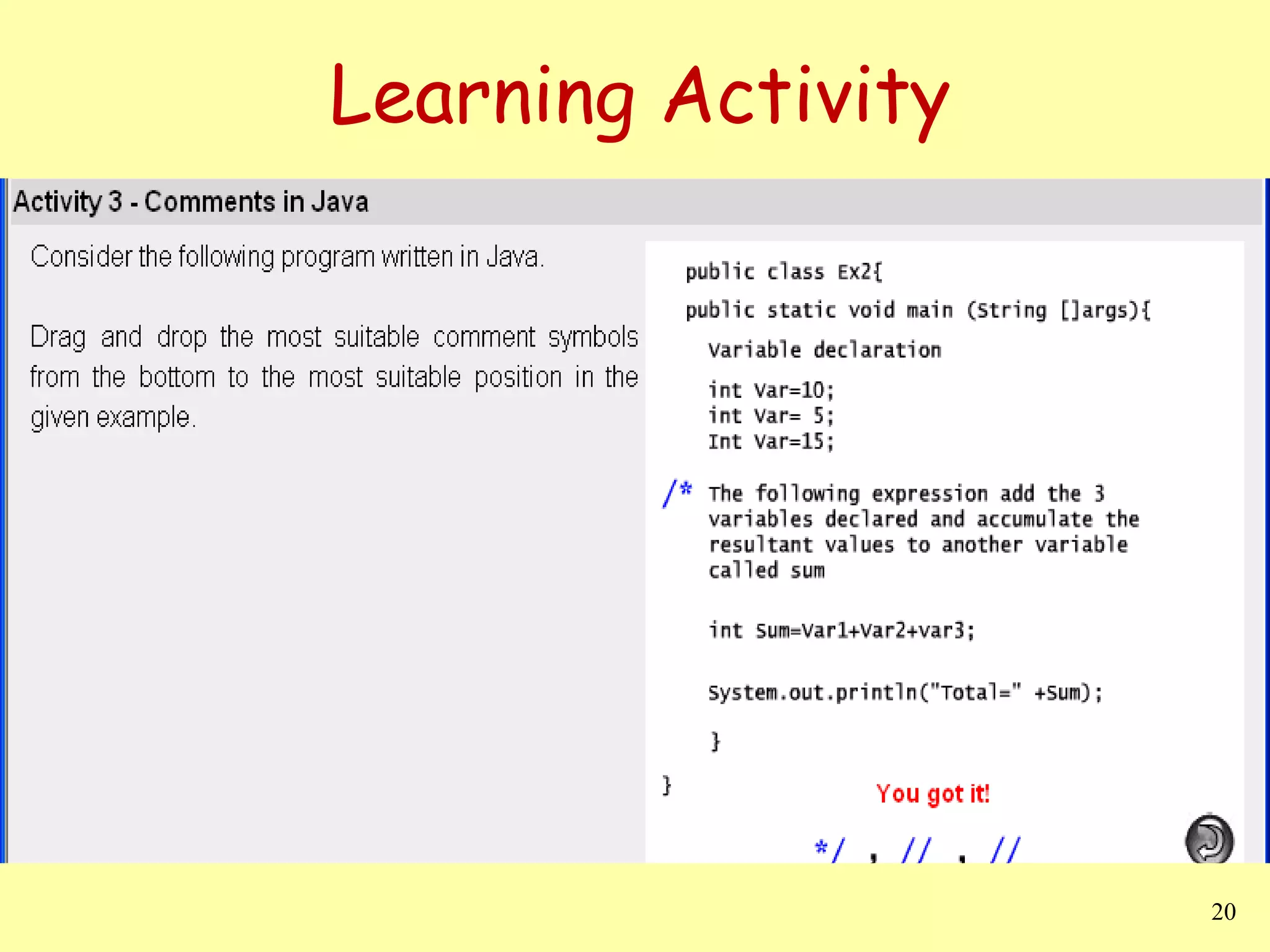
Learning Activity
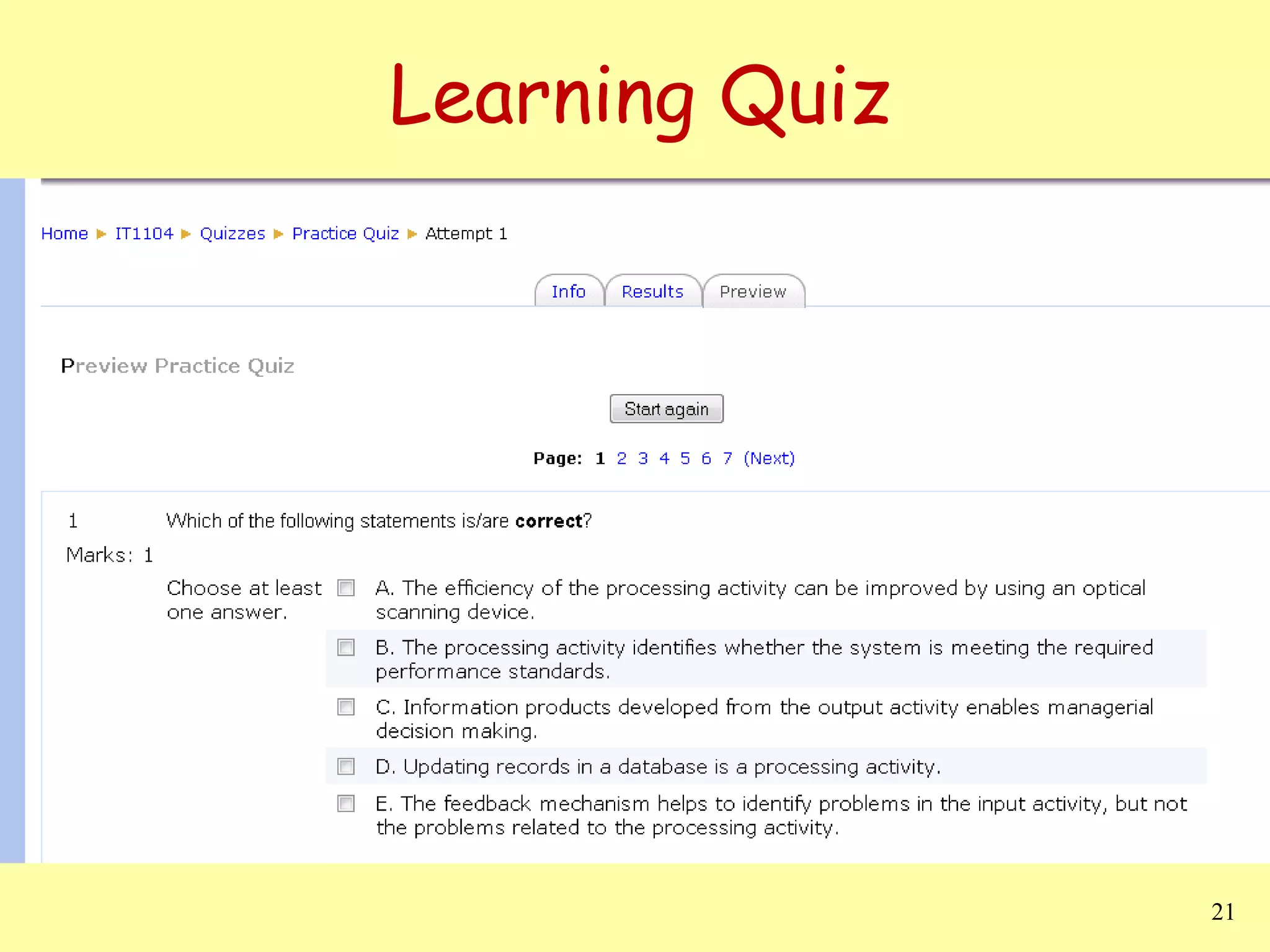
Learning Quiz
Continuing Professional Development Employment after formal education  degrees and professional qualifications To perform expected duties  upgrading their knowledge Informal learning activities reading and exploring on their own
Informal Learning Web 2.0 technologies  platform to generate knowledge collectively interact with each  E.g. user experiences and feedbacks on Hotel using blogs
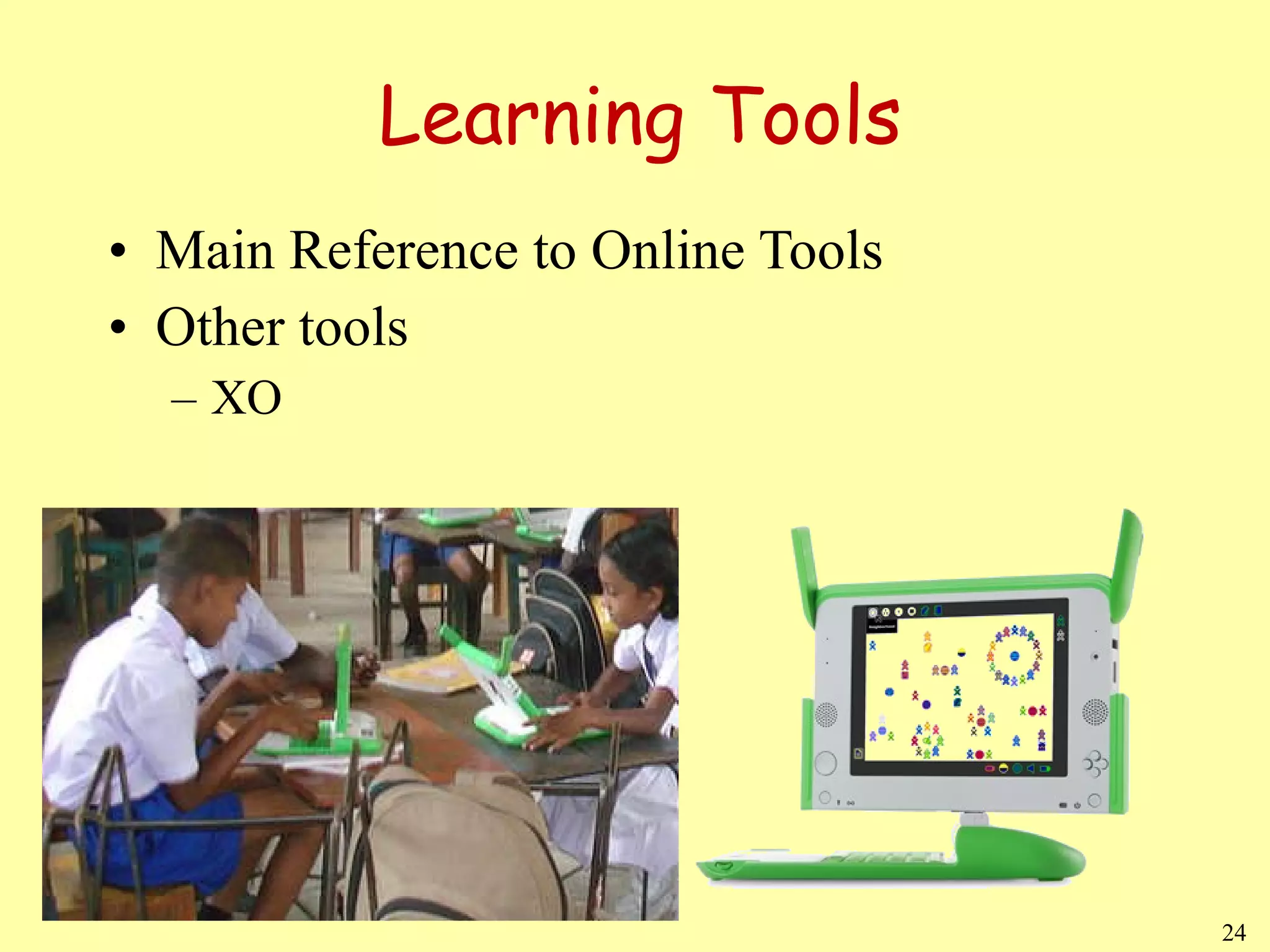
Learning Tools Main Reference to Online Tools Other tools XO
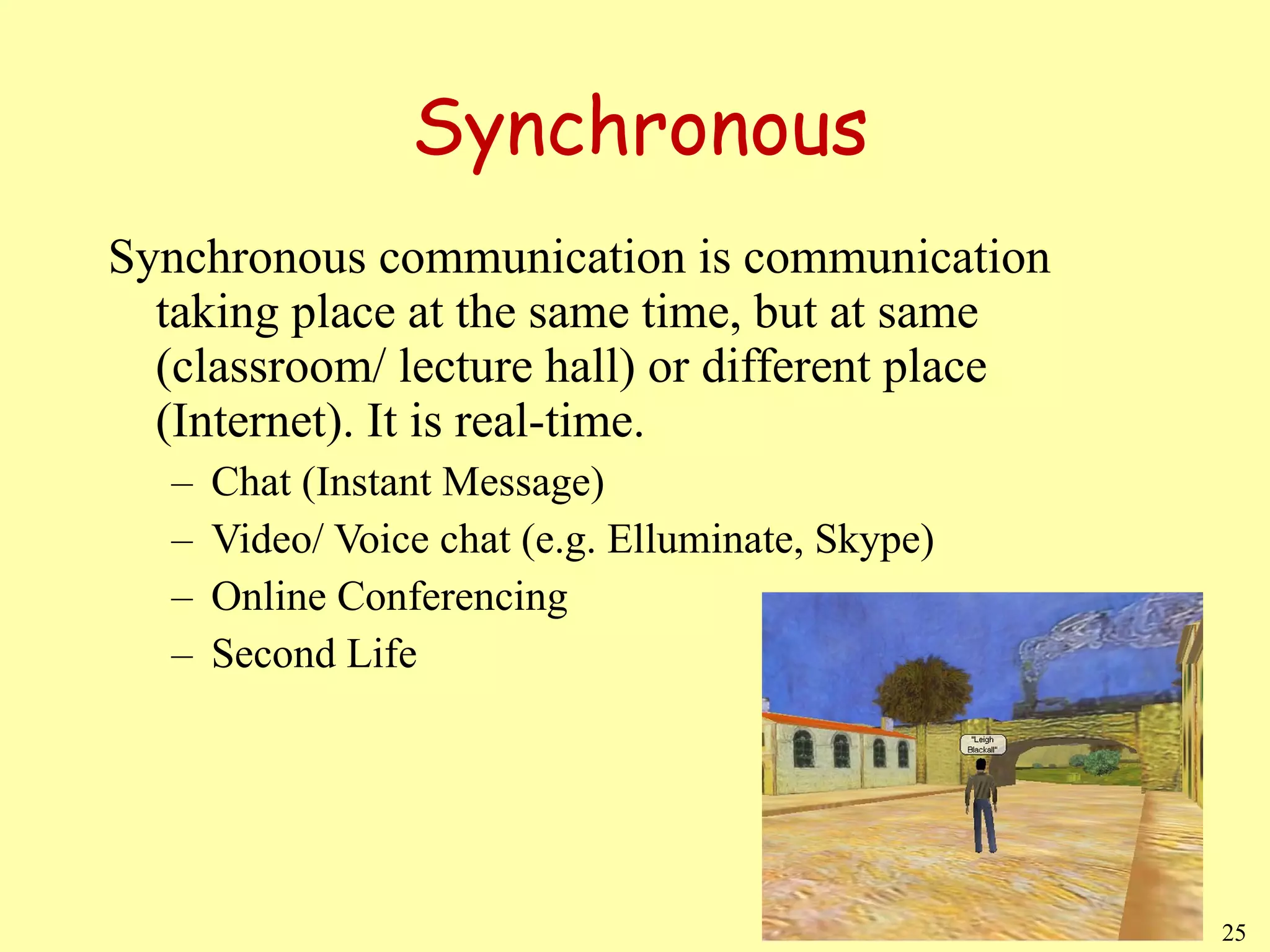
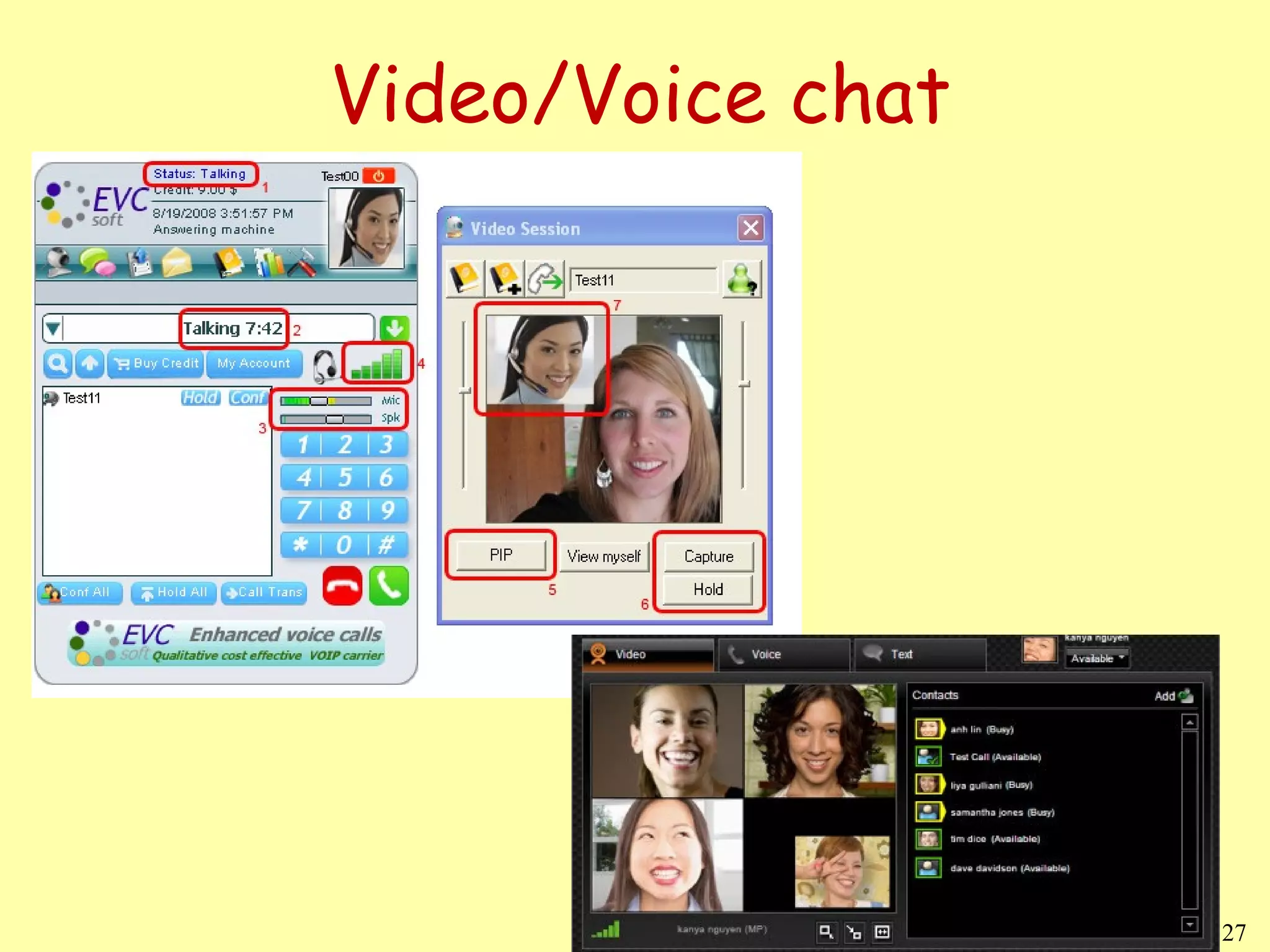
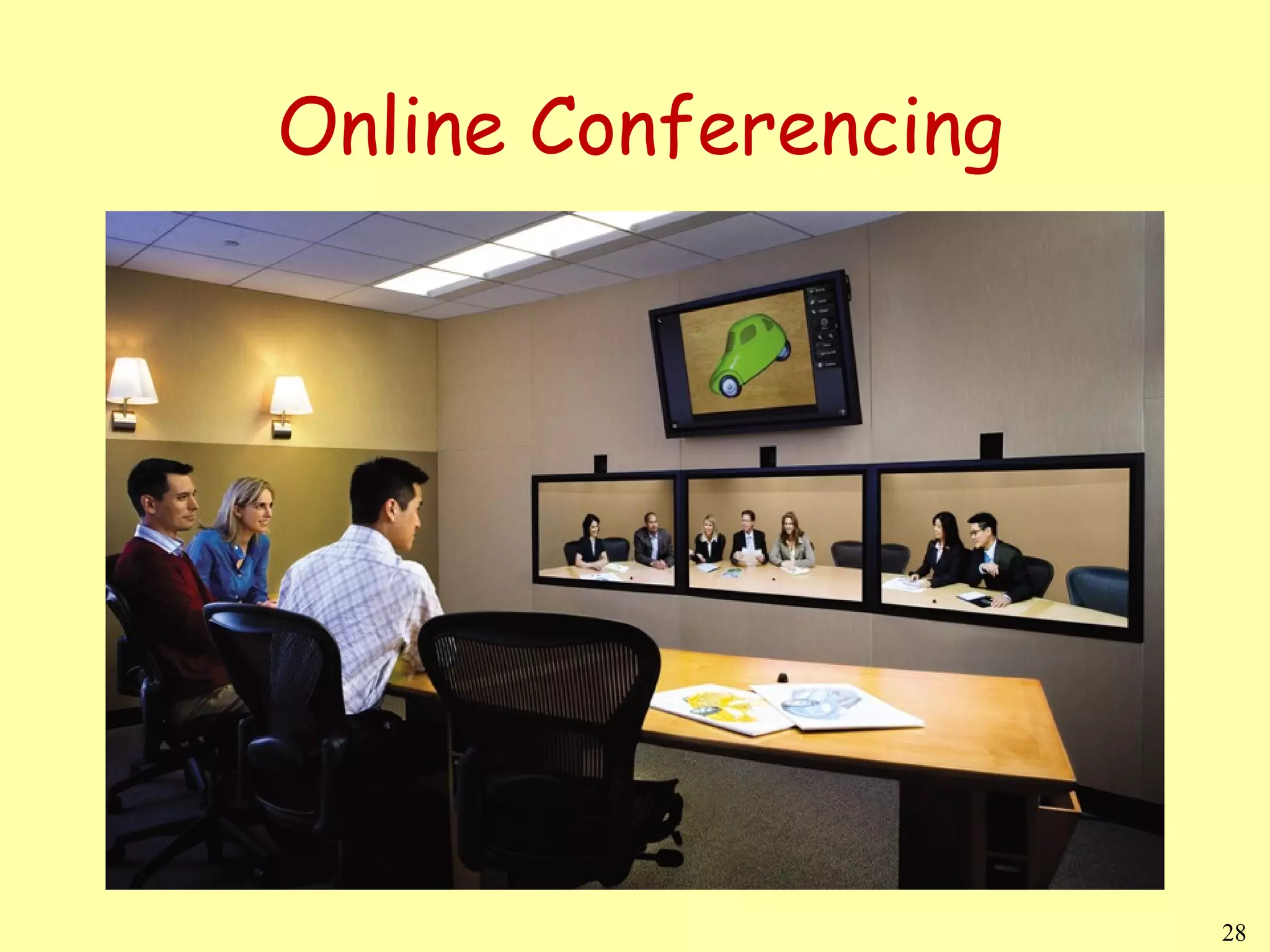
Synchronous Synchronous communication is communication taking place at the same time, but at same (classroom/ lecture hall) or different place (Internet). It is real-time. Chat (Instant Message) Video/ Voice chat (e.g. Elluminate, Skype) Online Conferencing Second Life
Chat (Instant Message)
Video/Voice chat
Online Conferencing
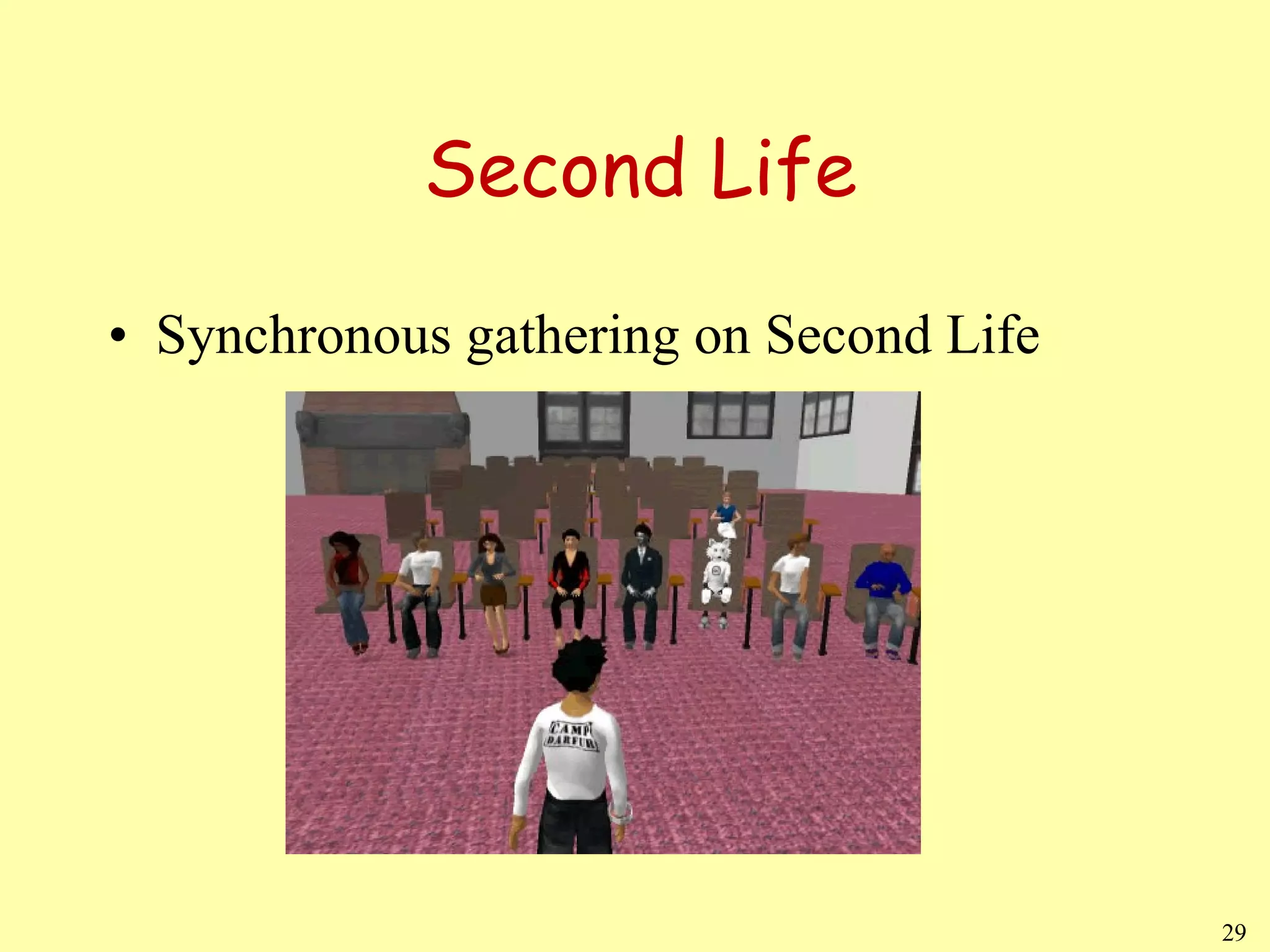
Second Life Synchronous gathering on Second Life
Asynchronous Asynchronous:  Email, List servers, Bulletin board; Message Boards, Threaded Discussion Boards,  SMS, Blogs, Wiki Free Wikis Zoho, Wikispaces, wikiversity
Wiki A  wiki  is a page or collection of Web pages designed to enable anyone who accesses it to contribute or modify content. www. wikipedia .org/ Free encyclopaedia Wiki farms http://sites . google .com/,  www. mediawiki .org/ ,  www. pbwiki .com/, www. tiddlywiki .com/ ,  www. wetpaint .com/, www. wikispaces .com/
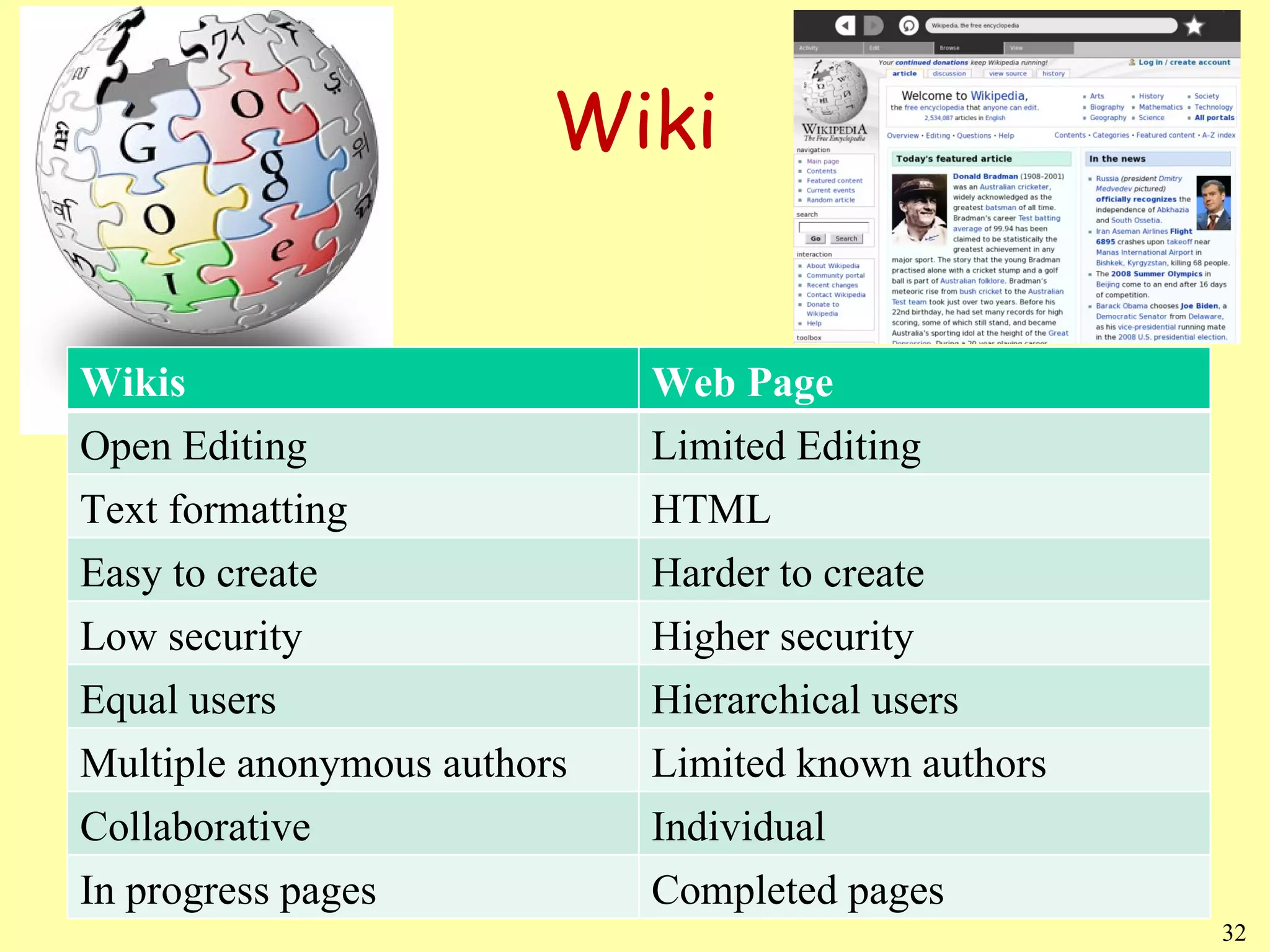
Wiki Wikis Web Page Open Editing Limited Editing Text formatting HTML Easy to create Harder to create Low security Higher security Equal users Hierarchical users Multiple anonymous authors Limited known authors Collaborative Individual In progress pages Completed pages
Conclusion Life long learning Ability to adapt with society changes Exploit technology advances for career advances

Learning beyond the classroom

  • 1.
    Learning beyond theclassroom University of Colombo School of Computing Prof. Gihan Wikramanayake
  • 2.
    Overview Changes dueto Technology Virtual Learning Environments Continuing Professional Development Informal Learning Learning Tools Conclusion
  • 3.
    Changes due toTechnology Society Changes through Technology We do things differently e.g. Online purchasing Check-in machine
  • 4.
    Changes in EducationChalk & blackboards Electronic presentations Smart boards. Teaching  Learning
  • 5.
    Lectures and OtherOne-Way Delivery Systems
  • 6.
    New way ofthinking about teaching and learning teacher - learner relationship Learner centered learning based on constructivism and socio-constructivism Process of learning problem solving, critical thinking Hypertext & hypermedia Paradigm Shift to Networked Learning
  • 7.
    Paradigm Shift toNetworked Learning Learner interdependence / collaborative learning Opportunity for everyone to participate Learner as active participant Synchronous real time conversations Asynchronous Time to reflect before responding Teacher facilitator, coach
  • 8.
    Changes in Education..Learning student centric teacher centric Activity; Peer; Self
  • 9.
    Coordinators WWW DatabasesLibrary Peers Instructor Multimedia Experts Learner Networked Learning
  • 10.
    Changes in Education...Knowledge Organisation Media Access Use Sharing Books  Internet Text  Audio, Video Library  Home; Computer; PDA
  • 11.
    Impact in EducationLearning Skills Infrastructure Requirements Read, Write  Spellings, Grammar, Teacher depended  Keyboard, Internet, Tools, Community depended
  • 12.
    Virtual Learning EnvironmentsClosed learning environments restricted to enrolled learners. Learning Resources teacher’s material activities, quizzes and forums.
  • 13.
    Learning Management SystemsFree and Open-source e-Learning Software Affordable access to Internet Not just PowerPoint Slides
  • 14.
  • 15.
  • 16.
  • 17.
  • 18.
  • 19.
  • 20.
  • 21.
  • 22.
    Continuing Professional DevelopmentEmployment after formal education degrees and professional qualifications To perform expected duties upgrading their knowledge Informal learning activities reading and exploring on their own
  • 23.
    Informal Learning Web2.0 technologies platform to generate knowledge collectively interact with each E.g. user experiences and feedbacks on Hotel using blogs
  • 24.
    Learning Tools MainReference to Online Tools Other tools XO
  • 25.
    Synchronous Synchronous communicationis communication taking place at the same time, but at same (classroom/ lecture hall) or different place (Internet). It is real-time. Chat (Instant Message) Video/ Voice chat (e.g. Elluminate, Skype) Online Conferencing Second Life
  • 26.
  • 27.
  • 28.
  • 29.
    Second Life Synchronousgathering on Second Life
  • 30.
    Asynchronous Asynchronous: Email, List servers, Bulletin board; Message Boards, Threaded Discussion Boards, SMS, Blogs, Wiki Free Wikis Zoho, Wikispaces, wikiversity
  • 31.
    Wiki A wiki is a page or collection of Web pages designed to enable anyone who accesses it to contribute or modify content. www. wikipedia .org/ Free encyclopaedia Wiki farms http://sites . google .com/, www. mediawiki .org/ , www. pbwiki .com/, www. tiddlywiki .com/ , www. wetpaint .com/, www. wikispaces .com/
  • 32.
    Wiki Wikis WebPage Open Editing Limited Editing Text formatting HTML Easy to create Harder to create Low security Higher security Equal users Hierarchical users Multiple anonymous authors Limited known authors Collaborative Individual In progress pages Completed pages
  • 33.
    Conclusion Life longlearning Ability to adapt with society changes Exploit technology advances for career advances