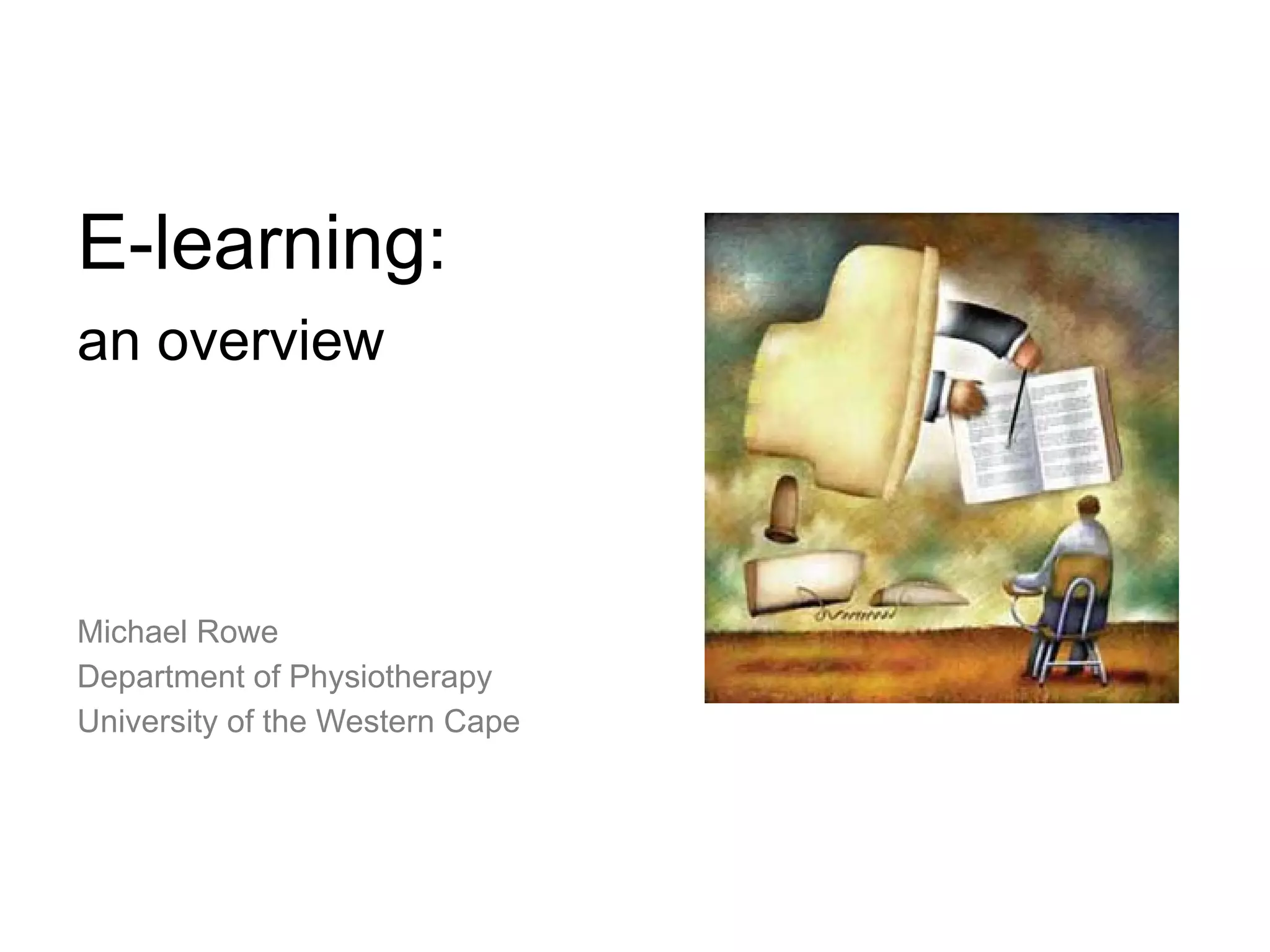
E-learning:
an overview


Michael Rowe
Department of Physiotherapy
University of the Western Cape
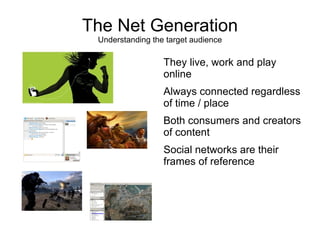
The Net Generation
 Understanding the target audience

                  They live, work and play
                  online
                  Always connected regardless
                  of time / place
                  Both consumers and creators
                  of content
                  Social networks are their
                  frames of reference
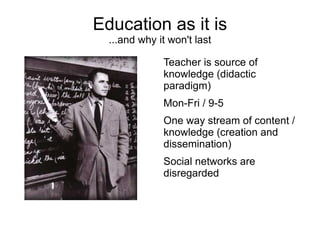
Education as it is
  ...and why it won't last

              Teacher is source of
              knowledge (didactic
              paradigm)
              Mon-Fri / 9-5
              One way stream of content /
              knowledge (creation and
              dissemination)
              Social networks are
              disregarded
Education as it will be
   Implications for teachers

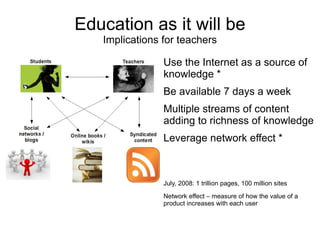
                Use the Internet as a source of
                knowledge *
                Be available 7 days a week
                Multiple streams of content
                adding to richness of knowledge
                Leverage network effect *


                July, 2008: 1 trillion pages, 100 million sites
                Network effect – measure of how the value of a
                product increases with each user
On social media
 web 2.0 characteristics

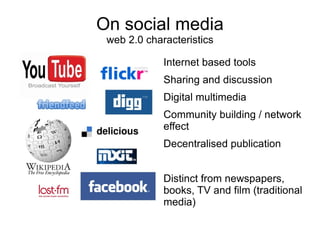
             Internet based tools
             Sharing and discussion
             Digital multimedia
             Community building / network
             effect
             Decentralised publication


             Distinct from newspapers,
             books, TV and film (traditional
             media)
Why is this important?
          Managing expectations
          Students
          Teachers
          Software
          Not just about putting content
          online
          Context important
Wikis
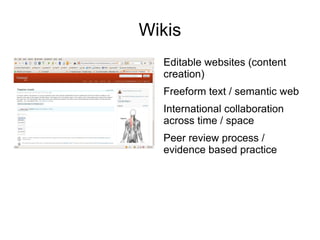
  Editable websites (content
  creation)
  Freeform text / semantic web
  International collaboration
  across time / space
  Peer review process /
  evidence based practice
Blogs and RSS
 Informal monologue
 Content broadcast to students
 Automatic updates (e.g. changes in
 course readers, test dates, class times)
 Podcasts
 Video / audio
 Hearing impaired students
 Education anywhere
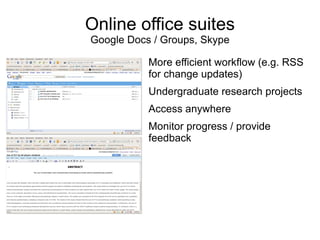
Online office suites
Google Docs / Groups, Skype

           More efficient workflow (e.g. RSS
           for change updates)
           Undergraduate research projects
           Access anywhere
           Monitor progress / provide
           feedback
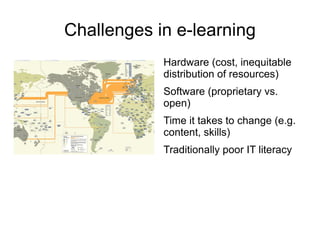
Challenges in e-learning
            Hardware (cost, inequitable
            distribution of resources)
            Software (proprietary vs.
            open)
            Time it takes to change (e.g.
            content, skills)
            Traditionally poor IT literacy
The way forward
Personal learning systems
Students control learning environment, process and content
No formal classes
Education anywhere on mobile devices
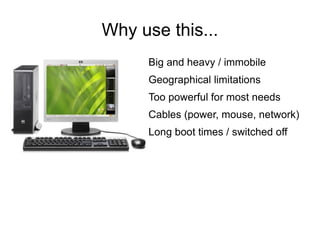
Why use this...
      Big and heavy / immobile
      Geographical limitations
      Too powerful for most needs
      Cables (power, mouse, network)
      Long boot times / switched off
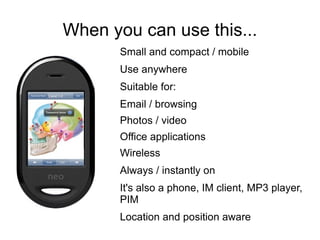
When you can use this...
       Small and compact / mobile
       Use anywhere
       Suitable for:
       Email / browsing
       Photos / video
       Office applications
       Wireless
       Always / instantly on
       It's also a phone, IM client, MP3 player,
       PIM
       Location and position aware
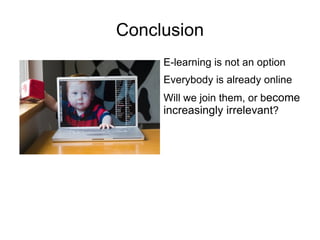
Conclusion
     E-learning is not an option
     Everybody is already online
     Will we join them, or become
     increasingly irrelevant?
Contact
http://www.mrowe.co.za/blog
Twitter: http://www.twitter.com/michael_rowe
email: mrowe@uwc.ac.za

eLearning - An overview

  • 1.
    E-learning: an overview Michael Rowe Departmentof Physiotherapy University of the Western Cape
  • 2.
    The Net Generation Understanding the target audience They live, work and play online Always connected regardless of time / place Both consumers and creators of content Social networks are their frames of reference
  • 3.
    Education as itis ...and why it won't last Teacher is source of knowledge (didactic paradigm) Mon-Fri / 9-5 One way stream of content / knowledge (creation and dissemination) Social networks are disregarded
  • 4.
    Education as itwill be Implications for teachers Use the Internet as a source of knowledge * Be available 7 days a week Multiple streams of content adding to richness of knowledge Leverage network effect * July, 2008: 1 trillion pages, 100 million sites Network effect – measure of how the value of a product increases with each user
  • 5.
    On social media web 2.0 characteristics Internet based tools Sharing and discussion Digital multimedia Community building / network effect Decentralised publication Distinct from newspapers, books, TV and film (traditional media)
  • 6.
    Why is thisimportant? Managing expectations Students Teachers Software Not just about putting content online Context important
  • 7.
    Wikis Editablewebsites (content creation) Freeform text / semantic web International collaboration across time / space Peer review process / evidence based practice
  • 8.
    Blogs and RSS Informal monologue Content broadcast to students Automatic updates (e.g. changes in course readers, test dates, class times) Podcasts Video / audio Hearing impaired students Education anywhere
  • 9.
    Online office suites GoogleDocs / Groups, Skype More efficient workflow (e.g. RSS for change updates) Undergraduate research projects Access anywhere Monitor progress / provide feedback
  • 10.
    Challenges in e-learning Hardware (cost, inequitable distribution of resources) Software (proprietary vs. open) Time it takes to change (e.g. content, skills) Traditionally poor IT literacy
  • 11.
    The way forward Personallearning systems Students control learning environment, process and content No formal classes Education anywhere on mobile devices
  • 12.
    Why use this... Big and heavy / immobile Geographical limitations Too powerful for most needs Cables (power, mouse, network) Long boot times / switched off
  • 13.
    When you canuse this... Small and compact / mobile Use anywhere Suitable for: Email / browsing Photos / video Office applications Wireless Always / instantly on It's also a phone, IM client, MP3 player, PIM Location and position aware
  • 14.
    Conclusion E-learning is not an option Everybody is already online Will we join them, or become increasingly irrelevant?
  • 15.