Lean Project Management


John Bun
Scenario
Company ABC

The need
Improve IT service
request response
time
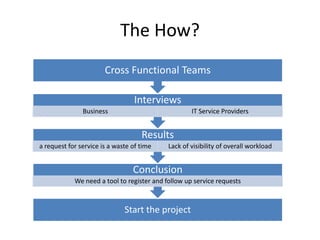
The How?
                       Cross Functional Teams

                                 Interviews
               Business                             IT Service Providers


                                    Results
a request for service is a waste of time    Lack of visibility of overall workload


                                 Conclusion
            We need a tool to register and follow up service requests


                              Start the project
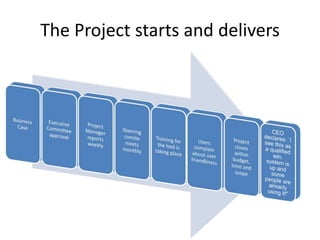
The Project starts and delivers
Is this a successful
       project?
Did the project take the
      need away?
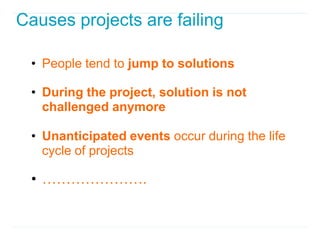
Causes projects are failing

 • People tend to jump to solutions

 • During the project, solution is not
   challenged anymore

 • Unanticipated events occur during the life
   cycle of projects

 • ………………….
Project management - definition

 • A temporary activity undertaken to create a
   unique product, service or result

 • A project is goal oriented and consists of a
   series of interrelated non routine tasks

 • Timely execution of a solution to address a
   need, opportunity, or problem
  The Project Management Body of Knowledge (PMBOK) provides a framework that
  support central lean tenets including alignment, standard work, structured problem
  solving and effective teams
Lean - Definition

• A management strategy to improve and
  organize the operational activities of companies

• Goal is “Operational Excellence’” when each
  and every employee can see the flow of
  value to the customer, and fix that flow
  before it breaks down (Kevin J. Duggan)
Lean project management - definition
Reinforce the effectiveness of project management
by emphasizing

       iterative discovery,
       problem solving,
       value delivery, and
       eliminating wasteful tasks,

resulting in improved quality, reduced total elapsed
Project time and reduced project costs.
Objectives (Promises) of Lean Project
Management
 Improved customer satisfaction
  Focus during every project and project activity on Value for the Customer


 Shorter through put times
  Smart standardized work processes,


 Project Cost Savings
  Elimination of waste, remove non value added activities

 Continuous organization improvement
  Focus on learning and critical attitude during project

 Professionalism and Quality improvement
  Continuous feedback, empowered teams
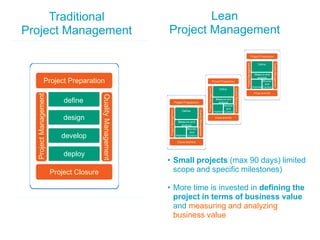
Traditional                                                      Lean
Project Management                                            Project Management


              Project Preparation
  Project Management


                           define        Quality Management

                           design

                          develop

                           deploy
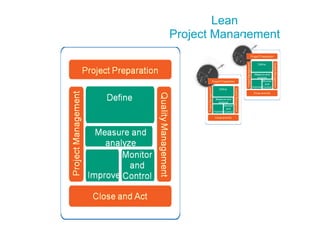
                                                              • Small projects (max 90 days) limited
                       Project Closure                          scope and specific milestones)

                                                              • More time is invested in defining the
                                                                project in terms of business value
                                                                and measuring and analyzing
                                                                business value
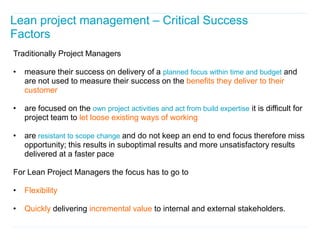
Lean project management – Critical Success
Factors
Traditionally Project Managers

•   measure their success on delivery of a planned focus within time and budget and
    are not used to measure their success on the benefits they deliver to their
    customer

•   are focused on the own project activities and act from build expertise it is difficult for
    project team to let loose existing ways of working

•   are resistant to scope change and do not keep an end to end focus therefore miss
    opportunity; this results in suboptimal results and more unsatisfactory results
    delivered at a faster pace

For Lean Project Managers the focus has to go to

•   Flexibility

•   Quickly delivering incremental value to internal and external stakeholders.
Lean
Project Management
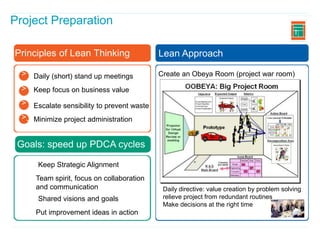
Project Preparation
                                                                                            I

Principles of Lean Thinking                 Lean Approach

  > Daily (short) stand up meetings         Create an Obeya Room (project war room)

  > Keep focus on business value
  > Escalate sensibility to prevent waste
  > Minimize project administration
   >

 Goals: speed up PDCA cycles

       Keep Strategic Alignment
      Team spirit, focus on collaboration
      and communication                      Daily directive: value creation by problem solving
       Shared visions and goals              relieve project from redundant routines
                                             Make decisions at the right time
      Put improvement ideas in action
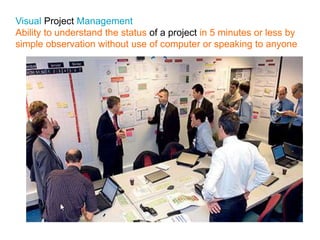
Visual Project Management
Ability to understand the status of a project in 5 minutes or less by
simple observation without use of computer or speaking to anyone
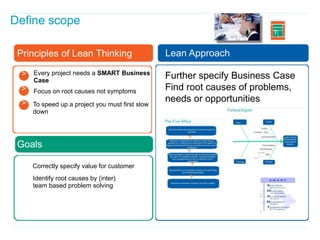
Define scope
                                                                          I


 Principles of Lean Thinking                      Lean Approach

  >   Every project needs a SMART Business
                                                  Further specify Business Case
      Case
  >   Focus on root causes not symptoms           Find root causes of problems,
  >   To speed up a project you must first slow
                                                  needs or opportunities
      down


 Goals

      Correctly specify value for customer
      Identify root causes by (inter)
      team based problem solving
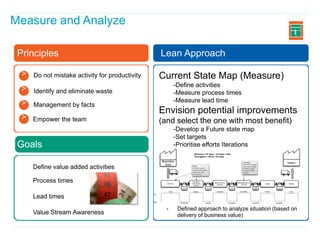
Measure and Analyze
                                                                                                     I


 Principles                                      Lean Approach

  >   Do not mistake activity for productivity   Current State Map (Measure)
                                                       -Define activities
  >   Identify and eliminate waste                     -Measure process times
  >                                                    -Measure lead time
      Management by facts
                                                 Envision potential improvements
  >   Empower the team                           (and select the one with most benefit)
                                                       -Develop a Future state map
                                                       -Set targets
 Goals                                                 -Prioritise efforts Iterations


      Define value added activities

      Process times

      Lead times
                                                   -    Defined approach to analyze situation (based on
      Value Stream Awareness                            delivery of business value)
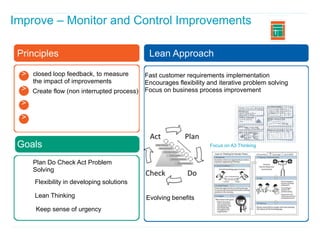
Improve – Monitor and Control Improvements
                                                                                             I


 Principles                                    Lean Approach

  >   closed loop feedback, to measure        Fast customer requirements implementation
      the impact of improvements              Encourages flexibility and iterative problem solving
  >   Create flow (non interrupted process)   Focus on business process improvement

  >
  >


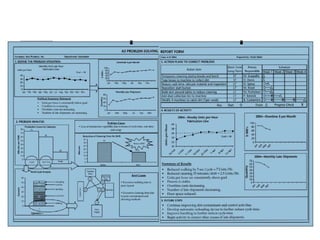
 Goals                                                               Focus on A3 Thinking


      Plan Do Check Act Problem
      Solving
      Flexibility in developing solutions

      Lean Thinking                           Evolving benefits
       Keep sense of urgency
Close and action
                                                                                  I


 Principles                                         Lean Approach

  >   Move beyond defending individual positions    Consolidate lessons learned from
      and ownership of ideas, serving the greater   previous stages
  >   goals of the team, organization and its
      customers
  >                                                 Make adjustments to project
                                                    management practices –
  >                                                 standardized work

                                                    Train and reinforce Lean Principles
 Goals
                                                    Project is an opportunity to work on
                                                    process improvement while getting
      Define lessons learned                        the work done
      Take actions to deploy lessons learned

      Manage towards perfection
Benefits of Lean Thinking in Project Management

• Deliverable generate value at each improvement cycle, rather
  than only at the end of the project. Faster introduction of new
  product (to increase market share)
• Improvement cash flow: shorten time between spending and
  receiving money
• Agility and pro activity during project
• Focus on current problems
• Less risky
• More likely to succeed, which increases buy-in for subsequent
  stages
• Less work in process, simpler coordination of tasks and
  resources
• Effective team engagement in root cause analysis and iterative
  problem solving

Lean project management

  • 1.
  • 2.
    Scenario Company ABC The need ImproveIT service request response time
  • 3.
    The How? Cross Functional Teams Interviews Business IT Service Providers Results a request for service is a waste of time Lack of visibility of overall workload Conclusion We need a tool to register and follow up service requests Start the project
  • 4.
    The Project startsand delivers
  • 5.
    Is this asuccessful project?
  • 6.
    Did the projecttake the need away?
  • 7.
    Causes projects arefailing • People tend to jump to solutions • During the project, solution is not challenged anymore • Unanticipated events occur during the life cycle of projects • ………………….
  • 8.
    Project management -definition • A temporary activity undertaken to create a unique product, service or result • A project is goal oriented and consists of a series of interrelated non routine tasks • Timely execution of a solution to address a need, opportunity, or problem The Project Management Body of Knowledge (PMBOK) provides a framework that support central lean tenets including alignment, standard work, structured problem solving and effective teams
  • 9.
    Lean - Definition •A management strategy to improve and organize the operational activities of companies • Goal is “Operational Excellence’” when each and every employee can see the flow of value to the customer, and fix that flow before it breaks down (Kevin J. Duggan)
  • 10.
    Lean project management- definition Reinforce the effectiveness of project management by emphasizing iterative discovery, problem solving, value delivery, and eliminating wasteful tasks, resulting in improved quality, reduced total elapsed Project time and reduced project costs.
  • 11.
    Objectives (Promises) ofLean Project Management  Improved customer satisfaction Focus during every project and project activity on Value for the Customer  Shorter through put times Smart standardized work processes,  Project Cost Savings Elimination of waste, remove non value added activities  Continuous organization improvement Focus on learning and critical attitude during project  Professionalism and Quality improvement Continuous feedback, empowered teams
  • 12.
    Traditional Lean Project Management Project Management Project Preparation Project Management define Quality Management design develop deploy • Small projects (max 90 days) limited Project Closure scope and specific milestones) • More time is invested in defining the project in terms of business value and measuring and analyzing business value
  • 13.
    Lean project management– Critical Success Factors Traditionally Project Managers • measure their success on delivery of a planned focus within time and budget and are not used to measure their success on the benefits they deliver to their customer • are focused on the own project activities and act from build expertise it is difficult for project team to let loose existing ways of working • are resistant to scope change and do not keep an end to end focus therefore miss opportunity; this results in suboptimal results and more unsatisfactory results delivered at a faster pace For Lean Project Managers the focus has to go to • Flexibility • Quickly delivering incremental value to internal and external stakeholders.
  • 14.
  • 15.
    Project Preparation I Principles of Lean Thinking Lean Approach > Daily (short) stand up meetings Create an Obeya Room (project war room) > Keep focus on business value > Escalate sensibility to prevent waste > Minimize project administration > Goals: speed up PDCA cycles Keep Strategic Alignment Team spirit, focus on collaboration and communication Daily directive: value creation by problem solving Shared visions and goals relieve project from redundant routines Make decisions at the right time Put improvement ideas in action
  • 16.
    Visual Project Management Abilityto understand the status of a project in 5 minutes or less by simple observation without use of computer or speaking to anyone
  • 17.
    Define scope I Principles of Lean Thinking Lean Approach > Every project needs a SMART Business Further specify Business Case Case > Focus on root causes not symptoms Find root causes of problems, > To speed up a project you must first slow needs or opportunities down Goals Correctly specify value for customer Identify root causes by (inter) team based problem solving
  • 18.
    Measure and Analyze I Principles Lean Approach > Do not mistake activity for productivity Current State Map (Measure) -Define activities > Identify and eliminate waste -Measure process times > -Measure lead time Management by facts Envision potential improvements > Empower the team (and select the one with most benefit) -Develop a Future state map -Set targets Goals -Prioritise efforts Iterations Define value added activities Process times Lead times - Defined approach to analyze situation (based on Value Stream Awareness delivery of business value)
  • 19.
    Improve – Monitorand Control Improvements I Principles Lean Approach > closed loop feedback, to measure Fast customer requirements implementation the impact of improvements Encourages flexibility and iterative problem solving > Create flow (non interrupted process) Focus on business process improvement > > Goals Focus on A3 Thinking Plan Do Check Act Problem Solving Flexibility in developing solutions Lean Thinking Evolving benefits Keep sense of urgency
  • 21.
    Close and action I Principles Lean Approach > Move beyond defending individual positions Consolidate lessons learned from and ownership of ideas, serving the greater previous stages > goals of the team, organization and its customers > Make adjustments to project management practices – > standardized work Train and reinforce Lean Principles Goals Project is an opportunity to work on process improvement while getting Define lessons learned the work done Take actions to deploy lessons learned Manage towards perfection
  • 22.
    Benefits of LeanThinking in Project Management • Deliverable generate value at each improvement cycle, rather than only at the end of the project. Faster introduction of new product (to increase market share) • Improvement cash flow: shorten time between spending and receiving money • Agility and pro activity during project • Focus on current problems • Less risky • More likely to succeed, which increases buy-in for subsequent stages • Less work in process, simpler coordination of tasks and resources • Effective team engagement in root cause analysis and iterative problem solving