Corneal Ulcer
Lutfi Abdallah
Medical Student
Contents
•
•
•
•
•
•
•

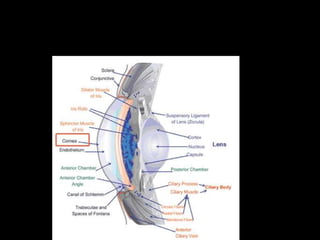
Applied anatomy of the cornea
Definition of corneal ulcer
Causes
Pathogenesis
Clinical presentation
Management
Complications
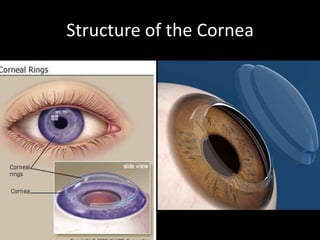
• The cornea is a transparent, avascular, watchglass like structure. It forms anterior one-sixth
of the outer fibrous coat of the eyeball.
Structure of the Cornea
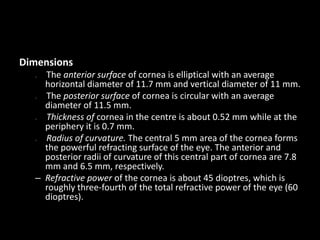
Dimensions
The anterior surface of cornea is elliptical with an average
horizontal diameter of 11.7 mm and vertical diameter of 11 mm.
The posterior surface of cornea is circular with an average
diameter of 11.5 mm.
Thickness of cornea in the centre is about 0.52 mm while at the
periphery it is 0.7 mm.
Radius of curvature. The central 5 mm area of the cornea forms
the powerful refracting surface of the eye. The anterior and
posterior radii of curvature of this central part of cornea are 7.8
mm and 6.5 mm, respectively.
– Refractive power of the cornea is about 45 dioptres, which is
roughly three-fourth of the total refractive power of the eye (60
dioptres).
–

–

–

–
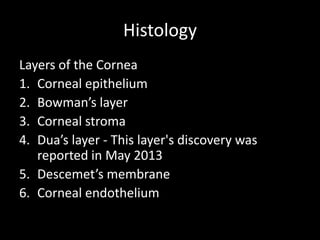
Histology
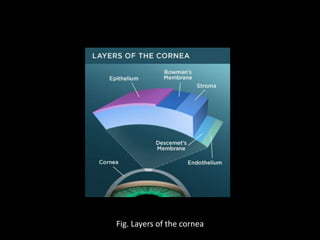
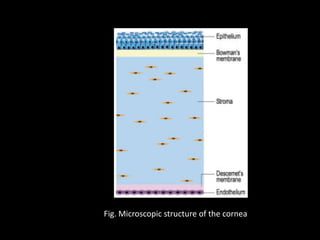
Layers of the Cornea
1. Corneal epithelium
2. Bowman’s layer
3. Corneal stroma
4. Dua’s layer - This layer's discovery was
reported in May 2013
5. Descemet’s membrane
6. Corneal endothelium
Fig. Layers of the cornea
Fig. Microscopic structure of the cornea
Corneal Ulcer
• Corneal ulcer is the discontinuation of the
normal epithelial surface of the cornea.
Causes of Corneal ulcer
Infectious







Bacterial causes
Viral causes
Fungal causes
Protozoal
Chlamidial
Spirochaetal

Noninfectious








Allergic
Trophic
Traumatic
Idiopathic
Vitamin A deficiency
Drug-Induced Epithelial Keratitis
Keratoconjunctivitis Sicca (Sjögren's Syndrome)
Pathogenesis
• Once the damaged corneal epithelia is
invaded by offending agent the sequence of
pathological changes which occur during
development of corneal ulcer can be
described under four stages:
1. Progressive infiltration
2. Active ulceration
3. Regression
4. Cicatrization
1) Stage of progressive infiltration
Characterized by the infiltration of
polymorphonuclear and/or lymphocytes into
epithelium from the peripheral circulation
supplemented by similar cells from the
underlying stroma if this tissue is also affected.
2. Stage of Active ulceration
Active ulceration result from necrosis and sloughing
of the epithelium. Bowman’s membrane and the
involved stroma.
3. Stage of regression
- Induced by the natural host defence mechanisms
(both humoral and cellular) and the treatment
with auguments the normal host response.
- A line of dermacation develops around the
ulcer, which consists of leucocytes that neutralize
and eventually phagocytose the offending
organisms and necrotic cellular debris.
- The ulcer now begins to heal and epithelium
starts growing over the edges.
4. Stage of Cicatrization
- Healing continues by progressive epithelization
which forms a permanent covering.
Beneath the epithelium, fibrous tissue is laid
down partly by the corneal fibroblasts and partly
by the endothelial cells of the new vessels thus
the stroma thickens and fills in under the
epithelium, pushing the epithelial surface
anteriorly.
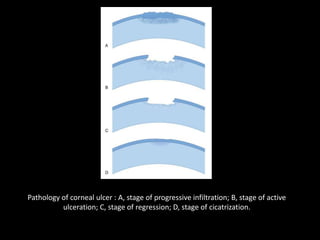
Pathology of corneal ulcer : A, stage of progressive infiltration; B, stage of active
ulceration; C, stage of regression; D, stage of cicatrization.
Clinical Presentation
Symptoms:
 Pain
 Photophobia
 Tearing
 Redness of the eye
 Blurry/or poor vision due to haze

 Some discharge
 Foreign body sensation
Signs:
Lids are swollen
Marked blepharospasm
Conjuctiva is Chemosed, hyperemic and ciliary
congested.
Yellowish white area of ulcer which may be oval or
irregular in shape.
Margins of the ulcer are swollen and overhanging
Flow of the ulcer is covered by necrotic material
Stromal edema is present surrounding the ulcer area
MANAGEMENT
Investigations:
Routine investigations:
1.
CBC
2.
ESR
3.
RBG
4.
Urinalysis and stool examination
5.
VDRL
6.
HIV Serology test
Microbial Investigations:
1.
2.

Doing a corneal scraping and examining under the microscope with stains like Gram's and 10%
KOH preparation may reveal the bacteria and fungi respectively.
Microbiological culture tests may be necessary to isolate the causative organisms for some cases.
- Culture on blood agar medium for aerobic organisms.
- Culture on Sabouraud's dextrose agar medium for fungi.

* The use of fluorescein stain, which is taken up by exposed corneal stroma and appears green, helps in
defining the margins of the corneal ulcer, and can reveal additional details of the surrounding
epithelium
Treatment
Specific treatment
1. Treatment depending on the causative agent
2. Topical antibiotics: Initial therapy (before
results of culture and sensitivity are
available) should be with combination
therapy to cover both gram-negative and
gram-positive organisms.
Non – Specific treatment
1. Cycloplegic drugs. Preferably 1 percent atropine eye
ointment or drops should be used to reduce pain from
ciliary spasm and to prevent the formation of posterior
synechiae from secondary iridocyclitis. Atropine also
increases the blood supply to anterior uvea by relieving
pressure on the anterior ciliary arteries and so brings
more antibodies in the aqueous humour.
2. Systemic analgesics and anti-inflammatory drugs such as
paracetamol and ibuprofen relieve the pain and decrease
oedema.
3. Vitamins (A, B-complex and C) help in early healing of
ulcer.
Complications
1.
2.
3.

Toxic iridocyclitis
Descementocele/ Keratocele
Perforation of the cornea which may lead to
 Loss of acqueos
 Anterior synechiae
 Iris Prolapse
 Cataract/or lens extrusion
 Loss of vitreous
 Endophthalmitis
 Staphyloma

4.
5.
6.

Secondary glaucoma
Corneal scarring
Blindness if the scar is centrally located.
References
- Comprehensive ophthalmology 4th edition, A K
KHURANA et al
- General ophthalmology 17th edition
, Vaughan, Asbury et al.

Laso corneal ulcer presentation

  • 1.
  • 2.
    Contents • • • • • • • Applied anatomy ofthe cornea Definition of corneal ulcer Causes Pathogenesis Clinical presentation Management Complications
  • 3.
    • The corneais a transparent, avascular, watchglass like structure. It forms anterior one-sixth of the outer fibrous coat of the eyeball.
  • 4.
  • 5.
    Dimensions The anterior surfaceof cornea is elliptical with an average horizontal diameter of 11.7 mm and vertical diameter of 11 mm. The posterior surface of cornea is circular with an average diameter of 11.5 mm. Thickness of cornea in the centre is about 0.52 mm while at the periphery it is 0.7 mm. Radius of curvature. The central 5 mm area of the cornea forms the powerful refracting surface of the eye. The anterior and posterior radii of curvature of this central part of cornea are 7.8 mm and 6.5 mm, respectively. – Refractive power of the cornea is about 45 dioptres, which is roughly three-fourth of the total refractive power of the eye (60 dioptres). – – – –
  • 7.
    Histology Layers of theCornea 1. Corneal epithelium 2. Bowman’s layer 3. Corneal stroma 4. Dua’s layer - This layer's discovery was reported in May 2013 5. Descemet’s membrane 6. Corneal endothelium
  • 8.
    Fig. Layers ofthe cornea
  • 9.
  • 10.
    Corneal Ulcer • Cornealulcer is the discontinuation of the normal epithelial surface of the cornea.
  • 11.
    Causes of Cornealulcer Infectious       Bacterial causes Viral causes Fungal causes Protozoal Chlamidial Spirochaetal Noninfectious        Allergic Trophic Traumatic Idiopathic Vitamin A deficiency Drug-Induced Epithelial Keratitis Keratoconjunctivitis Sicca (Sjögren's Syndrome)
  • 12.
    Pathogenesis • Once thedamaged corneal epithelia is invaded by offending agent the sequence of pathological changes which occur during development of corneal ulcer can be described under four stages: 1. Progressive infiltration 2. Active ulceration 3. Regression 4. Cicatrization
  • 13.
    1) Stage ofprogressive infiltration Characterized by the infiltration of polymorphonuclear and/or lymphocytes into epithelium from the peripheral circulation supplemented by similar cells from the underlying stroma if this tissue is also affected.
  • 14.
    2. Stage ofActive ulceration Active ulceration result from necrosis and sloughing of the epithelium. Bowman’s membrane and the involved stroma.
  • 15.
    3. Stage ofregression - Induced by the natural host defence mechanisms (both humoral and cellular) and the treatment with auguments the normal host response. - A line of dermacation develops around the ulcer, which consists of leucocytes that neutralize and eventually phagocytose the offending organisms and necrotic cellular debris. - The ulcer now begins to heal and epithelium starts growing over the edges.
  • 16.
    4. Stage ofCicatrization - Healing continues by progressive epithelization which forms a permanent covering. Beneath the epithelium, fibrous tissue is laid down partly by the corneal fibroblasts and partly by the endothelial cells of the new vessels thus the stroma thickens and fills in under the epithelium, pushing the epithelial surface anteriorly.
  • 17.
    Pathology of cornealulcer : A, stage of progressive infiltration; B, stage of active ulceration; C, stage of regression; D, stage of cicatrization.
  • 18.
    Clinical Presentation Symptoms:  Pain Photophobia  Tearing  Redness of the eye  Blurry/or poor vision due to haze  Some discharge  Foreign body sensation
  • 19.
    Signs: Lids are swollen Markedblepharospasm Conjuctiva is Chemosed, hyperemic and ciliary congested. Yellowish white area of ulcer which may be oval or irregular in shape. Margins of the ulcer are swollen and overhanging Flow of the ulcer is covered by necrotic material Stromal edema is present surrounding the ulcer area
  • 20.
    MANAGEMENT Investigations: Routine investigations: 1. CBC 2. ESR 3. RBG 4. Urinalysis andstool examination 5. VDRL 6. HIV Serology test Microbial Investigations: 1. 2. Doing a corneal scraping and examining under the microscope with stains like Gram's and 10% KOH preparation may reveal the bacteria and fungi respectively. Microbiological culture tests may be necessary to isolate the causative organisms for some cases. - Culture on blood agar medium for aerobic organisms. - Culture on Sabouraud's dextrose agar medium for fungi. * The use of fluorescein stain, which is taken up by exposed corneal stroma and appears green, helps in defining the margins of the corneal ulcer, and can reveal additional details of the surrounding epithelium
  • 21.
    Treatment Specific treatment 1. Treatmentdepending on the causative agent 2. Topical antibiotics: Initial therapy (before results of culture and sensitivity are available) should be with combination therapy to cover both gram-negative and gram-positive organisms.
  • 22.
    Non – Specifictreatment 1. Cycloplegic drugs. Preferably 1 percent atropine eye ointment or drops should be used to reduce pain from ciliary spasm and to prevent the formation of posterior synechiae from secondary iridocyclitis. Atropine also increases the blood supply to anterior uvea by relieving pressure on the anterior ciliary arteries and so brings more antibodies in the aqueous humour. 2. Systemic analgesics and anti-inflammatory drugs such as paracetamol and ibuprofen relieve the pain and decrease oedema. 3. Vitamins (A, B-complex and C) help in early healing of ulcer.
  • 23.
    Complications 1. 2. 3. Toxic iridocyclitis Descementocele/ Keratocele Perforationof the cornea which may lead to  Loss of acqueos  Anterior synechiae  Iris Prolapse  Cataract/or lens extrusion  Loss of vitreous  Endophthalmitis  Staphyloma 4. 5. 6. Secondary glaucoma Corneal scarring Blindness if the scar is centrally located.
  • 24.
    References - Comprehensive ophthalmology4th edition, A K KHURANA et al - General ophthalmology 17th edition , Vaughan, Asbury et al.

Editor's Notes

  • #7 Applied anatomy and dimensions followed by this picture