Penaeus indicus
 Penaeus is the marine prawn,widely distributed
in tropical and temparate seas.
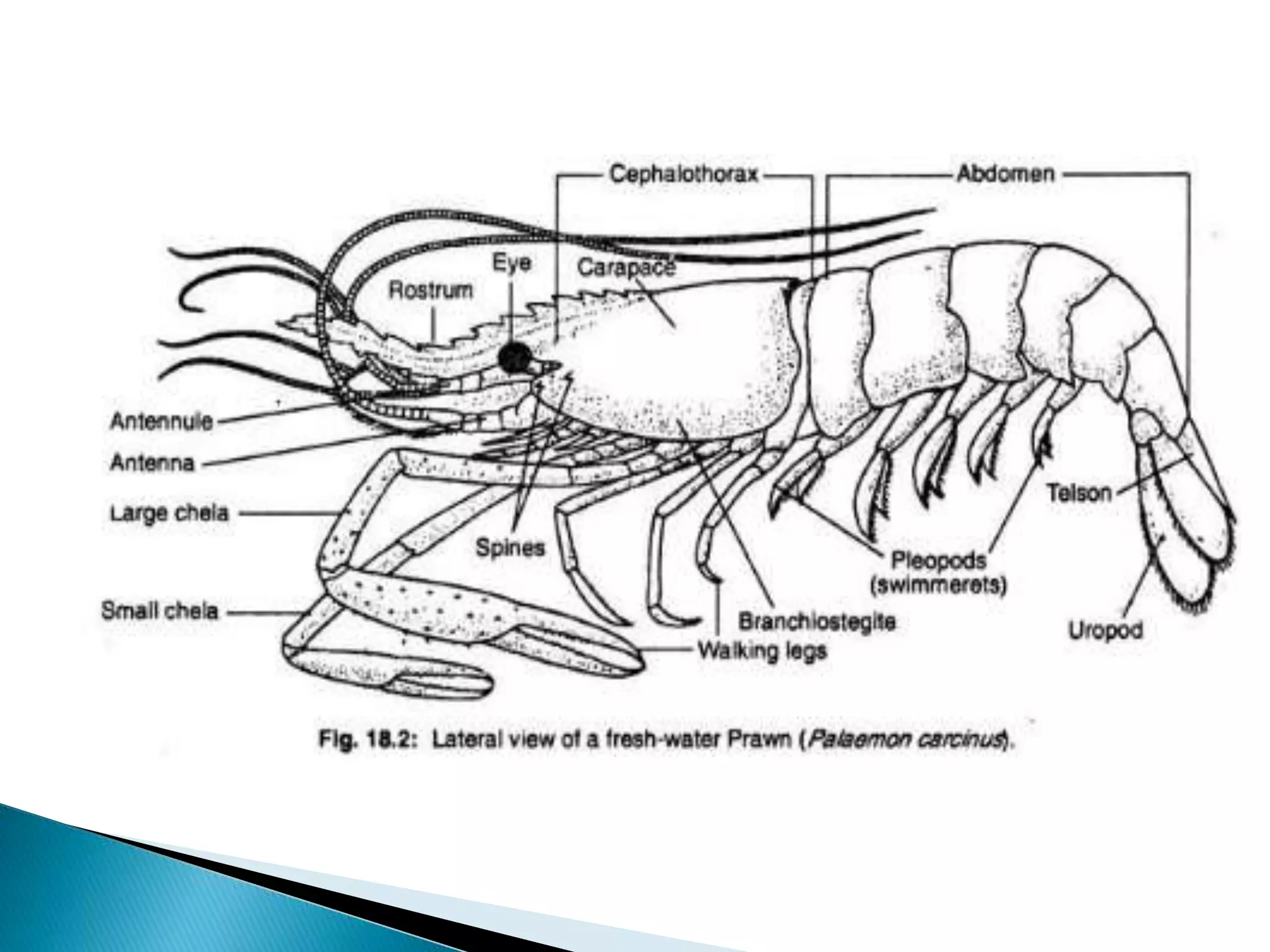
 The segmented body of prawn has two
regions,cephalothorax and abdomen.
 Cephalothorax is formed by the fusion of thirteen
segments,namely five cephalic and eight thoracic.
 Abdominal region has segments and a terminal
conical process,called telson.
 The body of prawn is
elongated,hemispherical and slightly tapering
at the posterior end.
 The fresh specimen is slightly bluish in colour.
 The whole body of prawn is covered by a
segmented cuticular exoskeleton,secreated by
the underlying epidermis.
 It is formed of chitin and protein.
 Exoskeleton protects the body and provides
provisions for the attachment of muscles.
 It also give some internal support through its
infoldings, called apodemes.
 Apodemes not only increase the area for the
attachment of muscles but also protect soft
internal organs.
 Exoskeletal covering is segmented,and its
segments are called sclerites.
 Each body segment bears a pair of
appantages on its ventral side.
 Thus there is 19 pairs of appendages;five pair
of cephalic ,eight pairs of thoracic and six pairs
of abdominal.
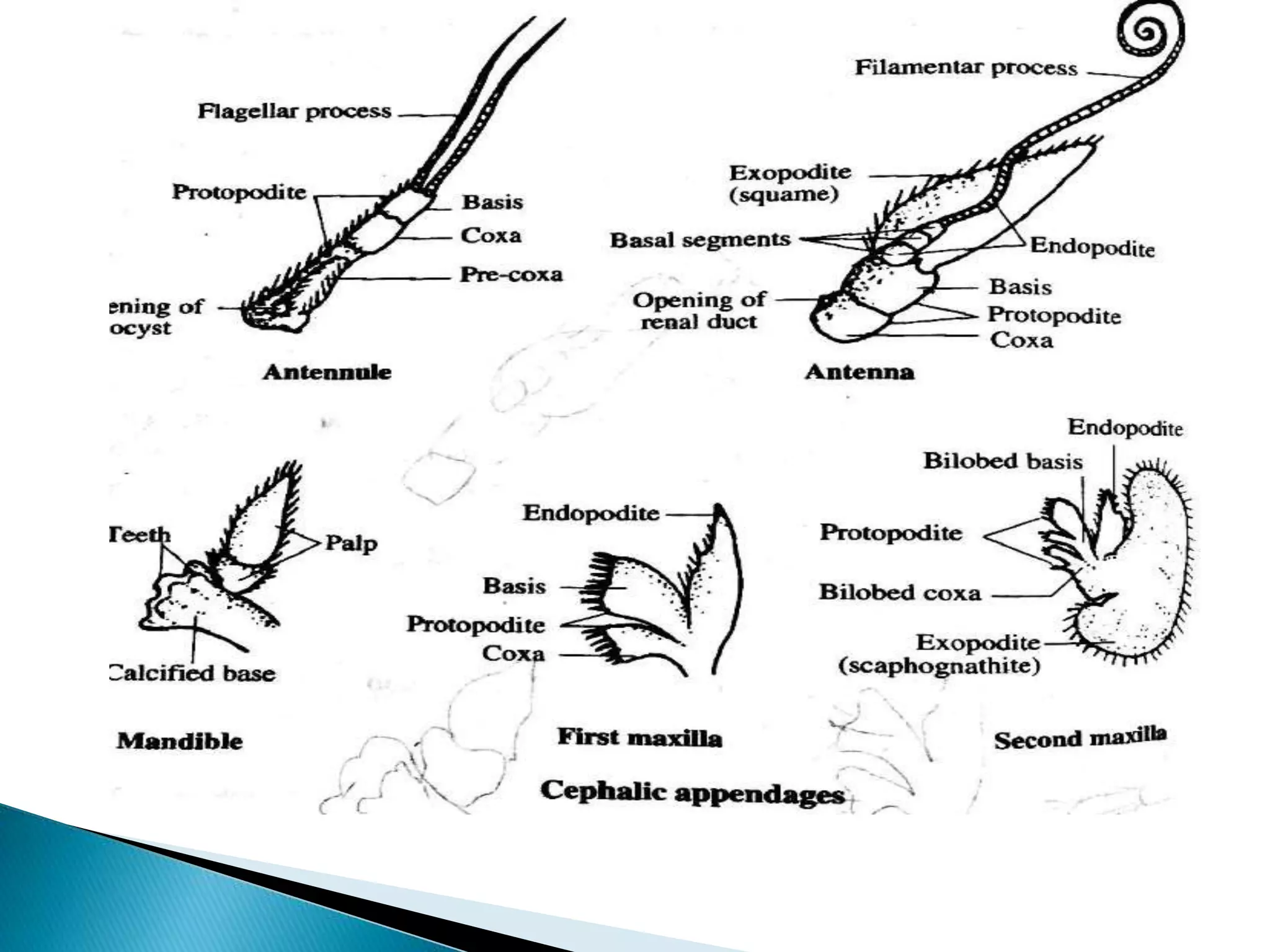
 Cephalic appandages are five pairs in number.
 They include the paired
antennules,antennae,mandibles,first maxillae and
second maxillae.
 Antennules and antennae are tactile
structures,mandibles are masticatory structures used
to cutting the food into pieces,and the first and
second maxillae serves as feeding food.
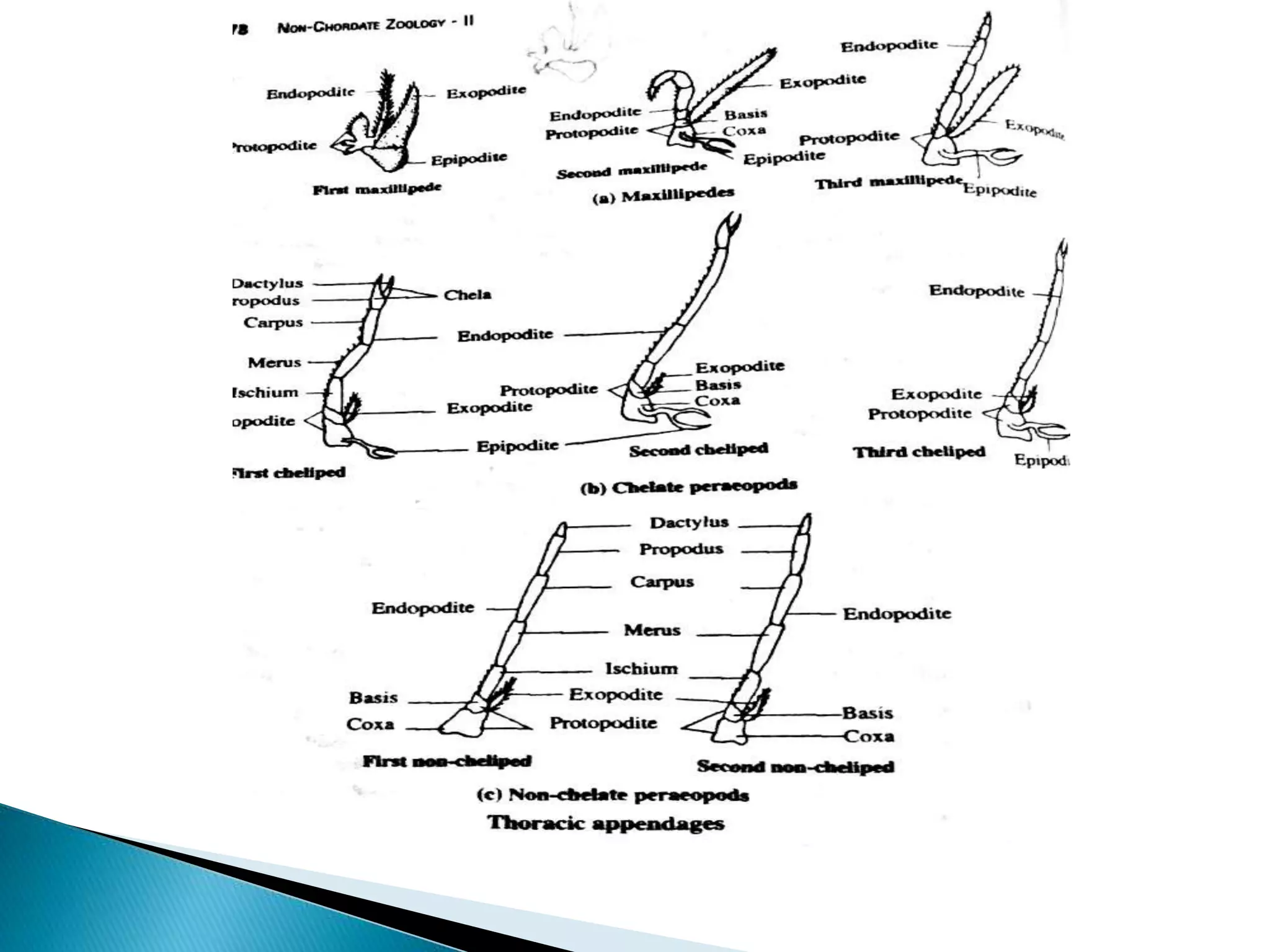
 Thoracic appandages are eight pairs in
number.
 It includes first,second and third maxillipede
and five walking legs.
 In these first three walking legs are cheliped
and other two are non-cheliped.
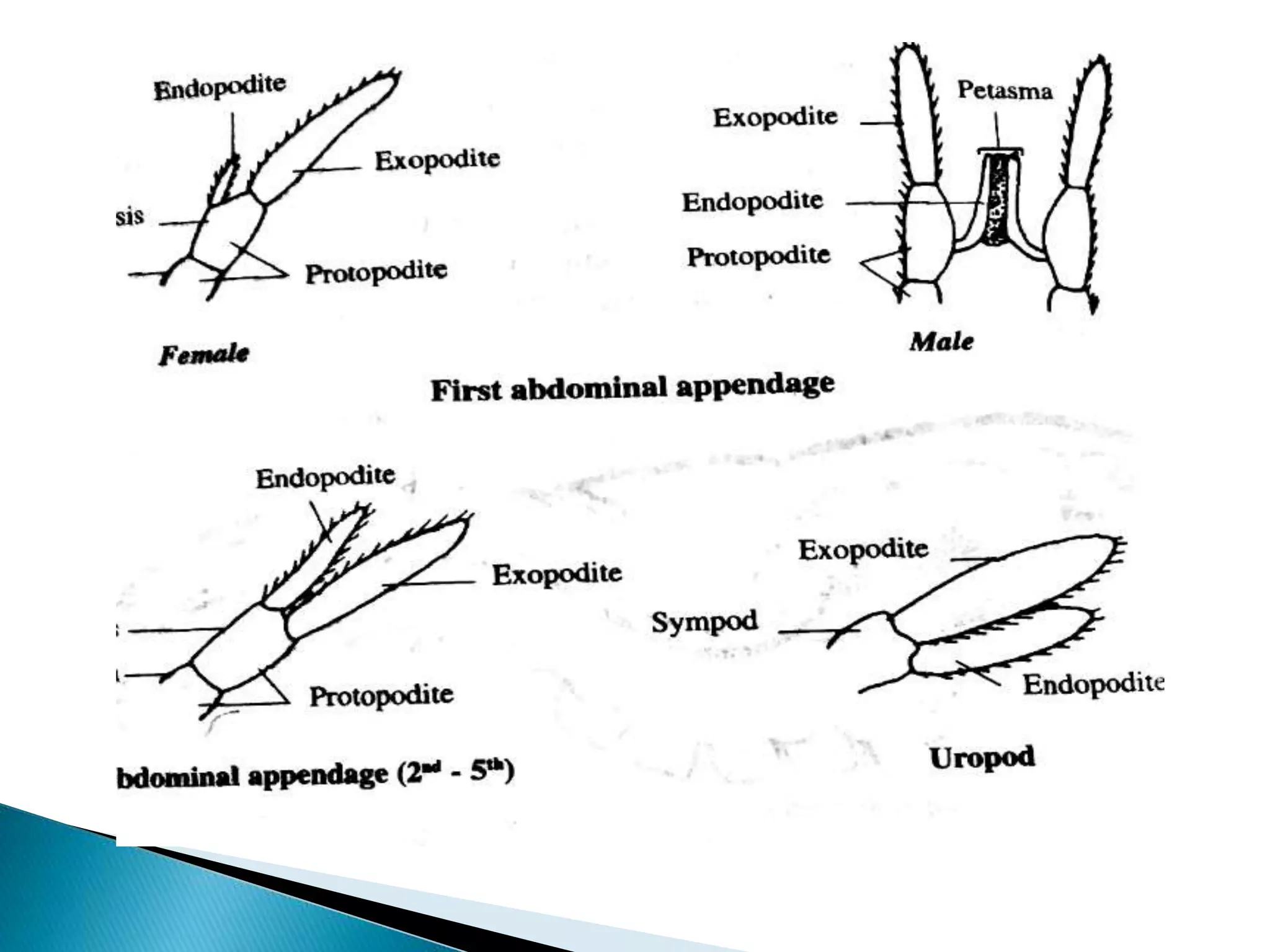
 Abdominal appendages are six pairs in
number.
 They are used for swimming and hence called
pleopods.
 the last pair of pleopods are called uropods.
 the first pleopod is different in two sexes.
THANK YOU..

MORPHOLOGY OF PRAWN (Penaeus indicus)

  • 2.
    Penaeus indicus  Penaeusis the marine prawn,widely distributed in tropical and temparate seas.  The segmented body of prawn has two regions,cephalothorax and abdomen.  Cephalothorax is formed by the fusion of thirteen segments,namely five cephalic and eight thoracic.  Abdominal region has segments and a terminal conical process,called telson.
  • 4.
     The bodyof prawn is elongated,hemispherical and slightly tapering at the posterior end.  The fresh specimen is slightly bluish in colour.  The whole body of prawn is covered by a segmented cuticular exoskeleton,secreated by the underlying epidermis.  It is formed of chitin and protein.
  • 5.
     Exoskeleton protectsthe body and provides provisions for the attachment of muscles.  It also give some internal support through its infoldings, called apodemes.  Apodemes not only increase the area for the attachment of muscles but also protect soft internal organs.
  • 6.
     Exoskeletal coveringis segmented,and its segments are called sclerites.  Each body segment bears a pair of appantages on its ventral side.  Thus there is 19 pairs of appendages;five pair of cephalic ,eight pairs of thoracic and six pairs of abdominal.
  • 7.
     Cephalic appandagesare five pairs in number.  They include the paired antennules,antennae,mandibles,first maxillae and second maxillae.  Antennules and antennae are tactile structures,mandibles are masticatory structures used to cutting the food into pieces,and the first and second maxillae serves as feeding food.
  • 9.
     Thoracic appandagesare eight pairs in number.  It includes first,second and third maxillipede and five walking legs.  In these first three walking legs are cheliped and other two are non-cheliped.
  • 11.
     Abdominal appendagesare six pairs in number.  They are used for swimming and hence called pleopods.  the last pair of pleopods are called uropods.  the first pleopod is different in two sexes.
  • 13.