Connected Orthopaedic Insight 1
ACJ Reconstruction and Reinforcement
Surgical Technique
2
Contents
Overview
Indications
LARSTM
synthetic ligament composition
General considerations
LARSTM
in ACJ reconstruction
LARSTM
anatomic ACJ reconstruction technique summary
Surgical approach
LARSTM
Top hat technique
Ordering information
References
Corin would like to thank Prof L Funk for his input to this
surgical technique.
3
4
4
4
4
5
6
20
22
23
Connected Orthopaedic Insight 3
Stability Versatility Recovery
Overview
LARSTM
is a range of versatile synthetic ligament augmentation and
reconstruction devices, suitable for a wide variety of applications.
The LARSTM
ligament is used as an Internal fixation device,
providing immediate stability and allowing restoration of shoulder
function. The intra-articular longitudinal fibres resist fatigue and
allow fibroblastic in-growth1,2,3,4,5
, whilst the extra-articular woven
fibres provide strength and resistance to elongation3,4,5
. LARSTM
can
be used in conjunction with the remnants of the ruptured ligament,
or as reinforcement of an autologous reconstruction. In both cases,
LARSTM
protects the original ligament tissues during the immediate
post-operative period.
4
Indications
LARSTM
ligaments can be considered for:
- Acute or chronic ACJ dislocations or instability
- Revision ACJ reconstruction surgery
LARSTM
synthetic ligament composition
Mechanical in vivo tests for resistance, fatigue and creep have
shown that LARSTM
ligaments are highly effective ligament
reconstruction and augmentation devices and clinical results are
excellent 3,6,7,8
.
LARSTM
ligaments are manufactured in a range of sizes, with
various numbers of longitudinal fibres corresponding to varying
resistance to elongation and tensile strength. The strength of
LARSTM
ligaments is approximately 1,500N for 30 fibres, 2,500N
for 60 fibres, 3,600N for 80 fibres and 4,700N for 100 fibres 3
.
General considerations
LARSTM
ligaments must always be placed in an anatomical and
isometric position. When positioning the ligament, it is essential
to avoid any abrasion within the joint or obstruction with other
surrounding tissues, as this may lead to wear of the ligament
fibres 4,5,7
. It is also important to avoid placing the free fibres
portion of the LARSTM
ligament within the tunnels or at the tunnel
edges as these fibres are more prone to damage when in contact
with sharp bony edges. At least 2mm of the extra-articular fibres
should be visible outside the tunnel entrance, to minimise risk of
long-term wear of the ligament.
Acute angles of bone tunnels must be avoided. The diameter of
the bony tunnels must correspond to the specific technique for
each type of ligament and should typically be as small as possible
to encourage bony tissue in-growth
Due to the stiffness of a LARSTM
ligament it is crucial to implant
the ligament in an isometric and anatomic position with final
fixation at the angle where the ligament is longest to avoid any
excessive strain on the ligament fibres. LARSTM
ligaments should
not be over-tensioned during fixation as this will restrict motion
and cause undue strain on the ligament. The tension should not
be more than that of the repaired anatomic ligament.
The fixation of the ligament is carried out using dedicated
cannulated interference screws, which do not damage the
ligament and provide maximum contact with the tunnel wall. As a
general rule, the interference screw size should be at least 1mm
bigger than the tunnel size and its length should be the longest
permissible, dependent on tunnel length. The use of resorbable
screws is not recommended with the LARSTM
ligament.
LARSTM
in ACJ reconstruction
LARS™ is used to anatomically reconstruct the CC ligaments
(trapezoid and conoid). The technique can be modified to add
reinforcement to the AC ligament if deemed appropriate by
treating surgeon.
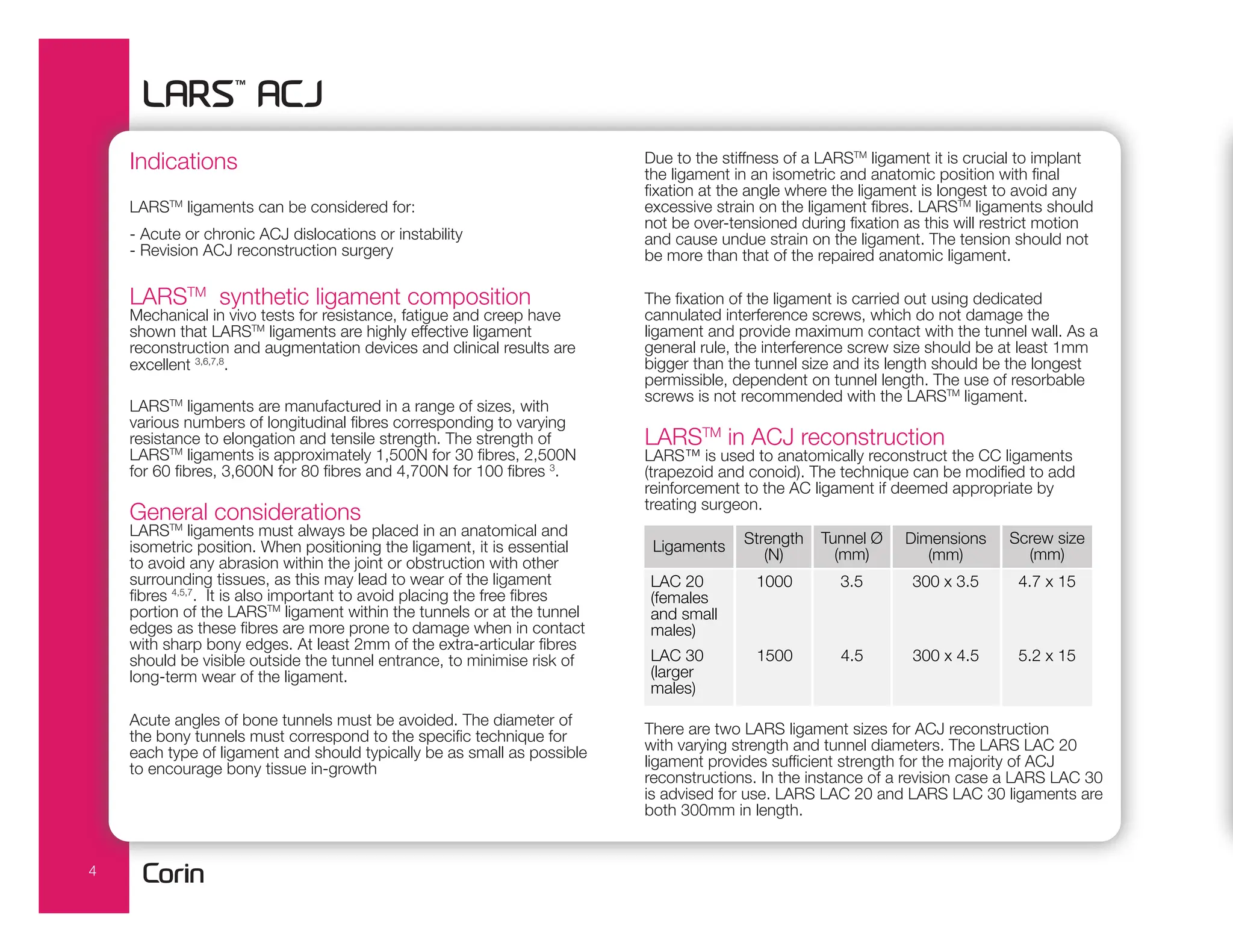
There are two LARS ligament sizes for ACJ reconstruction
with varying strength and tunnel diameters. The LARS LAC 20
ligament provides sufficient strength for the majority of ACJ
reconstructions. In the instance of a revision case a LARS LAC 30
is advised for use. LARS LAC 20 and LARS LAC 30 ligaments are
both 300mm in length.
Ligaments Strength
(N)
Tunnel Ø
(mm)
Dimensions
(mm)
Screw size
(mm)
LAC 20
(females
and small
males)
LAC 30
(larger
males)
1000
1500
3.5
4.5
300 x 3.5
300 x 4.5
4.7 x 15
5.2 x 15
Connected Orthopaedic Insight 5
LARS™ anatomic ACJ reconstruction technique summary
4. LARSTM
ligament is passed through the
bone tunnels. The clavicle is reduced and
two interference screw are inserted.
1.The lateral end of the clavicle is excised. 2. the LARSTM
ligament is passed under the
coracoid.
3. Two bone tunnels are drilled in the
superior cortex of the clavicle in an oblique
fashion.
5. The medial limb of the LARSTM
ligament
is passed under the coracoid to improve
horizontal stability.
6. The limbs of the LARSTM
ligament are
sutured together.
6
1. A sabre-cut skin incision is made in Langer’s lines, about 1-2cm
medial to the lateral end of the clavicle and overlying the coracoid.
Surgical approach
The patient is positioned in the beach chair, semi-recumbent
position, with a firm arm support under the elbow and
forearm for counter-pressure during intra-operative joint
reduction.
Following standard skin preparation and draping,
a sabre-cut incision is made in Langer’s lines,
about 1-2 cm medial to the lateral end
of the clavicle and overlying the
coracoid.
Connected Orthopaedic Insight 7
A medial based ‘L’ take-down of the deltoid is performed with
a stay suture at the apex of the ‘L’, described by Angus Wallace
and Lars Neumann, Nottingham. This is made through the fascial
coalescence of the deltoid and trapezius and the trapezius is
peeled off the lateral clavicle to expose the clavicle and AC joint.
This exposure allows visual access to the coracoid, pectoralis
minor muscle, coracoacromial ligament and conjoined tendon (if
needed).
3.
2.
8
The lateral end of the clavicle is excised. No more than 5-8mm
should be removed, to allow for a superior capsular repair on
closure.
Any adhesions and scar tissue under the lateral clavicle should be
removed, to allow for an easy reduction of the coracoclavicular
gap. Ensure reduction and alignment is achieved in both horizontal
and vertical planes.
5.
4.
Connected Orthopaedic Insight 9
The LARSTM
curved guide is passed from medial to lateral under
the coracoid process and behind (dorsal) to the pectoralis minor
tendon on the medial side and behind (dorsal) to the coracoacromial
ligament on the lateral side.
The end of the guide needs to be prominent laterally to push the
wire loop out. If it is not, then the cannulated top hat guide can be
used.
In larger patients it may be difficult to see the end of the curved
guide. In these cases, the cannulated top hat can be used. See
technique on page 20.
7.
6.
10
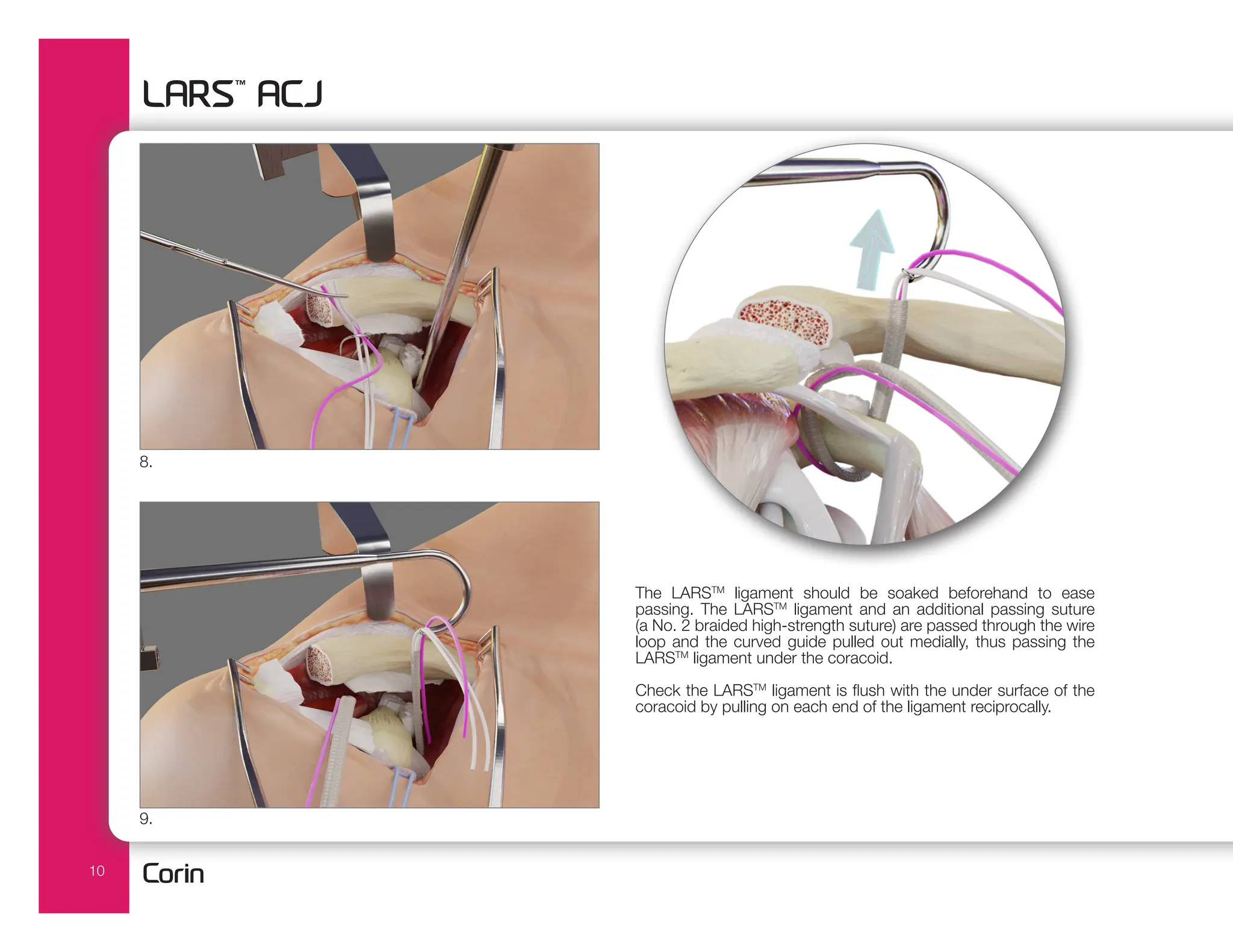
The LARSTM
ligament should be soaked beforehand to ease
passing. The LARSTM
ligament and an additional passing suture
(a No. 2 braided high-strength suture) are passed through the wire
loop and the curved guide pulled out medially, thus passing the
LARSTM
ligament under the coracoid.
Check the LARSTM
ligament is flush with the under surface of the
coracoid by pulling on each end of the ligament reciprocally.
9.
8.
Connected Orthopaedic Insight 11
Two bony tunnels are drilled in the superior cortex of the clavicle in
an oblique fashion (size 3.5 mm for the LAC 20 and size 4.5 mm
for the LAC 30).
The drill holes should be in the isometric points of the
coracoclavicular ligaments and aligned with their orientation.
The medial tunnel is directed from antero-superior to postero-
inferior and the lateral tunnel is directed from postero-superior to
antero-inferior.
Allow at least one inch space between lateral tunnel and lateral
end of clavicle and one inch between the two tunnels to avoid any
iatrogenic fractures.
11. View from above
10.
12
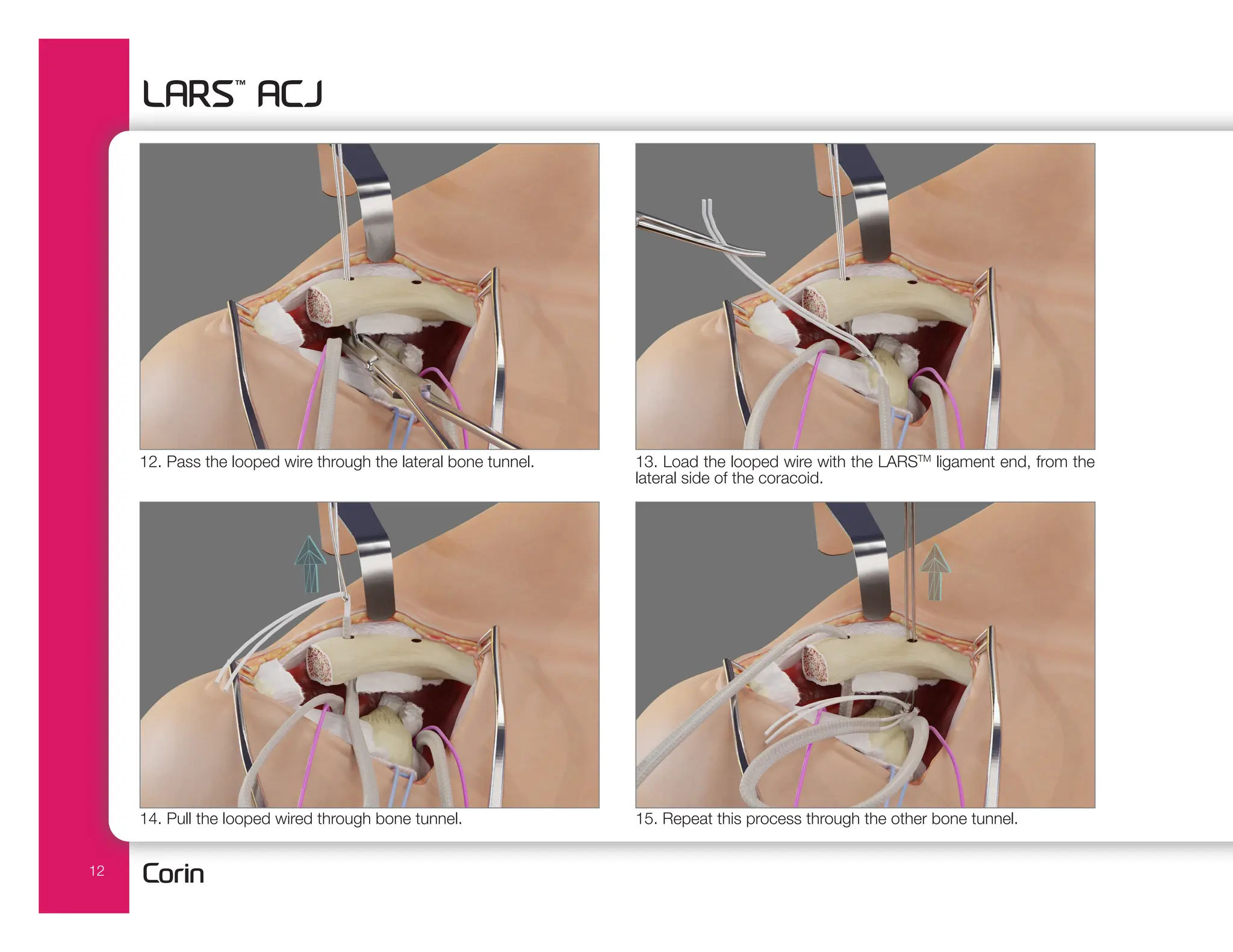
13. Load the looped wire with the LARSTM
ligament end, from the
lateral side of the coracoid.
14. Pull the looped wired through bone tunnel.
12. Pass the looped wire through the lateral bone tunnel.
15. Repeat this process through the other bone tunnel.
Connected Orthopaedic Insight 13
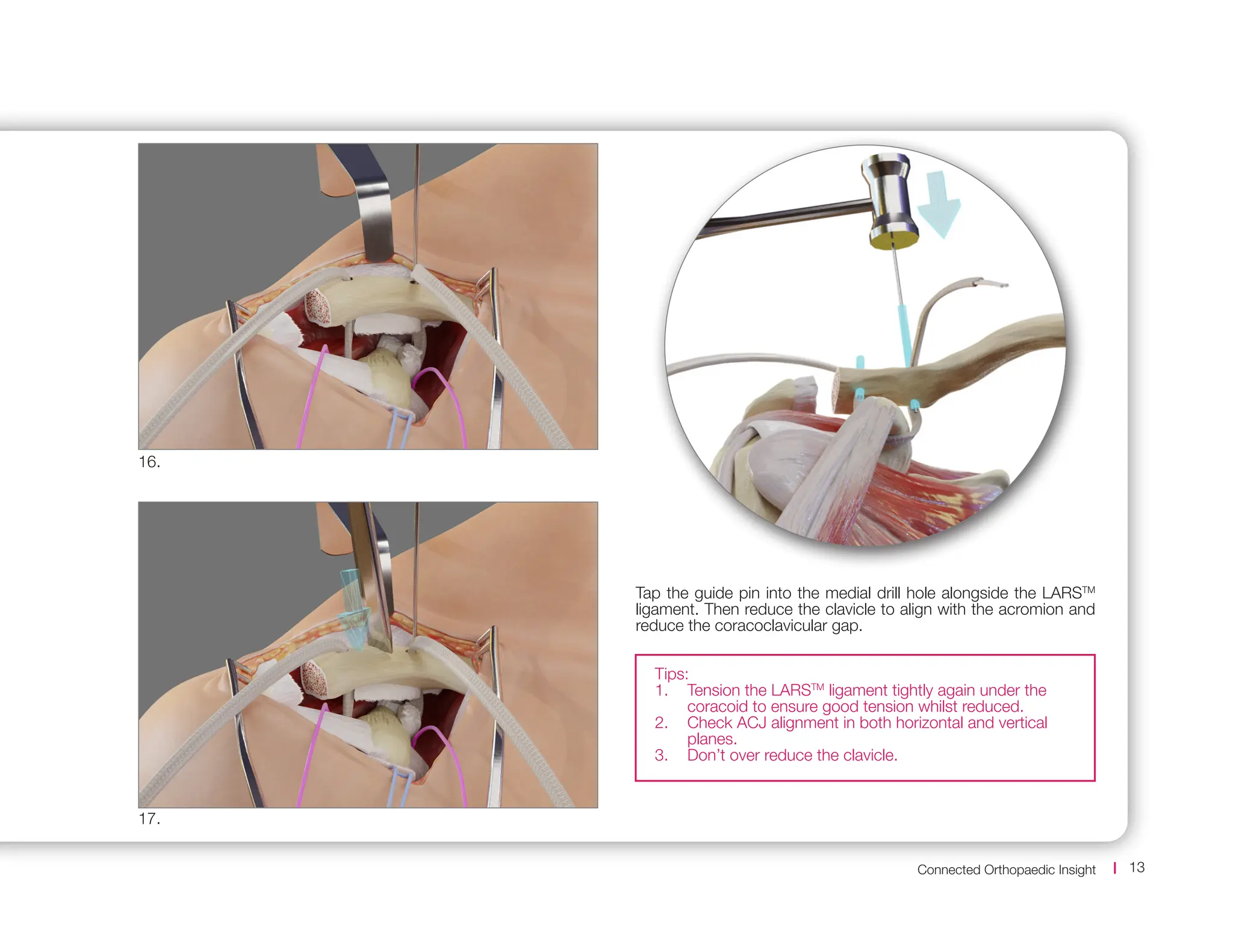
Tap the guide pin into the medial drill hole alongside the LARSTM
ligament. Then reduce the clavicle to align with the acromion and
reduce the coracoclavicular gap.
17.
16.
Tips:
1. Tension the LARSTM
ligament tightly again under the
coracoid to ensure good tension whilst reduced.
2. Check ACJ alignment in both horizontal and vertical
planes.
3. Don’t over reduce the clavicle.
14
Insert the medial interference screw (4.75 x 15mm for LAC 20; 5.2
x 15mm for LAC 30), whilst pulling tight on the LARSTM
ligament
and your assistant holds the clavicle reduced (a bone clamp
between the clavicle and coracoid can also be used to hold the
reduction, but be careful not to over-reduce).
Repeat this process for the lateral screw.
19.
20.
18.
Tips:
1. Keep tension on the LARSTM
ligament whilst inserting
screws.
2. Insert screw slowly and stop intermittently to relieve
torque stresses.
3. In softer bone it may be safer to avoid using the screws
and tie the LARSTM
ligament, to reduce the risk of
iatrogenic fractures.
Connected Orthopaedic Insight 15
An additional figure-of-8 loop around the coracoid appears to
improve the horizontal stability, reduce tension on the interference
screws and reduce the stress under the coracoid.
The lateral limb of the No. 2 stay suture is tied to the medial limb of
the LARSTM
ligament and then pulled under the coracoid.
22.
21.
16
24. They are fixed with a high strength No. 2 suture.
25. Excess LARSTM
ligament limbs are cut.
23. The two free LARSTM
ligament limbs are tied together
26. The AC joint reconstruction is now complete.
Connected Orthopaedic Insight 17
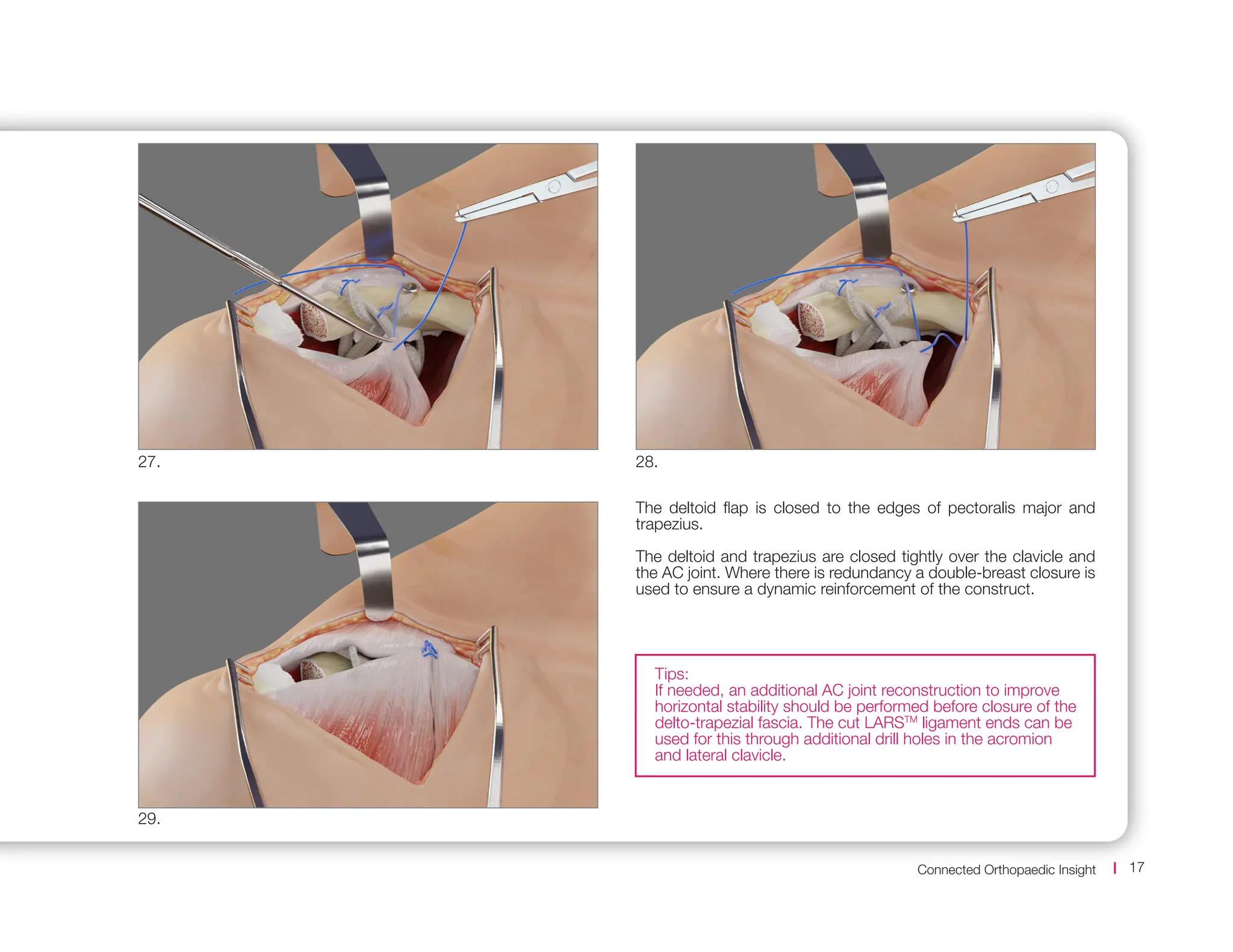
The deltoid flap is closed to the edges of pectoralis major and
trapezius.
The deltoid and trapezius are closed tightly over the clavicle and
the AC joint. Where there is redundancy a double-breast closure is
used to ensure a dynamic reinforcement of the construct.
28.
29.
27.
Tips:
If needed, an additional AC joint reconstruction to improve
horizontal stability should be performed before closure of the
delto-trapezial fascia. The cut LARSTM
ligament ends can be
used for this through additional drill holes in the acromion
and lateral clavicle.
18
30.
Connected Orthopaedic Insight 19
20
Insert the guide’s hook under the coracoid from the medial border
to the lateral border.
Set up the wire-passer cannula. Tap the drift several times to get
the top of the hook free from the fibrous tissue which may be
interposed.
Cannulated top hat technique
7a. 7b.
7c.
Connected Orthopaedic Insight 21
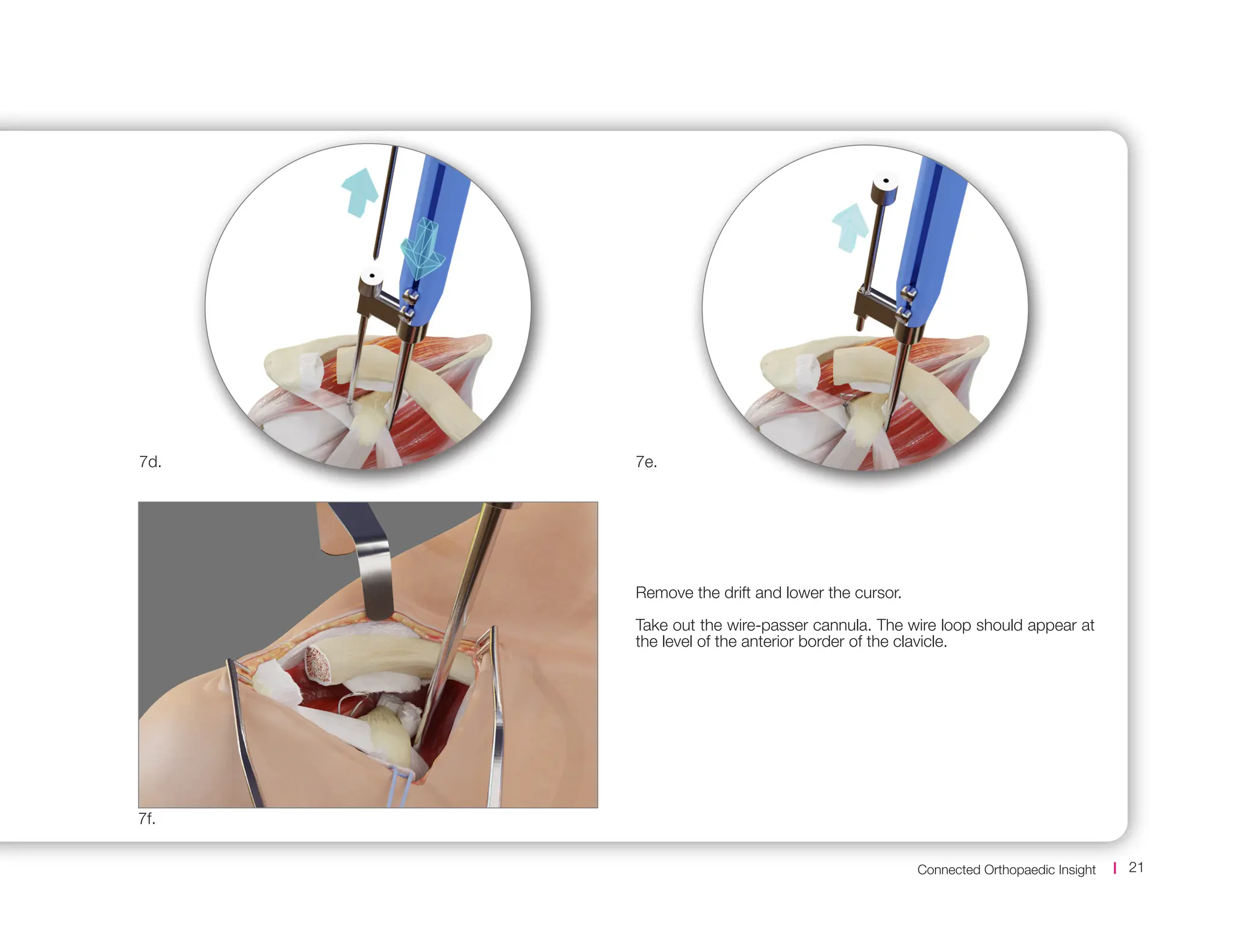
Remove the drift and lower the cursor.
Take out the wire-passer cannula. The wire loop should appear at
the level of the anterior border of the clavicle.
7e.
7f.
7d.
22
Ordering information
LARSTM
acromioclavicular ligament
104.115 LAC 20 Ligament
104.116 LAC 30 Ligament
LARSTM
blunt thread interference screws
104.470 Ligament Screw 4.7 x 15mm
104.515 Ligament Screw 5.2 x 15mm
104.520 Ligament Screw 5.2 x 20mm
104.530 Ligament Screw 5.2 x 30mm
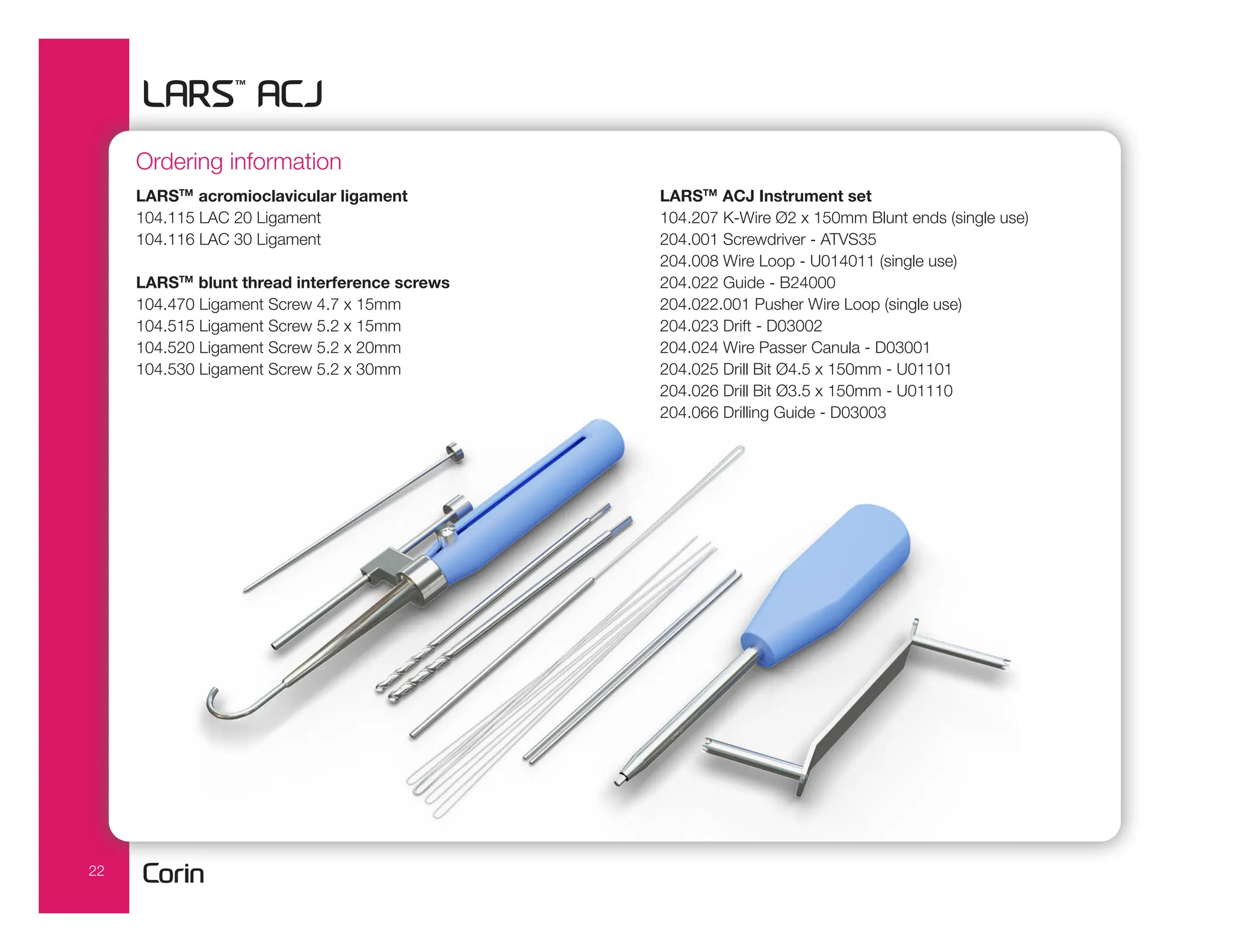
LARSTM
ACJ Instrument set
104.207 K-Wire Ø2 x 150mm Blunt ends (single use)
204.001 Screwdriver - ATVS35
204.008 Wire Loop - U014011 (single use)
204.022 Guide - B24000
204.022.001 Pusher Wire Loop (single use)
204.023 Drift - D03002
204.024 Wire Passer Canula - D03001
204.025 Drill Bit Ø4.5 x 150mm - U01101
204.026 Drill Bit Ø3.5 x 150mm - U01110
204.066 Drilling Guide - D03003
Connected Orthopaedic Insight 23
References:
1. Papadopoulos et al., 2011. Treatment of unstable knee
anterior cruciate ligament deficiency using the new
generation LARS™ artificial ligament: long-term follow-up
of 162 operated knees in 155 patients. Presented at: AOA,
Rotorua, New Zealand
2. Pelletier and Durand. Human fibroblast culture: in vitro
study. Institut National de Recherche Appliquée (INRA) test
report. Data to file. Corin Group 2005.
3. LARS™ laboratory testing. Data held on file, Corin Group
PLC 2005
4. Shao-bin et al., 2008. Histological characteristics and
ultrastructure of polyethylene reconstruction of anterior
cruciate ligament in rabbits. Journal of ZGLCKF, e-journals
5. Trieb et al., 2004. In vivo and in vitro cellular in-growth into
a new generation of artificial ligaments. European surgical
research
6. Machotka et al., 2010: Anterior cruciate ligament repair
with LARS™ (ligament advanced reinforcement system):
a systematic review. Sports Med Arthrosc Rehabil Ther
Technol
7. Guidoin et al., 2000. Analysis of retrieved polymer fibre
based replacements for ACL. Biomaterials
8. Shen et al, 2010. Arthroscopic posterior cruciate ligament
reconstruction using LARS™ artificial ligament: A
retrospective study. Journal of Surgical Research
9. Ranger et al. 2018. LARS synthetic ligaments for the acute
management of 111 acute knee dislocations: effective
surgical treatment for most ligaments. Knee Surgery,
Sports Traumatology, Arthroscopy.
10. Baxter, J.A., Phadnis, J., Robinson, P.M. and Funk, L.,
2018. Functional outcome of open acromioclavicular joint
stabilization for instability following distal clavicle resection.
Journal of Orthopaedics, 15(3), pp.761-764.
11. Robinson, P.M., Kanthasamy, S. and Funk, L., 2020. A
Surgical Technique for Revision of Failed Acromioclavicular
Joint Reconstruction. Techniques in Shoulder & Elbow
Surgery, 21(2), pp.37-41.
12. Funk, L. and Imam, M.A., 2020. Acromioclavicular Joint
Injuries. In Sports Injuries of the Shoulder (pp. 153-178).
Springer, Cham.
13. Geraci, A., Riccardi, A., Montagner, I.M., Pilla, D., Camarda,
L., D’Arienzo, A. and D’arienzo, M., 2019. Acromion
Clavicular Joint Reconstruction with LARS Ligament in Acute
Dislocation. Archives of Bone and Joint Surgery, 7(2), p.143.
14. Tiefenboeck, T.M., Boesmueller, S., Popp, D., Payr, S.,
Joestl, J., Binder, H., Schurz, M., Komjati, M., Fialka, C. and
Ostermann, R.C., 2018. The use of the LARS system in the
treatment of AC joint instability–Long-term results after a
mean of 7.4 years. Orthopaedics & Traumatology: Surgery &
Research, 104(6), pp.749-754.
15. Lu, N., Zhu, L., Ye, T., Chen, A., Jiang, X., Zhang, Z.,
Zhu, Q., Guo, Q. and Yang, D., 2014. Evaluation of the
coracoclavicular reconstruction using LARS artificial ligament
in acute acromioclavicular joint dislocation. Knee Surgery,
Sports Traumatology, Arthroscopy, 22(9), pp.2223-2227.
16. Muccioli, G.M.M., Manning, C., Wright, P., Grassi, A.,
Zaffagnini, S. and Funk, L., 2016. Acromioclavicular joint
reconstruction with the LARS ligament in professional
versus non-professional athletes. Knee Surgery, Sports
Traumatology, Arthroscopy, 24(6), pp.1961-1967.
Distributed by Corin
The Corinium Centre
Cirencester, GL7 1YJ, UK
t: +44 (0)1285 659 866
f: +44 (0)1258 658 960
e: info@coringroup.com
Manufactured by LARS
5 rue de la Fontaine
21560 Arc sur Tille, France
t: +33 (0)3 80 37 26 60
f: +33 (0)13 80 37 26 61
e: info@lars-ligaments.com
www.coringroup.com
©2020 Corin P No I1591 Rev01 09/2020 ECR 3364
0459

LARS ACJ Surgical Technique Corin Lennard Funk

  • 1.
    Connected Orthopaedic Insight1 ACJ Reconstruction and Reinforcement Surgical Technique
  • 2.
    2 Contents Overview Indications LARSTM synthetic ligament composition Generalconsiderations LARSTM in ACJ reconstruction LARSTM anatomic ACJ reconstruction technique summary Surgical approach LARSTM Top hat technique Ordering information References Corin would like to thank Prof L Funk for his input to this surgical technique. 3 4 4 4 4 5 6 20 22 23
  • 3.
    Connected Orthopaedic Insight3 Stability Versatility Recovery Overview LARSTM is a range of versatile synthetic ligament augmentation and reconstruction devices, suitable for a wide variety of applications. The LARSTM ligament is used as an Internal fixation device, providing immediate stability and allowing restoration of shoulder function. The intra-articular longitudinal fibres resist fatigue and allow fibroblastic in-growth1,2,3,4,5 , whilst the extra-articular woven fibres provide strength and resistance to elongation3,4,5 . LARSTM can be used in conjunction with the remnants of the ruptured ligament, or as reinforcement of an autologous reconstruction. In both cases, LARSTM protects the original ligament tissues during the immediate post-operative period.
  • 4.
    4 Indications LARSTM ligaments can beconsidered for: - Acute or chronic ACJ dislocations or instability - Revision ACJ reconstruction surgery LARSTM synthetic ligament composition Mechanical in vivo tests for resistance, fatigue and creep have shown that LARSTM ligaments are highly effective ligament reconstruction and augmentation devices and clinical results are excellent 3,6,7,8 . LARSTM ligaments are manufactured in a range of sizes, with various numbers of longitudinal fibres corresponding to varying resistance to elongation and tensile strength. The strength of LARSTM ligaments is approximately 1,500N for 30 fibres, 2,500N for 60 fibres, 3,600N for 80 fibres and 4,700N for 100 fibres 3 . General considerations LARSTM ligaments must always be placed in an anatomical and isometric position. When positioning the ligament, it is essential to avoid any abrasion within the joint or obstruction with other surrounding tissues, as this may lead to wear of the ligament fibres 4,5,7 . It is also important to avoid placing the free fibres portion of the LARSTM ligament within the tunnels or at the tunnel edges as these fibres are more prone to damage when in contact with sharp bony edges. At least 2mm of the extra-articular fibres should be visible outside the tunnel entrance, to minimise risk of long-term wear of the ligament. Acute angles of bone tunnels must be avoided. The diameter of the bony tunnels must correspond to the specific technique for each type of ligament and should typically be as small as possible to encourage bony tissue in-growth Due to the stiffness of a LARSTM ligament it is crucial to implant the ligament in an isometric and anatomic position with final fixation at the angle where the ligament is longest to avoid any excessive strain on the ligament fibres. LARSTM ligaments should not be over-tensioned during fixation as this will restrict motion and cause undue strain on the ligament. The tension should not be more than that of the repaired anatomic ligament. The fixation of the ligament is carried out using dedicated cannulated interference screws, which do not damage the ligament and provide maximum contact with the tunnel wall. As a general rule, the interference screw size should be at least 1mm bigger than the tunnel size and its length should be the longest permissible, dependent on tunnel length. The use of resorbable screws is not recommended with the LARSTM ligament. LARSTM in ACJ reconstruction LARS™ is used to anatomically reconstruct the CC ligaments (trapezoid and conoid). The technique can be modified to add reinforcement to the AC ligament if deemed appropriate by treating surgeon. There are two LARS ligament sizes for ACJ reconstruction with varying strength and tunnel diameters. The LARS LAC 20 ligament provides sufficient strength for the majority of ACJ reconstructions. In the instance of a revision case a LARS LAC 30 is advised for use. LARS LAC 20 and LARS LAC 30 ligaments are both 300mm in length. Ligaments Strength (N) Tunnel Ø (mm) Dimensions (mm) Screw size (mm) LAC 20 (females and small males) LAC 30 (larger males) 1000 1500 3.5 4.5 300 x 3.5 300 x 4.5 4.7 x 15 5.2 x 15
  • 5.
    Connected Orthopaedic Insight5 LARS™ anatomic ACJ reconstruction technique summary 4. LARSTM ligament is passed through the bone tunnels. The clavicle is reduced and two interference screw are inserted. 1.The lateral end of the clavicle is excised. 2. the LARSTM ligament is passed under the coracoid. 3. Two bone tunnels are drilled in the superior cortex of the clavicle in an oblique fashion. 5. The medial limb of the LARSTM ligament is passed under the coracoid to improve horizontal stability. 6. The limbs of the LARSTM ligament are sutured together.
  • 6.
    6 1. A sabre-cutskin incision is made in Langer’s lines, about 1-2cm medial to the lateral end of the clavicle and overlying the coracoid. Surgical approach The patient is positioned in the beach chair, semi-recumbent position, with a firm arm support under the elbow and forearm for counter-pressure during intra-operative joint reduction. Following standard skin preparation and draping, a sabre-cut incision is made in Langer’s lines, about 1-2 cm medial to the lateral end of the clavicle and overlying the coracoid.
  • 7.
    Connected Orthopaedic Insight7 A medial based ‘L’ take-down of the deltoid is performed with a stay suture at the apex of the ‘L’, described by Angus Wallace and Lars Neumann, Nottingham. This is made through the fascial coalescence of the deltoid and trapezius and the trapezius is peeled off the lateral clavicle to expose the clavicle and AC joint. This exposure allows visual access to the coracoid, pectoralis minor muscle, coracoacromial ligament and conjoined tendon (if needed). 3. 2.
  • 8.
    8 The lateral endof the clavicle is excised. No more than 5-8mm should be removed, to allow for a superior capsular repair on closure. Any adhesions and scar tissue under the lateral clavicle should be removed, to allow for an easy reduction of the coracoclavicular gap. Ensure reduction and alignment is achieved in both horizontal and vertical planes. 5. 4.
  • 9.
    Connected Orthopaedic Insight9 The LARSTM curved guide is passed from medial to lateral under the coracoid process and behind (dorsal) to the pectoralis minor tendon on the medial side and behind (dorsal) to the coracoacromial ligament on the lateral side. The end of the guide needs to be prominent laterally to push the wire loop out. If it is not, then the cannulated top hat guide can be used. In larger patients it may be difficult to see the end of the curved guide. In these cases, the cannulated top hat can be used. See technique on page 20. 7. 6.
  • 10.
    10 The LARSTM ligament shouldbe soaked beforehand to ease passing. The LARSTM ligament and an additional passing suture (a No. 2 braided high-strength suture) are passed through the wire loop and the curved guide pulled out medially, thus passing the LARSTM ligament under the coracoid. Check the LARSTM ligament is flush with the under surface of the coracoid by pulling on each end of the ligament reciprocally. 9. 8.
  • 11.
    Connected Orthopaedic Insight11 Two bony tunnels are drilled in the superior cortex of the clavicle in an oblique fashion (size 3.5 mm for the LAC 20 and size 4.5 mm for the LAC 30). The drill holes should be in the isometric points of the coracoclavicular ligaments and aligned with their orientation. The medial tunnel is directed from antero-superior to postero- inferior and the lateral tunnel is directed from postero-superior to antero-inferior. Allow at least one inch space between lateral tunnel and lateral end of clavicle and one inch between the two tunnels to avoid any iatrogenic fractures. 11. View from above 10.
  • 12.
    12 13. Load thelooped wire with the LARSTM ligament end, from the lateral side of the coracoid. 14. Pull the looped wired through bone tunnel. 12. Pass the looped wire through the lateral bone tunnel. 15. Repeat this process through the other bone tunnel.
  • 13.
    Connected Orthopaedic Insight13 Tap the guide pin into the medial drill hole alongside the LARSTM ligament. Then reduce the clavicle to align with the acromion and reduce the coracoclavicular gap. 17. 16. Tips: 1. Tension the LARSTM ligament tightly again under the coracoid to ensure good tension whilst reduced. 2. Check ACJ alignment in both horizontal and vertical planes. 3. Don’t over reduce the clavicle.
  • 14.
    14 Insert the medialinterference screw (4.75 x 15mm for LAC 20; 5.2 x 15mm for LAC 30), whilst pulling tight on the LARSTM ligament and your assistant holds the clavicle reduced (a bone clamp between the clavicle and coracoid can also be used to hold the reduction, but be careful not to over-reduce). Repeat this process for the lateral screw. 19. 20. 18. Tips: 1. Keep tension on the LARSTM ligament whilst inserting screws. 2. Insert screw slowly and stop intermittently to relieve torque stresses. 3. In softer bone it may be safer to avoid using the screws and tie the LARSTM ligament, to reduce the risk of iatrogenic fractures.
  • 15.
    Connected Orthopaedic Insight15 An additional figure-of-8 loop around the coracoid appears to improve the horizontal stability, reduce tension on the interference screws and reduce the stress under the coracoid. The lateral limb of the No. 2 stay suture is tied to the medial limb of the LARSTM ligament and then pulled under the coracoid. 22. 21.
  • 16.
    16 24. They arefixed with a high strength No. 2 suture. 25. Excess LARSTM ligament limbs are cut. 23. The two free LARSTM ligament limbs are tied together 26. The AC joint reconstruction is now complete.
  • 17.
    Connected Orthopaedic Insight17 The deltoid flap is closed to the edges of pectoralis major and trapezius. The deltoid and trapezius are closed tightly over the clavicle and the AC joint. Where there is redundancy a double-breast closure is used to ensure a dynamic reinforcement of the construct. 28. 29. 27. Tips: If needed, an additional AC joint reconstruction to improve horizontal stability should be performed before closure of the delto-trapezial fascia. The cut LARSTM ligament ends can be used for this through additional drill holes in the acromion and lateral clavicle.
  • 18.
  • 19.
  • 20.
    20 Insert the guide’shook under the coracoid from the medial border to the lateral border. Set up the wire-passer cannula. Tap the drift several times to get the top of the hook free from the fibrous tissue which may be interposed. Cannulated top hat technique 7a. 7b. 7c.
  • 21.
    Connected Orthopaedic Insight21 Remove the drift and lower the cursor. Take out the wire-passer cannula. The wire loop should appear at the level of the anterior border of the clavicle. 7e. 7f. 7d.
  • 22.
    22 Ordering information LARSTM acromioclavicular ligament 104.115LAC 20 Ligament 104.116 LAC 30 Ligament LARSTM blunt thread interference screws 104.470 Ligament Screw 4.7 x 15mm 104.515 Ligament Screw 5.2 x 15mm 104.520 Ligament Screw 5.2 x 20mm 104.530 Ligament Screw 5.2 x 30mm LARSTM ACJ Instrument set 104.207 K-Wire Ø2 x 150mm Blunt ends (single use) 204.001 Screwdriver - ATVS35 204.008 Wire Loop - U014011 (single use) 204.022 Guide - B24000 204.022.001 Pusher Wire Loop (single use) 204.023 Drift - D03002 204.024 Wire Passer Canula - D03001 204.025 Drill Bit Ø4.5 x 150mm - U01101 204.026 Drill Bit Ø3.5 x 150mm - U01110 204.066 Drilling Guide - D03003
  • 23.
    Connected Orthopaedic Insight23 References: 1. Papadopoulos et al., 2011. Treatment of unstable knee anterior cruciate ligament deficiency using the new generation LARS™ artificial ligament: long-term follow-up of 162 operated knees in 155 patients. Presented at: AOA, Rotorua, New Zealand 2. Pelletier and Durand. Human fibroblast culture: in vitro study. Institut National de Recherche Appliquée (INRA) test report. Data to file. Corin Group 2005. 3. LARS™ laboratory testing. Data held on file, Corin Group PLC 2005 4. Shao-bin et al., 2008. Histological characteristics and ultrastructure of polyethylene reconstruction of anterior cruciate ligament in rabbits. Journal of ZGLCKF, e-journals 5. Trieb et al., 2004. In vivo and in vitro cellular in-growth into a new generation of artificial ligaments. European surgical research 6. Machotka et al., 2010: Anterior cruciate ligament repair with LARS™ (ligament advanced reinforcement system): a systematic review. Sports Med Arthrosc Rehabil Ther Technol 7. Guidoin et al., 2000. Analysis of retrieved polymer fibre based replacements for ACL. Biomaterials 8. Shen et al, 2010. Arthroscopic posterior cruciate ligament reconstruction using LARS™ artificial ligament: A retrospective study. Journal of Surgical Research 9. Ranger et al. 2018. LARS synthetic ligaments for the acute management of 111 acute knee dislocations: effective surgical treatment for most ligaments. Knee Surgery, Sports Traumatology, Arthroscopy. 10. Baxter, J.A., Phadnis, J., Robinson, P.M. and Funk, L., 2018. Functional outcome of open acromioclavicular joint stabilization for instability following distal clavicle resection. Journal of Orthopaedics, 15(3), pp.761-764. 11. Robinson, P.M., Kanthasamy, S. and Funk, L., 2020. A Surgical Technique for Revision of Failed Acromioclavicular Joint Reconstruction. Techniques in Shoulder & Elbow Surgery, 21(2), pp.37-41. 12. Funk, L. and Imam, M.A., 2020. Acromioclavicular Joint Injuries. In Sports Injuries of the Shoulder (pp. 153-178). Springer, Cham. 13. Geraci, A., Riccardi, A., Montagner, I.M., Pilla, D., Camarda, L., D’Arienzo, A. and D’arienzo, M., 2019. Acromion Clavicular Joint Reconstruction with LARS Ligament in Acute Dislocation. Archives of Bone and Joint Surgery, 7(2), p.143. 14. Tiefenboeck, T.M., Boesmueller, S., Popp, D., Payr, S., Joestl, J., Binder, H., Schurz, M., Komjati, M., Fialka, C. and Ostermann, R.C., 2018. The use of the LARS system in the treatment of AC joint instability–Long-term results after a mean of 7.4 years. Orthopaedics & Traumatology: Surgery & Research, 104(6), pp.749-754. 15. Lu, N., Zhu, L., Ye, T., Chen, A., Jiang, X., Zhang, Z., Zhu, Q., Guo, Q. and Yang, D., 2014. Evaluation of the coracoclavicular reconstruction using LARS artificial ligament in acute acromioclavicular joint dislocation. Knee Surgery, Sports Traumatology, Arthroscopy, 22(9), pp.2223-2227. 16. Muccioli, G.M.M., Manning, C., Wright, P., Grassi, A., Zaffagnini, S. and Funk, L., 2016. Acromioclavicular joint reconstruction with the LARS ligament in professional versus non-professional athletes. Knee Surgery, Sports Traumatology, Arthroscopy, 24(6), pp.1961-1967.
  • 24.
    Distributed by Corin TheCorinium Centre Cirencester, GL7 1YJ, UK t: +44 (0)1285 659 866 f: +44 (0)1258 658 960 e: info@coringroup.com Manufactured by LARS 5 rue de la Fontaine 21560 Arc sur Tille, France t: +33 (0)3 80 37 26 60 f: +33 (0)13 80 37 26 61 e: info@lars-ligaments.com www.coringroup.com ©2020 Corin P No I1591 Rev01 09/2020 ECR 3364 0459