KIỂM TRA ĐÁNH GIÁ
NGOẠI NGỮ
LANGUAGE ASSESSMENT
FOR TEACHERS OF
ENGLISH
Giảng viên tập huấn: ThS Lê Nguyễn Như Anh
Trường Đại Học Sư Phạm TPHCM
Khoa Tiếng Anh
Tập huấn:
MODULE 7
SCORING
PERFORMANCE-BASED
ASSESSMENT
After learning module 7, you can:
• Understand types of instruments to record
evidence in students’ performance
• Distinguish different types of rating scales
• Explain the features of good scoring
instruments
• Identify the common scoring criteria for
writing and speaking performance
• Familiarize with key principles for scoring
• Know the common errors in scoring
performance-based assessment
Main contents
• Types of performance recording
instruments
• A focus on rating scales
• Features of good scoring instruments
Types of recording instruments for
performance-based assessment
• Anecdotal records
• Behavior tallies
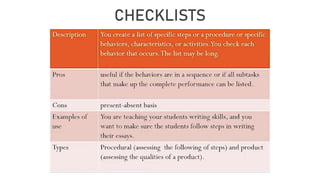
• Checklists
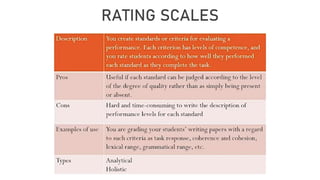
• Rating scales
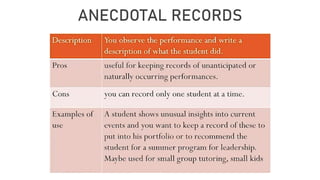
ANECDOTAL RECORDS
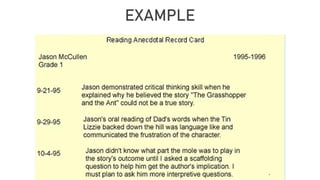
EXAMPLE
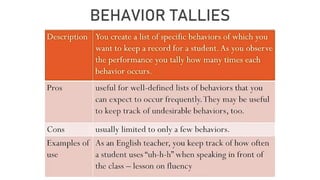
BEHAVIOR TALLIES
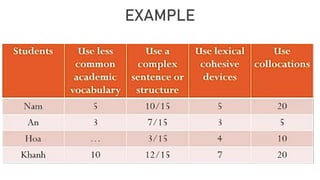
EXAMPLE
CHECKLISTS
RATING SCALES
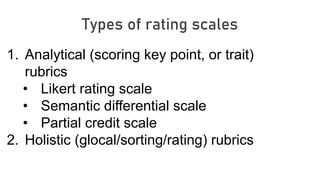
Types of rating scales
1. Analytical (scoring key point, or trait)
rubrics
• Likert rating scale
• Semantic differential scale
• Partial credit scale
2. Holistic (glocal/sorting/rating) rubrics
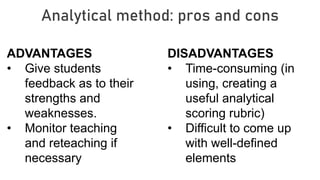
Analytical method: pros and cons
ADVANTAGES
• Give students
feedback as to their
strengths and
weaknesses.
• Monitor teaching
and reteaching if
necessary
DISADVANTAGES
• Time-consuming (in
using, creating a
useful analytical
scoring rubric)
• Difficult to come up
with well-defined
elements
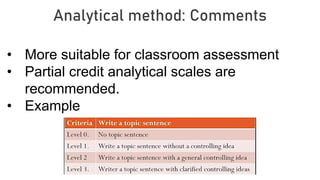
Analytical method: Comments
• More suitable for classroom assessment
• Partial credit analytical scales are
recommended.
• Example
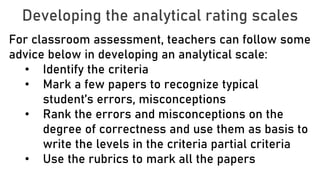
Developing the analytical rating scales
For classroom assessment, teachers can follow some
advice below in developing an analytical scale:
• Identify the criteria
• Mark a few papers to recognize typical
student’s errors, misconceptions
• Rank the errors and misconceptions on the
degree of correctness and use them as basis to
write the levels in the criteria partial criteria
• Use the rubrics to mark all the papers
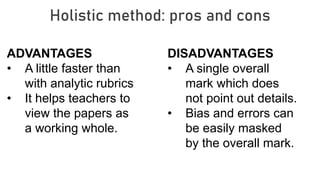
Holistic method: pros and cons
ADVANTAGES
• A little faster than
with analytic rubrics
• It helps teachers to
view the papers as
a working whole.
DISADVANTAGES
• A single overall
mark which does
not point out details.
• Bias and errors can
be easily masked
by the overall mark.
More vs less useful scales
• Irrelevant indicators/criteria and descriptors
• Over-lengthened: Too many criteria or descriptors/levels
• Immeasurable descriptors
• Task specific
• Excessively general/ambiguous adjectives [good, bad, average]
• Dysfunctional/untypical
descriptors/criteria/standards/categories for the students
• Student-unfriendly: jargons and technical words
• Double barrel criteria: 2 in 1
• Double negative descriptors
• Descriptors of what students cannot do
THAT’S ALL
Thank you for your attention

Language Assessment Module 7

  • 1.
    KIỂM TRA ĐÁNHGIÁ NGOẠI NGỮ LANGUAGE ASSESSMENT FOR TEACHERS OF ENGLISH Giảng viên tập huấn: ThS Lê Nguyễn Như Anh Trường Đại Học Sư Phạm TPHCM Khoa Tiếng Anh Tập huấn:
  • 2.
  • 3.
    After learning module7, you can: • Understand types of instruments to record evidence in students’ performance • Distinguish different types of rating scales • Explain the features of good scoring instruments • Identify the common scoring criteria for writing and speaking performance • Familiarize with key principles for scoring • Know the common errors in scoring performance-based assessment
  • 4.
    Main contents • Typesof performance recording instruments • A focus on rating scales • Features of good scoring instruments
  • 5.
    Types of recordinginstruments for performance-based assessment • Anecdotal records • Behavior tallies • Checklists • Rating scales
  • 6.
  • 7.
  • 8.
  • 9.
  • 10.
  • 11.
  • 12.
    Types of ratingscales 1. Analytical (scoring key point, or trait) rubrics • Likert rating scale • Semantic differential scale • Partial credit scale 2. Holistic (glocal/sorting/rating) rubrics
  • 13.
    Analytical method: prosand cons ADVANTAGES • Give students feedback as to their strengths and weaknesses. • Monitor teaching and reteaching if necessary DISADVANTAGES • Time-consuming (in using, creating a useful analytical scoring rubric) • Difficult to come up with well-defined elements
  • 14.
    Analytical method: Comments •More suitable for classroom assessment • Partial credit analytical scales are recommended. • Example
  • 15.
    Developing the analyticalrating scales For classroom assessment, teachers can follow some advice below in developing an analytical scale: • Identify the criteria • Mark a few papers to recognize typical student’s errors, misconceptions • Rank the errors and misconceptions on the degree of correctness and use them as basis to write the levels in the criteria partial criteria • Use the rubrics to mark all the papers
  • 16.
    Holistic method: prosand cons ADVANTAGES • A little faster than with analytic rubrics • It helps teachers to view the papers as a working whole. DISADVANTAGES • A single overall mark which does not point out details. • Bias and errors can be easily masked by the overall mark.
  • 17.
    More vs lessuseful scales • Irrelevant indicators/criteria and descriptors • Over-lengthened: Too many criteria or descriptors/levels • Immeasurable descriptors • Task specific • Excessively general/ambiguous adjectives [good, bad, average] • Dysfunctional/untypical descriptors/criteria/standards/categories for the students • Student-unfriendly: jargons and technical words • Double barrel criteria: 2 in 1 • Double negative descriptors • Descriptors of what students cannot do
  • 20.
    THAT’S ALL Thank youfor your attention