KIỂM TRA ĐÁNH GIÁ
NGOẠI NGỮ
LANGUAGE ASSESSMENT
FOR TEACHERS OF
ENGLISH
Giảng viên tập huấn: ThS Lê Nguyễn Như Anh
Trường Đại Học Sư Phạm TPHCM
Khoa Tiếng Anh
Tập huấn:
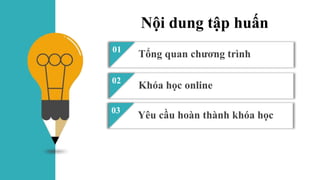
Nội dung tập huấn
01
02
Tổng quan chương trình
Khóa học online
03
Yêu cầu hoàn thành khóa học
Course overview
Course description
This course introduces learners to common
tasks in the language assessment process.
Learners practice and develop their autonomy,
self-assessment, and critical thinking skills via
analyzing the problems and performing major
assignments.
Course overview
Objectives
TEACHERS will be able to conduct major
language assessment tasks in the classroom,
particularly in
1) Identifying purposes and targets of assessment
2) Identify and use language assessment methods
3) Analyze and interpret language assessment
results
4) Provide criterion-referenced feedback to
students
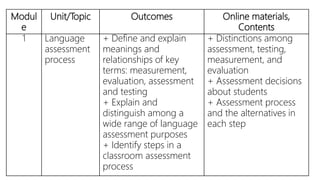
Modul
e
Unit/Topic Outcomes Online materials,
Contents
1 Language
assessment
process
+ Define and explain
meanings and
relationships of key
terms: measurement,
evaluation, assessment
and testing
+ Explain and
distinguish among a
wide range of language
assessment purposes
+ Identify steps in a
classroom assessment
process
+ Distinctions among
assessment, testing,
measurement, and
evaluation
+ Assessment decisions
about students
+ Assessment process
and the alternatives in
each step
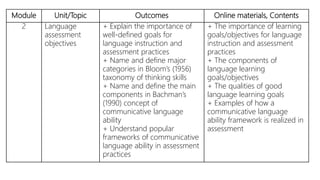
Module Unit/Topic Outcomes Online materials, Contents
2 Language
assessment
objectives
+ Explain the importance of
well-defined goals for
language instruction and
assessment practices
+ Name and define major
categories in Bloom’s (1956)
taxonomy of thinking skills
+ Name and define the main
components in Bachman’s
(1990) concept of
communicative language
ability
+ Understand popular
frameworks of communicative
language ability in assessment
practices
+ The importance of learning
goals/objectives for language
instruction and assessment
practices
+ The components of
language learning
goals/objectives
+ The qualities of good
language learning goals
+ Examples of how a
communicative language
ability framework is realized in
assessment
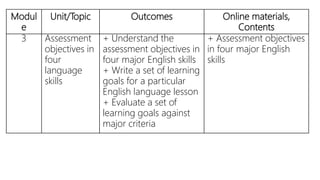
Modul
e
Unit/Topic Outcomes Online materials,
Contents
3 Assessment
objectives in
four
language
skills
+ Understand the
assessment objectives in
four major English skills
+ Write a set of learning
goals for a particular
English language lesson
+ Evaluate a set of
learning goals against
major criteria
+ Assessment objectives
in four major English
skills
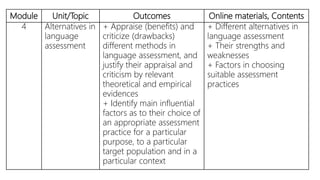
Module Unit/Topic Outcomes Online materials, Contents
4 Alternatives in
language
assessment
+ Appraise (benefits) and
criticize (drawbacks)
different methods in
language assessment, and
justify their appraisal and
criticism by relevant
theoretical and empirical
evidences
+ Identify main influential
factors as to their choice of
an appropriate assessment
practice for a particular
purpose, to a particular
target population and in a
particular context
+ Different alternatives in
language assessment
+ Their strengths and
weaknesses
+ Factors in choosing
suitable assessment
practices
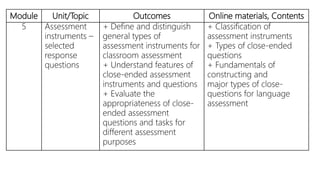
Module Unit/Topic Outcomes Online materials, Contents
5 Assessment
instruments –
selected
response
questions
+ Define and distinguish
general types of
assessment instruments for
classroom assessment
+ Understand features of
close-ended assessment
instruments and questions
+ Evaluate the
appropriateness of close-
ended assessment
questions and tasks for
different assessment
purposes
+ Classification of
assessment instruments
+ Types of close-ended
questions
+ Fundamentals of
constructing and
major types of close-
questions for language
assessment
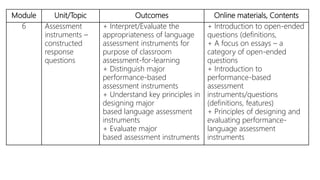
Module Unit/Topic Outcomes Online materials, Contents
6 Assessment
instruments –
constructed
response
questions
+ Interpret/Evaluate the
appropriateness of language
assessment instruments for
purpose of classroom
assessment-for-learning
+ Distinguish major
performance-based
assessment instruments
+ Understand key principles in
designing major
based language assessment
instruments
+ Evaluate major
based assessment instruments
+ Introduction to open-ended
questions (definitions,
+ A focus on essays – a
category of open-ended
questions
+ Introduction to
performance-based
assessment
instruments/questions
(definitions, features)
+ Principles of designing and
evaluating performance-
language assessment
instruments
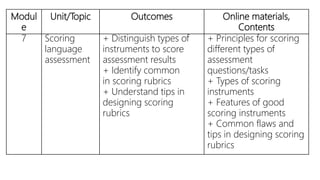
Modul
e
Unit/Topic Outcomes Online materials,
Contents
7 Scoring
language
assessment
+ Distinguish types of
instruments to score
assessment results
+ Identify common
in scoring rubrics
+ Understand tips in
designing scoring
rubrics
+ Principles for scoring
different types of
assessment
questions/tasks
+ Types of scoring
instruments
+ Features of good
scoring instruments
+ Common flaws and
tips in designing scoring
rubrics
Modul
e
Unit/Topic Outcomes Online materials,
Contents
8 Interpreting
assessment
results in
language
classrooms
+ Identify different
frameworks to interpret
scores
+ Describe different
ways of reporting scores
+ Interpret assessment
results from descriptive
statistics
+ Use the descriptive
statistics of assessment
results to interpret the
results
+ Frequency distribution
+ Characteristics of
frequency distribution
+ Central tendency
descriptive data
+ Reporting and
interpreting the analyses
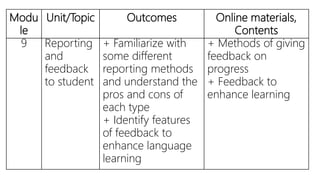
Modu
le
Unit/Topic Outcomes Online materials,
Contents
9 Reporting
and
feedback
to student
+ Familiarize with
some different
reporting methods
and understand the
pros and cons of
each type
+ Identify features
of feedback to
enhance language
learning
+ Methods of giving
feedback on
progress
+ Feedback to
enhance learning
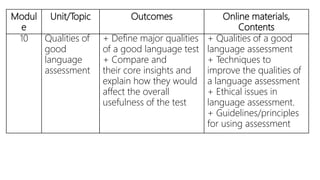
Modul
e
Unit/Topic Outcomes Online materials,
Contents
10 Qualities of
good
language
assessment
+ Define major qualities
of a good language test
+ Compare and
their core insights and
explain how they would
affect the overall
usefulness of the test
+ Qualities of a good
language assessment
+ Techniques to
improve the qualities of
a language assessment
+ Ethical issues in
language assessment.
+ Guidelines/principles
for using assessment
Khóa học Online
Yêu cầu hoàn thành khóa học
1. Khóa học Online (40%)
2. Dự án cuối khóa (60%)
Yêu cầu hoàn thành khóa học
Dự án cuối khóa (60%)
- Học viên làm việc cá nhân
- Soạn 2 bài kiểm tra kỹ năng Đọc, mỗi bài 5 câu
hỏi (kèm các thông số kiểm tra bằng công cụ).
- Trình bày toàn bộ trong 1 file word duy nhất.
- Mô tả chi tiết yêu cầu bài cuối kỳ:
bit.ly/thptdanhgiacuoiky
- Bài mẫu tham khảo:
bit.ly/danhgiasample
Yêu cầu hoàn thành khóa học
3. Dự án cuối khóa (70%)
- Hình thức nộp bài: Học viên nộp bài tại địa
chỉ sau:
bit.ly/nopbai_danhgia_2020
- Hạn nộp bài: 30 tháng 10 năm 2020
THAT’S ALL
Thank you for your attention

Assessment Introduction

  • 1.
    KIỂM TRA ĐÁNHGIÁ NGOẠI NGỮ LANGUAGE ASSESSMENT FOR TEACHERS OF ENGLISH Giảng viên tập huấn: ThS Lê Nguyễn Như Anh Trường Đại Học Sư Phạm TPHCM Khoa Tiếng Anh Tập huấn:
  • 2.
    Nội dung tậphuấn 01 02 Tổng quan chương trình Khóa học online 03 Yêu cầu hoàn thành khóa học
  • 3.
    Course overview Course description Thiscourse introduces learners to common tasks in the language assessment process. Learners practice and develop their autonomy, self-assessment, and critical thinking skills via analyzing the problems and performing major assignments.
  • 4.
    Course overview Objectives TEACHERS willbe able to conduct major language assessment tasks in the classroom, particularly in 1) Identifying purposes and targets of assessment 2) Identify and use language assessment methods 3) Analyze and interpret language assessment results 4) Provide criterion-referenced feedback to students
  • 5.
    Modul e Unit/Topic Outcomes Onlinematerials, Contents 1 Language assessment process + Define and explain meanings and relationships of key terms: measurement, evaluation, assessment and testing + Explain and distinguish among a wide range of language assessment purposes + Identify steps in a classroom assessment process + Distinctions among assessment, testing, measurement, and evaluation + Assessment decisions about students + Assessment process and the alternatives in each step
  • 6.
    Module Unit/Topic OutcomesOnline materials, Contents 2 Language assessment objectives + Explain the importance of well-defined goals for language instruction and assessment practices + Name and define major categories in Bloom’s (1956) taxonomy of thinking skills + Name and define the main components in Bachman’s (1990) concept of communicative language ability + Understand popular frameworks of communicative language ability in assessment practices + The importance of learning goals/objectives for language instruction and assessment practices + The components of language learning goals/objectives + The qualities of good language learning goals + Examples of how a communicative language ability framework is realized in assessment
  • 7.
    Modul e Unit/Topic Outcomes Onlinematerials, Contents 3 Assessment objectives in four language skills + Understand the assessment objectives in four major English skills + Write a set of learning goals for a particular English language lesson + Evaluate a set of learning goals against major criteria + Assessment objectives in four major English skills
  • 8.
    Module Unit/Topic OutcomesOnline materials, Contents 4 Alternatives in language assessment + Appraise (benefits) and criticize (drawbacks) different methods in language assessment, and justify their appraisal and criticism by relevant theoretical and empirical evidences + Identify main influential factors as to their choice of an appropriate assessment practice for a particular purpose, to a particular target population and in a particular context + Different alternatives in language assessment + Their strengths and weaknesses + Factors in choosing suitable assessment practices
  • 9.
    Module Unit/Topic OutcomesOnline materials, Contents 5 Assessment instruments – selected response questions + Define and distinguish general types of assessment instruments for classroom assessment + Understand features of close-ended assessment instruments and questions + Evaluate the appropriateness of close- ended assessment questions and tasks for different assessment purposes + Classification of assessment instruments + Types of close-ended questions + Fundamentals of constructing and major types of close- questions for language assessment
  • 10.
    Module Unit/Topic OutcomesOnline materials, Contents 6 Assessment instruments – constructed response questions + Interpret/Evaluate the appropriateness of language assessment instruments for purpose of classroom assessment-for-learning + Distinguish major performance-based assessment instruments + Understand key principles in designing major based language assessment instruments + Evaluate major based assessment instruments + Introduction to open-ended questions (definitions, + A focus on essays – a category of open-ended questions + Introduction to performance-based assessment instruments/questions (definitions, features) + Principles of designing and evaluating performance- language assessment instruments
  • 11.
    Modul e Unit/Topic Outcomes Onlinematerials, Contents 7 Scoring language assessment + Distinguish types of instruments to score assessment results + Identify common in scoring rubrics + Understand tips in designing scoring rubrics + Principles for scoring different types of assessment questions/tasks + Types of scoring instruments + Features of good scoring instruments + Common flaws and tips in designing scoring rubrics
  • 12.
    Modul e Unit/Topic Outcomes Onlinematerials, Contents 8 Interpreting assessment results in language classrooms + Identify different frameworks to interpret scores + Describe different ways of reporting scores + Interpret assessment results from descriptive statistics + Use the descriptive statistics of assessment results to interpret the results + Frequency distribution + Characteristics of frequency distribution + Central tendency descriptive data + Reporting and interpreting the analyses
  • 13.
    Modu le Unit/Topic Outcomes Onlinematerials, Contents 9 Reporting and feedback to student + Familiarize with some different reporting methods and understand the pros and cons of each type + Identify features of feedback to enhance language learning + Methods of giving feedback on progress + Feedback to enhance learning
  • 14.
    Modul e Unit/Topic Outcomes Onlinematerials, Contents 10 Qualities of good language assessment + Define major qualities of a good language test + Compare and their core insights and explain how they would affect the overall usefulness of the test + Qualities of a good language assessment + Techniques to improve the qualities of a language assessment + Ethical issues in language assessment. + Guidelines/principles for using assessment
  • 15.
  • 16.
    Yêu cầu hoànthành khóa học 1. Khóa học Online (40%) 2. Dự án cuối khóa (60%)
  • 17.
    Yêu cầu hoànthành khóa học Dự án cuối khóa (60%) - Học viên làm việc cá nhân - Soạn 2 bài kiểm tra kỹ năng Đọc, mỗi bài 5 câu hỏi (kèm các thông số kiểm tra bằng công cụ). - Trình bày toàn bộ trong 1 file word duy nhất. - Mô tả chi tiết yêu cầu bài cuối kỳ: bit.ly/thptdanhgiacuoiky - Bài mẫu tham khảo: bit.ly/danhgiasample
  • 18.
    Yêu cầu hoànthành khóa học 3. Dự án cuối khóa (70%) - Hình thức nộp bài: Học viên nộp bài tại địa chỉ sau: bit.ly/nopbai_danhgia_2020 - Hạn nộp bài: 30 tháng 10 năm 2020
  • 19.
    THAT’S ALL Thank youfor your attention

Editor's Notes

  • #20 https://quizizz.com/admin/quiz/5db3d4dc2ee939001ddc8ab1