Land Use and Transportation Exploring the Connections Matti Siemiatycki, University of Toronto Margaret Wittgens, TransLink
Presentation Overview Introduction to transportation and land use interactions Present contemporary experience: From the nation to the neighbourhood Planning processes to link transportation and land use in Canada TransLink Case Study: Scale/types of projects Take home message
Why is there such recent interest in transportation?
Transportation and Land Use ‘ transport shapes city development but city form then shapes travel choices’  (Colin Clark, 1957)   Mode influences travel behaviour Available modes influence development patterns
Transportation and City Form: A Historical Perspective
The International Experience  Transportation and Land Use: Urban Density
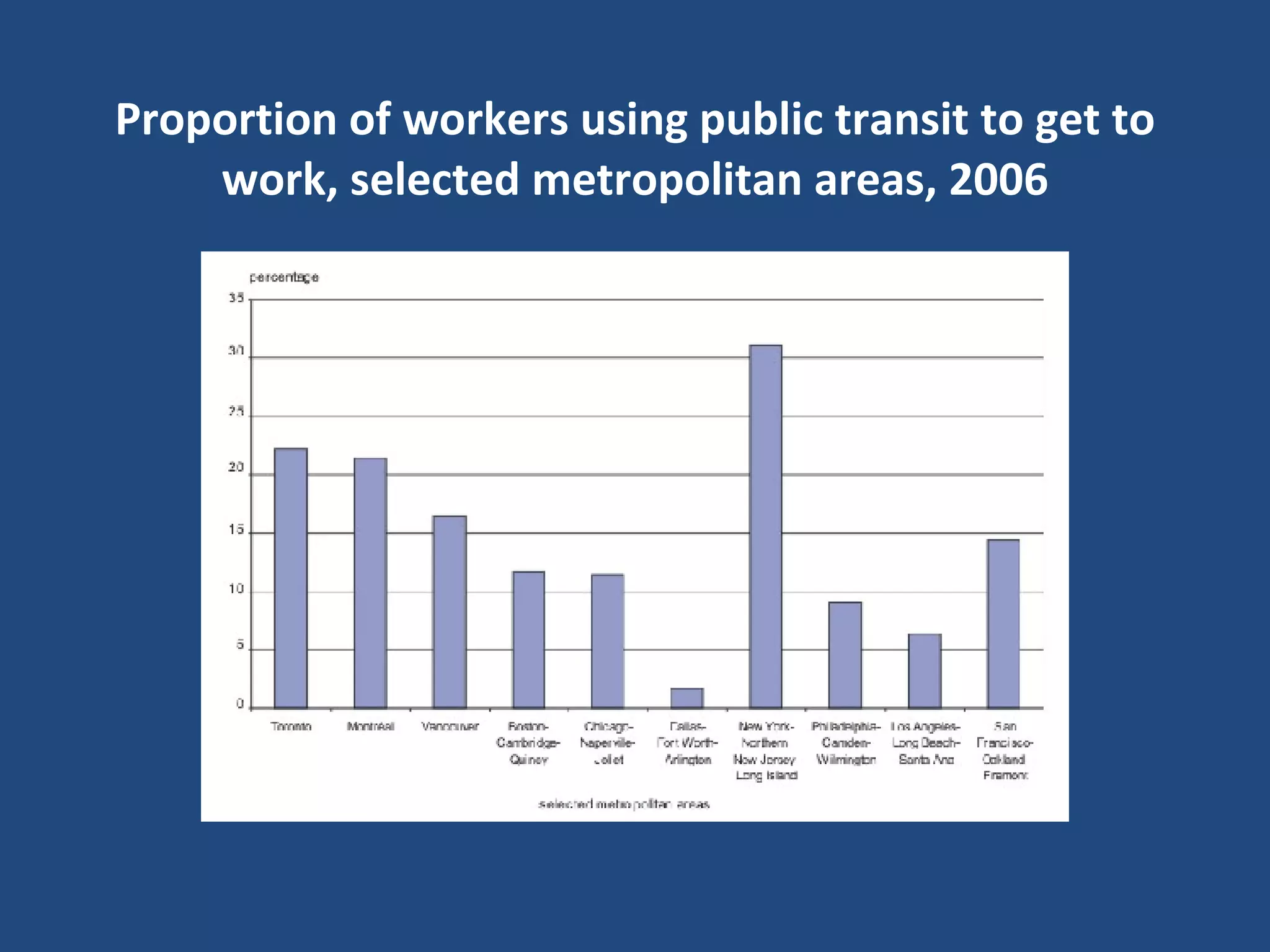
Proportion of workers using public transit to get to work, selected metropolitan areas, 2006
Transportation and Land Use: Efficacy of Public Transit
Transportation and Land Use: Emissions by Transport Sector
Transportation and Land Use: Urban Wealth
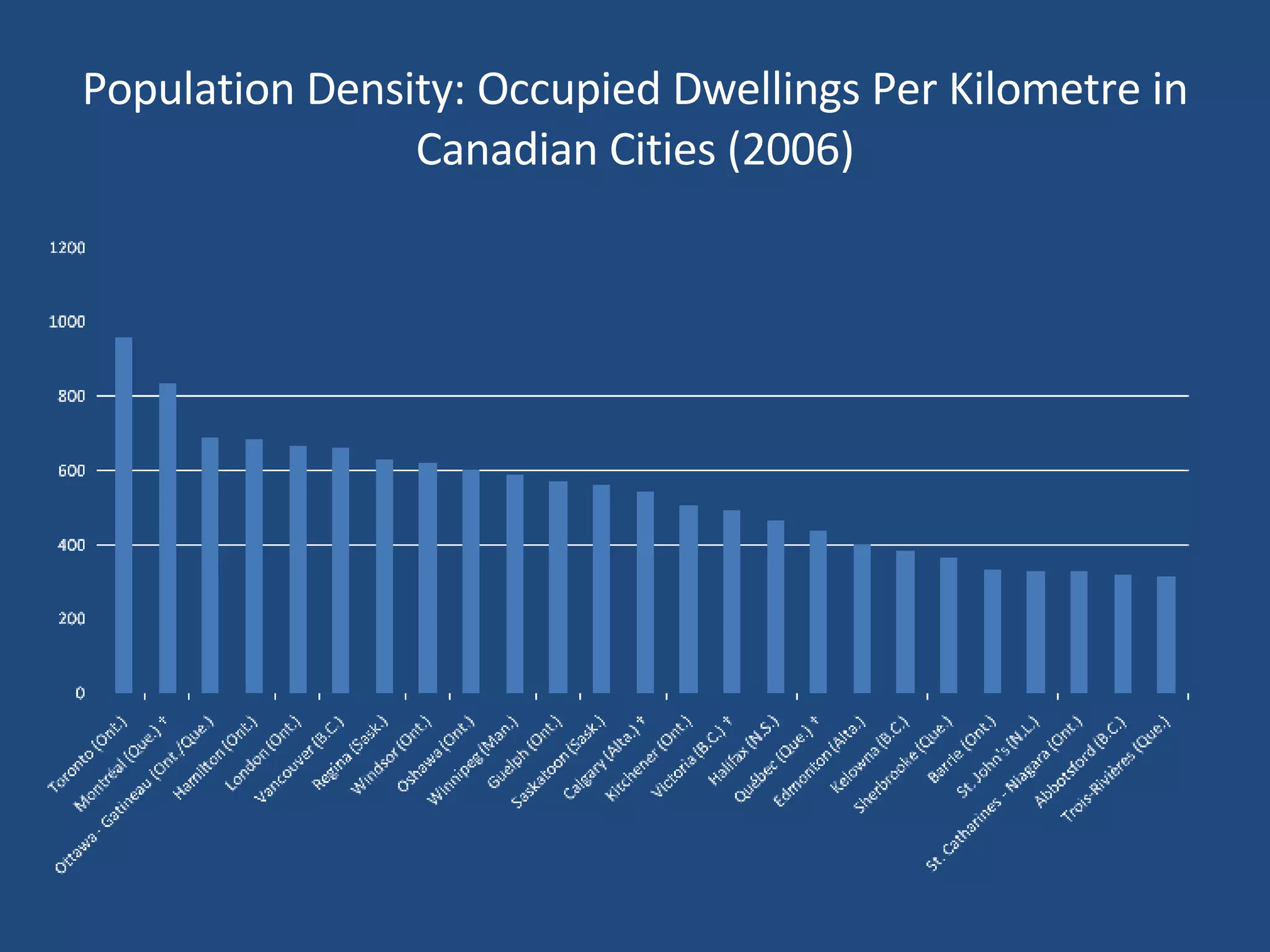
Population Density: Occupied Dwellings Per Kilometre in Canadian Cities (2006)
Relationship between density and car commuting in Canada’s largest cities Occupied Dwellings per Square Kilometre Total share of Trips to work by car
Relationship between  density  and car commuting in Canada’s Medium Sized Cities
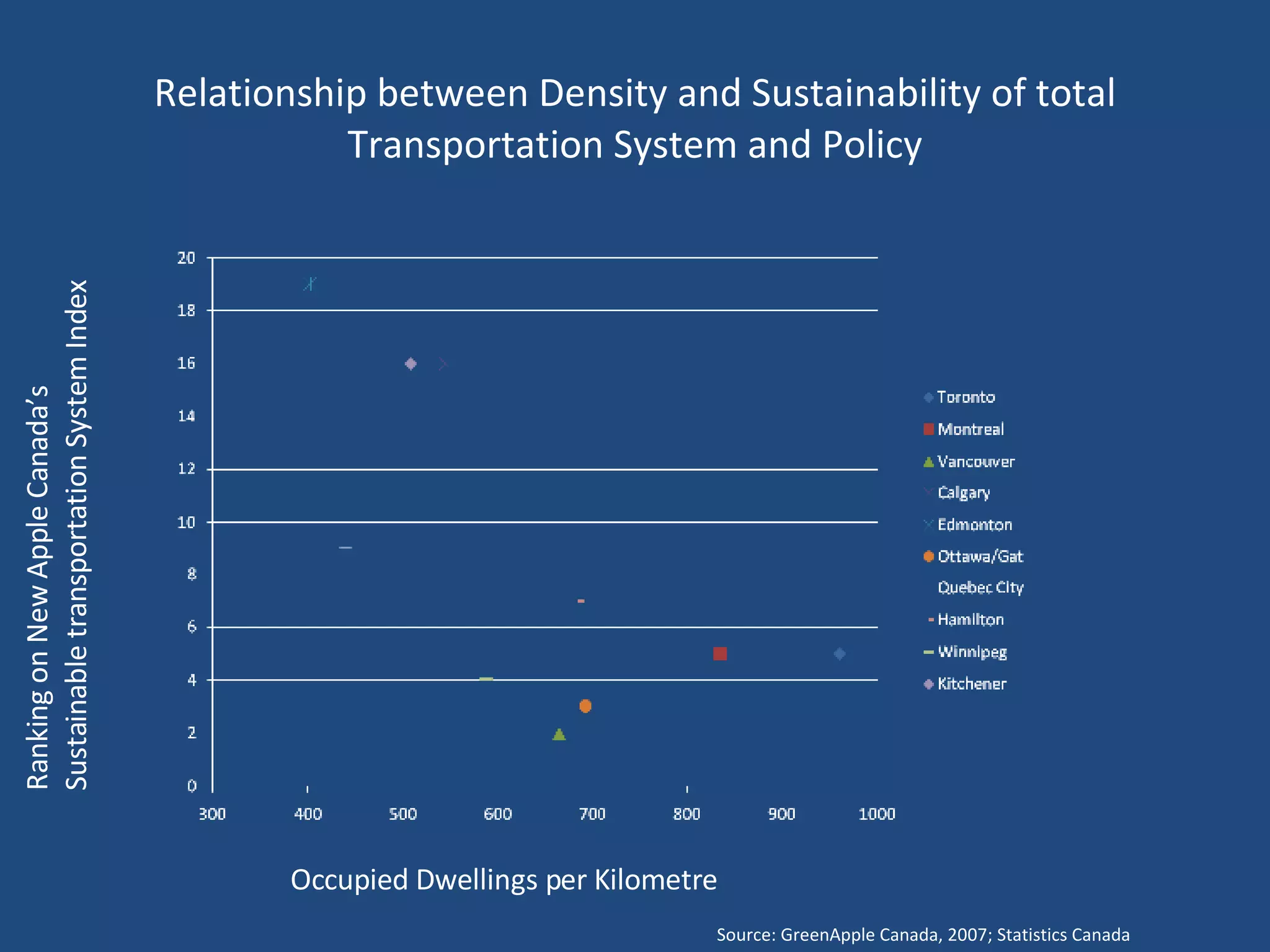
Relationship between Density and Sustainability of total Transportation System and Policy Occupied Dwellings per Kilometre Ranking on New Apple Canada’s Sustainable transportation System Index Source: GreenApple Canada, 2007; Statistics Canada
Relationship between income and car commuting in Canada’s largest cities Median Individual Income Total share of Trips to work by car Source: Stats Can, 2006
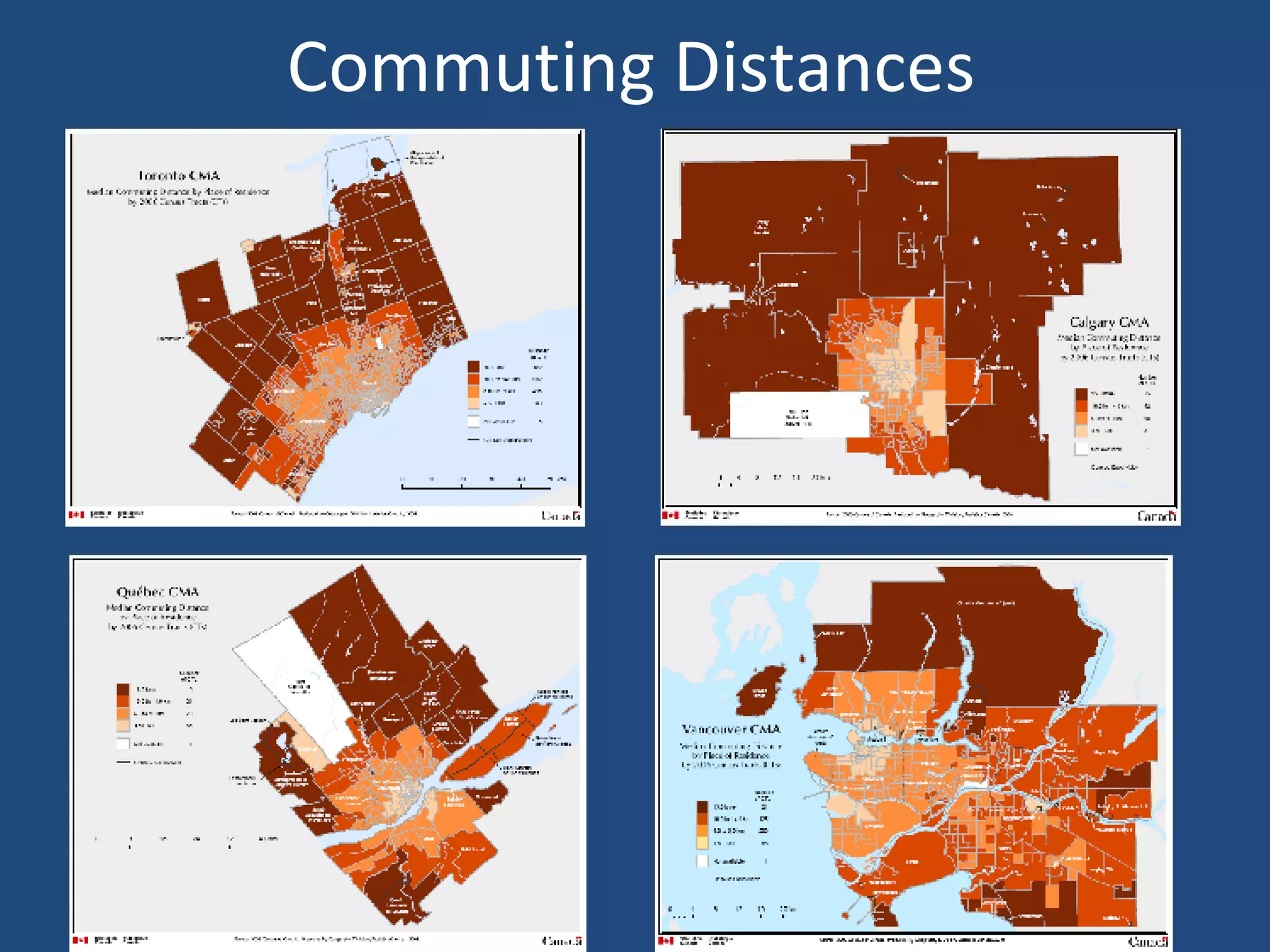
The Regional Scale: The Canadian Urban Experience Median commuting distance (in kilometres) travelled by workers in census metropolitan areas by period of construction of dwelling of residence, Canada, 2006
Commuting Distances
Commuting by Sustainable Travel Modes: an Issue of Equity and the Environment Job Sites
Greenhouse Gas Emissions: A Toronto Example (2007) (Source: VandeWeghe and Kennedy, 2007)
Greenhouse Gas Emissions: All Residential Buildings (2007) (Source: VandeWeghe and Kennedy, 2007)
Greenhouse Gas Emissions: All Passenger Transportation (2007) (Source: VandeWeghe and Kennedy, 2007)
Greenhouse Gas Emissions: All Residential Emissions (2007) (Source: VandeWeghe and Kennedy, 2007)
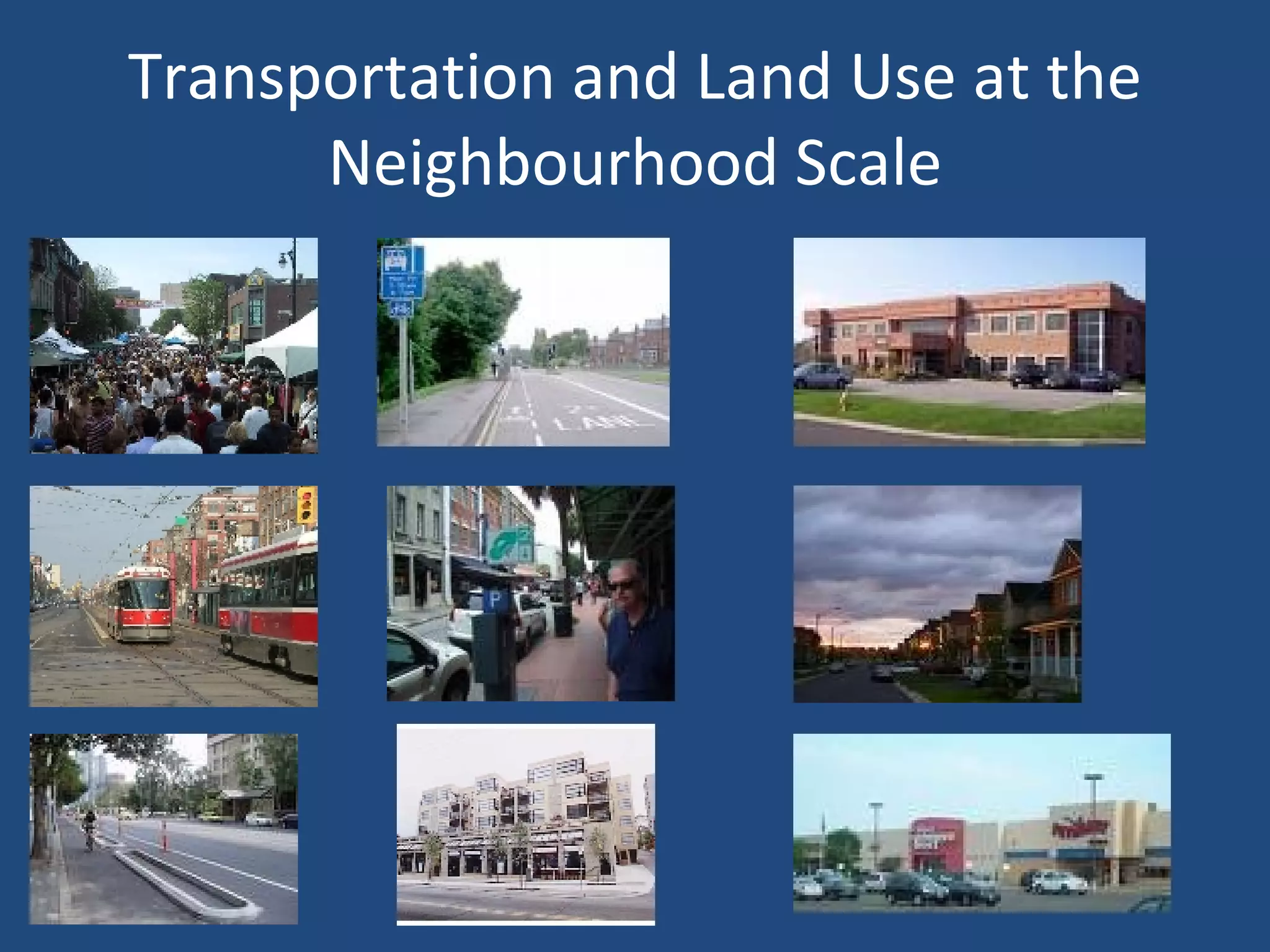
Transportation and Land Use at the Neighbourhood Scale
Transportation and Land Use: The Health Connection Land use patterns and transportation influence our health Car usage and suburban land pattern which encourages car usage has been linked with obesity related diseases Non-motorized and public transit encourage more physical activity, and have been linked to improved health More likely to occur in higher density areas
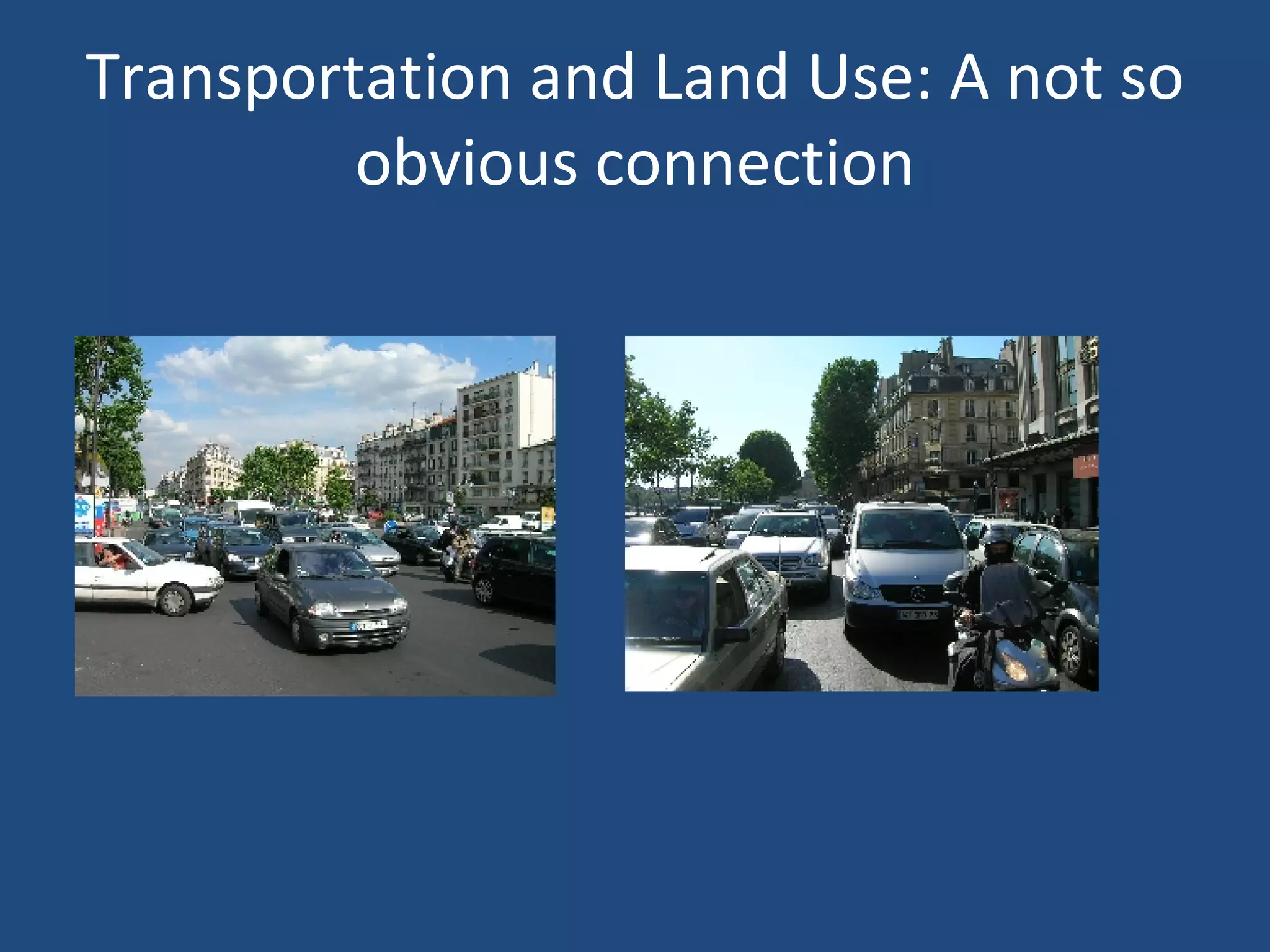
Transportation and Land Use: A not so obvious connection Transportation shapes land use, and individual travel decisions are also shaped by land uses Empirical studies have had a difficult time demonstrating universal linkages between transportation investments and land use change Difficulty demonstrating cause and effect Conflicting evidence, or disagreement on direction of impact  Difficulty in generalising results or conclusions
Transportation and Land Use: A not so obvious connection
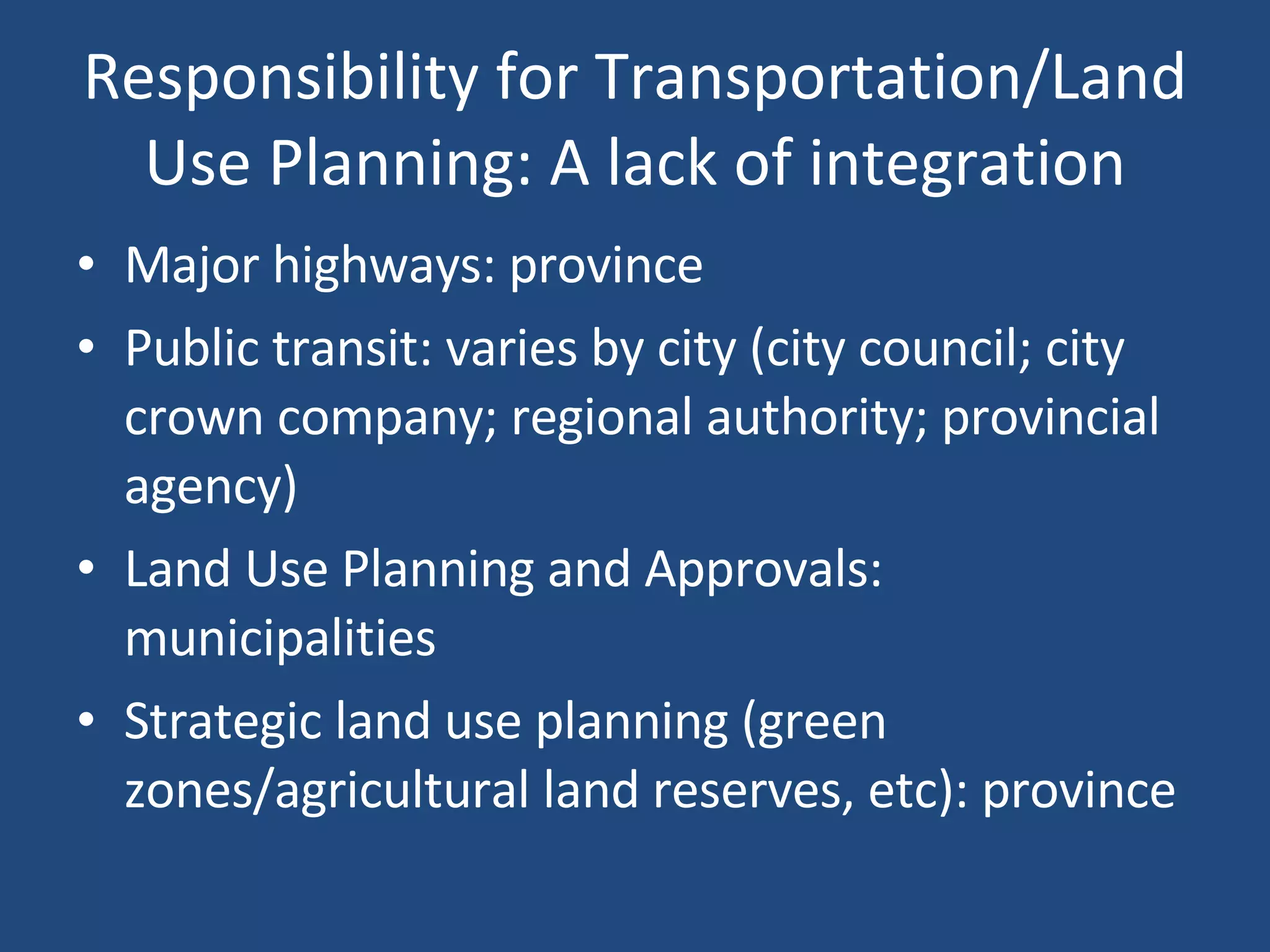
Responsibility for Transportation/Land Use Planning: A lack of integration Major highways: province Public transit: varies by city (city council; city crown company; regional authority; provincial agency)  Land Use Planning and Approvals: municipalities Strategic land use planning (green zones/agricultural land reserves, etc): province

CUTA 2008: Matti S. Presentation

  • 1.
    Land Use andTransportation Exploring the Connections Matti Siemiatycki, University of Toronto Margaret Wittgens, TransLink
  • 2.
    Presentation Overview Introductionto transportation and land use interactions Present contemporary experience: From the nation to the neighbourhood Planning processes to link transportation and land use in Canada TransLink Case Study: Scale/types of projects Take home message
  • 3.
    Why is theresuch recent interest in transportation?
  • 4.
    Transportation and LandUse ‘ transport shapes city development but city form then shapes travel choices’ (Colin Clark, 1957) Mode influences travel behaviour Available modes influence development patterns
  • 5.
    Transportation and CityForm: A Historical Perspective
  • 6.
    The International Experience Transportation and Land Use: Urban Density
  • 7.
    Proportion of workersusing public transit to get to work, selected metropolitan areas, 2006
  • 8.
    Transportation and LandUse: Efficacy of Public Transit
  • 9.
    Transportation and LandUse: Emissions by Transport Sector
  • 10.
    Transportation and LandUse: Urban Wealth
  • 11.
    Population Density: OccupiedDwellings Per Kilometre in Canadian Cities (2006)
  • 12.
    Relationship between densityand car commuting in Canada’s largest cities Occupied Dwellings per Square Kilometre Total share of Trips to work by car
  • 13.
    Relationship between density and car commuting in Canada’s Medium Sized Cities
  • 14.
    Relationship between Densityand Sustainability of total Transportation System and Policy Occupied Dwellings per Kilometre Ranking on New Apple Canada’s Sustainable transportation System Index Source: GreenApple Canada, 2007; Statistics Canada
  • 15.
    Relationship between incomeand car commuting in Canada’s largest cities Median Individual Income Total share of Trips to work by car Source: Stats Can, 2006
  • 16.
    The Regional Scale:The Canadian Urban Experience Median commuting distance (in kilometres) travelled by workers in census metropolitan areas by period of construction of dwelling of residence, Canada, 2006
  • 17.
  • 18.
    Commuting by SustainableTravel Modes: an Issue of Equity and the Environment Job Sites
  • 19.
    Greenhouse Gas Emissions:A Toronto Example (2007) (Source: VandeWeghe and Kennedy, 2007)
  • 20.
    Greenhouse Gas Emissions:All Residential Buildings (2007) (Source: VandeWeghe and Kennedy, 2007)
  • 21.
    Greenhouse Gas Emissions:All Passenger Transportation (2007) (Source: VandeWeghe and Kennedy, 2007)
  • 22.
    Greenhouse Gas Emissions:All Residential Emissions (2007) (Source: VandeWeghe and Kennedy, 2007)
  • 23.
    Transportation and LandUse at the Neighbourhood Scale
  • 24.
    Transportation and LandUse: The Health Connection Land use patterns and transportation influence our health Car usage and suburban land pattern which encourages car usage has been linked with obesity related diseases Non-motorized and public transit encourage more physical activity, and have been linked to improved health More likely to occur in higher density areas
  • 25.
    Transportation and LandUse: A not so obvious connection Transportation shapes land use, and individual travel decisions are also shaped by land uses Empirical studies have had a difficult time demonstrating universal linkages between transportation investments and land use change Difficulty demonstrating cause and effect Conflicting evidence, or disagreement on direction of impact Difficulty in generalising results or conclusions
  • 26.
    Transportation and LandUse: A not so obvious connection
  • 27.
    Responsibility for Transportation/LandUse Planning: A lack of integration Major highways: province Public transit: varies by city (city council; city crown company; regional authority; provincial agency) Land Use Planning and Approvals: municipalities Strategic land use planning (green zones/agricultural land reserves, etc): province