ANUJA NAYAKAGE (08/47)
CHAMIKA MUTHUKUMARANA (08/45)
                  3ND YEAR.CIVIL
Today we will be discussing:

 Problem of the population and land space

 Construction of the artificial island on the ocean

 Advantages & Disadvantages of artificial island
PROBLEM OF THE POPULATION & THE
  LAND SPACE

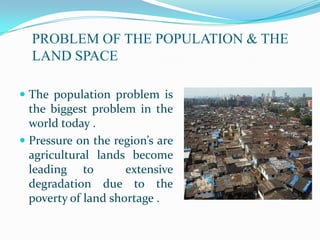
 The population problem is
  the biggest problem in the
  world today .
 Pressure on the region’s are
  agricultural lands become
  leading to         extensive
  degradation due to the
  poverty of land shortage .
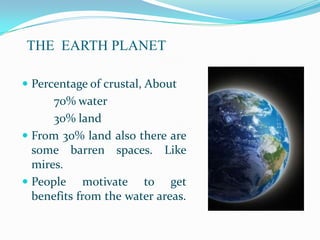
THE EARTH PLANET

 Percentage of crustal, About
      70% water
      30% land
 From 30% land also there are
  some barren spaces. Like
  mires.
 People motivate to get
  benefits from the water areas.
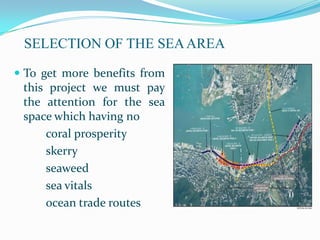
SELECTION OF THE SEA AREA

 To get more benefits from
 this project we must pay
 the attention for the sea
 space which having no
     coral prosperity
     skerry
     seaweed
     sea vitals
     ocean trade routes
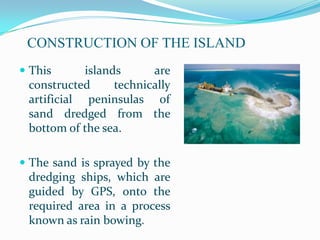
CONSTRUCTION OF THE ISLAND
 This      islands      are
 constructed      technically
 artificial peninsulas of
 sand dredged from the
 bottom of the sea.

 The sand is sprayed by the
 dredging ships, which are
 guided by GPS, onto the
 required area in a process
 known as rain bowing.
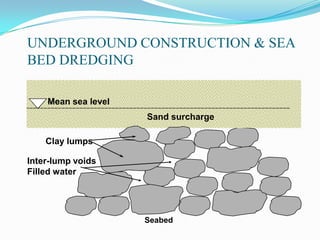
UNDERGROUND CONSTRUCTION & SEA
BED DREDGING

    Mean sea level
                     Sand surcharge

    Clay lumps

Inter-lump voids
Filled water


                     Seabed
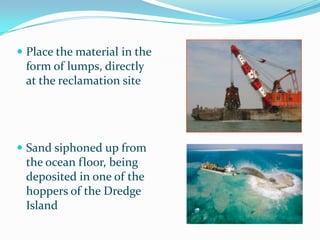
 Place the material in the
 form of lumps, directly
 at the reclamation site


 Sand siphoned up from
 the ocean floor, being
 deposited in one of the
 hoppers of the Dredge
 Island
CONSTRUCTION PROCEDURE

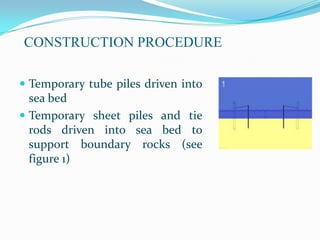
 Temporary tube piles driven into
  sea bed
 Temporary sheet piles and tie
  rods driven into sea bed to
  support boundary rocks (see
  figure 1)
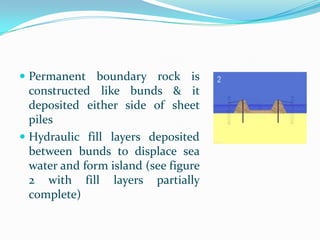
 Permanent boundary rock is
  constructed like bunds & it
  deposited either side of sheet
  piles
 Hydraulic fill layers deposited
  between bunds to displace sea
  water and form island (see figure
  2 with fill layers partially
  complete)
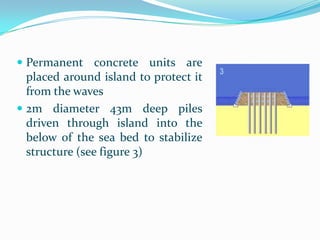
 Permanent concrete units are
  placed around island to protect it
  from the waves
 2m diameter 43m deep piles
  driven through island into the
  below of the sea bed to stabilize
  structure (see figure 3)
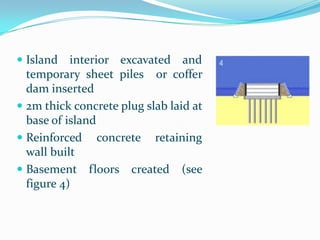
 Island   interior excavated and
  temporary sheet piles or coffer
  dam inserted
 2m thick concrete plug slab laid at
  base of island
 Reinforced concrete retaining
  wall built
 Basement floors created (see
  figure 4)
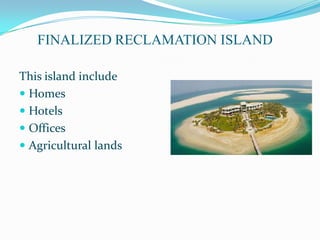
FINALIZED RECLAMATION ISLAND

This island include
 Homes
 Hotels
 Offices
 Agricultural lands
ADVANTAGES OF RECLAMATION

 Land reclamation will definitely increase
  land area for a certain country
 More lands, more buildings and better
  infrastructure can be built
 Can reclaimed lot of lands from flooding
DISADVANTAGE OF RECLAMATION

 Land reclamation can be damaging to corals and
 marine life due to wrong selection of poor
 knowledge of the subject
THANK YOU

Land reclamation-Presentation(civil 3rd year)

  • 1.
    ANUJA NAYAKAGE (08/47) CHAMIKAMUTHUKUMARANA (08/45) 3ND YEAR.CIVIL
  • 2.
    Today we willbe discussing:  Problem of the population and land space  Construction of the artificial island on the ocean  Advantages & Disadvantages of artificial island
  • 3.
    PROBLEM OF THEPOPULATION & THE LAND SPACE  The population problem is the biggest problem in the world today .  Pressure on the region’s are agricultural lands become leading to extensive degradation due to the poverty of land shortage .
  • 4.
    THE EARTH PLANET Percentage of crustal, About 70% water 30% land  From 30% land also there are some barren spaces. Like mires.  People motivate to get benefits from the water areas.
  • 5.
    SELECTION OF THESEA AREA  To get more benefits from this project we must pay the attention for the sea space which having no coral prosperity skerry seaweed sea vitals ocean trade routes
  • 6.
    CONSTRUCTION OF THEISLAND  This islands are constructed technically artificial peninsulas of sand dredged from the bottom of the sea.  The sand is sprayed by the dredging ships, which are guided by GPS, onto the required area in a process known as rain bowing.
  • 7.
    UNDERGROUND CONSTRUCTION &SEA BED DREDGING Mean sea level Sand surcharge Clay lumps Inter-lump voids Filled water Seabed
  • 8.
     Place thematerial in the form of lumps, directly at the reclamation site  Sand siphoned up from the ocean floor, being deposited in one of the hoppers of the Dredge Island
  • 9.
    CONSTRUCTION PROCEDURE  Temporarytube piles driven into sea bed  Temporary sheet piles and tie rods driven into sea bed to support boundary rocks (see figure 1)
  • 10.
     Permanent boundaryrock is constructed like bunds & it deposited either side of sheet piles  Hydraulic fill layers deposited between bunds to displace sea water and form island (see figure 2 with fill layers partially complete)
  • 11.
     Permanent concreteunits are placed around island to protect it from the waves  2m diameter 43m deep piles driven through island into the below of the sea bed to stabilize structure (see figure 3)
  • 12.
     Island interior excavated and temporary sheet piles or coffer dam inserted  2m thick concrete plug slab laid at base of island  Reinforced concrete retaining wall built  Basement floors created (see figure 4)
  • 13.
    FINALIZED RECLAMATION ISLAND Thisisland include  Homes  Hotels  Offices  Agricultural lands
  • 14.
    ADVANTAGES OF RECLAMATION Land reclamation will definitely increase land area for a certain country  More lands, more buildings and better infrastructure can be built  Can reclaimed lot of lands from flooding
  • 15.
    DISADVANTAGE OF RECLAMATION Land reclamation can be damaging to corals and marine life due to wrong selection of poor knowledge of the subject
  • 16.