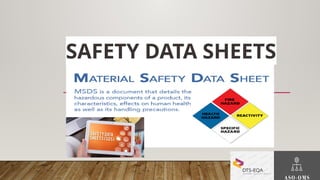
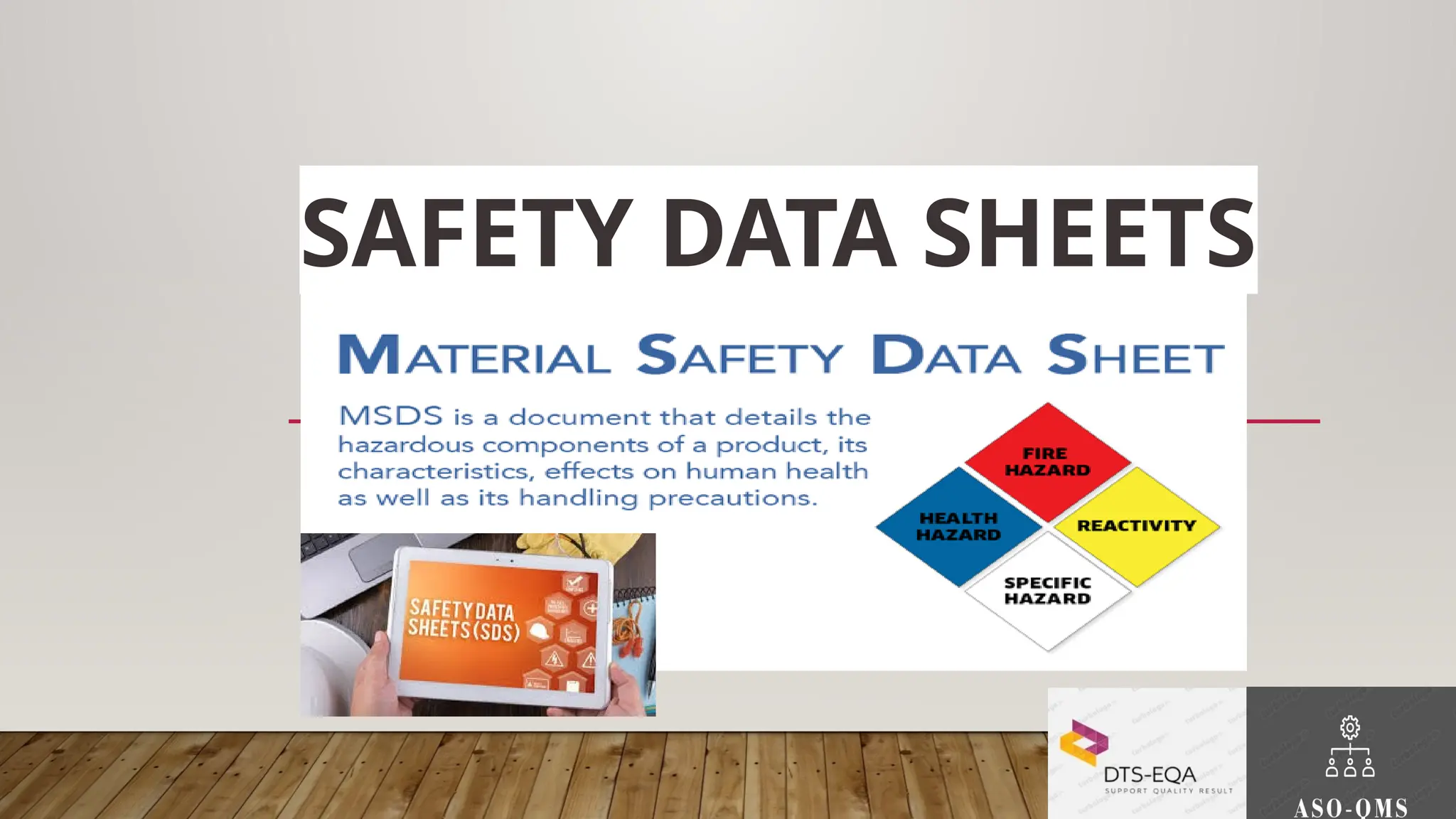
SAFETY DATA SHEETS
INTRODUTION
• Safety Data Sheets or SDSs provide critical information about
hazardous substances and chemicals.
• The ultimate purpose of an SDS is to provide information for
the safe handling, storage, and disposal of hazardous
substances.
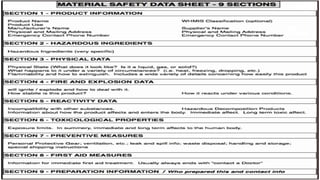
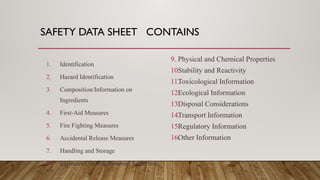
SAFETY DATA SHEET CONTAINS
1. Identification
2. Hazard Identification
3. Composition/Information on
Ingredients
4. First-Aid Measures
5. Fire Fighting Measures
6. Accidental Release Measures
7. Handling and Storage
8. Exposure Controls/Personal Protection
9. Physical and Chemical Properties
10.
Stability and Reactivity
11.
Toxicological Information
12.
Ecological Information
13.
Disposal Considerations
14.
Transport Information
15.
Regulatory Information
16.
Other Information
SDS INTERPRETATION
• Start with the section headings: The section headings provide a useful
guide to the content of the Safety Data Sheet (SDS). Familiarize yourself
with these headings to quickly locate the information you need.
• Understand the abbreviations and acronyms: Safety Data Sheets (SDS)
often contain abbreviations and acronyms that can be confusing if you’re
not familiar with them. Learn commonly used abbreviations and
acronyms to make the process easier.
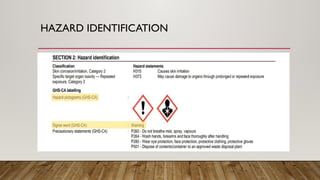
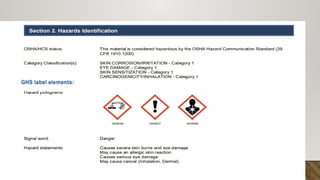
HAZARD IDENTIFICATION
SDS INTERPRETATION
• Look for the signal words: Safety Data Sheets (SDS) contain signal words
that indicate the level of hazard associated with the substance. The two
signal words used are “Danger” and “Warning.” “Danger” indicates a
severe hazard, while “Warning” indicates a less severe hazard.
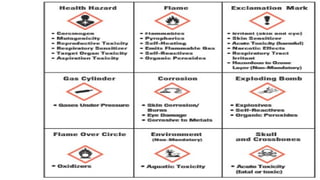
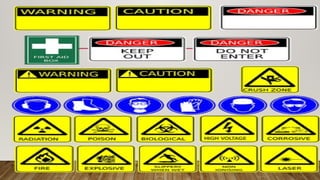
• Pay attention to the pictograms: Safety Data Sheets (SDS) also contain
pictograms that provide visual representations of the hazard associated
with the substance. By understanding the meaning of the pictograms, you
can quickly identify potential risks associated with the substance.
SDS INTERPRETATION
Read the entire Safety Data Sheet (SDS): While it may be tempting to skip sections
that do not seem relevant, it is crucial to read the entire Safety Data Sheet (SDS). Each
section provides critical information that may be necessary for your safety.
Once you’ve fully reviewed the SDS, you need to apply the information to your
application. Remember, the SDS represents the chemical product as supplied. If you
dilute the product, depending on how much water or solvent you add, the hazards
identified on the SDS may differ from your diluted solution. Whenever you have
questions about SDSs or how to apply the information to your application, contact
your chemical supplier.
SDS INTERPRETATION
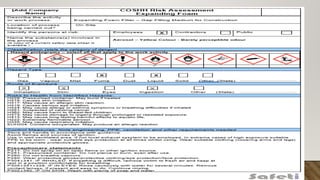
To safely handle the chemical, remember to do a hazard assessment
for your specific operation and application. Often, you can take
several actions to reduce your risk by adopting controls within your
operation and ensuring employees are properly trained. In the
absence of other hazard controls, personal protective equipment
(PPE) is the last line of defense to protect yourself from exposure.
THE RISKS ASSOCIATEDWITH IGNORING A SAFETY DATA SHEET (SDS)
• Increased Risk of Accidents and Injuries
• Environmental Damage
• Legal Consequences
• Damaged Reputation
• Increased Costs
THANKYOU FOR LISTENING

Safety Data Sheets in the medical laboratory

  • 1.
  • 3.
    INTRODUTION • Safety DataSheets or SDSs provide critical information about hazardous substances and chemicals. • The ultimate purpose of an SDS is to provide information for the safe handling, storage, and disposal of hazardous substances.
  • 4.
    SAFETY DATA SHEETCONTAINS 1. Identification 2. Hazard Identification 3. Composition/Information on Ingredients 4. First-Aid Measures 5. Fire Fighting Measures 6. Accidental Release Measures 7. Handling and Storage 8. Exposure Controls/Personal Protection 9. Physical and Chemical Properties 10. Stability and Reactivity 11. Toxicological Information 12. Ecological Information 13. Disposal Considerations 14. Transport Information 15. Regulatory Information 16. Other Information
  • 5.
    SDS INTERPRETATION • Startwith the section headings: The section headings provide a useful guide to the content of the Safety Data Sheet (SDS). Familiarize yourself with these headings to quickly locate the information you need. • Understand the abbreviations and acronyms: Safety Data Sheets (SDS) often contain abbreviations and acronyms that can be confusing if you’re not familiar with them. Learn commonly used abbreviations and acronyms to make the process easier.
  • 6.
  • 7.
    SDS INTERPRETATION • Lookfor the signal words: Safety Data Sheets (SDS) contain signal words that indicate the level of hazard associated with the substance. The two signal words used are “Danger” and “Warning.” “Danger” indicates a severe hazard, while “Warning” indicates a less severe hazard. • Pay attention to the pictograms: Safety Data Sheets (SDS) also contain pictograms that provide visual representations of the hazard associated with the substance. By understanding the meaning of the pictograms, you can quickly identify potential risks associated with the substance.
  • 12.
    SDS INTERPRETATION Read theentire Safety Data Sheet (SDS): While it may be tempting to skip sections that do not seem relevant, it is crucial to read the entire Safety Data Sheet (SDS). Each section provides critical information that may be necessary for your safety. Once you’ve fully reviewed the SDS, you need to apply the information to your application. Remember, the SDS represents the chemical product as supplied. If you dilute the product, depending on how much water or solvent you add, the hazards identified on the SDS may differ from your diluted solution. Whenever you have questions about SDSs or how to apply the information to your application, contact your chemical supplier.
  • 13.
    SDS INTERPRETATION To safelyhandle the chemical, remember to do a hazard assessment for your specific operation and application. Often, you can take several actions to reduce your risk by adopting controls within your operation and ensuring employees are properly trained. In the absence of other hazard controls, personal protective equipment (PPE) is the last line of defense to protect yourself from exposure.
  • 14.
    THE RISKS ASSOCIATEDWITHIGNORING A SAFETY DATA SHEET (SDS) • Increased Risk of Accidents and Injuries • Environmental Damage • Legal Consequences • Damaged Reputation • Increased Costs
  • 15.