“ Preconception Care” and the Transformation of Women’s Health Care into Reproductive Medicine Rebecca Kukla Professor of Philosophy and Obstetrics and Gynecology University of South Florida [email_address]
Two main arguments and a conclusion: From a health care point of view, the project of intensive parenting has already been extended backwards through pregnancy. The “preconception care” movement is extending this even farther back, prior to pregnancy and through much of women’s lives.    Health care for women is transforming into risk management for future children, including merely imaginary future children.
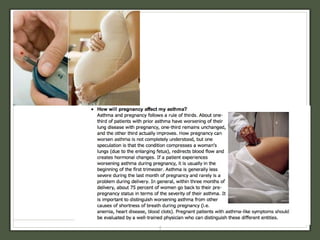
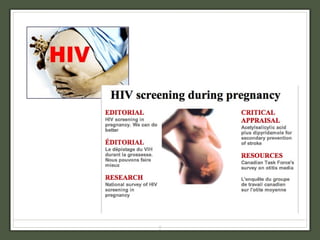
What kinds of health care do pregnant women need? When we think of health care for pregnant women, we think of reproduction-related care, ‘prenatal’ care, geared towards healthy birth. But pregnant women continue to have a variety of health needs of their own. There’s lots of information available about the various health conditions pregnant women may face…
But this instrumental approach is not limited to pregnancy… Cultural association between ‘women’s health’ and reproductive health. Maternal-child health a growing specialty, emphasized in global health initiatives. Office of minority health: “If your women are healthy, your babies are going to be healthy and your society will be healthy.”
‘ Preconception’ care Preconception care is care for women who are not pregnant but could in theory become so. The goal is to reinterpret primary care for women with childbearing capacity as preconception care, regardless of whether they intend to become pregnant. Literally treats the non-pregnant body as on its way to pregnancy. Official priority for Center for Disease Control, US Office of Minority Health, many others.
‘ Preconception’ care CDC guidelines for preconception care:  All  primary care for women of reproductive age should be treated as preconception care, since “the average woman of reproductive age encounters the medical system 3.8 times per year and any of these occasions may be a woman’s last before she becomes pregnant.” Women’s bodies as naturally ‘poised for pregnancy’ – non-pregnant state is always fleeting, on its way to vanishing.
‘ Preconception’ care is not just for those planning to get pregnant On the contrary, especially targeted at minority/low income women not planning to be pregnant. One of the best times to integrate preconception care into primary care is “ during a visit that includes a negative pregnancy test .  Because this is a time when many women learn how easily an unintended pregnancy can occur.”  California Preconception Care Initiative, letter to providers.  Emphasis in original.
‘ Preconception’ care is not just for those planning to get pregnant “ Preconception care is a ‘hard sell’ for women who, even if sexually active and not using birth control, don’t think they’ll ever get pregnant. We ended up  repackaging  it as a well-woman health package.”  Executive director, Northeast Florida Healthy Start Coalition
So what is preconception care? Counsels lifestyle modifications that improve pregnancy outcomes – quit smoking, lose weight if needed, etc. Control underlying conditions that affect pregnancy outcome – diabetes, hyperthyroidism, etc. Education on fertility, prenatal health. Health interventions that are not done during pregnancy, such as catching up on vaccinations. Screening for HIV, Hepatitis, etc. Screening for domestic abuse.
Transforming ALL of women’s health care into reproductive care?     Preconception care is designed to extend into almost all domains of health care. All these different types of medicine now become  branches of reproductive health care  when addressed under the rubric of preconception care.
Transforming ALL of women’s health care into reproductive care?  Preconception care is also extending across the lifespan: CDC: “2 nd  national summit on preconception health and health care: advancing the health of women and infants before, between, and beyond pregnancy” March of Dimes: Preconception care for girls should begin before adolescence in pediatric clinic. Office of Minority Health: “[Preconception care] starts before birth and it goes from the cradle to the grave.” (??) ASTHO preconception fact sheet: “Preconception care … should take place in an ongoing manner over the course of a woman’s lifespan, beginning in early adolescence, before she is able to become pregnant, and continuing through her reproductive years.”
Why is all this a problem? Isn’t it good for us to make addressing all these health needs a priority?  Won’t women benefit? Well, they often will benefit, but…
Why is all this a problem? It reduces women to their reproductive function. “ In the future,  prenatal care  may be redefined to include care for women across the reproductive live span” (Van Dyke et al,  JAAPA  2008) “ Whether you've begun your conception campaign already or you're just starting to think about getting pregnant, it’s never too late--or too early--to start optimizing your preconception profile. ( What to Expect Before You’re Expecting , Blurb) 2.  Sends strong, potentially coercive/alienating pronatalist message.
Why is all this a problem? 3.  Compromises in quality of care. Treating chronic conditions, etc., so as to maximize (potential) fetal outcomes is not always the best for the woman, even if it helps. For instance: Choice of drugs with lower teratogenic risk, even when less effective. Aggressive rather than conservative treatment choices for diseases affecting pregnancy outcomes. Care for the woman is the ‘packaging’ but not the guiding goal.
Why is all this a problem? Unreasonable permanent restrictions imposed on non-pregnant women. Normal behaviors such as light drinking treated as irresponsibly risky.  Among the goals of preconception care is “eliminating alcohol and recreational drug use before the woman becomes pregnant.”  But in this same article: preconception care is supposed to include “all women with reproductive potential” (Van Dyke, JAAPA) Stringent standards for weight, prescription drug use, etc, imposed as permanent burdens.
Why is all this a problem? Interpreting everything through the lens of reproductive health skews: which conditions  we care most about   (those that affect fetal outcomes).
Why is all this a problem? Interpreting everything through the lens of reproductive health skews: whose health  we prioritize –  Where do these initiatives leave care for women who can’t get pregnant – transgendered, post-hysterectomy, etc.? Is their need for diabetes control, substance abuse treatment, etc. any less? Care for women who are past ‘reproductive lifespan’? End of reproductive life and end of life equated in much of the preconception literature.
Conclusion: The culture of intensive parenting and child-oriented risk management is distorting women’s health care. Women’s health care is being swallowed up by reproductive health care, potentially to the detriment of women. Tenuous, unproven benefits to possible future children who do not exist and may not even be planned are not worth this cost.

“Preconception Care” and the Transformation of Women’s Health Care into Reproductive Medicine

  • 1.
    “ Preconception Care”and the Transformation of Women’s Health Care into Reproductive Medicine Rebecca Kukla Professor of Philosophy and Obstetrics and Gynecology University of South Florida [email_address]
  • 2.
    Two main argumentsand a conclusion: From a health care point of view, the project of intensive parenting has already been extended backwards through pregnancy. The “preconception care” movement is extending this even farther back, prior to pregnancy and through much of women’s lives.  Health care for women is transforming into risk management for future children, including merely imaginary future children.
  • 3.
    What kinds ofhealth care do pregnant women need? When we think of health care for pregnant women, we think of reproduction-related care, ‘prenatal’ care, geared towards healthy birth. But pregnant women continue to have a variety of health needs of their own. There’s lots of information available about the various health conditions pregnant women may face…
  • 12.
    But this instrumentalapproach is not limited to pregnancy… Cultural association between ‘women’s health’ and reproductive health. Maternal-child health a growing specialty, emphasized in global health initiatives. Office of minority health: “If your women are healthy, your babies are going to be healthy and your society will be healthy.”
  • 13.
    ‘ Preconception’ carePreconception care is care for women who are not pregnant but could in theory become so. The goal is to reinterpret primary care for women with childbearing capacity as preconception care, regardless of whether they intend to become pregnant. Literally treats the non-pregnant body as on its way to pregnancy. Official priority for Center for Disease Control, US Office of Minority Health, many others.
  • 14.
    ‘ Preconception’ careCDC guidelines for preconception care: All primary care for women of reproductive age should be treated as preconception care, since “the average woman of reproductive age encounters the medical system 3.8 times per year and any of these occasions may be a woman’s last before she becomes pregnant.” Women’s bodies as naturally ‘poised for pregnancy’ – non-pregnant state is always fleeting, on its way to vanishing.
  • 15.
    ‘ Preconception’ careis not just for those planning to get pregnant On the contrary, especially targeted at minority/low income women not planning to be pregnant. One of the best times to integrate preconception care into primary care is “ during a visit that includes a negative pregnancy test . Because this is a time when many women learn how easily an unintended pregnancy can occur.” California Preconception Care Initiative, letter to providers. Emphasis in original.
  • 16.
    ‘ Preconception’ careis not just for those planning to get pregnant “ Preconception care is a ‘hard sell’ for women who, even if sexually active and not using birth control, don’t think they’ll ever get pregnant. We ended up repackaging it as a well-woman health package.” Executive director, Northeast Florida Healthy Start Coalition
  • 17.
    So what ispreconception care? Counsels lifestyle modifications that improve pregnancy outcomes – quit smoking, lose weight if needed, etc. Control underlying conditions that affect pregnancy outcome – diabetes, hyperthyroidism, etc. Education on fertility, prenatal health. Health interventions that are not done during pregnancy, such as catching up on vaccinations. Screening for HIV, Hepatitis, etc. Screening for domestic abuse.
  • 18.
    Transforming ALL ofwomen’s health care into reproductive care?  Preconception care is designed to extend into almost all domains of health care. All these different types of medicine now become branches of reproductive health care when addressed under the rubric of preconception care.
  • 20.
    Transforming ALL ofwomen’s health care into reproductive care? Preconception care is also extending across the lifespan: CDC: “2 nd national summit on preconception health and health care: advancing the health of women and infants before, between, and beyond pregnancy” March of Dimes: Preconception care for girls should begin before adolescence in pediatric clinic. Office of Minority Health: “[Preconception care] starts before birth and it goes from the cradle to the grave.” (??) ASTHO preconception fact sheet: “Preconception care … should take place in an ongoing manner over the course of a woman’s lifespan, beginning in early adolescence, before she is able to become pregnant, and continuing through her reproductive years.”
  • 21.
    Why is allthis a problem? Isn’t it good for us to make addressing all these health needs a priority? Won’t women benefit? Well, they often will benefit, but…
  • 22.
    Why is allthis a problem? It reduces women to their reproductive function. “ In the future, prenatal care may be redefined to include care for women across the reproductive live span” (Van Dyke et al, JAAPA 2008) “ Whether you've begun your conception campaign already or you're just starting to think about getting pregnant, it’s never too late--or too early--to start optimizing your preconception profile. ( What to Expect Before You’re Expecting , Blurb) 2. Sends strong, potentially coercive/alienating pronatalist message.
  • 23.
    Why is allthis a problem? 3. Compromises in quality of care. Treating chronic conditions, etc., so as to maximize (potential) fetal outcomes is not always the best for the woman, even if it helps. For instance: Choice of drugs with lower teratogenic risk, even when less effective. Aggressive rather than conservative treatment choices for diseases affecting pregnancy outcomes. Care for the woman is the ‘packaging’ but not the guiding goal.
  • 24.
    Why is allthis a problem? Unreasonable permanent restrictions imposed on non-pregnant women. Normal behaviors such as light drinking treated as irresponsibly risky. Among the goals of preconception care is “eliminating alcohol and recreational drug use before the woman becomes pregnant.” But in this same article: preconception care is supposed to include “all women with reproductive potential” (Van Dyke, JAAPA) Stringent standards for weight, prescription drug use, etc, imposed as permanent burdens.
  • 25.
    Why is allthis a problem? Interpreting everything through the lens of reproductive health skews: which conditions we care most about (those that affect fetal outcomes).
  • 26.
    Why is allthis a problem? Interpreting everything through the lens of reproductive health skews: whose health we prioritize – Where do these initiatives leave care for women who can’t get pregnant – transgendered, post-hysterectomy, etc.? Is their need for diabetes control, substance abuse treatment, etc. any less? Care for women who are past ‘reproductive lifespan’? End of reproductive life and end of life equated in much of the preconception literature.
  • 27.
    Conclusion: The cultureof intensive parenting and child-oriented risk management is distorting women’s health care. Women’s health care is being swallowed up by reproductive health care, potentially to the detriment of women. Tenuous, unproven benefits to possible future children who do not exist and may not even be planned are not worth this cost.

Editor's Notes

  • #3 Two main arguments and a conclusion: Pregnant women’s bodies are already interpreted and treated as maternal bodies whose primary purpose is to minimize risk to their future children – thus the project of intensive parenting has already been extended backwards through pregnancy. With the advent of the “preconception care” movement, this project has been extended even farther backwards, prior to pregnancy, and arguably throughout much of women’s lives. THUS women’s health care is being increasingly subsumed under reproductive medicine – medical care for women is increasingly transforming into medical care and risk management for future children, including merely imaginary future children.
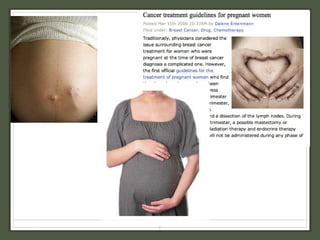
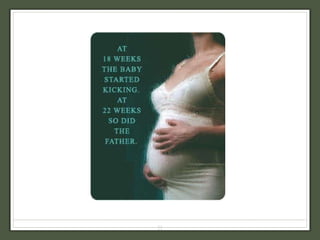
  • #4 SPEAK FROM THIS SIDE: It is not surprising that when women are pregnant, their health care is typically dominated by reproductive health care. When we think of pregnant women and health care, the first thing we think about is trying to make it to a good birth outcome, having a healthy baby. But women continue to have health needs of their own during pregnancy – these aren’t put on hold. During pregnancy, women may need not just ‘prenatal’ care but oncology, psychiatry, cardiology, substance abuse treatment programs, etc. Indeed, there is a large amount of information available about various health conditions and concerns that face pregnant women: HIV, depression, diabetes, etc. Here are some images of pregnant women from these health information sources. See if you notice a subtle similarity between the women who show up in these sources...
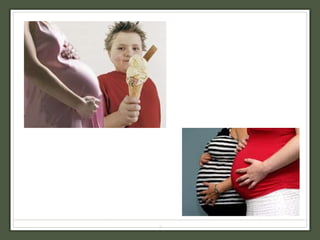
  • #5 During pregnancy women may need information about or treatment for… Diabetes and asthma
  • #7 Lupus, MS, cancer
  • #8 obesity
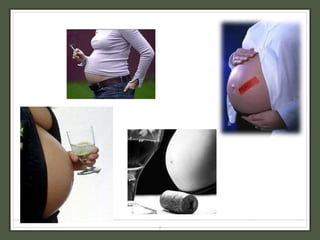
  • #9 Dependence on cigarettes, alcohol, drugs. Headless pregnant bellies about to take a big drink or a puff on the cigarette.
  • #10 Depression – headless pregnant belly in melancholy darkness! You can tell the belly is depressed because of the lighting.
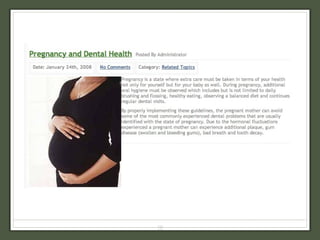
  • #11 Dental problems
  • #12 Domestic abuse As you may have noticed these women have no heads– their independent identity as subjects of medical need and care is erased. (Go look – I am not cherry-picking!) At least imagistically, pregnant women’s medical needs are all seen through the lens of their reproductive function, the impact on the fetus. Invisibility of woman is particularly striking for dental care (can’t even see the relevant body part), domestic abuse (direct victim of abuse erased). In several slides, the pregnant belly is labeled, locating the problem for us – HIV slide (4) – it is the belly labeled as having HIV. In the other slide the womb is transparent. Substance abuse slide (7): the belly is ‘fragile’ Lupus slide (5): the footprint calls attention to fetal subjectivity though the head is absent.
  • #13 The instrumental understanding of women’s health care extends beyond prenatal care  The ‘purpose’ of women’s health care is the protection of babies and society.
  • #14 I want to talk about the preconception movement… Recent widespread advocacy and support for ‘preconception’ care supported by various government agencies, professional health organizations, and charity groups – strong, explicit example of a concerted initiative to bring more of women’s health care under the umbrella of reproductive health care. You know the preconception care movement is gaining traction now that there’s a new What to Expect book just for it! Released 2009. POSSIBLE conception is directly conflated with PREconception.
  • #16 Even lack of pregnancy is taken as sign that pregnancy is immanent – this is a bit like taking declaration of homosexuality as a good time to discuss contraception because heterosexual sex could have happened instead.
  • #17 Well-woman care – care for the woman herself – is here a marketing ruse – explicitly not what they care about, but want to get women who don’t plan to be pregnant in the door for reproductive care by promising them care for themselves.
  • #21 Remember – must put this expansion across the lifespan together with the idea that every primary care visit (plus others) is supposed to be treated as a ‘preconception’ care visit. Vs. ACOG, which only recommends a preconception visit when you plan to become pregnant – much more moderate and woman-centered. (ASTHO: Association of state and territorial health officials)
  • #22 I want to spend the rest of my time looking at several reasons why this shift is problematic for women.
  • #23  Instrumentalization of body begins well before pregnancy. Design behavior in terms of ‘optimizing’ pregnancy outcomes. Do lesbians, women who are carefully contracepting and not interested in having children, 13 year olds, women done having kids, really want their bodies seen as pre natal, understood in terms of reproductive function? (Journal of the American Academy of Physician Assistants)
  • #24 How you choose to treat an about-to-be-pregnant body is not necessarily the same as how you choose to treat another body.
  • #27 SEE last two quotes on slide 22. Second quote: ‘lifespan’ and ‘reproductive years’ explicitly equated! Older women here disappear from the rhetorical health radar, no direct attention or prioritization, even though they live longer and have special medical needs.