

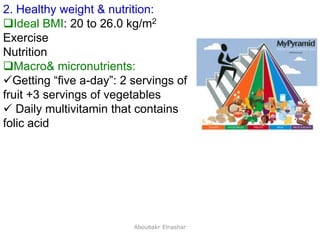
![23
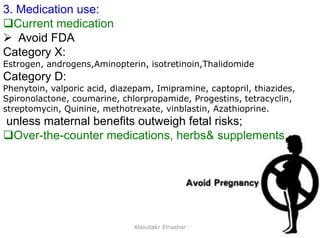
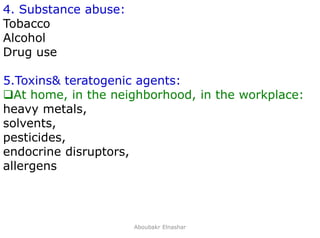
3. Healthy behaviors:
Nutrition
Exercise,
Safe sex
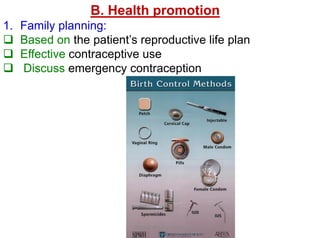
Effective contraceptive use
Dental flossing
Preventive health services
Discourage risky behaviors:
Douching
Not wearing a seatbelt,
Smoking:
use the five A’s [Ask, Advise, Assess, Assist, Arrange] for
smoking cessation
Alcohol
Substance abuse
Aboubakr Elnashar](https://image.slidesharecdn.com/preconceptioncare-140712205146-phpapp01/85/Preconception-care-Aboubakr-Elnashar-23-320.jpg)
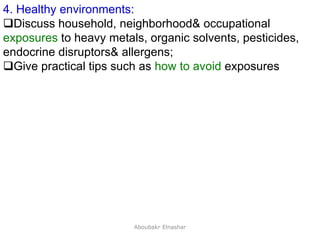
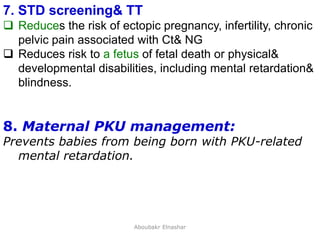
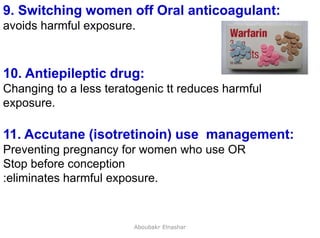
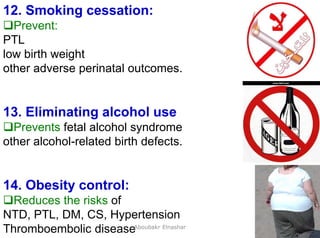
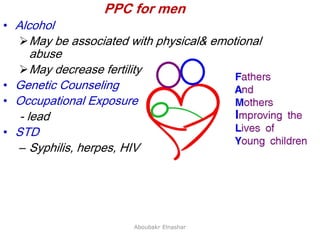

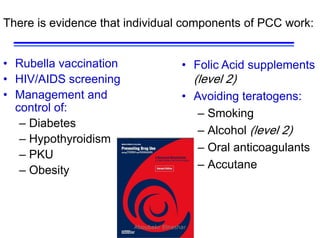
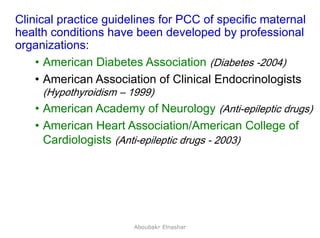

Preconception care involves identifying risks to a woman's health or future pregnancy through prevention and management strategies before she becomes pregnant. It aims to improve pregnancy outcomes. Key components of preconception care include risk assessment of medical, reproductive and family histories; health promotion through healthy behaviors and lifestyle changes; and medical interventions to address existing conditions like diabetes or infections. Providing preconception care has been shown to reduce risks like birth defects and preterm birth. However, barriers include unintended pregnancies and lack of awareness among patients and providers. Implementing preconception care involves integrating it into routine primary care visits for women of reproductive age.


![CASE_PRESENTATION_ON_subdural_hematoma(SDH)[1 FINAL PPT]-1.pptx](https://cdn.slidesharecdn.com/ss_thumbnails/casepresentationonsubduralhematomasdh1finalppt-1-260129172522-d405d375-thumbnail.jpg?width=640&height=640&fit=bounds)


