Downloaded 16 times

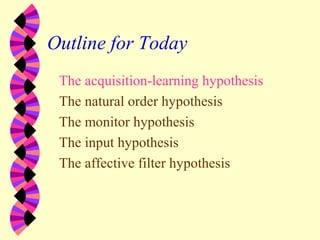


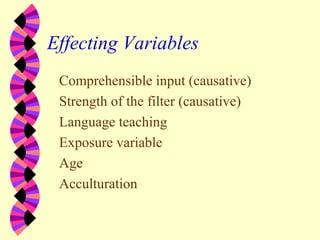

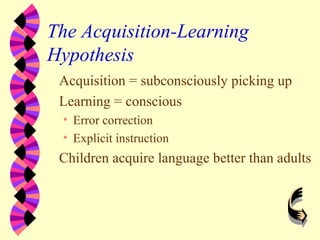
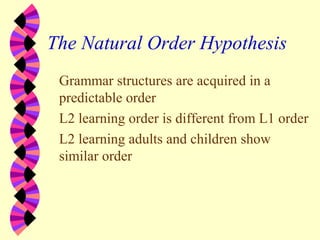
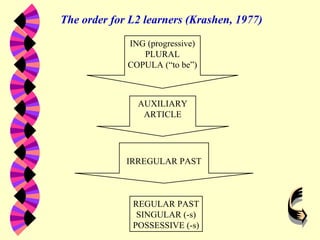
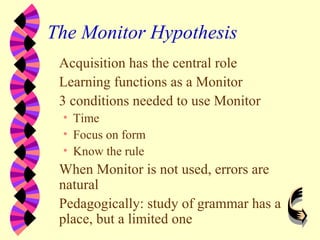
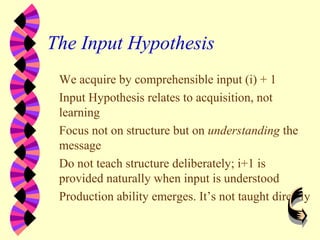

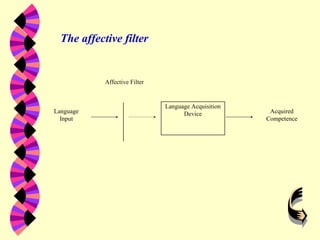

Krashen's L2 Acquisition Theory proposes five main hypotheses about second language acquisition: 1. The Acquisition-Learning Hypothesis distinguishes between subconscious acquisition and conscious learning, positing that acquisition is more important and is facilitated by comprehensible input. 2. The Natural Order Hypothesis claims that grammar structures are acquired in a predictable order, which may differ between first and second languages. 3. The Monitor Hypothesis describes the limited role of learning as a "monitor" or editor, only used when speaking or writing with time and focus on form. 4. The Input Hypothesis states that language is acquired through comprehensible messages that are slightly above one's current


![Theories Of Language Acquisition[1]](https://cdn.slidesharecdn.com/ss_thumbnails/theories-of-language-acquisition1-1225480010904742-8-thumbnail.jpg?width=640&height=640&fit=bounds)


